REVIEW · COLOSSEUM TOURS
Rome Explorer Pass: 2 to 7 Attractions – Includes Colosseum
Book on GetYourGuide →Operated by Go City - EMEA · Bookable on GetYourGuide
This pass cuts Rome ticket lines. The Go City Rome Explorer Pass bundles entry to major sights across Rome and the Vatican, with a digital guide to help you book and get in. You choose the attractions that fit your days, then use your phone instead of chasing separate tickets.
I particularly like two things: it includes the Colosseum, and it’s set up to reduce the hassle of managing your day. One thing to keep in mind: reservations are required for many popular options, and the Sistine Chapel can be temporarily closed (expected to re-open mid-May).
In This Review
- Key things to know before you buy
- How the Go City Rome Explorer Pass actually works (and why that matters)
- The Colosseum plus Roman Forum and Palatine Hill: the big-ticket anchor
- Vatican Museums, Sistine Chapel, and St. Peter’s: plan around the calendar
- Pantheon and Castel Sant’Angelo: two great indoor choices with clear logistics
- Big sights beyond the big three: Imperial Rome, walking tours, and catacombs
- How the food experiences fit real trip rhythm
- Using your Go City app without stress (this is where many people win)
- Price and value: when the Rome Explorer Pass makes financial sense
- The trade-offs: what the pass can’t fix for you
- Who this pass suits best (and who should skip it)
- FAQ
- What does the Rome Explorer Pass include?
- Does the pass include the Colosseum?
- How long is the pass valid?
- Do I need reservations?
- How do I access the pass at attractions?
- Is transportation included?
- What should I bring?
- Should you book the Rome Explorer Pass?
Key things to know before you buy

- Pick 2 to 7 attractions from a list of 45+ options, with the option to slow down or sprint (your call).
- The Colosseum is included, plus you can add the Roman Forum and Palatine Hill with an audio experience.
- Skip-the-line / reserved entrance options show up across several big names like the Pantheon and Vatican Museums.
- Your smartphone is the ticket system: sync your pass in the Go City app, or save/print when needed.
- You get 30 days after activation, which is ideal when Rome is the kind of trip that changes as you go.
- Easy orientation extras are available, like Hop-On Hop-Off bus and a 24-hour river cruise.
How the Go City Rome Explorer Pass actually works (and why that matters)
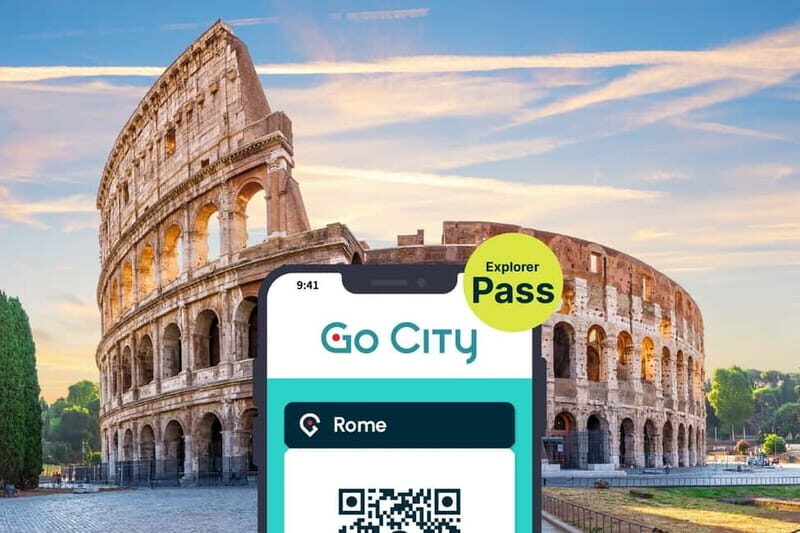
The Rome Explorer Pass is a choose-your-own-adventure pass. You select a plan based on how many attractions you want to include—2, 3, 4, 5, 6, or 7—and each attraction uses up one slot. Your pass is valid for 30 days to 2 months depending on starting times, but the key practical rule is this: the pass is valid for 1 year from purchase, and it only becomes activated when you visit your first included attraction. After activation, you have 30 days to finish the remaining sights you purchased.
That activation timing is important because it helps you avoid the classic Rome problem: locking yourself into a rigid schedule before you even know how your trip will unfold. If you arrive late, if you want to shift due to weather, or if you simply move your Vatican day around—this format gives you more breathing room than single-day tickets.
You’ll also notice the pass is designed around the phone. The Go City app is where you check the most up-to-date line-up, opening times, and instructions on how to access each entry. You’ll be asked to follow instructions on your booking confirmation to sync the pass, and you should bring a charged smartphone so you can show what you need at each stop.
You can also read our reviews of more tours and experiences in Rome.



The Colosseum plus Roman Forum and Palatine Hill: the big-ticket anchor

If you’re buying the Rome Explorer Pass, you’re probably buying it for one reason: the Colosseum. This pass includes the Colosseum experience with an audio tour and multimedia video, and it can also include the Roman Forum and Palatine Hill as part of the same Colosseum-oriented package.
Here’s what that combination does for your day. You’re not just looking at one monument—you’re getting connected context. The Colosseum gives you the scale and drama, while the Forum and Palatine Hill help explain why this area mattered so much in ancient Rome. Even if you aren’t a self-declared ruins nerd, the audio format helps you keep moving without constantly stopping for a guidebook.
A practical tip: build your day around the fact that this is a top attraction. The pass reduces ticket-buying friction, but you still need to reserve when required and follow access instructions. Also, give yourself time for the walk between entry points and the slower “I need one more photo” moments around the exterior.
Vatican Museums, Sistine Chapel, and St. Peter’s: plan around the calendar

The Vatican is the other heavy hitter on the list, and this pass can cover it in more than one way. You can include Vatican Museums and Sistine Chapel with escorted skip-the-line tickets, which is a real time-saver when you’re dealing with security and crowd flow. You can also add St. Peter’s Basilica and Cupola Guided Tour with Breakfast, plus an audioguide of the papal tombs.
Two things to watch. First, the Sistine Chapel can be temporarily closed, with a re-opening expected mid-May. If your travel dates land around that window, you’ll want to check the Go City app for the current lineup and what you can realistically access.
Second, St. Peter’s is one of those places where the “guided” piece can change how you experience it. A cupola experience tends to add payoff if you want views, and the papal tomb audioguide can help you place names and stories as you move through. If you like museums and sacred art in the same day, the pass gives you the tools to connect them.
Pantheon and Castel Sant’Angelo: two great indoor choices with clear logistics

Rome has a way of making you do outdoor-only sightseeing when you’re not careful. This pass helps balance that with major indoor and semi-indoor stops.
The Pantheon is included with reserved entrance and an audioguide. That reserved entrance matters because it’s one of those sights where the line isn’t just annoying—it also steals time you could use for actual wandering. With the audioguide, you can slow down once you’re inside and still keep your momentum outside.
Castel Sant’Angelo is another included option. It’s a strong pick if you want a break from ancient street-level crowds and want something that feels more fortress-like. If you’re the type who enjoys views and photo stops, this is often a better “midday reset” than stacking two major classics back-to-back.
Big sights beyond the big three: Imperial Rome, walking tours, and catacombs

Not everything here is a single building. Some of the included experiences are designed to help you see Rome as a system.
You can include the Imperial Rome Walking Tour (including Colosseum exterior). This is useful because it helps you get your bearings fast—where major routes ran, what connections existed, and why the city layout feels the way it does. It can also be a nice warm-up day before you go deeper into the Colosseum/Forum area.
You can also choose the Big Bus Rome Hop-On Hop-Off 1-Day Discover Ticket and pair that with a Hop-on Hop-off River Cruise (24 Hours). These aren’t “must-do” for everyone, but they have a practical value: they make it easier to plan when you’re spread across neighborhoods like Centro Storico, Prati, and Vatican sides of town. When your feet are tired, hop-on options can save you from turning every route into a long walk.
For a more underground experience, there’s Big Bus Rome Catacombs guided tour with bus transfer. The bus transfer matters because it takes time and uncertainty out of getting there. If catacombs are on your list, this option is typically more efficient than trying to piece together transport and timing on your own.



How the food experiences fit real trip rhythm

Rome is at its best when you eat on the way to something else. This pass leans into that with multiple food-and-drink options, and it’s a smart choice if you don’t want your itinerary to feel like a constant queue simulator.
You can include a 1-Hour Pizza-cooking Experience. It’s not just about eating pizza—this kind of activity gives you a structured break in the middle of sightseeing and gives you something to do that isn’t standing in line or walking uphill. If you want a hands-on activity, this is an easy win.
There’s also an Espresso, Gelato and Tiramisu Tour, which can help you sample across the classic Roman dessert and coffee categories. And if you like the idea of tying food to scenery, there’s a Sunset pizza tour near the Colosseum plus a Pizza Terrace Menu in the Prati District (reservation required where noted).
For value, think of food experiences in terms of time saved. If you were going to plan tastings, book a class, and decide which neighborhood to visit, the pass can bundle decision-making. Just keep it realistic: these experiences still depend on availability and reservations, so don’t treat them as last-minute filler.
Using your Go City app without stress (this is where many people win)

The best use of the Explorer Pass is to treat it like a planning tool, not just a discount wrapper. Your smartphone becomes your guide: you’ll access the digital guide, which includes attraction information and instructions on booking your visits. You’ll also want to sync your pass in the Go City app using the instructions in the booking confirmation.
I’d also plan to check the app before you go anywhere. Attractions and tours can change, and opening hours can shift—especially on holiday periods. Since the pass depends on reservations for popular experiences, you don’t want to arrive with outdated info and scramble.
A second practical point: reservations are required for many options. This isn’t a “set it and forget it” pass for the most popular sights. The simplest approach is to reserve as soon as your dates are firm, then build the rest of your trip around what you’ve already locked in.
Price and value: when the Rome Explorer Pass makes financial sense

The pass price shown here is $100.82 per person, and it’s positioned as a way to save up to 50% on entry based on sample itineraries. You should still do one quick reality check for your own plan: this type of pass works best when you actually use most of the included slots.
If you buy the 2-attraction version and your second choice ends up being something you’d only do out of guilt, you might feel like you didn’t get full value. If you buy the 4-to-7 attraction version and you’re serious about the Vatican, Colosseum area, plus a couple of add-ons, the savings concept starts to make sense fast. The pass also reduces the friction cost of time—less ticket shopping and fewer decisions on the fly.
The “value” isn’t only dollars. It’s also how much stress you remove. Going in with reserved entrance options like the Pantheon and skip-the-line options like Vatican Museums can turn a crowded day into a more controlled day. When you only have so many daylight hours, that counts.
A smart strategy: decide on your non-negotiables first (for many people, Colosseum and Vatican Museums), then add choices that fit your walking tolerance and preferred vibe: indoor (Pantheon, Castel Sant’Angelo), guided (Imperial Rome, catacombs, Basilica/Cupola), or scenic transport (hop-on bus, river cruise).
The trade-offs: what the pass can’t fix for you

A pass helps with tickets. It can’t fix human reality.
First, you still need reservations for many top activities. That means you should plan ahead, especially for time-specific experiences. The phone helps, but it doesn’t remove the need to pick times.
Second, some icons can be affected by temporary closures. The Sistine Chapel is noted as temporarily closed with an expected mid-May re-opening, so if you’re traveling near that timing, you need to be flexible. The app should show the most up-to-date situation.
Third, you’ll be doing a lot of “access management.” You can’t just show up and wing it for every included site. Bring your charged phone, follow the instructions, and expect to show a digital pass and follow access rules at each stop.
Who this pass suits best (and who should skip it)
This pass is a strong fit if you want three things:
- You want big-name sights without spending your trip energy on individual ticket planning.
- You like the idea of a built-in framework (the digital guide) but still want freedom to shuffle days.
- You’ll realistically book multiple experiences, not just two.
It may not suit you if you prefer fully spontaneous, no-planning travel where every day is a new whim. Since reservations are required for many popular options, you’ll feel the constraints if you hate scheduling.
It’s also a good match if you value variety: ancient ruins (Colosseum/Forum/Palatine), world-famous museums (Vatican Museums/Sistine Chapel), and classic Rome structure (Pantheon, Castel Sant’Angelo). Then add transport and food experiences to round out the rhythm.
FAQ
What does the Rome Explorer Pass include?
The pass includes entrance to any 2, 3, 4, 5, 6, or 7 Rome and Vatican attractions and tours you choose from a list of over 45 options. It also includes a digital guide with attraction information and instructions.
Does the pass include the Colosseum?
Yes. The Colosseum is included in the list of attractions and tours you can choose from, with an audio tour and multimedia video.
How long is the pass valid?
The pass is valid for 30 days to 2 months, depending on starting times. Once activated with your first included attraction visit, you then have 30 days to visit the remaining attractions you purchased.
Do I need reservations?
Reservations are required for many of the most popular activities. The digital guide in the Go City app includes instructions, and you should reserve well in advance to avoid disappointment.
How do I access the pass at attractions?
You’ll need to sync your pass with the Go City app following the instructions on your booking confirmation. You can also save the pass to your phone/tablet or print a copy.
Is transportation included?
Transportation is not included unless it is part of a specific activity (for example, a catacombs tour that includes bus transfer).
What should I bring?
Bring a charged smartphone.
Should you book the Rome Explorer Pass?
If you’re planning to hit major sites like the Colosseum and Vatican Museums, plus at least a couple of add-ons (Pantheon, a hop-on bus or river cruise, a food experience, or a guided walking/catacombs option), this pass can be a smart way to cut ticket hassle and protect your time.
Book it if you’re comfortable reserving popular options and using your phone for access. Skip it if you want a purely spontaneous schedule or if you’re only aiming to do 1–2 sights total. For most visitors, the value comes from using enough slots to justify the format—and from reserving early enough that the pass truly saves you time.