REVIEW · CYCLING TOURS
Rome at Night Bike Tour
Book on Viator →Operated by Fat Tire Tours Holdings LLC - Italy · Bookable on Viator
Rome at night feels different.
This ride strings together classic landmarks and quieter corners in one smooth loop, timed for sunset and the glow of illuminated Rome. Two things I really like: the small group size (up to 14) keeps it relaxed, and the guide-led pacing plus headsets means you get the story without craning your neck at every stop. One thing to consider: you do need moderate physical fitness for cycling for 3 hours plus, and a couple sights have admission ticket fees that are not included.
What makes the experience click is the way the guide talks while you ride. In particular, Danielle and Marika show how the best tours balance fun and direction, with enough detail to keep things interesting without turning into a lecture. You also get that practical first-night benefit: a guide can help you get your bearings fast and start seeing the city the right way.
In This Review
- Key moments worth circling in your calendar
- How the night-bike format works (and why it’s a smart first taste of Rome)
- Price and value: what $54.19 buys you in real life
- Where it starts: Via dei Delfini and the rhythm of a guided meetup
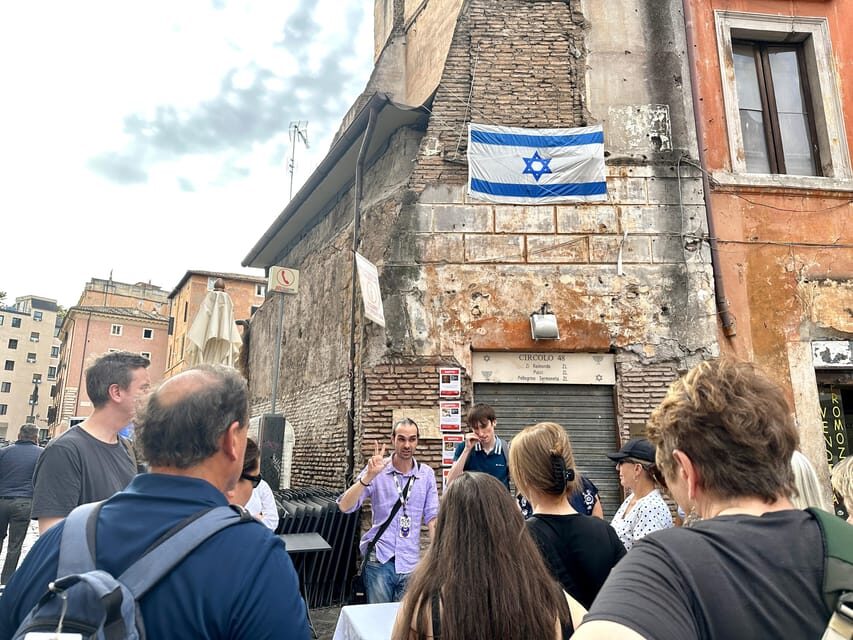
- Stop 1: Il Portico di Ottavia and the Roman Synagogue moment
- Ponte Fabricio: crossing the Tiber like you’re reading a map in motion
- Tiberina Island ride-through: a short section with big atmosphere potential
- Ponte Cestio: another bridge, another angle on the riverfront
- Trastevere at night: 20 minutes that make the city feel local
- Basilica di Santa Maria in Trastevere: quick look, admission not included
- Piazza Trilussa: a small pause with a famous name
- Ponte Sisto: the bridge that links the feeling to the next district
- Piazza Farnese and the architecturally striking street segment
- St. Angelo Bridge wine stop: the classic setting plus a social break
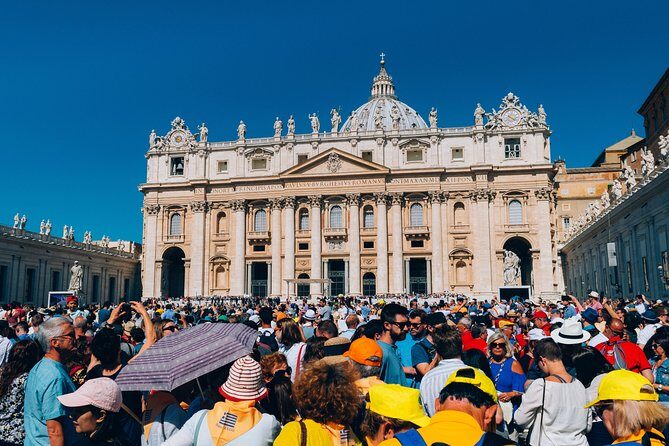
- St. Peter’s Square and the Vatican area view: fast, focused, and forward-facing
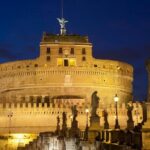
- Castel Sant’Angelo: Hadrian’s mausoleum, seen at night
- Along the River Tiber as sunset fades: a moving “finale warm-up”
- Via dei Condotti: ancient-meets-modern shopping street
- Spanish Steps: see it twice, in two different ways
- Piazza del Popolo: a wine glass break plus a wide open view
- The shopping street segment and the final architectural stop
- Guides make or break it: why Danielle, Marika, and Mattias stand out
- Who should book this tour (and who might skip it)
- Should you book Rome at Night Bike Tour?
- FAQ
- Is the Rome at Night Bike Tour offered in English?
- How long is the tour?
- What’s included with the ticket?
- Do I need admission tickets for the stops?
- What’s the maximum group size?
- Can I cancel for free?
Key moments worth circling in your calendar
- Trastevere at sunset: a real neighborhood feel, not just a photo stop
- Historic crossings over the Tiber: Ponte Fabricio, Ponte Cestio, and Ponte Sisto in sequence
- Wine breaks with the right vibe: stops near St. Angelo Bridge and in Piazza del Popolo
- Vatican-area views by bike: time at St. Peter’s Square plus a quick look toward Castel Sant’Angelo
- A tight, guided loop: 3 hours 30 minutes that covers a lot without making you stare at a map
- Private upgrade available: if you want more one-on-one attention, you can switch to a private bike tour
How the night-bike format works (and why it’s a smart first taste of Rome)
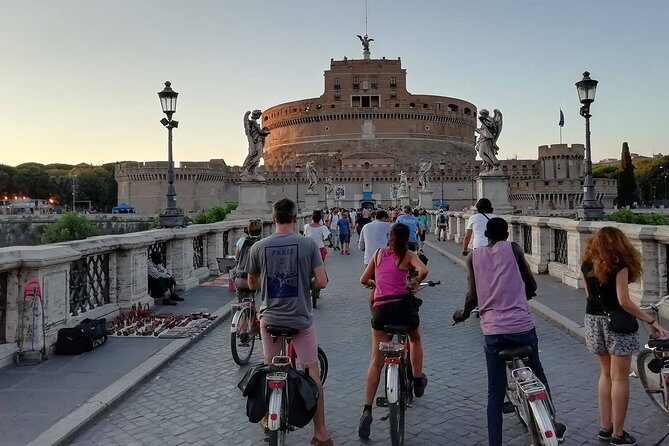
A night bike tour can sound like a gimmick. In Rome, it actually makes sense. You cover ground quickly, and the darker hours reduce the pressure to plan every step. The route is built like a storyline: you start with a historical anchor, then swing through neighborhoods and key squares as the sky gets darker.
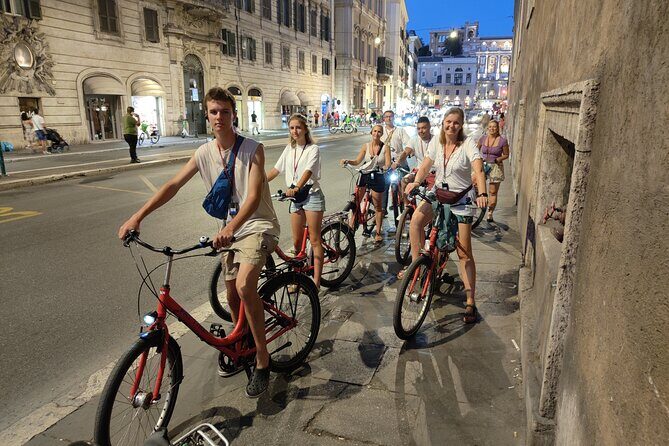
The setup helps, too. You get a helmet and a basket or bike bag, plus headsets so the guide’s info stays clear even while you’re pedaling. That headset detail matters more than you’d think. You’re not forced to stop and crowd around for every explanation, and you can keep moving at a steady pace.
This is also a small-group experience. With a maximum of 14 people, it feels more like a guided ride with a plan than a long line of strangers. If you like your sightseeing with less waiting and more momentum, that’s a real plus.
You can also read our reviews of more cycling tours in Rome
Price and value: what $54.19 buys you in real life
At about $54.19 per person for roughly 3 hours 30 minutes, the cost is reasonable for a tour that includes transportation, guiding, and a couple included breaks.
Here’s why it adds up:
- You’re paying for your bike plus an active guide: cycling around Rome isn’t just about speed. It’s about safe route choices and turning landmarks into an actual narrative.
- Headsets are included: that alone improves the experience and reduces frustration.
- Alcoholic beverages are part of the tour: there are designated wine moments, and there are alternative options for kids and non-wine drinkers.
You’re not just buying views. You’re buying the time saved and the context delivered while you’re moving.
If you’re trying to do the classics and still feel like you saw Rome as a living city, this format can be a good deal. The proof is in the consistent 5/5-style feedback: people repeatedly call it the best way to get oriented in a short window.
Where it starts: Via dei Delfini and the rhythm of a guided meetup
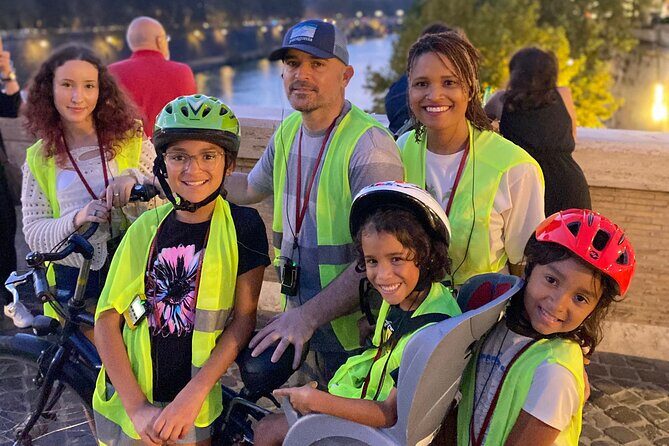
Your meeting point is Via dei Delfini, 35 in Rome (00186). The tour ends back at the same place, which keeps logistics easy at the end of a night ride.
Two practical notes matter here:
- The start is near public transportation, so you can plan your day without relying only on taxis.
- Tag-along trailers are not available, which matters if you were thinking about bringing a child who isn’t riding independently.
Stop 1: Il Portico di Ottavia and the Roman Synagogue moment
The tour kicks off at Il Portico di Ottavia, where you’ll see the historic Roman Synagogue. This isn’t the typical starting point for casual sightseeing. That’s part of why the ride feels different: it drops you into a layer of Roman life before you hit the postcard stuff.
It’s a brief stop (about 5 minutes), and the admission ticket for this stop is listed as free. Even if you don’t go in deep, it’s a useful way to set context for the city’s complex identity—religion, culture, and centuries overlapping in one place.
Ponte Fabricio: crossing the Tiber like you’re reading a map in motion
Next, you cross Ponte Fabricio. Even with just a quick crossing, you’re doing something smarter than standing still: you’re getting orientation. Bridges in Rome act like landmarks and shortcuts at the same time.
This is also where night biking becomes practical. You’re not stuck in a single viewpoint. You’re rolling, and your perspective keeps shifting as the Tiber corridor appears and disappears behind you.
You can also read our reviews of more evening experiences in Rome
Tiberina Island ride-through: a short section with big atmosphere potential
Then you ride through Tiberina Island. It’s not a long museum-style stop. It’s a movement moment. That’s good. You’ll get the feel of the river setting without turning the night into a list of slow stops.
The main win here is mood. The ride-through helps connect the dots from earlier history to what comes next in Trastevere and the Vatican area.
Ponte Cestio: another bridge, another angle on the riverfront
Crossing Ponte Cestio keeps the route flowing. At this stage, you should start noticing the pace: the tour is not designed around you spending time reading plaques. It’s designed to keep you cycling with a guide who points out what to notice.
You’ll likely appreciate this if you’ve struggled with Rome tours that over-explain and then rush you through the important parts. The guide style described in the feedback emphasizes just enough information to stay engaged.
Trastevere at night: 20 minutes that make the city feel local
Then you arrive in Trastevere, with about 20 minutes to visit. This is one of the most talked-about parts of the tour, and it makes sense. Trastevere at night gives you the neighborhood experience without the full commitment of wandering for hours on your own.
A key detail: the tour is timed for the sunset hour. That makes a difference in atmosphere. You get street energy while the lighting is soft, and the neighborhood looks good even when you’re not photographing every corner.
Admission is free for this stop, so you’re not stuck planning around ticket constraints.
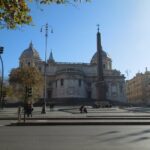
Basilica di Santa Maria in Trastevere: quick look, admission not included
Next is Basilica di Santa Maria in Trastevere, with about 5 minutes. Admission ticket is listed as not included, so plan for that if you decide to go inside beyond just a quick look.
This is a classic Roman stop, but the value here is the flow. You’re not arriving already tired and cranky. You’re still in sightseeing momentum, and the guide’s framing helps you notice what you might otherwise skip.
Piazza Trilussa: a small pause with a famous name
You’ll see Piazza Trilussa for about 5 minutes. Admission is free. This kind of stop works well on bike tours because it acts like a reset button: you stretch, look around, and absorb the way streets open into squares.
It’s also a chance to catch the vibe of Trastevere and transition cleanly toward the river crossings and major landmarks ahead.
Ponte Sisto: the bridge that links the feeling to the next district
Crossing Ponte Sisto continues the Tiber storyline. After Trastevere, bridges can start to feel like chapter markers. That makes the night route easier to remember later when you’re mapping out your next day.
This segment is short on purpose. You’re building momentum and keeping the group together.
Piazza Farnese and the architecturally striking street segment
Then you reach Piazza Farnese (about 5 minutes, free). The tour also includes time to explore an architecturally stunning street right after the piazza.
Why this matters: bike tours sometimes skip the “in-between” details because people want to rush to big names. Here you get a little breathing space to notice buildings and the way the street layout frames views.
That can be especially helpful if you’re a repeat Rome visitor. The tour includes stops that are less cookie-cutter, and that feeling came up in the feedback as well.
St. Angelo Bridge wine stop: the classic setting plus a social break
Next is St. Angelo Bridge, with a stop of about 15 minutes and free admission. This is the wine moment on the itinerary, and it also matches the highlights about pausing for a sip at lively wine-bar style spots.
This part is smart for two reasons:
- You get a longer break, so the ride doesn’t feel like non-stop motion.
- You’re watching one of Rome’s famous bridge-and-river scenes while the day flips into night.
If you want a tour that feels like a night out, this is the place where it becomes social.
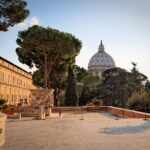
St. Peter’s Square and the Vatican area view: fast, focused, and forward-facing
You stop at St. Peter’s Square for about 5 minutes. Admission is listed as not included for this stop, so keep that in mind if you expect to access anything beyond the public area view.
Even with a short time, the payoff is orientation. Seeing the Vatican area from the street level gives you scale and helps you place it relative to everything else you saw tonight, especially once you look toward Castel Sant’Angelo next.
Castel Sant’Angelo: Hadrian’s mausoleum, seen at night
Then it’s Castel Sant’Angelo, about 5 minutes, admission free. This is the Mausoleum of Hadrian, and at night it tends to feel more dramatic simply because the light hits stone differently.
You’re not lingering long. The guide’s job here is to connect it to the route story so it doesn’t feel like another quick stop on a checklist.
Along the River Tiber as sunset fades: a moving “finale warm-up”
After Castel Sant’Angelo, you ride along the River Tiber for about 10 minutes as the sun sets. This is a key emotional beat of the tour. The ride gives you the wide Rome angle, and it helps you feel like the city is still opening up even after the big landmarks.
It’s also where the headset narration can shine. You’re not trapped in front of a monument. You’re traveling through the same river corridor that has shaped Roman life for centuries.
Via dei Condotti: ancient-meets-modern shopping street
Then you glide down Via dei Condotti for about 5 minutes (free admission). This street is described as a commercial haven that dates back to ancient Rome.
You don’t stop to shop for an hour. The value is the contrast. You’re cycling right through a place that feels modern and expensive, while the guide frames it as a continuation of older Rome patterns.
Spanish Steps: see it twice, in two different ways
You stop at the Spanish Steps twice, both around 5 minutes each, with free admission.
That might feel redundant on paper, but on a bike tour it can actually help you appreciate the structure. One pass can set the scene. The next lets you get a better angle on the famous sloping steps and the square around them.
If you care about photo angles, you’ll probably like the repeated chance to look. If you don’t, you’ll still benefit from the pacing: it keeps the route moving without cutting out the landmarks.
Piazza del Popolo: a wine glass break plus a wide open view
Next is Piazza del Popolo, about 15 minutes, free admission. This is another included wine moment: the itinerary specifically notes enjoying a glass of wine in the square.
This is a relaxing payoff after more structured stops. Piazza del Popolo has the space to breathe, so you’re not stuck in a narrow street while waiting for the group to regroup.
The shopping street segment and the final architectural stop
After the square, you have time on a shopping street segment. Then you finish at the Complex of the Victorian Ala Brasini, with about 5 minutes and free admission.
The tour also gives a specific political-cultural context: in 1878, after Italy’s unification, the Italian Parliament dedicated a monument to King Vittorio Emanuele II, who had recently passed away, and to the entire Risorgimento period.
Even if you only catch a quick look, the guided framing helps you connect the place to national history, not just street scenery.
Guides make or break it: why Danielle, Marika, and Mattias stand out
The feedback you’re working with here is consistent: the guides keep things fun and keep the information practical. Danielle is described as fun and accommodating, with excellent English. Marika is praised for striking the right balance: enough city storytelling to stay engaged, without dragging it out.
Matt and Matthias/Mattias also come up in the reviews for helping people get oriented fast—ideal if this is your first night in Rome. One review even emphasizes that the ride includes off-the-beaten-path history, which is exactly what you want if you’ve already seen the most obvious highlights earlier in the day.
Who should book this tour (and who might skip it)
You’ll probably love this tour if you:
- want to see a lot of Rome in a short time without reading maps all night
- like guided pacing with breaks built in
- enjoy city lights and a neighborhood feel in Trastevere
- want included wine moments as part of the experience
You might hesitate if:
- you’re not comfortable cycling for 3 hours plus with a moderate fitness requirement
- you were counting on a tag-along trailer for a child (not available)
- you want to avoid any stops where admissions are listed as not included (Santa Maria in Trastevere and the Vatican-area stop)
Should you book Rome at Night Bike Tour?
If your goal is to get oriented quickly and see Rome in a way that feels alive, I’d book it. The combination of a small group, headsets, and a guide who keeps the story moving fits the reality of Rome: you need direction, but you also want freedom.
The value at about $54.19 is strongest when you factor in what’s included—bike, guidance, helmet, headsets, and those wine breaks—plus the fact that you’re covering a serious route in about 3 hours 30 minutes. Just be honest with yourself about the cycling time and the moderate fitness requirement.
If you want a more tailored experience, the private bike tour upgrade is a smart option, especially if you’re traveling with family, want more time at a couple of stops, or prefer fewer group dynamics.
FAQ
Is the Rome at Night Bike Tour offered in English?
Yes. The tour is offered in English, and it includes a local licensed tour guide.
How long is the tour?
The duration is about 3 hours 30 minutes.
What’s included with the ticket?
The tour includes use of a bicycle, a helmet and basket/bike bag, local licensed tour guide, headsets, and alcoholic beverages (with alternative options available for kids and non-wine drinkers).
Do I need admission tickets for the stops?
Some stops list admission as not included, specifically Basilica di Santa Maria in Trastevere and the stop at St. Peter’s Square. Other stops on the route list admission as free.
What’s the maximum group size?
The tour has a maximum of 14 travelers.
Can I cancel for free?
Yes. You can cancel up to 24 hours in advance for a full refund. If you cancel less than 24 hours before the start time, the amount you paid is not refunded.