REVIEW · OSTIA ANTICA TOURS
Private Tour of Ancient Ostia with Exclusive Guide and Skip-the-line Tickets
Book on Viator →Operated by Ostia Tours · Bookable on Viator
Ostia Antica can feel like Rome’s secret cousin. This private, English-language tour pairs skip-the-line tickets with an expert guide, so you get to the ruins fast and spend your time looking at what matters. You’ll walk through an ancient port city that grew from a military post into a real urban world.
I especially love two things: the guaranteed no-line entry, which makes a crowded day feel manageable, and the chance to see standout interiors like the mosaics and frescoed walls up close. One consideration: the route involves about 2 km of walking, with breaks, so comfy shoes are not optional.
In This Review
- Key things to know before you go
- Why Ostia Antica feels like a smarter Rome day
- Getting to the site: meeting point and the walking reality
- Skip-the-line tickets: what you really gain
- The guide makes the ruins click
- Parco Archeologico di Ostia Antica: from castrum to city streets
- Baths and amphitheater: where people worked out and gathered
- House of Diana and the magic of real interiors
- What the 2,000-year details teach you (and how to look better)
- Price and value: is $320.49 per person worth it?
- Who this private Ostia tour fits best
- Should you book this private Ostia tour?
- FAQ
- How long is the private Ostia Antica tour?
- Are skip-the-line tickets included?
- Where does the tour start and end?
- Is transportation to Ostia included?
- How much walking is involved?
- What languages is the tour offered in?
- What happens if the weather is bad or I cancel?
Key things to know before you go
- Skip-the-line tickets to Ostia Antica, so you don’t burn time in entry lines
- A private guide who helps you connect buildings to daily life, not just dates
- Mosaic floors and frescoed walls that still look sharp after 2,000 years
- A focused highlights route (baths, amphitheater, House of Diana) in about 3 hours
- Roman-city basics you can picture fast: Cardus/Decumanus and major city doors
- Private group experience (only your group), so you can move at a human pace
Why Ostia Antica feels like a smarter Rome day
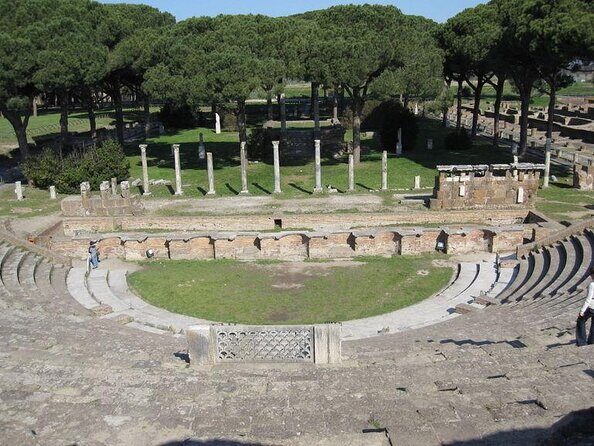
Ostia Antica is close to Rome, but it doesn’t play by Rome’s big-tour rules. It’s a working-feeling archaeological site: you stroll through streets and building blocks and you can picture how people moved, traded, and relaxed. And the scale is right for a guided highlights visit—large enough to feel like a real city, but not so overwhelming that you’re always playing catch-up.
This is also a tour that respects time. With skip-the-line entry, you’re less likely to lose your momentum to crowds. That matters because Ostia is the kind of place where your best moments come from pausing—looking at floor patterns, reading room layouts, and letting a guide connect architecture to everyday life.
You can also read our reviews of more tours and experiences in Rome



Getting to the site: meeting point and the walking reality

You start and end at Viale dei Romagnoli, Lido di Ostia RM, Italy. The tour notes it’s near public transportation, which is useful if you’re planning a simple, no-stress day on your own. The provider does not include private transportation, so you’ll handle getting from Rome to the meeting point.
The good news: the duration is about 3 hours, and there are breaks to sit and enjoy the site. The not-so-fun news: you’re looking at roughly 2 km of walking. That’s totally doable for most people, but it’s still walking across an ancient site. If you have mobility limits or you just hate long stretches outdoors, consider whether you want a shorter option instead.
Skip-the-line tickets: what you really gain
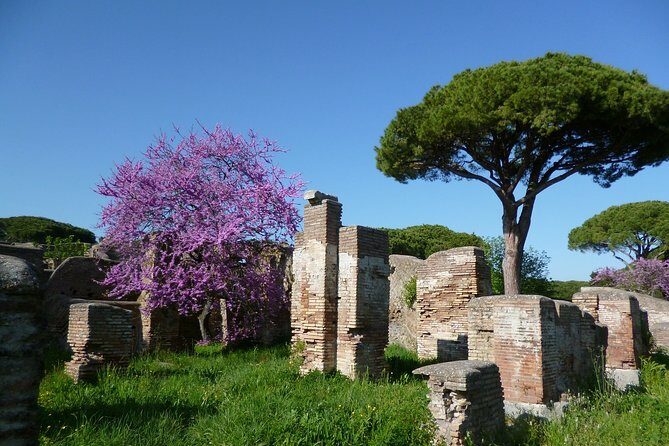
Skip-the-line sounds nice in theory. In practice, it means you can spend your energy on the ruins instead of the waiting game. Ostia Antica can be busy, and the whole point of an efficient guided visit is that you arrive, enter, and start learning right away.
This is one of the most praised parts of the experience in the feedback: guides like Valentina are repeatedly credited for making tours smooth even when the site is crowded. When you’re not stuck at a bottleneck, you can stick to the route, hit the key stops, and still have time to look closely at details like mosaics.
The guide makes the ruins click

Ostia rewards attention. Without context, it can be easy to see walls and columns and move on. With a guide, you start to notice patterns: how rooms relate to street life, how public entertainment spaces were used, and why certain areas feel built for movement and crowds.
In the experience feedback, you’ll see names that hint at what you’re aiming for: Martha, a parent who’s described as getting the information pacing right for young kids; Paola, identified as an archaeologist at the entrance; and Laura, noted for strong academic detail. Even when the day is just your group, you’ll benefit from that kind of on-the-ground clarity.
This is also a private tour. That matters because you can ask questions and get answers without feeling like you’re sharing time with strangers. If your group includes kids, the ability to adjust pacing and keep attention matters even more.
Parco Archeologico di Ostia Antica: from castrum to city streets
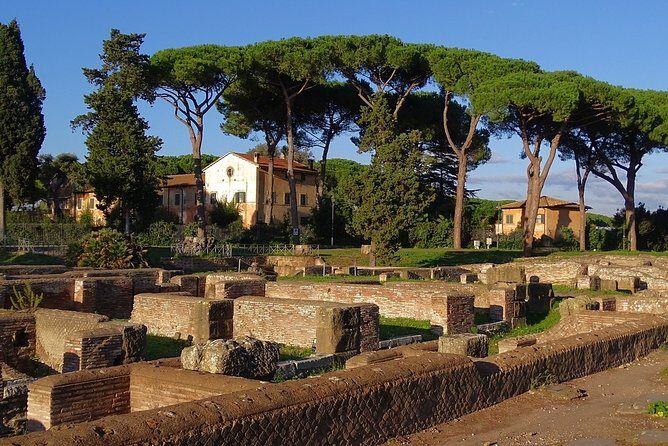
Your main stop is the Parco Archeologico di Ostia Antica, the ancient archaeological park that sits a short distance from Rome. This place didn’t start as a grand “ruins show.” It began as a settlement that grew into a port-city system, tied directly to Rome’s safety and commerce.
A guide-led walk helps you picture the city’s bones. You’ll hear how the area’s early settlement roots go back to the fourth century B.C., then how a more structured castrum (a square, fortified setup) was built toward the end of that period. Tufa walls and key streets—Cardus and Decumanus—become easier to understand when someone points them out and explains what they meant in daily life.
One of the most helpful bits of context is why the location mattered: Ostia was set at about 16 miles from Rome as a station to monitor the Tiber’s entrance and protect Rome from threats in the surrounding zones. That’s the kind of detail that transforms “old buildings” into a reason-for-everything city.
You may also get oriented to major city doors—Porta Romana, Porta Laurentina, and Porta Marina—which helps you see how the urban area was structured once it expanded. And the tour frames the city boundaries too: the walled urban territory is described as roughly 50 hectares, reached through those main entrances.
Practical tip: If you like architecture, watch for how your guide keeps connecting street direction to the bigger city layout. Even short explanations can help you stop guessing and start recognizing.
You can also read our reviews of more guided tours in Rome





Baths and amphitheater: where people worked out and gathered
In about 3 hours, you won’t see every corner of Ostia Antica. Instead, the tour focuses on high-impact highlights, including the baths and the amphitheater.
Baths in Roman life weren’t just about cleanliness. They were social spaces, routine hubs, and places to linger. When a guide walks you through what you’re seeing, you’ll usually understand the logic of how the bathing areas were arranged—how the buildings supported daily rhythms and helped different groups move through the space.
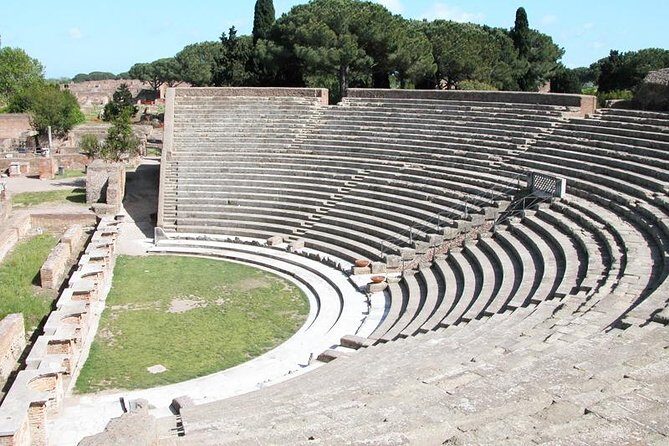
The amphitheater adds the crowd factor. This is where entertainment energy lived. A guided visit helps you shift from “big stone structure” to “designed audience experience.” Even if you’re not a die-hard Roman spectator sports fan, it helps to see how public spaces were engineered for movement and visibility.
Possible drawback: Because this tour is a highlights route, you might want more time in whichever stop grabs you most. Ostia rewards repeat visits if you’re the type who wants to keep looking for smaller details.
House of Diana and the magic of real interiors
One of the specific “wow” stops is the House of Diana. Houses like this matter because they show you how wealth and taste expressed themselves through interior spaces. It’s where the visual storytelling of Ostia becomes much easier to understand.
This is also where the tour’s emphasis on mosaic floors and frescoed walls really lands. Seeing those decorations in context—not just as pretty floor art—helps you understand how homeowners and guests used these rooms. Mosaics create a kind of visual pathway. Frescoes add atmosphere and storytelling in walls that people would have actually stood near, not just glanced at from far away.
If you love art details, this stop is a strong reason to book. The tour is designed to give you enough time to look, not just rush past.
What the 2,000-year details teach you (and how to look better)
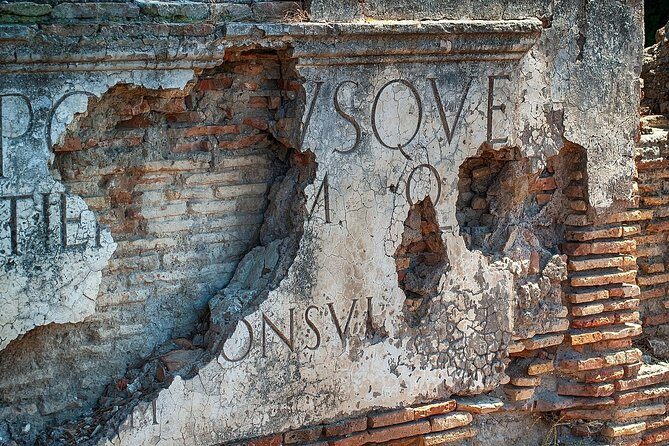
It’s easy to walk through archaeological sites and just think: old stuff, impressive. Guided time changes your brain’s focus. At Ostia, the tour highlights things that are both visually striking and structurally informative.
Here’s a helpful way to watch while you’re there:
- Look at mosaic floors first, then ask yourself what direction the room pushes you toward. Your guide’s explanations can make that layout feel logical instead of random.
- For frescoed walls, focus on what remains. Even partial artwork tells you how rooms were meant to feel—brighter, more staged, more intentional than plain stone rooms.
The result is you’ll leave with a stronger mental model of how the port city functioned. You start to connect architecture to behavior: where people gathered, where daily routines happened, and how public entertainment coexisted with private living spaces.
Price and value: is $320.49 per person worth it?
At $320.49 per person, this is not a budget-only option. The value comes from a mix of three things you’d otherwise struggle to combine on your own: private guiding, guaranteed skip-the-line access, and a tight 3-hour highlights route.
Skip-the-line can be a big deal at a major archaeological site because waiting reduces the time you can spend looking and learning. A private guide is another major value driver: the tour isn’t just walking in the park; it’s learning what you’re seeing and why it matters. And because the tour is scheduled as a 3-hour experience with breaks, you’re not trying to self-manage a large site while also figuring out where your attention should go.
The one “watch-out” for value is what’s not included: private transportation. So the true cost is tour price plus whatever you spend to get to and from Viale dei Romagnoli, Lido di Ostia. If you’re already making it out there, you get the best match.
Who this private Ostia tour fits best
This tour is a good fit if you want:
- A guided visit that helps you understand Roman urban planning quickly
- A highlights experience focused on baths, amphitheater, and House of Diana
- The time-saver of skip-the-line tickets
- A private group setup where your questions don’t get squeezed
It also notes that most travelers can participate, and it involves about 2 km of walking with breaks. That makes it realistic for many adults who can handle walking on site terrain for a couple of hours.
If you’re traveling with kids, remember: children must be accompanied by an adult. The feedback includes a family-focused guide, Martha, who was praised for getting the right pacing so young children could enjoy the day.
If you prefer minimal walking or you hate guided structure, this might feel too “route-based.” But if you like direction and you want to leave with real understanding, you’ll likely appreciate the plan.
Should you book this private Ostia tour?
If your goal is a smart, guided Rome-area archaeological experience without wasting time in lines, I’d book it. The skip-the-line setup is a practical win, and the private guide element is what turns ruins into a story you can follow. The highlights selection hits the places that people tend to remember—especially mosaic floors, frescoed rooms, the baths, and the amphitheater.
I’d especially lean yes if you’re the type who reads details and wants to know what you’re looking at while you’re standing in front of it. If you’re mainly after photos and a free-roam wander, then a self-guided approach might be cheaper. But for most people aiming for a meaningful day with less hassle, this is the easier path.
FAQ
How long is the private Ostia Antica tour?
The tour lasts about 3 hours (approximately), with breaks included.
Are skip-the-line tickets included?
Yes. You get guaranteed skip-the-line tickets to Ostia Antica.
Where does the tour start and end?
The start (and end) point is Viale dei Romagnoli, Lido di Ostia RM, Italy.
Is transportation to Ostia included?
No. Private transportation is not included.
How much walking is involved?
Expect about 2 km of walking, with breaks to sit and enjoy the site.
What languages is the tour offered in?
It’s offered in English.
What happens if the weather is bad or I cancel?
The experience requires good weather. If it’s canceled due to poor weather, you’ll be offered a different date or a full refund. You can cancel for a full refund up to 24 hours in advance.