REVIEW · MUSEUMS
Private Tour – National Etruscan Museum
Book on Viator →Operated by Rome Guides · Bookable on Viator
Etruscan Rome gets personal fast. This private tour of the National Etruscan Museum at Villa Giulia turns famous objects into stories, without the usual museum-speedrun feel. I like the ticket-included format and the way you get guided attention on standout works like the Apollo from Veio and the Sarcophagus of the Spouses. One catch: there’s no hotel pickup, so you’ll need to make your own way to Piazzale di Villa Giulia 9.
You’ll also appreciate the pacing. It runs about 2 hours, you choose morning or afternoon, and you get time for unlimited questions with just your group—no squeeze, no herd.
And the setting matters. The museum is inside Villa Giulia, a suburban residence of Pope Julius III (1550–55), with wings added later, so you’re not only looking at artifacts—you’re also looking at the architecture that frames them.
In This Review
- Key things to know before you go
- Villa Giulia’s Etruscan Museum: why this setting matters
- Your 2-hour plan inside the museum
- The highlights: what you’ll see, and why it clicks
- Apollo from Veio (6th century BC)
- Sarcophagus of the Spouses from Cerveteri (6th century BC)
- Pyrgi: high relief and thin gold sheets (5th century BC)
- Apollo dello Scasato from Falerii (4th century BC)
- Centaur from Vulci (6th century BC)
- Cista Ficoroni from Palestrina (4th century BC)
- What the private, English guide experience is really buying you
- Morning or afternoon timing: how to fit this into your Rome day
- Price and value: is $138.18 per person worth it?
- Logistics at Piazzale di Villa Giulia 9 (and why it’s easy)
- Who should book this private Villa Giulia museum tour?
- Should you book the private National Etruscan Museum tour?
- FAQ
- How long is the private tour?
- Is the admission ticket included?
- Is this tour private or shared?
- What language is the guide?
- Where do we meet for the tour?
- Is hotel pickup included?
- Can I cancel for a full refund?
Key things to know before you go
- Villa Giulia setting: You’re touring inside a Renaissance villa tied to Pope Julius III (and later museum expansions).
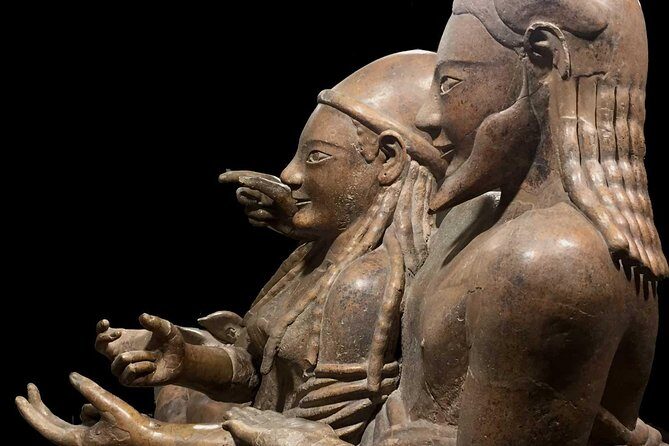
- Objects with real names and dates: Expect anchors like the Apollo from Veio (6th century BC) and the Sarcophagus of the Spouses (6th century BC).
- Question time without rush: It’s private, in English, and built for conversation, not just listening.
- Epigraphy included: Dedicated sections cover Etruscan writing and how the museum tells its own story.
- Your schedule, not the tour clock: Morning or afternoon departure keeps it easier to fit into your Rome day.
Villa Giulia’s Etruscan Museum: why this setting matters
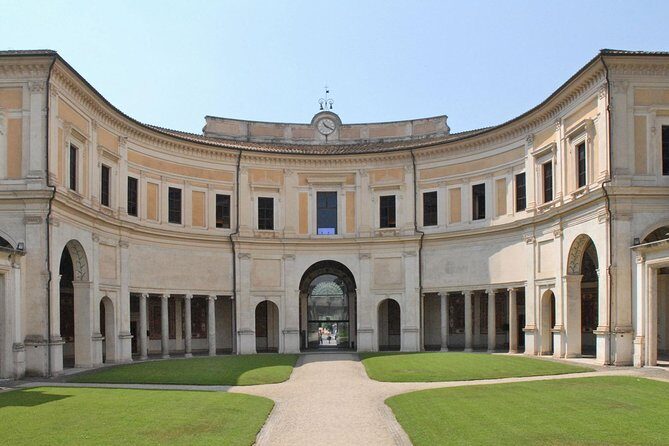
When you walk into the National Etruscan Museum at Villa Giulia, you’re not starting in a generic building box. You’re inside a villa with its own backstory: Pope Julius III’s suburban residence from 1550–55, designed by Vignola and realized with help from Ammannati and Vasari. That matters because it changes how the museum feels. It’s calmer, more “place-based,” and you can slow down without feeling like you’re fighting the architecture.
Then comes the museum layer. In 1889, the villa was destined to become the Museum of pre-Roman Antiquities of Latium, and additional wings were added between 1912 and 1923. So the museum isn’t just a container—it’s a living timeline. You’re seeing Etruscan civilization through collections housed in an environment that has been reshaped over time to tell a different story.
This is also where a guided private format shines. Etruscan civilization can feel distant if you only read labels. But a good guide can connect the dots—where objects were found, what they represent, and why certain items became highlights. And if your guide’s style clicks with you, the whole thing can feel like a society rather than a list of artifacts. One guide name you may run into is Vincenzo, who has been praised for being lively and for making the Etruscans feel human, not distant.
You can also read our reviews of more private tours in Rome



Your 2-hour plan inside the museum
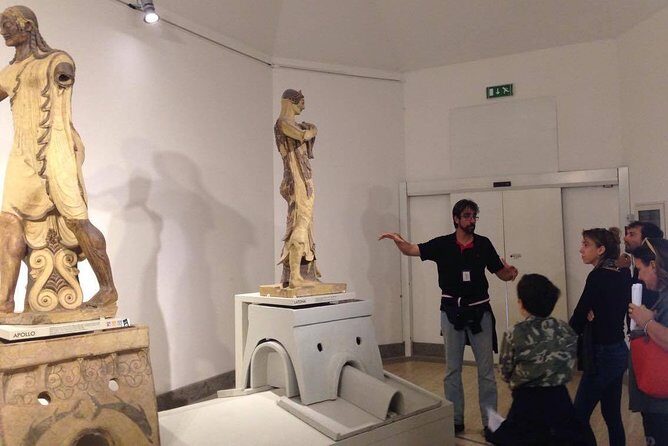
This tour is built around one main stop: the Museo Nazionale Etrusco di Villa Giulia. The total time is about 2 hours, and since it’s private, you can move at a pace that fits your interests. If you’re the type who wants to read and look closely, you won’t get punished by a group schedule.
Here’s what you’ll get time to cover during that window:
First, you’ll settle into the museum’s major themes—Etruscan epigraphy, the history of the museum itself, and the architectonic complex of Valle Giulia. That’s a big deal. Epigraphy (inscriptions and written records) helps you see that this civilization wasn’t just about art objects—it also left behind text, names, and clues about culture. Even if you’re not reading Etruscan, having the guide frame how writing and artifacts relate makes the exhibits more legible.
Then you’ll move through some of the museum’s best-known works, including:
- Apollo from Veio (6th century BC)
- Sarcophagus of the Spouses from Cerveteri (6th century BC)
- High relief and thin gold sheets from Pyrgi (5th century BC)
- Apollo dello Scasato from Falerii (4th century BC)
- Centaur from Vulci (6th century BC)
- Cista Ficoroni from Palestrina (4th century BC)
The trick is that the objects are famous for a reason, but your understanding depends on the pacing and the context. With a private guide, you can pause longer on the pieces that hook you and ask what you actually want to know. That matters a lot because Etruscan art has many “layers”: style, symbolism, religious ideas, and how Roman-era writers and later collectors interpreted things.
A practical note: the tour ends back at the meeting point. So this isn’t a “stack three sights” kind of itinerary. It’s designed to let one museum experience land well.
The highlights: what you’ll see, and why it clicks
Let’s talk about the specific objects, because these are the kinds of works that turn an Etruscan tour from academic to memorable.
Apollo from Veio (6th century BC)
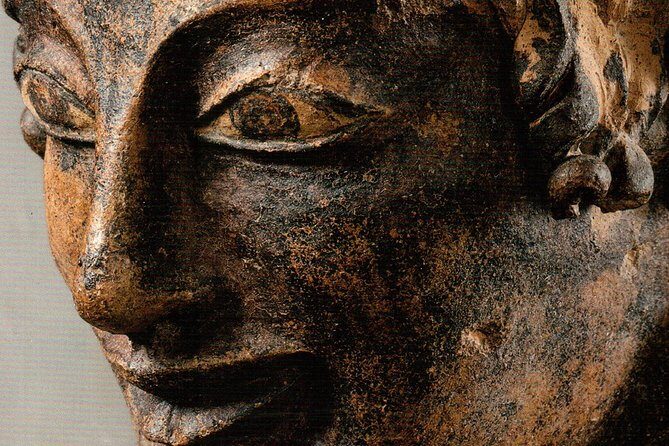
This is one of the museum’s anchors. An Apollo figure gives you a gateway topic: how Greek myth, local interpretation, and Etruscan culture intersect. A good guide helps you see the work as more than a sculpture—you’re learning what this subject meant in that time and place, and how artistic choices communicate ideas about identity and belief.
Sarcophagus of the Spouses from Cerveteri (6th century BC)
If you want something emotional, this is the stop. The “reclining couple” detail is especially memorable because it humanizes the message. Funerary art can sound grim on paper, but when a guide frames it right, it becomes a window into status, ritual, and how people pictured life and memory.
You can also read our reviews of more museum experiences in Rome





Pyrgi: high relief and thin gold sheets (5th century BC)
Gold sheet elements and relief work bring a different kind of visual energy. This is where you’ll likely appreciate the guide’s job: explaining what you’re looking at so you don’t just register it as pretty. These pieces help you understand craftsmanship and the ways religious or ceremonial themes showed up in materials.
Apollo dello Scasato from Falerii (4th century BC)
Moving forward in time, you can use this piece to understand change. A guide can help you notice how styles and themes shift across centuries, and how the same mythic figure can look and communicate differently depending on era and region.
Centaur from Vulci (6th century BC)
A centaur gives you a story of hybrid imagery—part human, part mythic creature. It’s a perfect object for learning how Etruscan artists borrowed, adapted, and made visual languages that felt local.
Cista Ficoroni from Palestrina (4th century BC)
This type of object helps you see daily life and ritual life in the same breath. A guide can also point out how decorative objects weren’t just “stuff”—they carried symbolism and status. Even if you only catch a few key interpretive ideas during the 2 hours, this kind of piece can stick with you.
What the private, English guide experience is really buying you
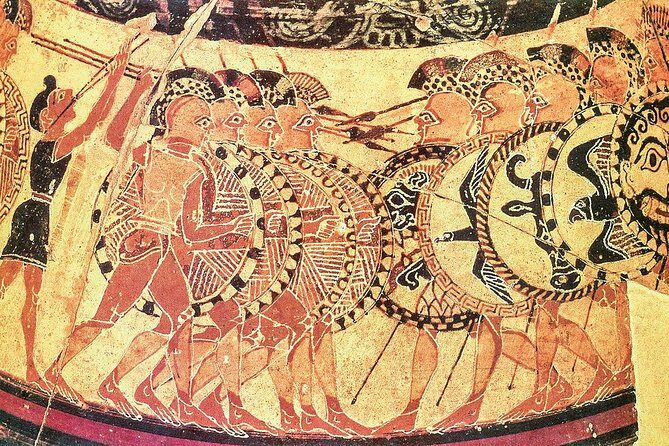
The headline benefits say it all: unlimited time for questions, private group, English-only. But here’s what you should actually care about as a visitor.
First, the museum is full of details that don’t always land if you’re rushing. A private guide lets you slow down when you want. If an inscription catches your eye, you can ask what it means and what it signals. If a sculpture feels confusing, you can ask how to read it—symbol-wise and context-wise.
Second, private doesn’t mean silent. It means you get a real two-way experience. One guide named Vincenzo has been praised for being insightful and lively, for going above and beyond, and for bringing the Etruscans to life with passion. That kind of energy matters because Etruscan civilization can feel hard to picture at first. A strong guide helps you build that mental image.
Third, English makes a difference here. With a subject like Etruscans and their written tradition, having clear explanations in your language turns “I saw a thing” into “I understand what I saw.”
If you’re traveling with friends who have different tastes—one loves art, another loves writing, another just wants the best pieces for photos—private is one of the easiest ways to avoid compromise.
Morning or afternoon timing: how to fit this into your Rome day
You get a choice of morning or afternoon tour time. That sounds simple, but it can save your whole schedule.
If you’re the kind of traveler who likes to hit museums early before the day gets loud, the morning slot is a good bet. If you prefer a slower start, the afternoon timing can fit better after you’ve done lunch or a walk.
Because this tour is only about 2 hours and stays focused on one museum, it’s also easier to pair with nearby plans. You won’t be dealing with long transit between multiple stops, since it’s centered around Villa Giulia and returns you to the meeting point.
One more point: since there’s no hotel pickup, you’ll want to pick a time when you’re comfortable handling getting there on your own. If you like independence in the morning, afternoon works; if your mornings get chaotic, choose the time that keeps you least stressed.
Price and value: is $138.18 per person worth it?
The price is $138.18 per person for a private tour lasting about 2 hours, with admission ticket included. That combination matters because you’re not paying extra for entry, and you’re buying guided time in a museum that can easily overwhelm you if you’re just there on your own.
Here’s how to think about the value:
- You’re getting admission included, so the per-person total doesn’t get inflated by another payment at the counter.
- You’re getting a professional local guide for a focused time window, which helps you “save” time and confusion inside a museum that isn’t designed to be instantly readable.
- You’re buying privacy—meaning you can ask questions until the guide feels you’ve hit your sweet spot.
One note from the experience description: there are group discounts, which can improve value if you’re traveling with others. If you’re solo, it may still be a solid choice if you really care about interpretation, not just sightseeing.
Also consider this: the museum has standout works listed by title and date. If those are the kinds of objects you came to see, a guided format is a way to convert recognition into understanding.
Logistics at Piazzale di Villa Giulia 9 (and why it’s easy)
The meeting point is the National Etruscan Museum of Villa Giulia at Piazzale di Villa Giulia 9, 00196 Roma RM, Italy. The tour ends back at the same meeting point.
This makes your life easier in two ways:
- No mystery end location.
- You can plan your next stop right away after the tour without backtracking.
The tour is also described as near public transportation. That’s helpful because there’s no hotel pickup or private transportation included. You’re relying on your own arrival plan—public transit, walking, or whatever fits your day.
The “most travelers can participate” note is also worth paying attention to. If you’re in good general health and can handle a typical museum visit (standing, walking through galleries, reading labels), you should be fine.
Who should book this private Villa Giulia museum tour?
This tour is a great fit if you want:
- A museum visit where you can ask questions and not feel rushed
- A focused 2-hour experience rather than a long, multi-sight day
- English explanations tied to specific Etruscan objects (not vague generalities)
- A calmer setting inside a villa, not a fast-moving “see everything” route
It’s especially good for people who like art but also want context—why the object matters, how to interpret it, and how the museum organizes themes like epigraphy and the museum’s own history.
If you’re the type who only likes very short museum visits or you don’t care about interpretive detail, you might prefer a self-guided approach. But if you’re trying to understand Etruscan civilization beyond a few headline pieces, the private guide format tends to pay off.
Should you book the private National Etruscan Museum tour?
If Etruscan art and artifacts are a priority for your Rome trip, I’d book this. The museum is focused, the guide time is private, and you’re covering major highlights like the Apollo from Veio and the Sarcophagus of the Spouses without the friction of a group schedule. The fact that admission is included makes the pricing feel less like a stack of add-ons.
Skip it only if you dislike guided tours in general or you’re visiting purely for quick photos with minimal reading. Also, if you hate managing your own arrival (because there’s no hotel pickup), plan for that ahead of time.
FAQ
How long is the private tour?
The tour lasts about 2 hours.
Is the admission ticket included?
Yes. Tickets for the museum are included in the tour price.
Is this tour private or shared?
It’s private. Only your group participates.
What language is the guide?
The tour is offered in English.
Where do we meet for the tour?
The meeting point is the National Etruscan Museum of Villa Giulia, Piazzale di Villa Giulia 9, 00196 Roma RM, Italy. The tour ends back at the same meeting point.
Is hotel pickup included?
No. Hotel pickup and drop-off are not included, and private transportation is not provided.
Can I cancel for a full refund?
Yes. Free cancellation is available up to 24 hours in advance of the experience start time for a full refund.