REVIEW · MUSEUMS
Private Tour – Doria Pamphilj Gallery
Book on Viator →Operated by Rome Guides · Bookable on Viator
A great gallery needs a good guide. This private visit to the Doria Pamphilj Gallery turns a museum walk into a guided story inside a palace that took shape over centuries. You’ll spend about 2 hours seeing major works while your guide connects what you’re looking at to how the collection was organized.
Two things I really like about this experience are the art lineup and the way the tour is structured. You get a concentrated sweep across major names like Raphael and Caravaggio, plus the guide will explain the gallery’s founding documents and how the paintings’ positions follow older rules (including symmetry and thematic ties).
One possible drawback: since this is a private start at Via del Corso (and the meeting point is specific), you’ll want to arrive on time and double-check you’re at the correct entrance area. The payoff is that once you’re inside, the pace is yours and your guide can answer questions without a crowd rush.
In This Review
- Key Things You’ll Notice During the Doria Pamphilj Private Tour
- Entering the Villa Doria Pamphilj: A Palace That Shapes the Art
- The Four-Wing Layout and the Surprise of How Paintings Are Placed
- Raphael Through Baroque: What You’ll See in the Doria Pamphilj Gallery
- What the Guide Adds: Founding Documents and the Art of Explaining Placement
- Timing, Meeting Point, and How to Avoid a Stumble on Via del Corso
- Admission Included: Why the Ticket-in-the-Price Part Matters
- What Makes This Tour Feel Worth It: Private Pace + Masterpiece Density
- Small Downsides to Keep in Mind Before You Book
- Who Should Book This Private Doria Pamphilj Tour
- Should You Book the Private Tour – Doria Pamphilj Gallery?
- FAQ
- How long is the private tour?
- What time does the tour start?
- Where does the tour meet?
- Is admission included in the price?
- Is the tour private?
- What languages is the tour offered in?
- What’s included in the tour price?
- What’s not included?
- Can I cancel for free?
- Who is the experience provider?
Key Things You’ll Notice During the Doria Pamphilj Private Tour
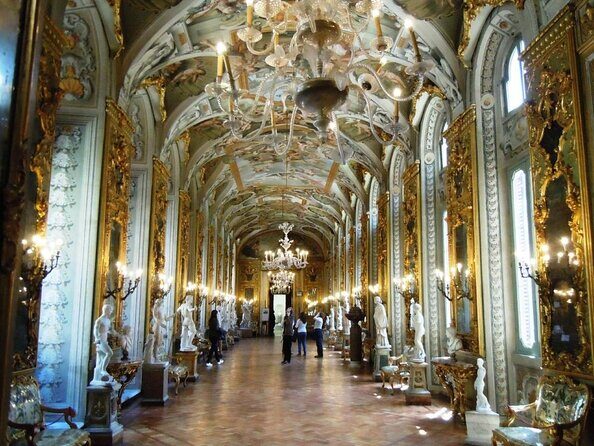
- A palace gallery layout: four wings arranged according to older organizing principles, not random hanging
- Big-name paintings in one stop: Raphael, Titian, Caravaggio, Velazquez, and more
- Your guide explains the founding documents, including why works appear where they do
- Admission tickets are included, so you’re not scrambling for entry on the day
- Private group format: only your party joins the tour, with room for questions
Entering the Villa Doria Pamphilj: A Palace That Shapes the Art
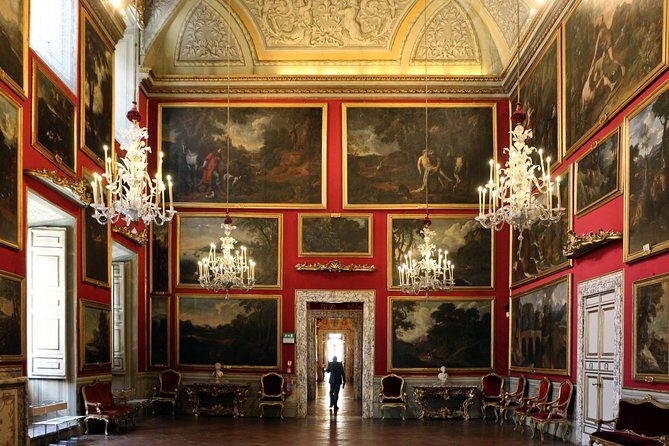
This tour starts at the Galleria Doria Pamphilj on Via del Corso, with the visit anchored in the Villa Doria Pamphilj palace complex. What matters here is not just that you’re seeing famous paintings. You’re seeing them in the kind of setting that affects how you read the collection.
The palace itself was built over a long span, from the middle of the fifteenth century into the beginning of the eighteenth. That slow build is part of the charm: the gallery feels like it grew into its role. The rooms have that old-Rome sense of intention—space that was designed for people to move, pause, and look, not just pass through.
Then there’s the main idea your guide helps you catch: the gallery arrangement follows guidance from an eighteenth-century document. Instead of a modern “display for maximum impact,” the layout leans on rules—especially symmetry—and sometimes pairs works through typological and stylistic affinity. When your guide explains that, the collection stops feeling like a checklist and starts feeling like a designed argument.
You can also read our reviews of more private tours in Rome



The Four-Wing Layout and the Surprise of How Paintings Are Placed
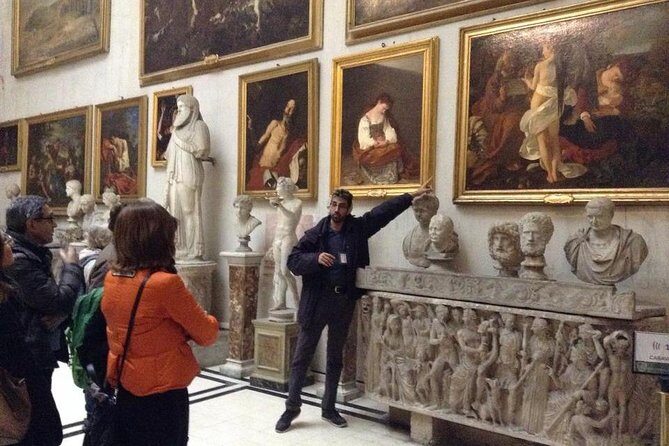
One of the most interesting parts of this experience is that it’s not only a list of masterpieces. It’s about how the gallery was organized. The paintings are distributed across four wings, and the placement follows older indications where the exact location of each work is specified.
That changes how you look.
If you’re used to modern museums where everything is curated around today’s themes, this can feel different—in a good way. Symmetry and placement create patterns. You start noticing echoes: styles that talk to each other, subjects that sit near related ideas, and visual rhythms between rooms.
Your guide’s job is to help you read those patterns quickly. You don’t have to be an art scholar. The tour approach is built around practical interpretation—what you’re seeing, how it fits the organizing logic, and why the palace display matters as much as the artwork.
Raphael Through Baroque: What You’ll See in the Doria Pamphilj Gallery
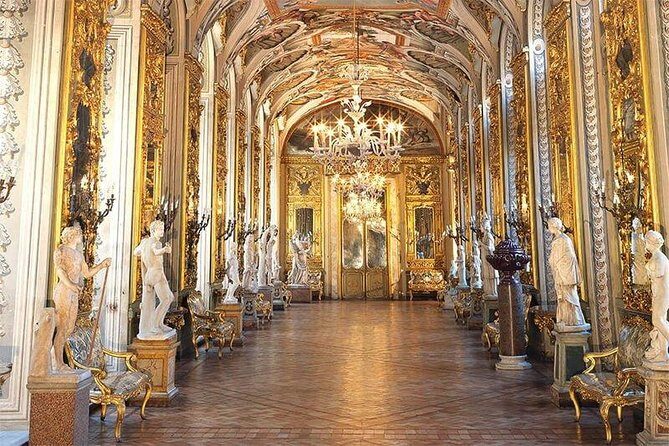
This private tour gives you a dense run of paintings and names that you usually have to hunt for across multiple museums. You’ll see work by artists including Raphael, Titian, Domenichino, Caravaggio, and the Carracci brothers, along with major Baroque painters and portraiture.
Here are some of the standouts in the collection you’ll encounter:
- Raphael: Portrait of Andrea Navagero
You get a chance to study Renaissance portraiture in a palace setting—where the focus is clarity, dignity, and detail.
- Titian: Salome with the head of St. John the Baptist
Expect a dramatic subject paired with Titian’s sense of paint and presence.
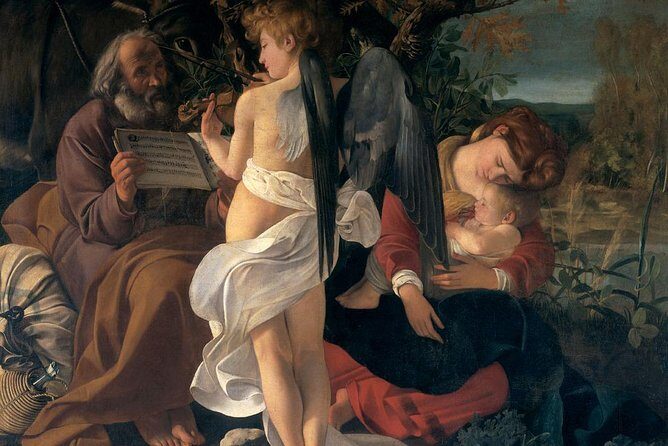
- Caravaggio: Rest during the flight to Egypt, plus works including St. John the Baptist and Magdalene
This is where the mood often shifts. Caravaggio’s works tend to hit emotionally because of their realism and intensity.
- Annibale e Ludovico Carracci: Satyr and shepherd, Madonna with the Infant, St. Sebastian
You’ll see how the Carracci approach helps bridge Renaissance ideals and later dramatic taste.
- Mattia Preti: Magdalene repentant, St. John the Baptist, Christ conducted on the Scala Santa
These selections are well-suited for someone who likes the theatrical side of Baroque.
- Guercino: Erminia finds Tancred wounded, Allegory of springtime, Return of the prodigal son, St. Joseph
This gives you narrative range—allegory, family drama, and spiritual stories.
- Guido Reni: Madonna adoring the Infant, St. Peter repentant, Sacred and profane love
Reni’s works often reward slow looking: you notice how expressions and gestures carry meaning.
- Velazquez: Portrait of Innocent the Tenth
The tour doesn’t just stay in one style. You get Spanish portrait work tied to Roman authority and power.
Your guide ties these works back to the way the gallery was laid out, so you’re not just walking from one famous painting to the next. You’ll also understand why seeing them in sequence matters—especially in a space arranged with older logic about symmetry and affinity.
What the Guide Adds: Founding Documents and the Art of Explaining Placement
The tour includes a professional guide, and the special value here is that the guide doesn’t only narrate. They explain the gallery’s founding documents—what they say, and how they shaped the museum you see today.
That kind of context is worth it because it gives you a framework. You can walk through and enjoy beautiful paintings, sure. But with the founding-document angle, you get something more practical: you understand what to look for next, and you learn why a particular work might be placed near another.
In a place like this, the “why” makes a huge difference. The gallery’s organization is based on older rules, sometimes linked to both stylistic and typological affinity. When your guide points that out, you start making connections instead of collecting random impressions.
Also, the guides in this experience have a reputation for being warm and animated. In fact, one recurring guide name you’ll see associated with this tour is Vincenzo—and the feedback about his explanations highlights how he keeps the experience moving while still answering questions. If you like guides who can make art feel human rather than academic, that’s a good sign.
Timing, Meeting Point, and How to Avoid a Stumble on Via del Corso
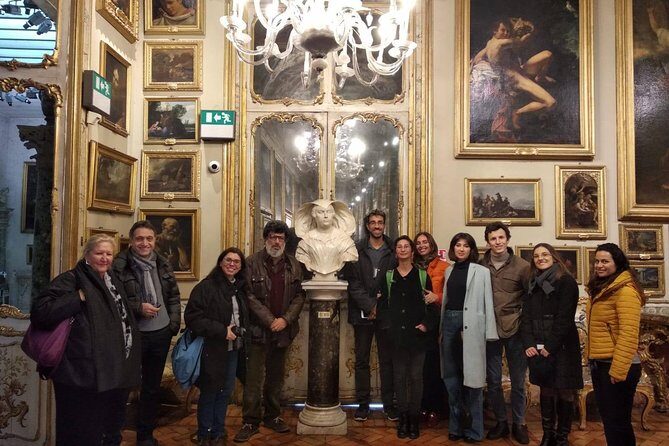
This tour begins at 2:00 pm at:
Galleria Doria Pamphilj, Via del Corso 305, 00186 Roma RM, Italy
It ends back at the meeting point.
Because the start time is fixed and the meeting point is specific, timing matters. Rome is easy to navigate, but entrances and side doors can be a little tricky—especially when you’re tired from sightseeing earlier in the day. I’d treat the meeting point like a checkpoint: be there early enough to get your bearings, check you’re at the right entry, and settle in before the tour begins.
The good news: it’s near public transportation, and most travelers can participate. The other good news: it’s private. Once you’re with your guide, you won’t be dragged through the rooms with strangers while you try to ask questions.
Duration is about 2 hours, which is a comfortable length for this kind of focused collection. It’s long enough to take your time with key works, but short enough that you won’t feel like you’re spending half your day in one place.
You can also read our reviews of more museum experiences in Rome





Admission Included: Why the Ticket-in-the-Price Part Matters
The tour price is listed as $138.16 per person, and it includes admission tickets. That may sound small on paper, but in real life it’s convenience with value.
Here’s why it’s worth paying attention to:
- You’re not coordinating your own entry timing on the day.
- You’re buying a package where your guide work is part of the value, not an add-on.
- The experience includes a professional guide and a private tour format, so you’re paying for guided time with access that makes the art easier to understand.
This is also a tour that tends to get booked ahead—on average around 79 days in advance. If you have firm travel dates, I’d plan early. When a collection like this runs private-guided visits, demand tends to concentrate on the same time slots.
Finally, there’s a note that group discounts may apply. If you’re traveling with people, it can be smart to check how the pricing scales for your party size.
What Makes This Tour Feel Worth It: Private Pace + Masterpiece Density
For me, the biggest value is the combination: private pace plus a high concentration of major artists. A lot of tours do one or the other. Here you get both.
In practical terms, that means:
- You can pause longer on the works that grab you.
- You can ask questions and get direct answers rather than waiting for the group to catch up.
- You can follow the logic of the gallery layout (symmetry, affinity, and the older placement rules) without feeling rushed.
The collection includes artists across Renaissance, dramatic Baroque, and portraiture. That mix works well for many travel styles. If you’re the type who likes to compare how different artists treat the same religious story or portrait authority, you’ll get plenty to think about.
If you’re more of a “show me the highlights and let me enjoy them” visitor, the guide can still steer you toward the most meaningful works—like Raphael’s portrait, Titian’s dramatic scene, and Caravaggio’s intense set pieces.
Small Downsides to Keep in Mind Before You Book
No tour is perfect. The main considerations for this one are practical.
First: because the tour has a start time and a specific meeting point, the experience depends on showing up on schedule. Even one missed moment can cut into your guided time.
Second: the duration is about 2 hours, so it’s not designed as a slow, open-ended museum wander. If you love reading every label and staying in one room for a long stretch, you may need to decide what you want most—depth with your guide or maximum time with the artworks.
Third: this is a private tour format. That’s usually a plus, but it can also mean you’re paying for guide time even if you’re a solo traveler. If you’re traveling as a couple or with a small group, it often feels more balanced.
Who Should Book This Private Doria Pamphilj Tour
This experience is a strong fit if:
- You care about art but want it explained in plain, human terms.
- You like hearing why a museum is arranged the way it is.
- You want to see multiple major artists in one focused visit without splitting your day across several sites.
- You travel with a small group and want a private pace.
It may not be the best fit if:
- You want a full, all-day museum experience. This is about a guided slice of the collection.
- You’re strict budget-first and don’t value a professional guide plus admission included.
If your idea of a great Rome afternoon is good art, good context, and not battling crowds, this tour lines up nicely.
Should You Book the Private Tour – Doria Pamphilj Gallery?
Yes—if you want a smarter way to see the Doria Pamphilj Gallery. The best reason to book is the pairing of admission included with a guide who explains the gallery’s founding documents and the logic behind the works’ placement. That’s what makes the visit feel like more than just walking past paintings.
Before you go, do two simple things: arrive a few minutes early at Via del Corso, and come with at least one artist you’re excited about (Caravaggio is a great bet). If that’s you, you’ll leave with more than impressions—you’ll have a clearer sense of how this palace collection was designed to be read.
FAQ
How long is the private tour?
It’s approximately 2 hours.
What time does the tour start?
The start time is 2:00 pm.
Where does the tour meet?
It meets at Galleria Doria Pamphilj, Via del Corso 305, 00186 Roma RM, Italy.
Is admission included in the price?
Yes, admission tickets are included.
Is the tour private?
Yes. It’s a private tour/activity, and only your group will participate.
What languages is the tour offered in?
It’s offered in English.
What’s included in the tour price?
Tickets, a local guide, the private tour, and a professional guide are included.
What’s not included?
Hotel pickup and drop-off and private transportation are not included.
Can I cancel for free?
Yes. You can cancel up to 24 hours in advance for a full refund.
Who is the experience provider?
The provider is Rome Guides.