REVIEW · CITY TOURS
Private Tour – City Center
Book on Viator →Operated by Rome Guides · Bookable on Viator
Rome’s highlights, timed and guided. This private city-center tour is built for people who want the big-name Rome sights fast, with an English guide to explain the why behind the what. You start near Piazza di Spagna at Fontana della Barcaccia and hit several of the historic core’s best-known stops on a route that keeps you moving without feeling rushed.
I especially love the convenient stop-to-stop flow. It strings together landmarks that are otherwise scattered across different corners of central Rome. The other thing I like is that the pace is flexible, so you can spend a little more time where you’re actually curious instead of marching to a fixed script.
The guide quality is a major part of the value here. Guides like Martina are praised for making history feel fun, and Vincent is noted for being energetic and great with questions, not just lectures. If you like conversation, this is the kind of tour that gives you room to ask about local customs and what you’re seeing in the moment.
One thing to consider: this is a walking-focused tour with no hotel pickup or private transportation included. It also lasts about 2 hours 30 minutes, so each stop is short. If you’re the type who likes to linger for an hour in one place, you’ll need to plan extra time outside the tour.
In This Review
- Key Points You Should Know Before You Go
- Private City-Center Route With a Real Guide
- Pricing and Value for $139.13 Per Person
- How the Afternoon Walk Works (Start at Piazza di Spagna, End at Piazza Navona)
- Spanish Steps: Baroque Drama and a Fashionable Meeting Place
- Trevi Fountain: The Coin Legend and the Sculpted Water World
- Piazza di Pietra: A Quick Pass By Hadrian’s Temple
- Sant’Ignazio di Loyola: Illusion Dome, Ceiling Details, and Gregory XV
- Pantheon Entry: Roman Engineering and a Raffaello Connection
- Church of St. Louis of the French: Caravaggio Without the Museum Hopping
- Piazza Navona: From Roman Stadium Roots to Baroque Fountains
- The Big Takeaway: What This Tour Does Better Than Planning Alone
- Should You Book This Private City-Center Tour?
Key Points You Should Know Before You Go
- Private tour means just your group, with a dedicated local guide speaking English.
- Central meeting point at Piazza di Spagna makes it easy to connect to the rest of your day.
- A tight loop of major sights helps you get your bearings fast in Rome’s historic core.
- Iconic landmarks with included tickets means less hassle and fewer decisions at the ticket counter.
- Guides who talk like people rather than reciting facts, with plenty of room for questions.
- Short stops across several churches and squares is ideal for seeing a lot, not for deep sitting-and-staring time.
Private City-Center Route With a Real Guide
This is the kind of Rome tour that works when you have limited hours but still want to see the classics: Spanish Steps, Trevi Fountain, the Pantheon, and Piazza Navona. Because it’s private, you get a guide who can adjust to your questions and interests instead of trying to keep a large group in sync. You’re not stuck waiting for strangers to catch up, and that matters when you’re moving through crowded historic streets.
The best part is the commentary. You’re not just pointing at famous places. Your guide’s job is to connect the sights to the culture around them: how Rome evolved, why these buildings look the way they do, and what legends or artwork you should notice while you’re there. If you want your Rome day to feel like a story instead of a checklist, this format fits.
You can also read our reviews of more city tours in Rome


Pricing and Value for $139.13 Per Person
At $139.13 per person for about 2 hours 30 minutes, you’re paying for three things that are hard to DIY in a satisfying way: a guide’s time, the convenience of an optimized route, and the included tickets. If you’ve ever tried to plan a half-day around several top sights, you know it quickly turns into a map-and-metro-math exercise.
This tour also has a built-in advantage: it’s listed with tickets included and the stop entries are presented as admission-ticket free. That removes friction and keeps your brain on what you’re seeing instead of on cost and timing. Add the private guide and the fact that you start at a central spot and end near taxi access at Piazza Navona, and the price starts to make sense for a single afternoon.
One more value angle: group discounts are mentioned. If you’re traveling with friends or family, sharing the cost can make this feel like an even smarter way to get a guided Rome highlights run.
How the Afternoon Walk Works (Start at Piazza di Spagna, End at Piazza Navona)
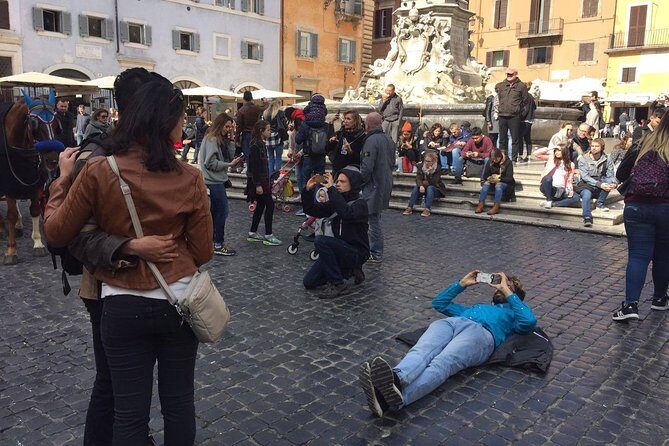
The tour starts at 2:30 pm at Fontana della Barcaccia in Piazza di Spagna. You end at Piazza Navona, with taxi stations close to the finish point. That routing is practical because it keeps you in the heart of Rome’s walkable center, and it avoids having you finish out in an awkward spot where you need a whole new plan.
Expect a moderate level of physical activity. You’ll be walking between stops and taking short time-outs for photos and looking closely. Since the whole experience is about 2.5 hours, each stop is built to give you the main points without turning your afternoon into a marathon.
If you’re the type who likes to “see it all” in one go, this is a strong setup. If you’re the type who hates moving on before you’re ready, you may wish you had a second block of time after the tour to slow down.
Spanish Steps: Baroque Drama and a Fashionable Meeting Place
Your first stop is the Spanish Steps, one of Rome’s most iconic monuments. The guide’s focus here is not just the stairs themselves, but what they represent: impressive baroque architecture wrapped into a place people gather. It’s fashion territory and a social meeting point, and that context helps you understand why it’s never quiet even when you’re standing there trying to take in the details.
You’ll have about 15 minutes. That’s enough time to orient yourself, take a few photos from sensible angles, and listen for the explanation that makes the structure click. If you arrive hoping for five different perspectives and a long sit-down, you’ll be tempted to go over time. Keep your expectations aligned with the format: short and focused beats long and slow on this route.
No admission ticket is listed for this stop, so you can jump right into the experience without extra delays.
Trevi Fountain: The Coin Legend and the Sculpted Water World
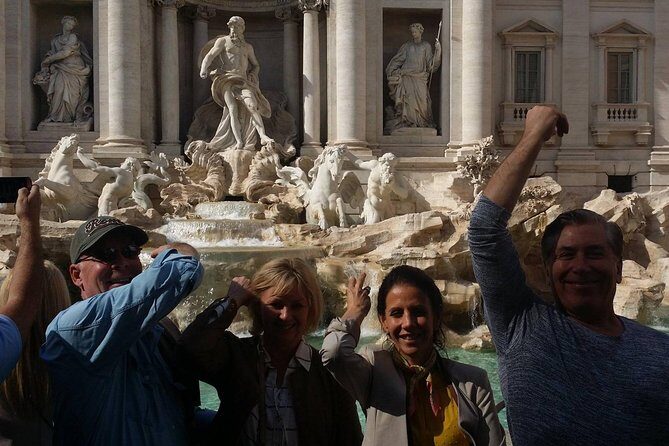
Next up is the Fontana di Trevi, with around 20 minutes on site. This is the classic Rome moment, and it’s famous for more than being photogenic. The fountain’s design is full of energy and symbolism, including waves and Tritons, and the guide will point out the features that most people miss when they’re just trying to get the picture.
There’s also the playful legend: you flip a coin and imagine you’ll be back in the Eternal City. Even if you treat it like a fun ritual rather than a guarantee, it adds a little story to what you’re looking at.
One practical note: Trevi is often surrounded by a lot of people. You’ll want to use your guide’s timing and guidance to get moments where you can actually look up at the fountain rather than only at the back of someone’s camera.
Entrance is listed as free for this stop, and tickets are included, so you’re paying for the guided experience more than for site logistics.
You can also read our reviews of more private tours in Rome





Piazza di Pietra: A Quick Pass By Hadrian’s Temple
You’ll get a shorter break here, about 5 minutes, and it’s more of a “look and learn” stop than a stay-and-explore one. The highlight is the ancient temple of Emperor Hadrian, passed by as you continue your loop through central Rome.
This brief stop is useful because it gives you a time jump. You go from baroque-era landmarks and crowded squares into a reminder that Rome’s layers go deep. Even in a short window, the guide’s explanation can make the stones feel less random and more intentional.
If you love ancient architecture, you’ll probably wish you had more time. But the tour’s design is about moving efficiently across multiple headline sights, and this stop earns its spot as a quick context builder.
Sant’Ignazio di Loyola: Illusion Dome, Ceiling Details, and Gregory XV
Now comes one of Rome’s great church experiences: Chiesa di Sant’Ignazio di Loyola. You’ll spend about 25 minutes, and this is a stop where the guide’s eye for details really matters.
The church is known for its illusionary dome and a ceiling that’s meant to be studied, not just glanced at. On top of that, you’ll see the tomb of Pope Gregory XV. Even if you’re not a church-art expert, this is the kind of place where the building does the explaining for you, and the guide helps you notice what the architecture is trying to pull off.
A possible drawback for some people: churches can require you to stand and look up more than you expect. If you have trouble with that, plan your time accordingly. Still, if you like visual surprises and religious art that uses design tricks, this is one of the most rewarding stops on the route.
No admission ticket is listed for this stop, keeping the focus on your guided walk-in and looking.
Pantheon Entry: Roman Engineering and a Raffaello Connection
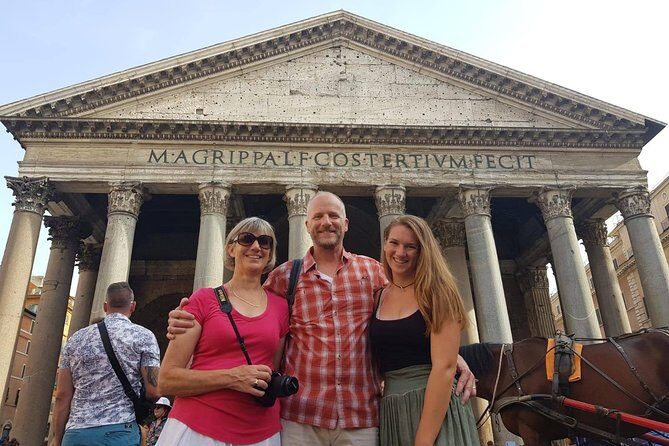
The Pantheon is next, and you get about 25 minutes here. Even if you’ve seen photos, it lands differently in person because of the scale and the engineering. The guided angle focuses on the “how” behind what you’re seeing, not just the fact that it’s famous.
You’ll also hear legends tied to the monument, and there’s a mention of a symbolic tomb connected to Raffaello. That kind of story helps the building feel like it’s still part of Rome’s cultural life, not just a preserved artifact.
This is also one of the stops where you’ll benefit from walking in with a plan: look up, notice the geometry, then look around for the details your guide points out. With only about half an hour, you’ll want to avoid spending the whole time stuck at one spot. The guide’s timing helps you get through the highlights without feeling like you missed everything.
Entrance is listed as free for the tour, with tickets included, so you can focus on the experience rather than the logistics.
Church of St. Louis of the French: Caravaggio Without the Museum Hopping
Next is the Church of St. Louis of the French, with about 20 minutes. This is the stop that can turn a standard highlights tour into a true art moment.
If you know Caravaggio, you’ll be excited. If you don’t, you still should go. The reason is straightforward: inside are three of Caravaggio’s most famous paintings. The guide helps you look at them in a way that makes sense, so you’re not just standing in front of famous names without context.
You get a limited time window, so it’s best to come in mentally ready to pick out what grabs you first. Caravaggio’s work often rewards close viewing, but with a tour schedule, the best strategy is to identify one or two elements the guide highlights and then see how the rest connects.
Admission is listed as free, and tickets are included, so you’re not paying extra on top for this art-focused stop.
Piazza Navona: From Roman Stadium Roots to Baroque Fountains
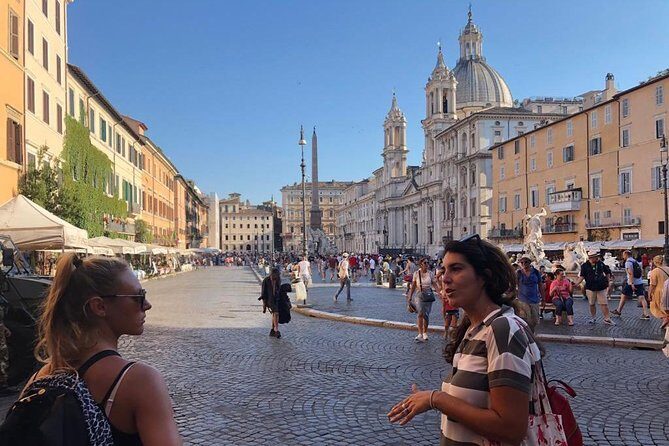
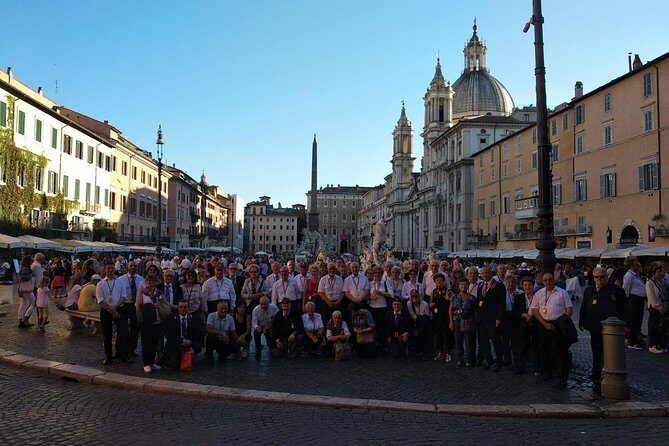
You finish at Piazza Navona, with about 20 minutes to soak it in. This square has an ancient Roman stadium origin, and it shows in the shape even as the space is now defined by baroque style. You’ll see the Church of St. Agnes and the Fountain of the Four Rivers, one of the most famous fountain scenes in the center of Rome.
The guide’s job here is to tie the past and present together so the space doesn’t feel like just another pretty plaza. When you understand that the square’s geometry has roots in the Roman era, the baroque details feel more intentional instead of decorative.
Finish-point tips: because you end at Piazza Navona, you’re in a location that’s easy to keep exploring. There are taxi stations close to the end point, which is helpful if you want to move on without another hunt for transportation.
No admission ticket is listed for this stop.
The Big Takeaway: What This Tour Does Better Than Planning Alone
This private walk works because it’s built for your time. In just a few hours, you see a concentrated hit of Rome’s most recognizable landmarks, and you also get the explanation that helps you connect them. The included guide time matters most when you’re trying to avoid the common Rome problem: you see everything, but nothing sticks.
I also like that the stops are mostly free of ticket pressure during the experience. You’re not constantly checking whether you need to line up or pay extra. That means you spend more minutes looking and less time dealing with logistics.
Finally, the guide style described by named guides like Martina and Vincent points to something practical: they tend to keep the experience interactive. That turns the tour from a lecture into a conversation, which is exactly what you want when you’re walking through visually loud, crowded landmarks.
Should You Book This Private City-Center Tour?
Yes, if you want a guided Rome highlights route in a short window. This is especially good for first-time visitors who want to start at Piazza di Spagna, see the major icons, and finish in the heart of Piazza Navona without feeling like they need to plan every minute themselves.
Book it sooner rather than later, since it’s on average booked about 148 days in advance. You’ll probably also enjoy it if you like asking questions and want a guide to explain things as you go, from architecture to art to local customs.
Skip it only if you know you want a slow, long-form day in one place. This tour is about smart coverage, with short stop times and a walking pace that assumes you’ll keep moving.
If your goal is to get oriented, see the classics, and come away understanding what you saw, this private city-center format is a strong value.