REVIEW · COLOSSEUM TOURS
Colosseum Underground All Access Tour with Ancient Rome
Book on GetYourGuide →Operated by T&T Empire · Bookable on GetYourGuide
That underground is a time machine.
This Colosseum-focused tour takes you past the postcard stops and into the restricted zones that show how the show ran behind the scenes. I love the skip-the-line setup, because Rome’s big sights punish waiting. I also love the way the day strings together three levels of the Colosseum with Palatine Hill panoramas and a Roman Forum walk that hits the big named landmarks. One key drawback to watch: the tour title can be misleading if you pick the wrong option—some versions include Arena+Forum+Palatine only, and underground access is not automatic.
The vibe is organized, not rushed. With a small-to-mid group size (up to 14), you get headsets/radios so you can hear your guide even in noisy lines. Guides like Mandela, Manuela, Georgia, and Mya/Mia are singled out for storytelling and for using photo references to help you picture what you’re standing on. Still, plan for lots of steps and uneven ground, and note it’s not suitable for wheelchair users.
In This Review
- Quick hits worth caring about
- Underground access: what all access really means
- Where you meet at Largo Gaetana Agnesi (and how to find the tour group)
- Colosseum Underground: the hidden machine under the amphitheater
- Arena Floor: where you stand inside the fight choreography
- Inside the Colosseum and up to the 1st and 2nd levels
- Palatine Hill: emperors, elite villas, and Romulus-and-Remus mythology
- Roman Forum: Via Sacra walking and the monuments you keep seeing
- Small groups, headsets, and guides who actually manage the crowd
- Price and value: what you’re paying for at $93.57
- What to bring, what to wear, and how much walking to plan for
- Who should book this tour
- Should you book the Colosseum Underground All Access Tour?
- FAQ
- What does the skip-the-line part include?
- Does every booking include the Colosseum Underground?
- How long is the tour?
- Where is the meeting point?
- What should I bring for the tour?
- Is the tour wheelchair accessible?
Quick hits worth caring about
- Restricted underground access with tunnels, dungeons, and chambers used for gladiators and animals
- Arena Floor time so you stand where fights happened and can look out over the amphitheater
- 1st and 2nd level views for real height and sweeping perspectives
- Palatine Hill panoramas over the Roman Forum and Circus Maximus
- Forum walking on Via Sacra with stops tied to major monuments like the Temple of Saturn and Arch of Titus
Underground access: what all access really means
First thing: treat the word all access like a shopping list, not a vibe. The experience you want is the option that includes the Colosseum Underground. The information you’re given is very clear that underground is not included in the arena-only version.
Here’s how to think about it before you book:
- If you want the true behind-the-scenes portion—tunnels, dungeons, chambers—you need the underground-included choice.
- If you choose the simpler “Arena + Roman Forum + Palatine Hill” option, you’ll still see a lot, but you won’t get the subterranean rooms.
This matters because the most consistently praised part of the day is exactly that underground route. The difference between “classic Colosseum tour” and “restricted Colosseum access” is the stuff that can’t be replicated later on your own.
You can also read our reviews of more tours and experiences in Rome.



Where you meet at Largo Gaetana Agnesi (and how to find the tour group)
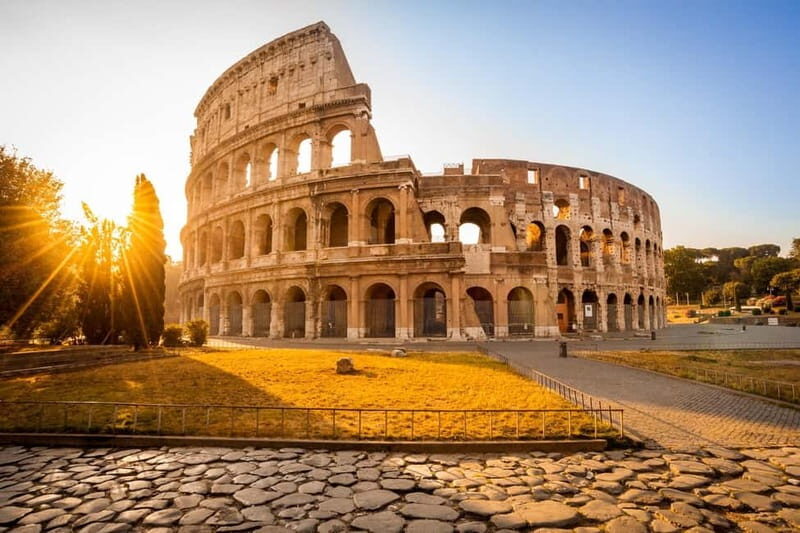
Your meeting point is Largo Gaetana Agnesi, at the square on the terrace above the Colosseum Metro Station. Your staff should be holding a yellow flag with a black T in the center of the raised terrace.
Two practical tips that save stress:
- If you’re standing at street level in front of the metro area, go upstairs first.
- The terrace across the road can look similar when you’re early, so keep your eyes on that bright yellow flag and don’t be shy about asking metro staff for help finding the terrace exit.
You end back near the end area too—your end points are listed as Roman Forum and Palatine Hill—so check your final voucher for the exact drop-off detail for your time slot.
Colosseum Underground: the hidden machine under the amphitheater
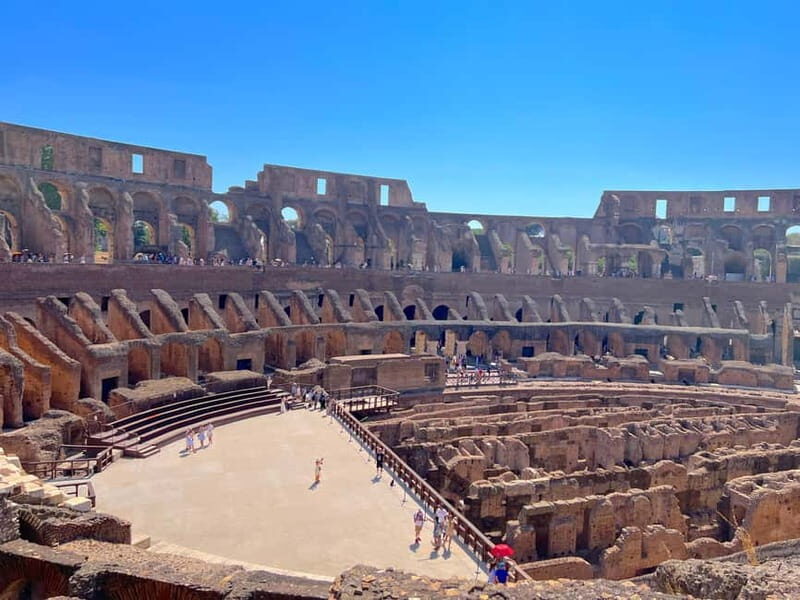
The day starts with the Colosseum Underground segment (about 30 minutes). This is where the Colosseum stops being a single landmark and becomes a working site.
You’ll explore:
- underground chambers
- corridors and service tunnels
- the spaces where gladiators and animals awaited their fate
Walking underground does something visual to your brain. Instead of thinking about spectacle only on the arena floor, you start understanding logistics—movement, staging, and control. It’s also the portion most people can’t recreate independently, because the restricted access is the whole point of paying for a guided program.
Expect it to feel cooler and darker than the surface routes. Wear shoes that grip well; some areas can be uneven.
Arena Floor: where you stand inside the fight choreography
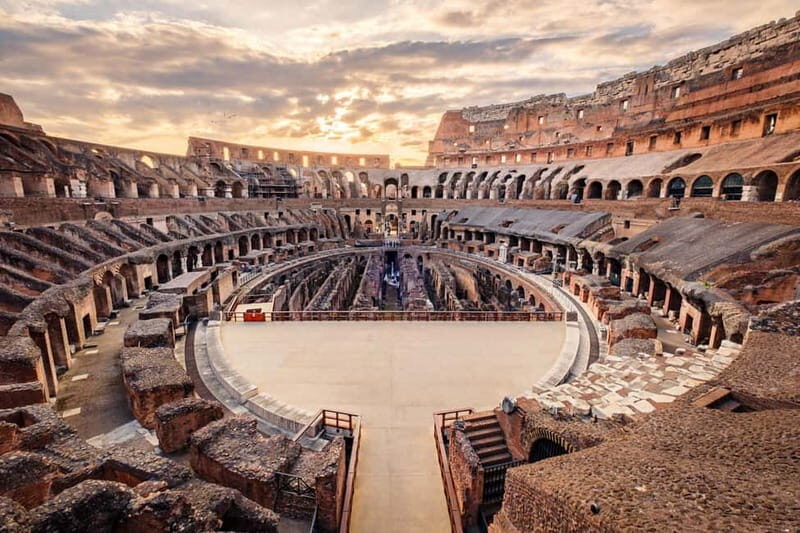
Next comes the Arena Floor (about 20 minutes). You’ll step into the amphitheater arena, standing where warriors once fought and where the crowd’s energy was directed toward this exact spot.
This stop isn’t just for photos. It’s for perspective:
- you can relate the underground spaces to what happened “above”
- you can imagine entrances and how quickly events unfolded
- you can understand why the Colosseum feels like a designed machine rather than just a big ruin
If you’re the type who likes to know what you’re looking at, the guide’s narration makes the arena floor much more meaningful than a casual walk.
Inside the Colosseum and up to the 1st and 2nd levels
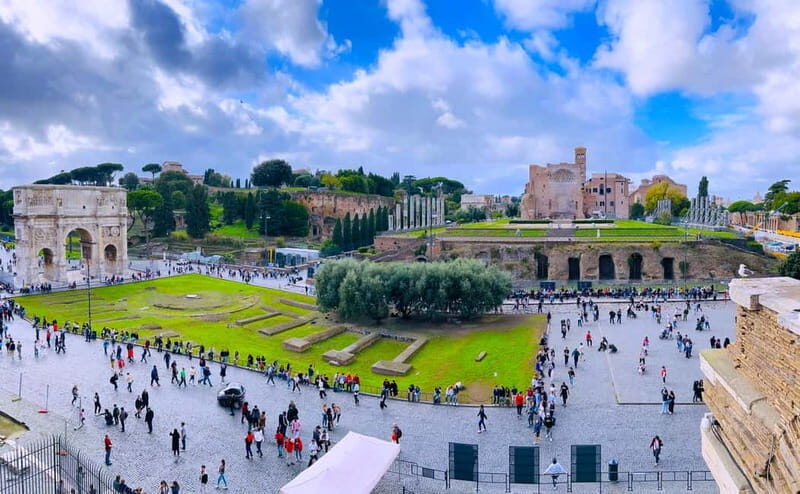
After the arena portion, the tour spends about 45 minutes at the Colosseum itself, including access to the 1st and 2nd levels.
That’s where the panoramic side of the experience kicks in. From these spectator areas you get height, better sight lines, and a chance to absorb how Romans built seating for crowds—then read the building like a diagram.
Also, the timing usually keeps you moving steadily without the long delays that happen with standard entry lines. Headsets/radios help you stay tuned to your guide’s explanations even when you’re surrounded by groups.



Palatine Hill: emperors, elite villas, and Romulus-and-Remus mythology
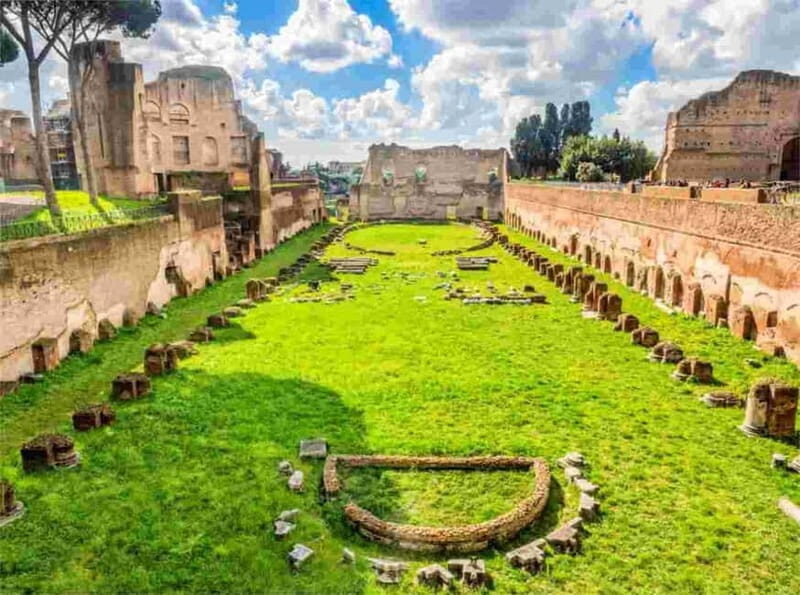
Then you head to Palatine Hill (about 45 minutes). Palatine is one of Rome’s best “meaning first, views second” places. The ruins matter, but the viewpoint matters too.
What you’re likely to focus on:
- the remains of imperial residences and aristocratic palace sites
- stories tied to Rome’s founding myth—Romulus and Remus
- why Palatine became the heart of Roman elite society
- sweeping overlooks of the Roman Forum and Circus Maximus
I like Palatine most because it helps you connect the dots. You finish the Colosseum section with a sense of the spectacle world, then you climb into the elite world that paid for it and shaped the empire.
If you like history that reads like people-with-locations (not just dates), this stop is a strong payoff.
Roman Forum: Via Sacra walking and the monuments you keep seeing
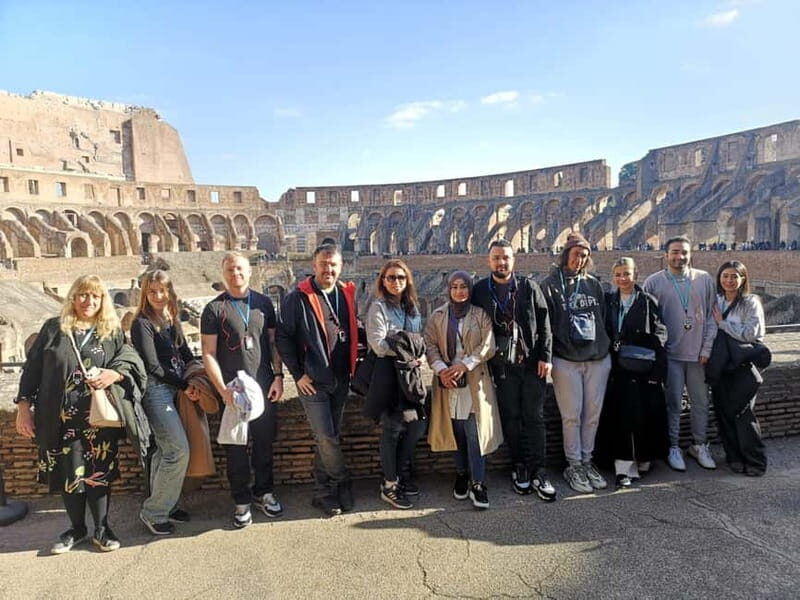
The Roman Forum portion runs about 30 minutes and is one of the easiest places to feel the “big picture” of Roman daily life.
You’ll walk key routes such as the Via Sacra, the main street where victorious generals paraded after battle. You’ll also see and learn about major structures and icons including:
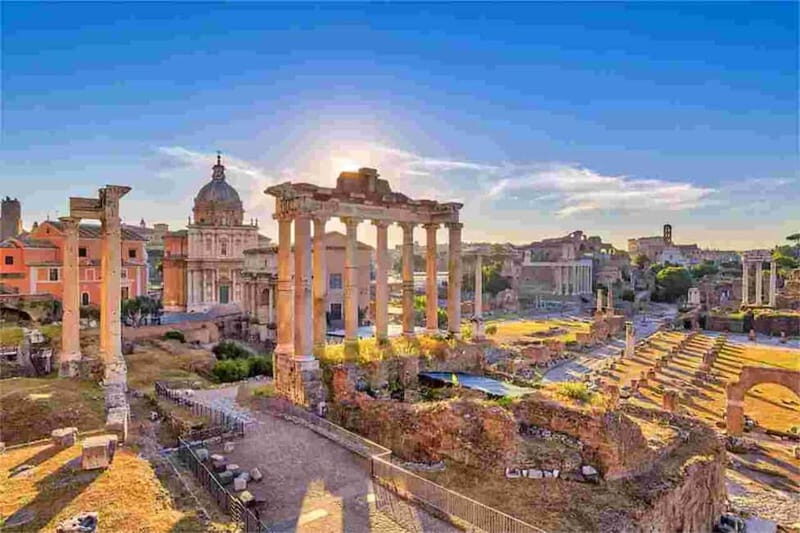
- the Temple of Saturn
- the Arch of Titus
- the Curia (Senate House)
The guide connects these points to Roman political, social, and religious life—how decisions were made, how power was performed, and how public space shaped behavior.
The Forum can feel like scattered stones if you’re on your own. With a guide, it turns into an outline of how Rome functioned.
Small groups, headsets, and guides who actually manage the crowd
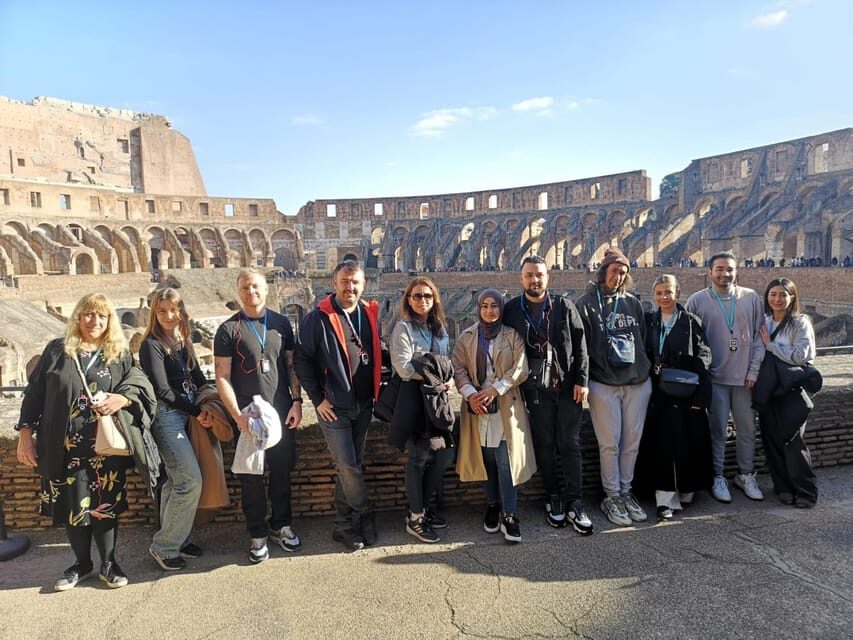
This tour runs with small-to-mid groups (up to 14 guests), and it uses headsets and radios. That might not sound glamorous, but in a site like the Colosseum—where sound bounces and lines are tight—it’s the difference between hearing the story and just walking.
You’ll also notice guide differences. Some guides are particularly praised for:
- keeping a manageable pace
- making sure everyone stays together (helpful when groups spread out near viewpoints)
- using photo reference materials to show what you’re looking at during Roman times
- friendly, organized leadership in busy areas
Names that appear with high praise include Mandela, Manuela, Georgia, and Mya/Mia. Any of these kinds of guides will make the walking feel purposeful instead of “we’re here because we’re supposed to be.”
Price and value: what you’re paying for at $93.57
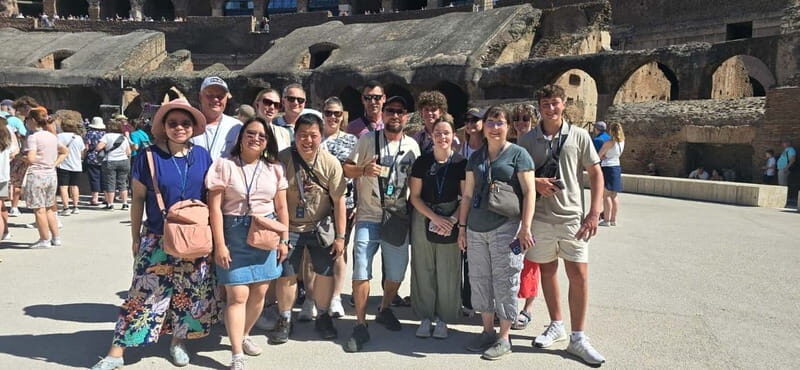
At $93.57 per person, it’s not a budget activity. The value comes from three things that are hard to replicate without a guided product:
1) Restricted Colosseum access, especially the underground route
2) Skip-the-line entry through a separate entrance
3) A guided itinerary that links Colosseum + Arena + Palatine + Forum into one narrative
If you’re the type who visits big landmarks and then feels slightly confused later, paying for a guide is usually the best money you spend in Rome. You’re buying a storyline and time savings at the same time.
The caution is also part of value: if you accidentally choose an option that doesn’t include underground, you may feel like you paid for a headline you didn’t receive. Double-check the exact inclusions during booking.
What to bring, what to wear, and how much walking to plan for
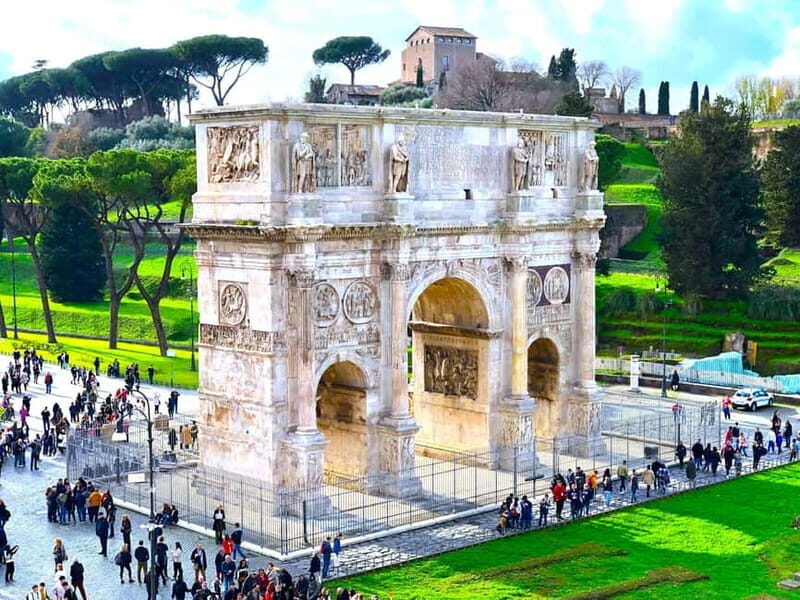
This is a shoes-and-stamina tour.
Bring:
- passport or ID card
- comfortable shoes (you’ll want grip)
- hat, sunscreen, and water
Also note:
- no luggage or large bags
- no drones
What to expect physically:
- lots of walking
- stairs/steps
- uneven ground in archaeological areas
One important reality check: it’s not suitable for wheelchair users. Even strollers may feel challenged on the uneven surfaces and steps, so plan accordingly.
Who should book this tour
You’ll get the most out of this if you:
- want the Colosseum underground experience, not just the arena floor
- like structured storytelling over wandering
- want big-site value in one outing: Colosseum, Palatine Hill views, and Roman Forum monuments
- prefer small-group guidance (up to 14) with headsets/radios
This is less ideal if:
- you can’t handle stairs or uneven ground
- you only want one area (like “just the Forum”) and don’t care about deeper access in the Colosseum
Should you book the Colosseum Underground All Access Tour?
My take: book it if the underground access is truly part of your Rome plan. When you pair underground chambers with Arena Floor time and then finish on Palatine and the Forum, you leave with more than “I saw the Colosseum.” You understand how Rome staged power, entertainment, and politics in one connected system.
Before you click confirm, do this one thing: verify the option includes the Underground. The tour name can tempt you, but the inclusions are what decide your day.
If you want, tell me your travel dates and whether you’re more excited about gladiators or politics. I can help you choose the best option setup for your priorities and pacing.
FAQ
What does the skip-the-line part include?
The tour includes skip-the-line access to the Colosseum and Roman Forum through a separate entrance, plus entry to the Colosseum Dungeons, Underground, Arena, and restricted areas (based on the option you select).
Does every booking include the Colosseum Underground?
No. The information provided says underground access is exclusive to the option that includes it. If you choose an arena-only version, underground is not included.
How long is the tour?
The duration is listed as 2.5 to 3 hours. Starting times vary, so you’ll need to check availability for the exact schedule.
Where is the meeting point?
Meet at Largo Gaetana Agnesi, at the square on the terrace above the Colosseum Metro Station. Staff hold a yellow flag with a black T. If you’re in front of the Metro Station, go upstairs.
What should I bring for the tour?
Bring your passport or ID card, wear comfortable shoes, and also plan for hat, sunscreen, and water.
Is the tour wheelchair accessible?
The tour is listed as not suitable for wheelchair users.