REVIEW · CYCLING TOURS
PRIVATE Civita di Bagnoregio and Orvieto Wine Tasting -Ebike tour
Book on Viator →Operated by TopBike Rental and Tours · Bookable on Viator
One day. Two dramatic towns. That’s the fun here.
I love how this trip flips your Rome plans on their head by getting you out to the Tiber Valley and Umbria fast, then letting you cover real distance with electric-assist bikes. You’ll also get two big “wow” stops—Civita di Bagnoregio and Orvieto—without spending your whole day on slow buses or fighting crowds. One heads-up: this is an active, intermediate ride (about 54 km and roughly 800 m of climbing), and the hills can still feel serious even with the e-bike help.
The route is built around smart logistics. You cycle to the station, load the bike, then ride out toward the countryside before you switch to your e-bike and start moving under your own power. I also like that the tour is truly private—you’re not sharing the day with strangers, and guides such as Imke or Emmanuel can bring the day to life with very practical local knowledge. A possible drawback: if you’re picturing a gentle, flat sightseeing spin, you might find the climbs and long riding time more demanding than expected.
If you’re an active traveler who wants views plus real town time, this is a standout day trip.
In This Review
- Key Things to Know Before You Go
- Why Civita di Bagnoregio and Orvieto Fit Together So Well
- Starting in Rome: TopBike Meeting, Helmets, and the Train That Saves Time
- Tiber Valley Cycling and the Oasis of Alviano Nature Reserve
- Civita di Bagnoregio: The Dying Town, Rebuilt by Artists
- Orvieto Streets, the Duomo, and the Lift Ticket Included
- Wine-Cellar Dinner: What You’ll Actually Be Eating
- How Hard Is This Ride, Really (Even With E-Bikes)
- Safety and Route Planning on Real Roads
- Guides Make the Day Feel Personal: Imke and Emmanuel as Examples
- Price and Value: What $373.54 Gets You
- Who Should Book This E-Bike Day Trip (And Who Should Skip It)
- Should You Book This Tour?
- FAQ
- What time does the tour start?
- How long is the tour?
- Is this tour private?
- What’s the bike like and is a helmet provided?
- Is lunch included?
- Is dinner and wine included?
- Are train tickets included?
- Do I need to pay for the Orvieto cathedral?
- Is the lift in Orvieto included?
- How hard is the ride?
Key Things to Know Before You Go
- Private day, small-group feel: It’s only your group, and the dynamic can stay personal even on a full-day itinerary.
- E-bikes that matter: You’ll ride Top Quality Cannondale e-bikes with anti-puncture tires, plus a required helmet.
- Two towns, different personalities: Civita is the cliff-hanging art town; Orvieto is the cathedral-and-alley medieval center.
- Nature reserve riding: You’ll cycle through the Tiber Valley area and the Oasis of Alviano nature reserve.
- Food and wine are built in: A lunch box plus a dinner and wine in Orvieto makes the day feel complete.
- Orvieto lift is included: You won’t have to hunt down that ticket to see the city comfortably from key viewpoints.
Why Civita di Bagnoregio and Orvieto Fit Together So Well
This works because these places reward different moods. Civita di Bagnoregio is pure drama: a hilltop town connected by a narrow bridge, perched above the valley like it’s almost too fragile to exist. Orvieto, on the other hand, feels sturdier and more everyday medieval—stone streets, a cathedral that’s hard to ignore, and lots of wine-bar energy.
Doing both in one day also saves you from the usual Rome-day-trip trap: spending most of your time in transit and then having barely enough hours for the “main” sights. Here, the pace is built around motion—you ride—so you trade long rides on public transport for time in towns where you can actually wander.
And the e-bike changes the equation. It doesn’t make the day effortless, but it keeps it fun instead of turning it into an endurance contest. I like trips where the “effort” feels proportional to the payoff. This one generally does that.
You can also read our reviews of more food & drink experiences in Rome
Starting in Rome: TopBike Meeting, Helmets, and the Train That Saves Time
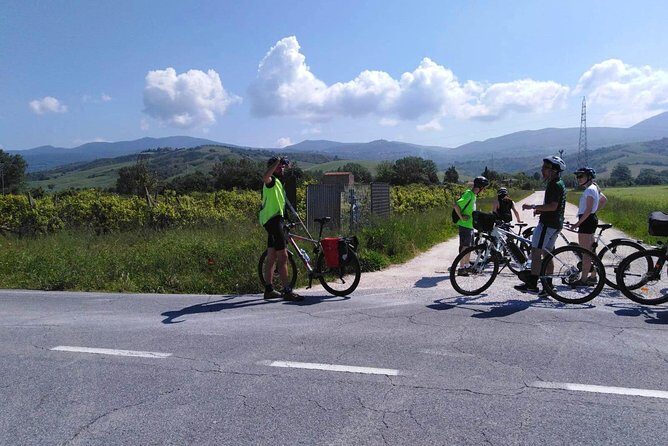
Your day starts in Rome at Via Labicana, 49, near public transportation, with an 8:00 am start and a roughly 14-hour overall schedule. The first stop is the TopBike Rental & Tours shop, where you’ll get oriented and set up for the ride.
Then comes one of the smartest parts: you don’t just bike out of the city all morning. You’ll cycle from the meeting point to the train station, then take the train with your e-bike to get you up to the northern area faster. That’s huge for comfort. It cuts down on the kind of stop-and-go city strain that can drain your energy before the good scenery starts.
Practical note: the helmet is mandatory and provided for free, and you’ll also get a handlebar bag. That means you can keep essentials where you want them—no rummaging every time you stop for photos.
Tiber Valley Cycling and the Oasis of Alviano Nature Reserve
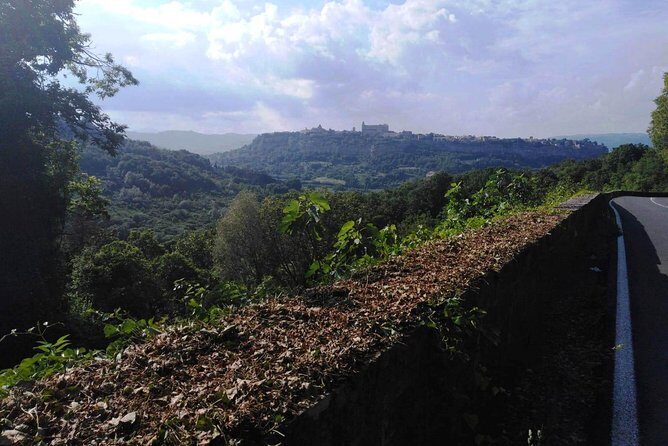
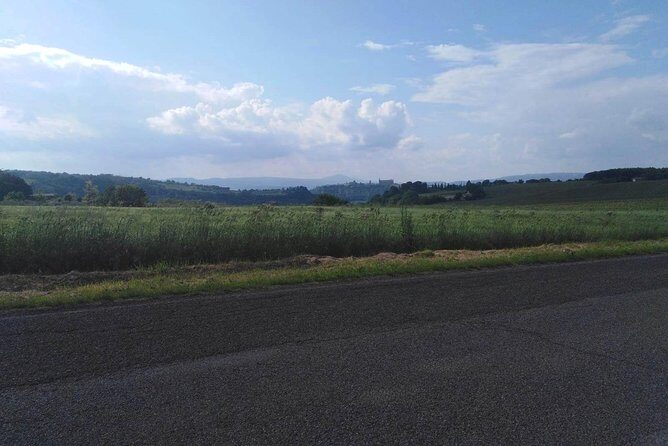
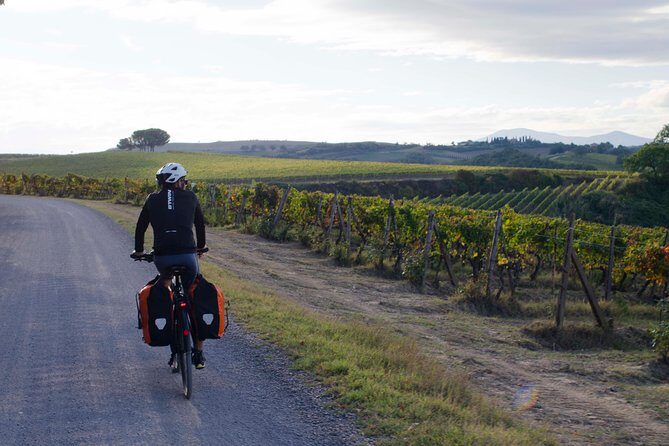
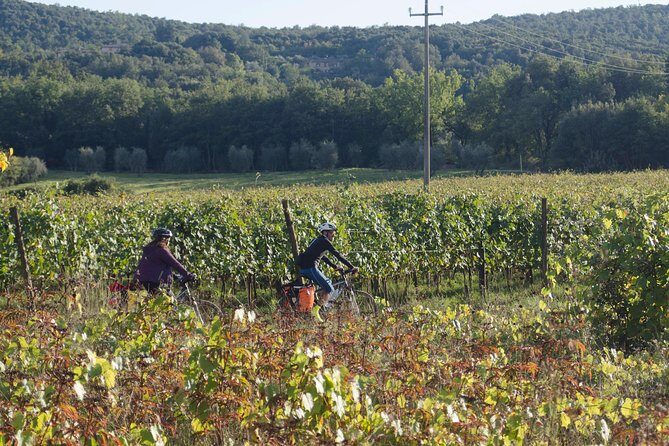
Once you’re on the e-bike portion of the day, you’ll ride through the Tiber Valley scenery with your guide leading the way. The tour also includes a chance to pass through the Oasis of Alviano, a nature reserve. Even if you’re not a hardcore bird-and-botany person, reserves tend to create a calmer rhythm: fewer interruptions, more open views, and a feeling that you’re slipping away from traffic and into farmland and river country.
After a stretch of riding, you’ll have a quick lunch box provided by the guide. This matters. You’re doing enough cycling that skipping lunch or grabbing something random later would turn the afternoon stressful. The lunch being packaged and scheduled keeps the day from unraveling.
A tip for you: treat the lunch as fuel, not a leisurely meal. This tour is about keeping momentum so you still have energy for the later climbs and town walks.
Civita di Bagnoregio: The Dying Town, Rebuilt by Artists
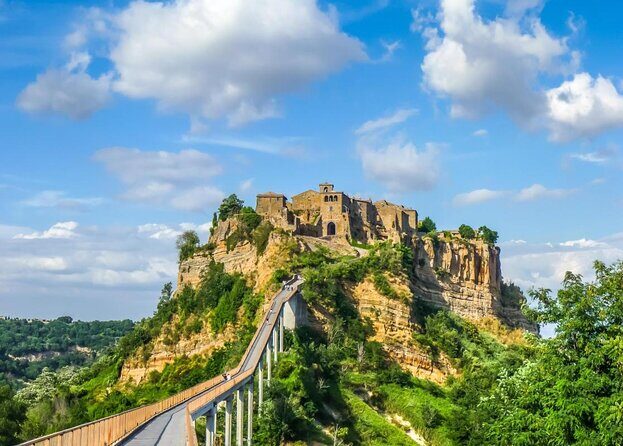
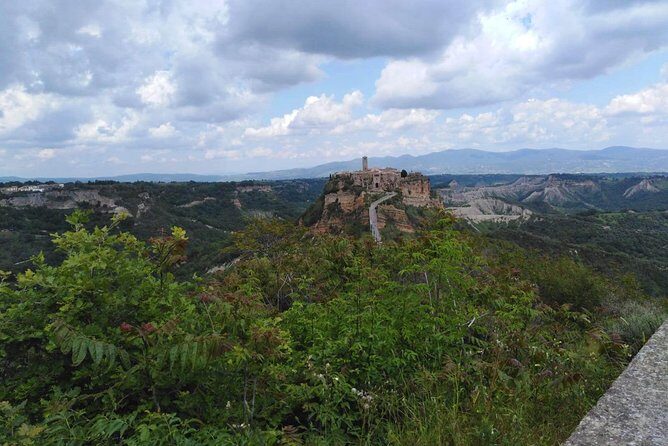
Civita di Bagnoregio is the kind of place that looks like a movie set from a distance, and then becomes even more interesting when you’re close—because you realize it’s perched there for a reason, and connected by a narrow bridge that makes the approach feel deliberate.
This is the stop that earns the biggest emotional reactions. The town is famously called the dying town due to the geological instability that once forced it into abandonment. What’s compelling here is the turnaround: artists helped revive it, and today you’ll find art galleries and restaurants tucked into the town’s tight lanes. In other words, it’s not just scenic; it’s alive.
You’ll have about 30 minutes to explore Civita. That short time is a tradeoff. You’re seeing the main experience without losing the whole day here, which keeps Orvieto on the schedule. But it does mean you’ll want a game plan: pick your photo viewpoints early, then spend the rest of the time walking the narrow cobblestoned streets at a relaxed pace.
Practical consideration: the ride to get there can be more strenuous than people expect, even with the e-bike help. One reason I’m glad the time in Civita is concentrated is that it gives you a satisfying reward after effort, without asking you to spend hours grinding your legs right at the peak views.
Orvieto Streets, the Duomo, and the Lift Ticket Included
After Civita, you pedal toward Orvieto, and yes—there are upward climbs. The e-bike assist helps, but it doesn’t remove gravity. What it does do is let you arrive in Orvieto ready to walk the town, not wiped out.
Orvieto is built on cliffs, so once you see it from the right angle, it makes sense immediately. Medieval towns love steep settings; they’re easy to defend and easy to admire. Here, you’ll feel that cliffside layout as you move through streets and viewpoints.
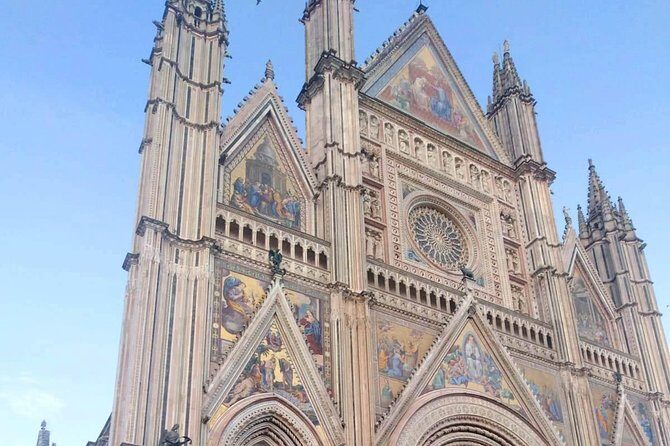
Your town time includes exploring the Duomo di Orvieto, a 14th-century cathedral with a Gothic façade. Plan for about 1 hour for the cathedral-area exploration time. Importantly, cathedral admission is not included, so if you want to go in, you may need to pay separately.
Good news: the tour includes a ticket for the lift up in Orvieto. That’s one of those “small” inclusions that can make the difference between enjoying the town and feeling like you’re doing another workout before dinner.
Orvieto is also where you get to slow down mentally. You’ve earned it. After so much riding, the value is in wandering the small lanes, checking out the cathedral exterior details, and letting your legs recover while you tour.
You can also read our reviews of more cycling tours in Rome
Wine-Cellar Dinner: What You’ll Actually Be Eating
This isn’t just a quick stop for a drink. The experience includes dinner and wine in Orvieto, served in one of the city’s wine bars/cellar-style settings.
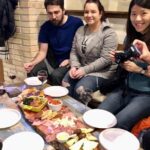
The meal is hearty and very Italian in spirit: cheese, salami, salad, pasta, and plenty of local wine. This is a big part of the tour’s value because you’re not left hunting for dinner after a long day. You’re also not stuck settling for a sandwich because everything good closes early.
If you’re trying to pace yourself, here’s how I’d approach it: eat enough early so you don’t crash, then enjoy the wine as part of the experience rather than treating it like a race. With a ride day behind you and a return train ahead, comfort matters.
How Hard Is This Ride, Really (Even With E-Bikes)
Let’s talk honestly about difficulty. This tour is listed as intermediate, covering about 36 miles (54 km) with an elevation gain of roughly 800 m. Most of the route is on asphalt, and the difficulty level note says you’ll be on roads about 95% asphalt, which usually means predictable surfaces—not sketchy off-road surprises.
The e-bikes help a lot, and that’s why many people who are comfortable in a city but not athletic grinders still enjoy the day. In practice, the hardest moments are usually the longer climbs and the cumulative effort—especially if you don’t ride hills much at home.
A useful guide from real-world experience: one rider advice was simple—if you’re not a bike person, don’t treat this like a short flat sightseeing loop. Another point: even with the e-bike, the final hill can still feel like the kind of thing that tests your legs for a minute. The good news is that you’ll be moving along a planned route with safety in mind.
So here’s my take for you: if you can handle moderate slopes around town and you’re okay with a full-day activity, you’re in the right lane. If you want gentle, mostly flat movement, choose something else.
Safety and Route Planning on Real Roads
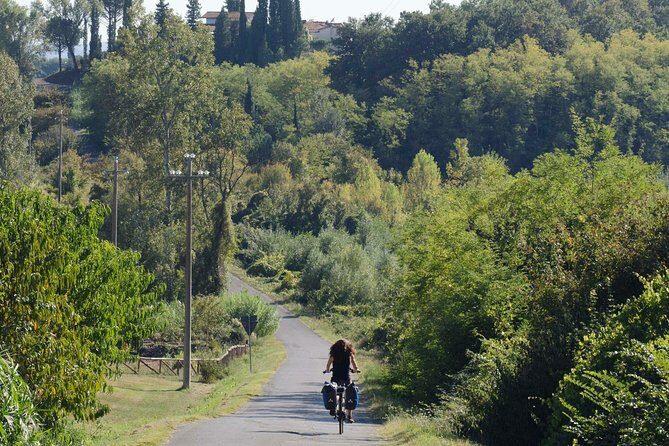
The tour follows carefully planned routes with limited access to traffic, and some segments have no traffic at all. That structure matters. It’s the difference between enjoying cycling and being stressed about drivers.
Still, remember you’re in and around Rome at the start of the day for the bike-to-station portion, and one rider noted city-traffic conditions during their day. The key takeaway for you is not to overthink it, but to expect that you’re not starting on a bicycle path in the middle of nowhere—you’re starting in a real city environment before the countryside takes over.
You also get a mandatory helmet and bike equipment that’s designed for everyday touring comfort, including anti-puncture tires. Those details reduce small hassles that can ruin your mood when you’ve got a full day ahead.
Guides Make the Day Feel Personal: Imke and Emmanuel as Examples
This is a private tour with a guide in English or Dutch. In the real world, what makes the day work isn’t just the scenery—it’s the way the guide sets expectations, chooses pacing, and shares context you can actually use while you’re walking around.
I’ve seen guides do this in two modes: either they lecture, or they time the stops so you don’t feel rushed. On this kind of e-bike day, the best guides do the second. You’ll spend your time looking at places, not watching someone explain a place from far away.
And from the experiences I’ve read about this trip, guides such as Imke and Emmanuel are highlighted for being very knowledgeable and helpful, with strong local insights that go beyond what you’d find on a typical postcard script.
Price and Value: What $373.54 Gets You
At $373.54 per person, this isn’t a cheap add-on. But it’s also not just a “bike rental with a route.” You’re paying for a full, guided day with multiple included costs wrapped into one.
Here’s what you get for the price:
- Round-trip train tickets so the countryside part is easier
- A Cannondale e-bike with anti-puncture tires, plus helmet and handlebar bag
- A guide and a planned route designed for safety and pacing
- A lunch box
- Dinner and wine in Orvieto
- Entry ticket to Civita di Bagnoregio
- Orvieto lift ticket
- Bottled water (biodegradable bottle)
On a day like this, those inclusions add up fast. If you tried to recreate the day on your own, you’d spend time figuring out transit with a bike, lining up guided pacing, and paying for the lift/dinner/entry pieces separately.
So the value is best if you want a ready-made day where your biggest job is showing up and riding.
Who Should Book This E-Bike Day Trip (And Who Should Skip It)
Book it if:
- You want two major hill towns plus countryside cycling in one long day
- You’re comfortable with an intermediate ride and can handle sustained effort
- You like the idea of a private experience with a guide who can keep things organized
- You care about included food and wine, not just sightseeing
Skip it if:
- You want a flat, casual ride with minimal climbing
- You’d be unhappy if the day includes more biking time than a short walking tour
- You prefer to control every meal and ticket on your own
This is also a great fit for couples and small groups. The private setup means you’re not squeezed into a larger crowd dynamic.
Should You Book This Tour?
I’d book it if you’re the kind of traveler who loves a plan that still feels like freedom. The combination of e-bike power, Civita’s cliffside drama, and Orvieto’s cathedral-and-wine atmosphere is the right mix. The biggest question isn’t whether the views are good—they are. The real question is whether you’re okay riding about 54 km with meaningful climbing.
If you are, you’ll likely come away feeling like you did something specific, not just another Rome checklist day. If you aren’t sure about your hill comfort, be honest during the decision. This tour can be “fun challenging,” but it’s not a scooter ride disguised as culture.
FAQ
What time does the tour start?
The start time is 8:00 am at Via Labicana, 49, 00184 Roma RM, Italy.
How long is the tour?
The duration is approximately 14 hours.
Is this tour private?
Yes. It is a private bicycle tour, and only your group participates.
What’s the bike like and is a helmet provided?
You ride Top Quality Cannondale e-bikes with anti-puncture tires. A helmet is mandatory and provided for free.
Is lunch included?
Yes. A lunch box is included.
Is dinner and wine included?
Yes. Dinner and wine in Orvieto are included.
Are train tickets included?
Yes. Train tickets are included, and you’ll take the train as part of the day.
Do I need to pay for the Orvieto cathedral?
Duomo di Orvieto admission is not included, so you may need to pay separately if you want to enter.
Is the lift in Orvieto included?
Yes. A ticket for the lift up in Orvieto is included.
How hard is the ride?
You’ll cover about 36 miles (54 km) with elevation of about 880 yards (800 m). The difficulty level is intermediate, and the route is mostly asphalt with electric assist.