REVIEW · POMPEII
Pompeii: Tour with Archaeologist Guide & Skip-the-Line Entry
Book on Viator →Operated by Travelcampania · Bookable on Viator
Pompeii hits fast, and this tour keeps it tight. You start with skip-the-line entry and an archaeologist guide, then move through the UNESCO site with a clear, last-day-of-79-AD storyline. Expect frescoes and preserved everyday stuff, not just big names and dry facts.
I like the way you get multiple Pompeii “eras” in one short loop: Teatro Grande and the amphitheater area, then the streets and homes that explain how people actually lived. I also really enjoy the stop at the Fiorelli casts and the walk through the Forum and Basilica, because that’s where the tragedy becomes physical. One drawback: with only about 2 hours, the pace is brisk, so if you want lingering time in each room, you may feel rushed.
In This Review
- Key highlights before you go
- Skip-the-Line Start at Piazza Esedra
- A 2-Hour Archaeologist Route: What You’ll Actually See
- Teatro Grande and the Amphitheater Area
- Domus and Frescoes Along Via dell’Abbondanza
- Stabian Baths: Cleanliness, Routine, and Roman Leisure
- The Lupanare: A Tour Stop with Real Cultural Context
- Forum and Basilica: Pompeii’s Civic Center
- Fiorelli Casts and the 79 AD Story That Gets Personal
- Price and Value for a Short Skip-the-Line Tour
- Group Size, Pace, and How to Make It Enjoyable
- Who This Pompeii Tour Fits Best
- Should You Book This Pompeii Tour?
- FAQ
- How long is the Pompeii tour?
- Is admission included in the price?
- What do I see during the tour?
- Where does the tour start and end?
- What group size should I expect?
- Is the tour suitable if I have moderate physical fitness?
- Can I get a full refund if my plans change?
Key highlights before you go
- Skip-the-line entry handled for you, so you spend less time waiting at the gate
- Archaeologist-led storytelling that connects buildings to the last moments of 79 AD
- Everyday Pompeii details, including frescoes and everyday objects, not just monuments
- A route through amphitheater, private houses, Via dell’Abbondanza, baths, and the lupanare
- A powerful culture/tech moment: the first casts from 1863 by Arch. Giuseppe Fiorelli
- Small-group feel with a maximum of 25 travelers
Skip-the-Line Start at Piazza Esedra
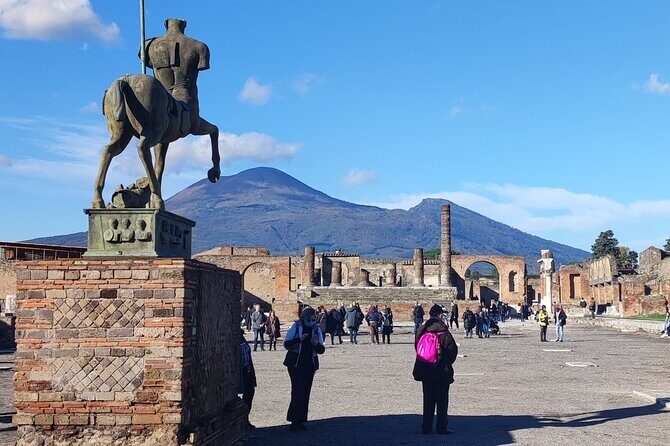
This is one of those Pompeii tours that helps you get your bearings quickly. You meet around Piazza Esedra near Coffee Shop Vittoria bar, and the whole point of the skip-the-line service is that your guide takes care of admission tickets for the archaeological park.
That matters more than it sounds. Pompeii entrances can be time-consuming, and time is the one thing you don’t get back on a short, 2-hour walk. If you’re trying to fit Pompeii into a tight day with trains, buses, or a later trip to the Amalfi Coast, this format keeps your plan from collapsing.
You also end in the park, near the Foro di Pompei by Via Villa dei Misteri 2. That’s convenient because you don’t have to backtrack to “start over” after the official tour ends.
You can also read our reviews of more guided tours in Pompeii

A 2-Hour Archaeologist Route: What You’ll Actually See
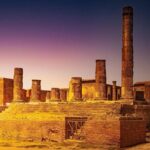
The tour is designed as a sprint with meaning. In roughly 2 hours, you cover a set of headline zones: amphitheater, private Roman houses (domus) with frescoes, the Via dell’Abbondanza corridor, baths, the lupanare, and the civic center (Forum and Basilica). Your archaeologist guide also brings in the human side, including the eruption’s timing and impact on daily life.
Think of it like a guided “greatest hits” walk, but with enough context to keep you from treating the ruins like a photo stop list. You’ll also hear about the plaster casts first made in 1863 by Arch. Giuseppe Fiorelli, which are key to understanding what happened to bodies during the eruption.
Because it’s short, you won’t get every street and side room. Still, you’ll get the major places that help you understand why Pompeii feels so eerie and real at the same time.
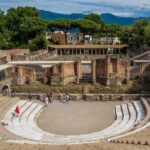
Teatro Grande and the Amphitheater Area
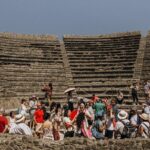
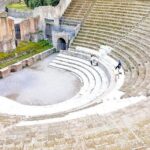
The tour kicks off with Teatro Grande as a starting reference, then unfolds toward the amphitheater zone. This is a smart place to start because the amphitheater instantly communicates Roman entertainment culture and the scale of public spaces.
Even if you only catch Pompeii for a day, amphitheaters help you “read” the city. You can picture crowds gathering, announcements being made, and life revolving around public events. It’s also a good mental anchor early on, because later stops—houses, baths, and the forum—start to feel connected rather than random.
One practical point: this part of Pompeii can be visually impressive, but it’s also where many people slow down for photos. If you’re camera-focused, plan for a little squeeze in the flow.
Domus and Frescoes Along Via dell’Abbondanza
Next comes a shift from public life to private rooms. You’ll see Roman domus (private houses) and you’ll spend time on the famous frescoes, the kind of painted decoration that makes Pompeii more than stone shells.
The guide also points out the Via dell’Abbondanza, which is one of the key “spines” for understanding where people moved through town. Walking along a major street (even in ruins) gives you spatial context: you start to see how commerce, housing, and civic life could sit next to each other.
What I like here is the everyday angle. Frescoes aren’t just pretty wall art. They help you imagine tastes, jobs, and household routines in a city that froze at a single moment.
If frescoes are a top priority for you, this tour fits well because it doesn’t leave them out. Still, since you only have about 2 hours, expect a focused tour of the most important rooms rather than extended time in each one.
Stabian Baths: Cleanliness, Routine, and Roman Leisure

Bathrooms and bathing spaces are where Pompeii quietly becomes relatable. You’ll visit the Stabian baths, and that’s useful because Roman bathing wasn’t just about hygiene. It was also a social routine and part of leisure life.
Even in ruins, baths help you understand how people organized daily time. You can infer sequences—warm to cool spaces, areas for resting or gathering—because the design is still legible. It’s one of the best ways to translate the city from tragedy back into normal life.
If your travel style leans toward human-scale details—how people ate, moved, washed, and relaxed—this stop usually delivers more than you expect. It’s not as headline-famous as the Forum, but it’s often more vivid in the mind.
You can also read our reviews of more tours and experiences in Pompeii



The Lupanare: A Tour Stop with Real Cultural Context
One of the more striking parts of the route is the lupanare, the ancient brothel area. This is not a “shock value” stop. With an archaeologist guide, it’s approached as a window into how Pompeii worked—economy, gendered spaces, and urban life.
You’ll also learn how the lupanare fits into the street and neighborhood layout. That helps you avoid the common mistake of treating it like an isolated attraction.
Just know what this means for your personal comfort level. If that topic makes you uneasy, you may need to brace yourself mentally. The tour is short, so it won’t linger for long, but it is included as part of a full picture.
Forum and Basilica: Pompeii’s Civic Center
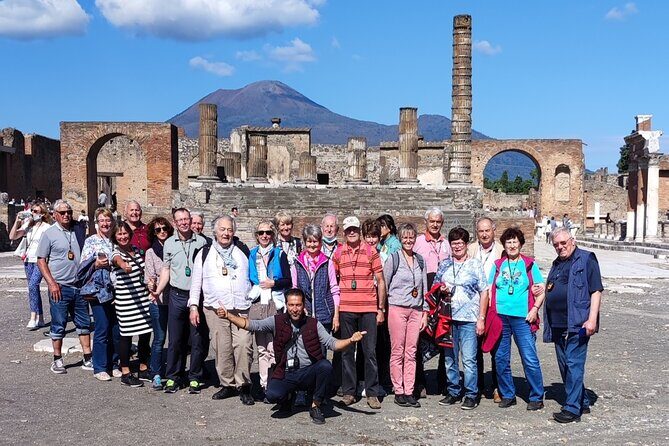
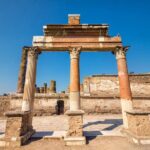
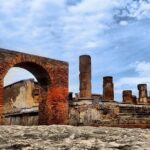
Then you hit the place where Pompeii shows its formal face. The Forum and Basilica are the civic core, and seeing them after the baths and houses helps your brain make connections fast.
The Forum makes you think about decisions, gatherings, and public business. The Basilica adds another layer because it connects architecture to administration and public activity. This is where the city feels structured rather than simply residential.
If you love understanding city planning—how streets, squares, and public buildings shaped daily routines—this portion will land well. It’s also a strong place to mentally compare “public Pompeii” and “private Pompeii” as you move through the route.
Fiorelli Casts and the 79 AD Story That Gets Personal
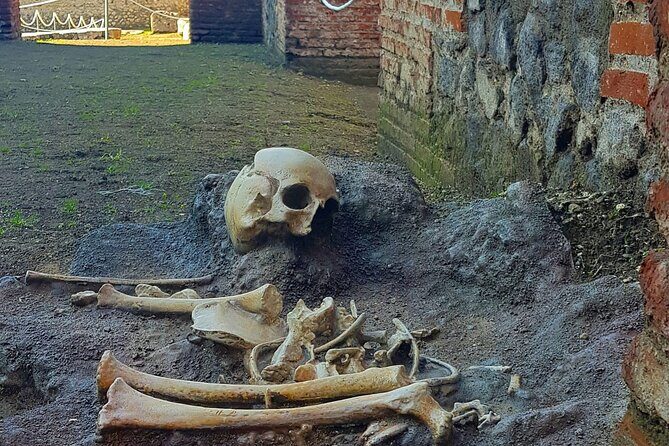
This tour includes one of the most powerful techniques in Pompeii interpretation: the plaster casts. You’ll see the first casts of 1863 by Arch. Giuseppe Fiorelli, which turned the circumstances of the eruption into something you can almost meet face to face.
This is where the tour’s emotional messaging becomes concrete. The city isn’t just a site of collapsed walls; it becomes a moment with people, bodies, and posture preserved in a way that’s hard to dismiss.
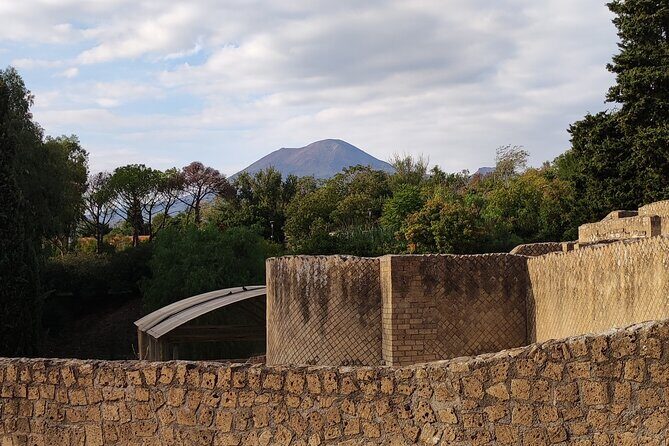
And your guide ties it back to the broader story of the eruption of Vesuvius in 79 AD. The route is structured so that you move from public and private life into tragedy, instead of jumping straight from monuments to disaster.
For me, this is one of the biggest reasons the tour is worth considering even at a short duration. It gives you context for why Pompeii feels so haunting.
Price and Value for a Short Skip-the-Line Tour
At $57.84 per person for about 2 hours, you’re not paying for a long day. You are paying for focus: a small group (max 25 travelers), an archaeologist guide, skip-the-line entry support, and admission included.
Is it expensive? Not really, when you compare it to the cost of ticketing plus the value of a knowledgeable person steering you through the most important pieces. Pompeii tickets alone aren’t the issue; the problem is time and confusion. A short guided route reduces both.
Where value can vary is in your expectations. If you want a slow, room-by-room experience, this format won’t feel deep enough. If you want a strong overview that still includes the emotional core (Fiorelli casts and the 79 AD story), it can feel like a smart way to spend limited time.
Also, tours like this are often booked ahead (this one averages about 34 days in advance). That’s a sign demand exists, and it’s another reason to lock in your timing early if your dates are fixed.
Group Size, Pace, and How to Make It Enjoyable
The tour runs with a maximum of 25 travelers, which helps. You should still be able to hear the guide and see the key spots without being swallowed by a huge crowd.
The pace is brisk by design because Pompeii is big and the tour is short. So you’ll get a lot of “important” in a little time, but you’ll also move on before you fully absorb everything. If you’re the kind of visitor who likes to sit with one wall and study it for 20 minutes, plan to do that on your own after the tour ends.
Good to know: the tour expects a moderate physical fitness level. That’s a common Pompeii reality because you’re walking on uneven ground. Wear shoes you trust, and keep water in mind for warmer days.
Finally, service animals are allowed, and the start area is near public transportation, which can make scheduling easier if you’re coming from Naples or transferring from another stop.
Who This Pompeii Tour Fits Best
This is a strong fit for you if you want:
- A high-impact overview of Pompeii in a short window
- An archaeologist-led explanation that goes beyond dates and names
- Key experiences you might miss on your own, like the way the route connects houses, civic buildings, baths, and the lupanare
- A guided path that ends where you can keep exploring the park on your own
It may be less ideal if you:
- Want a slow, self-paced museum style visit
- Prefer to spend long stretches in one area rather than covering multiple zones
- Get overwhelmed by sudden topic changes, like the shift from domestic life to the lupanare
Should You Book This Pompeii Tour?
If your goal is to see the big Pompeii story without wasting hours at the entrance or getting lost in ruins, I’d book this. The combination of skip-the-line entry, an archaeologist guide, and stops that cover both daily life and the eruption aftermath makes it a practical choice.
I’d skip it only if you know you’re the type who needs lots of solo time in every corner. Pompeii rewards that style, but this tour is built to compress the essentials into about 2 hours.
If you’re aiming for value, not perfection, this one makes sense. You’ll leave with the city’s layout in your head, plus a clearer emotional understanding of 79 AD.
FAQ
How long is the Pompeii tour?
It lasts about 2 hours.
Is admission included in the price?
Yes. Admission ticket access is included, and the skip-the-line service means your guide purchases the entrance tickets.
What do I see during the tour?
You’ll visit major Pompeii highlights including the amphitheater, private Roman houses with frescoes, Baths (including the Stabian baths), the lupanare, casts connected to Arch. Giuseppe Fiorelli, and the Forum and Basilica.
Where does the tour start and end?
You start around Piazza Esedra near Coffee Shop Vittoria bar. The tour ends at the Foro di Pompei near Via Villa dei Misteri, 2.
What group size should I expect?
The maximum group size is 25 travelers.
Is the tour suitable if I have moderate physical fitness?
The tour states it requires a moderate physical fitness level.
Can I get a full refund if my plans change?
Yes. You can cancel for a full refund up to 24 hours before the experience starts.