REVIEW · POMPEII
Pompeii Skip-the-Line Entry & Guided Tour with a certified guide
Book on Viator →Operated by Pompei Tour Organizer_Tempio Travel · Bookable on Viator
A city like Pompeii deserves more than a quick stroll. This skip-the-line tour gives you the right order, real context, and a guide to translate what you’re seeing. You get the big set pieces without turning your day into a map-and-mystery game.
I especially like that admission is handled for you with express entry. I also like that you’re not just staring at walls—you’ll hear how spaces worked in everyday Roman life, from markets to bath routines.
One thing to keep in mind: the route is short, but the terrain can be tough. Expect uneven ground and some climbing, and the group timing can feel tight if you stop often for photos.
In This Review
- Key things you’ll enjoy most
- Skip-the-line at Pompeii: what you’re really paying for
- Where to meet: the station office that beats bad GPS
- A 2-hour route that makes Pompeii make sense
- The Forum and Macellum: politics, religion, and where people shopped
- Forum Baths: the gendered routine of Roman public life
- Casa del Fauno and Casa dei Vettii: elite life and a warning about expectations
- House of the Faun (Casa del Fauno)
- House of the Vettii (Casa dei Vettii)
- Via dell’Abbondanza and the Roman fast-food stop
- Group size, headsets, and why the pace can feel tight
- Weather, shoes, and the Pompei hill factor
- Price and value: express entry plus a guide beats DIY for many people
- Who this tour suits best (and who might want something else)
- Should you book this Pompeii skip-the-line tour?
- FAQ
- How long is the Pompeii guided tour?
- Does the ticket include skip-the-line entry?
- Where is the meeting point exactly?
- Is the Villa of Mysteries included?
- Are headsets provided?
- Are children allowed?
- Are service animals allowed?
Key things you’ll enjoy most
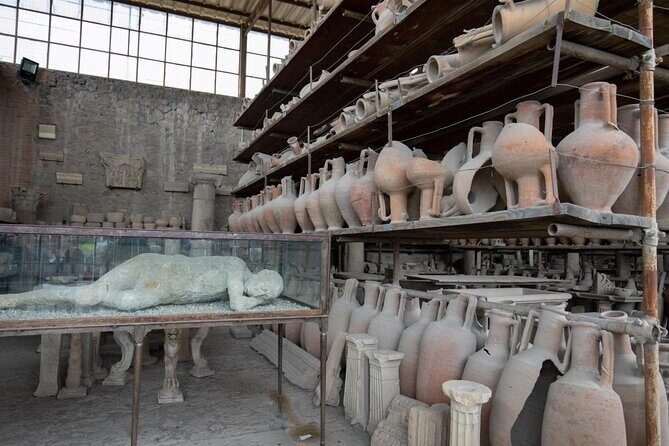
- Skip-the-line express admission so your start time isn’t wasted
- Certified guide explanations that make unmarked ruins easier to understand
- Headsets for larger groups (when the group is over 15)
- Practical stop selection: Forum, baths, elite houses, and a thermopolium
- Small-tour feel with a maximum group size of 35
Skip-the-line at Pompeii: what you’re really paying for
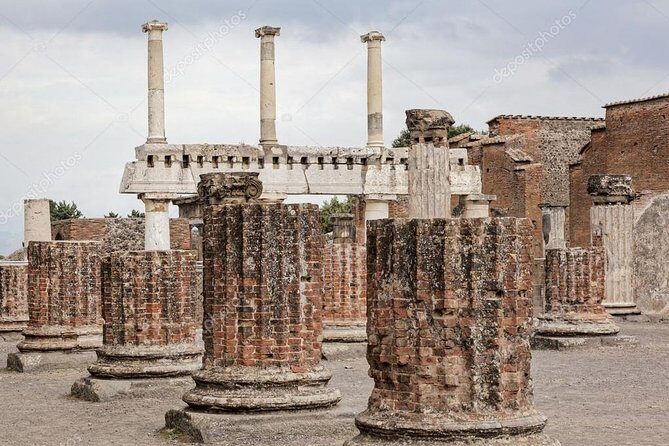
At $58.87 per person, this tour is priced for people who want time-saving—and better than “guide-by-sign.” The big value isn’t magic. It’s that you’re paying for two things together: admission and a guide who keeps the visit moving in a sensible path.
Pompeii can overwhelm you fast. Streets branch, buildings overlap, and many key spots don’t come with a clear label that tells you what you’re looking at. That’s where the guide earns their fee. You’re not trying to figure it out alone.
The tour duration is about 2 hours, with set stops and short explanation windows. If you love to linger, this might feel short. But if you want the essentials plus context in one compact block, it’s a strong deal.
You can also read our reviews of more guided tours in Pompeii


Where to meet: the station office that beats bad GPS

Meeting point confusion is one of the few real weak spots here. The good news: you can avoid it with a simple plan.
You meet at Via Villa dei Misteri, 1, inside the Circumvesuviana station area for Pompei Scavi Villa dei Misteri. The office is called Tempio Travel / Pompeii Tickets and it’s on the first floor of a red station building. It’s about 100 meters from Porta Marina Superiore.
If your map app tries to send you to the wrong place (it sometimes does), use this rule:
- Find the Circumvesuviana station called Pompei Scavi Villa dei Misteri
- Go to the first floor
- Look for the Tempio Travel / Pompeii Tickets office
Bring a little patience. Show up around 15 minutes early so you’re not racing the schedule.
A 2-hour route that makes Pompeii make sense
This isn’t a drive-by tour. It’s built around a logical walk through the heart of Pompeii—politics, public life, elite homes, and street food.
The itinerary looks like this (times are approximate):
- Forum of Pompeii (~30 minutes)
- Macellum (~10 minutes)
- Forum Baths (~15 minutes)
- House of the Faun (~10 minutes)
- House of the Vettii (~10 minutes)
- Walk along Via dell’Abbondanza
- Thermopolium (Regio VI, Insula VIII, 8) (~10 minutes)
Between stops, you’re also moving along major connections in town. Via dell’Abbondanza links the Forum area with other key neighborhoods toward Porta Sarno. Even if you don’t catch every sightmark, the guide’s pacing helps your brain stitch the city together.
The Forum and Macellum: politics, religion, and where people shopped

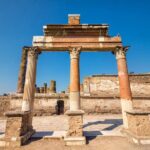
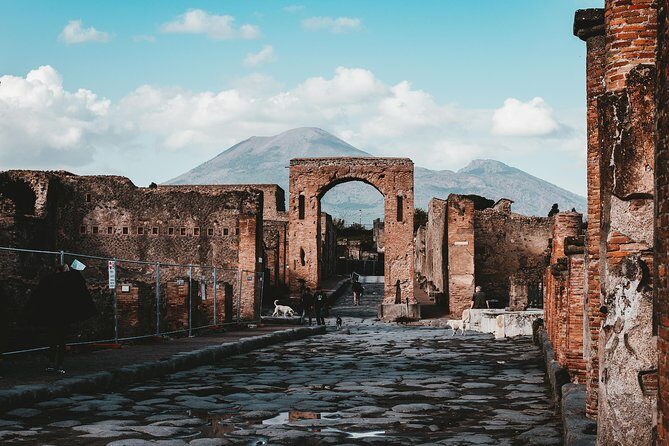
The tour begins at the Foro di Pompei, the city’s main square. This is where you get the big picture fast: political power, economic activity, and religious life all orbit the same space. Standing in the Forum with context makes the rest of the ruins feel less random.
From there you move to the Macellum, the market hall on the Forum. This is the place to understand what people actually bought and ate. It was a focal point for meat and fish sales, and you can see frescoes that show foods eaten by Romans in the 1st century C.E.
Why I like this stop order: it hits public life first. When you understand that this city ran on markets and ritual, the “cool carvings and columns” turn into something more like a living place.
Forum Baths: the gendered routine of Roman public life

Next come the Terme del Foro—Forum Baths. This is one of the most interesting stops because it shows how daily routines were built into the architecture.
Here’s what makes these baths worth your attention:
- The bath sector covers about 410 square meters
- There are both male and female sections
- Each side has its own independent entrance
- Water came from the Acquedotto del Serino, with a well available if water was scarce
- The original ceilings still have stucco decoration
- The caldarium (hot room) has a marble tub and a mosaic floor
Even if you don’t consider yourself a “baths person,” this stop gives you a clear mental model. Pompeii wasn’t just grand homes. It was also shared public systems—organized, functional, and socially structured.
You can also read our reviews of more tours and experiences in Pompeii



Casa del Fauno and Casa dei Vettii: elite life and a warning about expectations
Pompeii’s houses can feel like museum objects unless someone puts them in perspective. That’s where the two home stops help.
House of the Faun (Casa del Fauno)
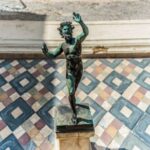
This was one of the larger, more luxurious aristocratic residences of Roman Pompeii. One highlight is the Mosaic of Alexander. Important detail: what you’ll see in this house is a copy, while the original is preserved at the MANN museum.
So if you’re the kind of person who hates disappointment, here’s the best mindset: think of this as “the story at the site,” not “the original artifact.”
House of the Vettii (Casa dei Vettii)
This home is different. It was buried during the eruption of Vesuvius in 79 C.E. and later uncovered through excavations. It’s closely tied to its owners: Aulo Vettio Restituto and Aulo Vettio Conviva.
The standout interior detail is a room with erotic wall paintings. The tour explains these in a way that connects them to the life of the household—specifically, the room’s use in connection with prostitution within the home.
A quick practical note: parts of these houses can feel darker and more crowded than the open Forum areas. If you’re a careful photographer, plan your shots and keep moving. You’ll get more value if you trade some shutter time for the guide’s interpretation.
Via dell’Abbondanza and the Roman fast-food stop
After the houses, you walk along Via dell’Abbondanza. This street connects major parts of the city between the Forum and Porta Sarno. The benefit is simple: walking a named corridor helps you build a route in your head, instead of bouncing randomly between highlights.
Then you reach the Thermopolium (Regio VI, Insula VIII, 8). A thermopolium is literally a place where something hot was sold. Think of it like Roman take-away: food you could buy and eat without cooking at home.
It’s a great end stop because it flips the script. After elite homes and public buildings, you get a window into everyday convenience. Pompeii didn’t run only on marble and mosaics. It ran on real people buying food quickly.
Group size, headsets, and why the pace can feel tight
This tour has a maximum of 35 travelers. If the group is bigger than 15, you get headsets for clearer audio.
Audio matters at Pompeii. Stone echoes. Wind can mess with voices. Headsets make it easier to stay with the group while still looking around.
The pace is brisk because it’s only about two hours. Some people love that because it avoids the “heat fatigue” that can set in. Others may find it hard to stop repeatedly for photos. The guide’s job is to keep everyone moving and covering the core stops.
If your travel style is slow and thoughtful, build in your own time buffer after the tour. That’s when you can return to a favorite spot without feeling rushed.
Weather, shoes, and the Pompei hill factor
Pompeii is not flat. Even if you’re only doing a short route, you can feel the effort in the approach and on uneven ground.
So pack like you mean it:
- Wear shoes with traction
- Bring water
- In warm months, sunscreen helps more than you think
- If you’re visiting in summer heat, consider an umbrella for shade and sun protection
Also, this is an outdoor site. Your comfort level will largely decide how much you enjoy the experience, even if the guide is excellent.
Price and value: express entry plus a guide beats DIY for many people
Skip-the-line can sound like marketing, but here it’s practical. You’re buying express tickets that get you into the archaeological site without waiting through the regular entrance process.
Then you add the guide. That’s what turns “I saw Pompeii” into “I understood Pompeii.” With the guide, you learn why the Forum was the city’s center, why the baths were structured by entrances, why the market mattered, and what the homes reveal about status and daily life.
What’s not included: Villa of Mysteries entrance (it’s not part of the express ticket here). If that’s on your must-see list, you’ll want a separate plan for it.
Who this tour suits best (and who might want something else)
This tour is a good match if:
- You have limited time in Pompeii and want a structured highlight route
- You’d rather have context than wander without a plan
- You like the mix of public life plus homes plus food culture
You might want a different format if:
- You plan to spend hours photographing interiors and mosaics
- You strongly prefer slow museum-style pacing
- You need maximum flexibility to skip stops on the fly
For most first-timers, though, this is a smart way to start. Pompeii is huge, and two hours is a realistic “best of” window when you don’t want to lose the day to confusion.
Should you book this Pompeii skip-the-line tour?
Yes, with clear expectations.
Book it if you want express entry, a certified guide, and a tight two-hour route that covers the most meaningful public spaces and homes. It’s especially worth it if you’re the type who benefits from learning what a place is before you judge it.
Consider skipping or choosing a longer tour if you want lots of free roaming time, or if you’re visiting when heat and crowds are likely to slow you down. And do yourself a favor: show up early and use the station-office instructions so you don’t lose time hunting the meeting point.
If you’re ready for a focused Pompeii overview—with less guesswork and more “oh, that’s what this was”—this is a solid booking.
FAQ
How long is the Pompeii guided tour?
The tour is about 2 hours (approx.).
Does the ticket include skip-the-line entry?
Yes. The tour includes express entrance tickets for the archaeological site.
Where is the meeting point exactly?
You meet at Via Villa dei Misteri, 1, 80045 Pompei NA. The office is Tempio Travel / Pompeii Tickets on the first floor of the Circumvesuviana station building (Pompei Scavi Villa dei Misteri), near Porta Marina Superiore.
Is the Villa of Mysteries included?
No. Entrance tickets for the Villa of Mysteries with plus are not included.
Are headsets provided?
Headsets are provided for listening to the guide when the group is more than 15 people.
Are children allowed?
Children must be accompanied by an adult.
Are service animals allowed?
Yes, service animals are allowed.