REVIEW · POMPEII
Pompeii Guided Tour with Skip the Line Entry
Book on Viator →Operated by Enjoy Pompeii · Bookable on Viator
Pompeii is one of those places that hits hard—especially when you walk the streets instead of just looking at photos. This skip-the-line guided tour is built for speed with understanding: in about two hours, you’ll move through the key civic areas and learn how daily life worked right up until AD79.
I like two things the most. First, the pacing fits real life—short, focused stops instead of a half-day slog. Second, the guide storytelling lands. You might hear from guides with distinct styles, like Anna, Frankie (Follow Frankie), Francesco, Ornella, or Daniela, and the best ones mix the human drama with clear explanation of what you’re seeing.
One consideration: it’s not a slow, linger-all-day visit. You’ll cover a lot, so if you want long photo pauses every 30 steps, plan to do extra exploring after the guided portion ends.
In This Review
- Key highlights you’ll feel right away
- Skip-the-Line at Pompeii: fewer delays, more ruins
- Your two-hour route through the Forum, Basilica, baths, and theater
- The Forum: where power and public life played out
- The Basilica: everyday justice and public meetings
- Thermal baths: the routines you can almost smell
- The theater: entertainment as a city function
- Commercial and residential neighborhoods: the city beyond the icons
- The pacing reality check
- How the Vesuvius story is told while you’re standing there
- Meeting point at Ristorante Bar Sgambati and how the tour ends at the Forum
- Group size, pacing, and what makes the guide style matter
- Price and value: what $58.87 buys you in Pompeii time
- Who this Pompeii skip-the-line tour is best for
- Should you book this tour?
- FAQ
- How long is the Pompeii guided tour?
- Is admission included?
- Does the tour use skip-the-line entry?
- What language is the tour offered in?
- Where do I meet the guide, and where does it end?
- How big is the group?
- Is a mobile ticket used?
- Is the tour available for everyone?
- What if the weather is bad?
- Can I get a full refund if plans change?
Key highlights you’ll feel right away
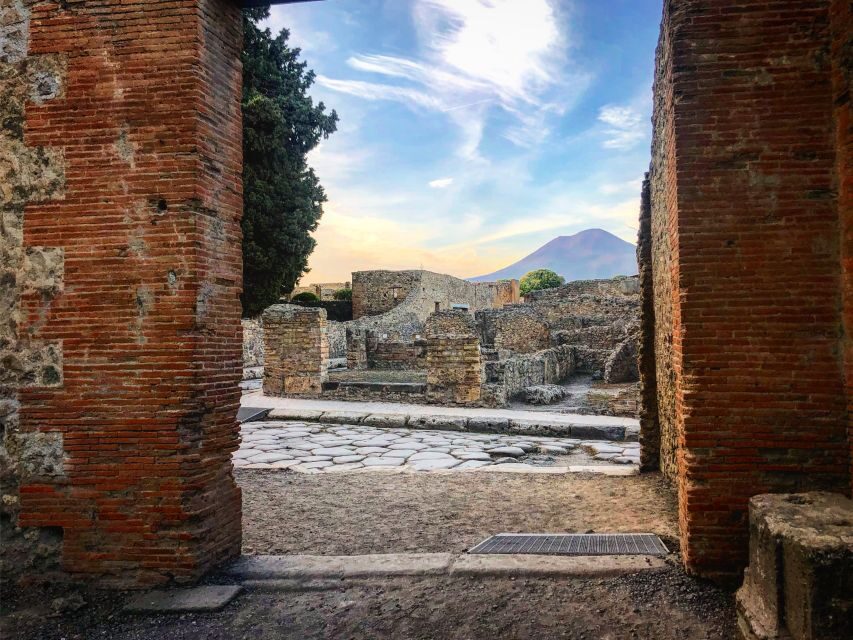
- Skip-the-line entry included, so you start your visit sooner and waste less time
- Small group size (max 20) keeps the tour from feeling like a stampede
- 2-hour guided walking tour targets the most important places without rushing you too hard
- Forum, Basilica, baths, and theater are woven into the route so you understand the city layout
- Vesuvius and the AD79 eruption story is told while you stand where it happened
- Mobile ticket makes it easy to get in without extra printed paperwork
Skip-the-Line at Pompeii: fewer delays, more ruins
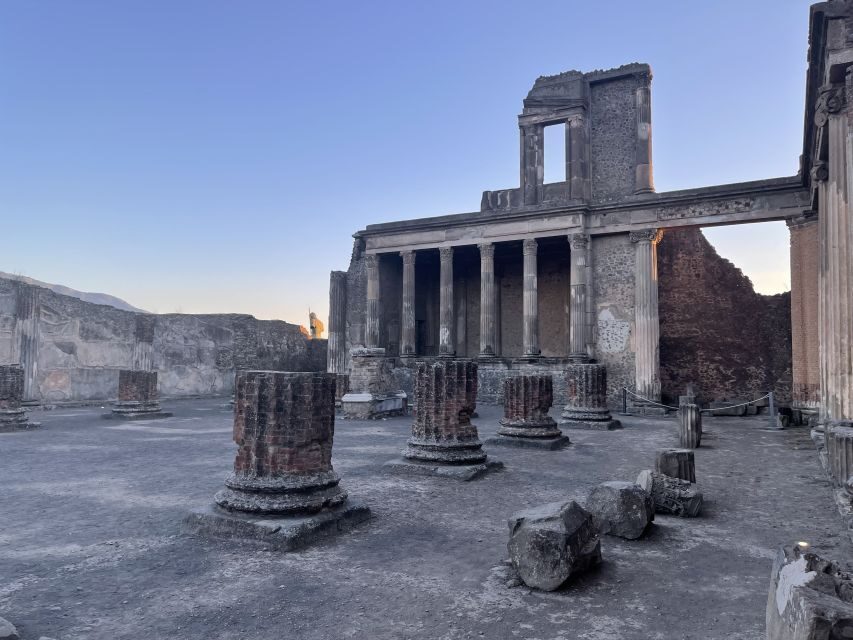
If you’ve ever joined a long line at a major site, you already know why this matters. Pompeii can feel like it’s constantly asking for patience—busy entrances, sun, and people bottlenecking at the same points. By including pre-booked skip-the-line tickets, this tour helps you avoid that slow start and shift your energy toward the ruins themselves.
You also get a cleaner arrival experience. Your ticket is handled digitally via a mobile ticket, and you receive confirmation at booking time. That takes some stress out of the day, especially if you’re coordinating trains, buses, or just trying to find the right street in a busy tourist area.
And yes, there’s a weather reality check. The experience is marked as requiring good weather, so if conditions are rough, you might be offered a different date or a full refund. It’s one of those cases where planning ahead is part of the value.
You can also read our reviews of more guided tours in Pompeii

Your two-hour route through the Forum, Basilica, baths, and theater
This tour centers on one main stop: the Archaeological Park of Pompeii, guided as a walking loop that shows you the core of Roman civic life. At roughly two hours, it’s designed to give you the big picture fast, with just enough detail to make the ruins make sense.
Here’s what you can expect to see and why it matters.
The Forum: where power and public life played out
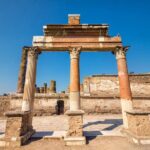
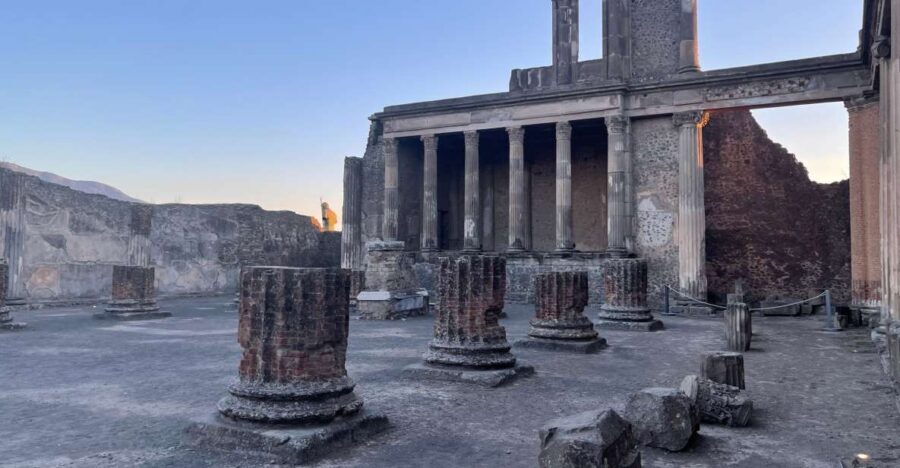
The tour ends at the Forum of Pompeii, which is fitting because it’s also one of the strongest places to understand the city. The Forum wasn’t just a pretty open area—it was a hub for civic pride, decision-making, and public movement. Standing in the Forum area helps you connect what you hear in the story to the physical layout you’re walking through.
If you’ve ever wondered why Roman towns feel so organized, this is the answer zone. The streets, the public buildings, and the flow of people all point toward one idea: Pompeii functioned like a real city, not a set of random ruins.
The Basilica: everyday justice and public meetings
The Basilica is one of those buildings that can look like “just another big wall” until someone explains what it did. In Roman towns, the basilica type of space was strongly tied to public business—place-making for community life and formal interactions.
On this tour, you’re not just seeing the shape of the structure. You’re getting a sense of how civic life operated: who would gather, what kind of public work happened in these areas, and how that connects to the rhythm of daily life before the eruption.
Thermal baths: the routines you can almost smell
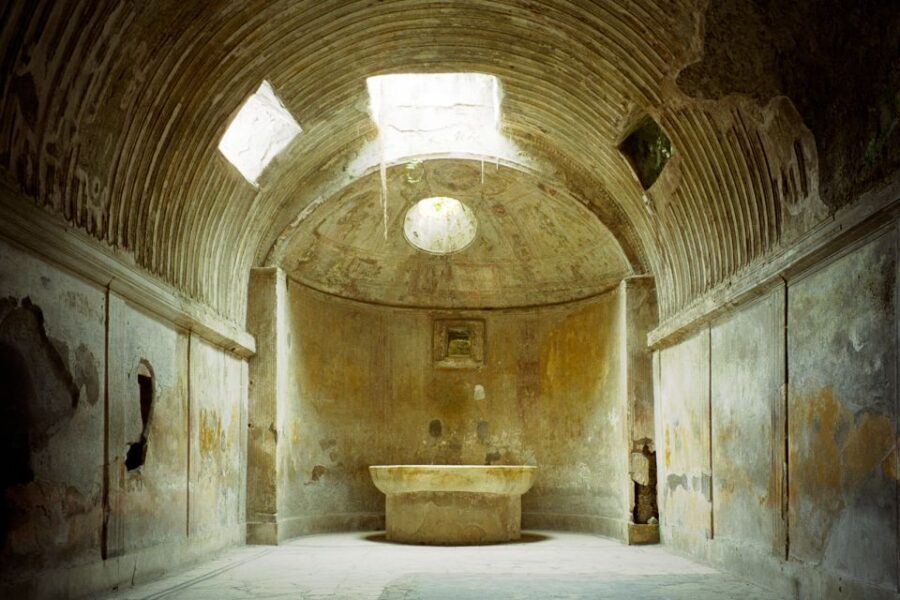
Roman baths weren’t a one-time luxury. They were part of routine, social time, and community identity. When the route includes the thermal baths, it helps you understand Pompeii as a place people lived and socialized in, not only a backdrop for disaster.
I love baths stops on any Pompeii tour because they bring you back to human scale. You’re looking at architecture, yes—but you’re also thinking about the repeated routines: meet someone, talk, relax, rinse, repeat. The ruins become a living city in your mind.
You can also read our reviews of more tours and experiences in Pompeii



The theater: entertainment as a city function
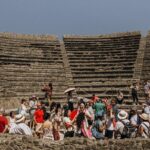
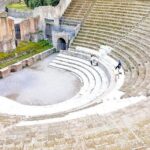
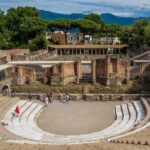
The theater adds another layer. Civic life wasn’t only about politics and business. It was also about performance, gathering, and shared culture. When you see the theater as part of a short, guided circuit, you start to understand that Pompeii had a full schedule of public life.
This is also where a skilled guide can make the city feel less like stone and more like people making plans—what to do, where to meet, and how culture moved through town.
Commercial and residential neighborhoods: the city beyond the icons
A good Pompeii tour doesn’t stop at the postcard highlights. This one points you toward what remains of commercial and residential neighborhoods, which is where Pompeii shifts from “major buildings” to actual neighborhoods.
This section is valuable because it reminds you Pompeii wasn’t empty. It was packed with homes and shops—real spaces for regular people. You start noticing how streets connect and how daily movement likely worked.
The pacing reality check
At about 2 hours, you’ll cover a lot, but you won’t get lost in endless details. That’s a feature if you want context fast. It’s a drawback if you want a slow, photo-heavy wander. The compromise is simple: do the guided overview first, then spend extra time afterward on whatever you loved most.
How the Vesuvius story is told while you’re standing there
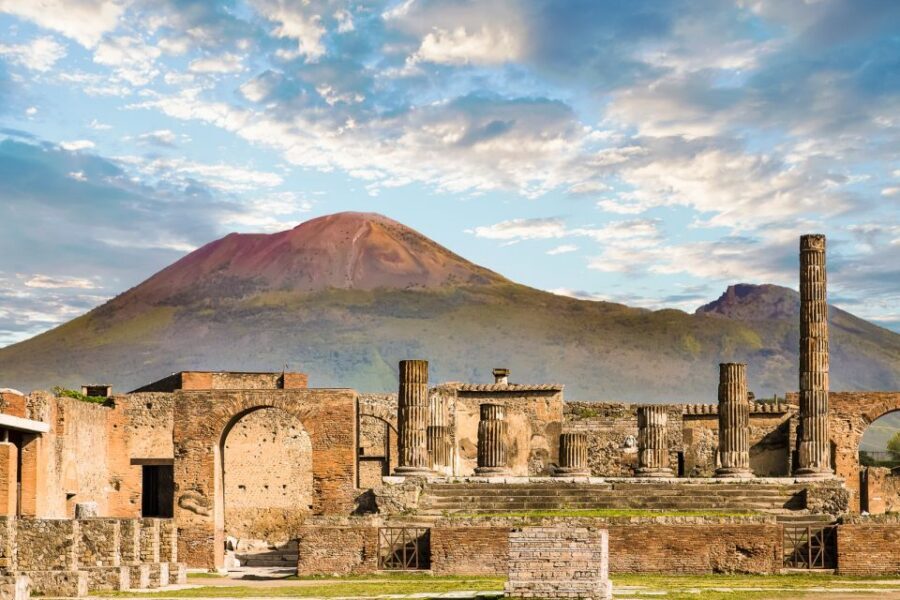
Pompeii has one job: to make AD79 feel real. The eruption of Mt. Vesuvius is the emotional engine of the site, and on this tour, the guide brings that story into the walking route instead of treating it like a separate lecture.
What I find works best on a Pompeii tour is hearing cause-and-effect on the ground. You’re looking at civic buildings, neighborhood remnants, and public spaces, and then the guide threads the disaster into the layout. That turns the tragedy into something more specific: not just “a volcano happened,” but how a city’s routines were interrupted.
One extra plus: some guides have strong science backgrounds. There’s at least one guide noted as a volcanologist, which can add extra clarity to how the eruption impacted the area. Even if you’re not a science person, it helps you understand the why behind the destruction.
Meeting point at Ristorante Bar Sgambati and how the tour ends at the Forum
Logistics matter more at Pompeii than people expect. The meeting point is at Ristorante Bar Sgambati, Via Villa dei Misteri, 1, 80045 Pompei NA, Italy. The tour ends at the Forum of Pompeii, Via Villa dei Misteri, 2, 80045 Pompei NA, Italy.
Two practical tips:
- Give yourself extra time to find the start. One unhappy scenario can happen when people aim for a meeting address shown by a map app that doesn’t perfectly match how people meet on the ground. Arrive early and use the actual street address, not just a pin.
- Remember it’s a shared tour with a set time. If you arrive late or at the wrong place, you may end up out of sync.
If you end your guided portion near the Forum, you’ll likely have a natural jumping-off point for additional self-guided wandering. That’s a smart way to turn a short guided walk into a longer personal exploration.
Group size, pacing, and what makes the guide style matter
This tour caps at 20 travelers, which is the sweet spot for a site like Pompeii. Big tours can become noise. Tiny tours can become awkward if the guide has to fill time. Here, you usually get enough group energy to stay moving, with enough space for questions and clear explanations.
The guide quality is the real value driver. The guide names that come up here—Anna, Frankie (Follow Frankie), Francesco, Ornella, and Daniela—are often praised for blending storytelling with direction. A strong guide also helps you see the site in the right order, including routes that can reduce time spent stuck with crowds.
One caution from the real world: avoid thinking you can treat the tour like you have no obligations. It’s common in Italy for guides to explain expectations at the end, but if that moment gets uncomfortable, it can sour the experience. If tips are a concern for you, decide how you feel ahead of time so you don’t get caught off guard.
Price and value: what $58.87 buys you in Pompeii time
At $58.87 per person for about two hours, the price is best understood as a bundle:
- Skip-the-line tickets included
- A guided walking tour (with the admission covered as part of the experience)
So you’re paying for two things that matter when you’re on-site: access and interpretation. If you show up on your own and buy tickets at the gate, you might spend that money anyway—just in the form of time, lines, and frustration. Buying the guided package is often worth it if you want to get your bearings quickly and avoid wasting your most limited sightseeing hours.
Also, Pompeii isn’t a place you “learn” by skimming. You need context to connect buildings, street layout, and the AD79 story. The guide helps that connection happen while you still have the city’s layout in front of you.
If you book in advance, you’ll likely be better positioned too. This experience is often booked about 30 days in advance, which is a sign of demand for short guided access.
Who this Pompeii skip-the-line tour is best for
This is a great fit if you want an efficient Pompeii hit without turning your day into a marathon. It’s especially well-suited for:
- First-timers who need orientation fast
- Families who want a structured walk through the biggest highlights
- People who prefer a small group and a guided narrative over wandering aimlessly
- Anyone who cares about understanding the city layout—Forum, basilica, baths, theater, and neighborhood remnants
It might be less ideal if:
- You want a long, slow, hour-by-hour photographic visit
- You get impatient when you can’t stop as often as you want
- You’re very sensitive to crowds and tight timing (even with smaller groups, Pompeii is still Pompeii)
Good news: service animals are allowed, and it’s noted that most travelers can participate. If you have mobility needs, you’ll still want to think through uneven walking surfaces typical of archaeological sites, even when the tour itself is short.
Should you book this tour?
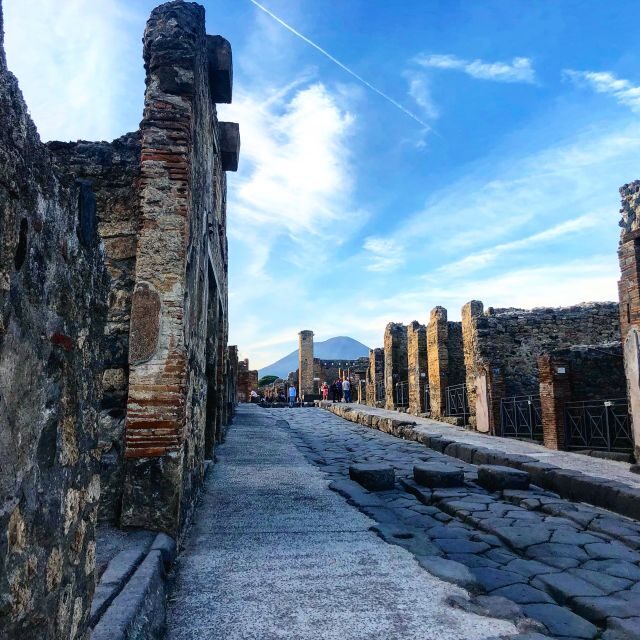
I’d book it if you want Pompeii to feel understandable quickly. The combination of skip-the-line entry plus a tight 2-hour guided route is a strong way to turn a high-demand site into a manageable plan. And if you care about the human story of AD79, this format helps it land while the city layout is still fresh in your mind.
I’d skip—or plan differently—if you want a leisurely, self-paced visit with lots of unstructured time. In that case, you might prefer more time on your own after the guided overview, or choose a longer tour that matches your pace.
If you’re torn, here’s a practical rule: if Pompeii is your one big stop and you don’t want to lose hours to logistics, this is the sensible, time-saving choice.
FAQ
How long is the Pompeii guided tour?
The tour runs for about 2 hours.
Is admission included?
Yes. The guided walking tour includes admission ticket access.
Does the tour use skip-the-line entry?
Yes. Skip-the-line tickets are included as part of the experience.
What language is the tour offered in?
The tour is offered in English.
Where do I meet the guide, and where does it end?
You meet at Ristorante Bar Sgambati, Via Villa dei Misteri, 1, 80045 Pompei NA, Italy. The tour ends at the Forum of Pompeii, Via Villa dei Misteri, 2, 80045 Pompei NA, Italy.
How big is the group?
The tour has a maximum of 20 travelers.
Is a mobile ticket used?
Yes. You’ll have a mobile ticket.
Is the tour available for everyone?
It’s noted that most travelers can participate. Service animals are allowed, and the meeting area is near public transportation.
What if the weather is bad?
This experience requires good weather. If it’s canceled due to poor weather, you’ll be offered a different date or a full refund.
Can I get a full refund if plans change?
Free cancellation is available. You can cancel up to 24 hours in advance for a full refund, and within 24 hours there’s no refund.