REVIEW · POMPEII
Pompeii 3h Private & Quality Tour with your Archaeologist
Book on Viator →Operated by Grand Tour Experience · Bookable on Viator
Pompeii clicks into place fast with a guide. This private Pompeii tour pairs a live, authorized archaeologist with a tight route you can actually manage in about 3 hours. I like that the visit starts you at the main entrance at Porta Marina Superiore, then builds outward from the evidence: Vesuvius context, what’s in the antiquarium, and what the excavations reveal.
Two things I really like: you get skip-the-line entry help (they send you a link in advance), and you walk with the focused attention of a guide who can answer real questions on the spot. In the past, guides like Francesco, Paolo, Patrizia, Riccardo, Raffaele, and Daniela have been highlighted for strong English and for turning the ruins into understandable stories for groups from kids to seniors.
One consideration: the entrance ticket isn’t included (it’s €19 per person). Also, with only 3 hours, you’re seeing a carefully chosen slice of Pompeii rather than trying to cover everything on your own wish list.
In This Review
- Key highlights worth planning around
- A private Pompeii walk built around an archaeologist
- Skip-the-line entry: what you need to know
- Starting at Porta Marina Superiore: your tour’s “front door” plan
- Antiquarium first: artifacts that change how you see the eruption
- Basilica, Forum, and Temples: the city’s day-to-day center
- The Greater Decumano and Lupanare: streets, water, and sex-work clues
- Domus of Leda and the Swan, plus newly opened rooms
- Via dell’Abbondanza and the Fugitives’ Garden
- Great Gymnasium: everyday objects, even charred food
- The amphitheatre finish: a dramatic ending point
- Price and group size: where the value really comes from
- Who this tour suits best
- Tips to get more out of your 3 hours
- Should you book this Pompeii private archaeologist tour?
- FAQ
- How long is the Pompeii 3h Private & Quality Tour?
- Is the tour in English?
- What does the price include?
- Is the Pompeii admission ticket included in the price?
- Where do we meet for the tour?
- Is this a private tour?
- How many people are in a group?
- What is the cancellation policy?
Key highlights worth planning around
- Main-entrance start at Porta Marina Superiore to save time and reduce stress at the gate
- Antiquarium stop with artifacts including a coin tied to eruption dating and a heavy golden arm cuff
- Domus-focused route, including recently opened areas like the Domus of Leda and the Swan
- A clear walk through Pompeian daily life: Basilica, Forum, market areas, thermal system views, and the Lupanare
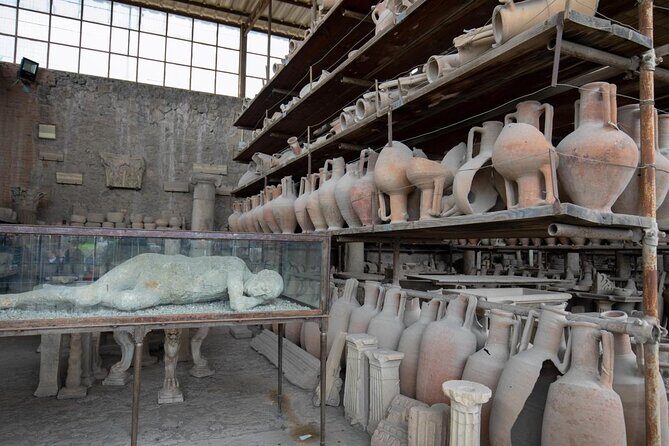
- Fugitives’ Garden with plaster moulds showing where people tried to escape
- Great Gymnasium and amphitheatre finish with daily objects, even charred food, and a dramatic end point
A private Pompeii walk built around an archaeologist
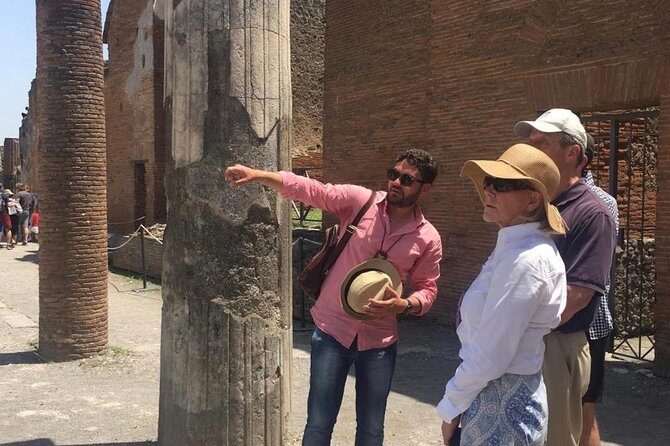
Pompeii can feel overwhelming—so much stone, so many rooms, so little time. The smart move here is letting an archaeologist guide decide what to show you and how to explain it. The tour is designed to connect the dots: what the city looked like, how it worked, and what the eruption preserved.
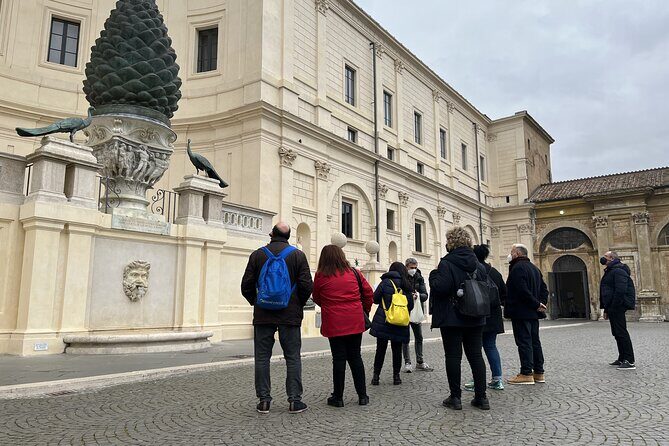
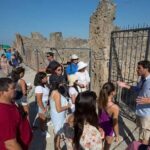
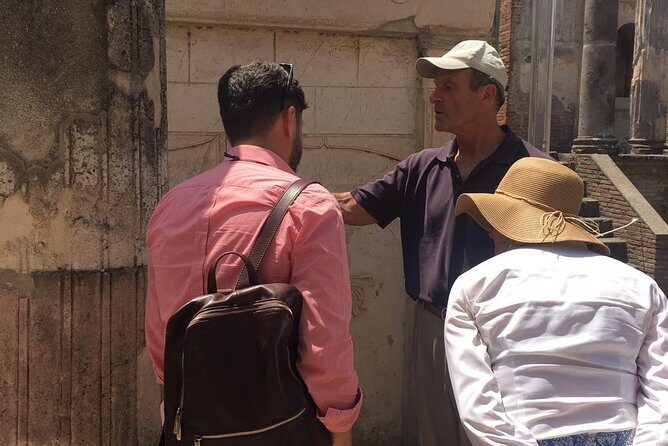
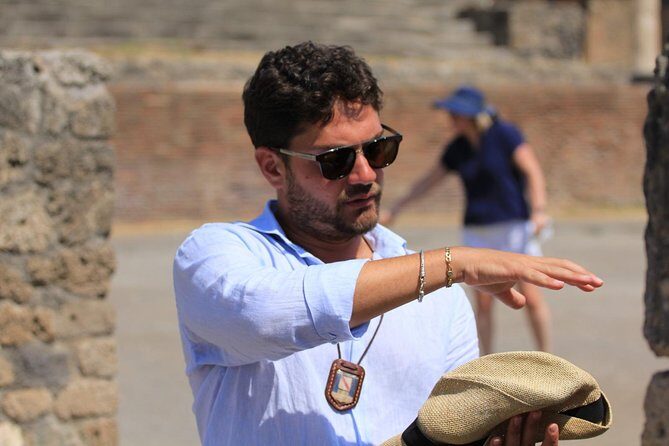
This is also where the private format matters. With a small group (up to 10) you can move at a pace that fits your crew—especially helpful if you’ve got mixed ages. In the reviews, guides were praised for managing time efficiently and keeping the day comfortable for both younger visitors and older ones. I’d treat that as a big signal: this isn’t a “run fast and hope you keep up” style tour.
Just as important, the guides aren’t only reciting dates. They’re talking about objects, restorations, and ongoing discoveries. That’s what makes Pompeii feel like a research site instead of a museum copy.
You can also read our reviews of more private tours in Pompeii


Skip-the-line entry: what you need to know
Pompeii’s entrance can be the bottleneck. This tour helps you avoid that by providing a link before the visit so you can buy a direct skip-the-line admission ticket. The guided portion includes the expert archaeologist and the route inside the park, but the ticket itself is not included.
Practical takeaway: budget for the €19 per person ticket, and follow the pre-tour link so you’re lined up with the intended entry flow. It’s a small step on your end that can save a lot of standing around.
Starting at Porta Marina Superiore: your tour’s “front door” plan
The meeting point is Scavi di Pompei – Biglietteria Porta Marina Superiore, at Via Villa dei Misteri, 2, 80045 Pompei (NA), Italy. The tour begins from this main entrance, Porta Marina Superiore, which helps you get your bearings quickly and keeps the early part of your visit from getting chaotic.
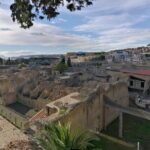
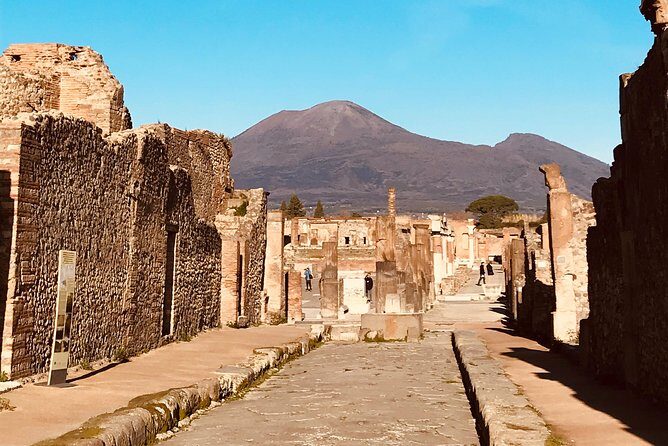
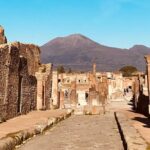
You also get a built-in visual reminder of what’s coming: the route is described as moving with views of Mount Vesuvius. That matters because it frames the whole story. You’re not just looking at walls—you’re seeing what the eruption trapped and preserved, and how excavation work turned ruins into evidence.
Antiquarium first: artifacts that change how you see the eruption
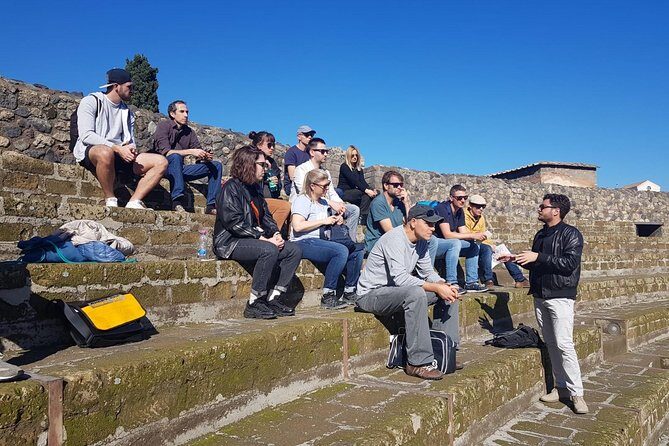
One of the most valuable early stops is the antiquarium. Before you even wander deep into the city blocks, you’re shown objects from recent excavations, including a coin that affects how people interpret the eruption’s timing, plus a very heavy golden arm cuff.
Why this matters: Pompeii is famous because of dramatic preservation, but the real magic is the details. When you learn that even something as small as a coin can refine dates, you start spotting Pompeii’s deeper value. The guide’s job is to connect those artifacts to what you’ll see outdoors—where the story becomes physical.
This is also a good moment to ask questions while you’re fresh. If you’re wondering how restorations are handled or what “recently opened” domus means in practice, the antiquarium context makes those answers click.
Basilica, Forum, and Temples: the city’s day-to-day center
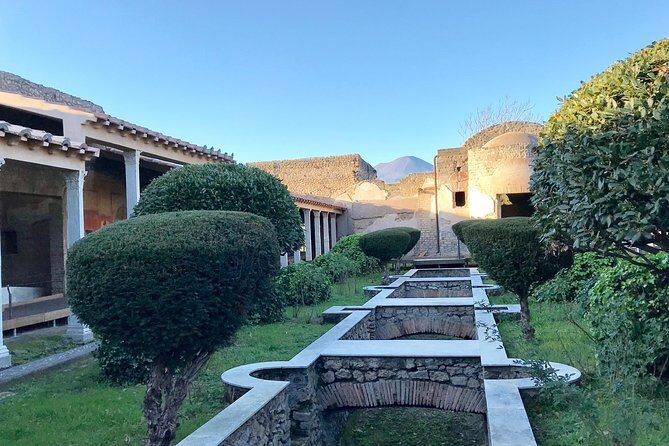
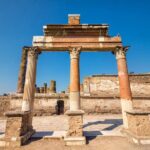
After the antiquarium, the tour moves through the Basilica and the Forum, including the market area and the main temples. This is Pompeii’s public heart: not bedrooms and not back alleys, but the place where civic life happened.
The value here is clarity. In a self-guided visit, it’s easy to get lost in beautiful rooms and forget how the city worked as a system. A guide can explain what you’re looking at and why people gathered there.
I’d mentally tag this as your “urban systems” segment. Once you understand how the Forum and temples fit into daily life, the later stops—houses, gardens, even the amphitheatre—start feeling like chapters in one story.
You can also read our reviews of more tours and experiences in Pompeii

The Greater Decumano and Lupanare: streets, water, and sex-work clues
From the Forum you head along the Greater Decumano, and the route includes two big topics that help you understand Pompeii as a functioning city: the thermal system and the Lupanare.
1) Thermal system area: you get a nearby look at how bathing and water use were arranged.
2) Lupanare: you see the well-known brothel site, discussed in a way that places it in the city fabric rather than treating it like a shock photo stop.
In reviews, the best guides were credited with thoughtful explanations that “brought the Roman world to life.” That kind of guidance is exactly what helps here, because these parts of Pompeii can be misread if you only look at them as labels.
Tip: if you’re visiting with kids, you’ll want to decide in advance how much you want the guide to explain in explicit terms. A good archaeologist-style guide can often adjust phrasing while still teaching the important context.
Domus of Leda and the Swan, plus newly opened rooms
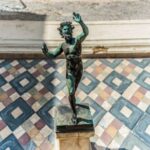
A major advantage of this tour is that it goes beyond the obvious “must-see” ruins. It explores many domus (Roman houses), including some recently opened areas such as the Domus of Leda and the Swan.
This is where Pompeii earns its reputation, because those homes show you the “designed” side of daily life: artwork, layout, and how wealth and status expressed themselves through domestic spaces.
The route also includes mentions of restorations—like those connected to the House of Golden Cupids—made by one of the guide’s teacher. Even without a long lecture, that kind of detail signals that the guide is tied to the work and not just reciting what’s printed on signs.
If you care about art and patronage, this section is the payoff. If you don’t, it’s still useful because it explains social rank in a way you can see, not just hear.
Via dell’Abbondanza and the Fugitives’ Garden
Next comes via dell’Abbondanza, heading toward the Fugitives’ Garden—a stop tied to what happened during the eruption when people tried to escape. What you’ll see is described as moulds: impressions that show where people died as the disaster overtook the area.
This is emotionally heavy, but it’s also one of the most educational parts of Pompeii. It’s where “tragedy” becomes evidence. A skilled guide helps you hold both truths: the human reality and the archaeological record.
Practical note: plan for a slower pace here. Even if the group moves efficiently overall, don’t rush the moments that feel intense. This is the sort of stop where you’ll remember details later, long after the photos blur together.
Great Gymnasium: everyday objects, even charred food
Then you reach the Great Gymnasium, where many daily objects are exposed—described as including even charred food.
This can be one of the most unsettling and convincing stops on the whole itinerary. You’re not only seeing how people lived; you’re seeing what survived and what changed. The mention of charred food is important because it turns the eruption story from scenery into something you can almost smell and picture.
Value-wise, this is the moment when Pompeii stops being just “ruins you toured” and becomes a site that explains how systems—food, workspaces, routines—got interrupted.
The amphitheatre finish: a dramatic ending point
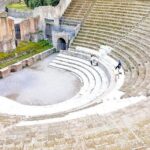
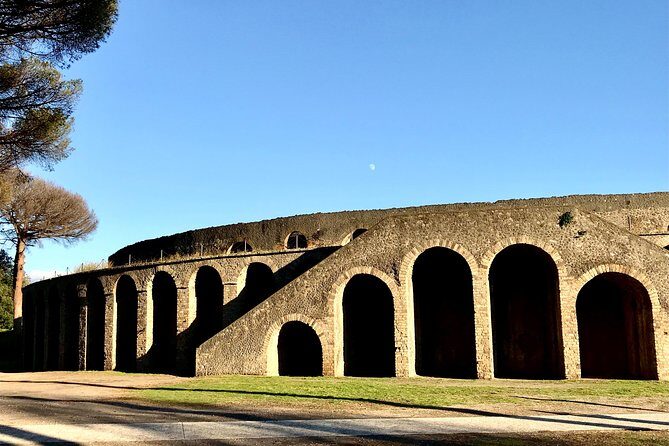
The tour ends at the amphitheatre. It’s a strong closer because the shape is immediately legible even if you’re not a classicist. You can picture crowds, sound, and spectacle—then connect it back to what the guide explained earlier about urban life.
Also, finishing with a larger open structure helps you transition out of the site with your mind clearer. You don’t end on a tiny room full of inscriptions that requires deep reading to appreciate.
Price and group size: where the value really comes from
The price is $385.32 per group (up to 10) for about 3 hours. That sounds steep if you compare it to a basic entry ticket. But for a private Pompeii visit with an authorized archaeologist, the math shifts depending on how many people split the cost.
- If you fill more of the group capacity, you’re paying less per person for expert time.
- If you’re traveling as a small party of 1–2, you’ll feel the premium more, because it’s still a full-group rate for the guide.
Then add the practical value: the tour includes help purchasing a direct skip-the-line admission ticket and a route that hits the site’s most teachable highlights without wasting time. In other words, you’re paying for both interpretation and time efficiency.
My suggestion: if Pompeii is the main stop on your itinerary (not one of three), this kind of guided focus is usually worth it.
Who this tour suits best
This Pompeii experience fits best if you want:
- One clear route through Pompeii rather than making decisions under pressure
- Expert guidance on what you see in houses, public spaces, and key eruption-related areas
- A pace that can handle mixed abilities and ages (the guide approach has been praised for that)
- An archaeologist mindset: objects, restorations, and explanations that match the evidence
It may be less ideal if you’re the type who loves wandering aimlessly for hours with no structure, or if your priority is to maximize the number of sites over the quality of interpretation. Also, note the tour is offered in English, so check language needs for your group.
Tips to get more out of your 3 hours
Here’s what I’d do to maximize your time on the ground:
- Wear comfortable shoes. Pompeii includes uneven stone and lots of walking.
- Come with a couple of questions ready, like how domus life differed from public life or what restorations mean for how you interpret the past.
- If you’re planning food after, ask your guide where to eat. One guide was specifically praised for sending people to a place away from typical tourist routes, which is the kind of local value you can only get from the person doing your tour.
And don’t underestimate the group dynamic: private tours work best when everyone is engaged enough to ask questions and share interests.
Should you book this Pompeii private archaeologist tour?
If you’re deciding between winging it or hiring a guide, I’d lean toward booking this style of tour—especially if Pompeii is a top priority for your trip. The combination of private attention, a carefully chosen route, and archaeologist-level explanations makes the difference between seeing ruins and understanding them.
Book it if:
- You want skip-the-line help and a plan for where to go first.
- You care about houses, public spaces, and eruption-related evidence in one visit.
- Your group spans ages or interests and you want someone to manage the day.
Skip it if:
- You only want the cheapest option and don’t mind waiting at the gate.
- Your idea of a perfect day is long, unstructured wandering with no guidance.
Bottom line: for a 3-hour Pompeii visit, this is the kind of tour that turns time into meaning—and keeps the day from slipping away to confusion and lines.
FAQ
How long is the Pompeii 3h Private & Quality Tour?
It lasts about 3 hours.
Is the tour in English?
Yes. The experience is offered in English.
What does the price include?
It includes a guided tour of the Pompeii ruins with an authorized guide and expert archaeologist. The tour also provides a link before the tour to purchase a direct skip-the-line admission ticket.
Is the Pompeii admission ticket included in the price?
No. The admission ticket costs €19 per person and is not included.
Where do we meet for the tour?
The meeting point is Scavi di Pompei – Biglietteria Porta Marina Superiore, Via Villa dei Misteri, 2, 80045 Pompei (NA), Italy.
Is this a private tour?
Yes. It’s a private tour/activity, and only your group participates.
How many people are in a group?
The price is per group for up to 10 people.
What is the cancellation policy?
Free cancellation is available. You can cancel up to 24 hours in advance for a full refund. If you cancel less than 24 hours before the start time, the amount you paid will not be refunded.