REVIEW · COOKING CLASSES
Pasta Cooking Class in Rome – Fettuccine Class in Piazza Navona
Book on Viator →Operated by Eatalian Cooks · Bookable on Viator
Pasta in Rome, but with hands-on magic. This is a small-group fettuccine-making workshop set right by Piazza Navona, with that famous fountain view while you learn classic Italian techniques. You roll the dough, shape fettuccine, and get guidance you can actually use back home.
I especially like the way the meal is built around your work: you start with bruschetta, then eat the fettuccine you made with a sauce you choose. You also get drinks included (water, soft drinks, and alcoholic options), plus a wine or beer with the meal.
One big consideration: this class has no gluten-free option. It also uses eggs, so it is not a fit for vegans, and pesto requests are not recommended if you have lactose or nut allergies.
In This Review
- Key highlights
- Piazza Navona Meets Fresh Fettuccine: What This Experience Really Is
- The Two-Hour Window: Why the Timing Works
- Rome Sightseeing Included: Trevi, Campo de’ Fiori, and Vatican Views
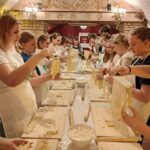
- Inside the Workshop: How Fettuccine-Making Actually Plays Out
- Sauce Choice + Restaurant Finish: The Part People Often Get Wrong
- Bruschetta, Wine or Beer, and Coffee or Limoncello: The Included Meal Part
- Value for $67.72: What You’re Paying For (and What You Should Expect)
- Who This Class Fits Best (and Who Might Be Frustrated)
- Practical Tips: How to Get the Most Out of Your Fettuccine Class
- Should You Book Pasta Cooking Class in Rome (Fettuccine at Piazza Navona)?
Key highlights
- Small-group size (max 15) keeps the class personal and easy to follow
- Piazza Navona location means you’re learning and eating with the fountains in sight
- Fresh fettuccine from scratch with step-by-step instruction you can repeat at home
- Sauce choice + restaurant finish: you pick the sauce, the kitchen prepares and serves it
- Bruschetta and drinks included, including wine or beer and later coffee or limoncello
- No gluten-free option and not vegan-friendly (eggs in the dough)
Piazza Navona Meets Fresh Fettuccine: What This Experience Really Is
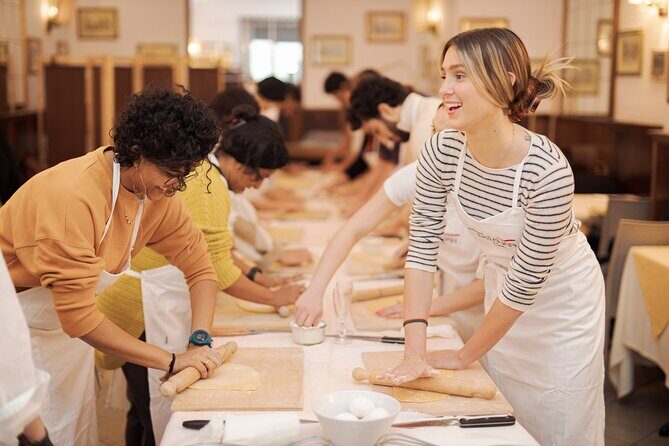
This isn’t a lecture-style cooking show. It’s a hands-on pasta workshop centered on one thing: making fresh fettuccine that you can confidently recreate later. The setting helps a lot. Starting and eating around Piazza Navona turns the class into an afternoon you’ll remember, not a chore squeezed between ruins.
The format is simple. You learn dough and shaping in a small group, then your pasta ends up paired with a sauce you choose. While that’s happening, you hang out at the restaurant with views over the square and Renaissance fountains. That part matters because good pasta timing is real—fresh dough doesn’t wait around forever—so you get to relax while the kitchen finishes the final steps.
If you like classic Italian food that’s “serious but not stuffy,” you’ll probably enjoy this. It’s also a good choice for families because you get a task you can do with your hands, plus a meal that shows up right after.
You can also read our reviews of more cooking classes in Rome
The Two-Hour Window: Why the Timing Works
The class runs about 2 hours. That length is one of the best values in Rome. You get a full cooking experience without needing to reorganize your entire day around it, and it fits neatly after a morning of sightseeing.
It also helps that the group stays small, with a maximum of 15 people. In practice, that means you’re not shouting over a crowd while trying to figure out how to roll dough. You can ask questions, get corrections, and move at a pace that keeps you from turning your fettuccine into linguine with anxiety.
That said, two hours is still not a slow-food seminar. The class is designed to be efficient. If you want to stretch every step into a long conversation about flour types, humidity, and gluten development, you might find the pace quick. The good news: you’ll leave with a clear, repeatable method for making pasta at home.
Rome Sightseeing Included: Trevi, Campo de’ Fiori, and Vatican Views
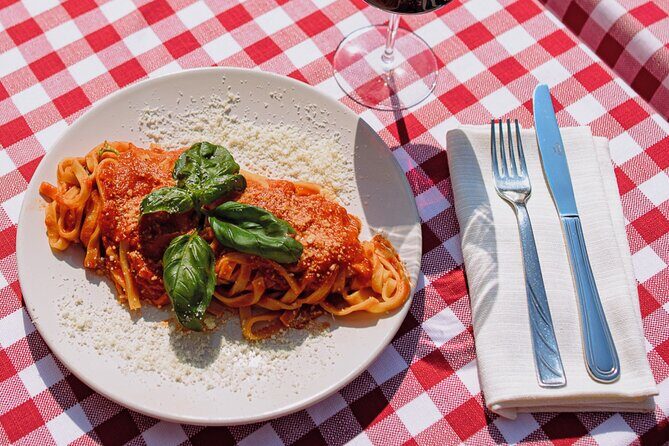
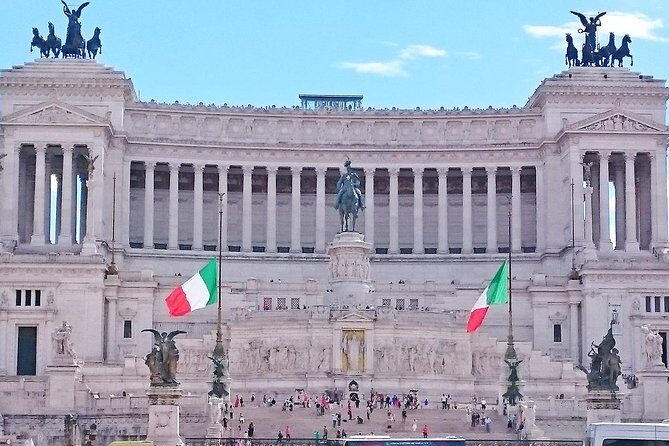
Even though the heart of the experience is the pasta, the plan also includes passing major central sights. You start around Piazza Navona, then move through the kinds of stops people actually want to see on a first trip: Trevi Fountain, Campo de’ Fiori, Castel Sant’Angelo, and viewpoints associated with Vatican City and Piazza Venezia.
Here’s why that matters: it keeps your afternoon from feeling like you simply teleported from one attraction to another. You’ll get a sightseeing thread running through the experience, so the pasta class feels like part of Rome, not a standalone add-on.
You won’t spend all your time in one museum line, and you won’t be stuck away from the main sights for half a day. The downside is also the tradeoff: the stops are part of a timed experience, so don’t expect deep guided explanations at every location.
If you’re the type of person who likes your day structured—start here, see these sights, end back in the same area—this setup can be comforting.
Inside the Workshop: How Fettuccine-Making Actually Plays Out
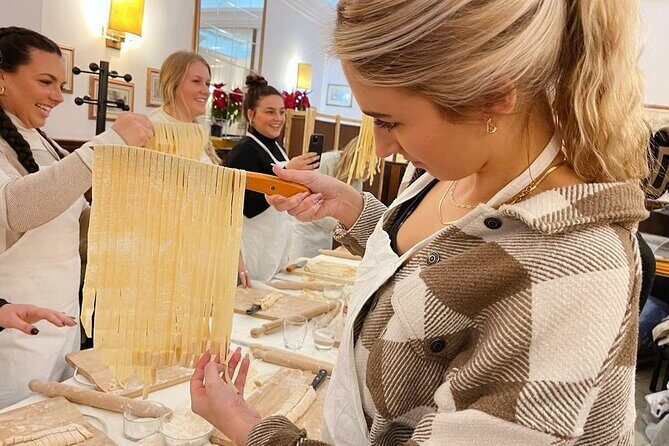
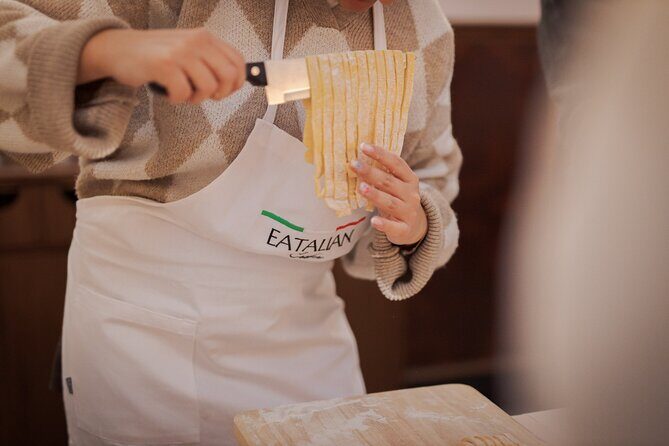
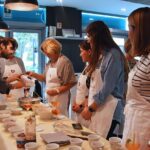
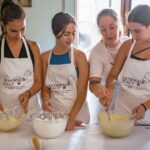
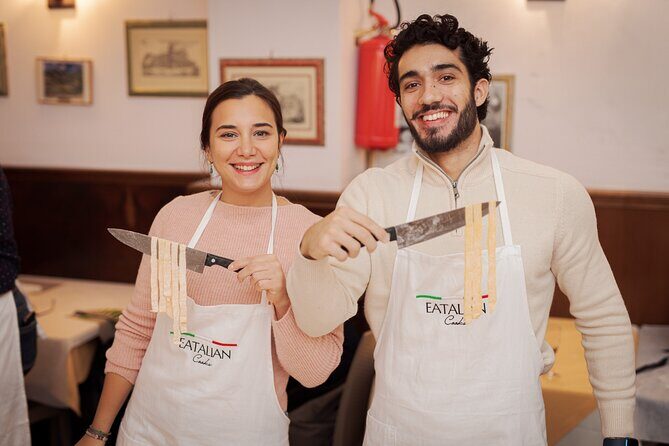
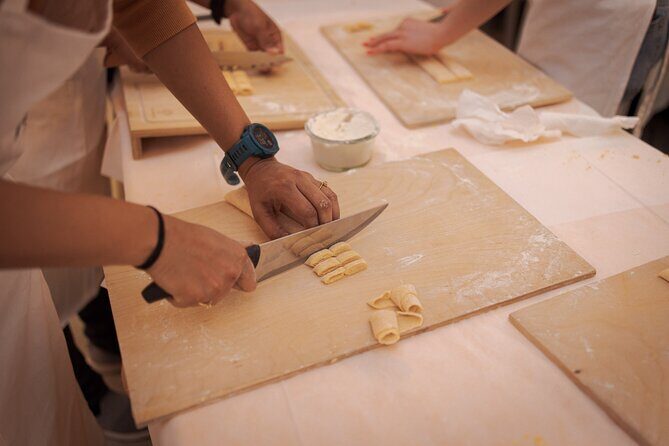
You’ll learn the mechanics of fresh pasta step by step, starting from raw dough and shaping into fettuccine. The instruction is designed to be doable for first-timers. The most common skill you’ll take home is confidence. You won’t just copy a recipe—you’ll understand what you’re aiming for when the dough is ready to roll, cut, and shape.
The class also leans into fun. In some sessions, the teaching approach includes playful elements, like friendly challenges around rolling or shaping. That kind of energy keeps kids from getting bored and keeps adults from feeling intimidated by something that sounds fancy.
One detail I really like for practical learners: you don’t just make dough and walk away. You’re set up to eat what you produce. After you shape the pasta, the restaurant’s kitchen prepares it, and staff serves it as your meal.
Instructors can vary by day, but the teaching style stays consistent. You might be taught by chefs and instructors named Sarah, Simone, Emmanuel, Georgia, Enea, Luca, or Alena—and the best part is that they focus on making the process feel understandable, not mysterious.
Sauce Choice + Restaurant Finish: The Part People Often Get Wrong
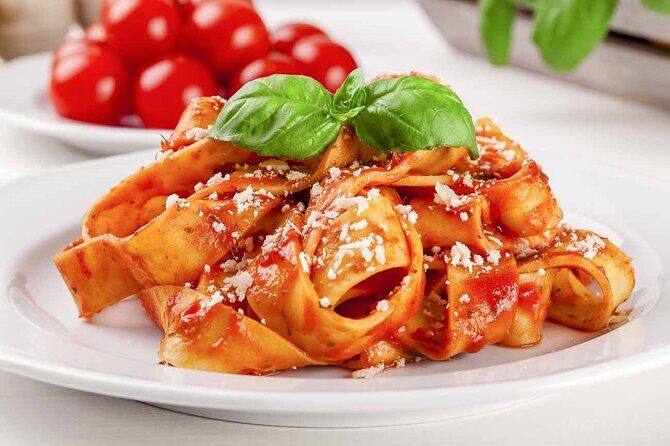
Here’s the key point you should know before booking: the class is focused on fresh pasta-making, not pasta-and-everything-else. You make the fettuccine. Then you choose a sauce, and the restaurant kitchen prepares it and serves it with your pasta.
That sauce component is where many people get surprised. If you assumed you’d also get dessert or a huge spread of extra items, you might feel let down. But if you’re mainly after learning fresh pasta and eating a real meal right after, it fits the bill.
Sauce choices are also a big part of why the class feels flexible. You can pick what you’re in the mood for, and the meal becomes a direct extension of what you practiced in the workshop.
Just know the class has limits based on ingredients. There is no gluten-free option, and the pasta dough includes eggs, so it’s not vegan. If you have lactose or nut allergies, you should avoid ordering pesto. (Pesto often involves dairy and nuts depending on the recipe.)
You can also read our reviews of more tours and experiences in Rome
Bruschetta, Wine or Beer, and Coffee or Limoncello: The Included Meal Part
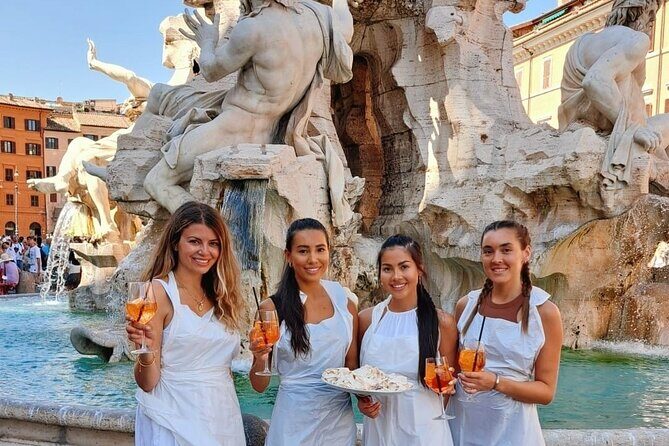
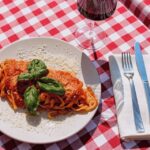
The meal is not an afterthought. You begin with bruschetta as an appetizer. Then your fettuccine arrives with your selected sauce. Drinks are included, including bottled water and soft drinks, and alcoholic beverages are part of the package.
At the meal, you’ll get a glass of wine or beer. Later, you should also expect coffee or limoncello after the meal, which makes the experience feel like a complete dining moment, not just a cooking demo.
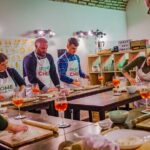
This is also where the class becomes social. You sit at tables, eat what you made, and talk with the group—often with a mix of family setups, solo visitors, and friend groups. It’s a nice reset after a morning of walking Rome’s famous streets.
If you’re the type who likes to keep logistics simple, this is the right kind of package. You don’t need to plan a separate dinner reservation right away. You get fed on-site, and your pasta is served while you’re still riding the momentum of the workshop.
Value for $67.72: What You’re Paying For (and What You Should Expect)
At $67.72 per person for about two hours, you’re paying for several things at once:
- Small-group instruction for shaping and working with fresh dough
- A proper meal centered on what you made
- Included drinks (water, soft drinks, and alcoholic options, plus wine or beer with the meal)
- A prime location near Piazza Navona, which is never cheap in time or money
So the best way to judge the value is to match it to your goal. If your goal is to learn how to make fettuccine and then eat it, the price starts making a lot of sense. If your goal is to leave with a full multi-course Roman feast plus a buffet of extra dessert and drinks, you may end up disappointed because this is a focused pasta session.
One more reality check: because it’s priced and timed for an experience, you shouldn’t expect a super slow, private masterclass. Think friendly and efficient. You’ll get enough guidance to recreate the process later, but you won’t get hours of deep theory.
Who This Class Fits Best (and Who Might Be Frustrated)
This works best if you want an experience that’s both hands-on and immediately rewarding. It’s especially good for:
- Families with teens and kids who need an activity that feels different from ruins and lines
- Adults who have never made pasta but want a doable method
- Friend groups looking for a shared activity that ends with dinner
You may also like it if you want your Rome day anchored around Piazza Navona. You can enjoy the square before and after, since the class ties you to that area and ends back near where you started.
Now the “skip” list is clear. This class is not recommended if you’re dealing with:
- Gluten intolerance (no gluten-free option)
- Vegan needs (eggs are part of the pasta dough)
- Lactose or nut allergies where pesto is involved (the safe move is to avoid pesto)
- Mobility issues (not recommended for those with mobility limitations)
If any of these apply to you, don’t just hope it works out. The class is built around traditional fresh pasta ingredients.
Practical Tips: How to Get the Most Out of Your Fettuccine Class
Here’s how I’d set yourself up for a smooth, enjoyable session.
First, plan to arrive early enough to find the meeting point without stress. You’ll meet at TucciPiazza Navona, 94, 00186 Roma RM, Italy. It’s near public transportation, and you’ll have a mobile ticket, which keeps things moving.
Second, dress for food work. Even if the instructor keeps it tidy, you’ll be handling dough. Comfortable shoes help because you’re going to be standing and moving around.
Third, if you have allergies or you need to avoid certain ingredients, speak up early. The class specifically notes not to ask for pesto if you have lactose or nut allergy. That’s a clue that sauce choices are not one-size-fits-all.
Fourth, set expectations for what you get. You’re making fettuccine and choosing a sauce. You’re not signing up for a dessert workshop or a huge spread of unlimited food. If you want a classic, focused pasta lesson that ends with a satisfying meal, you’ll be happy.
Finally, if you’re traveling with kids, this is one of those activities that can refresh their brain. It’s hands-on, not lecture-heavy, and kids tend to feel proud when they shape their own pasta.
Should You Book Pasta Cooking Class in Rome (Fettuccine at Piazza Navona)?
Book it if you want a genuine Rome food experience where the main event is hands-on fresh fettuccine and you eat the results right away. The setting at Piazza Navona, the included meal structure (bruschetta, sauce with your pasta), and the drinks package make it feel like an experience, not just a ticket.
Skip or reconsider if you need gluten-free, you follow a strict vegan diet, or mobility is a concern. Also think twice if you want an all-inclusive dining party with lots of extras, because this one is built around learning pasta first.
If you’re aiming for a practical “I can do this at home” takeaway—plus a great Roman afternoon—this is a strong choice.