REVIEW · WALKING TOURS
Medieval Rome & trastevere walking tour w/personal tour guide
Book on Viator →Operated by Easitalytours · Bookable on Viator
Medieval Rome feels close when you walk it. This private 3-hour stroll connects the Jewish Ghetto, Trastevere, and ancient landmarks in one smooth route, with a professional art historian guiding the way. I especially like the personal pacing of a private tour and the mix of places you can’t easily line up on your own. One thing to consider: it’s still a lot of walking on old streets, so plan for steady, moderate effort.
If you want Rome that looks like Rome, not a theme park, this tour is built for that. You’ll spend time in squares and alleys where the city still does its daily job, and you’ll also see major ancient ruins without the stress of figuring them out alone.
Key points I’d book for
- Private, local art historian guide for a smarter walk, not just photo stops
- Jewish Ghetto + Trastevere in one outing, so you get contrast, not repeat scenery
- Roman landmarks with free access: your stops are outside/accessible without paid entry tickets
- Bramante’s fountain in Piazza di Santa Maria in Trastevere adds a real sense of place
- Finish at Basilica of Santa Maria in Trastevere, a great launch point for dinner plans in Trastevere
- In one group, the guide Stephanie stood out as fun and extremely knowledgeable
In This Review
- A Private 3-Hour Walk Through Medieval Rome’s Best Corners
- Where It Starts and Why Campo de’ Fiori Sets Up Your Walk
- Antico Quartiere Ebraico (Jewish Ghetto): Stone Streets With Stories Attached
- Trastevere’s Santa Maria Square and Bramante’s Fountain Stop
- Trastevere: Cobblestones, Old Buildings, and Night Energy You Can Feel
- Teatro di Marcello: Ancient Theatre Ruins That Still Command Attention
- Isola Tiberina (Tiber Island): A Quiet Pause in the Middle of Rome
- Campo de’ Fiori Square: Market Day Energy to Evening Hangout Spot
- How the Guide Changes What You See
- Walking Comfort, Smart Casual, and Realistic Expectations
- Price and Value: What $254.67 Gets You
- Who Should Book This Tour (And Who Might Want a Different Style)
- Should You Book This Medieval Rome & Trastevere Tour?
- FAQ
- How long is the Medieval Rome & Trastevere walking tour?
- Is this tour private?
- What’s included in the price?
- Where do I meet and where does the tour end?
- What should I wear?
- What if the weather is bad?
A Private 3-Hour Walk Through Medieval Rome’s Best Corners
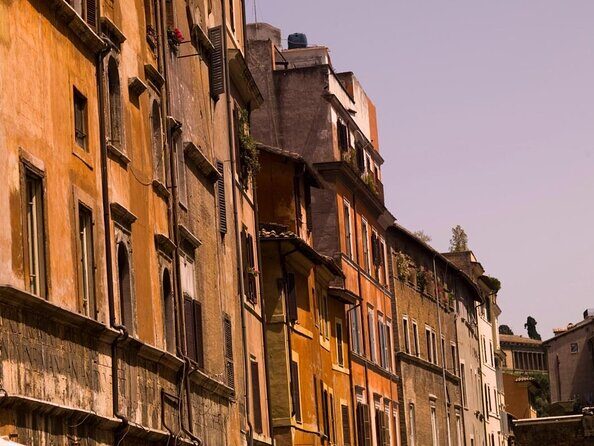
This tour is designed for people who like Rome on foot—slow enough to notice details, structured enough to understand what you’re seeing. It runs about 3 hours, which is a sweet spot. You get multiple neighborhoods and key landmarks, yet you’re not stuck all day in transit or waiting around for others.
Because it’s private, your group stays together and your guide can shape the pace. That matters in Rome, where streets tighten up, crowds swing in and out, and one wrong turn can waste ten minutes fast. Here, you’re moving with context from stop to stop.
You’ll also appreciate that most stops are admission free. That doesn’t mean the tour feels light. It means you’re paying for the guide and the route, not for entry fees at a bunch of paid sites. It’s a practical way to get a lot of meaning from public spaces.
Where It Starts and Why Campo de’ Fiori Sets Up Your Walk
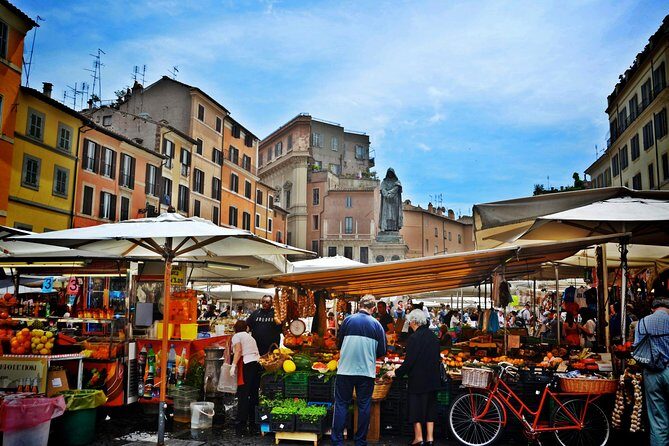
You meet in Campo de’ Fiori (00186 Roma RM). That’s an excellent starting point because it’s central and easy to orient yourself. Even before the guided route begins, you’ll feel the energy of Rome’s street life—people grabbing coffee, vendors setting up, locals walking through.
From there, you head into older districts where medieval Rome becomes very physical: uneven streets, older building lines, and squares that feel like they’ve held the same conversation for centuries. Starting in a lively public space helps you transition from modern-day Rome into the older layers without it feeling like you’re stepping into a disconnected museum.
The tour ends at Piazza di Santa Maria in Trastevere near the Basilica of Santa Maria in Trastevere (00153 Roma RM). That finish is smart. It puts you right where Trastevere dinner happens.
You can also read our reviews of more walking tours in Rome


Antico Quartiere Ebraico (Jewish Ghetto): Stone Streets With Stories Attached
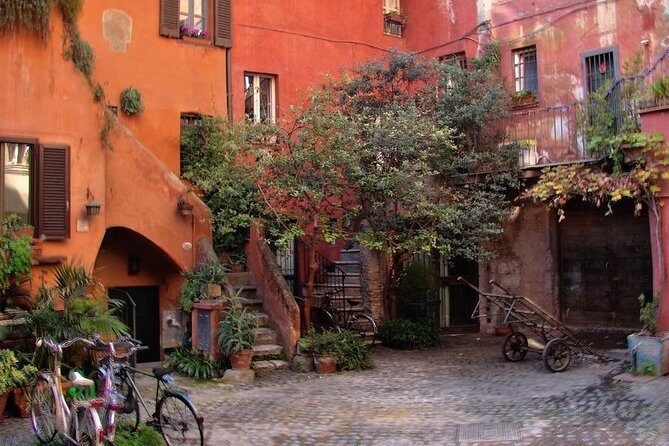
Your first major stop is Antico Quartiere Ebraico, Rome’s historic Jewish neighborhood. This is the part of the walk that tends to feel most grounded. The streets here can look ordinary at first glance, but a good guide turns them into a timeline.
You’ll get a guided walk through one of Rome’s most traditional areas, with the Jewish Ghetto presented as history you can actually see: the way streets connect, the way neighborhoods keep their identity, and how life and community shaped the area over time.
What I like about this stop: it’s not just facts on a sign. It’s a route through daily space, and your guide helps you read the neighborhood like a living document. If you want to feel the texture of Rome rather than just sightsee, this is a strong opening.
A consideration: if you’re expecting only high-crowd photo moments, this stop is more about understanding. You’ll still see beautiful streets, but the payoff is in what the guide helps you notice and connect.
Practical tip: pace yourself here. You want energy for Trastevere right after.
Trastevere’s Santa Maria Square and Bramante’s Fountain Stop
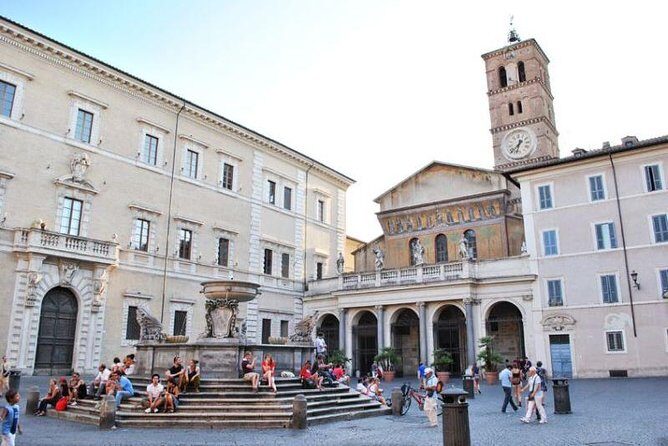
Next you’ll reach Piazza di Santa Maria in Trastevere. This is a classic “Rome square moment,” with a lively public feel and landmarks clustered close together.
Two highlights you’ll focus on:
- Basilica of Santa Maria in Trastevere (the big anchor of the area)
- A fountain by Bramante, which adds an art-and-architecture layer to what can otherwise be a simple square scene
Even if you’ve seen churches before, the value here is timing and framing. You’re not just passing by a famous place. You’re getting the why, and you’re seeing it in the context of the neighborhood that surrounds it.
Why this matters for your day: the tour is weaving medieval Rome with ancient influences, and this stop helps you connect those eras without switching gears abruptly.
Trastevere: Cobblestones, Old Buildings, and Night Energy You Can Feel
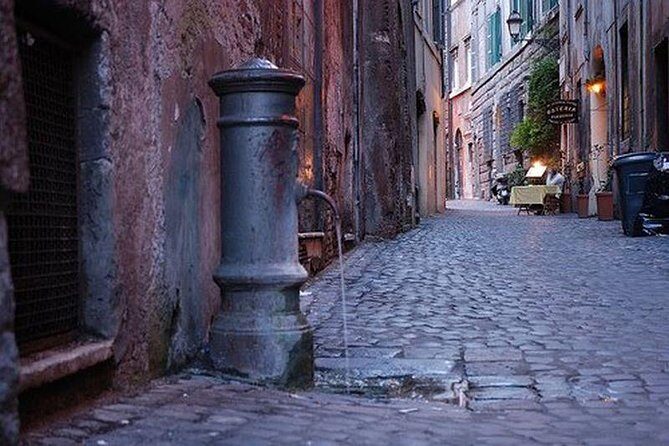
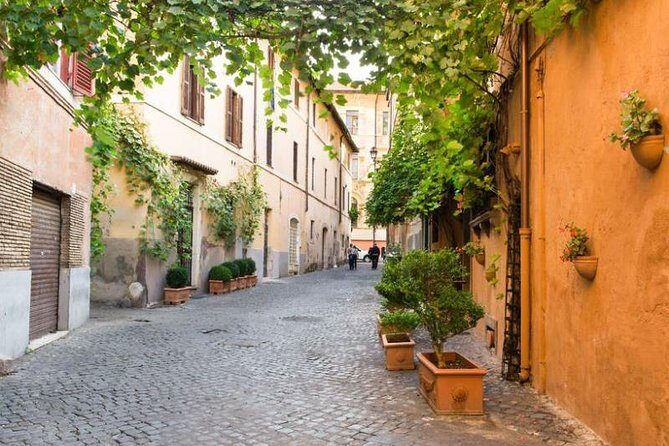
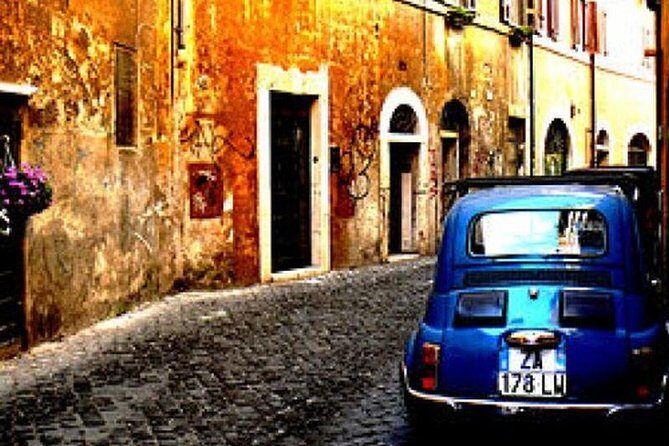
Then you step deeper into Trastevere, one of the city’s most character-rich districts. This is where the streets start to feel like a movie set—except you’ll also see real life moving through it.
In Trastevere you’ll notice:
- Old buildings
- Cobbled streets
- A dense mix of restaurants and evening hangout energy
The tour gives you time to walk the neighborhood and absorb its rhythm. You’re not rushing straight to a single attraction. You’re letting the place unfold as a district, which is exactly how Trastevere works best.
What I like about this stop: it’s the contrast after the Jewish Ghetto. The two areas feel different in mood and architecture, and your guide helps you see why that difference matters.
Possible drawback: because Trastevere is lively at night, it can feel crowded depending on when you’re walking. If you’re sensitive to noise and foot traffic, use the guide to keep your pace steady and your attention anchored to the story.
Teatro di Marcello: Ancient Theatre Ruins That Still Command Attention
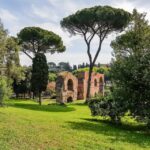
You’ll visit Teatro di Marcello, a major ancient site known for its imposing facade and surviving ruins. This place works because it’s not pretending to be complete. The ruins are part of the drama.
Your guide will help you make sense of why this ancient theater is so striking: it’s an architectural reminder of Rome’s scale and ambition, and the remains let you visualize the original impact.
Why you should care: even if you’re not an ancient Rome superfan, this stop gives you a big-picture link between the medieval neighborhoods you’ve been walking and the ancient city foundation beneath them.
Consideration: you may spend a short time here (about 20 minutes). That’s enough for the essentials when you have a guide, but if you want long photo sessions, plan to linger after the tour on your own.
You can also read our reviews of more guided tours in Rome





Isola Tiberina (Tiber Island): A Quiet Pause in the Middle of Rome
Next comes Isola Tiberina, also called Tiber Island. It’s a small island in the Tiber River that can feel like a pressure release compared with the dense streets around it.
What you’ll do here is simple but effective:
- Walk through a more open setting
- Take in the island’s “pause” feeling
- Learn about its cultural significance
The island is home to the Basilica of St. Bartholomew, which adds historical weight to an otherwise calm moment. The contrast is the point: you’re still in the center of Rome, yet the setting changes how you experience the city.
What I like about this stop: it gives your legs a break and gives your brain a reset, so Trastevere later feels less like you’re just checking boxes.
Possible drawback: depending on the route and timing, you might not get a ton of time for slow wandering. Use the guide time well, then take a few extra minutes if you want.
Campo de’ Fiori Square: Market Day Energy to Evening Hangout Spot
You’ll spend time at Campo de’ Fiori as a stop (about 20 minutes). The square is known for its day-and-night identity:
- During the day, it’s connected to market life
- In the evening, it shifts toward social energy with cafes and nightlife
Since you meet here, you get a double benefit. First, it’s your starting point. Later, it’s a place you understand through the guide’s framing, not just by walking through.
Why this matters: many visitors treat Campo de’ Fiori like a quick pass-through. This tour helps you see it as part of Rome’s continuous street culture—one more layer that connects to everything else you’re learning.
Consideration: if you prefer quiet sightseeing, you may find the square less restful. In that case, keep your focus on the guide’s storytelling while you’re there.
How the Guide Changes What You See
This tour includes a professional local art historian guide. That’s the real product. The route is the scaffold; the guide is what turns the scaffold into understanding.
A local art historian can help you connect:
- Architecture and neighborhood layout
- The way places shift over time
- Why certain landmarks matter even when they’re surrounded by modern life
A strong sign you’re in good hands: in one of the groups, the guide Stephanie was described as both fun and extremely knowledgeable, and that combination is a big deal on a walking tour. You want the information, but you also want pacing that keeps you engaged.
This is also a private tour, so your questions aren’t competing with a crowd’s attention. You can ask what you really want to know—about a building, a square, or why one area feels different from the next.
Walking Comfort, Smart Casual, and Realistic Expectations
This experience calls for moderate physical fitness. That doesn’t mean tough climbs or long hikes, but Rome’s streets are not flat and smooth. Think cobblestones, uneven sidewalks, and occasional tight corners.
Dress code is smart casual. In practice, that means wear something you can move comfortably in. If you hate walking in stiff shoes, don’t bring stiff shoes.
The tour includes a mobile ticket, so you’re not scrambling with printed vouchers. It also follows a weather-dependent model, since walking tours work best when conditions are good.
Where you end: near the Basilica of Santa Maria in Trastevere. That’s convenient, but it also means you’ll want to plan your next move in that area—dinner, a short stroll, or a transfer onward.
Price and Value: What $254.67 Gets You
At $254.67 per person, this is not a bargain-basement group deal. But it’s also not overpriced when you look at what’s included.
You’re paying for:
- A private guide (your group only)
- A professional art historian
- A route that covers multiple key neighborhoods and landmarks in about 3 hours
- Stops that are marked as free admission, so your money isn’t sunk into paid entry fees
If you were doing this on your own, you’d still have to pay for guide time if you want real context. The question is whether you value that context enough to pay. I think the answer is yes for anyone who wants more than surface sightseeing.
Also, the fact that the tour is often booked around 55 days in advance is a signal of demand. If your dates are set, booking early gives you more chances to line up a time that works with your other plans.
Who Should Book This Tour (And Who Might Want a Different Style)
This tour fits best if you:
- Want a private guided walk instead of a large group experience
- Like history that shows up in neighborhoods, not just ticketed sites
- Enjoy walking through Trastevere and want it explained, not just photographed
- Want a route that connects medieval streets with major Rome landmarks like Teatro di Marcello
You might consider a different option if you:
- Want a very long time inside major museums or ticketed attractions (this is mostly public-space walking)
- Prefer minimal walking and very slow pacing
- Are traveling during a period where weather will likely disrupt outdoor walking
Should You Book This Medieval Rome & Trastevere Tour?
Yes, if you want Rome that feels lived-in and readable at walking speed. The combination of Jewish Ghetto + Trastevere + ancient anchors is a smart mix, and the private art historian guide is the difference between a pretty stroll and an actually meaningful one.
If you’re the type who likes asking questions and noticing details, this is the right kind of tour. Start in Campo de’ Fiori, move through medieval streets with context, pause on Tiber Island, then finish in Trastevere with an easy transition to dinner. That end point alone makes it worth considering.
FAQ
How long is the Medieval Rome & Trastevere walking tour?
It lasts about 3 hours.
Is this tour private?
Yes. It’s a private tour/activity, so only your group participates.
What’s included in the price?
The tour includes a professional local art historian guide. Food and drinks, and transportation to/from attractions, are not included.
Where do I meet and where does the tour end?
You start at Campo de’ Fiori, 00186 Roma RM and end at Piazza di Santa Maria in Trastevere, 00153 Roma RM near the Basilica of Santa Maria in Trastevere.
What should I wear?
The dress code is smart casual, and the tour requires moderate physical fitness.
What if the weather is bad?
This experience requires good weather. If it’s canceled due to poor weather, you’ll be offered a different date or a full refund.