Ghost stories and ancient Rome mix well.
This walking tour takes you off the big-ticket tracks and into Rome’s quieter lanes, where controversial characters, eerie legends, and old stone structures all meet. What makes it fun is the pacing: you get short stops, quick context, and then you’re back out walking, from Campo de’ Fiori toward Trastevere.
I especially love how it uses the city like a storybook, moving from market squares and passageways to theatres and bridges without feeling like a lecture. The second thing I like is the way the walk ends in the right place to keep exploring—finish at Santa Cecilia in Trastevere and you can go straight into dinner plans or follow the river views.
One possible drawback: it’s a lot to pack into about 2.5 hours, so if you prefer long, slow lingering stops (or you hate walking over uneven old streets), you might want to plan extra time on your own afterward.
In This Review
- Key highlights to look for
- Why this route feels different from the usual big-stops tour
- Where the tour starts in Campo de’ Fiori, and where it ends in Trastevere
- Campo de’ Fiori: Giordano Bruno and a market square with sharp edges
- Passetto del Biscione: a quick look at an old Roman passageway
- Theatre of Pompey: the assassination of Julius Caesar in your line of sight
- Palazzo Santacroce Aldobrandini: ghost-story lore attached to real walls
- Piazza Benedetto Cairoli: a park stop that slows the pace
- Piazza Mattei and the Fountain of the Turtles
- Il Portico di Ottavia and the feeling of stepping into older layers
- Teatro di Marcello: pre-Colosseum theatre and a different kind of scale
- Pont Fabricius and Tiber Island: the river as a storyline
- Casa dei Mattei: a historical house that adds an everyday anchor
- Santa Cecilia in Trastevere: the tour’s peaceful, meaningful finish
- Price and value: what $34.91 buys you in real terms
- Group size, pacing, and who this walk fits best
- The guide factor: why the right storytelling matters here
- Should you book this Rome walking tour?
- FAQ
- How long is the Hidden Gems of Rome walking tour?
- Where does the tour start and where does it end?
- Is the entrance fee included?
- Do I need to bring bottled water?
- How many people are in a group?
- What is the cancellation policy?
Key highlights to look for
- A licensed guide with entrance fees handled, so you spend less time figuring out tickets
- Campo de’ Fiori to Trastevere route that keeps you moving through the historic center and then into evening-life Rome
- Short, focused stops tied to big names and darker legends, from Giordano Bruno to Julius Caesar’s assassination site
- Ancient Rome in “connector” sites like Passetto del Biscione and Pont Fabricius, not just the obvious ruins
- Spooky-but-light stops such as Palazzo Santacroce Aldobrandini with ghost-story lore
- A satisfying finish inside Santa Cecilia in Trastevere, a meaningful end point you can build on
Why this route feels different from the usual big-stops tour

Rome is easy to over-program. Many tours stack Colosseum photos, a fast Vatican glance, then send you off to fend for yourself. This one does the opposite. You still get ancient Rome, but you’re looking at it through the angles most visitors skip—odd passageways, smaller ruins, and sites that show how everyday life sat right next to myth and scandal.
The big promise here is a mix of macabre, scandalous, and even surprisingly warm stories. That matters, because Rome can feel heavy if every stop is only about battles and emperors. Here, the tone is lighter while still sticking to real locations. It’s the kind of walk where you’re paying attention because the story changes from corner to corner.
Group size also helps. With a maximum of 30 people, you’re not lost in a parade. You’ll still be in a group—just not one where the guide can’t point out details or keep the timing tight.
You can also read our reviews of more walking tours in Rome


Where the tour starts in Campo de’ Fiori, and where it ends in Trastevere
You start at Campo de’ Fiori (00186 Roma RM), a lively area where the square itself does half the work of setting the scene. You finish at Basilica di Santa Cecilia in Trastevere, Piazza di Santa Cecilia, 22 (00153 Roma RM). That end point is a smart choice. Trastevere is where you can transition from sightseeing mode to eating mode without paying another transit price.
Timing is about 2 hours 30 minutes. That’s long enough to feel like you saw a real slice of Rome, but short enough that you’ll still have energy to continue after the tour.
If you like building plans instead of just collecting “things to see,” this start-to-finish flow is a plus. You don’t end back where you began—you end in a neighborhood you’ll actually want to walk after dark.
Campo de’ Fiori: Giordano Bruno and a market square with sharp edges
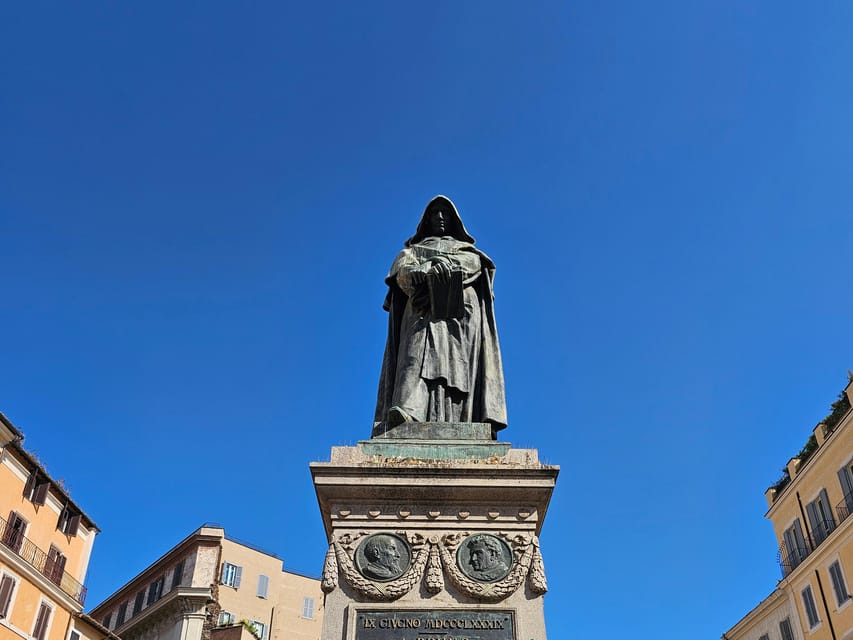
Campo de’ Fiori is famous, but the tour uses it for a specific reason: you’re not just standing in a pretty plaza. You’re looking at the square through the lens of Giordano Bruno, tied to a statue in the area. It’s a fast stop—about 15 minutes—but it sets a tone for the whole walk.
This is where you learn what this tour does best: it points out how Rome’s past can be uncomfortable, controversial, and still part of modern street life. That’s useful. When you understand why a place got its reputation, the rest of the walk clicks into place.
Downside to know: since it’s a square and a busy area, you may feel a little crowding around the stop. Give yourself a minute to orient when you arrive so you’re not flustered when the group tightens up.
Passetto del Biscione: a quick look at an old Roman passageway
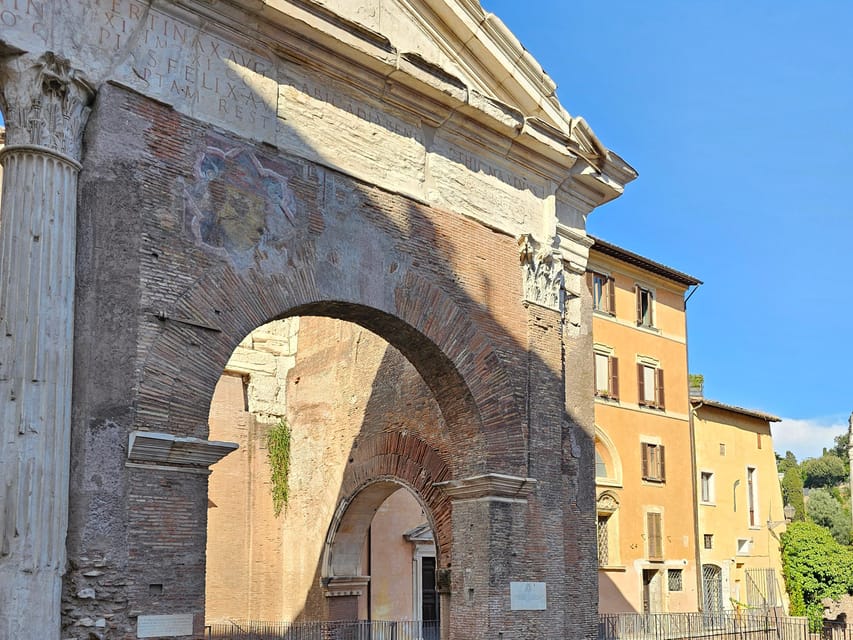
Next comes Passetto del Biscione, an ancient Roman passageway. Expect a short, focused moment—around 10 minutes—that makes you notice Rome in a new way.
A passageway sounds like a small thing, but it changes your mental map. It’s the kind of stop that shows Rome wasn’t built only for monuments. It was built for movement, access, and connection—sometimes hidden, sometimes right where people walk every day.
Value here: the tour doesn’t rush you past it. You get just enough context so that when you spot similar structures later in Rome, you’ll know what you’re looking at.
Theatre of Pompey: the assassination of Julius Caesar in your line of sight
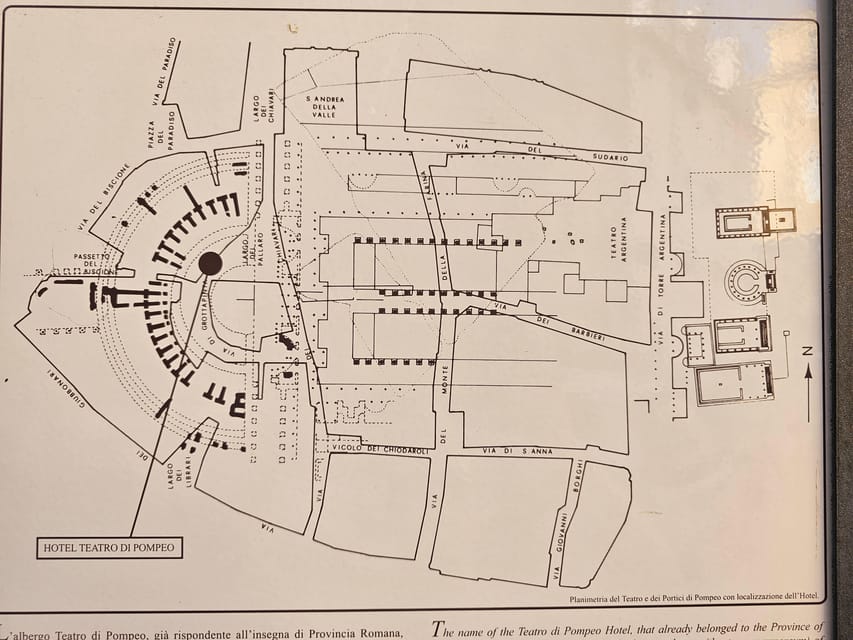
Then you’re at the Theatre of Pompey. This is one of the stops with high emotional stakes. The site is tied to the assassination of Julius Caesar, and the theatre was built by Pompeo. The visit is about 10 minutes, but it’s the kind of stop that lingers in your head because you can imagine the event around you.
One reason I like this stop: it connects a name most people know with a real physical space, without turning the tour into a history-only slog. You get anchored in place, not trapped in dates.
Possible drawback: because it’s a major story, you might feel like you want more time there. The tour stays efficient, so if you love that particular episode of Roman history, you’ll likely want to do a little independent reading afterward.






Palazzo Santacroce Aldobrandini: ghost-story lore attached to real walls
The walk adds a different flavor at Palazzo Santacroce Aldobrandini, described here as a palace with ghost stories. This is another 10-minute stop, and it works as a palate cleanser.
Why it’s worth your attention: Rome is full of legends. The interesting part isn’t whether you believe every story—it’s how the city keeps repeating themes through centuries. A quick ghost-story stop breaks the pattern of only talking about politics and warfare.
If you’re traveling with someone who likes spooky atmosphere, this is the kind of stop that creates shared laughs and makes the rest of the ruins feel more human.
Piazza Benedetto Cairoli: a park stop that slows the pace
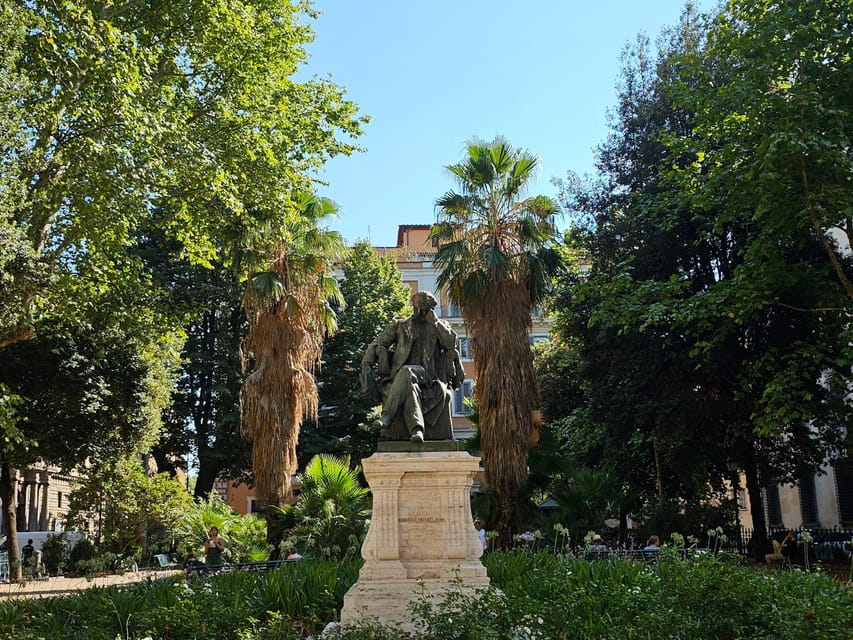
At Piazza Benedetto Cairoli, you get a short 10-minute visit to a park dedicated to Benedetto Cairoli. This is a less dramatic stop, and I mean that as a compliment.
After the heavier story beats, a park stop gives your legs a moment and helps you reset. It also helps you see how Rome isn’t just archaeology. It’s also civic space that people still use in daily life.
If you hate any downtime during guided walks, this might feel like the pause button. But for most people, it’s a smart breathing moment.
Piazza Mattei and the Fountain of the Turtles
Next is Piazza Mattei and the Fountain of the Turtles. This is brief—about 10 minutes—but it adds something Rome can be great at: playful details you might otherwise miss.
This stop matters because it stops the walk from becoming all solemn. Small weird landmarks are often where you get the best photos and the most “I didn’t know that was here” moments.
Tip for you: treat this like a quick reset. Get your bearings, look at the fountain up close, then move on with the next story.
Il Portico di Ottavia and the feeling of stepping into older layers
At Il Portico Di Ottavia, you’ll see ancient Roman ruins—another 10-minute stop. This one’s less about a single big name and more about place itself: you’re looking at layered history and how these fragments still shape the street rhythm around them.
I like ruins that aren’t shouting for attention. Portico-like areas often feel more intimate than grand arenas, and a good guide can help you notice the relationship between what’s left and what the space used to support.
Potential consideration: ruins can be visually subtle from street level. If you’re the type who needs to see every detail to enjoy, pay attention to the guide’s orientation cues so you’re not guessing what you’re supposed to be looking at.
Teatro di Marcello: pre-Colosseum theatre and a different kind of scale
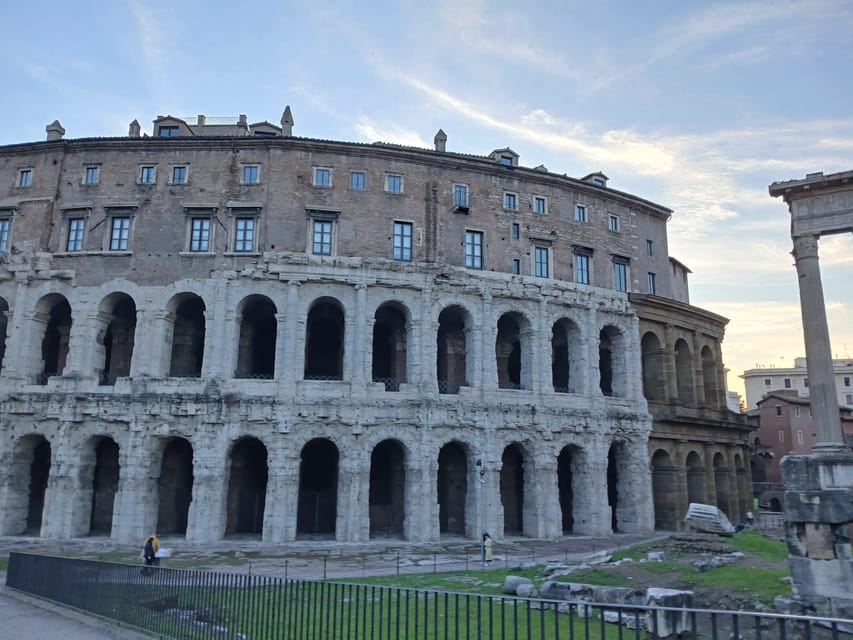
Then you arrive at Teatro di Marcello, an ancient Roman semi-circular theatre that predates the Colosseum. It’s about 10 minutes, and the pre-Colosseum angle is what makes it interesting.
This stop helps you understand Roman architecture as a progression, not just a set of unrelated monuments. You’re still seeing theatres, but the scale and timing feel different when you’re told it comes earlier.
If you already love the Colosseum, this is the stop that expands your understanding. If you’re only there for general sightseeing, it still works because it’s visual and memorable.
Pont Fabricius and Tiber Island: the river as a storyline
Two of the most atmospheric pieces come next, and they’re tied together by water.
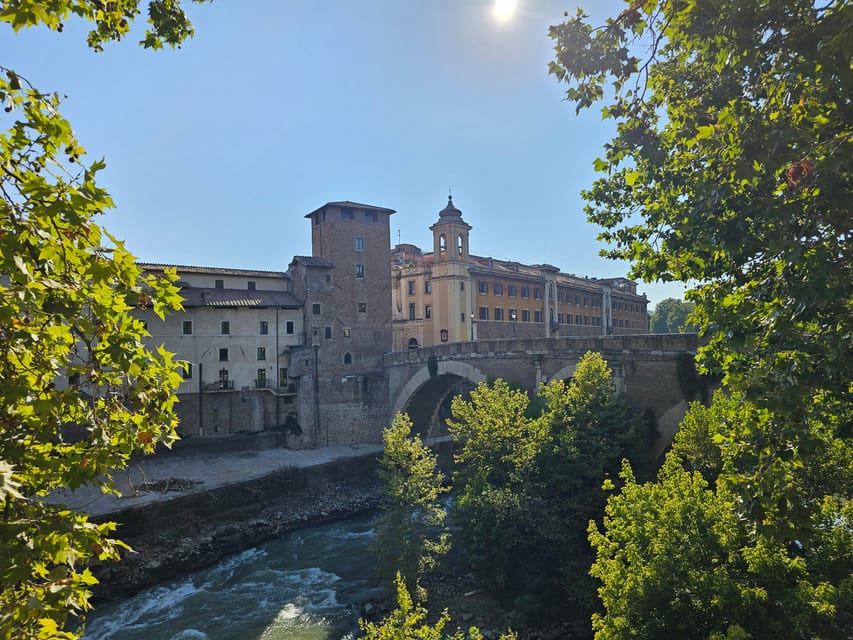
First: Pont Fabricius, an ancient Roman bridge. Then: Tiber Island, an island in the middle of the Tiber linked to ancient legends of healing. Each gets about 10 minutes.
I like this section because Rome’s river always feels like a stage. Even if you’re not spending time at the water’s edge on your own, you still get the sense that the Tiber carried stories as much as traffic.
Value for you: these stops give you the feeling of Rome as a living geography. It’s not just stone in a museum-like zone. It’s a city built around the river and the myths that people assigned to it.
Casa dei Mattei: a historical house that adds an everyday anchor
After the bridge-and-island feeling, the tour moves to Casa dei Mattei, a historical house of the Mattei family. Another 10-minute stop.
This is a smart shift. You move from public spaces and city infrastructure into something more personal. It helps the whole story tour feel balanced—politics and legends matter, but family homes and local life are what make Rome feel real.
Possible drawback: without a longer interior visit time, you might want more. But for a walking tour, the goal is to connect you to the right kind of follow-up. Casa dei Mattei can be exactly that starting point.
Santa Cecilia in Trastevere: the tour’s peaceful, meaningful finish
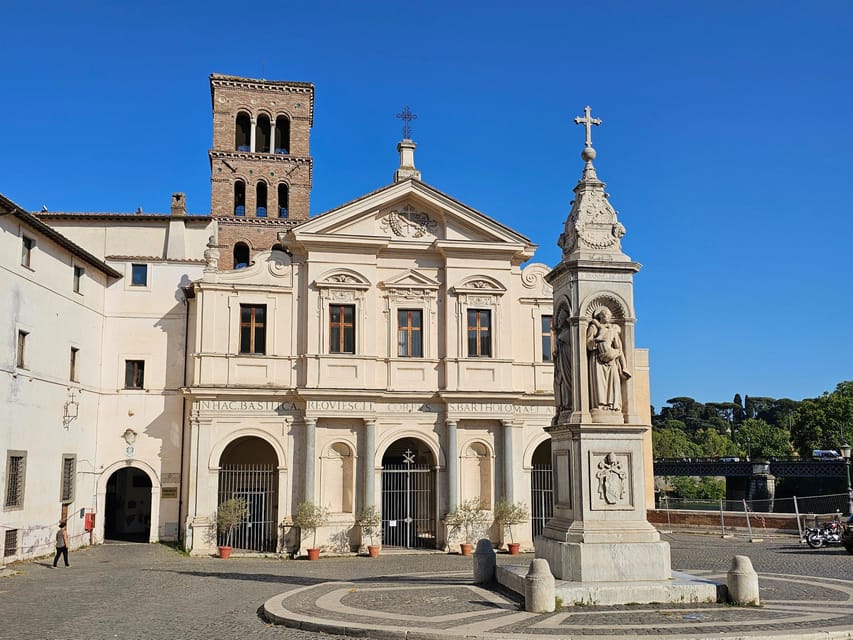
You end at Santa Cecilia in Trastevere, where entrance is included. The stop is about 15 minutes, and the key detail here is the basilica’s connection to Saint Cecilia and her tomb.
This is a fitting finish after the darker legends earlier in the walk. It gives you a calmer moment to land your thoughts and slow down. It’s also practical: the basilica is right where you can continue exploring without needing to reposition.
What you can do next is part of the appeal. The route puts you close to a panorama over the river for sunset views, or you can head into Trastevere, the district known for restaurants and evening life.
If you want your last hour of the day to feel like Rome instead of logistics, this ending point does the job.
Price and value: what $34.91 buys you in real terms
At $34.91 per person for roughly 2.5 hours, this isn’t a bargain in the “cheap and forgettable” sense. It’s a fair price for a guided route that includes the important bits you’d otherwise have to handle yourself.
Here’s the value in plain terms:
- Licensed guide included, so you get context tied to each stop
- Entrance fees included, with Santa Cecilia’s entrance specifically included and other locations free of admission
- You’re not just checking boxes. You’re getting a storyline through multiple locations, which is what makes it worth paying rather than walking the route on your own
One more practical note: the tour is often booked about 23 days in advance, which is a polite way of saying don’t leave it until the last minute if you want a slot that fits your schedule.
Also, it’s not a “water provided” tour. Bottled water isn’t included, so bring some if you’re out during warm months.
Group size, pacing, and who this walk fits best
With up to 30 travelers, the pacing is designed to work in Rome’s tighter streets. You should be able to hear the guide and still move with the group.
Most people can participate, and the tour allows service animals. It’s also near public transportation, which helps if you’re arriving from another area and don’t want to think too hard about the start.
This tour is best for you if:
- You like short, well-paced walks with story context at each stop
- You’re curious about controversial figures and the darker side of Rome’s past
- You want to see Roman ruins that aren’t the standard “top 3” postcards
- You want an easy transition into a Trastevere evening afterward
It might not be the best fit if:
- You need long stops or lots of time to sit and absorb
- You dislike quick changes of topic (since the stories shift from politics to legends to small, quirky landmarks)
The guide factor: why the right storytelling matters here
This kind of tour rises or falls on explanation. The strongest praise in feedback includes a guide named Joey, described as excellent and very knowledgeable.
That matters because many of these sites are not “big obvious.” If the guide can point out what connects Giordano Bruno, Julius Caesar’s assassination setting, and the river legends into one coherent walk, you’ll get more out of every stop.
Even if you don’t get the same guide, the licensed-guided format is a good sign that you’re not just paying for walking directions.
Should you book this Rome walking tour?
Book it if you want a Rome day that feels smarter than the standard checklist. You get entrance included, a licensed guide, and a route that ends where you actually want to be—Trastevere—without wasting time backtracking.
Skip it only if you prefer quiet museum-style pacing, or if you hate walking when the stories switch quickly from one theme to another.
If your goal is to understand Rome as a place where history, myth, and everyday street life overlap, this 2.5-hour route is a strong bet.
FAQ
How long is the Hidden Gems of Rome walking tour?
The tour lasts about 2 hours 30 minutes.
Where does the tour start and where does it end?
It starts at Campo de’ Fiori, 00186 Roma RM, Italy and ends at Basilica di Santa Cecilia in Trastevere, Piazza di Santa Cecilia, 22, 00153 Roma RM, Italy.
Is the entrance fee included?
Yes. Entrance fees are included, and Santa Cecilia in Trastevere specifically has entrance included.
Do I need to bring bottled water?
Bottled water is not included, so it’s a good idea to bring your own.
How many people are in a group?
The tour has a maximum of 30 travelers.
What is the cancellation policy?
You can cancel for a full refund if you cancel up to 24 hours in advance of the start time.