Rome can feel like a lot. This tour helps you tame it fast.
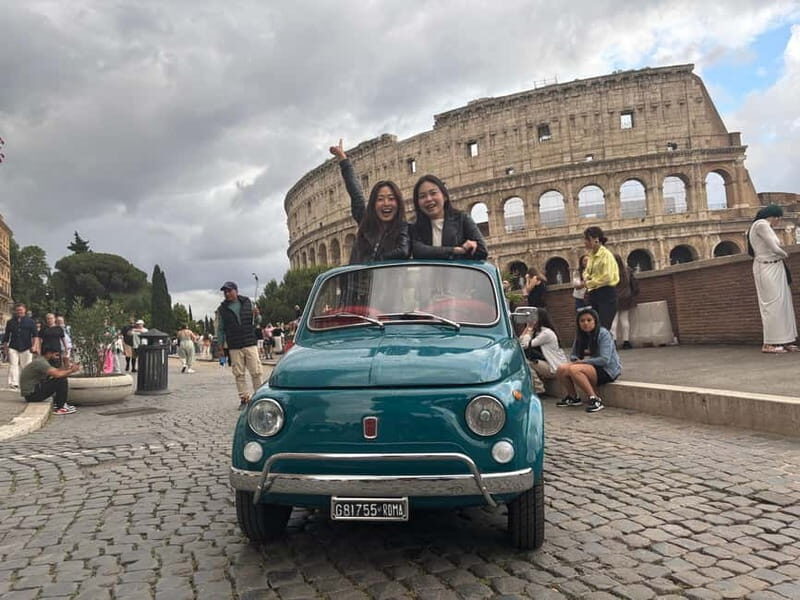
You get a private city day built around top Roman landmarks, with a driver who doubles as your guide so you can ask questions and adjust on the fly. I especially like that it’s built for seeing serious classics without spending your whole day in transit, and it’s offered in English.
Two things I really like: the hotel pickup and drop-off (so you start closer to the action), and the comfort factor with a vehicle that has efficient air conditioning. One possible drawback: the schedule is tight—each stop is short—so if you want slow wandering and long museum time, you may feel a bit rushed.
In This Review
- Key things to know before you go
- A Private Rome Power Day With Pickup and a Driver-Guide
- Circo Massimo: Where Chariots Ruled Rome
- Vittoriano (Altare della Patria) and Piazza Venezia
- Foro di Traiano: Trajan’s Power in Forum Form
- Trevi Fountain: Make the Most of a 40-Minute Photo Window
- Piazza di Spagna and Piazza Navona: Rome’s Big Squares in One Flow
- Pantheon to St. Peter’s Basilica: Two Icons, Different Moods
- Best Fit: Who This Private Route Works For
- Should You Book This Tour for a Rome Highlights Day?
- FAQ
- How long is the Rome city tour?
- What’s included in the price?
- Is this tour private?
- Do you get hotel pickup?
- Is there an option for airport pickup?
- What language is the tour offered in?
- Are admission tickets included for the stops?
- How far in advance should I book?
- What if my plans change and I need to cancel?
Key things to know before you go
- Private tour only for your group, so the pace stays yours
- Hotel pickup and drop-off across central Rome (no port pickups)
- Driver-guide setup lets you ask questions while moving between sites
- Mobile ticket for smoother check-in at stops marked free
- Eight major sights in about six hours, with timed visits from 15 to 50 minutes
A Private Rome Power Day With Pickup and a Driver-Guide
This is a classic Rome highlights day, but with one big upgrade: you’re not sharing the experience with a mass crowd. With a private tour (your group only), you can keep things moving without losing the ability to stop for clarifications, directions, or quick photo breaks.
The other practical win is the logistics. You get hotel pickup and drop-off, which matters in Rome where the streets can be tricky and time disappears quickly when you’re figuring out transport. You’ll also travel in a comfortable vehicle with efficient air conditioning, so even on a hot day you’re not baking between stops.
Now, about the price: at $480.63 per person for roughly six hours, it’s not a budget tour. But it’s pricing itself like a true private day—vehicle, driver-guide, local taxes, and that convenience of pickup and drop-off included. If you’re traveling with others and can take advantage of group discounts (when offered), the value can feel much easier to justify.
Also note the timing style. Your itinerary cycles through eight top sites, with each visit carved out in blocks. That’s great for getting your bearings and checking off the big names. Just be honest with yourself: if you want deep, slow exploration, you’ll need another day in Rome for that.
You can also read our reviews of more city tours in Rome

Circo Massimo: Where Chariots Ruled Rome
Your first stop is Circo Massimo, the ancient chariot racetrack area that dates back to the 6th century BCE. This place wasn’t only for races. It also hosted major public events like the Roman Games and gladiator-related spectacles, and it was used for chariot races as late as the 6th century CE.
You’ll have about 15 minutes here. That’s enough time to get the layout in your head and connect the space to what it used to be, without turning it into a long archaeological project. The best way to use this short window is to ask your driver-guide to explain how the track and event setup shaped crowds and movement in ancient Rome.
Since the stop is listed as admission ticket free, you won’t be juggling extra ticket timing. Still, Rome mornings can get busy, so I’d treat this as a quick orientation stop: learn the basics, take the wide photos, then move on.
Vittoriano (Altare della Patria) and Piazza Venezia
Next comes the Vittoriano, officially Monumento a Vittorio Emanuele II, also known as Altare della Patria. This monument was built between 1895 and 1927 in honor of Victor Emmanuel II, the first king of a unified Italy, and it sits in Piazza Venezia.
You get about 20 minutes. That’s a sweet spot for monuments like this because you don’t need hours to understand the scale. What I like about including Vittoriano is that it gives you a bridge between ancient Rome and modern Italy’s identity—so the day doesn’t feel like you’re stuck in only one era.
Admission for this stop is listed as free, which keeps the day flowing. The main thing to watch for is mindset: this is a stop for seeing, photographing, and learning what the monument represents—less for lingering.
Foro di Traiano: Trajan’s Power in Forum Form
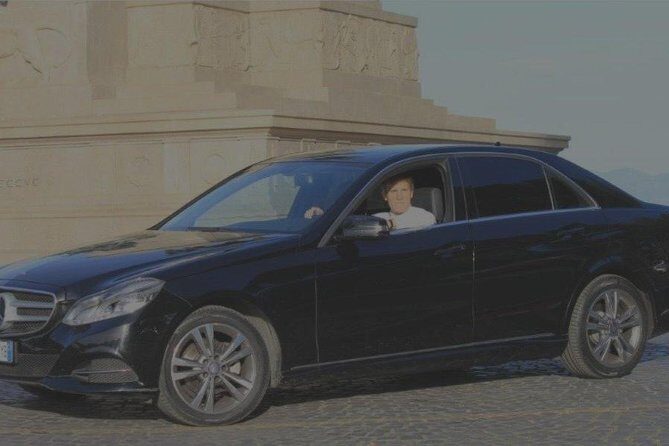
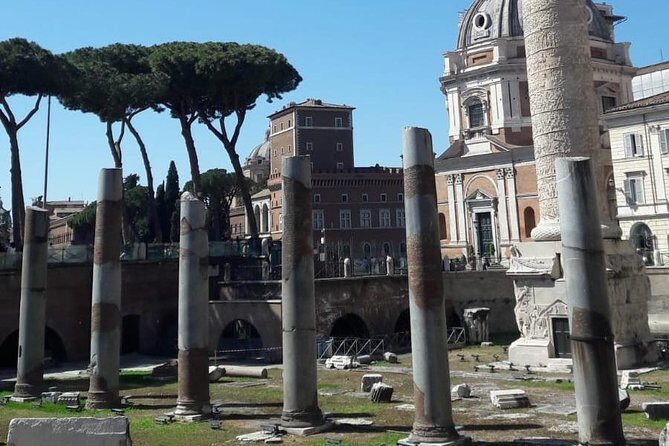
Then you’ll head to the Foro di Traiano, the forum built under Emperor Trajan. It’s tied to major conquest spoils from the Dacia campaign, with the forum inaugurated in the early 2nd century and Trajan’s Column inaugurated a little later.
You’ll have about 25 minutes here, which works well because forums can sprawl. A short visit is usually enough to spot the key idea: Trajan used monumental architecture to communicate power, victories, and civic pride.
Like the earlier stops, admission is listed as ticket free, so it’s another easy win for a packed day. If you like understanding what you’re seeing, ask your driver-guide to point out the forum’s role in Rome’s public life and why Trajan’s era wanted to be remembered in stone.
Trevi Fountain: Make the Most of a 40-Minute Photo Window
Trevi Fountain is the stop most people dream about. It’s the largest Baroque fountain in Rome and one of the most famous in the world. The design is credited to Nicola Salvi and completed by Giuseppe Pannini and others, with impressive dimensions—about 26.3 meters high and 49.15 meters wide.
You’ll spend about 40 minutes at the fountain. That’s plenty for your first look, photos, and a bit of time to watch how people move around it. Trevi is also a film star. It has appeared in classics like Roman Holiday and La Dolce Vita, plus it’s connected to Three Coins in the Fountain and other movies set in Rome.
Admission is listed as free, so the value here is mostly time and guidance. One practical tip: plan to use part of the window just to observe how locals and tourists circulate. If you’re trying to get photos without losing patience, that small strategy can save you.






Piazza di Spagna and Piazza Navona: Rome’s Big Squares in One Flow
After Trevi, you’ll move to Piazza di Spagna. This famous square sits at the bottom of the Spanish Steps and connects to the Palazzo di Spagna, the Spanish embassy seat to the Holy See. You’ll have about 40 minutes here, which is perfect because Spanish Steps and the surrounding streets are best experienced as a slow-moving scene rather than a single object you stare at for a long time.
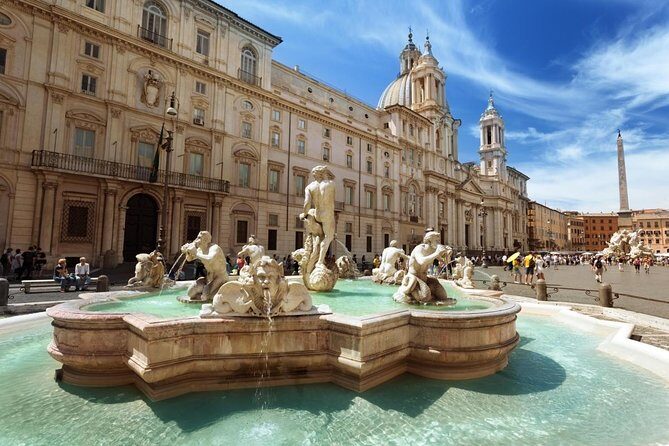
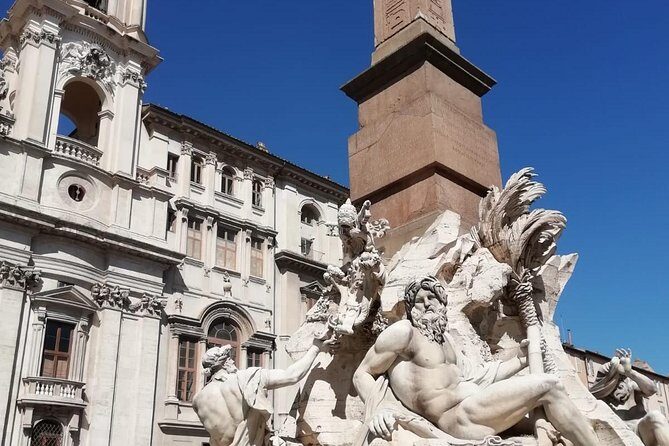
Then the tour continues to Piazza Navona for about 30 minutes. Piazza Navona is built on the site of an ancient Roman stadium, originally tied to the Domitian-era “games” concept. The name shifted over time—from Circus Agonalis toward what became Navona—so it’s a fun example of how places keep their purpose even as names evolve.
Both stops are listed as admission ticket free, keeping things easy. The main consideration is crowd comfort. These are famous squares, so the experience is more about managing your movement and timing than about quiet sightseeing.
If you want a calmer vibe, use your short time wisely: one circuit for photos, one pause to take in the overall shape, and one quick ask to your driver-guide about what to notice in the space.
Pantheon to St. Peter’s Basilica: Two Icons, Different Moods
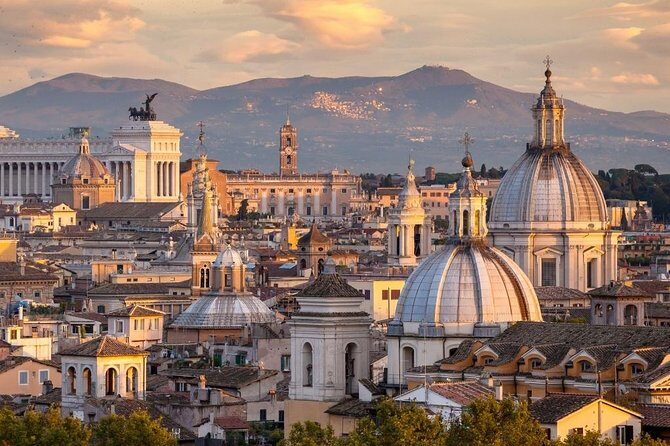
Your penultimate steps connect two of the most recognizable landmarks on the list.
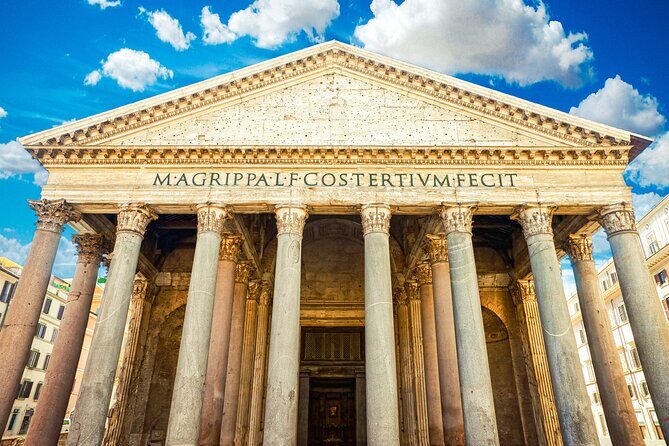
First is the Pantheon, the Temple of all the gods—originally built as a Roman temple, rebuilt around 126 AD under Hadrian. Today, it’s known for being the best preserved of Roman buildings. You’ll have about 30 minutes, and it’s a strong stop for understanding Roman engineering at a glance.
Admission is listed as free, so it stays efficient. The key here is time management: the Pantheon deserves attention, but your day is already stacked, so I’d focus on big visual moments and the explanation behind what made it last.
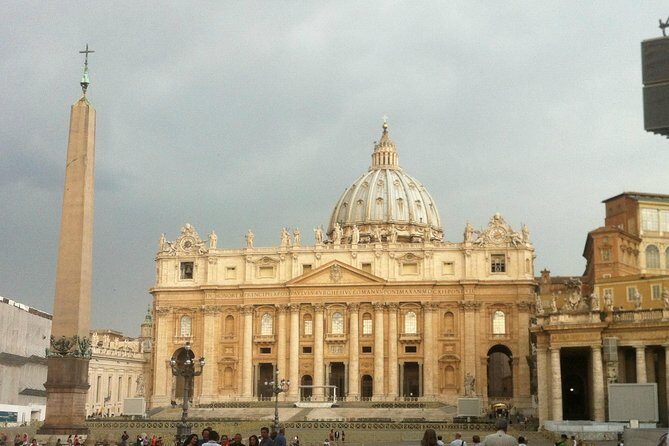
Finally, you’ll reach St. Peter’s Basilica, the world’s largest church and a central place in Christianity. Construction stretched over more than a hundred years, and it’s on Vatican Hill across the Tiber from Rome’s historic center. You get about 50 minutes, which is the longest block of the day after Trevi—likely because it needs more room to take it all in.
Admission is listed as free here too. This stop is less about quick facts and more about allowing the scale to land. If you’re trying to plan your energy, St. Peter’s is where you’ll feel the most benefit from that extra time.
Best Fit: Who This Private Route Works For
This tour is a great match for travelers who want to see a lot in one day without navigating transit, ticket logistics, and route decisions alone. It’s also ideal if you like having a real person to ask questions—especially a driver-guide who can explain what you’re looking at as you go.
It’s also a good fit for people who don’t want to gamble on how much walking they’ll do. You’re traveling by car between sites, and the visits are timed, so you get structure.
Where it may feel less ideal: if you’re the type who wants long museum sessions, deep dives into one neighborhood, or unplanned wandering for hours. This itinerary is built for momentum, not slow discovery.
One nice element: the tour includes the idea of maximum flexibility and customization. In practice, that means your driver-guide can help you tailor the “how” of each stop—what to prioritize, which questions matter most to you, and how to pace photos and transitions.
Should You Book This Tour for a Rome Highlights Day?
If you want a straightforward way to cover Rome’s biggest name sites—Circo Massimo, Vittoriano, Trajan’s Forum, Trevi, Spanish Steps, Piazza Navona, the Pantheon, and St. Peter’s—this is a solid option. The hotel pickup/drop-off plus a private vehicle with AC is the kind of comfort that makes a packed day actually feel doable.
I’d book it if:
- you’re short on time and want the classics covered in about six hours
- you prefer a private pace and real-time Q&A
- you value convenience more than spending extra time figuring out logistics
I’d think twice if:
- you want longer stays at fewer sites
- you hate structured timing and prefer to wander without limits
Guides on this tour have been highlighted by name in prior experiences—people like Carmine and Mauricio are associated with being strong drivers and giving clear, helpful answers. That kind of guide can make a big difference when your time is tight.
FAQ
How long is the Rome city tour?
It’s scheduled for about 6 hours. Your day is split into multiple timed stops, ranging from roughly 15 minutes up to 50 minutes.
What’s included in the price?
The tour includes a driver/guide, hotel pickup and drop-off, local taxes, and a private tour in a comfortable vehicle with efficient air conditioning.
Is this tour private?
Yes. It’s listed as a private tour/activity, meaning only your group participates.
Do you get hotel pickup?
Pickup is offered from hotels in Rome, plus vacation rentals and points of interest in the city. The information says they do not pick up at ports.
Is there an option for airport pickup?
Airport pickup is referenced, with an important note to provide your flight number and the exact time.
What language is the tour offered in?
The tour is offered in English. It may also be operated by a multi-lingual guide.
Are admission tickets included for the stops?
For each listed stop, admission ticket is shown as free. That means you shouldn’t need paid entry tickets for those specific sights as part of the visit.
How far in advance should I book?
On average, this tour is booked about 43 days in advance, so earlier planning can help your preferred time slot.
What if my plans change and I need to cancel?
You can cancel for a full refund up to 24 hours before the experience starts. If you cancel within 24 hours of the start time, the amount you paid is not refunded.