REVIEW · EVENING EXPERIENCES
Haunted Rome Ghost Night Walking Tour
Book on Viator →Operated by Carpe Diem Tours · Bookable on Viator
Rome at night turns darker fast.
This tour is fun because it uses Rome’s real, often grim past to explain what you’re seeing on the street. I especially like the night timing for fewer crowds and a cooler walk, and I also like how it stays focused on specific stops you can picture later, starting at Campo de’ Fiori and ending at Castel Sant’Angelo. It’s the kind of spooky that feels grounded, not cheesy.
One thing to consider: in a street setting, it can be harder to hear the guide if the group bunches up or road noise is high. If that worries you, plan to stay close and pay attention at every crossing so you don’t miss the details.
In This Review
- Key highlights you should care about
- Why a night ghost walk works in Rome
- Price and logistics: what you’re actually paying for
- Start at Campo de’ Fiori: from plaza to stage for fear
- Piazza Farnese: a pretty square with a scandal attached
- Via del Mascherone and Vicolo dei Venti: the “little madonnas”
- Ponte Sisto: Rome’s oldest bridge and its darker rumors
- Fontana del Mascherone: the warning on the fountain
- Chiesa di Santa Maria dell’Orazione e morte: when the church uses remains
- Via di Monserrato: a haunted apartment block and prison history
- Santa Maria in Monserrato degli Spagnoli: Spanish church drama
- Via Giulia: where cosmetics meet danger
- Via dell’Arco dei Banchi: Mastro Titta’s house
- Castel Sant’Angelo finale: angels above a warning
- Who this tour fits best
- A small caution on hearing and crowding
- Should you book Haunted Rome Ghost Night Walking Tour?
- FAQ
- How long is the Haunted Rome Ghost Night Walking Tour?
- Where does the tour start and end?
- What languages is the tour offered in?
- How much does the tour cost?
- How large is the group?
- Is there a private tour option?
- Do the stops require paid admission tickets?
- Which major sights are included on the route?
- Is free cancellation available?
- Is the tour near public transportation?
Key highlights you should care about
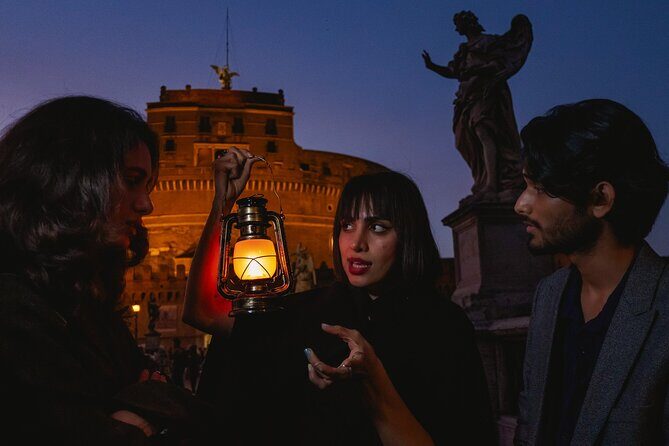
- A 2-hour night route designed to help you see a lot without frying in the heat
- History-first spooky stories (more sinister past than jump-scare ghosts)
- Signature Rome stops from Campo de’ Fiori to Ponte Sisto and on to Castel Sant’Angelo
- Small group size with a maximum of 20 travelers
- Street-level “crime and faith” details like madonelles meant to stop wrongdoing
- A private tour upgrade if you want a more personalized pace
Why a night ghost walk works in Rome
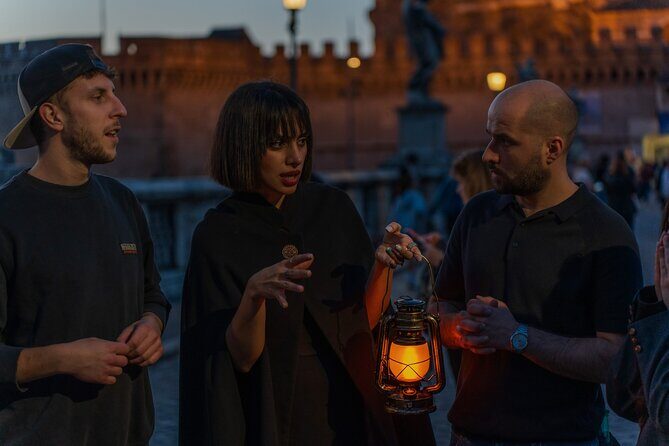
Rome is easiest to read at two times: early morning and night. A nighttime route matters here because you’re walking after the worst heat and before late-night chaos takes over. You also get a different feel for the streets. Even when you know Rome is old, it still hits harder in the dark.
This tour leans into the city’s darker side without turning it into theater. The goal is simple: connect the sights to the kind of stories that made people fear certain corners, bridges, and neighborhoods. If you like history but want it told with a chill factor, you’ll get that balance.
You’ll also cover ground efficiently. The full experience runs about 2 hours, with brief moments at each stop (around 10 minutes per location). That structure helps you keep momentum. It also means you’re not stuck for ages in one spot while the rest of the route waits.
You can also read our reviews of more walking tours in Rome


Price and logistics: what you’re actually paying for
At $35.07 per person, you’re buying a guided walk through central Rome with planned story stops and an easy pace. The value comes from how many recognizable areas you hit in one evening. You’re not paying for museum time or a long inside visit you may or may not enjoy.
The tour is offered in English and runs with a maximum group size of 20. That upper limit keeps the experience from feeling like a moving crowd. It also makes it more realistic to hear directions and follow the route on foot.
You’ll get a mobile ticket, and the meeting and ending points are in well-known central areas: Piazza Campo de’ Fiori to Castel Sant’Angelo. Both are the kind of places where you can also continue your evening on your own afterward, without needing a big plan.
One practical note: you’ll be outdoors for the whole experience. If it’s breezy or damp, wear something you can handle for two hours. If you’re doing it colder months, bring layers, because you’ll feel the night air more once you stop moving.
Start at Campo de’ Fiori: from plaza to stage for fear
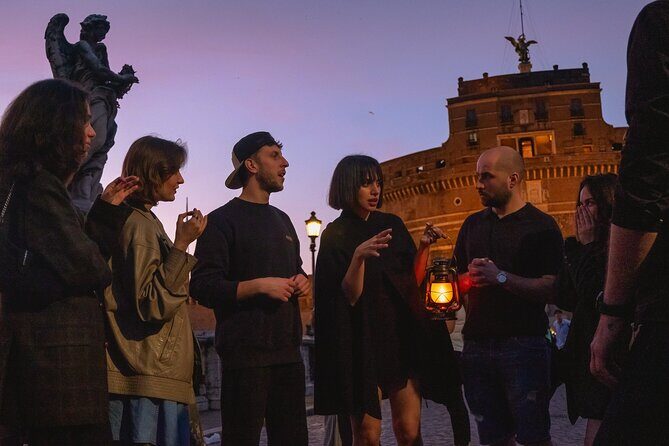
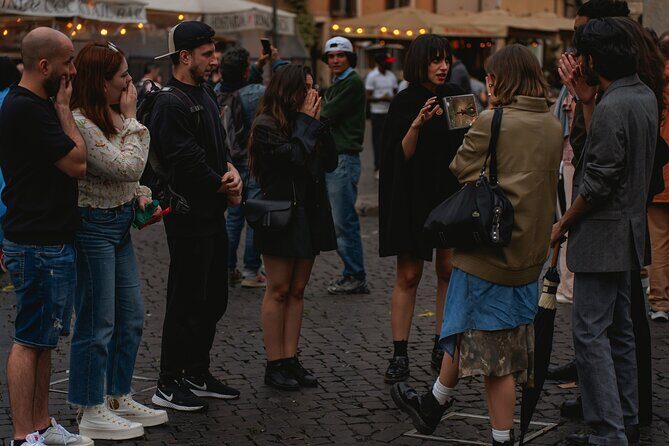
You begin at Piazza Campo de’ Fiori, right in the heart of one of Rome’s most famous piazzas. In modern life, it’s lively: bars, restaurants, people out for an evening. But the story lens here flips that mood.
The tour treats Campo de’ Fiori as a starting point because it carries the kind of past that turns a normal square into a warning. You’ll learn how this space was tied to executions, and you’ll see why locals would have had reasons to look over their shoulder. That contrast is the magic trick: you’re standing in a place that feels like today’s Rome while hearing how it used to function in a much harsher world.
If you’re doing this on your first night in Rome, this is a smart launch. It helps you get your bearings fast. You’ll start to connect street patterns, churches, and major landmarks with stories instead of just names on a map.
Piazza Farnese: a pretty square with a scandal attached
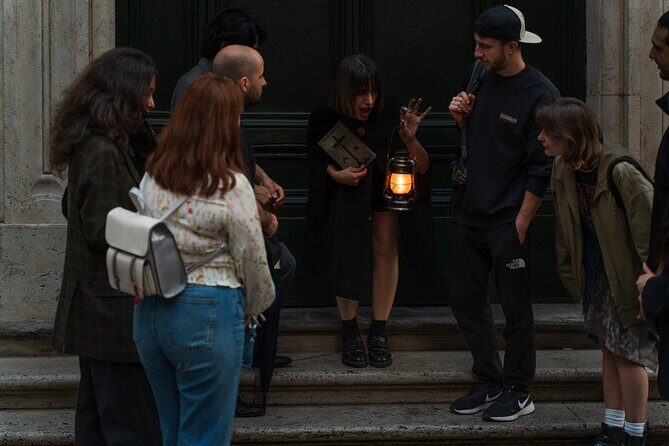
Next comes Piazza Farnese, which is one of those Rome squares that looks elegant even when you don’t know the backstory. That’s exactly why it works in a “haunted Rome” framing.
You’ll hear a legend tied to power and secrecy, including a claim about a secret passageway and two popes. Whether you take the legend literally or treat it as folklore shaped by real history, the effect is the same: the square feels less innocent. It stops being only architecture and becomes human drama.
This stop is short, about 10 minutes, so you’ll want to stay engaged rather than snapping photos and drifting. The guide’s job is to connect what you see to why people would whisper about it.
Via del Mascherone and Vicolo dei Venti: the “little madonnas”
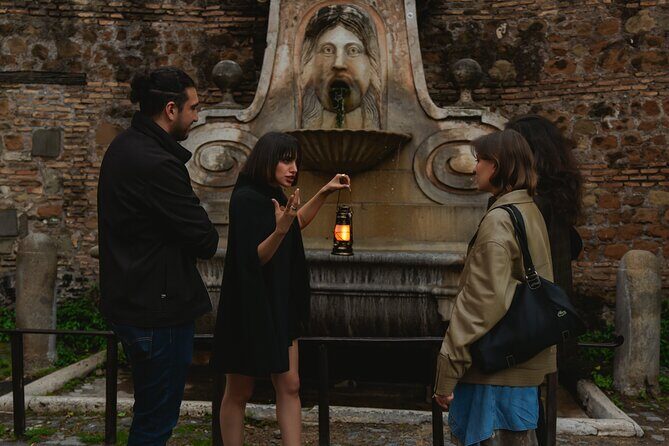
From there you move into narrower streets near Via del Mascherone and Vicolo dei Venti. Here the stories shift from big-power legends to everyday protections.
You’ll discover several madonelles, which are small street shrines often called little madonnas. The tour explains how they were meant to help stop crime. It’s an interesting idea: faith made visible, placed where someone might pass at night, with the hope that a person’s conscience or courage would be reinforced.
These are the kinds of details you’d normally walk right past. But at night, with a guide framing why they exist, you start noticing tiny choices in the streetscape. That’s one of the best reasons to do a guided walk at all.
You can also read our reviews of more evening experiences in Rome



Ponte Sisto: Rome’s oldest bridge and its darker rumors
Then you cross into bridge territory with Ponte Sisto, described as the oldest bridge in Rome. Bridges are always story magnets because they control movement. They funnel people into specific routes, and they become stages for everything from conflict to tragedy.
You’ll hear a grim mix of accidents, theft, power struggles, suspicious deaths, and more. The tone stays focused on how fear traveled along a city map. In other words: this is not only about what happened. It’s also about why it mattered afterward.
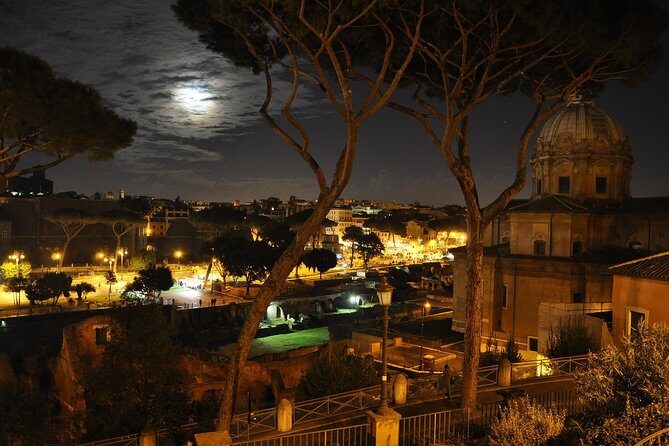
You’ll also likely get views along the river corridor that look great at night. That makes Ponte Sisto one of those stops where you get both mood and practical sightseeing.
Fontana del Mascherone: the warning on the fountain
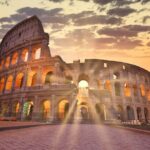
After the bridge, you visit Fontana del Mascherone. This isn’t presented as a typical fountain stop. The standout detail is that it bears a warning related to drinking.
Rome has countless fountains, but this one is framed as a cautionary marker. You’ll come away understanding how even something as ordinary as water could come with rules and fear attached. It’s a great reminder that public spaces weren’t always designed for comfort in the way we expect today.
Because your stop time is brief, this is a listen-and-look moment. Take in the setting, then let the guide’s explanation do the heavy lifting.
Chiesa di Santa Maria dell’Orazione e morte: when the church uses remains
Next up: Chiesa di Santa Maria dell’Orazione e morte, a 17th-century church decorated with human remains from long ago. Even if you don’t love morbid themes, the reason this stop works is clear. It turns death from something abstract into something physically present.
The tour uses the church to make a point: in Rome, reminders of mortality were often public and direct. You’re not dealing with a subtle reference. You’re dealing with a place that was designed to confront.
This is also a stop where I’d suggest you think about your own comfort level. If you’re squeamish, you may want to stand back for a moment and decide how long you stay. The route is structured, so you’re not stuck indefinitely.
Via di Monserrato: a haunted apartment block and prison history
Then you move to Via di Monserrato, which the tour describes as a haunted apartment block linked to one of the worst prisons in Rome’s history.
That contrast hits: a modern street facade standing above a past that sounds impossible for the everyday world. It’s the kind of story that makes you slow down and look carefully at what’s around you. Doors, walls, and corners stop being neutral.
This section of the walk is a strong fit if you like crime-and-consequence narratives. It’s also a reminder that “haunted” often means people carry memory, fear, and trauma through time.
Santa Maria in Monserrato degli Spagnoli: Spanish church drama
You then reach Chiesa di Santa Maria in Monserrato degli Spagnoli, a Spanish church in the heart of Rome. The tour frames it with a story that sounds dramatic in the way old court and scandal stories often do.
This stop adds a different flavor to the route: not only violence and death, but also how reputations and conflicts played out in religious and community spaces. If you enjoy that tangle of politics, faith, and human motives, you’ll like how the walk keeps changing gears.
Via Giulia: where cosmetics meet danger
Now you arrive at Via Giulia, and the tour makes this street more than just another Roman shopping corridor. You’ll hear it has an earlier history tied to beauty work, and then you get the darker pivot: cosmetics can kill.
The details here are less about spooky supernatural stuff and more about the real-world consequences of substances people used and trusted. It’s a reminder that danger can hide in what seems normal. It can also connect the dots between daily life and the darker side of how past societies worked.
If you’re coming from other Rome days of seeing churches and fountains, this stop provides a different lens. It’s human behavior, not just architecture.
Via dell’Arco dei Banchi: Mastro Titta’s house
Next is Via dell’Arco dei Banchi, where the tour points you to a house tied to Mastro Titta, Rome’s famous executioner.
This stop is a classic “look again” moment. You see a building that could blend into the street, and then the story changes what it means. It’s not only about the executioner’s role. It’s about the moral atmosphere of the time, and how roles in society were treated with fear, duty, and punishment.
If you like your history with a moral edge, this is one of the best stops. It’s also a reminder that Rome’s darker reputation isn’t just legend. It’s tied to real jobs and real systems.
Castel Sant’Angelo finale: angels above a warning
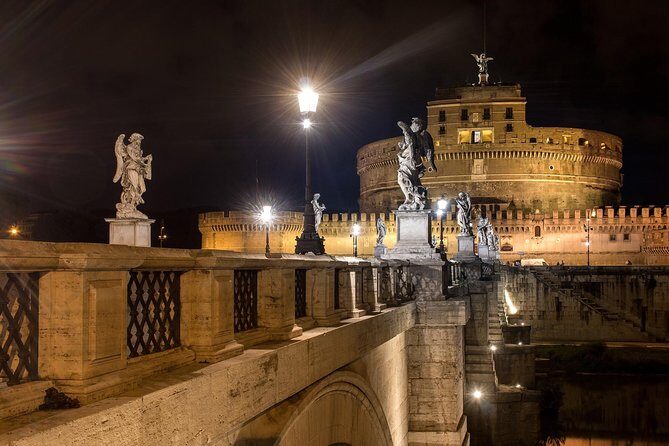
The tour ends at Castel Sant’Angelo, finishing at Lungotevere Castello 50. This is a strong close because the site has a built-in visual drama: heavy fortress energy with major Rome legends tied to it.
The bridge leading into Castel Sant’Angelo was used to expose bodies from executions to warn sinners. In today’s view, it’s surrounded by statues of angels, which creates a powerful contrast between what the place meant then and what it symbolizes now.
You’ll hear the story of the Cenci family and their fatal end. That name is useful because it gives you something to remember after the tour. And the ending works logistically too. You can keep walking, grab dinner nearby, or stroll along the river without needing a second transportation plan.
Who this tour fits best
This works best if you want a Rome evening that’s walkable, story-driven, and not too formal. It’s also a nice choice if you like your “spooky” grounded. The tone is often more historical spooky stories than full-on ghost theatrics.
It’s also a good pick for families with older kids and teens. The route is about history and myths, not jump scares, and it moves at a pace that keeps people engaged. If you’re traveling with teenagers, this kind of story-based route can beat the usual Rome routine.
If you hate crowds or want to start your trip with something that helps you understand neighborhoods, the night timing helps. And if you’re the type who loves noticing street details like madonelles, this tour will train your eyes quickly.
A small caution on hearing and crowding
One review note that’s worth listening to: some groups found the guide hard to hear in noisier spots. That’s a common problem on city streets. Your best move is simple—stay closer to the guide, don’t hang back for photos, and be ready to pause when the guide is explaining.
If your group is on the louder end or if the sidewalks are tight, the experience can feel more packed. The tour caps at 20, but small still feels crowded in Rome’s narrow sections. Take it slow and treat each stop as a quick listening moment, not a long hangout.
Should you book Haunted Rome Ghost Night Walking Tour?
Book it if you want a 2-hour night walk that mixes recognizable landmarks with the darker stories that shaped how people behaved in these streets. It’s a good value when you want a guided explanation without museum tickets or a long commitment.
Skip it if you know you get impatient with historical storytelling or if you’re very sensitive to death-related themes. This route includes churches connected to remains and prison-era explanations, so it’s not the lightest evening.
If you’re deciding between a generic night walk and a themed one, I’d choose this. It gives you a tighter narrative thread, and it makes Rome feel specific—one piazza, one bridge, one street at a time.
FAQ
How long is the Haunted Rome Ghost Night Walking Tour?
It runs for about 2 hours.
Where does the tour start and end?
It starts at Piazza Campo de’ Fiori (00186 Rome) and ends at Castel Sant’Angelo, Lungotevere Castello 50 (00193 Rome).
What languages is the tour offered in?
The tour is offered in English.
How much does the tour cost?
The price is $35.07 per person.
How large is the group?
The tour has a maximum of 20 travelers.
Is there a private tour option?
Yes, you can upgrade to a private tour for a more personalized experience.
Do the stops require paid admission tickets?
For the listed stops, admission tickets are listed as free.
Which major sights are included on the route?
The route includes Campo de’ Fiori, Piazza Farnese, Ponte Sisto, Castel Sant’Angelo, and other stops such as several churches and Via Giulia.
Is free cancellation available?
Yes, you can cancel for a full refund up to 24 hours in advance of the start time.
Is the tour near public transportation?
Yes, it’s listed as near public transportation.