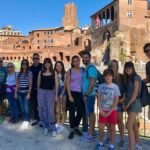
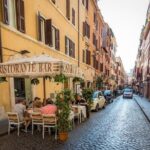
Rome clicks on foot.
This 2.5-hour Rome guided walking tour is a smart way to understand the city’s layout without getting stuck in museum-only mode. It starts near the Pantheon (at Piazza di Santa Chiara) and keeps moving through the big names—so you learn where everything sits and how to connect sights day to day. I also like the small-group vibe (up to 35 people) because it’s easy to ask questions and meet other visitors. Guides you might see in recent groups include Chiara, Anja, Laura, and Kara, and that live explanation makes a difference at every stop.
Two things I really like: the on-foot orientation you get in one go, and the practical pacing that fits into a hectic first day in Rome. The tour also leans on a local expert guide with a narrative that links sites instead of treating them like random checkboxes. One possible drawback: you’re not going inside paid attractions on this format, and some stops are brief—so if you want deeper time in any one place, plan a follow-up visit.
In This Review
- Key highlights I’d plan around
- Price and value: $31.31 for a first-day Rome “map”
- Getting there: Piazza di Santa Chiara to a Colosseum-area finish
- Stop 1: Pantheon—start with the dome and the light
- Stop 2: Trevi Fountain—Neptune, statues, and the coin ritual
- Piazza Venezia and the nerve center of central Rome
- Altare della Patria: a huge monument to Victor Emmanuel II
- Roman Forum: brief time, big payoff
- Colosseum: a final exterior hit that still packs a punch
- Guides matter: what the named guides tend to bring
- How to make the most of 2.5 hours (without getting annoyed)
- Who this tour is best for
- Should you book this walking tour?
- FAQ
- How long is the Guided Walking Tour in Rome?
- What is the price per person?
- Where do I meet for the tour?
- Where does the tour end?
- Is the tour offered in English?
- Is admission included for the stops?
- Do we enter paid attractions during the tour?
- What physical fitness level is required?
- Does the tour run in bad weather?
- Can I get a full refund if I cancel?
Key highlights I’d plan around
- Start near the Pantheon so you begin with one of Rome’s most iconic structures
- Free-entry stops for the sights listed on the route (no paid-attraction entry during the tour)
- A guided route through Pantheon → Trevi → Piazza Venezia → Altare della Patria → Roman Forum
- Colosseum at the end for a final photo-and-wow moment in the city center
- English-led with mobile tickets, designed to slot into a busy schedule
Price and value: $31.31 for a first-day Rome “map”
At about $31.31 per person for roughly 2 hours 30 minutes, this tour is priced like a solid “first overview” activity—not like a full-day deep dive. You’re paying for two things: a guided narrative and a local expert guide who helps you connect what you’re seeing. That matters in Rome, where even the famous stuff can feel confusing if you’re only looking at it from the outside.
It also helps that the stops listed in the tour come with free admission tickets. In other words, you’re not forced into a second ticket hunt just to get the basic experience. That said, the tour doesn’t enter paid attractions, so your money goes toward the walking route and explanations, not paid interior access.
One more value angle: this booking is tied to a pay-as-you-wish style approach. Your payment includes a reservation fee and the guide’s payment, and you can still choose how you want to reward the guide. If you’re the type who hates “extra flexibility,” this might feel slightly different than a straight fixed-price tour. If you’re comfortable with it, the model can be fair—especially if the guide’s story makes the walking worth it.
You can also read our reviews of more walking tours in Rome


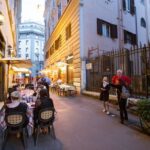
Getting there: Piazza di Santa Chiara to a Colosseum-area finish
Logistically, I like that the meeting point is easy to find on a map: Piazza di Santa Chiara, 00186 Roma. The tour ends near the Colosseum at Piazza del Colosseo, 1, 00184 Roma. That last detail is useful because it can cut down your “now what?” time when you’re tired and ready to wander independently.
You’ll also be near public transportation, which is a big deal in Rome. You don’t want to burn your energy getting to and from the start when you’re already walking a lot during the tour.
Group size is capped at 35 travelers, and the route is described as needing moderate physical fitness. It’s not a “sit down every 5 minutes” kind of experience, so wear shoes you can trust. The tour also runs in all weather conditions, so dress for rain or strong sun. Rome can go from pleasant to grumpy fast, and you’ll be walking through it.
Practical tip: try to arrive a little early and mentally switch on. Rome is busy, and finding the exact meeting point under bright daylight or evening glare can take a couple minutes.
Stop 1: Pantheon—start with the dome and the light
The tour kicks off at the Pantheon, and it’s a great opener. This is one of the few places in Rome where architecture alone can give you goosebumps. You’ll see the famous domed roof and the perfectly preserved oculus, the opening that brings in light straight through the ceiling.
Why this stop works early in your day: the Pantheon gives you a reference point. After you understand how Romans built large indoor spaces and handled light, other parts of the city make more sense. You’re also starting with something free-admission in this tour flow, so you’re not paying just to get oriented.
If you’re trying to photograph, remember: it’s a popular spot. Keep your expectations simple—get your angles, then let the guide’s explanation do the heavy lifting.
Stop 2: Trevi Fountain—Neptune, statues, and the coin ritual
From the Pantheon area, the route heads to the Trevi Fountain, a Baroque showpiece you’ve probably seen in photos a hundred times. Here, the guide focuses on the details: Neptune at the center, mythical sea creatures, and the sculpted drama that makes this fountain more like a monumental stage than a simple water feature.
A big part of Trevi’s pull is the tradition of throwing a coin over your shoulder. The tour includes the background on why people do it—returning to Rome is the promise behind the ritual.
Trevi is also one of those places where crowds can swallow your plans. The tour duration gives you about 20 minutes, which is enough to see it well if you stop trying to beat everyone to the perfect spot. Think of it as a “get it in context” moment: look first, photograph second, and listen while the guide explains what you’re looking at.
Piazza Venezia and the nerve center of central Rome
Next up is Piazza Venezia, a major junction square where major streets connect. The attraction here isn’t just one building—it’s the way the square organizes movement across the historic center. You’ll be taking in landmark architecture like the Altare della Patria and the presence of nearby monuments that point you toward other famous areas of Rome.
This is a useful stop even if you’ve never studied Roman urban planning. It helps you understand how the city’s layout channels foot traffic and sightlines. In practical terms, it makes it easier to navigate after the tour, especially if you plan to keep exploring on your own.
The stop is brief (around 15 minutes), so treat it as a quick reset: absorb where you are, then head to the monument that dominates the scene.
You can also read our reviews of more guided tours in Rome




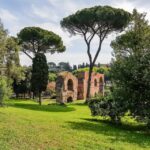
Altare della Patria: a huge monument to Victor Emmanuel II
Then comes the Altare della Patria, also known as the Monumento Nazionale a Vittorio Emanuele II. It’s a colossal neoclassical structure built to honor Victor Emmanuel II, the first king of a unified Italy. If Roman ruins are your focus, this monument still earns a place on the route because it shows you Rome as a modern capital, not just an ancient one.
Here’s what makes the stop worth your time: you’re seeing how Italian history was celebrated in stone—statues, columns, and the commanding equestrian statue. The scale can be a little overwhelming, but the guide’s explanation helps you read it instead of only staring at it.
This is also a good “stretch break” stop. After moving through streets and crowds, the monument gives you space to step back and take a wider look at the city’s story as it shifts from empire-era buildings to later national symbolism.
Roman Forum: brief time, big payoff
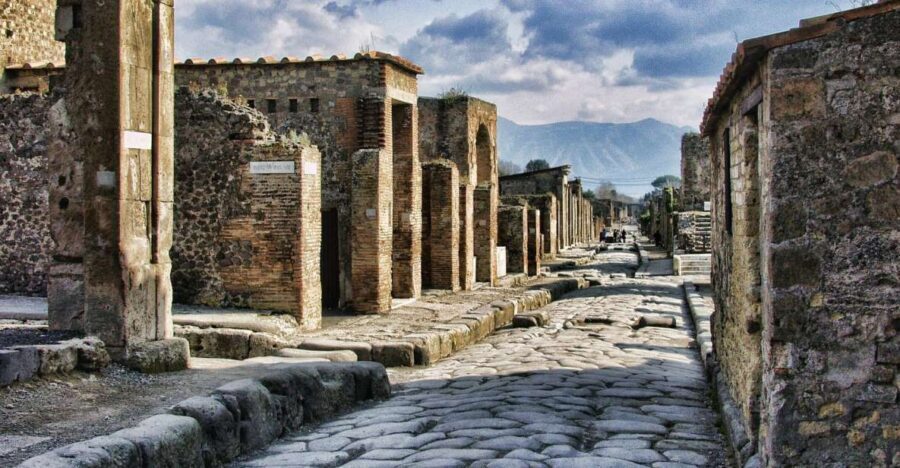
The walk continues to the Roman Forum (Foro Romano), one of the most important archaeological sites in the city center. This area was the political, religious, and commercial hub of ancient Rome—so it’s where power wasn’t just discussed, it was performed.
In this tour, you get about 20 minutes, which is short but not meaningless. The key is to listen for what the guide highlights: the ruins of government buildings, temples, and basilicas. You might see the “what” quickly, but the guide helps you grasp the “why” behind the layout and the significance of each zone.
The best way to use limited time here is to focus on structure rather than trying to read everything. Look for the general clusters of buildings and think about how people would have moved through the space. When you leave, you’ll be better prepared for any return visit where you want to slow down and explore more carefully.
Colosseum: a final exterior hit that still packs a punch
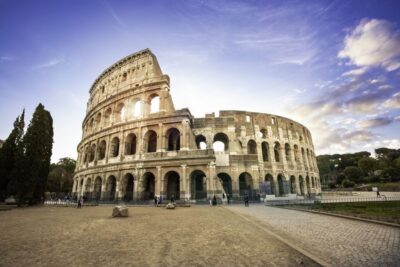
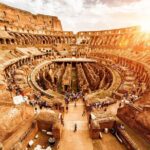
The tour ends near the Colosseum, which is the obvious crowd-pleaser for many people—and for good reason. Even without stepping inside paid zones, you can still appreciate what the Romans engineered. The tour frames the Colosseum as a massive amphitheater commissioned by Emperor Vespasian (AD 72) and completed under Titus (completed AD 80), built for public spectacles like gladiatorial contests and animal hunts.
Since the tour does not enter paid attractions, expect this to function as a close-up exterior moment: final photos, quick orientation, and a guide’s explanation to tie it back to what you saw earlier in the route.
If you want more than an exterior pass, plan a separate visit with the ticket type you prefer. This tour is ideal for learning how the Colosseum fits into the ancient city grid and why it matters—then you can decide whether you want deeper access afterward.
Guides matter: what the named guides tend to bring
One of the strongest parts of this experience is the human one. In recent groups, guides such as Chiara, Anja, Laura, and Kara have been praised for being pleasant, informative, and easy to follow while you’re walking. I also like that some guides bring visual aids, which is huge in Rome. A simple sketch or photo can turn a pile of stones into something that clicks.
Kara’s approach with visual material is especially helpful at places like the Forum, where ruins can feel abstract until someone explains how the spaces worked together. Anja and Laura’s styles show up as friendly and accommodating, which helps when you’re jet-lagged or just tired from the day’s walking.
Bottom line: a good guide doesn’t just tell facts. They help you look in the right direction and avoid getting lost in confusion.
How to make the most of 2.5 hours (without getting annoyed)
This tour is built for efficiency, not for lingering. That means you’ll want to travel smart so the experience stays fun.
- Wear comfortable shoes you can walk in for sustained stretches. Moderate fitness is requested, and Rome’s ground is not always flat.
- Bring a light layer and dress for weather, since it runs in all conditions.
- Use the mobile ticket on your phone so you’re ready at start time.
- Arrive a few minutes early and focus on the meeting point so you don’t start the walk stressed.
- Pick one or two stops to remember best, then take photos at the others. Trying to “do everything perfectly” wastes time.
Also, if you’re the kind of traveler who hates being rushed, pair this tour with a slower second day. Let this one act like your Rome map, and let later visits be your deeper dive.
Who this tour is best for
This is a strong match if you’re:
- On your first day in Rome and want a fast layout lesson
- Traveling solo or in a small group and like meeting other people briefly
- Short on time and want key sights in a single guided loop
- More interested in understanding connections than in paid interior access
If you’re a serious architecture nerd who wants hours in one site, you’ll likely want extra time elsewhere. This tour gives you direction; it doesn’t replace a full guided visit inside every major attraction.
Should you book this walking tour?
I’d book it if you want a guided Rome primer that strings together the biggest highlights in a practical route. At the price point, you get a guide, a coherent narrative, free-admission stops listed on the route, and a finish near the Colosseum that helps your day flow.
I’d skip it or upgrade your plan if you specifically want interior entry to paid attractions, or if your priority is slow, detailed time at one site like the Forum or the Colosseum. In that case, you’ll probably need a different style of tour.
If your goal is simple—get oriented, learn what you’re looking at, and enjoy a clean first-day walking plan—this one fits.
FAQ
How long is the Guided Walking Tour in Rome?
It lasts about 2 hours 30 minutes.
What is the price per person?
The price is $31.31 per person.
Where do I meet for the tour?
You meet at Piazza di Santa Chiara, 00186 Roma RM, Italy.
Where does the tour end?
The tour ends near the Colosseum at Piazza del Colosseo, 1, 00184 Roma RM, Italy.
Is the tour offered in English?
Yes, it is offered in English.
Is admission included for the stops?
Admission tickets for the sites listed in the tour are marked as free, and the tour notes that you will not enter paid attractions during the walk.
Do we enter paid attractions during the tour?
No. The tour says the group will not enter any paid attractions.
What physical fitness level is required?
A moderate physical fitness level is recommended.
Does the tour run in bad weather?
Yes. It operates in all weather conditions, so dress appropriately.
Can I get a full refund if I cancel?
Yes, you can cancel for a full refund if you cancel at least 24 hours in advance of the experience start time.