REVIEW · POMPEII
Guided Private Tour in Pompeii
Book on Viator →Operated by Capri Top Tours · Bookable on Viator
Pompeii feels personal on this tour. You get a private plan built around how Romans actually lived—streets, public spaces, food, bathing, and everyday rituals—so the ruins don’t turn into just more stone. I like that it’s led by an authorized archaeologist, not a random lecturer with a headset and a stopwatch.
Two things I especially like: you’re not just walking past famous sights, you’re guided through practical “day-to-day” themes (public life, eating, bathing, entertainment). And the pace is made for a short visit—about 2.5 hours—so you can still absorb the big ideas without feeling rushed through every doorway.
One drawback to consider: Pompeii can be uneven and busy, and parts of the route can be limited (for example, the big theater areas may not be accessible at the moment). If you want maximum access to every structure, you may need more time than this tour allows.
In This Review
- Key highlights worth your time
- Why a private, archaeologist-led Pompeii tour feels different
- Price per group: how this $326.72 deal shakes out
- Meeting at Piazza Esedra and starting at Porta Marina Inferiore
- The 13-stop Pompeii circuit, in plain English
- Stop 1: Pompeii Archaeological Park entrance and the port view
- Stop 2: Teatro Grande area (and the view even if access is limited)
- Stop 3: Tempio di Iside and the adjacent house area
- Stop 4: Termopolio di Vetuzio Placido, Pompeii’s fast-food wall
- Stop 5: Stabian Baths (Terme Stabiane) and the Roman bathing routine
- Stop 6: Piccolo Lupanare, the brothel district
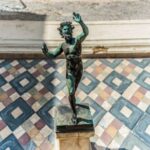
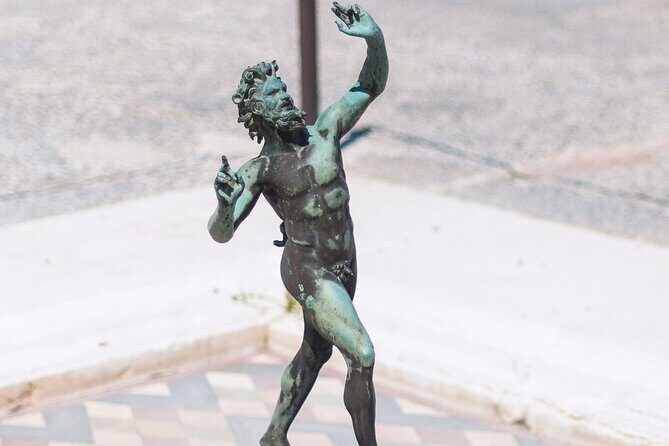
- Stop 7: Casa del Fauno, luxury house time
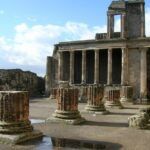
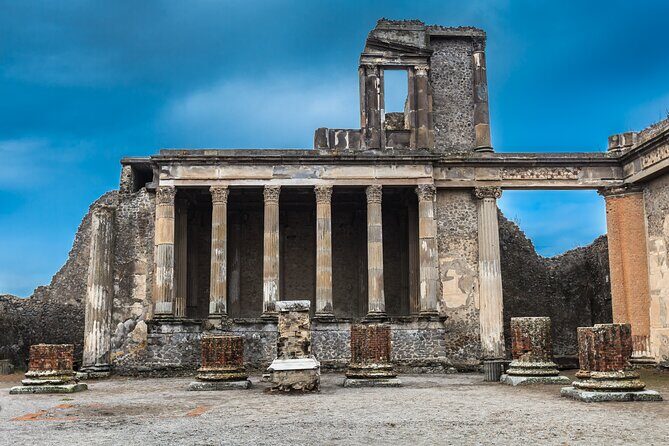
- Stop 8: La Basilica, Roman “parliament” energy
- Stop 9: Temple of Apollo, a sanctuary stop
- Stop 10: Macellum, the food market with dramatic wall scenes
- Stop 11: Tempio di Venere, Venus sanctuary highlight
- Stop 12: Tempio di Giove Capitolino and speeches in the forum
- Stop 13: Foro de Pompeya, Pompeii’s main square heart
- Roman routines you can actually picture (beyond the postcard)
- Who this tour is best for
- Should you book this private Pompeii tour?
- FAQ
- How long is the Guided Private Tour in Pompeii?
- What is the price for the tour?
- Is the tour private?
- What is included in the tour price?
- Is the Pompeii entrance ticket included?
- Where do we meet for the tour?
- What time does the tour operate?
- Does the tour end back at the meeting point?
- Is there a refund if I cancel?
Key highlights worth your time
- Archaeologist-led storytelling that turns the site into Roman routines, not trivia.
- Skip-queue friendly entry route via Piazza Esedra and Porta Marina Inferiore for an easier start.
- A tight Roman-life circuit: baths, fast food stop, brothel area, luxury villa, markets.
- Villa garden break with wine and time for fresco details, not just straight sightseeing.
- Food-focused moments including Roman-style snacks and a market stop with impressive wall art.
- Private group size up to 5 so you can move efficiently and get your questions answered.
Why a private, archaeologist-led Pompeii tour feels different
Pompeii is famous, but it can also be overwhelming. A private guide is the difference between wandering and understanding. Here, you’re guided by an authorized archaeologist, so the explanations stay anchored in what the site can actually show you.
I also like how the tour is built around daily life. Instead of only “look at this temple” moments, you’ll see where people met, ate, bathed, shopped, watched entertainment, and—yes—handled their private affairs. That theme makes it easier to picture a real person moving through the city 2,000 years ago.
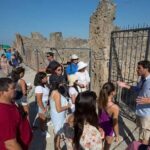
And because it’s private (up to five people), the guide can keep the story flowing at your speed. If you’re the kind of traveler who asks a lot of questions, this setup usually works better than a large group where your questions get swallowed by the crowd noise.
You can also read our reviews of more guided tours in Pompeii

Price per group: how this $326.72 deal shakes out
The tour price is $326.72 per group (up to 5) for about 2 hours 30 minutes. That’s not cheap in solo terms, but it becomes reasonable fast when you split it.
Here’s the math-style reality check:
- If you book as a full group of five, the tour cost is roughly $65 per person, plus the Pompeii site entry fee.
- The Pompeii Archaeological Park ticket is 18 euros per person (free under 18).
So if you’re traveling as a pair, your effective tour cost per person is higher, and you’re paying for convenience and expertise. If you’re a small group of friends or a family with older teens, this tends to feel like better value.
Also, the “ticket included” language shows up for multiple stops. The important part for you is the clear extra cost: the Pompeii park entry fee (18€ per person) is not included. Plan on adding that at checkout or at the time the guide processes entry.
Meeting at Piazza Esedra and starting at Porta Marina Inferiore
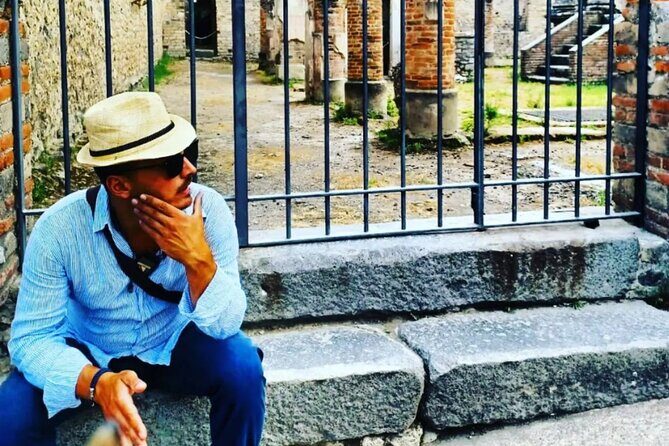
The meeting point is Ristorante Suisse, Piazza Esedra, 10/13, 80045 Pompei. It’s near public transportation, which matters because you’ll want to start smoothly and not waste your limited time figuring out where to stand.
From there, the tour begins at the Pompeii Archaeological Park using Piazza Esedra / Porta Marina Inferiore as the entrance. The value here is simple: it’s described as one of the best ways to avoid queueing and still get an early view of Pompeii’s ancient port area.
That first view is useful. When you see where ships connected the city to the wider world, the rest of Pompeii makes more sense. It stops being an isolated “dead city” and starts feeling like a working place with imports, exports, and daily movement.
The 13-stop Pompeii circuit, in plain English
This tour moves through Pompeii in a sequence designed for both highlights and Roman-life themes. Most stops are short, then you get context so the stops don’t feel like checkboxes.
Stop 1: Pompeii Archaeological Park entrance and the port view
You’ll enter at Porta Marina Inferiore, with the goal of avoiding long queues and getting a view of the ancient port. This is a smart opening because Pompeii isn’t only temples and villas—it’s also a city tied to trade and everyday arrival points.
If you’re someone who loves orientation, this stop helps you build a mental map quickly.
You can also read our reviews of more private tours in Pompeii


Stop 2: Teatro Grande area (and the view even if access is limited)
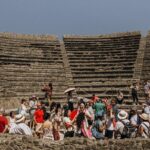
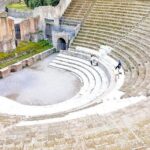
You’ll get the Teatro Grande and Teatro Piccolo from a panoramic viewpoint. The note here is important: the big and little theater areas may not be accessible at the moment, so don’t expect a full walk-through of every seating space.
Still, the viewing angle is the point. Entertainment was part of Roman life, and a theater view helps you understand where people sat to watch stories and performances.
Stop 3: Tempio di Iside and the adjacent house area
Next is Tempio di Iside. The tour includes an adjacent house area right in front of it, tied to why this part of Pompeii was discovered. Even without heavy technical detail, this kind of stop helps you see that Pompeii was “found” through clues in buildings, not just through luck.
It’s also a reminder that religion, architecture, and domestic space often sat side by side.
Stop 4: Termopolio di Vetuzio Placido, Pompeii’s fast-food wall
This is one of the most fun stops because it’s so human. Termopolio di Vetuzio Placido is a quick-eat place, and you’ll see frescoes that decorate the space.
What to watch for: this is where “Roman life” becomes visual. Food was part of the city’s rhythm, and these termopolia were built for movement, hunger, and speed.
Stop 5: Stabian Baths (Terme Stabiane) and the Roman bathing routine
At Stabian Baths, you’ll spend about 20 minutes. The tour frames these as a public spa healing complex, and it even mentions a Roman-style bathing ritual opportunity.
This stop is valuable because bathing wasn’t only hygiene. It was social time, routine, and status. Baths connected neighborhoods and helped people unwind in a way that looks different today but feels familiar.
Stop 6: Piccolo Lupanare, the brothel district
Next up is Piccolo Lupanare, described as part of a red-light district and including a visit to the brothel. Expect this to be straightforward and concrete—less romantic, more real.
This stop helps balance the tour. Pompeii wasn’t only polite public spaces and marble theaters. It had sex, bargaining, gossip, and everyday business too.
Stop 7: Casa del Fauno, luxury house time
Then you get Casa del Fauno, one of Pompeii’s best examples of luxury housing. You’ll spend about 20 minutes here, and the tour overview also mentions a garden pause with frescoes and a glass of wine.
This is where you shift gears from public life to private comfort. Even if you’re not a “villa person,” the contrast is powerful: one street feeds you; another place tells you what wealth looked like behind thick walls.
Stop 8: La Basilica, Roman “parliament” energy
You’ll see Pompei La Basilica, described as a Roman parliament-like public space with high-style marble decoration. It’s a short stop, but it matters because this is where law, business, and civic life braided together.
Look for how the space signals authority. A guide’s narration helps you feel what people did there beyond looking at columns.
Stop 9: Temple of Apollo, a sanctuary stop
The Temple of Apollo is next, around 5 minutes. It’s categorized as Apollo’s sanctuary, and even a quick stop can work if your guide connects it to the broader city pattern of worship and public identity.
Stop 10: Macellum, the food market with dramatic wall scenes
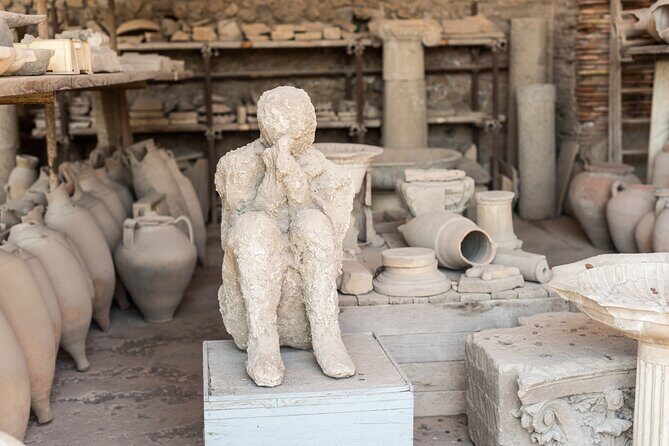
At Macellum, you’ll have about 15 minutes. The market is described with high-level frescoes and also includes body casts.
This is a heavy stop emotionally, so having an archaeologist-led explanation matters. It’s not just a pretty wall: it’s a place where people bought food and lived their last normal moments. The body casts portion is presented as part of the market experience here, which is a sobering but meaningful way to understand what happened.
Stop 11: Tempio di Venere, Venus sanctuary highlight
Next is Tempio di Venere. It’s called out as a scenery highlight, so expect the visual impact to be part of the point, not only the function.
This stop keeps the “Roman world” theme moving across different beliefs and public spaces.
Stop 12: Tempio di Giove Capitolino and speeches in the forum
You’ll visit Tempio di Giove Capitolino, described as Jupiter’s sanctuary and linked to public speech in the forum. Even if the stop is brief, it helps explain why the forum mattered: people weren’t only shopping—they were performing civic identity.
Stop 13: Foro de Pompeya, Pompeii’s main square heart
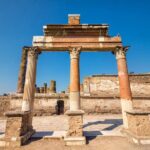
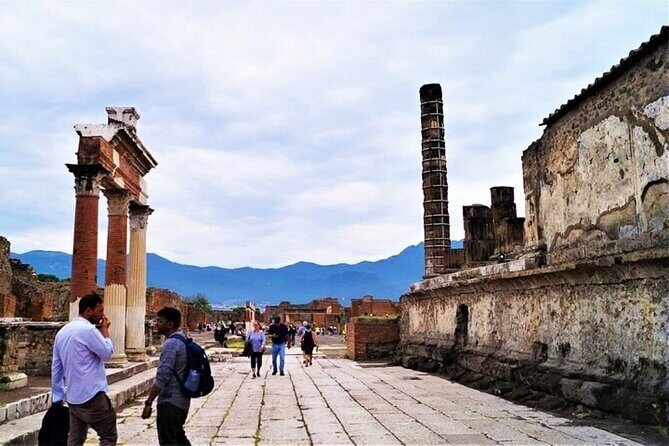
Finally, you reach Foro de Pompeya, the heart of the city’s activities, with about 15 minutes here. This last stop is where everything clicks. After baths, food, entertainment, luxury living, and worship, the forum shows how the city worked as a system.
If your time is limited, this ending helps you leave with a stronger overall picture.
Roman routines you can actually picture (beyond the postcard)
What makes this tour feel different is how it turns ruins into habits. You’ll see Romans as planners, eaters, bathers, and audience members—not just as people who left impressive buildings behind.
Bathing at Stabian Baths is a standout because it’s described as a safer, real way to stay well in Roman time, and it includes a Roman-style bathing ritual opportunity. Even if you choose not to treat it like a performance, the context makes the bath complex understandable.
Food gets multiple layers. You’ll have Roman-style snacking and freshly baked bread via a local bakery moment, then you’ll connect that idea at the Macellum food market. Termopolio di Vetuzio Placido adds the street-level “grab and go” feel that contrasts with the market’s broader variety.
Then there’s the villa garden with wine and fresco viewing. That stop matters even if you’re not a wine drinker because it gives your brain a place to rest. Pompeii can be intense. A planned pause makes your photos better too, because you aren’t rushing through everything like you’re on a train timetable.
Who this tour is best for
This is a strong fit if you fall into any of these buckets:
- You have limited time in Pompeii and want the major categories of Roman life in about 2.5 hours.
- You prefer private, small-group pacing over big bus tours.
- You want an archaeologist guide who brings context and story structure so you understand what you’re seeing.
- You’re visiting with friends or family and can split the group price to make it more affordable.
The tour also notes that most people can participate, but Pompeii is still Pompeii—uneven ground and stairs are common. If mobility is a concern, it’s worth asking the operator about the current accessibility of specific areas, especially since at least one theater area may not be accessible at the moment.
Should you book this private Pompeii tour?
I’d book this tour if you want Pompeii to feel like a living city you can explain to friends afterward. The combination of an authorized archaeologist, a tight 2.5-hour format, and Roman-life stops (baths, food, brothel district, luxury villa, forum) gives you real value for your time.
I’d think twice only if you’re the type who needs maximum access to every structure regardless of time limits. The route is designed for highlights and interpretation, not a slow, do-everything crawl.
If your top priority is smart use of a short visit, this private plan is a great choice, especially when you can fill more of the group spots and share the cost.
FAQ
How long is the Guided Private Tour in Pompeii?
It lasts about 2 hours 30 minutes.
What is the price for the tour?
The price is $326.72 per group, up to 5 people.
Is the tour private?
Yes. It’s a private tour/activity, and only your group participates.
What is included in the tour price?
You get an authorized archaeologist guide service for 2.5 hours and a private guided tour focused on Pompeii highlights and building types.
Is the Pompeii entrance ticket included?
No. The Pompeii Archaeological Park ticket is not included and costs 18 euros per person (free under 18).
Where do we meet for the tour?
The start point is Ristorante Suisse, Piazza Esedra, 10/13, 80045 Pompei NA, Italy.
What time does the tour operate?
The listed opening hours are 9:00 AM to 3:00 PM, Monday through Sunday, for the date range 05/28/2025 to 06/16/2026.
Does the tour end back at the meeting point?
Yes. The activity ends back at the meeting point.
Is there a refund if I cancel?
Yes. Cancellation is free if you cancel up to 24 hours in advance for a full refund. If you cancel less than 24 hours before, you won’t be refunded.