REVIEW · ROME
Rome: Leonardo da Vinci Exhibition Entrance Ticket
Book on GetYourGuide →Operated by Mostra di Leonardo da Vinci · Bookable on GetYourGuide
Leonardo’s ideas feel shockingly modern here. This ticket gets you into a special multimedia exhibition in Rome, where sketches turn into working-scale machines and you can interact instead of just stare.
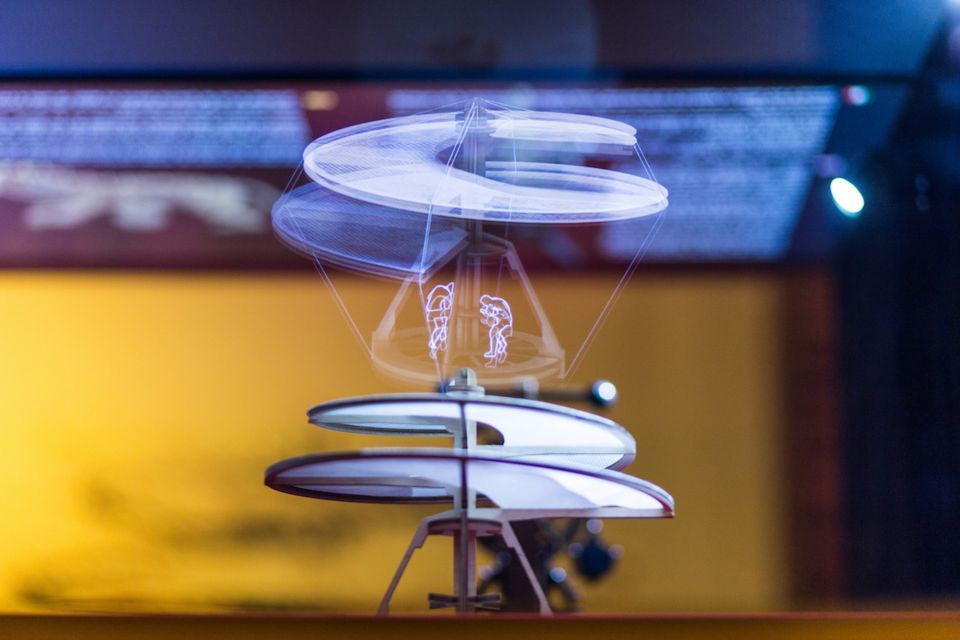
I especially like the hands-on approach—many of the reproductions are meant to be touched and tried. I also really enjoy the tech touches, including 3D holograms that bring Da Vinci’s inventions and paintings into a new dimension.
One thing to consider: it’s a relatively small, self-guided setup, so if you want a long, sit-down lecture with a guide, you may find it short.
In This Review
- Key highlights worth planning for
- Palazzo della Cancelleria: the building makes the visit feel extra Roman
- Getting there: Piazza della Cancelleria and when to arrive
- What you actually get for the $10 ticket
- The 4-part journey: from sketches to full-size machines
- Hands-on machines: the part you’ll remember
- The “Water, Air, Fire, Earth” stations: why this theme works
- The 43 BC tomb and underground pond: the surprise pause
- Audio and self-guided navigation: how to make it click
- How long should you plan?
- Who this exhibit suits best (and who might not)
- Value check: does $10 feel worth it?
- My booking recommendation: go if you want Leonardo to move
- FAQ
- Where is the Leonardo da Vinci exhibition in Rome?
- How much does the entrance ticket cost?
- What’s included with the ticket?
- How long should I plan for the visit?
- Is entrance allowed right up until closing?
- Can I cancel or change my plan?
Key highlights worth planning for
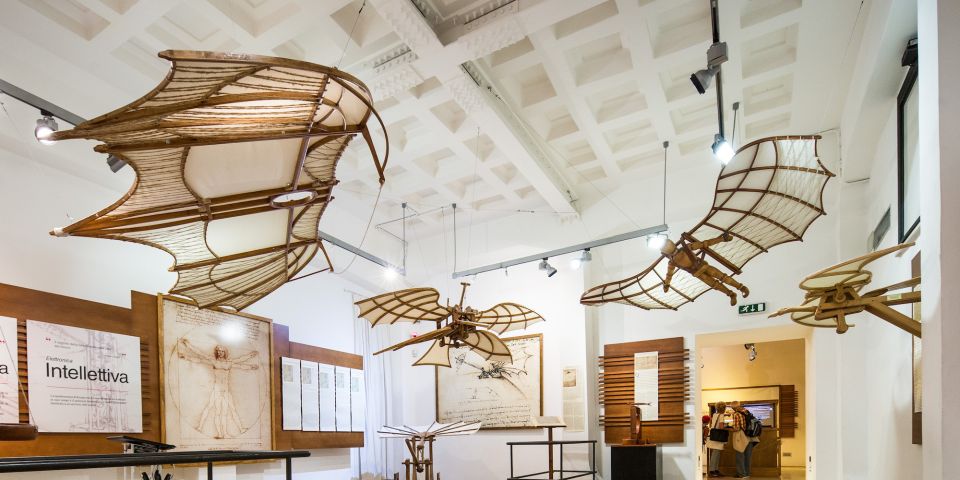
- 65 full-scale machines built from Leonardo’s designs, not just photos on walls
- 9 holograms in 3D that show paintings and inventions with a wow factor
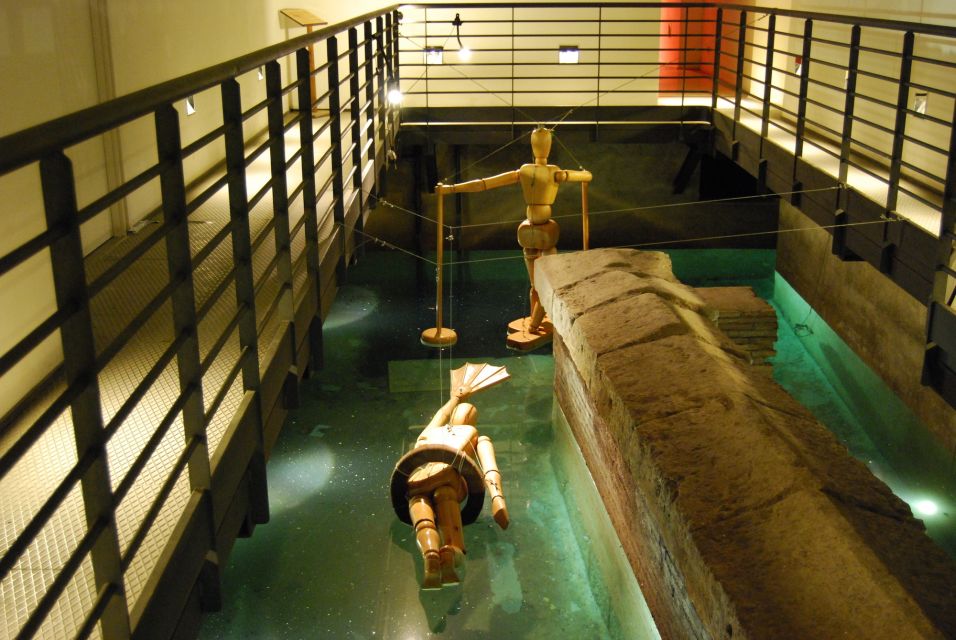
- Underground tomb setting with a 43 BC tomb in an underground pond area
- Interactive installations tied to Leonardo’s studies of Water, Air, Fire, and Earth
- Touch-and-play exhibits, including a chance to build your own bridge-style model
- Self-guided flow with optional audio/headphones, useful for turning facts into a story
Palazzo della Cancelleria: the building makes the visit feel extra Roman
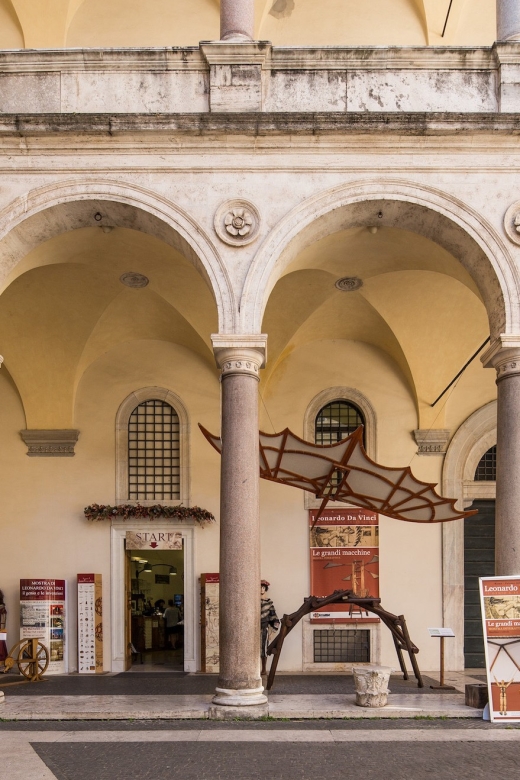
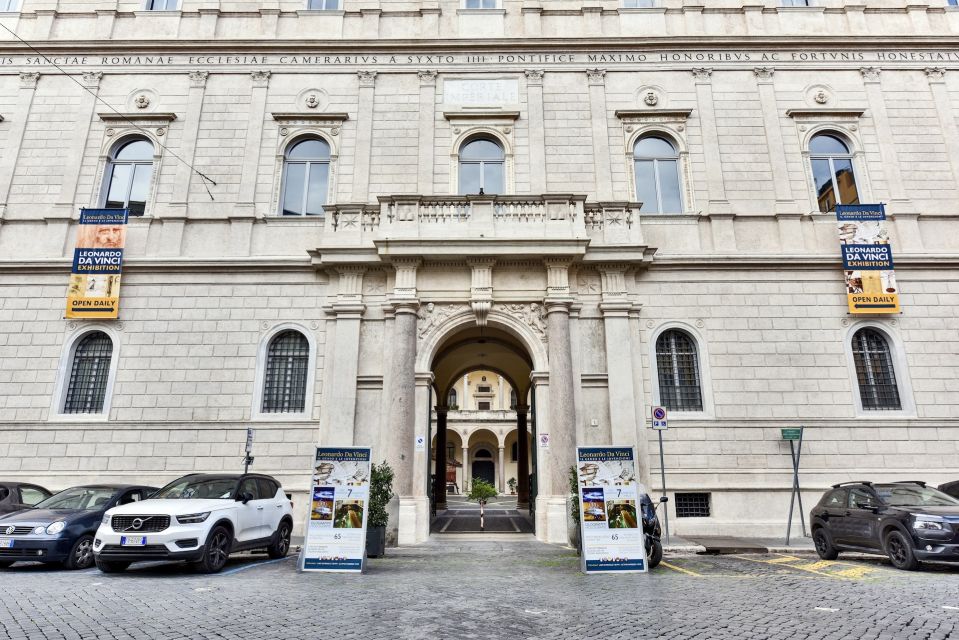
You’re not just entering an exhibition. You’re stepping into Palazzo della Cancelleria, a Vatican-owned building in the center of Rome. The setting is part of the experience: it has serious architectural weight, plus museum-like details that fit right in with Da Vinci’s “science and wonder” theme.
On the upper floor, the Sacra Rota handles church marriage cases, so the building lives in real Roman life, not just postcards. And then, in a wonderfully unexpected twist, there’s a tomb dating to 43 BC tied to the site’s deeper layers, including an underground natural pond area.
This matters because it changes how you’ll read the exhibit. You’re surrounded by layers of history while Leonardo’s work focuses on observation, mechanisms, and how ideas become objects. It’s a neat pairing: ancient space, Renaissance mind.
You can also read our reviews of more tours and experiences in Rome.



Getting there: Piazza della Cancelleria and when to arrive
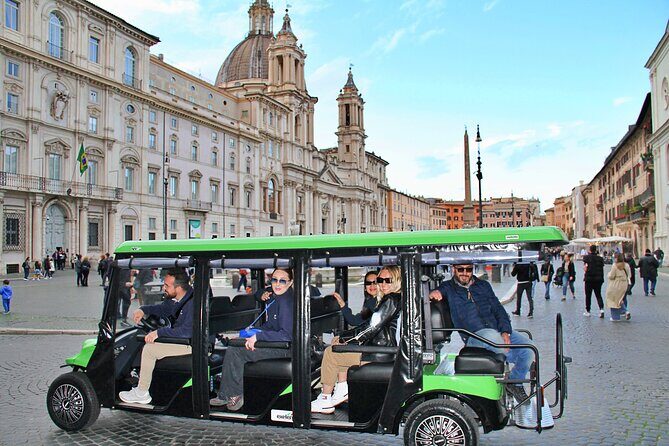
The meeting point is Piazza della Cancelleria 1, near Campo dei Fiori and Piazza Navona. That central location is convenient, especially if you’re building a day around the old-town core.
Your entrance is available until 1 hour before closing time. Plan to arrive with breathing room. Even though the exhibit is not huge, you’ll want time to try interactive pieces without feeling rushed.
A big practical win: your ticket includes skip-the-ticket-line entry. For a small museum, that can make the difference between an enjoyable visit and standing around while you bake in Rome’s heat.
What you actually get for the $10 ticket
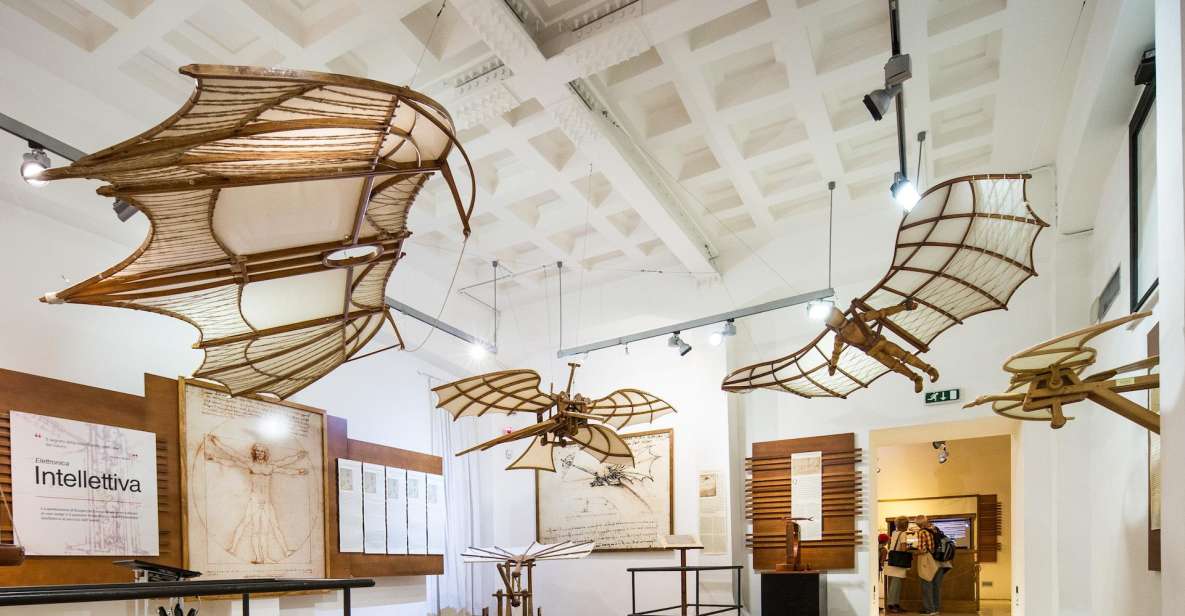
At $10 per person, this is one of those Rome experiences that feels priced for entry, not priced for a luxury brand. You’re paying for a concentration of models, holograms, and interactive stations, housed in a real historic building.
Your ticket includes exhibition entrance fees and you’ll receive a gadget when you arrive. The ticket does not include a guide, so you’ll be on your own through the rooms.
If that sounds a little scary, don’t worry. The exhibit is designed to be self-guiding, and many people use an audio/headphone option to make the story easier to follow. The audio doesn’t replace the hands-on fun; it supports it.
The 4-part journey: from sketches to full-size machines
The exhibition walks you through 4 sections, building a path from Leonardo’s thinking to visible, physical results. The big headline is that you’ll see over 65 full-scale machines made according to Leonardo’s designs.
This is where the experience earns its fans. A lot of Da Vinci displays show drawings and then you imagine the rest. Here, the models do the imagining for you. You can see proportions, mechanisms, and how a design becomes a functioning concept.
The exhibit also leans hard into multimedia. There are 9 holograms that show Da Vinci’s paintings and inventions in 3D. This isn’t just a novelty screen moment. It helps you connect the art side of Leonardo—how he thought visually—with the engineering side—how he tested and refined ideas.
You’ll also find that the layout has calming elements, including background music that keeps you from feeling like you’re in a loud tech show. It supports the theme: slow attention, not sprinting.
Hands-on machines: the part you’ll remember
Leonardo’s genius can feel abstract—until you touch something. Many exhibits are designed so you can touch and play with almost all the machines on display. That interaction is not a gimmick. It’s the point, because it turns Renaissance engineering into a physical experience.
A standout is the chance to build your own version of a bridge based on a Da Vinci idea. Even if you don’t build anything complex, the value is in trying the concept. You start understanding why Leonardo drew like a scientist and engineered like an artist.
You’ll also get 7 interactive installations that focus on Leonardo’s drawings and the principles behind them. The exhibit frames his work as a set of studies that connect the world—how air moves, how water behaves, what fire does, how earth forms—to machines and structures.
This approach makes the exhibit feel more than educational. It’s motivational. You’ll likely leave thinking about modern transportation and architecture in a new way, because Leonardo’s thinking maps onto problems we still solve.



The “Water, Air, Fire, Earth” stations: why this theme works
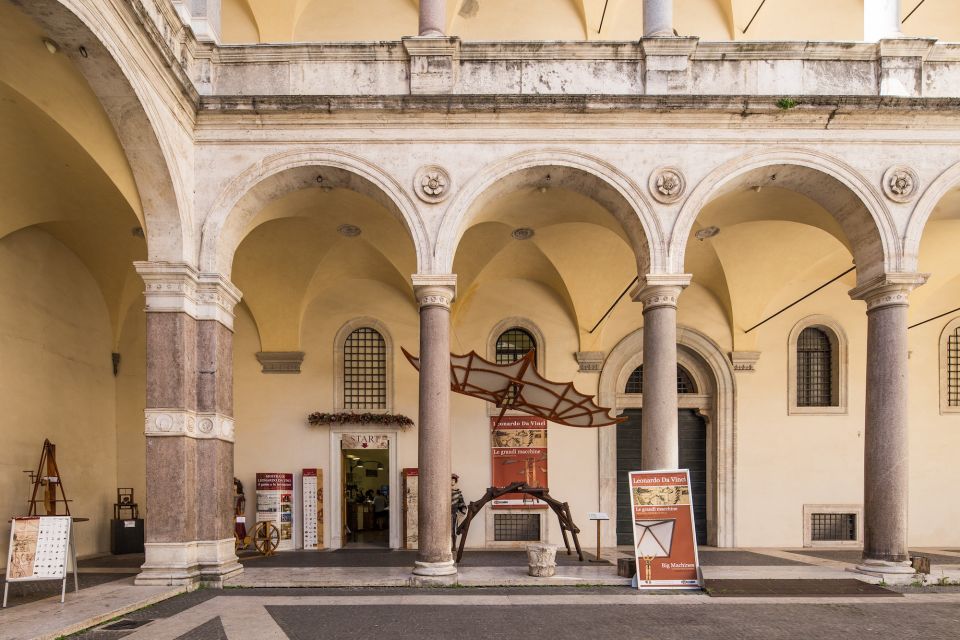
Leonardo didn’t just sketch inventions. He studied the rules behind them. In this exhibit, those rules show up through installations tied to Water, Air, Fire, and Earth.
For you, that theme is useful because it gives structure. Instead of bouncing randomly between machines, the exhibit encourages you to see connections. A water study links to fluid behavior and engineering thinking. Air supports ideas about motion and the dynamics behind flight-like concepts. Fire and Earth push you toward different forces and materials, which matters for real engineering.
If you like a cause-and-effect feeling—how one idea becomes another—you’ll probably enjoy these sections most. They also help younger visitors connect the dots without needing deep historical background.
The 43 BC tomb and underground pond: the surprise pause
You might walk in expecting only Da Vinci’s machines, then the building adds a plot twist. There’s a tomb from 43 BC, and it’s presented in an underground pond setting.
That’s more than an extra sight. It creates a different atmosphere—cooler and quieter—so you can reset mid-visit. It also reinforces the “Rome layering” feeling: you’re physically inside a place where many eras overlap.
Practically, the underground sections can be a welcome break from Rome’s heat, especially in warm months. It gives you a calmer pace, which helps if you like to read labels and not just move from one model to the next.
Audio and self-guided navigation: how to make it click
This is a self-guided experience, and that’s a good thing for most people. You control the pace, which matters because interactive stations take time.
The optional audio/headphone guide is worth considering. It can give excellent explanations, and it helps you understand what you’re looking at while you’re still standing in front of the mechanism.
One practical note: the audio information doesn’t always follow the room order perfectly. So if you use the audio, don’t worry if the narration jumps around. You can still use it like a spotlight: let it add context to whatever station you’re at.
Also, give yourself a minute for orientation. The room flow can feel slightly confusing at first, so if you’re chasing every detail, starting with a calm first lap helps you avoid backtracking.
How long should you plan?
Plan on a visit that ranges from about 45 to 60 minutes if you focus on the core machines and interactive highlights. If you read labels, try more hands-on items, and take your time with the holograms, you could easily stretch it closer to 1.5 to 2 hours.
Because it’s not huge, you can slot it into a day without derailing your whole itinerary. It works well as:
- a morning cool-down before the bigger outdoor sights
- an afternoon reset when you need indoor air
- a family stop that doesn’t turn into a long museum slog
Who this exhibit suits best (and who might not)
This is a strong fit if you like engineering, design, inventions, and hands-on learning. It’s also a good match if you enjoy history but want it translated into tangible ideas.
Families tend to like it because the interaction helps kids stay engaged. It’s also useful for older kids who like building, science, and mechanisms.
One caution: the exhibit isn’t designed as a baby-proof play zone. The floor can include trip hazards and there are touch/no-touch areas, so it’s best for families who can supervise closely.
If you want only famous paintings and traditional art galleries, you might find yourself more interested in the engineering displays than the art references. If, on the other hand, you want to see Leonardo as an inventor first and an artist second, this exhibit hits the target.
Value check: does $10 feel worth it?
For me, the value comes from the combo: price + interaction + variety. At $10, you’re not paying museum prices for something passive. You’re getting a concentrated set of large-scale machines, holograms, and interactive stations in a compact space.
It also helps that the visit can be shorter than many museums. You can spend an hour and still feel like you got something real out of it. Longer visits also work because the hands-on stations invite repeated attention.
The lack of a guide is also part of the value equation. You’re not paying extra for a tour leader, and the exhibit uses tech and explanations to carry the story. If you want extra support, the audio/headphone option is the best add-on idea from the on-site experience.
Finally, there’s a gift shop. It’s not a reason to go, but it’s a nice last stop for a Leonardo-themed souvenir that isn’t the typical mass-produced junk.
My booking recommendation: go if you want Leonardo to move
I’d book this if you want Leonardo da Vinci to feel like a living inventor rather than a distant historical figure. The touchable machines, the 3D holograms, and the mix of engineering topics (Water, Air, Fire, Earth) make the exhibit practical for both adults and kids.
Skip it if you already know all the famous Da Vinci sketches and you only want large museum-style masterpieces. This is more about mechanisms and concepts you can interact with than about a full art exhibition.
If you’re planning a Rome day around Campo dei Fiori or Piazza Navona, this fits nicely nearby. It’s also a smart indoor plan when heat or crowds make outdoor walking less fun.
FAQ
Where is the Leonardo da Vinci exhibition in Rome?
It’s located at Piazza della Cancelleria 1, near Campo dei Fiori and Piazza Navona.
How much does the entrance ticket cost?
The price is $10 per person.
What’s included with the ticket?
The ticket includes exhibition entrance fees and you’ll receive a gadget. A guide is not included.
How long should I plan for the visit?
Most visitors finish in about 45 to 60 minutes, but you may spend closer to 1.5 to 2 hours if you read labels and try many interactive stations.
Is entrance allowed right up until closing?
No. Entrance is available until 1 hour before closing time.
Can I cancel or change my plan?
Yes. There’s free cancellation up to 24 hours in advance for a full refund. There’s also a reserve now & pay later option.