REVIEW · EVENING EXPERIENCES
Ghost & Legends in Night Rome Walking Tour
Book on Viator →Operated by Rome Adventures · Bookable on Viator
Rome turns spooky after dark.
This 2-hour Ghosts and Legends storytelling walk threads together Rome’s darker side when the crowds thin and the air feels cooler. You’ll start in a square tied to executions, then drift toward bridges, backstreets, and churches with unsettling legends. I love the nighttime pacing and the fact that the stories feel rooted in real places you can point to.
One thing to plan for: in busier piazzas, it can get noisy enough that you may struggle to hear every detail from your guide.
In This Review
- Key highlights you’ll care about
- Why Rome at night fits ghost legends
- Price and group size: what $29.96 gets you
- Stroll map: Campo de’ Fiori to Castel Sant’Angelo
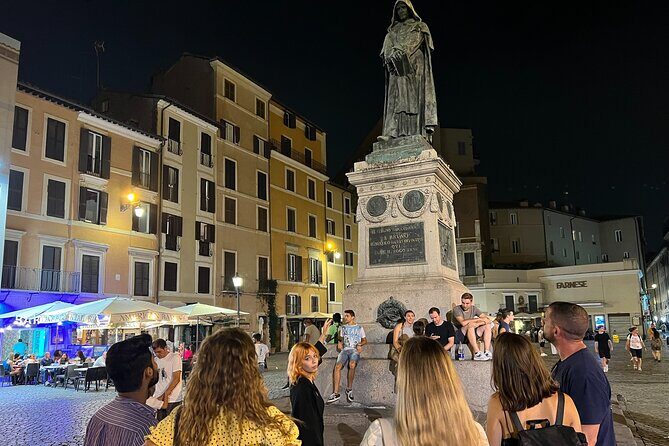
- Stop 1: Campo de’ Fiori, where the story starts
- Stop 2: Piazza Farnese and a legend of hidden access
- Stop 3: Via del Mascherone & Vicolo dei Venti, plus street-side protections
- Stop 4: Ponte Sisto and the bridge with a brutal reputation
- Stop 5: Fontana del Mascherone and the fountain rule
- Stop 6: Chiesa di Santa Maria dell’Orazione e Morte, made from human bones
- Stop 7: Via di Monserrato, haunted apartments with a prison past
- Stop 8: Chiesa di Santa Maria in Monserrato degli Spagnoli and scandal-by-story
- Stop 9: Via Giulia and the danger of cosmetics
- Stop 10: Via dell’Arco dei Banchi and Mastro Titta’s childhood home
- Stop 11: Castel Sant’Angelo and the Cenci family’s ending
- What you’ll actually hear: execution, prison, and eerie legends
- Guides, pacing, and staying able to hear the story
- How to get the most out of your ghost walk
- Who should book this tour, and who might skip it
- Should you book Ghost & Legends in Night Rome?
- FAQ
- How long is the Ghost & Legends in Night Rome walking tour?
- Where does the tour start and where does it end?
- What language is the tour offered in?
- Is there an admission ticket cost at the stops?
- How big is the group?
- What should I do if the weather is bad or if I need to cancel?
Key highlights you’ll care about
- A tight 2-hour loop with short stops that keep the energy up
- Max 20 people means you’re not swallowed by a huge group
- English guide + mobile ticket makes last-minute logistics easier
- Execution and crime stories tied to places like Campo de’ Fiori and Castel Sant’Angelo
- Unusual stops, including a church made from human bones and a fountain legend
- Night timing helps you see Rome when it’s less packed and more atmospheric
Why Rome at night fits ghost legends
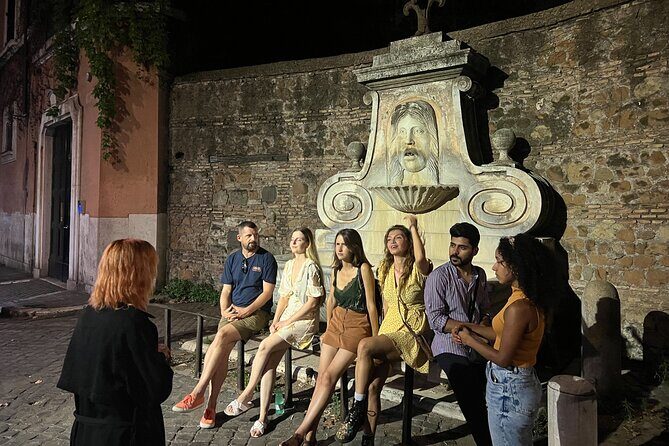
Night tours in Rome aren’t just about the spooky vibe. They solve a practical problem. During the day, you’re often fighting for space near major sights. At night, streets feel wider. You can walk without constantly stopping for tour groups. And your guide can actually keep the momentum.
This tour leans hard into that mood. The route mixes famous names with genuinely strange stops. One moment you’re on a classic piazza that used to be an execution site. The next, you’re hearing stories linked to bridges, prisons, and a church made from human bones. It’s not a slow, spooky stroll where everyone gets quiet and bored. It’s more like a guided storywalk where the city keeps changing shape around you.
Also: you’re getting the payoff of Rome’s “after hours” ambience without shelling out big-museum money. You’re paying for stories tied to walking-distance sights, not for a ticketed attraction that eats up half your evening.
You can also read our reviews of more walking tours in Rome


Price and group size: what $29.96 gets you
At $29.96 per person, this is priced like an affordable evening activity. That matters because Rome is expensive when you start stacking museums, timed entries, and taxis. Here, you get a guided night route with multiple stops, and the tour indicates admission tickets are free at the listed stops.
A few value points to keep in mind:
- You’re paying for guided storytelling across a cluster of locations rather than one single landmark.
- The group is capped at 20, so it tends to feel conversational instead of like a cattle line.
- The tour runs about 2 hours, which fits well between dinner and whatever you plan to do next (it ends at Castel Sant’Angelo).
There’s also a planning clue: it’s typically booked about 18 days in advance on average. That doesn’t mean you must book that far out, but it does suggest you shouldn’t wait until the night before if your dates are tight.
Stroll map: Campo de’ Fiori to Castel Sant’Angelo
This tour follows an easy-moving route where each stop is short—think about 10 minutes of story and atmosphere—so you’re constantly seeing new streets and squares rather than repeating the same block.
Below is what you can expect at the key locations, and why each one makes the story hit harder.
Stop 1: Campo de’ Fiori, where the story starts
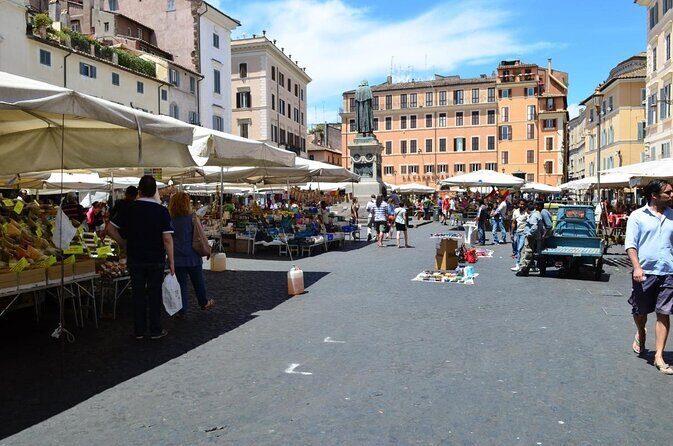
You begin in Campo de’ Fiori, a piazza that’s now known for lively bars and food-focused energy. But the darker side of the place is what your guide brings to life. This square was once an execution site, which makes it a perfect opening: the location already carries weight, even before the stories begin.
Practical tip: arrive a little early so you’re not rushing at night in a busy meeting spot.
Stop 2: Piazza Farnese and a legend of hidden access
Next is Piazza Farnese, tied to lavish elite living. Your guide adds a legend about a secret passageway—one of those details that instantly makes a well-known square feel strange and layered.
Why it works at night: you can see the geometry of the place more clearly when it’s calmer. Even if you’ve passed Piazza Farnese in daylight, the “what’s hidden” angle feels different after dark.
You can also read our reviews of more evening experiences in Rome



Stop 3: Via del Mascherone & Vicolo dei Venti, plus street-side protections
You then move through Via del Mascherone and Vicolo dei Venti. Here the focus shifts to the small religious images lining the streets—madonelles, often described as little madonnas—and how they were said to help curb crime.
This stop is great if you like history that’s written into everyday objects. It’s also a reminder that Rome’s “street art” traditions long predate modern marketing. At night, those markers look extra watchful.
Stop 4: Ponte Sisto and the bridge with a brutal reputation
You cross or pause at Ponte Sisto, described as Rome’s oldest bridge. Your guide ties it to a gruesome past: tragic accidents, power struggles, theft, and suspicious deaths.
At this stage, the tour’s tone locks in. Bridges are natural storytelling points because you feel the flow of movement—then you hear about what went wrong in the past.
Stop 5: Fontana del Mascherone and the fountain rule
At Fontana del Mascherone, the story gets delightfully spooky in a way only folklore can. You’re told you’re not supposed to drink from the fountain, and that doing so leads to deadly consequences.
Is it literal? No. But it’s exactly the kind of local legend that makes the streets feel like they’re part of a living book. It also breaks the tension without turning it into a joke.
Stop 6: Chiesa di Santa Maria dell’Orazione e Morte, made from human bones
Now comes one of the most intense stops: Chiesa di Santa Maria dell’Orazione e Morte, a 17th-century church described as being made from human bones.
If you’re easily put off by death-themed topics, this is the moment to pay attention. The tour is still presented as storytelling and history, but the subject matter is real and heavy. On the other hand, if you like your Rome a little darker and more honest, this stop is the kind of place you remember.
Practical tip: keep your expectations realistic. Even if the building is striking, it’s still a church setting—move respectfully and listen when your guide is speaking.
Stop 7: Via di Monserrato, haunted apartments with a prison past
Next is Via di Monserrato, described as one of Rome’s most haunted apartment blocks, with a link to one of the worst prisons in the city’s history.
This is where the tour does something smart: it connects “modern-looking” streets with older suffering underneath. You can look at the buildings and understand how the city repurposes space over time.
Stop 8: Chiesa di Santa Maria in Monserrato degli Spagnoli and scandal-by-story
You’ll also stop at Chiesa di Santa Maria in Monserrato degli Spagnoli, a Spanish church in the heart of Rome. The guide shares a scandalous story described as worthy of a telenovela.
This is the lighter, dramatic-plot stop. The kind of story that makes you lean in, not because it’s graphic, but because it has twists.
Stop 9: Via Giulia and the danger of cosmetics
Then you’re at Via Giulia, where the tour describes a former beauty shop and the idea that cosmetics could kill. That’s a fascinating angle—danger hiding behind everyday beauty culture.
It also fits the night theme. At night, even normal streets feel like they’re whispering secrets. Add the “cosmetics can kill” claim, and suddenly you’re thinking about how people tried to control their image while living with the risks of earlier medicine and ingredients.
Stop 10: Via dell’Arco dei Banchi and Mastro Titta’s childhood home
At Via dell’Arco dei Banchi, the story shifts to a very specific figure: Mastro Titta, one of Rome’s most famous executioners. You’ll hear that this area includes the childhood home tied to him.
This stop works best if you like “name to place” connections. It turns a distant historical occupation into something human in the way it’s geographically anchored.
Stop 11: Castel Sant’Angelo and the Cenci family’s ending
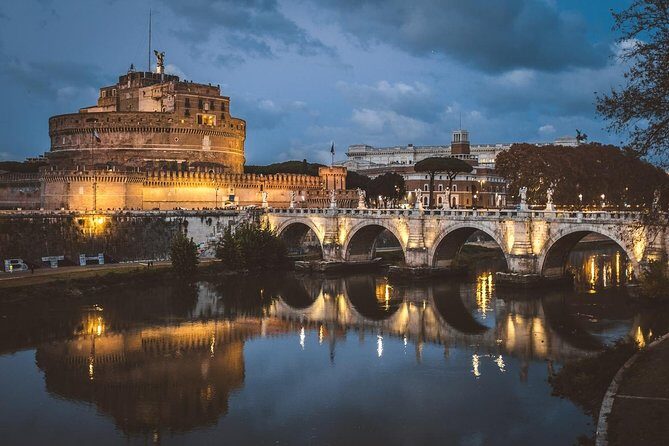
You finish at Castel Sant’Angelo. Your guide explains how, beyond its angel statues today, the site was used to expose bodies of the executed as a warning. You’ll also hear the story of the Cenci family and how they met their fatal end.
This is a strong finale because it’s both visual and symbolic. The fortress makes the story feel bigger than the street-level legends you heard earlier. And since you end here at Lungotevere Castello, 50, you can keep going right after—wander the area, grab a bite, or plan your next stop.
What you’ll actually hear: execution, prison, and eerie legends
This tour is built on a clear theme: the darker side of Rome. Expect stories about executions, murders, and crime-linked legends threaded through real locations. That includes the story links to prisons and executioners, plus the heavy-hitting bone-church stop.
But it’s not only doom and gloom. The tone often balances chilling material with humor and pacing. That balance is a big reason the tour gets such strong ratings: the stories don’t feel like homework. They feel like a night narrative you can follow from place to place.
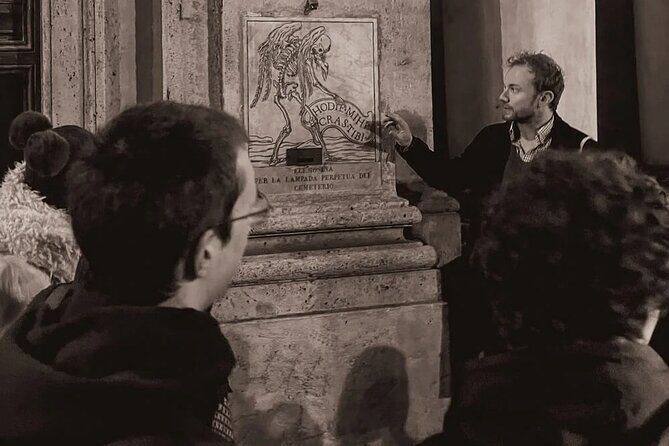
And guides vary in style. You’ll likely encounter guides who keep things easy-going and fun while staying detailed. Some have used pictures on their phones to support what they’re describing, and at least one guide has been reported as adapting storytelling for kids (one family mentioned their child-friendly version without losing quality).
Guides, pacing, and staying able to hear the story
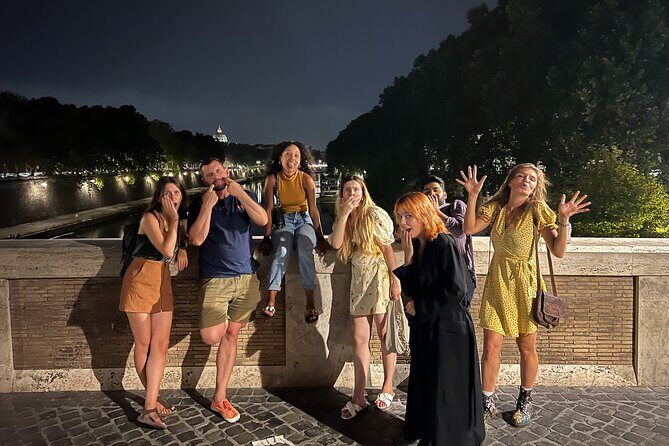
Night walking tours only work if you can follow the narration. The tour’s strongest element is how guides seem to shape the evening into something you want to listen to. Many guides are described as animated, energetic, and personable, with strong attention to details.
Names that have come up include Antonio, Dominica (also spelled Domenica in some notes), Diletta, Simon, Maham, Sarah, Paula, Delilah, Csenge, and Paola. The point for you: you’re not just getting a script. You’re getting a live storyteller.
That said, there is a real-world issue. Some piazzas get noisy, and you might have trouble hearing over foot traffic and ambient sound. If you struggle with audio at street level, do two things:
- Stand where your guide is speaking, not where the street photo is best.
- Wear something with your hood down if it muffles sound.
Also, go in weather-prepped mode. One guide’s advice was blunt: winter nights can be cold. Bring layers, and don’t assume Rome’s winter will be mild just because the sun can feel warm earlier.
How to get the most out of your ghost walk
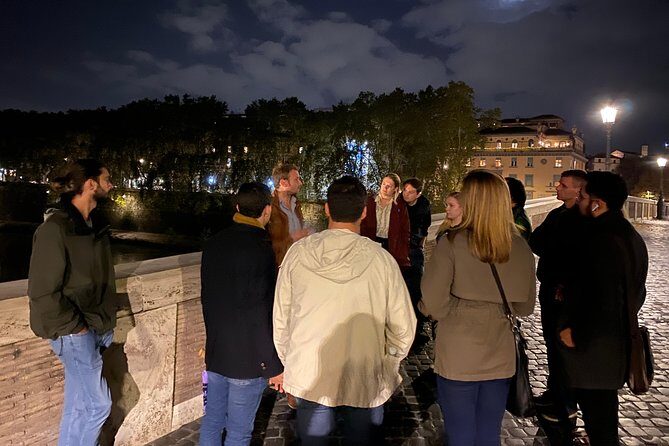
If you want this tour to feel like a highlight, not just a weird evening detour, plan like this:
- Wear comfortable shoes. You’ll be walking between multiple streets and stopping often.
- Bring layers for night air. Even if you’re fine in the evening, the time on the move can chill you.
- Keep your phone brightness reasonable. If you’re using it for directions, try not to blast light that ruins your view or distracts others.
- Be ready for dark themes. This isn’t horror movie territory, but it does cover death, execution, and prison history.
- Ask questions at the right moments. When your guide pauses, that’s your chance to clarify a name, a legend, or a timeline.
Small bonus: the route gives you a lot of variety in architecture and street texture. Even if you’re not obsessed with ghost stories, you’ll still get a different lens on everyday Rome.
Who should book this tour, and who might skip it
This tour fits best if you:
- want an evening plan that doesn’t revolve around a museum ticket
- enjoy local legends connected to real places
- like history with plot and character, not just dates
It may be less ideal if you:
- get frustrated when you can’t hear well over street noise
- prefer upbeat, light themes for your night activities
- dislike death-related topics, especially the church described as made from human bones
For families, it can work when the guide adapts. One report specifically mentioned a 12-year-old-friendly adjustment without killing the fun.
Should you book Ghost & Legends in Night Rome?
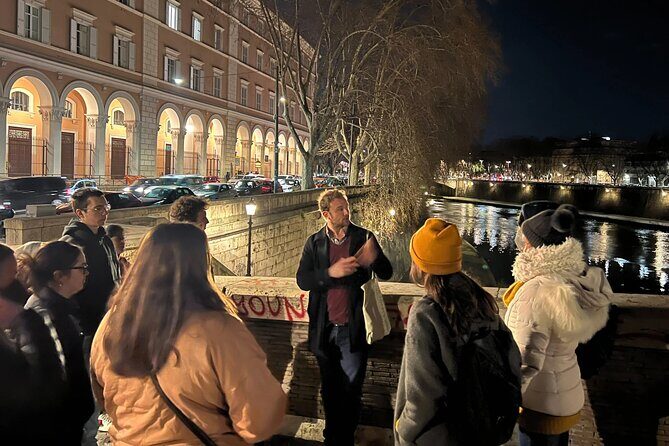
If you’re choosing between another daytime landmark scramble and a guided storywalk, I’d steer you toward this one—as long as you’re okay with darker subject matter and the reality of street-level noise.
At $29.96 for about two hours, with a small group size and stops tied to memorable, unusual locations, it’s strong value. You’re not just ticking Rome off a list. You’re learning how the city explains its past after dark—through legends, fear, and the kind of details that stick to your brain long after you leave Castel Sant’Angelo.
FAQ
How long is the Ghost & Legends in Night Rome walking tour?
It runs for about 2 hours.
Where does the tour start and where does it end?
It starts at Piazza Campo de’ Fiori and ends at Castel Sant’Angelo (Lungotevere Castello, 50).
What language is the tour offered in?
The tour is offered in English.
Is there an admission ticket cost at the stops?
The tour listing indicates admission ticket free for the stops.
How big is the group?
The maximum group size is 20 travelers.
What should I do if the weather is bad or if I need to cancel?
The experience requires good weather. If it’s canceled due to poor weather, you’ll be offered a different date or a full refund. You can cancel up to 24 hours in advance for a full refund; within 24 hours, the amount paid is not refunded.