REVIEW · COLOSSEUM TOURS
Rome Palatine Hill, Roman Forum, Colosseum Panoramic Views Tour
Book on Viator →Operated by Rome Colosseum Tours | Official Guided Tours · Bookable on Viator
Rome can be intense. This 3-hour small-group tour hits the Roman heart in a smart order. You get expert context as you move from Michelangelo’s Capitoline views to the Forum’s temple ruins, with headsets so you can actually hear the story.
Two things I really like: the emphasis on the Roman Forum and Imperial Forum areas (so you’re not wasting time stuck in the most crowded vibe), and the photo-friendly pacing from elevated spots like the Capitoline and Palatine Hills. You also finish with a guided look at the Colosseum from the outside, which is a great way to learn the building without burning your whole day in lines.
One drawback to plan around: the Colosseum admission ticket isn’t included, and the activity includes an exterior-style visit. If you want full access inside the Colosseum, you’ll need to line up that ticket separately, and you should expect security screening and ID checks along the way.
In This Review
- Quick hit list: what makes this tour work
- The real value: a Forum-heavy tour with smart viewing time
- Piazza del Campidoglio: Michelangelo’s square and fast panoramic orientation
- Trajan’s Forum and Trajan’s Column: military spectacle made walkable
- Roman Forum: the center of law, markets, and temple-lined drama
- Palatine Hill: imperial beginnings where rich homes once ruled
- Colosseum from the outside: learn it without losing your day to crowds
- Tickets, ID, and the few rules that can trip you up
- Who should book this Rome Forum and Palatine Hill tour
- Should you book this Palatine Hill, Forum, and Colosseum Views tour?
- FAQ
- FAQ
- How long is the Rome Palatine Hill, Roman Forum, Colosseum Panoramic Views Tour?
- What language is the tour offered in?
- What is the price per person?
- What’s included in the tour?
- What is not included?
- Is the Colosseum tour inside or outside?
- Do I need an ID for the Forum?
- Is there a maximum group size?
- Where does the tour start and end?
- What’s the cancellation policy?
Quick hit list: what makes this tour work
- Forum-first approach that saves you from the worst crowd crush
- Panoramic photo stops from the Capitoline and Palatine Hills
- Trajan’s Column and Trajan’s Forum explained like a story you can walk through
- Hands-on ruins focus in the Imperial and Roman Forum area with time to look closely
- Colosseum overview from outside, with time to admire rather than rush
- Max 24 people + radio/headsets, so you’re not stuck listening to whispering chaos
The real value: a Forum-heavy tour with smart viewing time
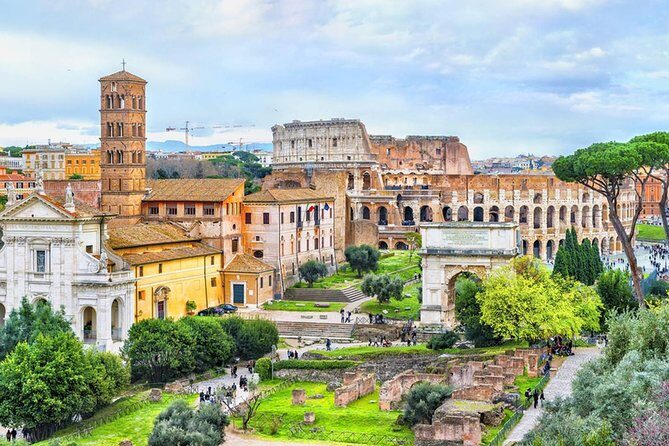
This isn’t a Colosseum-only sprint. The core idea is that you’ll spend most of your time in the spaces where Rome’s politics, religion, and public life actually happened—then you wrap it up with Colosseum context from a better angle than most people manage on their own.
For the money, the value comes from what’s handled for you: a professional licensed local guide, radio/headsets, and entry included for major sites on the Forum and Palatine Hill side (Trajan Forum, Roman Forum, Palatine Hill, and the Imperial Forum area). That matters because in Rome, the “time cost” is often what crushes you, not the walking.
The tour also keeps group size relatively tight—maximum 24 travelers—which helps when you’re trying to hear details while standing in front of fragile ruins. You’ll still deal with crowds on-site, but the route is built around avoiding the worst bottlenecks.
You can also read our reviews of more tours and experiences in Rome.

Piazza del Campidoglio: Michelangelo’s square and fast panoramic orientation
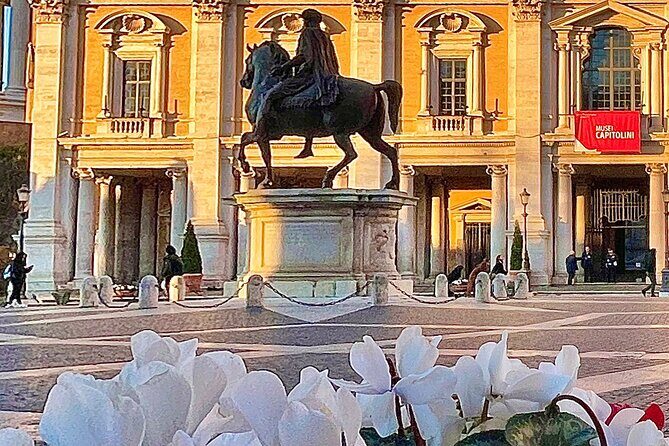
Your tour begins at Piazza del Campidoglio, also known as Campidoglio square. It’s a great starting point because it gives you a skyline view right away, before you go down into the Forum lowlands. Even if you’re not a museum person, this is Rome at its best: hills, sightlines, and stone that looks older every time you notice a detail.
This square was shaped through a uniform design concept by Michelangelo, commissioned during the 1500s when the hill had fallen into abandonment. He also created the Cordonata staircase—those giant steps—leading up to the solemn balustrade and the central placement of the equestrian statue of Marcus Aurelius.
Why this stop helps you: once you’ve seen where the hills sit relative to the Forum, the rest of the day makes more sense. You’ll be able to understand why the Palatine is powerful, why the Capitoline matters for politics, and why the Forum sits in that low bowl.
Practical note: the time here is brief. Use it to take a few solid photos and orient yourself, not to “wander and hope.”
Trajan’s Forum and Trajan’s Column: military spectacle made walkable
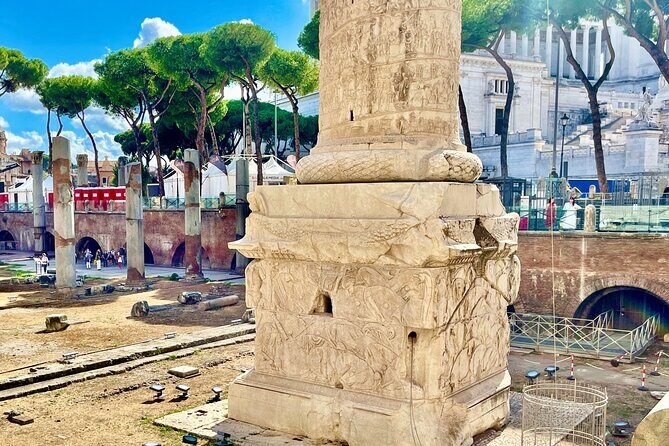
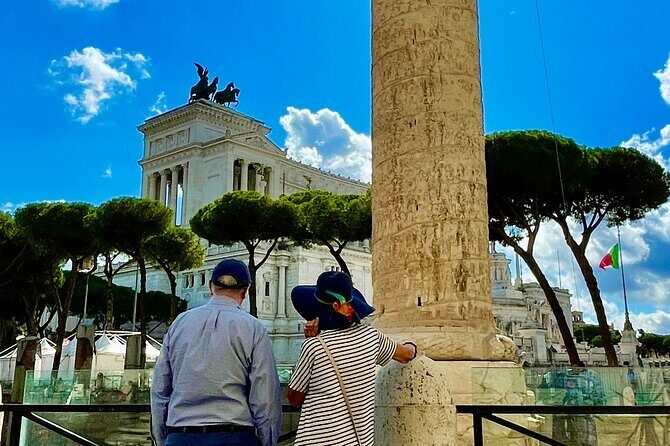
Next up is Foro di Traiano, one of the most ambitious Forum complexes ever built. It was cut into the landscape by shaping the Quirinale and Campidoglio slopes and connecting them across a saddle. Work likely began under Domitian, then continued under Trajan after Domitian’s death.
The tour’s explanation focuses on why Trajan’s Forum feels so heavy and official: it’s financed through booty from campaigns in Dacia (modern-day Romania). You’ll also hear the architect named Apollodorus of Damascus, tied to Trajan’s military engineering background.
Then you move to Colonna Traiana, where the story is literally carved in stone. Trajan’s Column narrates the two Dacian campaigns (101–102 and 105–106). The frieze is arranged around the shaft as a spiraling scroll—long enough to wrap an extraordinary number of scenes.
If you want a concrete reason this stop is worth it: it gives you a way to “read” Roman power. You’re not just looking at a monument; you’re learning how Romans used images to control memory. Even if you only catch parts of the reliefs, your guide’s framing helps you see the structure and intention.
Also, this is one of those stops where timing matters. You’ll want to look up and take in the form before you get swept along—don’t wait until the end.
Roman Forum: the center of law, markets, and temple-lined drama
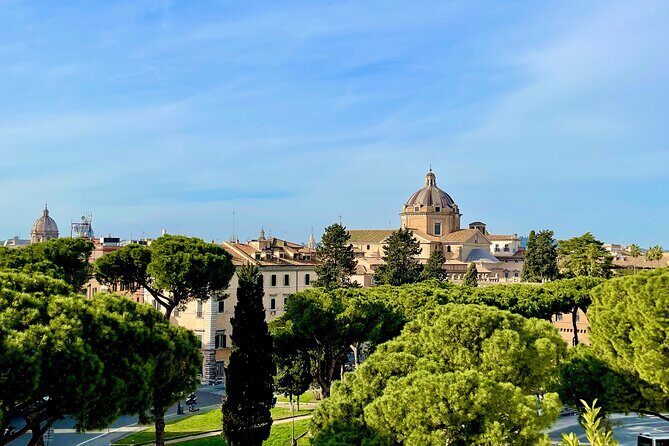
After Trajan’s dramatic military messaging, the day shifts into the heart of Rome’s public life at Foro Romano, the Roman Forum. This is the place where people gathered for speeches, law courts, and even gladiatorial combat in earlier times. Under the empire, it became more about ceremonies and spectacles, with major temples and monuments shaping the scene.
Your guide leads you through key surviving structures, including the Temple of Castor and Pollux, the Temple of the Deified Caesar, the Mamertine Prison, the Curia (senate house), and the Temple of Saturn. You also have time to see the Temple of Vesta and Temple of Romulus, plus arches like the Arch of Titus and the Arch of Septimius Severus.
I like this part because it’s not only “pretty ruins.” It’s a map of how Rome functioned: where decision-making took place, where religious life sat, and where crowds formed. With a good guide, the site clicks into place fast—one moment you’re staring at columns, and the next you’re understanding what was happening around them.
One thing to keep in mind: this is a long-thinking area. The Forum can feel open and exposed, and the ruins can be spread out. The included time here is helpful, but you still need to be patient and look slowly in the moments your guide pauses for you.
Palatine Hill: imperial beginnings where rich homes once ruled
Then you head to Palatine Hill, the centremost of the Seven Hills and a big reason Rome feels like a living museum. This hill is often described as the first nucleus of the Roman Empire, and now it’s mainly an open-air museum with the Palatine Museum holding finds from the excavations.
The Palatine is also where you’ll feel the contrast between “before empire” and “imperial power.” Before imperial times, it was mostly occupied by houses of wealthy Romans. Once emperors began building here—starting with Augustus—the hill became a symbol of control and status.
You’ll also get the big-picture detail that Palatine originally had two summits separated by a depression: Palatium and Germalus (sometimes spelled Cermalus). Those shape ideas help you visualize why the hill was such a strategic choice.
This is one of my favorite stops in the mix because it connects politics to geography. The Forum sits below; the Palatine sits above. When you’re up on the hill, you can see why emperors wanted to be both physically and symbolically elevated.
Colosseum from the outside: learn it without losing your day to crowds
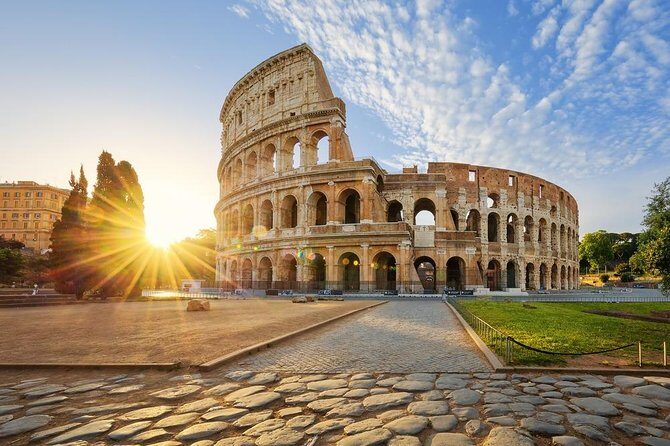
You end at Piazza del Colosseo and include a guided Colosseum experience that’s exterior-focused. That’s important: the tour is designed to teach you about the Colosseum while keeping you out of the most chaotic internal crush for part of the experience.
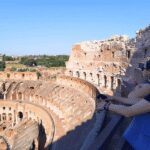
The guide will point out the best-preserved sections and explain what the building was for—gladiator combat, animal fights, and the big civic spectacle vibe. You’ll get to continue to higher viewpoints for views of the Colosseum (and this is where your exact access may feel slightly different depending on how the site is operating), but the key point is that Colosseum entry tickets are not included.
I like this approach because you still get the emotional hit of seeing it, but you don’t burn the entire visit waiting for the most popular doors. If you’re trying to see the Forum, Palatine, and Colosseum in one day, this route makes more sense than treating the Colosseum as the only event.
If you’re the type who wants to walk inside the Colosseum floor and do a deeper, ticket-dependent visit, you’ll need to bring your own ticket strategy. Otherwise, this is a smart way to get the architecture, the layout logic, and the history context without turning your afternoon into a line marathon.
Tickets, ID, and the few rules that can trip you up
A lot of Roman-site friction is predictable, and this tour has the typical essentials baked in—plus a couple of specifics you should take seriously.
First, ID matters. At the Roman Forum, you’re asked to present a valid passport or ID document that matches your booking name. If you don’t have valid ID, you can get denied entry to Trajan Forum and Roman Forum.
Second, security checks happen at entry. You’ll go through screening, and some items aren’t allowed in the Roman Forum area, including bottles and glasses containers, alcoholic beverages, aerosols, backpacks or bulky bags, and selfie sticks. Medium and small backpacks may be introduced, but they’ll go through metal detectors and inspection.
Third, know what’s and isn’t covered. Entry is included for Trajan Forum, Roman Forum, and Palatine Hill (plus Imperial Forum area). Colosseum admission isn’t included. And the Colosseum portion is described as an exterior tour—so don’t treat it as automatic full inside access.
Finally, keep your start time. There’s a mandatory meeting time—20 minutes before departure—and the company won’t issue individual tickets to late arrivals who miss the tour.
These are not just fine print. They decide whether you glide through or lose time.
Who should book this Rome Forum and Palatine Hill tour
This tour fits best if you want Rome’s big landmarks in a way that feels organized, not random. I’d point you here if you:
- care more about the Forum ruins and how Rome worked than about doing only the Colosseum ticket experience
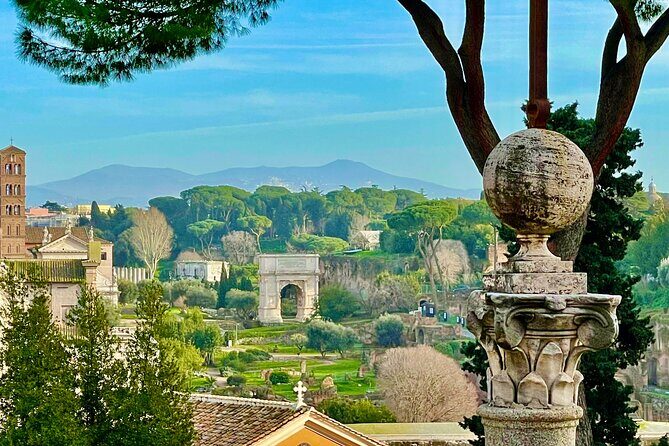
- want panoramic viewpoints where you can take photos that show the hills and the Forum bowl
- prefer small-group pacing with headsets so you can actually follow the guide
It may be less ideal if you know you want a major, ticket-dependent interior Colosseum experience above all else. In that case, you might prefer a Colosseum-focused tour that includes entry, then add this Forum/Palatine component separately.
It also makes sense if you like guides who explain not just dates, but why the Romans built things in particular places. The style praised here is detailed and thorough, and guides like Maria and Francesca have been singled out for being passionate, organized, and clear.
Should you book this Palatine Hill, Forum, and Colosseum Views tour?
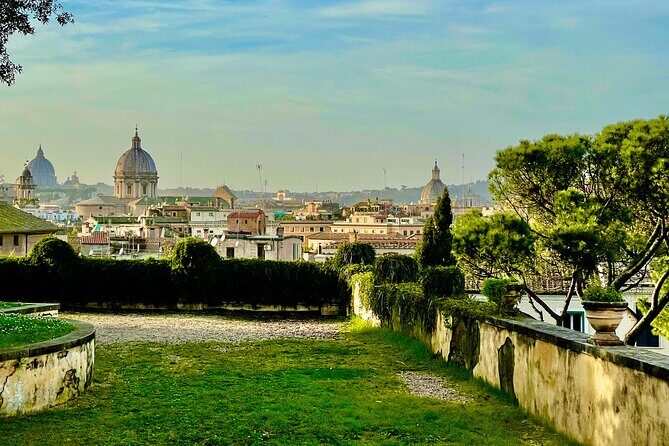
If your goal is to understand Rome’s story in the most efficient way—Forum first, panoramas built in, Colosseum viewed with context—this is a strong pick for your time. The combination of included entries for the big ruin clusters and the guide help you get the “why” fast, without spending your entire day swallowed by the Colosseum crowd.
I’d book it if you’re happy to treat Colosseum as a guided overview from the outside and viewpoints, and you’re willing to plan for separate Colosseum entry if you want more. If you’re the opposite—pure inside-Colosseum priority—then shop for a tour that includes that ticket and internal access.
FAQ
FAQ
How long is the Rome Palatine Hill, Roman Forum, Colosseum Panoramic Views Tour?
It lasts about 3 hours.
What language is the tour offered in?
The tour is offered in English.
What is the price per person?
The price is $459.52 per person.
What’s included in the tour?
You get a professional licensed local Blue Badge guide, radio and headsets, and entry for Trajan Forum, Roman Forum, and Palatine Hill (including the Imperial Forum area).
What is not included?
Colosseum admission tickets are not included, and hotel pickup/drop-off, food and drinks are also not included.
Is the Colosseum tour inside or outside?
The service includes an exterior tour of the Colosseum.
Do I need an ID for the Forum?
Yes. At the time of entry for the Trajan Forum and Roman Forum, you must present a valid ID card or passport that matches the name on your booking.
Is there a maximum group size?
Yes. The tour has a maximum of 24 travelers.
Where does the tour start and end?
It starts at Piazza del Campidoglio and ends at Piazza del Colosseo.
What’s the cancellation policy?
You can cancel for a full refund up to 24 hours before the experience’s start time.