Rome is a lot to absorb.
This private electric golf cart tour is built to help you get your bearings fast, sliding past traffic bottlenecks while still stopping at the big-name places like Trevi Fountain and the Colosseum. It also mixes in quieter, better-seeing moments from the Aventine hill and along the Imperial-era roadways.
I especially like the way it saves your energy. You cover a lot in about 3 hours without turning the day into a painful shoe test, and the cart is a comfortable way to keep moving even when streets get crowded.
One thing to consider: the stops are short, and the price can feel steep for what’s included. If you’re comparing against tours that bundle paid tickets everywhere, this one mainly delivers guided time plus gelato or wine and Italian snacks, not a long list of included admissions.
In This Review
- Key highlights at a glance
- Why a private electric golf cart works so well in Rome
- Trevi Fountain to Piazza Venezia: starting with the right kind of iconic
- Via dei Fori Imperiali: the straight-line shortcut through ancient Rome
- Circo Massimo and Giardino degli Aranci: Rome’s big scale, then its quieter view
- Arch of Constantine to the Colosseum: seeing the story between monuments
- Santa Maria Maggiore and the Aventine area: where the day slows down
- Gelato and snacks: the real payoff at the end
- Price and value: is $118.95 worth it?
- Who this Rome golf cart tour suits best
- Should you book this private golf cart tour?
- FAQ
- How long is the Rome private golf cart tour?
- Where does the tour start and end?
- Is hotel pickup included?
- What’s included with the tour besides the sightseeing?
- Is the tour private?
- What language is the tour offered in?
- Is the tour suitable for wheelchair users?
- Are there admission tickets included for the stops?
- Are tips included in the price?
- What’s the cancellation policy?
- Is there an age requirement?
Key highlights at a glance
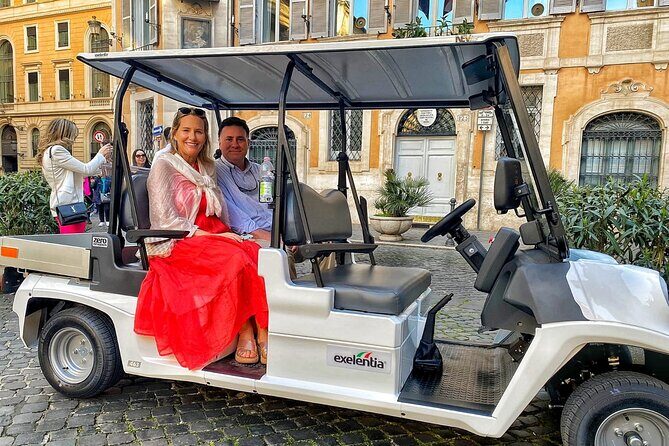
- Private, customizable cart time: Only your group rides, and the route can flex based on what will work best on the day.
- A clean overview of central Rome: Trevi Fountain, Piazza Venezia, Via dei Fori Imperiali, Circo Massimo, and more in one loop.
- Views that actually justify the drive: Giardino degli Aranci gives you roof-top perspective from the Aventine.
- Roman monuments with easy context: You get on-the-spot explanations for arches, theatres, and forum-adjacent streets.
- Gelato or tasting options at the end: Homemade gelato is a repeated fan favorite; wine tasting or Italian snacks are also included.
- Guides people remember: Names from past groups include Stefano, Christian, Margarita, and Mataeo, each praised for pacing and storytelling.
Why a private electric golf cart works so well in Rome
Rome is famous for its ancient sights, but it’s also famous for clogged sidewalks and slow crosswalks. A private golf cart gives you a practical advantage: you spend your limited sightseeing hours moving efficiently and arrive at viewpoints without feeling rushed by long walks.
Because it’s private, you’re not stuck waiting for a mixed group to regroup. Your guide can set the pace, make course tweaks, and keep you on track between stops.
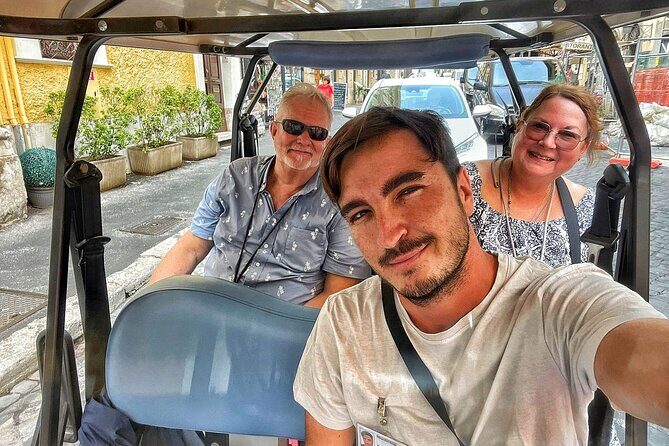
And yes, it’s simply fun. The cart is cool and breezy, and it adds a light, “we’re doing this together” vibe that can make a first-time Rome day feel less overwhelming.
You can also read our reviews of more private tours in Rome


Trevi Fountain to Piazza Venezia: starting with the right kind of iconic
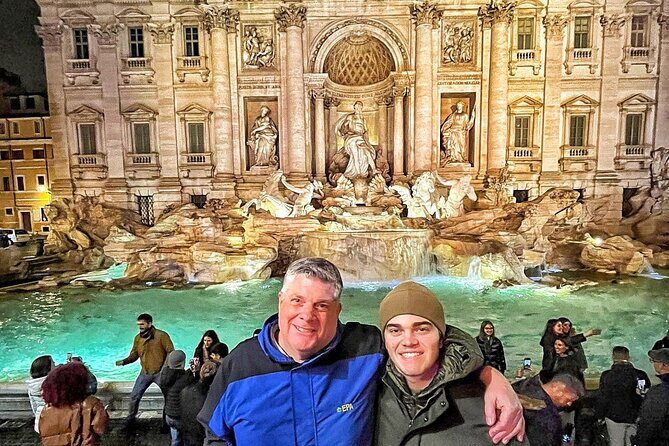
Your tour kicks off near Piazza della Repubblica (with pickup available at the front of the Anantara area). From there, the early stop is Trevi Fountain, where the city’s story goes from Roman engineering to postcard-era magic.
Trevi sits at the junction of three roads—tre vie—marking the terminal point of the revived Aqua Virgo aqueduct system. You’ll get the sort of context that makes the fountain more than a photo moment: the aqueduct’s origin is about 13 kilometers away, and the legend ties its discovery to a virgin’s help.
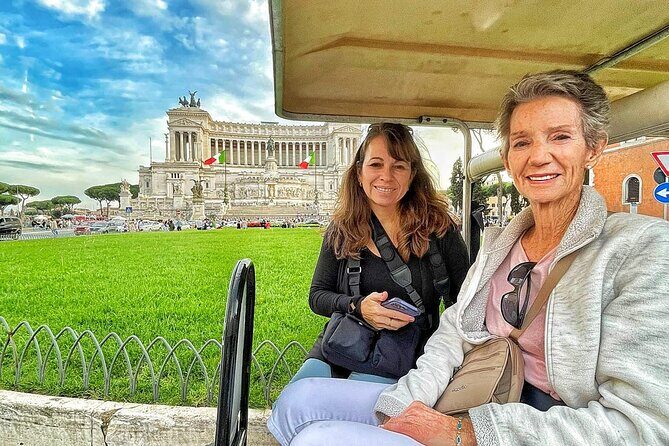
Next up is Piazza Venezia and the ancient city stretch around it. You’ll pass the Tomb of the Unknown Soldier at the Altare della Patria, part of the big Monument to Vittorio Emanuele II. It’s a reminder that Rome isn’t only ancient—modern Italy is physically layered into the same squares you’re visiting for Roman ruins.
What I like: these first stops are easy wins. You’re starting with the most recognizable sights, so even if you later decide to explore only a couple of neighborhoods in depth, you’ll still know where everything sits.
Watch-outs: Trevi and Piazza Venezia are busy. Even with a cart, your actual time at each stop is limited, so have your phone charged and your questions ready for your guide.
Via dei Fori Imperiali: the straight-line shortcut through ancient Rome
One of the best segments is Via dei Fori Imperiali, a straight stretch between Piazza Venezia and the Colosseum. This road runs over parts of major Imperial forums—Forum of Trajan, Forum of Augustus, and Forum of Nerva—so you’re getting “line of sight” context without needing to read every plaque.
The value here is interpretation. The cart gets you from point to point, but your guide’s job is to connect what you see on both sides of the road to what the forums were in their day. Instead of random ruins, you start picturing the original urban layout.
The stop at Teatro di Marcello follows the same idea: you see an ancient open-air theatre built in the closing years of the Roman Republic, where locals and visitors could watch performances of drama and song. Even if you’ve walked past similar structures in other cities, this one lands differently because you’re seeing how Roman culture used outdoor spaces.
Tip for your planning: if you want one photo that sums up Rome’s “ancient city feel,” this is where it often happens. The road’s straight line helps you aim your camera toward major landmarks without getting lost.
Circo Massimo and Giardino degli Aranci: Rome’s big scale, then its quieter view
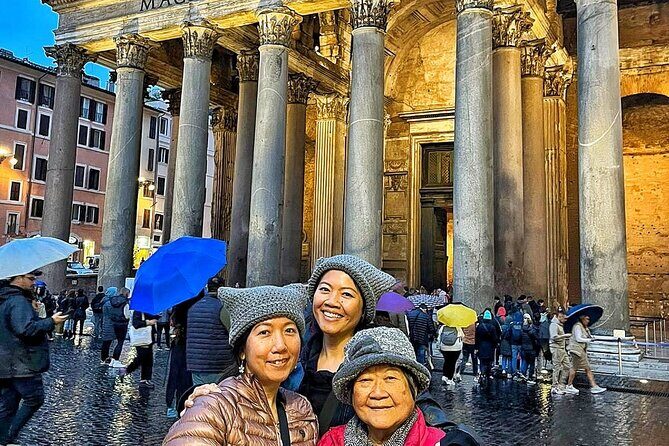
Then the tour heads to Circo Massimo, the ancient chariot-racing stadium in a valley between the Aventine and Palatine hills. It was Rome’s first and largest stadium, and it also functioned as mass entertainment.
This stop is short, but it’s the right kind of short. You’re not trying to cover every detail; you’re getting the sense of scale. When your guide explains what “first and largest” means in context, you’ll likely spot how the geography shapes crowd movement—even today.
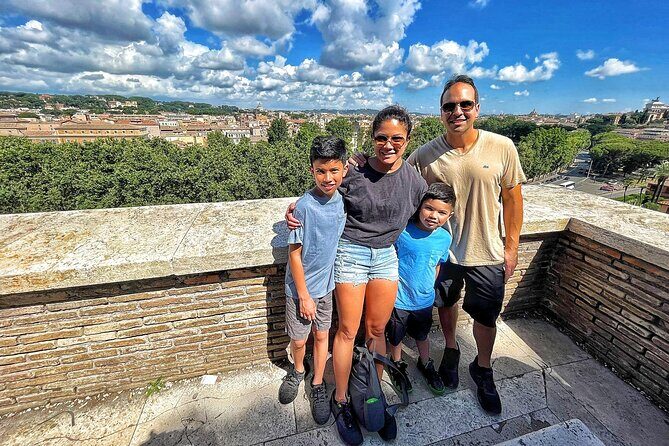
After that, you get to Giardino degli Aranci on the Aventine hill. This is one of the most rewarding moments because the payoff isn’t a monument you must decode—it’s the view. You’ll look out over roof tops and city angles from a calmer vantage point than the streets below.
The Aventine hill stop also fits a travel truth: Rome’s most pleasant time often comes after the crowds. This is where the day shifts from “marvel” to “breathe.”
Arch of Constantine to the Colosseum: seeing the story between monuments
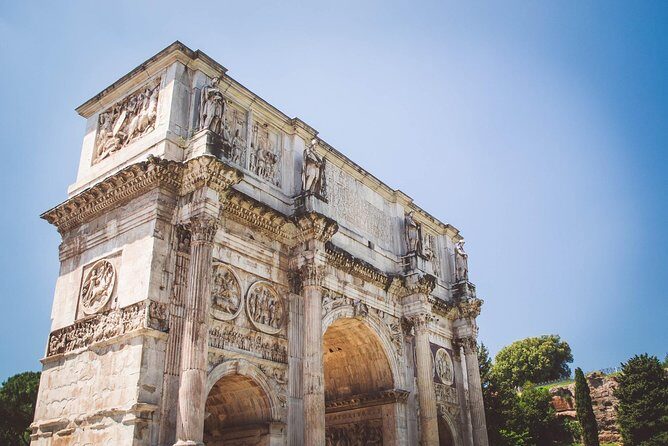
Next is the Arch of Constantine. It’s one of the victory arches still standing in Rome, and it’s tied to Constantine the Great, the ruler connected to Christianity’s rising presence in the empire. Victory arches are a Roman invention, and seeing one in person helps you understand the message: power, legitimacy, and public memory, all welded into stone.
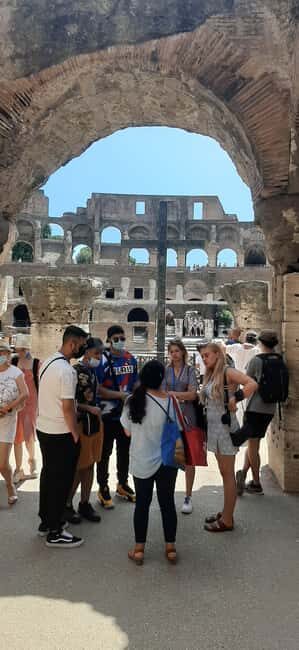
After the arch, the tour reaches the Colosseum, Rome’s headline attraction. Even if you’ve seen it from a distance before, this is one of those places that feels different when you approach as part of a themed route. You can connect the dots between forum life, public spectacle, and the arena’s role in Roman entertainment.
Your time here is around 15 minutes, so you’ll want to decide before you arrive: do you want the best angle for photos, or do you want to hear your guide’s explanation first? With limited time, that choice matters.
Practical note: the Colosseum area is one of the busiest zones in the city. Having a guide who can time your walk and keep you moving can make the difference between a frustrating bottleneck and a smooth finish.
You can also read our reviews of more tours and experiences in Rome




Santa Maria Maggiore and the Aventine area: where the day slows down
The tour then moves to Basilica di Santa Maria Maggiore. This is described as the largest temple dedicated to the Virgin Mary in Rome and one of the most important in the world. If you’re the kind of traveler who likes religious art and architecture, this stop can be a welcome contrast to the arena-and-forum focus earlier in the day.
From there, you head back toward the Aventine, with time for a pleasant walk away from the noise of the modern city below. This is not a grand spectacle stop; it’s a comfort stop. You’re trading intensity for atmosphere, and that’s exactly what makes the end of a whirlwind tour feel satisfying rather than exhausting.
One extra curiosity appears in the route as well: a reference to the first condominium in the world from ancient Rome. The point isn’t paperwork or modern real estate—it’s the idea that people lived in dense, multi-unit buildings long before the modern city invented the concept.
Gelato and snacks: the real payoff at the end
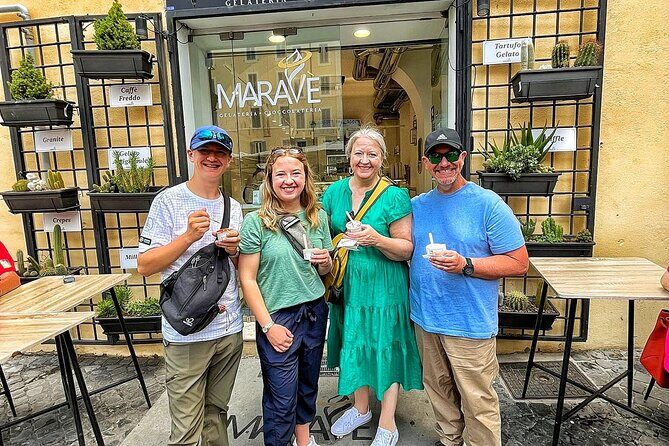
The itinerary doesn’t send you off into the maze without food. You’ll enjoy homemade gelato or a tasting option that includes wine and/or Italian snacks, depending on the tour offering on the day.
This is where the experience often turns from “good sightseeing” into “I want to do this again.” Gelato at the end is a simple reward, and it’s also a smart travel move: by the time you’re finished with the biggest monuments, you’ll actually taste what you’re eating rather than rushing through a meal.
I also like that the tour includes best restaurant recommendations for eating out. That’s useful because Rome’s food scene is huge—your guide’s direction can help you avoid the traps that look busy but aren’t always great.
Price and value: is $118.95 worth it?
At $118.95 per person for about 3 hours, the big question is value versus alternatives. Here’s what you’re really paying for:
- Time saved with hotel pickup and drop-off options.
- Private guidance and a route that’s designed to cover major sights without long, stop-and-go walking.
- Transport that’s easy on your feet, especially when the city is crowded.
- Included tasting at the end (gelato and/or wine/Italian snacks), plus insurance and restaurant recommendations.
What’s not included is also important: tips aren’t included, and the pricing can feel high if you expected paid site tickets bundled in. One pace-related consideration is that many stops are brief. You’re getting an efficient overview, not an all-day deep dive into one neighborhood or one major museum.
So I think it’s worth it if you match the “sweet spot” for this tour: you want a strong first overview of central Rome, you’d like help navigating, and you’d rather spend money on comfort and context than on extra walking.
Who this Rome golf cart tour suits best
This is a strong fit for:
- First-time Rome visitors who want to see the headline sights and a few calmer moments in one go.
- Travelers who don’t want to burn half a day navigating crowded sidewalks.
- People who prefer a clear route with short, manageable stop times over an unstructured wandering day.
- Anyone who wants the day to include a good food moment at the end.
It’s also described as suitable for wheelchair use with a foldable setup, which matters because Rome can be rough for mobility if you’re stuck on foot.
And because it’s private, it can work well for couples and small groups who want a shared pace—especially if you’re traveling with someone who likes photos but hates long lines.
Should you book this private golf cart tour?
I’d book it if you want a practical Rome overview without the stress. The combination of hotel pickup, a private electric cart, and a route that links Trevi, the Imperial roadway, viewpoint time at Giardino degli Aranci, and a Colosseum approach is exactly the kind of day that helps you later decide what to revisit.
I’d hesitate if your main goal is museum-style depth or if you’re comparing price to tours that include lots of entry tickets. In that case, this tour may feel like you paid for convenience and food rather than for add-on admissions.
If you’re the type who likes to get your bearings, then return on your own terms, this is a smart first move.
FAQ
How long is the Rome private golf cart tour?
It’s about 3 hours.
Where does the tour start and end?
It starts at P.za della Repubblica, 48, 00184 Roma RM, Italy, and it ends back at that same meeting point.
Is hotel pickup included?
Yes. Hotel pickup and drop-off are offered, and the tour can start and end at your hotel.
What’s included with the tour besides the sightseeing?
You’ll get best restaurant recommendations, insurance, and a gelato homemade or a tasting option with wine and Italian snacks.
Is the tour private?
Yes. It’s private, and only your group participates.
What language is the tour offered in?
The tour is offered in English.
Is the tour suitable for wheelchair users?
Yes, it’s listed as suitable for wheelchair use (foldable).
Are there admission tickets included for the stops?
The plan lists admission tickets for the stops as free for the sights included in the route.
Are tips included in the price?
No, tips are not included.
What’s the cancellation policy?
You can cancel for free up to 24 hours in advance for a full refund.
Is there an age requirement?
It notes no children under 2 years.