REVIEW · DESSERT TOURS
Tour of Rome:Trevi Fountain, Spanish Steps,Pantheon with Italian Ice Cream
Book on Viator →Operated by Raphael Tours & Events · Bookable on Viator
Rome’s classics in one tight walk. You’ll start in central Rome and get a guided route that mixes the big postcard stops (Trevi Fountain and the Spanish Steps) with serious wow-factor time inside the Pantheon and a major church afterward. I love how the tour explains the Pantheon as a place tied to Roman worship, not just a pretty dome. I also love that you finish with a real church visit plus Italian ice cream, so the pacing feels like more than just photos.
One thing to plan for: the dress code is strict at religious sites, and ignoring it can mean refusal of entry. Cover shoulders and knees, and expect you’ll walk a fair bit over about three hours.
In This Review
- Key highlights worth your attention
- How this 3-hour Rome route actually feels
- Trevi Fountain: coin toss legends plus a short, photo-friendly sprint
- Spanish Steps: fast viewpoints and a movie-set kind of stroll
- Marcus Aurelius and the Government District: a quick history snap
- The Pantheon dome: worship, design, and the tombs you shouldn’t miss
- Santa Maria sopra Minerva: Gothic on pagan foundations, with famous names
- Italian ice cream: the small included break that keeps the day pleasant
- Price and value: is $325.32 per person a smart use of time?
- Dress code and timing: the practical things that can make or break entry
- Guides: why names matter here (and why you should care)
- Who this tour is best for
- Should you book this Rome tour?
- FAQ
- How long is the tour?
- What does the tour cost?
- Is the tour in English?
- Where does the tour start?
- Is this a private tour?
- What’s included besides the guide?
- Are admission tickets included for all stops?
- What’s the dress code for the church visits?
- What if Santa Maria Minerva is closed during the tour?
- What’s the cancellation policy?
Key highlights worth your attention
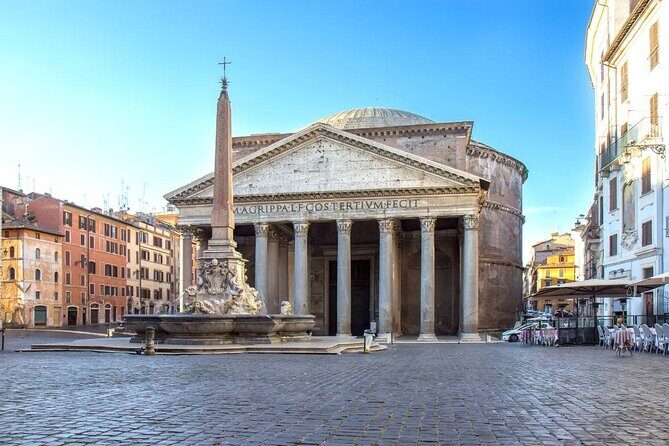
- Pantheon guided access focused on what the dome and the oculus mean in Roman design and belief
- Raphael’s tomb plus royal burials inside the Pantheon: King Victor Emmanuel II and Queen Margherita
- Santa Maria sopra Minerva with major art stops including a Michelangelo statue and well-known frescoes
- A practical central-Rome route that threads Trevi Fountain, Spanish Steps, and a walk by Marcus Aurelius
- A sensible reroute if Minerva is closed (your guide may swap in St Ignatia)
- Italian ice cream included so you’re not just sightseeing on empty
How this 3-hour Rome route actually feels
This tour is built for an efficient first visit to Rome: you’ll cover a cluster of top sights without spending hours on logistics. It runs about three hours, in English, and it’s private, meaning only your group participates. That matters in Rome, where crowding and line chaos can make group tours feel stressful fast.
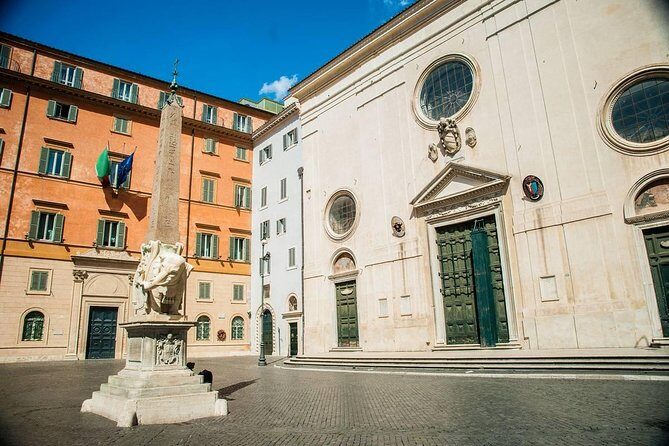
The meeting point is listed as Via dei Condotti, 86, and the tour begins near the Piazza della Minerva area. From there, you’ll walk from stop to stop with a local guide leading the pace and the commentary.
A big advantage here is the way it balances the agenda: it’s not only “look at this, move on.” The Pantheon time is guided, then you continue to a Gothic church with specific artwork to look for, and the icing-on-top detail is Italian ice cream.
You can also read our reviews of more tours and experiences in Rome


Trevi Fountain: coin toss legends plus a short, photo-friendly sprint
Trevi Fountain is famous for a reason, but in practice it’s also famous for crowds. This stop is about 30 minutes, and the admission ticket is listed as not included, so you’re mainly there for the fountain itself, photos, and the quick myth moment.
If you want to do the classic coin toss, this is your window. The fountain is the kind of place where your guide’s timing helps: you don’t want to spend your whole Rome afternoon waiting in the wrong spot. Also, because the next stops are walking-based, keeping this segment tight makes the overall tour feel smoother.
Practical tip: wear shoes you can stand in. Trevi is easy to enjoy, but it’s not the kind of place where you’re strolling with a relaxed stride.
Spanish Steps: fast viewpoints and a movie-set kind of stroll
Next up are the Spanish Steps, also about 30 minutes. Admission here is listed as included, which is helpful if you want the tour to keep things simple.
This stop tends to work well because it’s visual. From multiple angles, you get that stepped look that shows up in films, books, and postcards. If you’re using the tour as an orientation day, Spanish Steps gives you a “Rome bearings” moment before you shift into the quieter, more architectural sites.
The tour format usually keeps the movement active: you’ll be walking and looking rather than sitting. That’s good for stamina on a first day, especially if you want to hit the Pantheon later when the building’s interior is the main event.
Marcus Aurelius and the Government District: a quick history snap
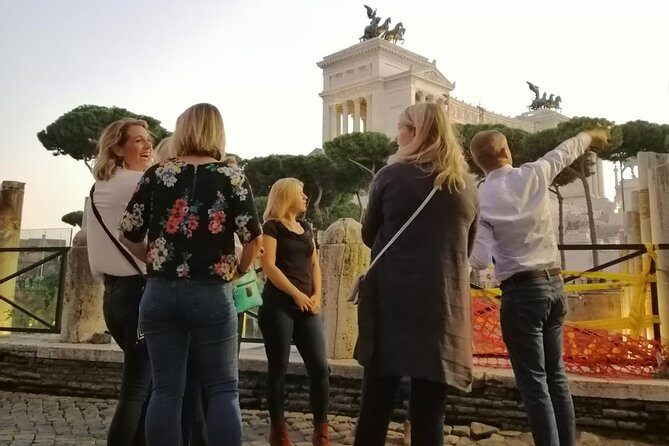
Stop three is about 30 minutes at the Column of Marcus Aurelius and nearby sights in the government district. Entry is free, and it’s a walk-by type moment rather than a long museum stop.
You’ll also see the Parliament Building and the Palace of the Council of Ministers from the outside. Close by is the Temple of Hadrian, and the tour explains how Emperor Antoninus Pius constructed the column in appreciation of his ancestor.
This is a nice pivot point in the itinerary. After the theatrical drama of Trevi and Spanish Steps, you get a more grounded Roman-stones-and-politics feel. It also sets you up for the Pantheon, because you’re shifting from street icons into Roman architecture that’s still standing.
Consideration: this portion is more about context than grandeur up close, so if you expect a big “inside” visit here, adjust your expectations.
The Pantheon dome: worship, design, and the tombs you shouldn’t miss
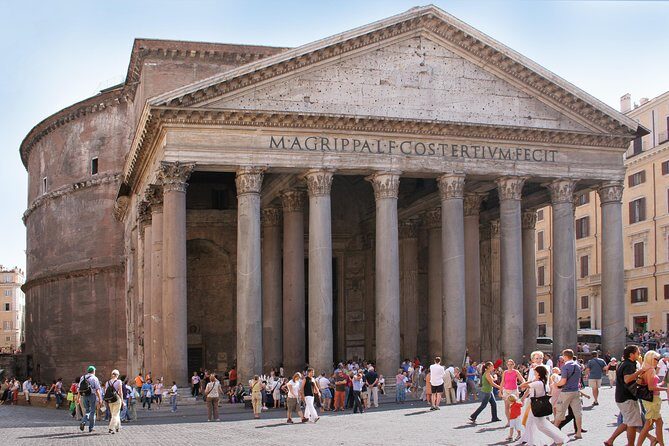
Now for the highlight: the tour enters the Pantheon, with admission included. Your guided visit is listed at about 20 minutes, but don’t think of that as “rushed.” The guide’s job is to point out the right things quickly—because the building is huge, and it’s easy to miss details while everyone around you is staring at the same central view.
What you’re looking at is an ancient temple that was dedicated to worship of every god. That idea changes how the place hits you: it’s not just “Roman architecture,” it’s Roman religion expressed in stone and geometry.
Inside, you’ll be guided under the dome—often described as the largest unreinforced concrete dome in the world—and you’ll look up through the oculus, the open-air opening at the top. That’s where the lighting and the symbolism meet. It’s also a practical “look up” moment that helps the visit feel memorable without needing extra time.
This stop also includes tombs. The tour highlights Raphael (the Renaissance painter), plus King Victor Emmanuel II and Queen Margherita. Seeing these resting places within the Pantheon’s space connects Rome’s layers: ancient imperial worship meets later Italian history in the same building.
Why this part is valuable: a Pantheon visit on your own can turn into a visual blur—great, but vague. A good guide turns “wow” into understanding, and helps you notice things you’d otherwise walk past.






Santa Maria sopra Minerva: Gothic on pagan foundations, with famous names
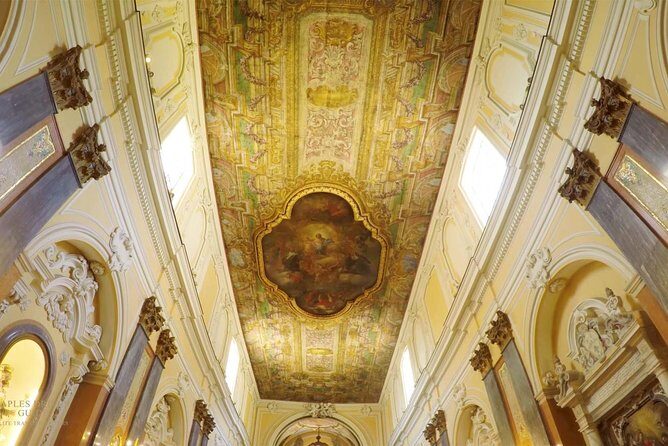
After the Pantheon, you continue to Santa Maria sopra Minerva, a Gothic church built on the site of three pagan temples. This is where the tour shifts from Roman antiquity to medieval and Renaissance art and devotion, without requiring another cab or museum transfer.
Inside, the guide directs you toward standout works and details:
- a Michelangelo statue
- 15th-century frescoes
- an altarpiece attributed to Fra Angelico
- an altar that covers the headless body of St. Catherine of Siena
This is also where you get the kind of “specific looking” that makes church stops worthwhile. If you’ve ever entered a beautiful church and thought, I’m not sure where to look, this tour solves that.
One important real-world note: Santa Maria Minerva can be closed due to renovation or other issues. Several guides have been known to reroute to St Ignatia instead when Minerva isn’t available. If your main goal is the Pantheon, you’ll still have it—but if your main goal is Minerva’s exact art stops, it’s smart to go in flexible.
Italian ice cream: the small included break that keeps the day pleasant
One detail that’s easy to overlook—Italian ice cream is included. That matters because you’ll be walking through some of the most active pedestrian zones in the center of Rome.
You may not want a long food stop mid-tour, and this gives you a built-in pause without derailing the schedule. It also helps if you’re traveling with kids or with anyone who gets cranky when the itinerary stays “standing and waiting” too long.
If you’re sensitive to heat, plan to take it slowly at the Trevi and Spanish Steps segments. The Pantheon and Minerva indoor parts are a nice temperature reset.
Price and value: is $325.32 per person a smart use of time?
At $325.32 per person for about three hours, you’re paying for a guided route that pairs major exterior landmarks with real entry time inside the Pantheon and a church. You’re also paying for convenience: the tour uses a mobile ticket, and it’s private, so you’re not stuck in a large herd.
The real value is not the sites alone—it’s the guide’s ability to help you notice what matters fast. The Pantheon is impressive even if you know nothing. But knowing why it was built, what the dome does, and which tombs are inside makes the experience feel “earned,” not just watched.
A possible drawback tied to value: one part of the itinerary is a church stop, and another is the Pantheon. If your top priority is maximum time inside the Pantheon, be aware the overall schedule is tight by design.
Also note: private transportation is not included. That’s normal for a walking-focused tour, but it means you should already be comfortable moving across central Rome on foot.
Dress code and timing: the practical things that can make or break entry
Religious sites can be strict in Rome, and this tour includes church entry. A dress code is required: no shorts or sleeveless tops, and you need shoulders and knees covered for both men and women. If you fail to comply, you can be refused entry.
So if you’re traveling in hot weather, plan clothing that still covers. Light long pants and a short-sleeve shirt with sleeves are usually fine, but check how strict the site is when you arrive.
Timing wise, this is a good format for a first or second day when you want the “big hits” without overplanning. If you’re visiting in peak summer heat, you’ll likely enjoy it more if you can schedule it earlier in the day.
Guides: why names matter here (and why you should care)
This tour stands or falls on the guide. The strongest praise points to guides who explain clearly, adapt to the group, and keep people engaged rather than reciting dates like a textbook.
Some guides that have shown up in prior experiences include Tomasso, Mateo, Mattei, Virginia, Claudia, and Giovanna. The common thread is that they ask about your interests at the start and then shape the route so it feels personal—even with a short total duration. One guide route included a thoughtful reroute to St Ignatia when Santa Maria Minerva wasn’t available.
If you’re traveling with teens or a mixed-age group, this kind of engagement can be the difference between tolerating a tour and actually enjoying it.
Who this tour is best for
This works especially well for you if:
- you want a first-time Rome orientation that hits Trevi, Spanish Steps, and the Pantheon
- you like architecture and art but don’t want a long, slow day
- you’d rather pay for guidance than spend your time figuring out what to look for
- you prefer a private format over joining a huge group
It may be less ideal if you want long free time at every stop. This is a walking itinerary with guided emphasis, so you’ll spend most of your time with the group and the guide’s plan.
Should you book this Rome tour?
If you want an efficient, guided route that turns the Pantheon from impressive to meaningful, I think it’s a strong choice. The combo of Pantheon dome and tombs, then Santa Maria sopra Minerva with specific art targets, plus a short Trevi/Spanish Steps sampler is exactly the kind of “time-smart” sightseeing you’ll appreciate later when your photos blur together.
Book it if your priorities are guidance, entry into the key interior spaces, and a smooth central-Rome path with Italian ice cream included. Consider it with caution if the Pantheon is your only must-see and you’re the type who gets restless during structured itineraries—but even then, the guided approach is a big part of why this tour earns high ratings.
FAQ
How long is the tour?
It runs about 3 hours.
What does the tour cost?
The price listed is $325.32 per person.
Is the tour in English?
Yes, the tour is offered in English.
Where does the tour start?
The meeting point is listed at Via dei Condotti, 86, 00187 Roma RM, Italy.
Is this a private tour?
Yes. Only your group will participate.
What’s included besides the guide?
The tour includes a local guide, a private tour format, and Italian ice cream. A mobile ticket is also part of the experience.
Are admission tickets included for all stops?
No. Trevi Fountain admission is listed as not included. Spanish Steps and the Pantheon are listed as included. The Column of Marcus Aurelius is listed as free.
What’s the dress code for the church visits?
You must cover shoulders and knees. No shorts or sleeveless tops are allowed, and you can be refused entry if you don’t comply.
What if Santa Maria Minerva is closed during the tour?
The tour is meant to include Santa Maria sopra Minerva, but there has been a reroute to St Ignatia when Minerva wasn’t available.
What’s the cancellation policy?
Free cancellation is available up to 24 hours in advance for a full refund. If you cancel within 24 hours of the start time, the amount you paid is not refunded.