REVIEW · DESSERT TOURS
Rome with Golf Cart at Night with Pizza & Ice Cream
Book on Viator →Bookable on Viator
Rome at night changes the whole feel.
This tour strings together the best-known sights in Rome beautifully lit after dark, with the added bonus of a relaxed golf cart route and real time for photos. I also love the mix of landmark stops plus the included pizza-and-gelato dinner, so you’re not hunting for a late meal after sightseeing.
The main drawback is simple: the big two museum-style stops are not included. You’ll still need to pay for Pantheon and Colosseum entry, so your evening may cost a bit more if you want to go inside both.
With pickup offered from your hotel in the city center and a small group cap (max 7 people), this is a smart way to get your bearings fast, especially if you arrive in Rome already tired.
In This Review
- Key things that make this night tour worth your time
- Why nighttime Rome feels different
- Golf cart touring: faster than walking, with real Rome vibes
- Piazza Navona at night: fountains, geometry, and perfect photo angles
- Pantheon: go inside only if you want the full payoff
- Trevi Fountain and the 20-meter glow moment
- Spanish Steps and Piazza del Popolo: classics without the all-day grind
- Piazza Farnese and Piazza Venezia: the elegant side of the route
- Dinner in a typical Roman restaurant: what’s included and why it matters
- Gelato after dinner: artisan ice cream, timed for the best mood
- Colosseum and Circo Massimo: what you’ll see, and what you’ll pay
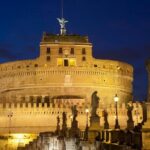
- St. Peter’s Square at night: the ellipse effect and the statues
- Campo de’ Fiori and more quick squares that add up
- Price and value: what you pay for, and what you still need to budget
- Who should book this night golf cart tour
- Should you book this Rome Night Golf Cart with Pizza and Ice Cream?
- FAQ
- What time does the tour start?
- How long is the experience?
- Is hotel pickup included?
- Are tickets for the Pantheon included?
- Are Colosseum tickets included?
- What’s included in the dinner?
- Is ice cream included?
- What happens if the weather is bad?
Key things that make this night tour worth your time
- Hotel pickup at 6:30 pm means you start without wrangling buses or taxis right away.
- Small group (up to 7 people) keeps the stops calmer and the guide easier to hear.
- Pizza dinner + ice cream are included, so the tour ends with a real local-food moment, not just a snack stop.
- St. Peter’s Square details like the 284 columns and 88 pillars are built into the evening experience.
- You’ll see the city at a lower temperature, which matters when Rome’s summer heat starts to drag.
Why nighttime Rome feels different
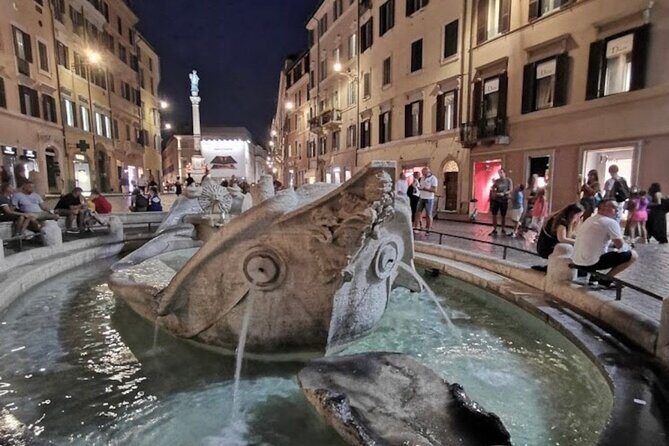
Night in Rome is when the city slows down for you. The lights soften the hard edges of stone and marble, and even the crowds seem to behave a little better after dinner hours. This is the kind of tour that’s designed around that exact idea: you ride through neighborhoods and squares after dark, then step out at key places where the lighting does the work.
What helps most is that you’re not doing this as a “sprint tour” on foot. The golf cart gives you an easy flow between stops, so you can actually enjoy what you’re seeing. And because the evening includes a proper Roman-style dinner rather than a quick bite, you’re not constantly thinking about the next restaurant.
One more nice touch: the pace is long enough for real looking. The itinerary isn’t just a drive-by. You stop at iconic locations, take photos, and get context for what you’re looking at before you move on.
You can also read our reviews of more evening experiences in Rome
Golf cart touring: faster than walking, with real Rome vibes
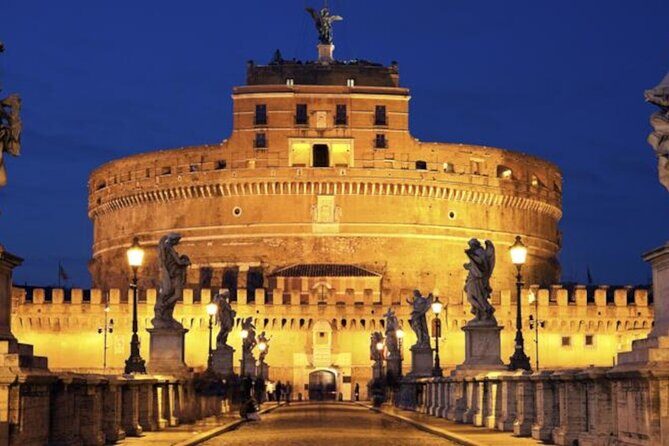
A golf cart in Rome is basically a cheat code for the first evening. You still get the city’s sights and sounds, but you’re not spending the entire 4 hours fighting traffic and cobblestones on your feet.
There are two things to know up front:
- The drive will feel a bit bumpy at times. Rome’s streets are uneven, and that’s part of the charm.
- The cart route makes it easier to reach different areas than a walking plan would, especially later in the day.
You’re also not stuck listening to the guide nonstop. The guide builds in short walking/photo moments at each stop, so you can look up at façades, fountains, and church fronts without feeling like you’re trapped in a bus.
If you care about comfort, this is worth it. People who’ve done it describe the experience as close and personal because the cart is small and the group stays tight. And because the evening runs as a guided route, you’re not guessing which corners to hit first.
Piazza Navona at night: fountains, geometry, and perfect photo angles
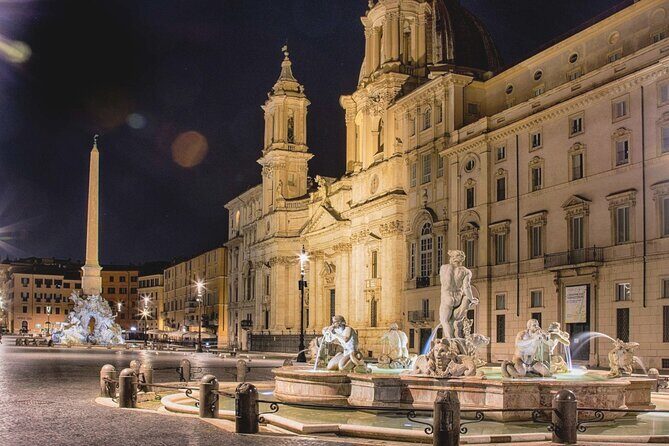
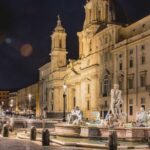
Your first major stop is Piazza Navona, one of Rome’s most photogenic squares after dark. The space is elongated and rectangular, and that shape isn’t random. It comes from the area’s earlier history, when a stadium stood there in the Roman period.
On the square itself, you’ll see three fountains plus an Egyptian obelisk. Even if you only have a few minutes here, the fountains and obelisk lighting makes it feel like a set designed for the evening.
Practical tip: use the first 5 minutes to pick your angles. At night, the lighting changes how shiny stone looks, so stand still for a moment. You’ll usually get clearer photos if you don’t rush.
Pantheon: go inside only if you want the full payoff
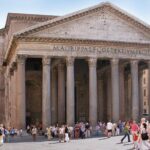
Next up is the Pantheon, a building that still wears its ancient purpose. It’s known as a temple dedicated to all past, present, and future deities, and today it’s a church and a major historical monument.
Here’s the key point: the stop includes time at the Pantheon, but entry is not included. The Pantheon ticket costs €7. If you want to enter, this is when you’d handle it.
If you’re thinking, I want the inside too, plan your pacing. You don’t want to spend all your time just outside the doors and then feel rushed once you decide to go in. If you’re more into the exterior and photos, you can still get a lot from the stop without buying the ticket.
Trevi Fountain and the 20-meter glow moment
Then comes Trevi Fountain, arguably Rome’s most famous fountain for a reason. It’s huge—about 20 meters wide and 26 meters tall—and the story reaches back to the early days of the aqueduct system. The fountain’s origin links to 19 BC, when it marked the endpoint of the Aqua Virgo aqueduct.
At night, Trevi looks almost theatrical because the light bounces off the stone and water. It’s also one of those places where you’ll want to arrive with a plan for photos. If you want a cleaner shot, don’t aim for the busiest spots right on the waterline.
The good news: you’re not stuck there for hours. You’ll get a short, focused window to enjoy the fountain’s lighting and grab your photos before moving on.
You can also read our reviews of more tours and experiences in Rome


Spanish Steps and Piazza del Popolo: classics without the all-day grind
The Spanish Steps stop focuses on the Trinità dei Monti staircase, built in travertine and tied to architect Francesco De Sanctis. The evening framing is part of the appeal, because the stairs and the church above them look sharp with the streetlights and building glow.
You’ll also get context about the area being called the living room of Rome, plus the church details tied to Santissima Trinità dei Monti and its French-speaking Catholic connection.
After that, Piazza del Popolo brings a different kind of Rome. It’s where three main streets meet—via del Babuino, via di Ripetta, and via del Corso—and it served as a main entrance to the city in Roman times. You’ll be under the influence of the nearby Pincio gardens too.
Time-wise, both of these stops are designed to work with night traffic and evening crowds, meaning you should come away with memories without burning your whole evening waiting in one place.
Piazza Farnese and Piazza Venezia: the elegant side of the route
You’ll pass through Piazza Farnese, one of Rome’s more elegant squares. It’s dominated by two large fountains, and it looks out toward the French Embassy area (the embassy has been based there since 1874). Even if you don’t go inside anything, the lighting and symmetry here feel calmer than the bigger headline squares.
Then you reach Piazza Venezia, ruled visually by the Vittoriano, one of Italy’s national symbols. Around it sit monumental buildings, including Palazzo Venezia. Palazzo Venezia dates to the 15th century and houses the national museum of the same name.
These are quick stops, but they’re valuable. They help you understand Rome isn’t only ancient ruins and postcard fountains—it’s also about state power, embassies, and national symbols staged in stone.
Dinner in a typical Roman restaurant: what’s included and why it matters
Here’s where this tour becomes more than a sightseeing loop. Dinner is included, and it’s built around classic Roman choices.
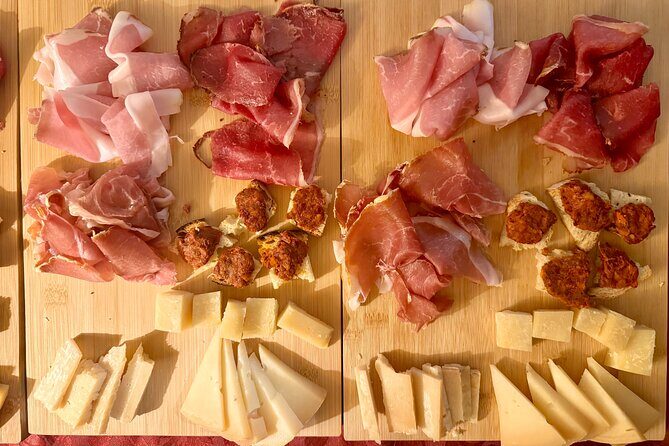
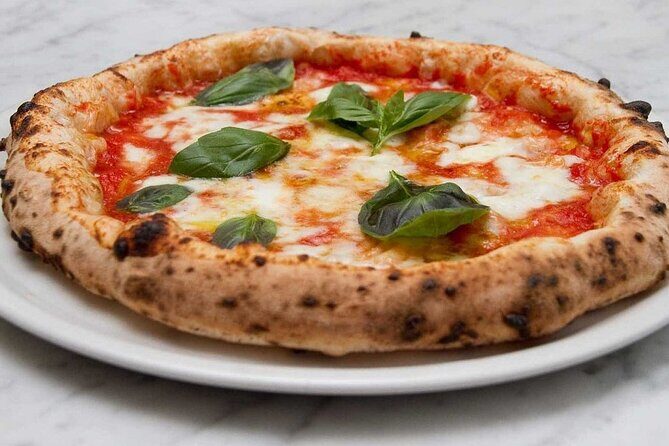
You start with a land starter: mozzarella paired with various cured meats. Then you pick from a first course of Roman pasta—options include Amatriciana, Carbonara, or Cacio e Pepe—or you can choose pizza instead. Dessert comes as cappuccino plus tozzetto.
In plain terms: you’re not left with an awkward half-meal or a generic tourist plate. The menu is varied enough that picky eaters usually find something. And since the tour continues afterward, the dinner timing helps you avoid the common Italy-travel problem of getting hungry too early, then feeling trapped into whatever restaurant has a table.
One small thing to consider: because you’re eating as part of a group schedule, you’ll likely be seated at a consistent time rather than wandering until you feel like it. If you like slow, solo dinner wandering, this may feel more structured than your style. But for most people, it’s a relief.
Gelato after dinner: artisan ice cream, timed for the best mood
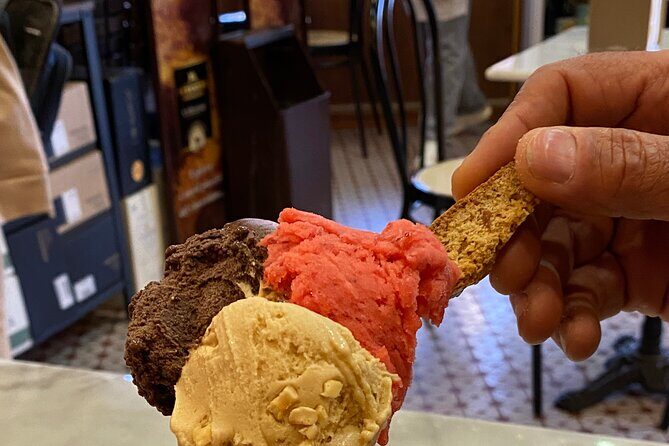
After dinner, you’ll finish with artisan Italian gelato. The tour is set up so gelato lands when you’re already satisfied and relaxed, not at hour one when you’re still deciding what you want for dessert.
That timing is a big deal. It turns gelato into a true finish line. It also means you don’t have to squeeze in one more stop later on your own.
Colosseum and Circo Massimo: what you’ll see, and what you’ll pay
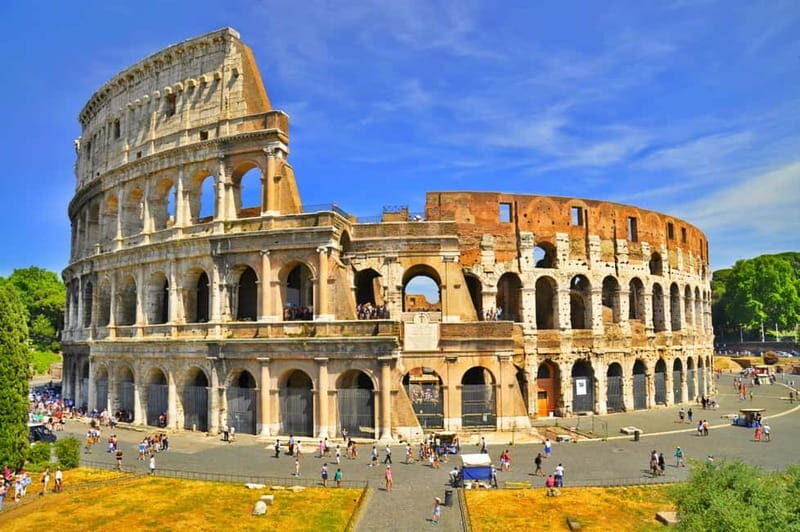
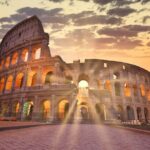
The Colosseum stop is short, and entry is not included. Ticket prices start around €20. If you want to go inside, you’ll need to purchase the entrance separately.
What this means for you: the Colosseum stop is best for seeing the monument in evening light and getting oriented with the scale. The Colosseum’s basic dimensions are huge—188 meters long, 156 meters wide, and 57 meters high—and the structure once held more than 50,000 spectators across multiple levels.
Next is Circo Massimo, located between the Aventine and the Palatine. The Circus Maximus held an estimated 300,000 spectators, with a sand track around 600 meters long and 225 meters wide. It’s free to view on this route, and the evening lighting helps you picture what the space must have been like.
If you’re choosing only one paid interior ticket, your decision should come down to your priorities: architecture and scale from the outside are still impressive here, but going inside the Pantheon or Colosseum is what turns those stops into deeper experiences.
St. Peter’s Square at night: the ellipse effect and the statues
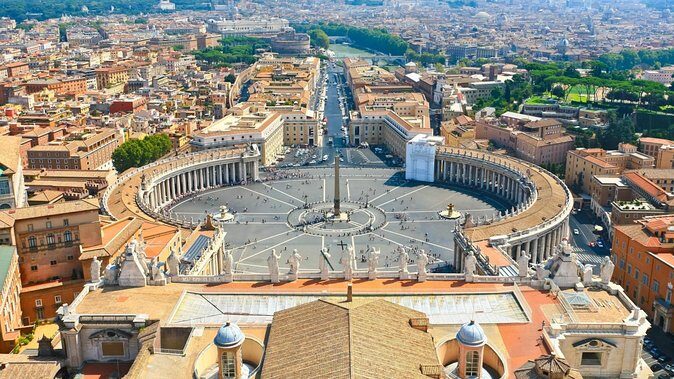
St. Peter’s Square is one of the evening’s high points, even if you’re not religiously motivated. The square is about 340 meters wide, and its ellipse shape is formed by colonnades: 284 columns and 88 pillars.
There are also 140 statues of Catholic saints placed along the top balustrades. At night, those details read more clearly than you might expect because the lighting pulls your eyes along the edges of the square.
Practical note: big events and closures can happen. If your evening overlaps with special restrictions, the area may be impacted and the guide may adjust what you can do around the Vatican area.
In other words: don’t assume everything is always accessible right up to the last second. But you should still come away with the square’s layout and mood.
Campo de’ Fiori and more quick squares that add up
You’ll also visit Campo de’ Fiori, a square with a name rooted in its past. It was built in an area connected to the Temple of Venus Victrix and earlier market stalls. The name comes from a wide flowery meadow and vegetable gardens that were present in the 15th century.
Then the route continues through smaller squares like Piazza Farnese and Piazza Venezia. These quick stops matter more than you’d think because they give your brain a map of Rome’s layout: fountains, churches, national landmarks, and market-era squares all in one guided evening.
The short timing keeps things from dragging. You’re moving often, but the stops aren’t random. Each one helps you connect different parts of the city into a single picture.
Price and value: what you pay for, and what you still need to budget
At $203.95 per person for about 4 hours, this isn’t a bargain-basement deal. The value comes from what’s included.
You get:
- Hotel pickup from the city center (so you lose less time hunting transport)
- A small-group night tour with multiple major photo stops
- Dinner in a Roman restaurant with a full menu structure
- Italian artisan gelato after dinner
What costs extra:
- Pantheon entry (€7)
- Colosseum entry (starting around €20)
So the real decision point is how you handle paid entrances. If you want to go inside both Pantheon and Colosseum, plan to add tickets on top. If you’re fine with exterior viewing for one or both, this can feel like a strong deal because dinner + transportation + guidance are already covered.
Also consider timing. Starting at 6:30 pm means you’re building your first Rome evening in a smart order: sight stops first, food mid-evening, then more sights and gelato. That’s often what saves the day on a first trip.
Who should book this night golf cart tour
This tour fits best if you:
- Want a first-night Rome overview with major landmarks lit up
- Like guided context but still want time for photos
- Prefer an easier pace than walking all evening
- Want dinner planned and included, especially when you don’t want to gamble on finding the right place
It might be less ideal if you:
- Want long, slow stays at one site
- Prefer fully independent touring with no schedule
- Expect every major attraction to be included without any extra ticket purchases
Should you book this Rome Night Golf Cart with Pizza and Ice Cream?
If you’re trying to make the most of limited time in Rome, I’d book it. The combination of night views, a smooth cart route, and a sit-down Roman dinner with gelato is the kind of practical “win” that’s hard to recreate on your own without careful planning.
Just go in with two expectations set: you’ll likely pay extra for the Pantheon and Colosseum tickets, and a few routes can shift if streets are hard to access or if special closures affect the Vatican area. If that’s okay, this is a fun, well-structured way to see the city after dark.
FAQ
What time does the tour start?
It starts at 6:30 pm.
How long is the experience?
The duration is about 4 hours.
Is hotel pickup included?
Yes. Pickup is offered from your hotel if you’re in the city center.
Are tickets for the Pantheon included?
No. Pantheon admission is not included, and the cost listed is €7 per person.
Are Colosseum tickets included?
No. Colosseum entrance tickets are not included. Prices start from about €20.
What’s included in the dinner?
Dinner includes an appetizer based on mozzarella and cured meats, plus a first course of Roman pasta (like Amatriciana, Carbonara, or Cacio e Pepe) or pizza, plus cappuccino and tozzetto.
Is ice cream included?
Yes. You’ll have Italian artisan ice cream after dinner.
What happens if the weather is bad?
The experience requires good weather. If it’s canceled due to poor weather, you’ll be offered a different date or a full refund.