REVIEW · PANTHEON TOURS
Caravaggio Art Walking Tour of Rome with Pantheon Visit
Book on Viator →Operated by Nicom Tours · Bookable on Viator
Caravaggio in Rome is a story with teeth. This 3-hour, 4:00 pm walk threads his paintings through real church spaces, then tops it off with an inside Pantheon visit. You’ll also get headsets so the guide’s explanations stay clear, even when you’re standing outside.
I love the way the route pairs Caravaggio’s work with the streets and politics that shaped him. You’re not just “seeing art.” You’re learning why his dramatic light and intense emotions made sense in Rome.
One thing to consider: it’s still a walking tour. If the weather turns damp, you may spend short stretches outside between churches.
In This Review
- Key highlights worth your attention
- Why this Caravaggio + Pantheon combo actually works
- Getting oriented: Piazzale Flaminio to Piazza del Popolo
- Stop 1: Santa Maria del Popolo and two Caravaggio masterpieces
- Stop 2: Campo Marzio and Via Ripetta’s street-level context
- Stop 3: Santa Maria della Pace and Raphael’s ceiling drama
- Stop 4: Sant’Agostino, Caravaggio, and the San Matteo intensity
- Stop 5: The Pantheon inside, with tomb stories and architectural cues
- Aperitivo break: why this included stop feels like part of the day
- Price and value: what you’re really paying for at $65.17
- Group size, guides, and the feel of the experience
- Practical tips so you get more out of every stop
- Who this tour fits best
- Should you book the Caravaggio Art Walking Tour with Pantheon visit?
- FAQ
- How long is the Caravaggio Art Walking Tour of Rome with a Pantheon visit?
- Where does the tour start and end?
- What’s included in the price?
- Which Caravaggio works will I see during the tour?
- Will I go inside the Pantheon?
- Is this tour a small group?
- Is hotel pickup available, and is luggage storage offered?
Key highlights worth your attention
- Caravaggio in the buildings where he belongs: You’ll see major works at Santa Maria del Popolo and Sant’Agostino, plus additional Caravaggio pieces connected to the San Matteo cycle.
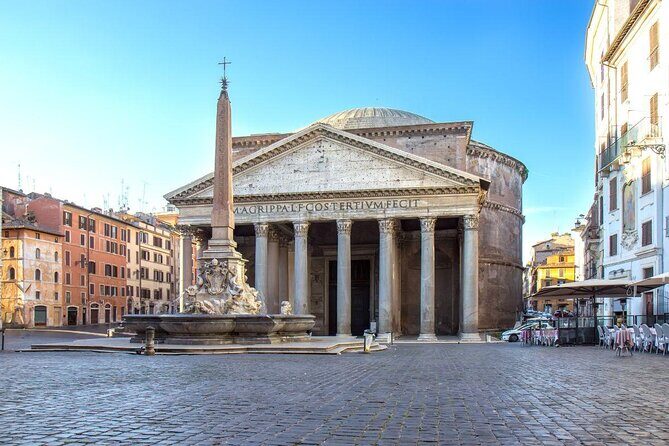
- Pantheon entry, not just a photo stop: You’ll go inside and hear what you’re looking at beyond the dome.
- Aperitivo included: A local wine bar break is part of the experience, not an add-on.
- Small group size (max 15): More time for questions and back-and-forth than you get on huge bus tours.
- Headsets included: Makes listening much easier in crowds and narrow lanes.
- A route built around context: You’ll connect the art to Roman life of the late 1500s, including social details tied to the area.
Why this Caravaggio + Pantheon combo actually works
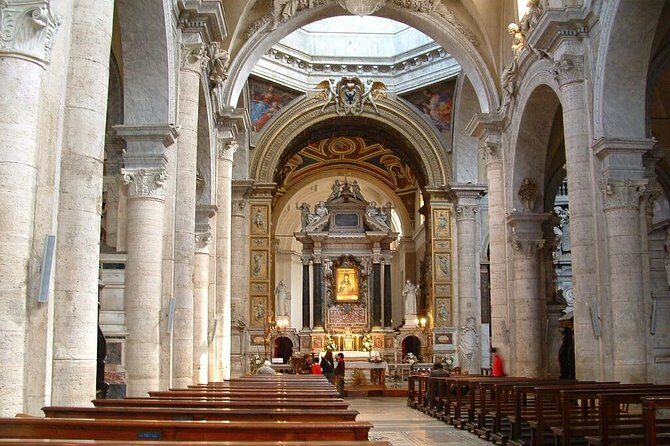
On paper, Caravaggio and the Pantheon sound like two different worlds. One is baroque grit and psychology. The other is ancient Rome’s perfect geometry. But that contrast is exactly why this tour feels smart.
Caravaggio spent much of his life in Rome, in the late 1500s. The best way to understand him is to watch how Rome’s layers overlap. You’re moving from churches tied to his paintings into a monument that Rome kept reinventing over centuries.
And then there’s the pacing. It’s short enough to stay fun. Yet it includes multiple interiors, so you aren’t stuck just staring at street corners.
You can also read our reviews of more walking tours in Rome

Getting oriented: Piazzale Flaminio to Piazza del Popolo
The tour meets at Piazzale Flaminio and starts at 4:00 pm. From there, you work toward Piazza del Popolo for the first stop at Santa Maria del Popolo.
I like a late afternoon start for this kind of plan. You’re walking when the city can feel less punchy than mid-day heat, and you’re catching church interiors when your eyes are ready for details. Also, headsets mean you don’t have to lose the story when the group gets spread out.
Bring comfortable shoes. Even if the route is only a few hours, Rome’s streets are not designed for soft landings.
Stop 1: Santa Maria del Popolo and two Caravaggio masterpieces
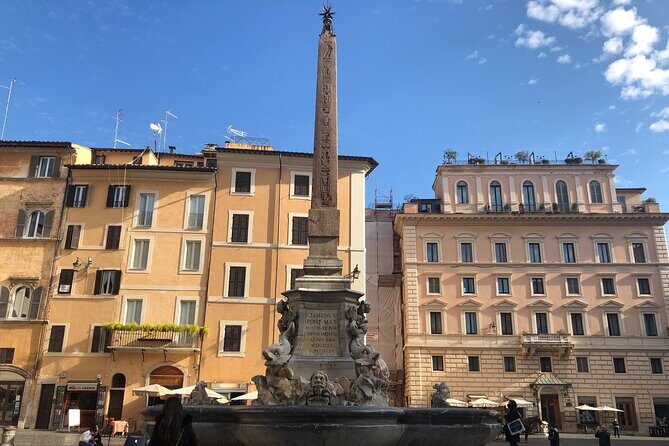
Santa Maria del Popolo is where the tour really locks in your attention. This Augustine church holds two major Caravaggio works: Crucifixion of St. Peter and Conversion on the Way to Damascus. They’re not hanging in some museum fantasy. They’re in a church setting that shapes how you read the scenes.
A useful detail here is the dome above. It’s described as designed and frescoed by Raphael, which gives you a strong visual reminder that Rome wasn’t a one-artist city. You’re seeing major Renaissance and baroque ideas in the same orbit.
What I’d watch for as you listen:
- The way Caravaggio’s drama pulls your eyes toward the emotional core, not the background scenery.
- How the church space frames those moments, making the paintings feel louder than their size suggests.
- The contrast between Raphael’s ceiling work and Caravaggio’s earthly intensity.
This stop runs about 45 minutes, and the admission ticket is included. That’s enough time to look slowly, not just glance and move on.
Stop 2: Campo Marzio and Via Ripetta’s street-level context
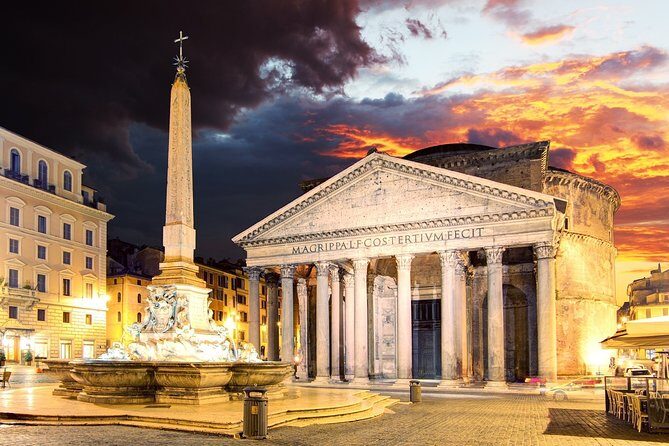
Next comes a walk through Campo Marzio. The tour focuses on the area around Via Ripetta, tied to Caravaggio’s inspiration from the street life—specifically the large number of prostitutes who inhabited the street.
This is one of the most valuable moments on the route because it changes how you interpret the art. When you hear that Caravaggio was drawing from Rome’s real, complicated life, the intensity in his figures stops feeling random. It starts feeling like observation.
You’ll have about 45 minutes for this stretch. It’s mostly walking and discussion, and it also helps you get your bearings. If you’re the type who needs to understand the neighborhood before the church paintings make sense, this is a great setup.
Stop 3: Santa Maria della Pace and Raphael’s ceiling drama
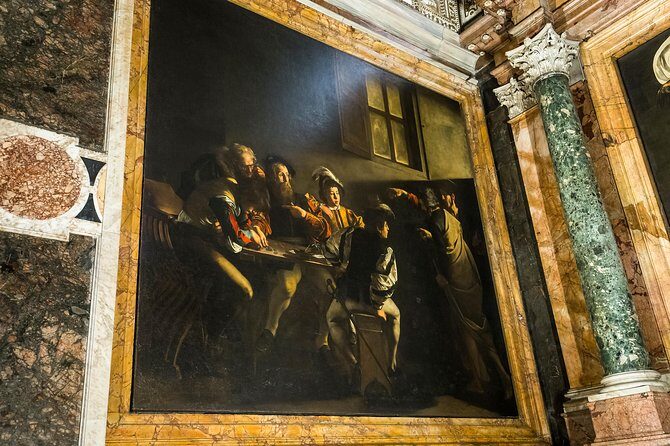
Santa Maria della Pace is next, and it’s a lovely change of pace: a beautiful church with visible, story-heavy decoration. Here the tour highlights Raphael’s fresco of Sybil’s dance, plus majestic angels across the ceiling.
Why this matters for a Caravaggio-focused tour: it keeps Rome’s art conversation intact. Caravaggio didn’t paint in a vacuum. He responded to what came before, and Rome’s artists were always in dialogue—sometimes respectful, sometimes not.
This stop is about 30 minutes with admission included. In that time, you can do two things well:
- Look at the fresco details while the guide explains what they mean.
- Reset your eyes after Caravaggio’s more confrontational mood.
If you’re traveling with people who don’t usually care about art, this is a good place to bring them in. Raphael’s imagery can feel less intimidating than baroque emotion, even when the story is complex.






Stop 4: Sant’Agostino, Caravaggio, and the San Matteo intensity
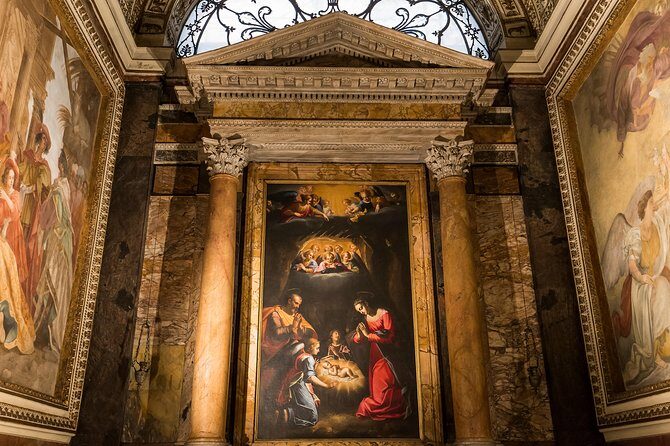
Then you move to Sant’Agostino, another church stop tied closely to the tour’s two central artists. You’ll enjoy a painting and a fresco connected to the protagonists, before the group moves on to the church of San Luigi dei Francesi.
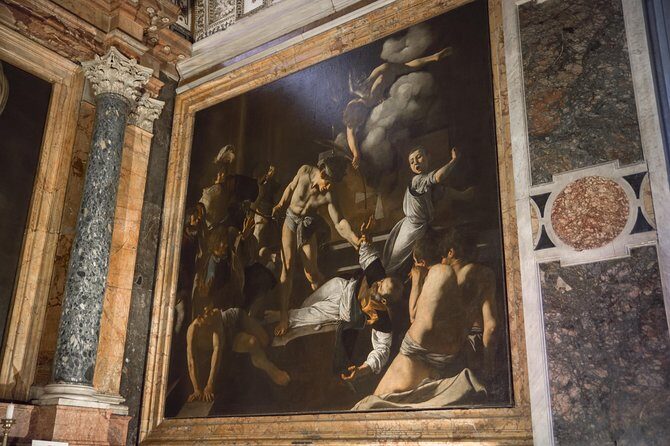
San Luigi dei Francesi is where you’ll encounter the trilogy dedicated to San Matteo, held there as part of Caravaggio’s work. The tour frames it as among the most mysterious and intense paintings he created.
This part is important because the emotion in Caravaggio’s paintings isn’t a gimmick. It’s the point. When you hear context—how his choices led to persecution and an early, tragic death—it helps explain why the work feels so urgent.
One practical note: churches can vary a lot in how bright they feel inside. Some angles make paintings look clearer. Some make you lean in and squint. If you want the best view, stand where the guide tells you to, then spend one extra minute looking from a slightly different angle. That small change can bring facial expressions and lighting effects into sharper focus.
This section is about 30 minutes and is listed as admission ticket free for the stop. The walking between interiors is usually quick, but keep an eye on your footing.
Stop 5: The Pantheon inside, with tomb stories and architectural cues
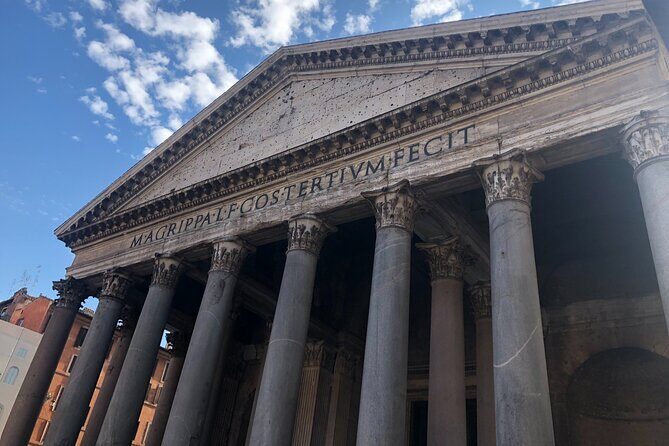
Finally, you reach the Pantheon. This is one of those places where you think you know what you’re seeing—until you stand inside and realize how it controls your attention.
The tour focuses on the Pantheon’s unique structure and why it’s one of Rome’s most striking architectural features. You’ll also learn its long transformation: it was the first pagan temple to be converted to Christianity.
The inside details are where this tour earns its ticket time. You’ll hear about the tombs of the first two kings of Italy, placed there after the unification in 1861. You’ll also hear about Raphael’s tomb. His work became a model of perfection in Renaissance painting, which helps explain why his resting place belongs in such a central monument.
You’ll have about 30 minutes here with admission included for the interior visit. That time is enough to:
- Notice how the dome’s geometry feels in person.
- Understand what the space was designed to do.
- Connect the Pantheon’s layers of meaning to the broader theme of Rome reinventing itself.
When the tour wraps, it ends in Piazza delle Coppelle.
Aperitivo break: why this included stop feels like part of the day
The tour includes an aperitivo at a local wine bar. I like included food and drinks on art tours because it stops the day from turning into a nonstop walking marathon.
This is not described as a formal dinner. It’s a small break to let what you learned settle in your brain. Also, the group mood improves when you’re tasting something Italian while chatting with your guide and each other.
Some guides have used places like Casa Coppelle for the bite and drinks, including Prosecco and wine. Even if your stop is at a different wine bar, the concept stays the same: a real pause, not a vending-machine moment.
If you’re the type who needs a reward for standing in church doorways for an hour, this part will make you happy.
Price and value: what you’re really paying for at $65.17
At $65.17 per person for about 3 hours, you’re paying for access and interpretation—not just walking past sights.
Here’s the value angle that matters:
- Multiple church interiors are included across the route, including ticketed entry for Santa Maria del Popolo and the Pantheon.
- Headsets are included, which is a quiet but major upgrade for comprehension.
- The guide provides art + context, tying paintings to Rome’s late 1500s life and the city’s shifting religious and political identity.
- You get aperitivo included, which reduces the “food cost creep” that often eats art-tour budgets.
The tradeoff is that this is not a sit-and-watch tour. It’s active. If you’re someone who wants minimal walking, the churches and alleyways might feel like a lot.
Still, the structure makes sense: two big art anchors (Santa Maria del Popolo and the Pantheon) plus the connecting churches that explain how Caravaggio fits into Rome’s bigger art story.
Group size, guides, and the feel of the experience
The tour keeps group size tight, with a maximum of 15. That matters because the route is dense with meaning. In a small group, you get more chance to hear details and follow the story without the guide constantly repeating themselves.
The guides on this kind of experience are described as highly engaged with the art. Names that show up for this route include Giuseppe, Maria, Valentina, and Jeanette. Across those examples, the consistent theme is that they explain Caravaggio’s choices and connect the paintings to broader Roman history and society.
I also think the small-group format helps with attention span. Caravaggio’s imagery can be intense. When you can ask a question or get a clarification in a calmer setting, the art lands better.
Practical tips so you get more out of every stop
This tour is simple in concept, but it rewards prep.
- Wear shoes you’d trust on slightly slick stone.
- Bring a light layer. Churches can feel cooler inside.
- If it’s raining, don’t fight the weather. It happens in Rome. A small packable umbrella or rain jacket helps.
- When you enter a church, pause for ten seconds and look around before searching for the painting. You’ll learn faster because you’re building a visual map.
Also, the tour uses headsets. Put them on promptly so you don’t miss the first sweep of context.
Who this tour fits best
This one is a strong match if you want:
- Caravaggio without the museum crowd chaos.
- A walking route that connects art to real Rome.
- A tour that treats paintings like stories, not just objects.
It may be less ideal if you:
- Prefer bus tours over walking.
- Have limited mobility or get tired fast on uneven stone streets.
- Hate listening through headsets in tight spaces.
Should you book the Caravaggio Art Walking Tour with Pantheon visit?
I’d book it if you want a short, high-impact Rome afternoon built around two giants: Caravaggio and the Pantheon. The included Pantheon interior time, the church-to-church art storytelling, the small group size, and the aperitivo make it feel like more than a “check the box” walk.
I’d think twice only if you know you can’t handle steady walking between interiors, or if you’re sensitive to rain and being outside briefly between stops. If that’s you, ask yourself one question: do you come to Rome to see architecture and art up close, or do you want maximum comfort and minimal effort?
FAQ
How long is the Caravaggio Art Walking Tour of Rome with a Pantheon visit?
The tour lasts about 3 hours.
Where does the tour start and end?
It starts at Piazzale Flaminio, Roma RM, Italy, and ends at Pantheon, Piazza della Rotonda, 00186 Roma RM, Italy.
What’s included in the price?
The price includes an expert local guide, headsets, an aperitivo, and internal visits/tickets for the Pantheon and specific churches on the route.
Which Caravaggio works will I see during the tour?
You’ll see Crucifixion of St. Peter and Conversion on the Way to Damascus at Santa Maria del Popolo, and Madonna del Loreto at the Cavaletti Chapel in Sant’Agostino. The route also includes Caravaggio works connected to the San Matteo cycle at San Luigi dei Francesi.
Will I go inside the Pantheon?
Yes. The tour includes an internal visit of the Pantheon.
Is this tour a small group?
Yes. The maximum group size is 15 travelers.
Is hotel pickup available, and is luggage storage offered?
Hotel pickup and drop-off are not included. Luggage storage is not available.