REVIEW · 1-DAY TOURS
Tivoli Day Trip from Rome: Hadrian’s Villa and Villa d’Este
Book on Viator →Operated by Enjoy Rome · Bookable on Viator
A day in Tivoli feels like a reset button. You get out of Rome, ride into the hills, and trade city noise for two UNESCO villas where water, power, and design mix in the most visual way. The best part for me is that the tour is built for your time, with an organized pace and entrance tickets included at both sites.
What I like most is the contrast: Villa d’Este shocks you with Renaissance fountain drama, then Hadrian’s Villa brings you back to Roman-scale imagination with pools, statues, and garden layouts. One drawback to plan for is that the visits are time-tight—so if you hate rushing, or you’re sensitive to lots of steps (especially at Villa d’Este), you’ll want to prepare your expectations and shoes.
In This Review
- Key highlights to know before you go
- Tivoli by Bus: a Smooth Escape Without Needing a Car
- Villa d’Este Gardens: Why the Fountains Steal the Show
- Hadrian’s Villa (Villa Adriana): Roman Scale, Designed Like Theater
- The Timing Reality Check: 6 Hours Sounds Simple
- Guide Quality: What You Should Listen For
- Comfort, Shoes, and Small Practical Tips
- Price and Value: What You’re Really Paying For
- Who This Tour Fits Best
- Should You Book This Tivoli Day Trip?
- What I’d do to make it work well
- FAQ
- How long is the Tivoli day trip?
- What time does the tour start, and where do we meet?
- Is the tour in English?
- What are the two main stops on the tour?
- Are entrance fees included?
- How much time do we have at each villa?
- Is there lunch included?
- Do we need to arrange hotel pickup?
- How big is the group?
- What if plans change?
- What if the tour is canceled due to low bookings?
Key highlights to know before you go
- UNESCO sites on one outing: Villa d’Este and Villa Adriana both made the world heritage list for good reason.
- Fountains with real height: Bernini’s Neptune fountain is famous for jet sprays reaching about 10 meters.
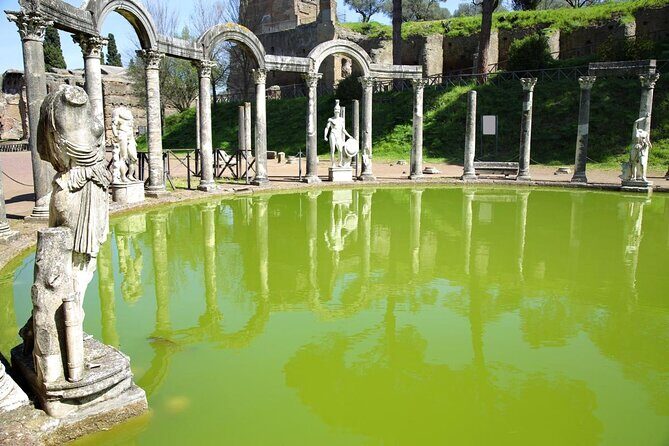
- Hadrian’s Canopus setup: you’ll see a long pool view designed to feel like a theatrical waterway.
- Headsets on the bus: you can actually hear the guide without craning your neck.
- Small group cap: up to 30 people, which helps the pace feel controlled.
- No hotel pickup: you meet at Castro Pretorio, so plan an easy commute from where you’re staying.
Tivoli by Bus: a Smooth Escape Without Needing a Car
This is a practical Rome day trip for one big reason: you don’t have to plan transport. You start at Castro Pretorio at 9:30 am, and you return to the same meeting point. The ride is handled in an air-conditioned vehicle, and you’ll have headsets to hear the guide clearly, even when you’re moving.
That matters because Tivoli is in the hills. If you’ve tried doing these sites on your own, you know how quickly the day can get eaten by logistics. Here, the structure keeps the day moving. You’ll also get the basic rhythm of Tivoli itself, a mountain town that feels like an easy breath out of Rome.
The tradeoff is time pressure. The sites are huge in the ways that count: lots of sightlines, lots of viewpoints, and lots of walking. You’ll need to be comfortable with a guided “see the highlights” format.
You can also read our reviews of more tours and experiences in Rome



Villa d’Este Gardens: Why the Fountains Steal the Show
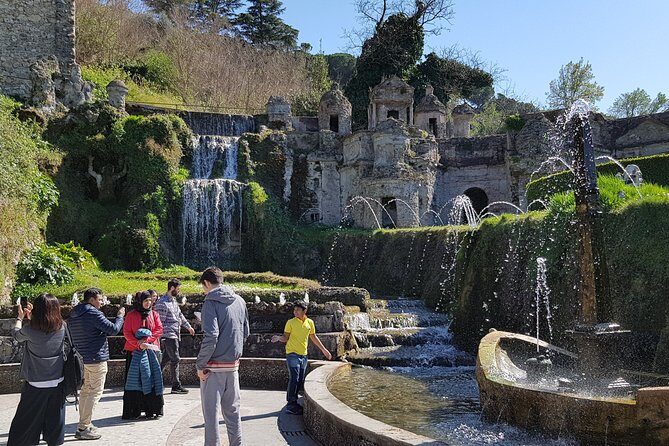
If you’re coming for eye-candy, Villa d’Este is the reason to take this tour. You’ll start with Villa d’Este, and it’s the kind of place where you realize how much garden design is basically stagecraft. The setting is Renaissance, but the energy is pure showmanship: terraces, water features, and fountains positioned so you discover them in layers as you move.
You get about one hour at this stop. In that time, you’re not trying to “complete” the whole garden at a walking pace. You’re meant to follow the guide’s route so you catch the best moments without getting lost.
Here are the specific fountain highlights that make Villa d’Este such a strong choice:
- Neptune’s Fountain by Bernini: the jets reach around 10 meters, which is hard to grasp until you see it in person.
- Central Fountain and Oval Fountain: both are major set-pieces, and they help you understand why this villa’s water works as sculpture, not just plumbing.
- Water as direction: the way features are placed nudges your eyes and your legs along the terrace lines. Even if you only have time for the “greatest hits,” you’ll leave feeling like the garden was planned, not random.
One practical note from experience-style guidance: bring a plan for photos. If you want a lot of fountain shots without sprinting, you’ll need to lean into the guide’s timing. The tour does give a chance to wander, but you shouldn’t expect long solo time to fully explore every grotto-like corner.
Also: there can be lots of steps. One traveler even noted an elevator option at a gift shop if you ask, which is the kind of real-world fix you’ll appreciate. So yes, wear comfortable shoes, and don’t force a heroic pace if your knees protest.
Hadrian’s Villa (Villa Adriana): Roman Scale, Designed Like Theater
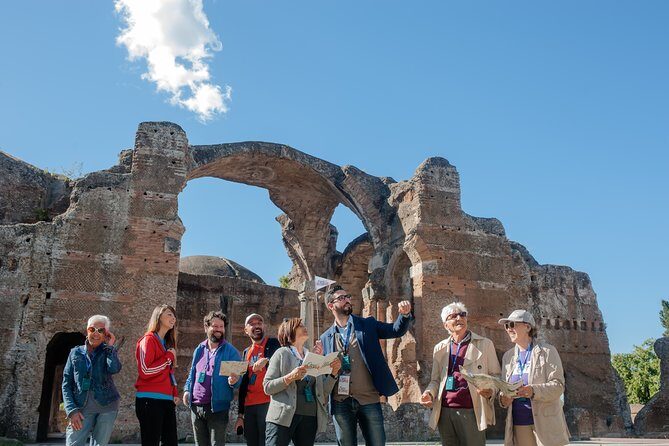
After the Renaissance spectacle, Hadrian’s Villa feels like the other half of the story—Roman power using architecture and landscape as propaganda. You’ll take roughly a 40-minute bus ride to Hadrian’s estate, and then you’ll have about one hour on-site.
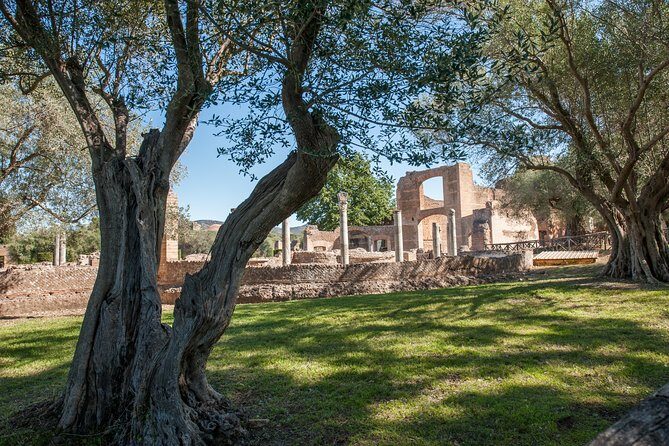
Even in a short window, the place hits. Hadrian chose to build his residence outside the city, in a water-rich area. That decision becomes visible as you move through the complex and see how the estate uses water as a central design element.
The star concept you’ll want to clock early is the Canopus. This long, carefully framed pool area is meant to create a sense of a preserved, idealized waterway. In the right light, the statues around the water create reflections that feel almost intentional—like the garden is painting with light and stone.
A few reasons this stop is worth your time, even if you’re not a hardcore archaeology fan:
- It’s a big idea in a small tour window. Even with limited time, you get to understand how Hadrian blended luxury, leisure, and imperial statement.
- You’ll see how Roman villas could be immersive. It’s not just rooms and walls. It’s planned movement and sightlines.
- The contrast with Villa d’Este is educational. Water appears in both places, but with totally different design goals—Roman recreation vs. Renaissance drama.
One caution: large estates like this can involve temporary changes. If there’s construction due to events, you may see barriers or shifted routes. It doesn’t erase the experience, but it can slightly change what you get to access at that moment.
The Timing Reality Check: 6 Hours Sounds Simple
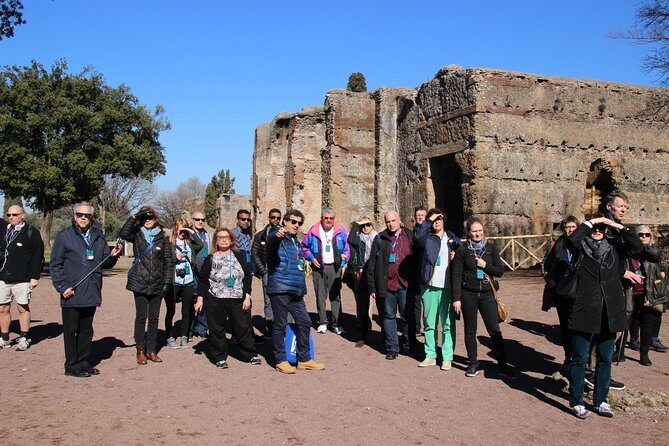
A “six-hour day trip” can sound relaxed. It isn’t. You’ll spend time on the bus, then you’ll do two major walking visits. Each site is around one hour, and that means you’ll mostly follow a curated highlight path.
This is where the tour can be either a perfect fit or a frustrating one:
- If you like structure and you’re okay with seeing the best moments: this works.
- If you wanted a slow, wandering “soak it in” pace at either villa: you might feel rushed.
Lunch is a factor here. Lunch is included only if you select that option. When it’s included, it can eat into your viewing time in a way that some people felt was unbalanced. The most useful way to handle this is to decide your priority before you go: do you want time in the gardens more than a sit-down meal? If you care more about fountains and ruins than a set menu, you may prefer a lighter meal on your own schedule.
Also, watch the day for timing disruptions. On one occasion in a separate group, a bus accident caused a delay and the day ran tighter at the second stop. Stuff happens on the road. If you’re the type who gets stressed by schedule changes, keep a little flexibility in your head.
Guide Quality: What You Should Listen For
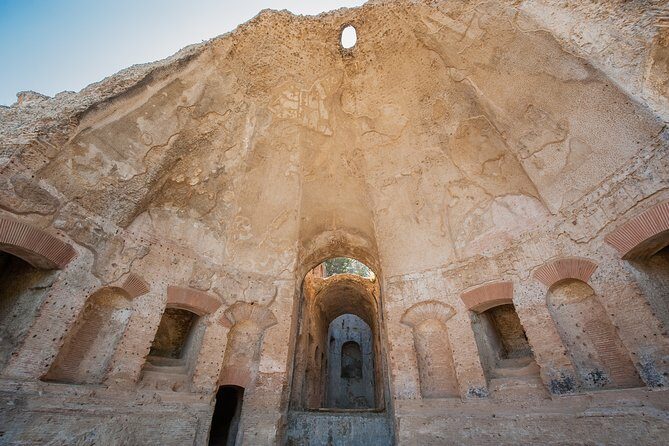
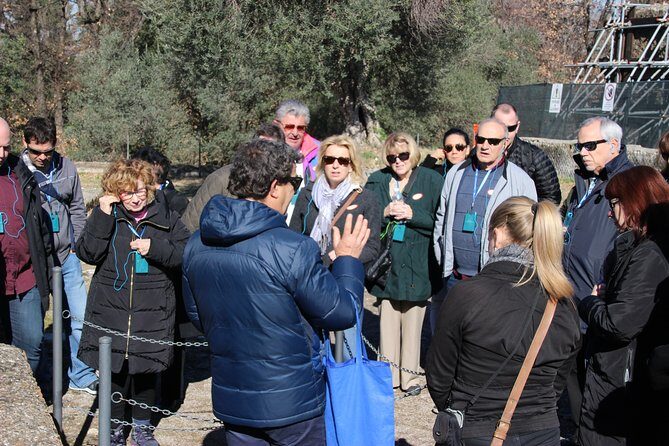
The guide is the difference between seeing pretty places and understanding why they matter. This tour uses a professional guide and typically includes clear narration with headsets. That means you won’t be stuck guessing what you’re looking at.
In past groups, guides named Marta and Giuseppe were praised for combining detailed explanation with a smooth pace. Other names like Marsha and Marcia also came up, with compliments for making the sites feel vivid and organized.
What to listen for during the walk:
- At Villa d’Este, focus on how water features relate to terrace design and sightlines. The fountain moments aren’t just pretty; they’re arranged to control your experience.
- At Hadrian’s Villa, pay attention to the water framing in the Canopus area, and how the estate’s layout supports leisure and display.
- Ask quick questions if you’re curious. With headsets, it’s easier to hear back when you ask something specific.
If you’re traveling with kids or mixed ages, this kind of guiding also helps. One detail from the experience’s reviews is that the storytelling can be threaded so it lands for children too, not only adults who already know the jargon.






Comfort, Shoes, and Small Practical Tips

You’ll do enough walking that comfortable shoes are not optional. One-hour blocks at two major villas still adds up when you include terraces, steps, and moving between viewpoints.
Here’s how to plan your body for the day:
- Wear comfortable shoes you trust on uneven stone.
- Expect steps and uneven surfaces, especially at Villa d’Este’s garden paths.
- If stairs are a problem, don’t assume you’re stuck. One traveler suggested an elevator option at a gift shop if you ask—so it’s worth knowing that help may exist.
Photo note: fountains at Villa d’Este can make you want to stop every 10 feet. That’s normal. Just be aware that the one-hour schedule means you may need to choose your photo priorities.
Price and Value: What You’re Really Paying For
At $90.11 per person, you’re not just paying for a bus ride. You’re paying for three main value pieces:
- Two UNESCO sites with entrance fees included
- A guide plus headsets
- A planned pace that saves you from coordinating transport and tickets yourself
This isn’t a bargain-tour either. But it does feel fair when you factor in that entrance tickets for major sites and guided interpretation add up if you do it independently.
Where value can drop is when your expectations don’t match the time. If you want deep, slow exploration at both villas, the one-hour stops may feel skimpy. If you’re happy to see the highlights with strong storytelling, the value tends to look better fast.
Also, the group size cap of 30 helps. It’s not a tiny private tour, but it also isn’t a chaotic crowd where you lose the guide.
Who This Tour Fits Best
I’d recommend this day trip if you fit one (or more) of these:
- You want the best highlights of Tivoli without stress.
- You like a guided route that helps you understand what you’re seeing.
- You care about gardens and water design, not just ruins.
- You want a single day that covers both sides of the story: Renaissance spectacle and Roman imagination.
It might be less ideal if:
- You hate rushing and want long free time inside each estate.
- You have limited mobility and rely on a lot of step-free routes (the tour asks you to note accessibility needs when booking, and you should double-check what that means for your comfort level).
- You’re hoping the lunch break is a major part of the experience. Some people found the meal average and felt the time could have been better spent walking.
Should You Book This Tivoli Day Trip?
Here’s my honest call: book it if you want a structured, high-impact day in Tivoli. Villa d’Este and Hadrian’s Villa are both strong on their own, and seeing them on the same trip is efficient in a way that’s hard to match by DIY planning. The included entrances and guide interpretation make it easier to get meaning quickly, without wasting hours on logistics.
Skip or reconsider if you want a slow, long-garden stroll where you can linger for every detail. The one-hour stops at each villa are the core constraint. And if your ideal day includes heavy free time at gardens, you may feel shortchanged.
What I’d do to make it work well
- Keep your expectations realistic: highlights, not full completion.
- Prioritize your footwear and pace, especially at Villa d’Este.
- If lunch matters less to you, don’t let it eat your viewing time.
If you’re the kind of traveler who loves when a place’s design tells a story, you’ll enjoy this one.
FAQ
How long is the Tivoli day trip?
It runs for about 6 hours (approx.).
What time does the tour start, and where do we meet?
The meeting point is Castro Pretorio in Rome, and the start time is 9:30 am. The tour ends back at the same meeting point.
Is the tour in English?
Yes, it is offered in English.
What are the two main stops on the tour?
You visit Villa d’Este and Villa Adriana (Hadrian’s Villa).
Are entrance fees included?
Yes. All entrance fees for these two UNESCO World Heritage sites are included.
How much time do we have at each villa?
Each stop is about 1 hour.
Is there lunch included?
Lunch is included only if you select the lunch option.
Do we need to arrange hotel pickup?
No. Hotel pickup and drop-off are not included, and you’ll meet at the Castro Pretorio location.
How big is the group?
The tour has a maximum of 30 travelers.
What if plans change?
You can cancel for a full refund up to 24 hours before the experience starts.
What if the tour is canceled due to low bookings?
The experience requires a minimum number of travelers. If it’s canceled because that minimum isn’t met, you’ll be offered a different date/experience or a full refund.