REVIEW · COLOSSEUM TOURS
Colosseum, Palatine Hill and Roman Forum Guided Tour
Book on Viator →Operated by Tour In Rome by Tour in the City · Bookable on Viator
Rome’s ancient heart, in one walk. This guided route strings together the Colosseum, Palatine Hill, and the Roman Forum with clear context so the stones don’t feel random.
What I like most is the structured path through three sites that are easy to get lost in on your own. I also love that you’ll get a headset/radio system, so the commentary stays audible even when crowds surge.
One consideration: this is still a real walking tour with uneven ground and stairs, so you’ll want comfortable shoes and a moderate fitness level.
In This Review
- Key things to notice before you go
- Colosseum, Palatine Hill and Roman Forum in One Tight Block
- The meeting point system that actually works
- Entering the Colosseum with timed-entry reality
- Inside the Colosseum: arena, mechanics, and Roman engineering
- Palatine Hill: Rome’s “oldest living” viewpoint
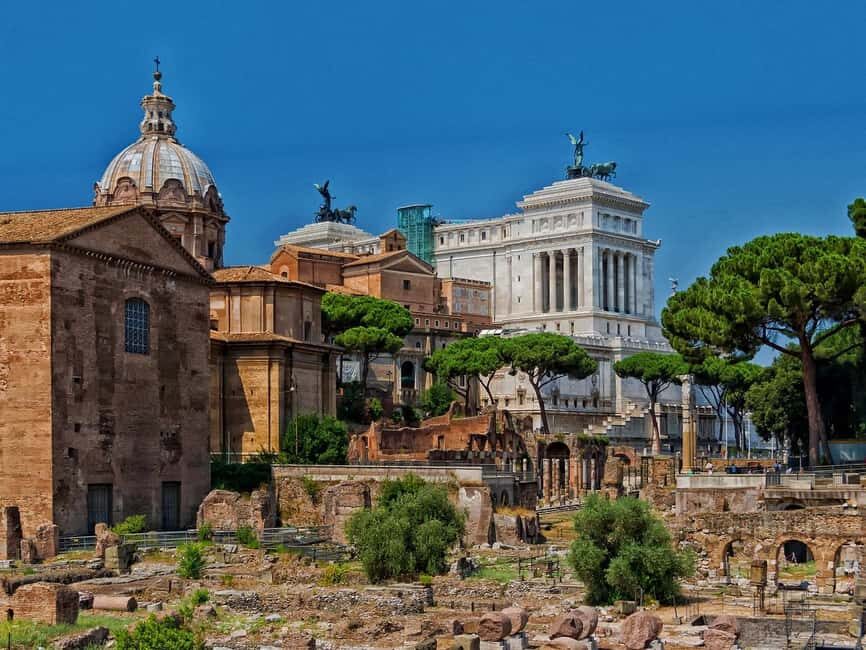
- The Roman Forum on foot: temples, arches, and political drama
- What the headsets and route design change for you
- Pace, stairs, and practical tips that save your day
- Price value: what $55.51 covers (and what you get back)
- Who should book this tour?
- Should you book this Colosseum–Forum–Palatine tour?
- FAQ
- What sites are included in the tour?
- How long is the experience?
- Is the Colosseum ticket timed-entry?
- What language options are available?
- Do I need a headset or special equipment?
- Is this tour suitable for people with mobility or walking issues?
- What if it rains or the Colosseum closes parts of the site?
Key things to notice before you go
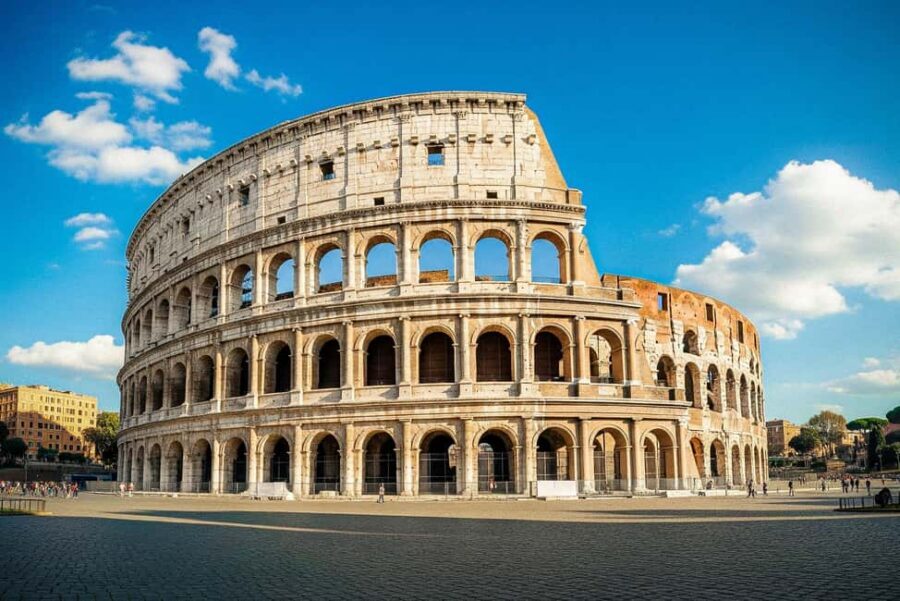
- Timed-entry focus at the Colosseum so you don’t waste your visit on ticket chaos
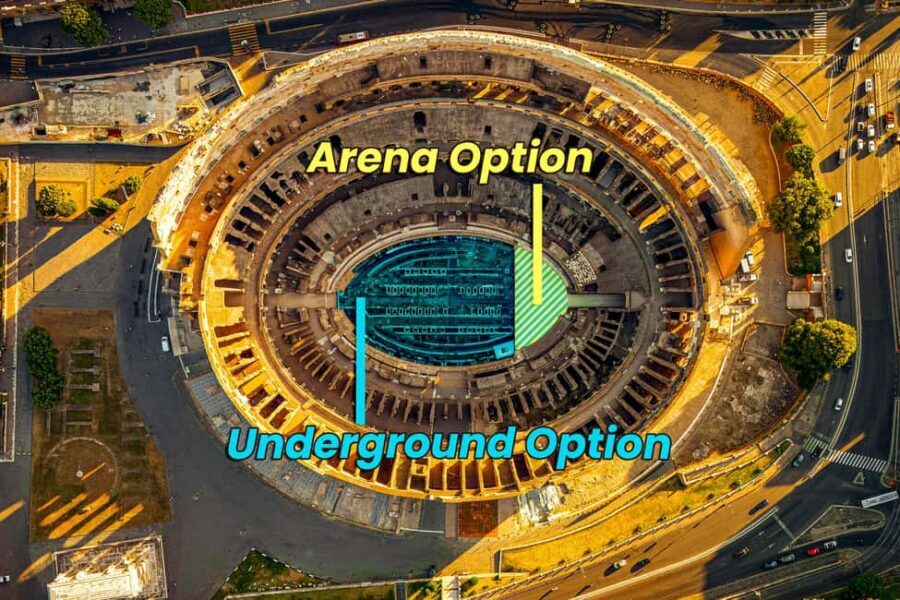
- First and second levels inside the Colosseum, plus arena-level explanations of how spectacles worked
- Big viewpoint payoff on Palatine Hill, including views over the Circus Maximus valley
- Forum landmarks on foot, with pointers to places like the Temple of Julius Caesar and the Arch of Titus
- Headsets/radio system for group-guided clarity (and less craning your neck)
- Small-ish group size (max 25) helps the guide keep things moving and makes questions easier
Colosseum, Palatine Hill and Roman Forum in One Tight Block
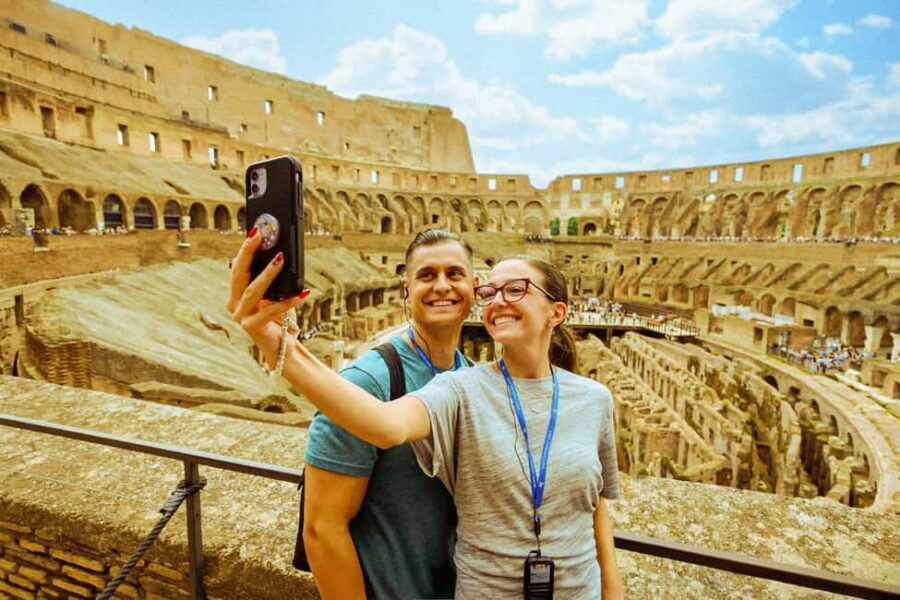
If your goal is to understand Ancient Rome fast, this is a smart way to do it. You’re not just sightseeing three famous spots. You’re moving from the stage (the Colosseum) to the power center (Palatine Hill) to the political/religious machinery (the Roman Forum).
The timing matters too. The tour runs about 2 hours 30 minutes, and it’s built to hit the essential highlights without turning your day into a full marathon of transit between sites. On top of that, it typically uses a planned route so you’re not constantly stopping to re-orient yourself in a maze of arches, terraces, and ticket lanes.
You’ll also benefit from the way your guide ties the scenes together. The best part of this kind of route is that the Colosseum stops being a postcard, and becomes an operating machine—engineering, spectacle, crowd control, and propaganda all in one.
You can also read our reviews of more guided tours in Rome



The meeting point system that actually works
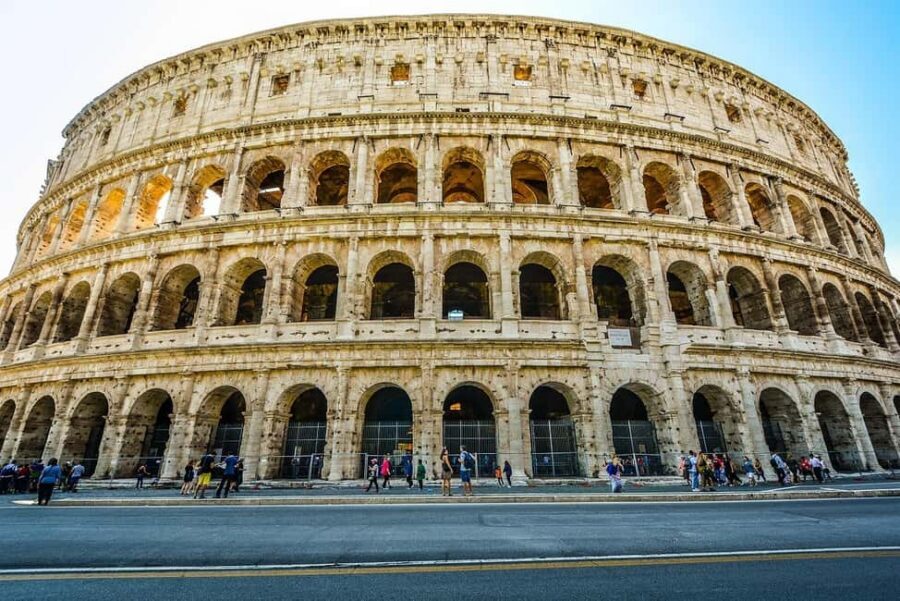
Meeting points in Rome can be messy. This one is at Piazza San Clemente, with staff waiting by the entrance to the Basilica holding a Tour in the city sign. You’ll need to arrive 20 minutes before the departure time since the operator has to manage group flow and ticket timing.
Two practical tips:
- Bring the names on your booking exactly as shown, and be ready to match them with a valid passport or ID at entry for Colosseum and Roman Forum.
- If you’re even slightly late, remember: Colosseum entry is timed, and strict security rules can mean you lose your slot. The Colosseum also screens everyone and their luggage.
At the end, the tour finishes near the Colosseum and Roman Forum area, which is helpful if you plan to keep exploring afterward.
Entering the Colosseum with timed-entry reality
The Colosseum is one of the most visited places on Earth, and that means the bottlenecks aren’t just theoretical. Even if you’ve booked ahead, crowd limits can slow access, since the Colosseum can accommodate a maximum of about 3,000 people at once.
What this tour helps with is reducing wasted time at the start. Your Colosseum entry ticket includes a reservation fee, and the tour is designed around getting you through the right doors during your time window.
Plan for the basics:
- Security screening happens, so leave time for it.
- Avoid bringing forbidden items like bottles/glasses containers, aerosols, backpacks or bulky bags, or alcohol.
- This site isn’t a smooth carpet. Expect stairs and uneven surfaces.
The “skip the stress” value here is real: when you’re inside, the historical explanations land better because you’re not constantly thinking about whether you’ll make it into the next gate.
Inside the Colosseum: arena, mechanics, and Roman engineering
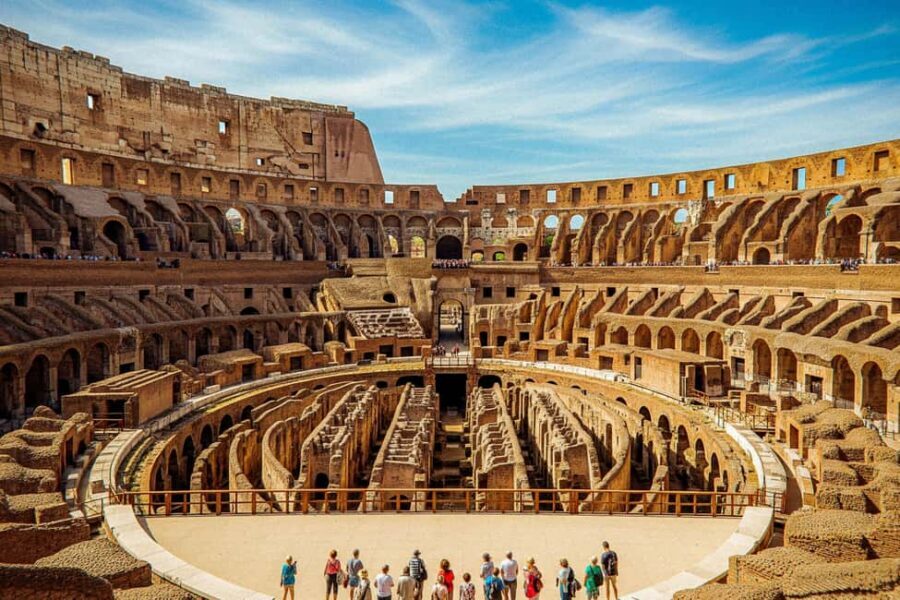
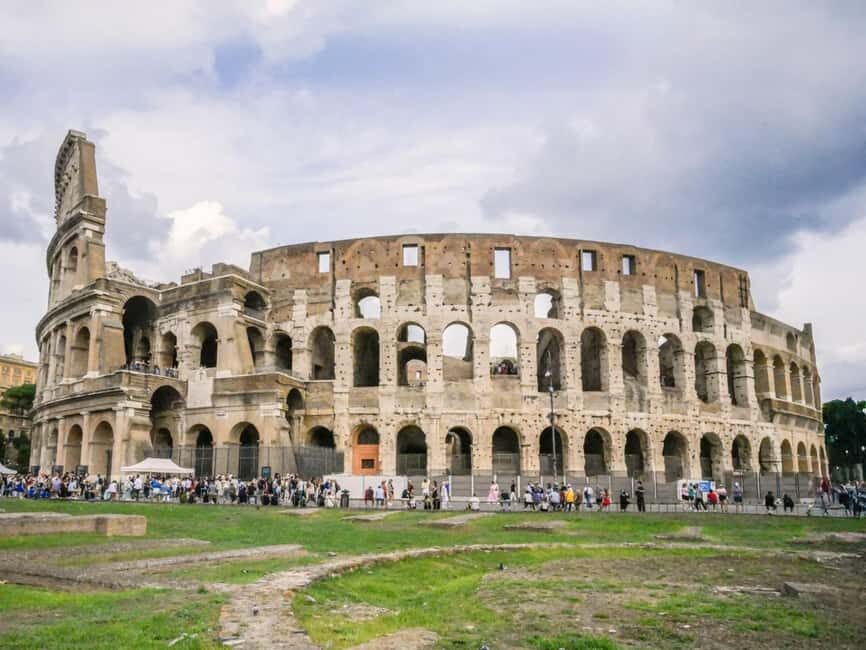
Your first stop is the Colosseum, where you’ll visit the monument as a working system—not just a dramatic shell. You’ll spend time on the first and second levels and then look toward the arena, where the story shifts from architecture to spectacle.
The guide’s focus is the “how did they do that?” side of the Colosseum:
- How gladiatorial contests were staged
- How Roman engineering made large-scale events possible
- The role of mechanisms and trapdoors (including what happened before fighting began)
- The staging behind the scenes, like where fighters waited and how animals were prepared for events
You can expect plenty of vivid, practical details—stories tied to sea-battle spectacles, the cages where lions were kept, and the violent reality of executions as part of the show’s power. It’s theatrical information, but it’s also the kind of context that helps you read the spaces correctly when you stand in them.
Also, this is one of those tours where the guide tends to manage pacing so you don’t feel swallowed by the crowd. There’s often time for gathering at photo-friendly moments and listening without constantly fighting for position.
Palatine Hill: Rome’s “oldest living” viewpoint
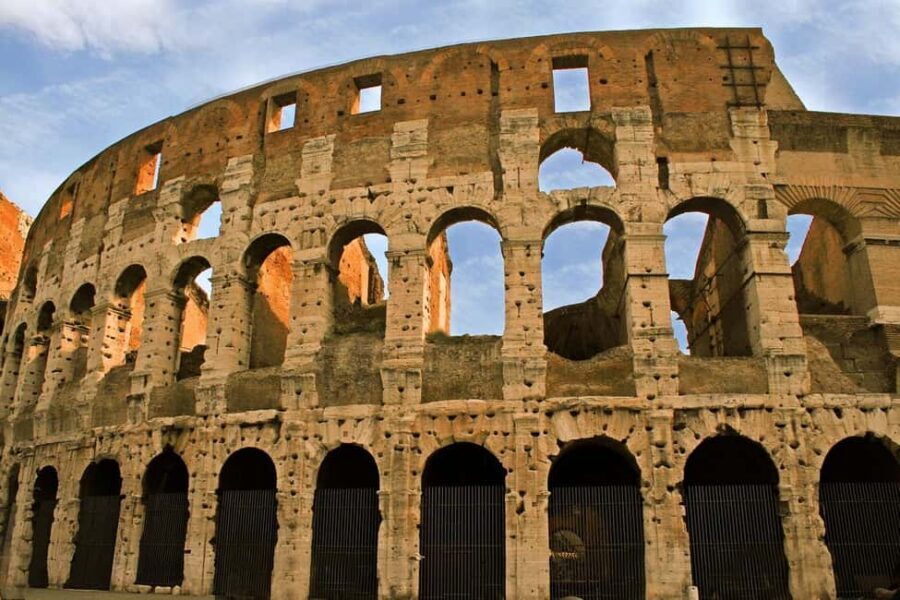
After the Colosseum, the route moves to Palatine Hill, traditionally linked with the earliest beginnings of Rome. If the Colosseum shows you power at spectacle scale, Palatine Hill shows you power at the family/legacy scale.
You’ll walk through an older settlement area that goes back to the 9th century BC, and you’ll also get a look at the Hippodrome, an elliptical sunken garden connected with the Palace of Domitian. Then the payoff: views over the Circus Maximus and down toward the Roman Forum valley.
The guide also ties in the legendary layer, including the story of Romulus and Remus—the brothers raised by a she-wolf and later battling for control. Whether you take the legend literally or as political mythmaking, it helps you understand why this hill became such a central stage for imperial identity.
One drawback at this stop: the terrain can be tiring. Palatine Hill is historic, but it isn’t designed for easy strolls. If you’re sensitive to stairs and uneven ground, pace yourself and plan for slower movement.



The Roman Forum on foot: temples, arches, and political drama
The final stop is the Roman Forum, which is basically Ancient Rome’s main worksite for politics, religion, and commerce. This is where the tour makes the transition from entertainment to governance feel natural.
You’ll walk among the remains of major landmarks, including:
- Temple of Julius Caesar
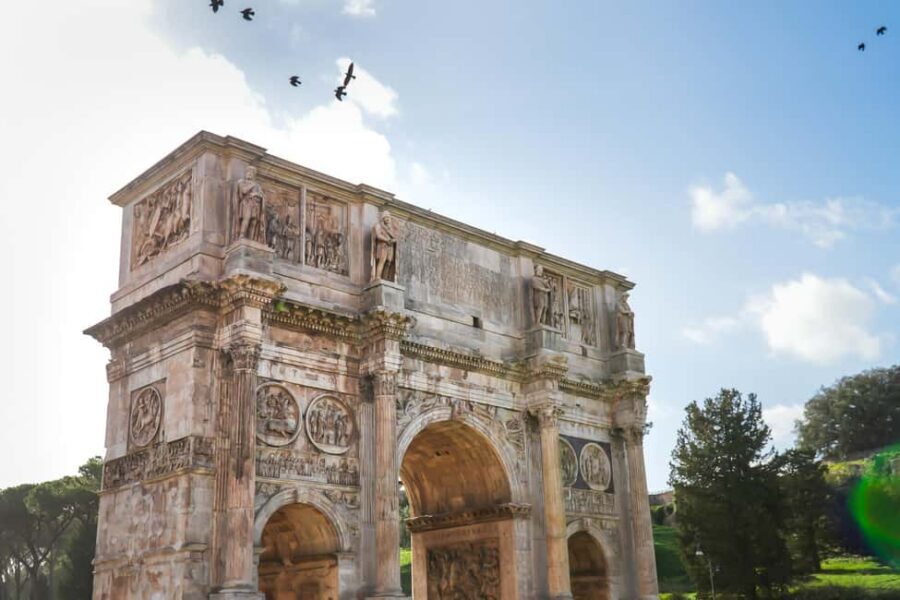
- Arch of Titus
- House of the Vestal Virgins
- Senate House
- Basilica of Maxentius
- The Sacred Way, described as a triumphal route tied to centurions marching after campaigns
This is also where the tour’s “context-first” approach shines. When you’re standing by an arch or temple, it’s easy to think of it as a random ruin. With the guide’s explanations, you start seeing how these places functioned together—processions, political authority, religious legitimacy, and economic activity woven into one walkable zone.
You’ll have about 45 minutes here, which is enough to hit the big names without turning it into a rushed blur. Still, remember you’re moving through a site where paths can be narrow, stones can be uneven, and crowds may bunch in key areas.
What the headsets and route design change for you
A headset/radio system is included for the guided option, which matters more than it sounds. Rome ruins can swallow sound, and crowds can make it hard to keep up visually. With the audio system, you can listen from a step or two back—helpful when you’re trying to catch the guide’s explanation without pushing into the densest cluster.
Route design is also part of the value. You’re not just dropping into the sites and figuring things out. The tour is built around a planned flow with time at key areas so you can absorb what you’re looking at.
Your itinerary order can vary depending on the day and site conditions, but the core experience stays the same: Colosseum first, then Palatine Hill, then Roman Forum (or a close variant). Either way, it’s a tight loop that keeps your attention on themes—spectacle, power, politics.
It’s also set up for questions. One of the strongest benefits of a guided format is that you can ask the “why was this built?” questions when you’re actually standing next to the evidence.
Pace, stairs, and practical tips that save your day
This tour asks for moderate physical fitness. It’s not described as a gentle walk, and real-world conditions at these sites can make everything feel steeper and more slippery than expected.
Here’s how to show up smart:
- Wear grippy shoes. The ground can be uneven and worn.
- Bring a layer. Even in good weather, the Colosseum area can feel cooler once you’re standing in shade.
- Expect long days of standing and stair steps. This isn’t a quick “see it and leave” stop.
- If rain hits, don’t panic. People report good experiences even in heavy rain, but you’ll need to handle cold and wet conditions carefully.
If you have mobility limits, walker problems, or anything that makes uneven terrain difficult, you should take the fitness requirements seriously. This tour isn’t presented as a smooth wheel-friendly route.
Price value: what $55.51 covers (and what you get back)
At $55.51 per person (about 2.5 hours), you’re paying for more than museum entry. The price includes:
- Colosseum admission (including a €18 per person ticket value and €2 reservation fee)
- Admission coverage for Palatine Hill and Roman Forum with tickets valid for 24 hours
- A group guided tour in English (or a private guided option in your selected language), with a headset/radio system
The remaining cost is stated to cover other services, not just the basic tickets. In plain terms: you’re paying for the combination of timing, route management, interpretation, and on-the-ground support.
Whether this is “good value” for you depends on your travel style:
- If you like structure and explanations while you walk, this price looks reasonable for what you’re getting.
- If you’re the type who enjoys going at your own pace and learning on your phone, you might find other formats cheaper. But you’ll give up the spoken context delivered on-site.
Either way, the key point is that the tour is built around timed-entry reality. That alone can be worth it on one of Rome’s toughest-to-navigate days.
Who should book this tour?
This fits best if you:
- Want to see the big three (Colosseum, Palatine Hill, Roman Forum) in one visit
- Like having a guide connect architecture to stories and mechanics
- Prefer a clear route over wandering in the wrong direction
- Enjoy asking questions as you go
It’s less ideal if you:
- Struggle with stairs and uneven ground
- Need fully accessible paths (this option is not presented as walker-friendly)
One more note: the tour can run with a maximum group size of 25, which helps it feel organized and still interactive.
Should you book this Colosseum–Forum–Palatine tour?
Yes, if you want a guided, structured Roman day and you’re comfortable with walking and stairs. The biggest payoff is how the guide frames each stop—Colosseum as an engineered spectacle, Palatine Hill as the origin-and-power viewpoint, and the Forum as where authority played out in real space.
Book this tour especially if you’re a first-timer or if you’ve tried wandering these sites before and found the names didn’t click. Having a plan plus headsets makes the whole experience feel sharper and less stressful.
FAQ
What sites are included in the tour?
You’ll visit the Colosseum, Palatine Hill, and the Roman Forum. Entrance is included for all options.
How long is the experience?
The guided experience runs about 2.5 hours (approx.). The duration is at least 2 hours and at most 3 hours depending on access time.
Is the Colosseum ticket timed-entry?
Yes. Colosseum access is strictly timed, and you must arrive for your scheduled slot due to site rules.
What language options are available?
The group guided tour is offered in English. There’s also a private guided option in the language selected. Audio-guided options are available in multiple languages.
Do I need a headset or special equipment?
For the guided tour, the option includes headsets and a radio system. If you choose the audio-guided self option, you’ll use your smartphone and download an app, and you’re advised to bring headphones.
Is this tour suitable for people with mobility or walking issues?
It’s described as requiring moderate physical fitness. It’s not accessible for walker users and isn’t recommended for people with walking problems.
What if it rains or the Colosseum closes parts of the site?
The itinerary may vary due to weather or events. The Colosseum administration can close the site or parts of it, and in that case an alternative itinerary may be offered with a partial refund.
If you want, tell me your travel dates and whether you’re booking guided or self audio-guided. I can help you pick the best option for your pace and how you like to learn at ancient sites.