REVIEW · ROME
Rome: Ostia Antica Tour From Rome
Book on GetYourGuide →Operated by Guided Tours E.D. · Bookable on GetYourGuide
Ostia Antica is Rome’s ancient port, minus the circus. This tour is interesting because you start with a guided train ride that helps you dodge morning congestion, then get two guided walks through one of Europe’s most important archaeology sites. I especially like the skip-the-line tickets (time is money in Rome), and I also love the small-group feel, where you’re not stuck watching the back of someone’s hat. One possible drawback: you still need to pay for the train tickets (€3), and you’re on your own for lunch during the short break.
You’ll see everyday Roman life in a place built for shipping, trade, and crowd entertainment: mosaics, bathhouses, temples, a theatre, and the main boulevard (Decumanus Maximus). Then, after the tour wraps, you can stay longer on site or ask your guide how to tack on the beach for the rest of your day.
In This Review
- Key things that make this tour worth your time
- Ostia Antica: What you’re really getting beyond Roman bragging rights
- Meeting at Piazzale Ostiense and riding the train the smart way
- First guided walk: mosaics, port-town daily life, and major public buildings
- Taking the break: where to pause, cool down, and regroup
- Second guided walk: Decumanus Maximus, the first firehouse, Forum, and the biggest baths
- After the tour: extending your day on site or adding the beach
- Price and value: is $77 a fair deal for a 4-hour Rome day trip?
- Who should book this Ostia Antica tour from Rome
- Should you book? My practical take
- FAQ
- How long is the Rome to Ostia Antica tour?
- Where do I meet the guide?
- Are skip-the-line tickets included?
- How much are the train tickets?
- Is the tour limited to a small group?
- What’s the schedule once you arrive at Ostia Antica?
- Is the tour wheelchair accessible?
- What should I wear and bring?
- Can I go to the beach after the tour?
Key things that make this tour worth your time
- Skip-the-line entry saves you from sitting around while other groups funnel in
- Train with your guide makes the morning easier and helps with getting tickets
- Small group of 12 or less keeps the experience friendly and questions practical
- Two guided blocks plus a break gives you time to pace yourself and see more
- Ending at the Forum and the largest bathhouse gives a strong finish point
- Optional beach plans afterward turns one historical day into a full outing
Ostia Antica: What you’re really getting beyond Roman bragging rights
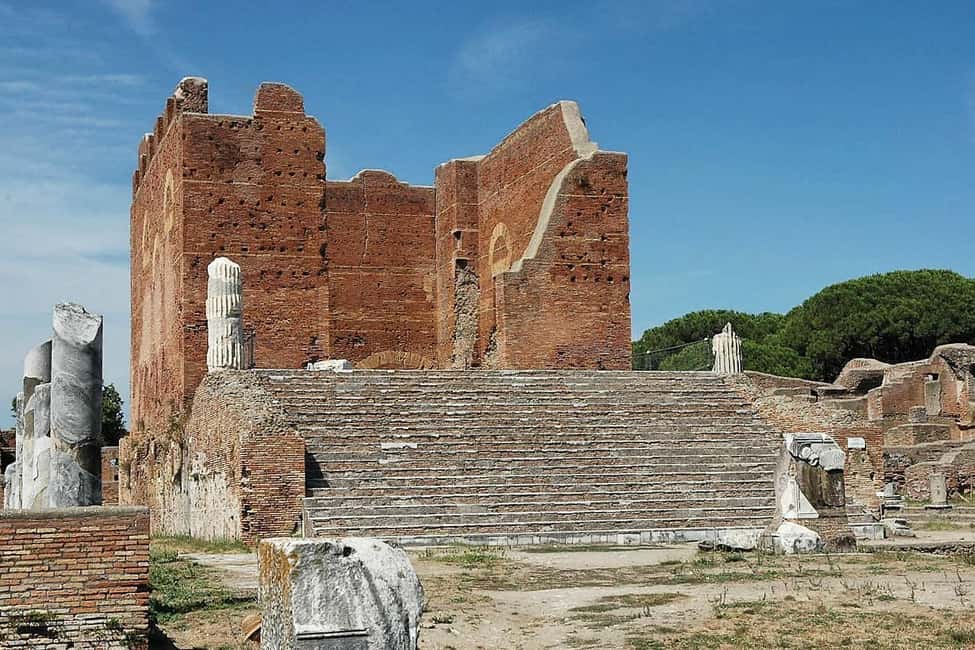
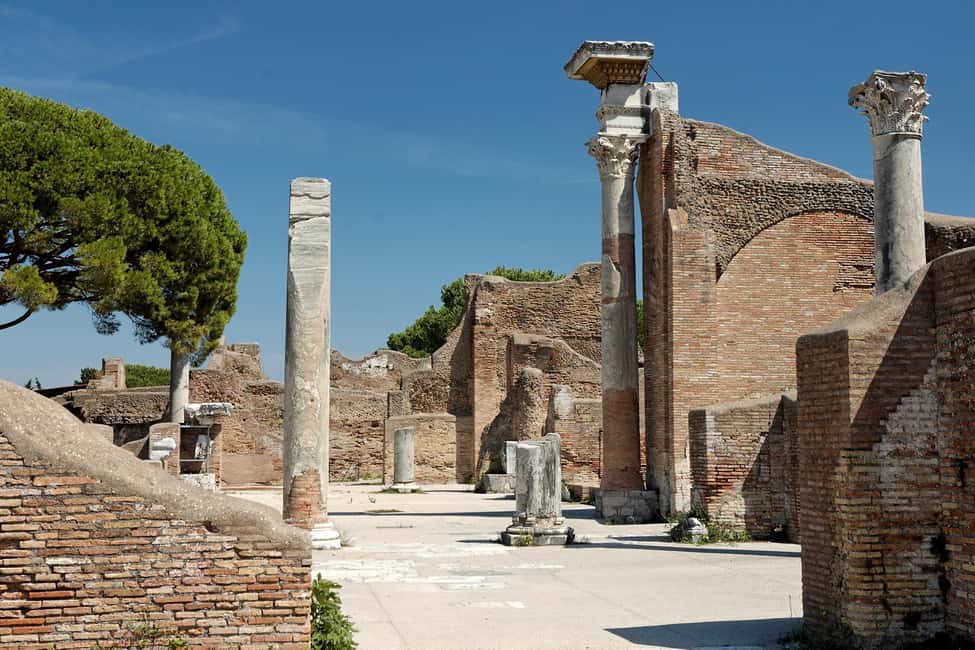
Ostia Antica is what happens when an empire runs a city like a machine. Not just grand temples. Real streets where merchants moved goods. Public buildings where people stayed clean, argued, and cooled off. The tour is built around that sense of a working town.
The best part for most people is the feeling of scale. Ostia Antica covers a lot of ground, and it’s arranged so you can connect the dots: homes and shop fronts, then public life, then infrastructure. You don’t just see ruins sitting there. You start understanding how the place functioned as a port hub 2,000 years ago—where commerce and movement were the whole point.
Guides often bring that to life with specific details. I’ve seen names like Joan, Rebecca, Camille, Sonia, Ali, and Andy come up repeatedly for turning buildings into stories you can actually picture: how streets connected the empire, why baths mattered to everyday life, and how public spaces were used. That’s the difference between seeing stones and understanding a city.
You can also read our reviews of more tours and experiences in Rome.



Meeting at Piazzale Ostiense and riding the train the smart way
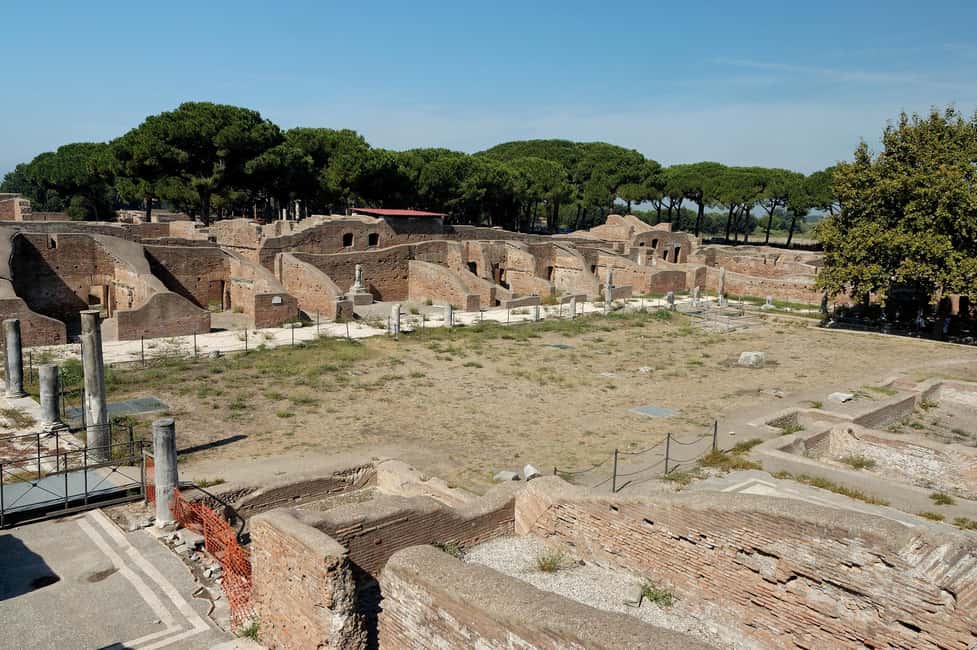
This tour starts at Piazzale Ostiense, 9, right outside the Piramide Metro station. Look near Café Piramide under the BAR T sign, and find the guide holding an E&D Tours sign.
You’ll take the train to Ostia Antica with your guide. The ride is about 25 minutes each way, and the big win is timing. The tour is designed so you’re heading out in a window that helps you avoid heavy morning traffic. Practically, it also means you’re not stuck figuring out transit right before you want to start walking.
One more small detail that matters: multiple guides are praised for making train logistics smoother, including helping you purchase train tickets. If you’re the type who likes to keep your day flowing without mental juggling, this setup is a plus.
First guided walk: mosaics, port-town daily life, and major public buildings
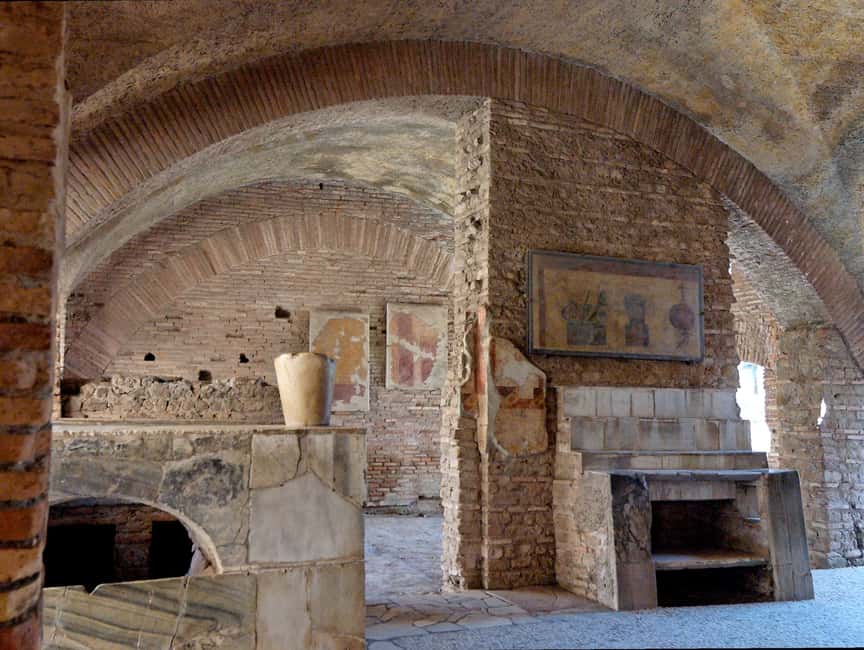
Your first guided segment runs about 1.5 hours. This is where you get the foundation. Instead of jumping straight to the biggest monuments, you build the picture of Ostia Antica as a lived-in city.
Expect stops that cover the kinds of places you’re used to seeing in Rome, but in a more readable form:
- marketplaces and shops (what people bought and sold)
- residential areas (how the city’s normal life was arranged)
- bathhouses and temples (public space that tells you what people valued)
You’ll also spend time looking at mosaic floors. That’s one of the signature features here because it shows wealth, trade connections, and everyday art at the same time. These aren’t just decorative. They help you understand the culture of the port town, where money and ideas traveled.
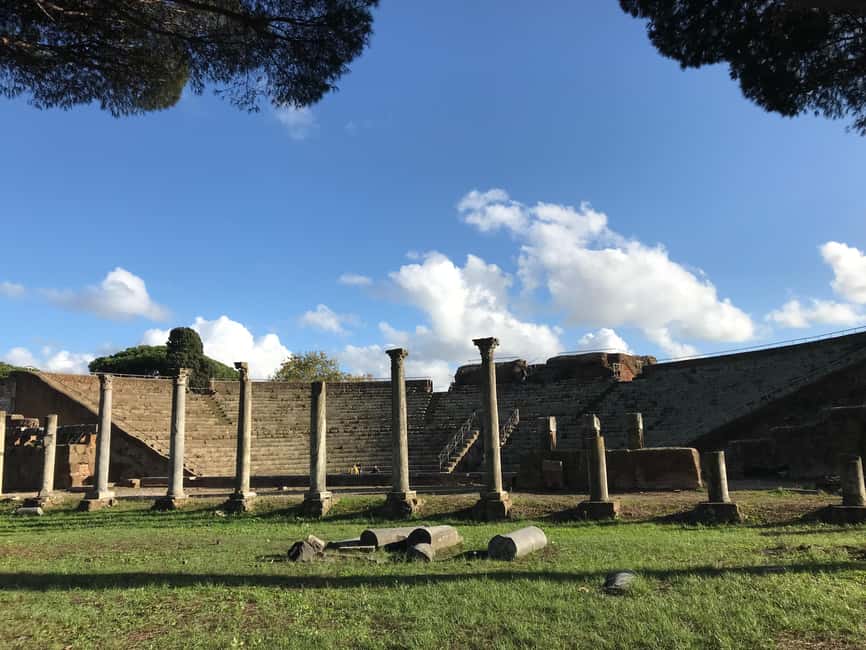
You’ll also move through key entertainment space, including an ancient theatre. It’s a reminder that Romans weren’t only building infrastructure—they also built stages for crowds. When a guide connects the theatre to the broader city rhythm, it helps the site feel like more than a museum.
The small-group pacing helps here. You’re not sprinting between stops, and you’re not forced into the thick of huge crowds. People often comment on how freely you can move through the ruins, and that’s a real quality-of-life factor in a place this large.
Taking the break: where to pause, cool down, and regroup
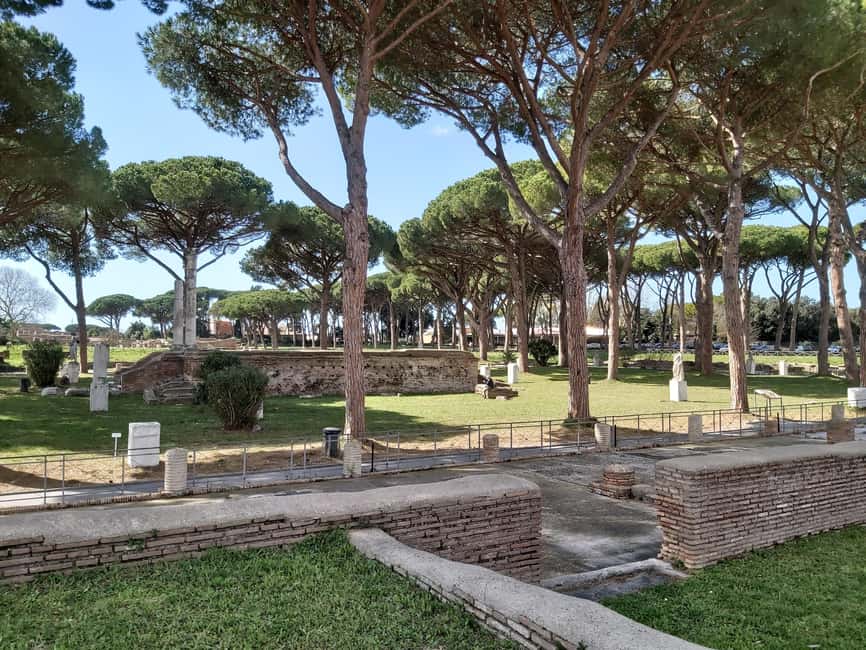
After the first 1.5 hours, you get a 20-minute break. This part matters because Ostia Antica can be sunny and spread out. A good tour doesn’t pretend everyone walks at the same speed, and multiple guide reports mention pacing and shade stops, especially on hotter days.
During the break, there’s a gift shop and a café in the park area, so you can grab a snack or a drink without wasting time. Even if you don’t buy anything, it’s a good moment to reset your legs and refuel your brain before the second guided walk.
Second guided walk: Decumanus Maximus, the first firehouse, Forum, and the biggest baths
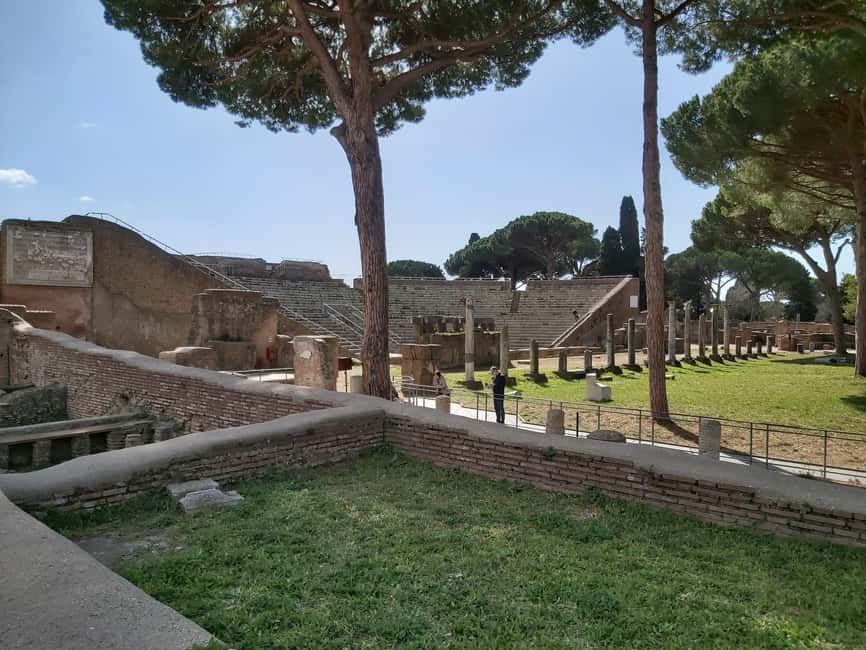
The second guided segment is another 1.5 hours, and it’s the part that feels like the site’s main story unfolding.
You’ll stroll down the main boulevard, Decumanus Maximus. This street is lined with tavernas and shops, which helps you visualize daily movement—people walking between work, leisure, and meals. It also makes the site feel more social, not just administrative.
Then comes one of the fun, practical details Ostia is known for: an ancient firehouse, described as the first recorded firehouse in the Western World. Even if you’re not a “history fact” person, this stop works because it turns the ruins into real-life planning. A city that large needed systems, and the firehouse is proof.
You’ll also get insight into infrastructure—how Roman roads connected parts of the empire for communication, commerce, and spreading culture. That theme matters because Ostia Antica isn’t isolated. It’s part of the network that fed Rome and kept ideas circulating.
The tour finishes at impressive ruins of the Forum and the largest bathhouse of Ostia Antica. Ending here is smart. You start by learning how the city lived, then you close with its civic and public-power spaces: the forum as a hub for public life, and the baths as a major social and daily routine.



After the tour: extending your day on site or adding the beach
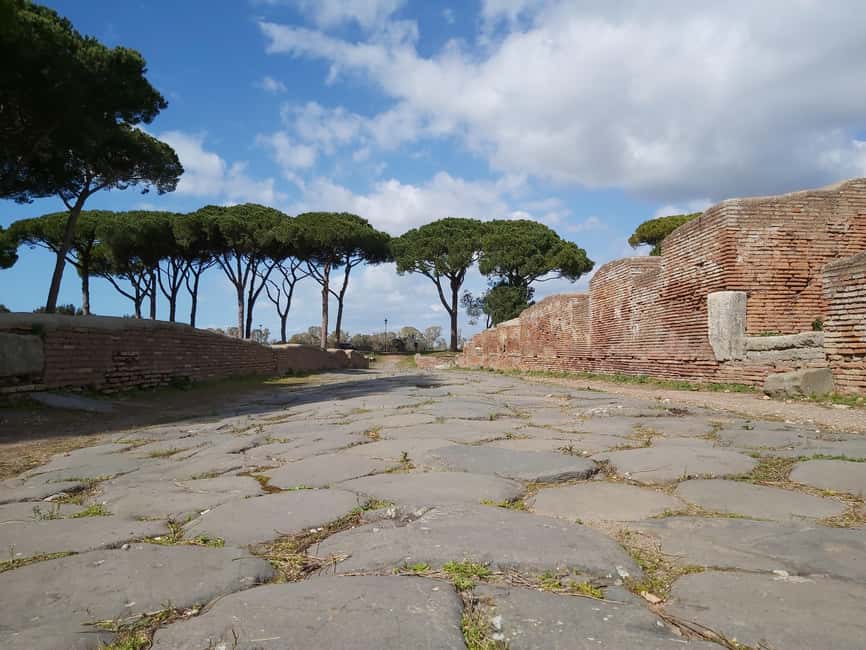
Once the guided portion ends, you have choices.
You can:
- stay on site and explore further on your own
- return to Rome with your guide
- ask your guide how to get to the beach and spend the rest of your day there
That flexibility is a big deal. Ostia Antica gives you enough to keep going if you’re enjoying it, but it also pairs nicely with a lighter afternoon plan. If you want a “history in the morning, seaside later” rhythm, this is one of the simplest ways to do it without forcing extra tours.
Price and value: is $77 a fair deal for a 4-hour Rome day trip?
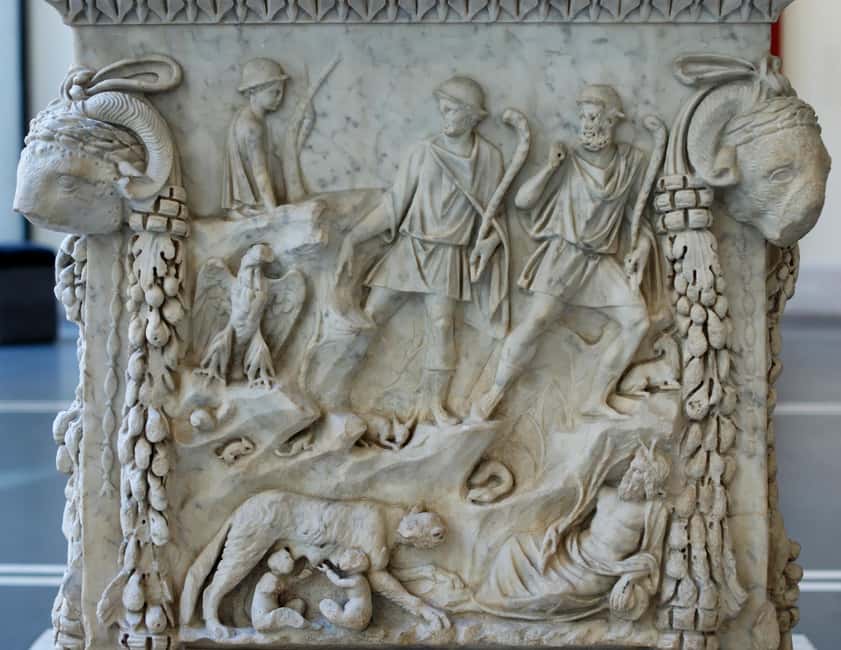
At about $77 per person for a 4-hour small-group tour, the value comes from what’s included and what’s not.
What you get:
- Skip-the-line admission tickets
- a live local guide
- a small group limited to 12 people
- the guided train ride (with the guide helping make it manageable)
- two guided blocks plus a break
What you pay extra for:
- train tickets (€3)
- pick-up/drop-off (not included)
- lunch during the break (at your own expense)
Is it overpriced? It depends on what you hate most. If you dread lines and like having someone else handle the pacing and key stops, skip-the-line entry and guide time justify the cost fast. If you’re trying to travel ultra-budget and also want to control food costs tightly, then yes, you’ll feel the add-ons.
Also, you’re not just buying access to ruins. You’re buying interpretation. A recurring theme in the guide feedback is how guides like Rebecca and Camille focus on clarity, enthusiasm, and making the “why” behind the ruins click. For many people, that’s the difference between a quick browse and an actually memorable visit.
Who should book this Ostia Antica tour from Rome
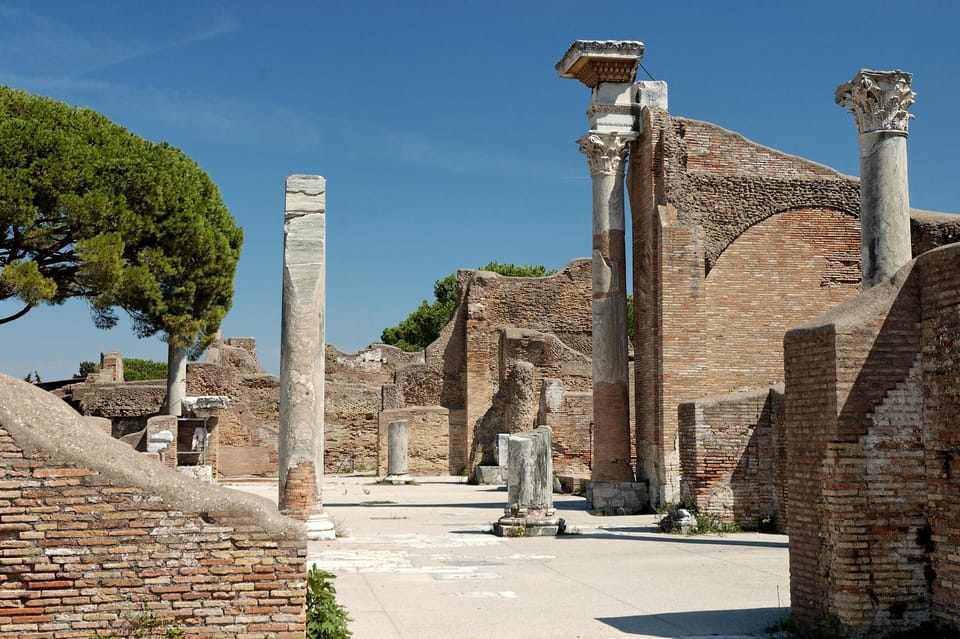
This tour is a strong fit if:
- you want a Roman history day trip that’s less chaotic than staying glued to central Rome all day
- you care about how the city worked (streets, baths, public spaces, infrastructure)
- you prefer small groups and clear guidance
- you’re traveling with kids and want a guide who can keep them engaged (there are reports about 9-year-old twins staying happy and attentive)
It’s not a fit if:
- you use a wheelchair, since it is not suitable for wheelchair users
And bring basics seriously:
- comfortable shoes (the site is spread out)
- water and weather-appropriate clothing, since the tour runs in all weather
- a plan for lunch, because the break is short and it’s on your own
Should you book? My practical take
Book this tour if you want an efficient, guided way to see Ostia Antica without wasting time on logistics. The combination of skip-the-line tickets, a small group, and a two-part guided route makes the most of a half-day window. If you’re also the type who likes to extend the day with a beach stop, the timing works well.
Skip it (or consider another format) if you hate paying for add-ons like the train ticket and you need more time for independent exploring. For pure flexibility, you might prefer a self-guided day and spend extra hours on your own pace. But for most people visiting Rome, this is one of the cleanest ways to get a lot of meaning out of a limited day.
FAQ
How long is the Rome to Ostia Antica tour?
The tour lasts about 4 hours.
Where do I meet the guide?
Meet at Piazzale Ostiense, 9, outside the Piramide Metro station near Café Piramide, under the BAR T sign. Your guide will be holding an E&D Tours sign.
Are skip-the-line tickets included?
Yes. Skip-the-line admission tickets are included.
How much are the train tickets?
Train tickets cost €3 and are not included.
Is the tour limited to a small group?
Yes. The group is limited to 12 people or less.
What’s the schedule once you arrive at Ostia Antica?
You’ll have about 1.5 hours guided, then a 20-minute break, then another 1.5 hours guided, with the day ending back at the meeting area.
Is the tour wheelchair accessible?
No. It is not suitable for wheelchair users.
What should I wear and bring?
Wear comfortable shoes and dress for the weather. The tour runs in all weather conditions. Water fountains are available for refilling your bottle.
Can I go to the beach after the tour?
Yes. After the tour you can ask your guide how to get to the beach, or stay on site longer, or return to Rome with the guide.