REVIEW · 3-HOUR EXPERIENCES
3-Hour Guided Tour of Splendid Rome by E-Bike
Book on Viator →Operated by BY E-BIKE TOUR · Bookable on Viator
Rome hits different from an e-bike.
This 3-hour guided ride stitches together Rome’s top landmarks with short, easy stops—Castel Sant’Angelo, St. Peter’s, Piazza Navona, the Pantheon, Trevi, Piazza del Popolo, and more—so you get the big moments without spending the whole day commuting on foot. I especially like the e-bike help for covering more ground, and I like that the route is built around practical photo time and short breaks (not long “stand and stare” sessions). One thing to consider: this experience depends on good weather, since you’ll be outside for most of the tour.
The vibe here is active but not punishing. You’ll start at Lungotevere delle Armi, 44, roll through some of Rome’s most famous views, then ride back to the same meeting point at the end. The group stays small (max 10), the tour is in English, and you get a mobile ticket, so you’re not scrambling for paper on the sidewalk.
In This Review
- Key Highlights You’ll Feel on This Route
- Getting Started at Lungotevere: Smooth, Small-Group Energy
- Why E-Bikes Work So Well for Rome’s “Best-of” Route
- Castel Sant’Angelo: 2,000 Years of Roman Reinvention
- Ponte Into the Vatican: Via della Conciliazione and St. Peter’s Energy
- Piazza Navona: Ancient Stadium Lines Under Baroque Fountains
- The Pantheon: When Geometry Does the Talking
- Via Sacra Moment: Walking the Street Caesar Would Recognize
- Trevi Fountain: Coins Are Fun, But Design Is the Real Hook
- Piazza del Popolo: The Empire Entrance and a Caravaggio Detour
- Pincio Terrace: One Stop for Views, Music, and That Sunset Setup
- Temple of Asclepius by Water: A Weird Roman Sight Worth the Pause
- Price and Value: Does $84.21 Make Sense for Three Hours?
- Who This Tour Suits Best
- Should You Book This 3-Hour E-Bike Rome Tour?
- FAQ
- How long is the 3-Hour Guided Tour of Splendid Rome by E-Bike?
- How much does the tour cost?
- What language is the tour offered in?
- Where do we meet and where does the tour end?
- What group size is it?
- Do I need a print ticket?
- What if the weather is bad?
Key Highlights You’ll Feel on This Route
- A fast, efficient route through major sights in about three hours, with built-in stop time for photos and quick rests
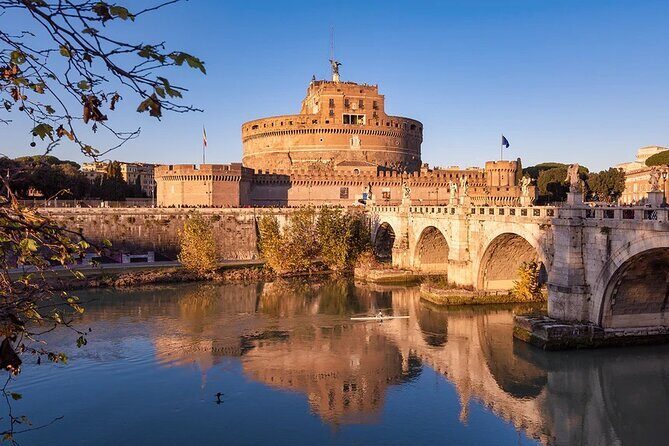
- Castel Sant’Angelo + Ponte degli Angeli for classic skyline photos from the outside
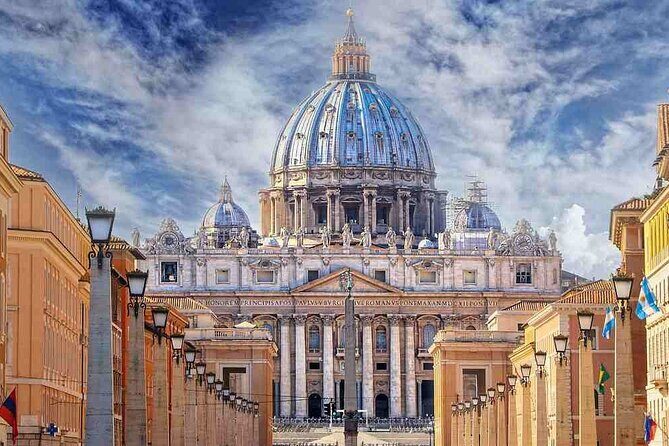
- St. Peter’s Basilica viewpoints plus a stroll along via della Conciliazione for a clean, camera-friendly approach
- Piazza Navona’s ancient stadium story tied to today’s Fountain of the Four Rivers
- Pantheon at Piazza della Rotonda with time focused on the building’s design and proportions
- Temple of Asclepius pond stop where you can choose to rent a rowboat or just enjoy the lake-side view
Getting Started at Lungotevere: Smooth, Small-Group Energy
Before anything dramatic happens, you need the basics right—and this tour starts with a clear meeting point on Lungotevere delle Armi (44). You’ll also appreciate that it’s near public transportation, because Rome can turn into a maze fast if you’re relying on taxis and last-minute wandering.
The group size is capped at 10, which matters more than people think. A smaller group means fewer awkward bottlenecks at photo stops and better guide attention if you’re unsure about where to position yourself or when to move on. It also keeps the tour from turning into a slow-moving parade.
Logistically, you’re using a mobile ticket. That’s one less thing to manage in a city where you may be juggling maps, water, and a phone battery that’s already working overtime.
You can also read our reviews of more cycling tours in Rome
Why E-Bikes Work So Well for Rome’s “Best-of” Route
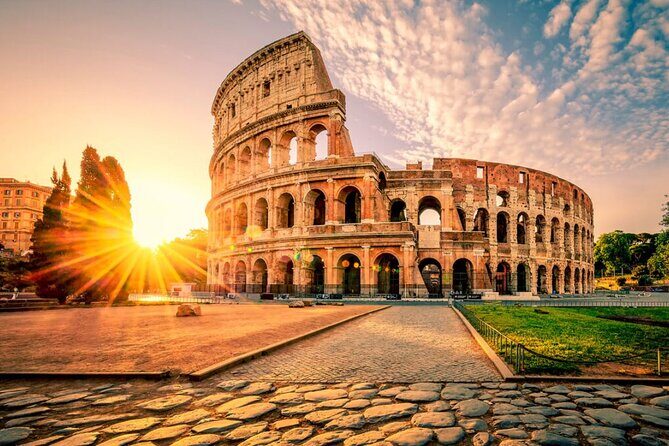
Rome can be a workout if you try to cram the highlights into one day. The good news here is that the ride uses e-bikes, which changes the whole rhythm of the sightseeing.
I like how this kind of route gives you the best of two worlds: you get the momentum of riding, but you still get time on foot where it counts—right in the middle of monuments, squares, and viewpoints. You’re not just “seeing” Rome from a distance. You’re getting those moments where you can look up, step closer, and actually read the place with your eyes.
And because the itinerary is built as a sequence of famous spots, you can think of it like a guided highlight reel you can pause. You’ll spend enough time at each location to feel oriented, not rushed—and you’ll still cover ground that would take you much longer by pure walking.
Castel Sant’Angelo: 2,000 Years of Roman Reinvention
The tour’s early stop sets the tone. Castel Sant’Angelo started as a sepulcher around 123 AD for Emperor Hadrian. That’s the fun part: the building isn’t stuck in one identity. It’s been transformed over time, yet it still tracks the fate and history of Rome across nearly two millennia.
You won’t go inside on this stop. Instead, you’ll see the imposing castle from the outside and walk along Ponte degli Angeli. That bridge is a photographer’s dream because it frames the castle with that straight-on, “you can’t unsee it” feeling.
There’s also a short pause among the quiet, well-kept gardens around the castle. That little pocket of calm is useful. It gives you a breather before the route turns into church-squares-photo-stops again. In a city that’s often loud, even a small garden stop helps you reset.
If you like architecture, this is a smart early anchor. Rome’s ruins can be powerful, but Castel Sant’Angelo shows the opposite: Roman power that kept evolving—and stayed monumental.
Ponte Into the Vatican: Via della Conciliazione and St. Peter’s Energy
Next up is St. Peter’s Basilica. This is the largest of Rome’s four papal basilicas, often described as the largest church in the world for both size and its central role in Catholic worship. Since it’s a papal chapel, it’s closely tied to the big ceremonial moments of the faith.
On this stop, you’ll admire the basilica’s majesty and take a short walk along via della Conciliazione—an impressive street that leads toward the Vatican City. It’s a great corridor for souvenir photos because you get long sightlines instead of the usual “everyone crowds the same corner” problem.
Practical note: while this tour includes the basilica area as a key visual moment, you’ll likely spend most of your time moving and positioning with the group. So if you’re the type who wants to linger and read every detail, keep your expectations realistic for a three-hour ride. Think of it as an orientation stop that makes the Vatican feel instantly more understandable.
Piazza Navona: Ancient Stadium Lines Under Baroque Fountains
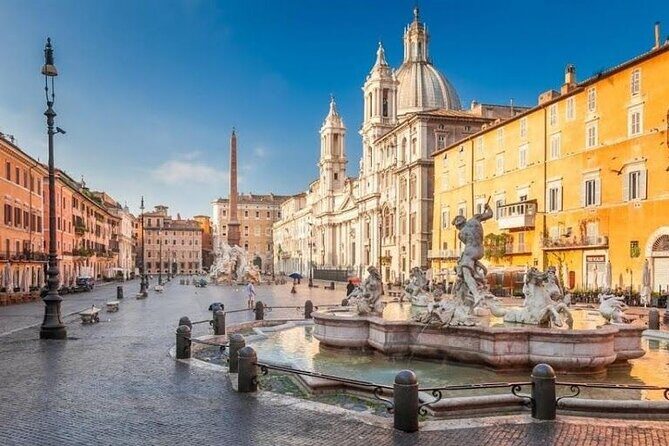
Piazza Navona looks like a postcard, but it has an older spine. In ancient Rome, it was a stadium built by Emperor Domitian—about 265 meters long and 106 meters wide, with capacity for 30,000 spectators. Today’s square keeps that sense of scale.
There’s also the name story: it was once called in Agone, linked to games and athletics competitions. The fountains once shaped how the space worked; the square was concave and water could flood the area when the fountain closures opened.
Your focus here includes time for Piazza Navona itself, plus the fountain ensemble. Fontana del Moro and Neptune sit near the big highlight: the Fountain of the Four Rivers, one of Italy’s most celebrated fountains. This is a stop where a guide helps more than you’d think. The place is famous, but without context, it’s easy to admire it like wallpaper.
You’ll also get time to see Church of Sant’Agnese in Agone, noted for preserving one of Rome’s most beautiful domes. Even if you don’t go inside, the dome matters—because it changes how you see the geometry of the square.
You can also read our reviews of more guided tours in Rome




The Pantheon: When Geometry Does the Talking
The Pantheon is one of the most impressive “still standing” monuments of Ancient Rome, and it’s often described as the best-preserved ancient building. Even if you’ve seen photos, being there in person makes a difference.
The tour’s approach is smart: you arrive in Piazza della Rotonda, right in the historic center, and then you have focused time to take in the harmony of the structure. The big idea is the geometry—how the masses are calculated to feel balanced. That balance is why architects from later eras keep treating the Pantheon like a reference point.
Here’s how I’d use your time if I were you: don’t just look at the facade. Spend a moment letting your eyes follow the proportions. Notice how it feels heavy and exact at the same time. Then, if the group pacing allows, take a step back and reset your perspective so you can see the whole building as one design.
This is also one of the best places to slow down, even briefly, because Rome’s noise drops off a bit when you’re staring at architecture that doesn’t care about modern crowds.
Via Sacra Moment: Walking the Street Caesar Would Recognize
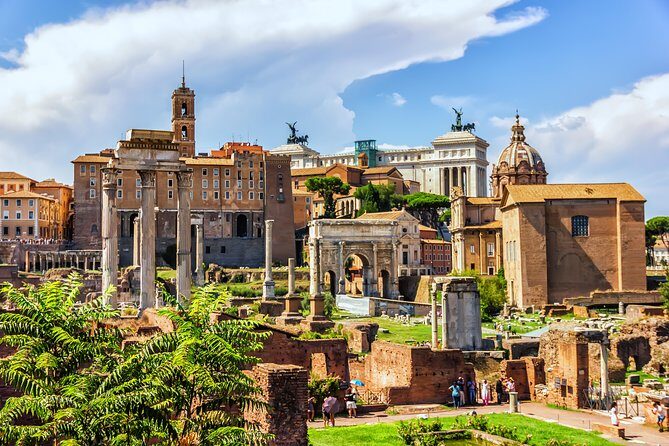
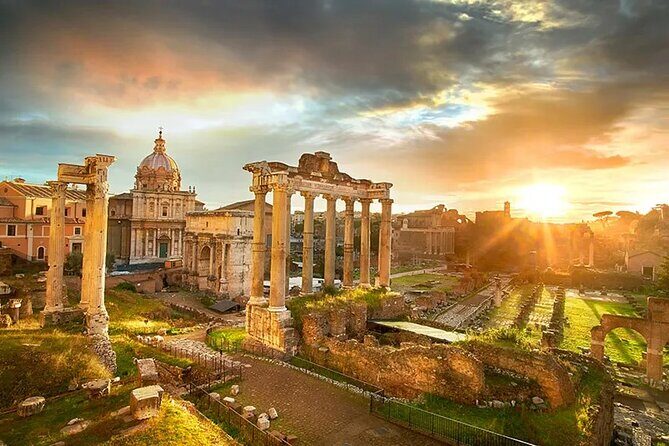
Then you get a very Rome move: you close your eyes and imagine the past while walking a street that still carries meaning. The route includes the Via Sacra experience—one of those classic ways of stepping into ancient Rome’s mindset.
The point isn’t to pretend you’re in Julius Caesar’s footsteps. It’s that Via Sacra gives you a physical “line” through time. You can sense the importance of the place because the street does what streets should do: it creates direction, movement, and perspective.
This is the stop that feels more emotional than checklist-driven. You’re not hunting for one object. You’re moving through the idea of how Rome performed power—public, visible, and walked into by people who knew they were watching something big happen.
Trevi Fountain: Coins Are Fun, But Design Is the Real Hook
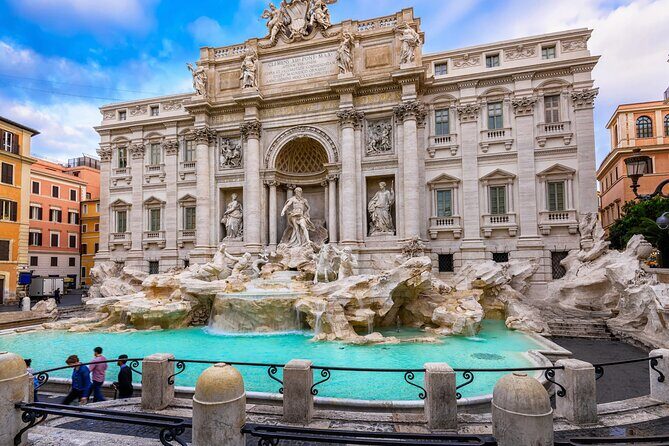
Trevi Fountain is where romance meets realism. It’s described as the most spectacular and largest fountain in Rome, about 20 meters wide and 26 meters high. That size isn’t just impressive—it makes the fountain hard to ignore, even from a distance.
The “why coins?” question is part of the classic folklore. The legend popularized in 1954 with the film Three Coins in the Fountain says:
- One coin: you’ll return to Rome
- Two coins: you’ll find love with an Italian
- Three coins: you’ll get married to the person you met
Sure, it’s playful. But I’d focus your attention on the reason Trevi keeps pulling people in: it’s a full composition. You’re not looking at one sculpture. You’re looking at an entire scene designed to pull you in from several angles.
You’ll have a set stop time here, with an admission ticket included. That matters because it helps structure how you spend time in a place that can otherwise feel like a chaotic waiting game.
Piazza del Popolo: The Empire Entrance and a Caravaggio Detour
Piazza del Popolo is one of Rome’s key squares because it was a major entrance to the city in Imperial times. Today, it still works as a crossroads: three important streets radiate out from the square. You’ll see Via del Babuino on the left, Via di Ripetta on the right, and Via del Corso straight ahead.
In the middle, there’s an Egyptian obelisk dating back to 1300 BC. Even if you don’t know everything about ancient Egyptian timelines, it helps to see how Rome absorbed and reused symbols.
The real reason many people aim for this stop, though, is Church of Santa Maria del Popolo. It’s where you can contemplate two remarkable paintings by Caravaggio, plus interesting Renaissance works. Even if you only get some exterior or quick interior time depending on the group pace, the takeaway is clear: this square isn’t just scenic. It’s a cultural pivot point.
If you like art, this is the kind of stop that makes the route feel smarter than just “pretty squares.” It connects Roman layout to Roman taste.
Pincio Terrace: One Stop for Views, Music, and That Sunset Setup
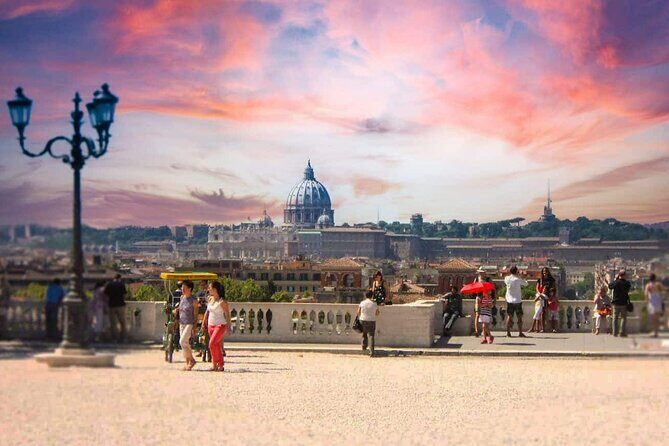
Passeggiata del Pincio is the kind of stop you understand instantly once you arrive. It’s a panoramic terrace above Piazza del Popolo, with views over Rome’s rooftops.
This is also where the idea of a St. Peter’s sunset becomes practical. You can see the dome of St. Peter as the star of the view from here. That’s a rare thing in Rome—so many viewpoints point at monuments, but not all of them arrange a clean visual story.
You’ll also notice street artists and a more relaxed atmosphere here, with music often in the background. In a short guided schedule, this stop is valuable because it gives you emotional payoff. It’s not about checking the next monument. It’s about letting the city breathe.
There’s an included ticket with this stop, which helps manage time so you can actually enjoy the view rather than just passing through.
Temple of Asclepius by Water: A Weird Roman Sight Worth the Pause
Finally, the route heads to a monument that feels different from the others: the Temple of Asclepius. What makes it special is its setting. To see it up close, you can rent a rowboat to navigate the pond in front of the temple.
You don’t have to rent the boat. You can still approach the lake area, take photos, and enjoy the view without going on the water. The choice is yours depending on time, comfort, and group pacing.
This stop is a great reminder that Rome isn’t only marble and churches. It also has strange, specific spaces—ritual places and architectural moments that don’t look like they belong in a single genre.
It’s also a good way to end the tour because you get a shift in scenery. After fountains, basilicas, and grand squares, the pond and temple create a calmer, more cinematic finale.
Price and Value: Does $84.21 Make Sense for Three Hours?
At $84.21 per person for about three hours, the question isn’t whether it’s cheap. It’s whether it’s focused.
Here’s the value angle that matters: e-bikes compress travel time and reduce fatigue, so you can enjoy stops that would take longer to reach on foot. A small group (max 10) adds value too, because it keeps the experience personal and helps the guide keep everyone moving efficiently.
You also get meaningful time at a long list of high-demand sights: Castel Sant’Angelo, St. Peter’s, Piazza Navona, the Pantheon, Trevi, Piazza del Popolo, Pincio, and the Temple of Asclepius. For Rome, that’s the kind of coverage most visitors struggle to pull off in half a day without rushing.
One more value point: some stops come with admission tickets included. That takes friction out of your planning and prevents you from spending time figuring out entry logistics on the fly.
If you’re the type who likes a structured route but still wants breaks to absorb what you’re seeing, this price is reasonable for the time you save and the way the tour organizes your day.
Who This Tour Suits Best
This tour fits best if you want Rome’s greatest hits without turning your legs into noodles.
- You’ll probably enjoy it if you’re short on time and want a coherent route.
- You’ll also like it if you want photo moments with enough guidance to actually find good angles.
- It’s a good pick for families and people of different ages, especially because e-bikes make the ride less tiring.
- If you’re a museum purist who wants long, slow interior time at every site, you might feel the pacing is quick. This tour is built for movement and key stops, not deep, hour-long soaking.
One last personal-style note: I like that the guiding approach seems to focus on keeping you on track and answering questions, with guides such as Omar noted for being attentive and detail-focused.
Should You Book This 3-Hour E-Bike Rome Tour?
Book it if you want an efficient, guided “Rome highlights” route that still gives you time to feel the city—especially if you’d rather ride than fight through distance on foot.
Skip it (or adjust expectations) if you need lots of slow, unstructured free time, or if you’re determined to do long interior visits at every stop. This is a paced, three-hour tour. It’s meant to orient you, impress you, and keep you moving.
If you’re traveling in good weather, this is a smart way to get a lot of Rome into one morning or afternoon without burning your whole day.
FAQ
How long is the 3-Hour Guided Tour of Splendid Rome by E-Bike?
It runs for about 3 hours.
How much does the tour cost?
The price is $84.21 per person.
What language is the tour offered in?
The tour is offered in English.
Where do we meet and where does the tour end?
The meeting point is Lungotevere delle Armi, 44, 00195 Roma RM, Italy, and the tour ends back at the same meeting point.
What group size is it?
The tour has a maximum of 10 travelers.
Do I need a print ticket?
No. You’ll use a mobile ticket.
What if the weather is bad?
The experience requires good weather. If it’s canceled due to poor weather, you’ll be offered a different date or a full refund.