REVIEW · COLOSSEUM TOURS
Best Colosseum, Palatine Hill and Roman Forum Guided Tour
Book on Viator →Operated by Vatican Guided Tours · Bookable on Viator
Rome’s ruins go fast.
This express guided tour strings together the Colosseum, Palatine Hill, and the Roman Forum in about 2.5 hours, with an official guide trained in art history and archaeology. I like how the Colosseum visit isn’t just looking—it’s learning the machines, tactics, and construction that made the arena work, with audio headsets so you can keep moving without losing the story.
You’ll also get viewpoints from the first and second tiers and then drop into the Forum and Palatine Hill for clearer context about daily life in ancient Rome. One thing to keep in mind: this is a lot of walking in a short window, and big sites like the Colosseum can still bring occasional delays due to capacity limits and security screening.
In This Review
- Key Highlights You’ll Feel During This Tour
- Price and What You Actually Get for It
- Meeting Point, Timing, and Getting Into the Colosseum Smoothly
- Stop 1: The Colosseum Arena and First-Time-Visitor Clarity
- What you’ll focus on inside
- Views you can use for photos
- A small consideration
- Stop 1 Bonus: Why an Art + Archaeology Guide Works Here
- Stop 2: Palatine Hill for the Older Rome Story
- What makes Palatine Hill special on this tour
- The one drawback to plan for
- Stop 3: Roman Forum Landmarks and the Power Grid of Ancient Rome
- What you learn when someone frames the ruins
- Time reality
- The Guides: What You Should Expect From the Human Part
- Pacing and Group Size: The Express Tour Advantage
- Weather, Closures, and How Flexible This Tour Really Is
- Who This Tour Is Best For (And Who Might Want Something Different)
- Should You Book This Colosseum, Palatine Hill, and Roman Forum Express Tour?
- FAQ
- How long is the Best Colosseum, Palatine Hill and Roman Forum guided tour?
- What does the tour include?
- Is the Colosseum ticket included in the price?
- Do I need to bring ID for entry?
- What time do I need to meet the group?
- Are headsets provided?
- Is this tour suitable for children?
- What physical requirements should I expect?
- What items are not allowed inside the Colosseum?
- Is the booking refundable or changeable?
Key Highlights You’ll Feel During This Tour
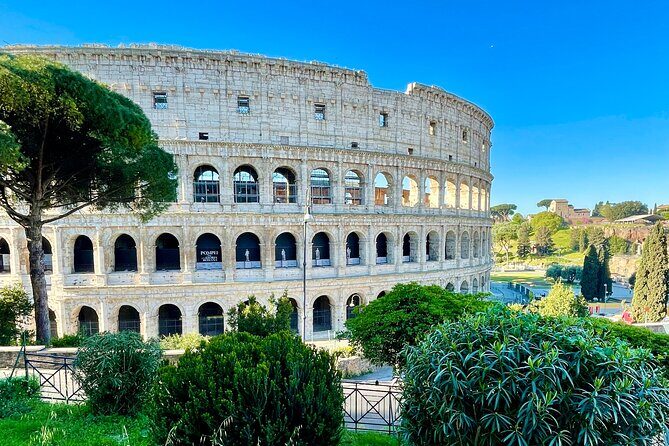
- Art-history and archaeology focus that turns stone and gaps into a real sense of how Rome worked
- Colosseum arena mechanics explained, including trapdoors and the systems behind the spectacle
- Tier-to-tier views from the first and second levels for photos that actually show scale
- Palatine Hill context first, starting with earlier settlement layers and the Domitian-era Hippodrome area
- Roman Forum sweep with named landmarks, from the Temple of Julius Caesar to the Arch of Titus
- Headsets/radios that help you hear clearly while the group keeps a steady pace
Price and What You Actually Get for It
At $30.85 per person, this is an affordable way to cover three big Roman icons without turning your day into an all-day shuffle. The pricing is especially reasonable once you understand what’s included: Colosseum admission (valued at €18) plus a reservation fee (valued at €2), and the rest of what you pay goes to the official guiding service and coordination.
The real value isn’t just speed—it’s interpretation. The Colosseum is massive, confusing, and full of details your eye won’t catch unless someone points them out. With a guide who works from an art-history and archaeology background, you get the “why this matters” behind the visuals: how games were staged, how engineering solved problems, and what different structures in the Forum meant for power and daily life.
You can also read our reviews of more guided tours in Rome



Meeting Point, Timing, and Getting Into the Colosseum Smoothly

You start at Via delle Terme di Tito, 72 (near public transportation). Plan to arrive with buffer, because there’s a mandatory meeting time set for 20 minutes before departure to manage entry and organization. If you’re late, you can miss the rhythm that keeps an express tour from turning into a waiting game.
Also note that entry into the Colosseum involves group ticketing, not individual tickets you can just use on your own. Add security screening and the list of forbidden items (no bottles or glass containers, no alcoholic drinks or aerosols, and backpacks/bulky bags have restrictions), and you’ll want to travel light. If you carry a small backpack, it may be allowed but still needs inspection and checks.
One practical heads-up: the Colosseum has a capacity limit, and pre-booked visitors can still experience delays if it gets crowded. That doesn’t cancel your tour, but it can slow the start a bit.
Stop 1: The Colosseum Arena and First-Time-Visitor Clarity
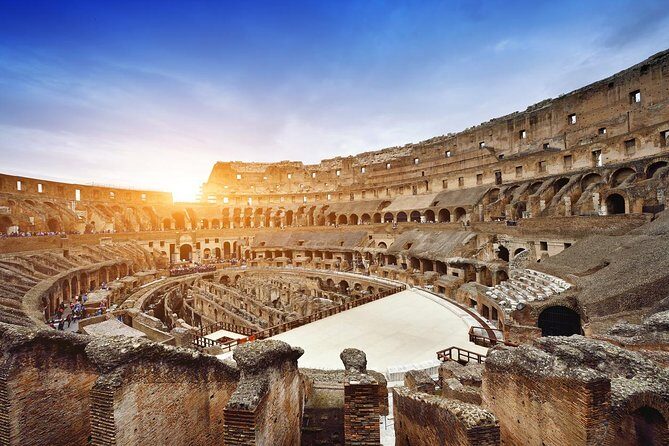
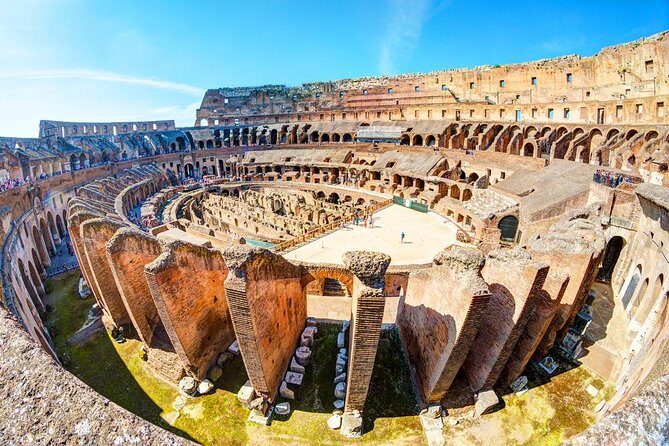
This is where the tour earns its keep. You don’t spend your time just staring up at walls. You’re guided around the first tiers, with time at the arena level so you can understand what’s happening in three dimensions.
What you’ll focus on inside
A good Colosseum tour makes you grasp that it was built to run performances like a machine. Expect stories and explanations about:
- The history of the amphitheatre and the kinds of spectacles it hosted
- Roman construction techniques and the engineering logic behind them
- Gladiator preparation spaces and the behind-the-scenes staging
- The arena’s trapdoors and mechanisms, and how they helped animate the games
- The logistics that made fights possible, including animal-holding areas and the technology used to run large events
The guide pacing helps here. You’re able to walk the tiers, then connect what you see to how the spectacle operated. If you’ve been to a modern stadium, you’ll recognize the pattern—just with far more grit and bloodless engineering pride.
Views you can use for photos
The included time on the first and second tiers gives you an angle that most “quick pass” tours miss. Even if photos aren’t your main mission, you’ll get a better sense of scale: the seating levels, where the crowd would have been, and why the sightlines mattered.



A small consideration
The Colosseum can be crowded and cool weather doesn’t always help—one review mentioned a rainy, cold day with big crowds. The takeaway for you: dress for the weather, bring a plan for traction on wet surfaces, and keep expectations flexible if crowds affect entry pacing.
Stop 1 Bonus: Why an Art + Archaeology Guide Works Here
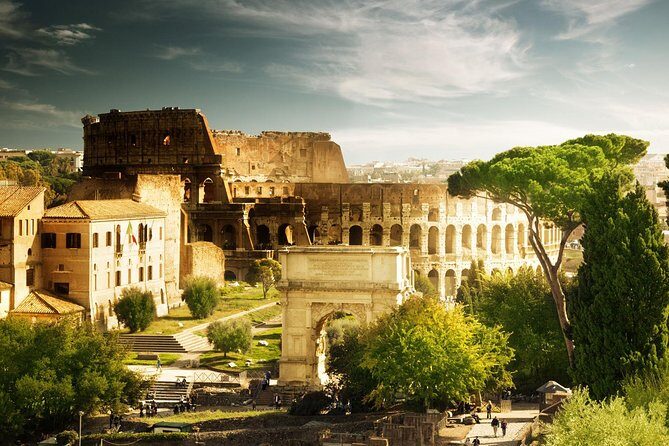
The Colosseum isn’t just a dramatic landmark. It’s a case study in Roman problem-solving. With a guide trained in art history and archaeology, you’re more likely to notice:
- how materials and structure served the building’s function
- why certain features existed even if they look broken today
- how symbolism and spectacle reinforced political power
If you like your sightseeing with a strong sense of cause-and-effect, this style of guiding pays off fast.
Stop 2: Palatine Hill for the Older Rome Story
After the Colosseum, the tour shifts from Roman spectacle to Roman origins. Palatine Hill is the place where the city’s layers start feeling real. You’ll walk through areas tied to early settlement history, including older settlements dating back to the 9th century BC.
What makes Palatine Hill special on this tour
This stop includes several named elements that help you visualize the city’s evolution:
- The Hippodrome, described as an elliptical sunken garden linked to the Palace of Domitian
- A strong outlook over Circus Maximus and down into the valley of the Roman Forum
- The legend connection to Romulus and Remus, the brothers raised by a she-wolf, and their later conflict for control
That combination—early settlement, imperial-era structures, and myth—gives you a bigger mental map. You’re not just walking ruins. You’re connecting Rome’s story across time.
The one drawback to plan for
Palatine Hill is walk-and-stand terrain. If your body hates uneven stones or long stretches, this is where you’ll feel it. The tour is designed for moderate physical fitness, but it’s still a compact route. Bring good shoes and expect your calves to do most of the talking.
Stop 3: Roman Forum Landmarks and the Power Grid of Ancient Rome
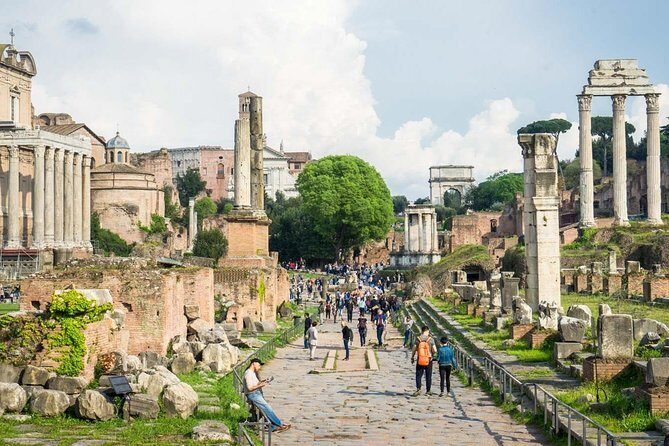
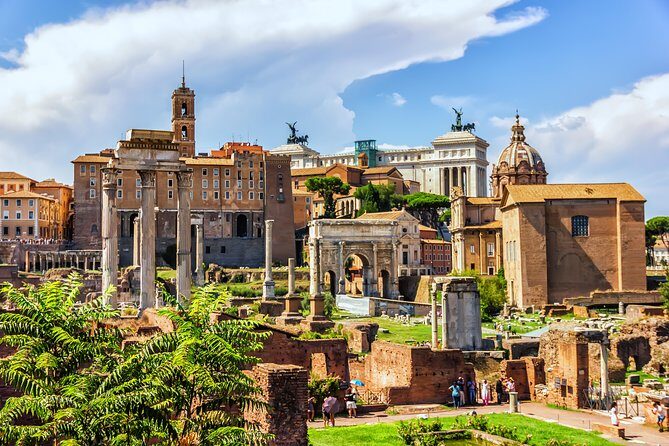
The Roman Forum is where Rome’s politics and public life were staged. You finish with an area filled with recognizable names and major structures, including:
- Temple of Julius Caesar
- Arch of Titus
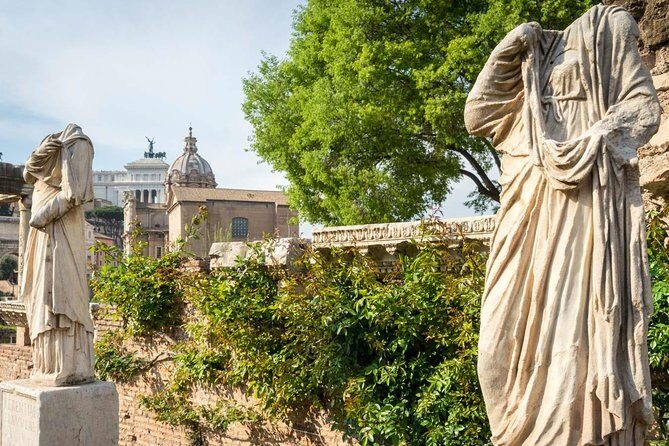
- House of the Vestal Virgins
- Senate House
- Basilica of Maxentius
You’ll also walk the Sacred Way, described as the triumphal road where the Centurions of Caesar marched after return from battles and conquests.
What you learn when someone frames the ruins
The Forum can feel like a pile of old buildings until someone connects the dots for you. Here, you get that sense of how public spaces operated:
- where authority was displayed
- where ceremonial movement mattered
- how religious and civic functions sat close enough to reinforce each other
It’s a strong way to end the tour because you leave with a mental model of Rome as a living system—not just a museum of monuments.
Time reality
This stop runs about 45 minutes. It’s enough to see key structures and understand the big themes, but not enough for a slow, deep architectural study. If you want to linger on one building for 30 minutes, this might feel fast. Still, for an express introduction, it’s an efficient and well-matched finale.
The Guides: What You Should Expect From the Human Part
One of the most praised aspects is the guide delivery—clear explanations, good pacing, and the ability to keep people engaged even with crowds. Specific names come up in the experience notes, including Katerina and Catarina, both described as pleasant and easy to understand.
You’ll also benefit from the sound system. Radios and earphones are provided to amplify the guide’s voice, and the setup is designed to help you hear while you walk. In real terms: you can keep up without constantly turning your head like a meerkat.
Pacing and Group Size: The Express Tour Advantage
This tour lasts about 2 hours 30 minutes, give or take 20–30 minutes depending on organizational flow. The structure is simple:
- Colosseum first (about 1 hour)
- Palatine Hill next (about 45 minutes)
- Roman Forum last (about 45 minutes)
That means you’re getting the “big three” in one run, rather than spending your limited time chaining together multiple tickets and meeting points. It also tends to work best when you’re okay with a steady pace and you want your guide to do the heavy lifting of making sense of the ruins.
A practical bonus: the smaller size helps. It’s capped (the details list a maximum of 25 travelers), which usually makes questions easier to fit in and keeps the group manageable through entrances and narrow paths.
Weather, Closures, and How Flexible This Tour Really Is
Rome can change its mind quickly. Weather can affect timing, with the tour noting possible variation due to rain, ice, or heat.
There’s also the reality that the Colosseum can close parts of the site for events, strikes, heavy rain, or other reasons. If that happens, the operator can offer an alternative itinerary and a partial refund. That flexibility is important, because you’re dealing with a site with real-world constraints, not a controlled museum.
Who This Tour Is Best For (And Who Might Want Something Different)
This one is a strong fit if:
- it’s your first time in Rome and you want high-impact context fast
- you like tours where the guide explains how things worked, not just what you’re looking at
- you want good views from the Colosseum tiers without buying extra experiences
- you’re traveling with teens or family members who can handle a couple hours of active walking
You might choose something else if:
- you plan to spend the rest of your trip doing deep archaeological study at a slow pace
- you have very limited mobility or specific health constraints (the tour notes it’s not recommended for people with motor lag)
- you expect a relaxed sit-down pace with minimal walking
Should You Book This Colosseum, Palatine Hill, and Roman Forum Express Tour?
Yes, you should consider booking if you want a time-efficient, guide-led run through Rome’s most iconic ancient sites, with headsets that keep you connected to the story as you move. The value is strong because admission and reservation costs are built in, and the guide focus turns the Colosseum and Forum into something you can actually understand, not just admire from a distance.
Book it especially if you’re the type of traveler who likes your sightseeing with clear structure: Colosseum mechanics first, origins on Palatine Hill second, and the political/public-life map of the Forum to close it out. Just don’t ignore the walking and meeting-time details—this tour works best when you show up early and travel light for security.
FAQ
How long is the Best Colosseum, Palatine Hill and Roman Forum guided tour?
The tour runs about 2 hours 30 minutes (approx.). There can be timing variation of about 20–30 minutes due to organizational reasons.
What does the tour include?
You get a guided visit to the Colosseum, Palatine Hill, and the Roman Forum. A guide is provided for the full time, plus audio headsets/radios.
Is the Colosseum ticket included in the price?
Yes. The Colosseum entrance ticket and the Colosseum reservation fee are included (ticket valued at €18 per person, reservation fee valued at €2 per person).
Do I need to bring ID for entry?
Yes. You’ll need a valid passport or ID document that matches the name provided when booking. If the voucher doesn’t include full traveler names matching ticket office records prior to entry, entry may be denied.
What time do I need to meet the group?
You must meet at the mandatory meeting time set by the operator, which is 20 minutes before the scheduled departure time.
Are headsets provided?
Yes. Radios and earphones amplify the guide’s voice (noted as provided for groups over 8 people), so you can follow the tour while walking.
Is this tour suitable for children?
Children must be accompanied by an adult. A child discount is applied only with a valid ID card.
What physical requirements should I expect?
You should have a moderate physical fitness level. The tour involves walking through all three areas.
What items are not allowed inside the Colosseum?
Forbidden items include bottles and glass containers, alcoholic beverages and aerosols, and backpacks or bulky bags/luggage/trolleys. Medium and small size backpacks may be allowed to shoulder but must be checked with metal detectors and inspected.
Is the booking refundable or changeable?
This experience is non-refundable and cannot be changed for any reason. Requests to cancel or amend aren’t eligible for refunds.