REVIEW · POMPEII
2 Hours Pompeii Group Tour with Archaeologist Guide and Skip the Line
Book on Viator →Operated by ELIANA SANDRETTI · Bookable on Viator
Few places feel this alive.
This 2-hour Pompeii group tour is built for focus: you get a tight run through the main attractions with a specialized archaeological guide and an actual archaeologist-guide experience in English. Two things I really like are the small group size (max 15) and the way the stops are paced so you’re not stuck in Pompeii’s open-air maze for hours. One consideration: since it’s only about 2 hours, you’ll be seeing highlights, not everything.
You’ll also save real time at the start.
Skip the line is included for purchasing your tickets on site, and the meeting point is easy to find at the main entrance of Ristorante Suisse in Piazza Esedra. For me, the value is that the ticket office line is one of those annoying bottlenecks—this tour tries to remove it—while still giving you a guided route. The trade-off is the entrance ticket itself is not included, so you’ll still need to budget for that before you enter.
I especially like how human the route feels.
The tour touches gladiators, laundry work at a fullonica, public temples, theaters, and then lands in everyday life with a luxury house (Casa del Menandro), baths, markets, and the street of shops. You’ll also see the famous Lupanar with its original frescoes, so the experience doesn’t stay polite or only “pretty ruins.” Keep in mind that you’ll be moving at a comfortable walking pace across a compact set of sites, so plan for some outdoor time and sun.
In This Review
- Key highlights
- Why 2 hours in Pompeii makes sense
- Start at Ristorante Suisse: finding your guide fast
- Gladiators and laundry work: Vicolo di Gladiatori and Fullonica di Stephanus
- The forum temples and a theater warm-up: Jupiter, Odeon, and the smaller stage
- Teatro Grande and performance spaces you can still read
- Casa del Menandro: luxury life in a compact visit
- Lupanar and Temple of Venus: the city isn’t always polite
- Basilica, shops, and the market: where everyday business happened
- Stabian Baths and Pompeii 3D: seeing routines, not just ruins
- Price and what you really pay for ($132.03 plus the ticket)
- Who should book, and when this tour is a smart match
- Should you book this Pompeii skip-the-line group tour?
- FAQ
- How long is the Pompeii group tour?
- Is the tour in English?
- Does the price include skip-the-line ticket purchase?
- Is the entrance ticket included in the price?
- What documents do minors need for free entry?
- Where is the meeting point?
- How big is the group?
- Does the tour end back at the meeting point?
- Is good weather required?
Key highlights
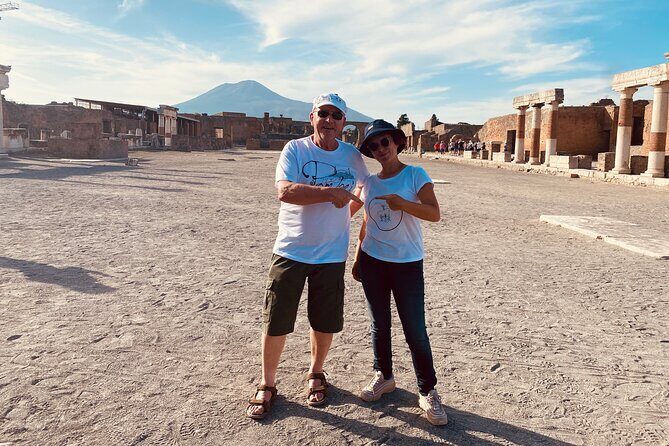
- Skip-the-line ticket purchase helps you bypass the long queue at the ticket office
- Small group (max 15) keeps questions possible and avoids the crush
- Archaeologist guide + English tour for clear context at major Pompeii sights
- A stop at the Lupanar with original frescoes and a frank look at daily life
- Stabian Baths and Pompeii 3D add visual ways to picture routines and people
- A classic Pompeii sweep: gladiators, temples, theaters, homes, forum areas, markets
Why 2 hours in Pompeii makes sense
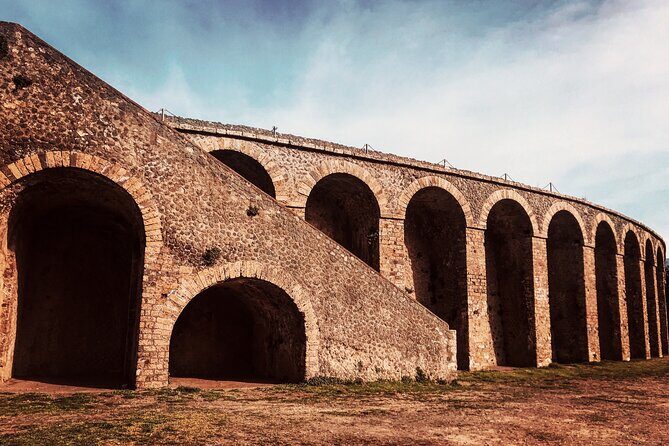
Pompeii is big, and a short visit is where good planning matters. This tour lasts about 2 hours and is designed to hit the site’s headline areas without turning your day into a long trek of “I’ll figure it out later.”
I like that the route is structured like a story you can follow. You start with places tied to action and work (gladiators, laundry), then move into the public face of the city (forum temples and theaters), and finally into the texture of daily life (homes, baths, markets, and shopping streets). That mix helps you connect what you see to how people lived.
This is also a good format if you don’t want to be stuck waiting. Skip-the-line ticket purchase is included, so your guide can get you into the flow faster rather than burning time in lines before you even start exploring.
The one drawback is simple: you won’t have time for slow wandering and side streets. If you want to browse every nook for photos or read every sign carefully at your own pace, this will feel like a “highlights” tour.
You can also read our reviews of more guided tours in Pompeii

Start at Ristorante Suisse: finding your guide fast
Meeting point clarity can make or break a Pompeii day. You’ll meet at Ristorante Suisse, Piazza Esedra 10/13, and the tour ends back at the meeting point, so you’re not scrambling to match up transportation later.
From a practical standpoint, I like that this is a central meeting spot. Piazza Esedra is easy to reach, and the tour is described as being near public transportation, which helps if you’re arriving by bus or train and don’t want a long walk.
The tour also gives you a mobile ticket, which typically means less fuss with printed vouchers. When you pair that with skip-the-line ticket purchase, you reduce the “deadline stress” that can creep in at popular sites.
One thing to note: the entrance ticket is not included in the tour price. The tour handles skip-the-line purchasing, but you still need to pay the 18 euros adult entrance ticket, and minors enter for free with an identity card requirement mentioned for them.
Gladiators and laundry work: Vicolo di Gladiatori and Fullonica di Stephanus
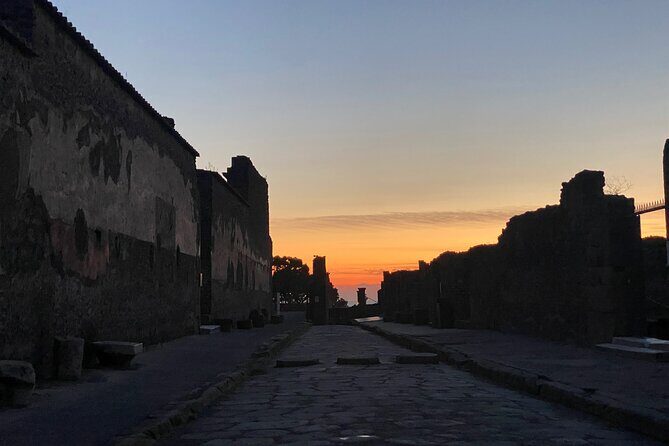
The tour’s early stops are clever because they switch your brain from sightseeing to daily life. At Vicolo di Gladiatori, you’re at the Gladiators’ Barracks—a place that instantly feels physical. Even if you’ve seen Pompeii photos before, the training and fighting context helps those stones turn into a real routine.
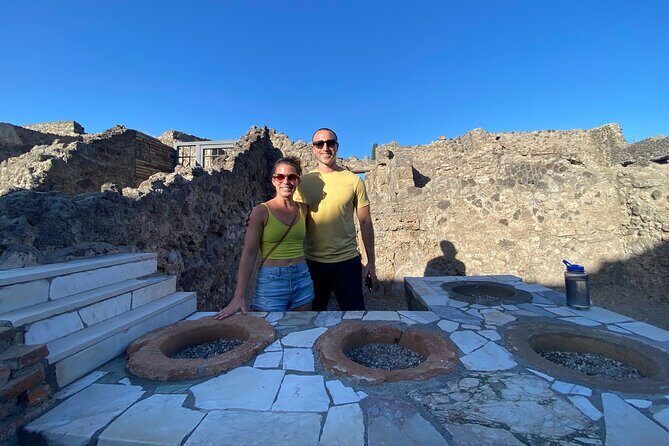
Then you shift to Fullonica di Stephanus, the most famous laundry in Pompeii. You get a concrete sense of how Romans handled washing and rough fabrics. I like this stop because it’s not just monuments and art—it’s work, materials, and process, and it explains why some parts of the city were built for constant labor.
Each of these stops is brief—about 10 minutes each—so you’ll get guided context without turning it into a lecture marathon. The upside is you’ll keep moving to new scenes while the guide ties the pieces together.
A small caution: because these are short segments, come prepared to ask questions early if something catches you. If you wait until later, you might not have time for a second look at the same spot.
The forum temples and a theater warm-up: Jupiter, Odeon, and the smaller stage
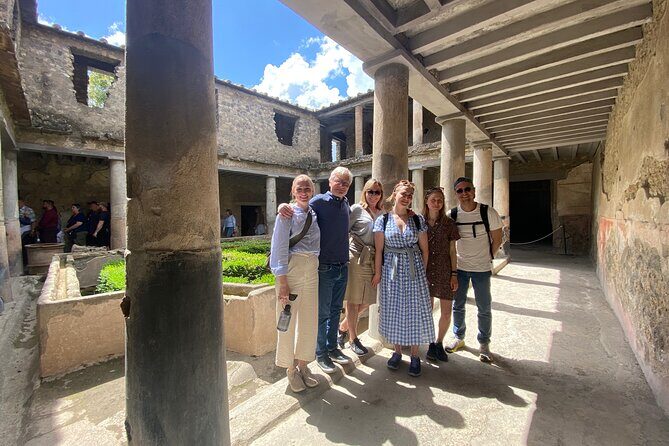
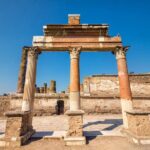
After the work-and-action start, you move into the civic and religious heart. The Tempio di Giove Capitolino sits in the forum area, where Pompeians carried out mercantile and cult activities in the morning. That combo—trade and worship in the same broad space—is a useful reminder that ancient cities ran on schedules you can almost feel.
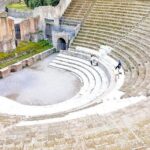
From there, you reach the Odeon – Teatro Piccolo, described as a theater for musical events. One neat detail here: musical instruments were found inside this theater and are now at the Antiquarium. That kind of clue helps you understand that Pompeii isn’t only about buildings—it’s also about what people used inside them.
I also like that the tour doesn’t only chase the biggest building. The Odeon is a “warm-up” that sets your expectations for how theaters were used, and it keeps you from feeling like you’re only staring at size.
Time-wise, it’s about 5 minutes for the temple of Jupiter and 15 minutes for the Odeon. You’ll have enough time to look around, but not enough to completely wander off. If you’re a photo person, this is where you’ll want to position yourself quickly for your best angles.
Teatro Grande and performance spaces you can still read
Next comes Teatro Grande, the largest theater in Pompeii, with dramas and theatrical comedies mentioned. This is the stop where the guide’s pacing matters most. In a bigger structure, it’s easy to get lost in scale. A good archaeologist-guide helps you see what the space is telling you—how performances were staged, and what parts were built for crowds.
This stop is listed at about 10 minutes, which sounds short until you realize the real win is guided interpretation. You’re not left alone with a stone shell. Instead, you’re given enough context to read the building like a tool that served entertainment and public life.
There’s also a restoration note: it was totally renovated thanks to grants from the Gens Holconia, one of the important families of Pompeii. Even if you’re not a restoration nerd, that detail helps you remember the city you’re walking through wasn’t just frozen in time—it went through human attention and change.
One consideration for this section: you’ll likely be standing and looking up or across for parts of it. If you’re sensitive to heat, plan water and sun protection before your tour begins, because this area stays outdoors.
You can also read our reviews of more tours and experiences in Pompeii

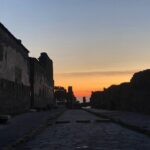

Casa del Menandro: luxury life in a compact visit
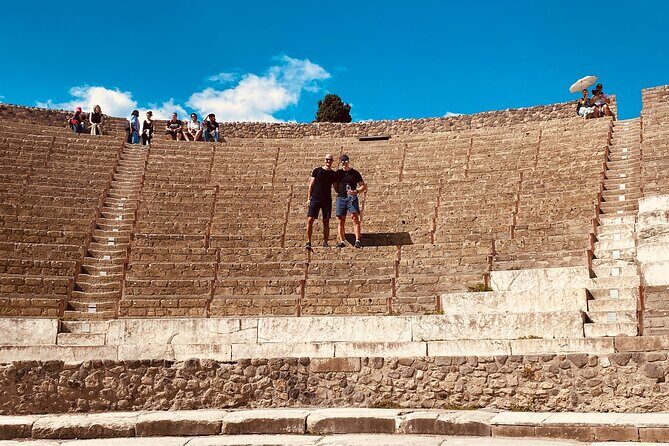
Now you step into private life with Casa del Menandro. The description is clear: Romans lived in luxury houses with frescoes, decorations, and sculptures. This is the stop that usually makes people slow down, because it feels like you’re stepping into someone’s home rather than a public building.
With about 15 minutes here, you should get time to notice decorative emphasis without feeling rushed through the whole house. I like this stop for the way it balances the more dramatic elements of Pompeii. After gladiators and theaters, seeing a home reminds you the city held everyday people, families, and status.
One practical note: homes and wall art in Pompeii can be easier to understand with context than with raw looking. If something catches your eye—an area of fresco detail, for example—ask your guide what it likely signals. In the reviews for this type of guide style, you can see people praised for storytelling that makes details feel purposeful, not just decorative.
If you’re traveling with kids, this is also a solid stop because it tends to spark questions. The structure of a guided tour means you’ll be able to keep their interest without needing to manage a long self-guided hunt.
Lupanar and Temple of Venus: the city isn’t always polite
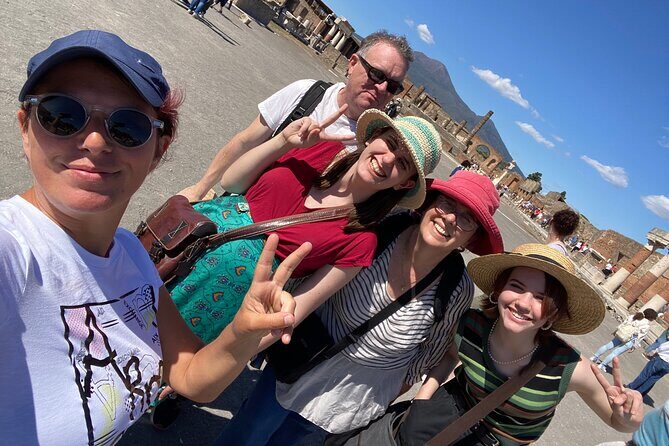
Then you hit the more sensitive side of Pompeii with the Lupanar. It’s described as one of the most famous brothels in the world, and the key point for your visit is that you can see original frescoes with scenes referenced as coming from the kamasutra. I’d treat this stop as part of the full picture, not just shock value.
The Lupanar stop is around 15 minutes. That’s enough time for your guide to explain what you’re looking at and why it matters for understanding daily life and social reality. It’s also short enough that you won’t feel stuck there while everyone else is wandering.
Then there’s the Temple of Venus, partly destroyed during the Second World War. This matters because it reminds you Pompeii’s story isn’t just about the eruption. The city’s long-term survival includes damage from later events, and the ruins you see today reflect that layered past.
This section is where I think your mood matters. If you prefer only grand monuments, the Lupanar may feel like a lot. If you want Pompeii to feel human, it’s a vital stop.
Basilica, shops, and the market: where everyday business happened
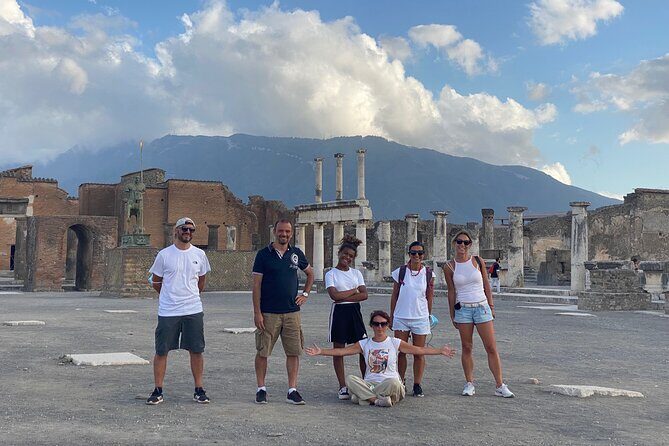
After the private and semi-private side of town, the tour shifts back to civic functions. Pompei La Basilica is where justice was administered, described as located near the main square. That’s a good reminder that people didn’t come to Pompeii only for fun or worship—they used it for courts and public decisions.
Next you walk through a street full of shops, described as the main street of the archaeological site, plus additional street segments. These walking stretches are useful because they help you connect buildings with movement. In Pompeii, you often lose your sense of orientation without a guide telling you what the space was for.
Then you reach the city market, described as being near the large forum. The market is noted as a place for large purchases of goods that could be resold in shops. I like that the tour explains the logic of buying and reselling rather than treating the market like a static backdrop.
For people who love context, this part is where your guide’s storytelling really pays off. In the reviews tied to guides working here, the consistent praise is for bringing the city to life in a way that feels like people are still moving through it.
If you’re short on time, this “everyday business” angle is one of the most efficient ways to build a mental map of Pompeii.
Stabian Baths and Pompeii 3D: seeing routines, not just ruins
One of the most memorable stops on this kind of route is always the baths, and here you get Stabian Baths (Terme Stabiane). They’re described as the first baths built in Pompeii, and they still have casts and frescoes. That combination is key: casts help you picture space and form, while frescoes help you imagine decoration and the visual mood of daily routines.
This stop runs about 15 minutes, which is enough to get the guided “why” without turning it into a long inspection. If you’ve ever looked at bath remains and wondered how people used them, this is the kind of stop where a good archaeologist-guide can turn confusion into understanding.
Next comes Pompei 3D: Bodies of Pompeii, about 5 minutes. Even with a short slot, a 3D element can be a practical way to grasp how the people and aftermath are represented. I treat this as a quick visual anchor—useful when the real site can be overwhelming.
The tour’s final moves also add a finishing note with Temple of Apollo mentioned as one of the most popular in Pompeii. That temple stop adds a final civic/religious beat so you’re not walking out with only homes and baths in your head.
Price and what you really pay for ($132.03 plus the ticket)
The headline price is $132.03 per person for a tour that runs about 2 hours. That sounds straightforward until you add the missing piece: the entrance ticket costs 18 euros for adults and is free for minors with an identity card.
So for an adult, you’re paying for two layers: the guided service plus your entry. In practical value terms, I think this is a good deal if you want expert help and you’re trying to avoid wasted time in lines and confusion inside the site.
You also get a few quality signals included in the price: skip-the-line ticket purchase, an authorized tourist guide/assistance throughout the tour, and a group capped at 15 people. That small-group limit matters because it makes the guide easier to hear and gives you a better chance to ask questions.
English is included, and the group approach means you’re not paying for a long private guide experience. It’s positioned as an efficient way to see major sights without the stress of planning your own route across Pompeii.
For the best value, you’ll want to arrive ready to move and look. If you’ll just skim everything with no interest in context, you might feel like you paid for explanations you didn’t use.
Who should book, and when this tour is a smart match
This tour is a great fit if you want a guided “big picture” visit in a short window. You’ll get main attractions plus a route that covers gladiator life, Roman work, temples, theaters, luxury housing, baths, market areas, and the Lupanar.
It’s also a strong pick for families, based on the emphasis in guide feedback on patience with children. If your kid needs a slower pace or a moment to cool down, a guide who’s used to working with families can help keep the tour fun instead of turning it into a meltdown parade.
If you’re into archaeology and want detail, this operator’s guide roster includes people with strong credentials and serious site expertise. Names that show up in guide praise include Mariagrazia, Eliana (the listed provider), Luisa, and Luciana, with consistent notes about turning Pompeii into something you can picture.
One more reason to book: a number of guides are praised for steering groups in ways that reduce crowd stress, so you can actually see things rather than just stand beside them.
This may be less ideal if you need maximum free time to wander, or if you have very slow mobility. The tour notes that most people can participate, but it also remains an outdoor walking experience through uneven ancient spaces.
Should you book this Pompeii skip-the-line group tour?
I’d book it if your goal is a high-impact Pompeii visit in a short time. The combination of skip-the-line ticket purchase, small group size, and a route that hits gladiators, theaters, baths, and the Lupanar is hard to beat for an efficient first visit.
You should consider it carefully if you hate guided pacing. At about 2 hours, the tour needs you to follow along. It’s also not a ticket-inclusive deal for adults, so you’ll still need to pay the 18 euros entrance fee on the day.
If you care about context, this is the type of tour where guides add meaning instead of just pointing. Based on the named guides and the consistent praise for storytelling and careful attention, you can expect explanations that help you connect what you’re seeing to how people lived.
If weather becomes an issue, the tour requires good weather, and you can usually get offered another date or a refund if it’s canceled for poor conditions.
FAQ
How long is the Pompeii group tour?
It runs for about 2 hours.
Is the tour in English?
Yes, the tour is offered in English.
Does the price include skip-the-line ticket purchase?
Yes. Skip-the-line is included to purchase tickets on site.
Is the entrance ticket included in the price?
No. The entrance ticket is not included. It costs 18 euros for adults, and minors are free.
What documents do minors need for free entry?
Minors must bring an identity card.
Where is the meeting point?
The meeting point is at the main entrance of Ristorante Suisse in Piazza Esedra, Pompei (address: 10/13).
How big is the group?
The maximum group size is 15 people.
Does the tour end back at the meeting point?
Yes, it ends back at the meeting point.
Is good weather required?
Yes. The experience requires good weather, and if it’s canceled due to poor weather you’ll be offered a different date or a full refund.