REVIEW · WALKING TOURS
Walking Tour With Marco
Book on Viator →Operated by MARCO PRIVATE TOURS · Bookable on Viator
Rome hits different with Marco.
I love how this tour feels like a guided walk through real neighborhoods, not a timed slideshow. Marco keeps the mood light with anecdotes and curiosities, so ancient Rome stays clear and human as you move from landmark to landmark. You’ll also get a plan that’s built for momentum, with stops clustered so you spend more time looking up and less time figuring things out.
Two things I really like are the private-guide flow (your group of up to 6, just you and Marco) and the way the route layers big sights with smaller, story-rich corners. The focus is on understanding the city—who lived where, what buildings meant, and why the Romans chose these exact spots.
One possible drawback: the schedule depends on walking and on ticket timing, and while some sites are free in the plan, key entries aren’t included. If you hate crowds or hate waiting for any ticket process at all, you’ll want to be ready for that part of the day.
In This Review
- Key highlights to look forward to
- Starting in Civitavecchia: how the day is set up
- Marco’s guide style: ancient Rome without the snooze factor
- Entering the Colosseum: how the visit is structured
- Roman Forum and the Arch of Titus route
- Teatro di Marcello and Largo Argentina: quick stops with punch
- Pantheon: the 2000-year timeline you can actually feel
- Sant’ Eustachio Il Caffe: the coffee break that teaches too
- Piazza Navona and the underground Domitian stadium reconstruction
- Price and logistics: what you’re really paying for
- Who this tour fits best (and who should skip it)
- Should you book Marco’s Walking Tour?
- FAQ
- How long is the Walking Tour With Marco?
- What’s the group size for this private tour?
- Where do we meet and where does the tour end?
- Are tickets included for the Colosseum and Roman Forum?
- Is coffee included?
- What time does the tour start?
- How do I get back to my hotel after the tour ends?
Key highlights to look forward to
- Skip-the-line style access for the Colosseum with tickets handled for you at the start
- Roman Forum walk that connects the Arch of Titus to the direction of Capitol Hill
- Short, meaningful stops like Teatro di Marcello and Largo Argentina to break up the heavy hitters
- Pantheon visit built around the building’s changing roles over centuries
- A real coffee break at Sant’ Eustachio with coffee history inside a small museum area
- Piazza Navona underground reconstruction + a playful quiz before gelato
Starting in Civitavecchia: how the day is set up
This tour is designed for people coming into Rome from the port area, with a clear start point at Civitavecchia Port (Piazza Vittorio Emanuele, 19). You’ll start at 9:00 am, then work your way into central Rome. Pickup is offered, which can be a big help if you’re coordinating with cruise schedules or want less stress on the front end.
The day ends at the Colosseum area (Piazza del Colosseo, 1). That’s convenient because it puts you back near a major transit hub—especially since you’re told you can use Subway Line B to get back to your hotel. In practice, this kind of end point matters: you don’t want a long walk or a complicated transfer after your “main event” day.
The route is also built around a 5 to 6 hour window. That’s long enough to feel you saw Rome’s core, but not so long that you’re completely cooked before dinner. Just remember: it’s a walking tour, so comfortable shoes are not optional.
You can also read our reviews of more walking tours in Rome

Marco’s guide style: ancient Rome without the snooze factor
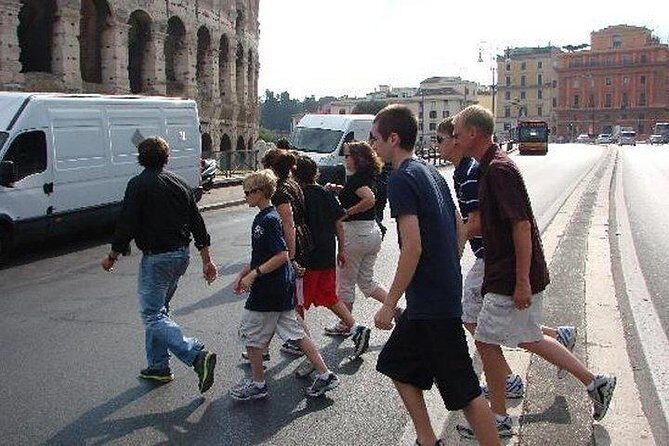
Marco’s approach is simple: he loves Ancient Rome, and he tries to share it as stories and practical context—not a textbook speech. You’ll hear curiosities and anecdotes, with the tone aimed at keeping you engaged. The idea is that ancient history should explain modern identity, not bury you in dates.
I like that the tour isn’t presented as “memorize facts.” Instead, Marco focuses on helping you see the logic behind where everything sits. The Colosseum isn’t just a big arena; the Roman Forum isn’t just ruins; the Pantheon isn’t just famous—it’s a timeline you can walk through.
You’ll also notice the pacing choices. The itinerary mixes heavy-hit stops (Colosseum, Roman Forum, Pantheon) with quick breaks (Teatro di Marcello, Largo Argentina) so the day stays readable. It’s a smart balance for people who want highlights but also want meaning.
And based on past client comments, Marco’s personality is a real part of the value. People describe him as warm, funny, and good at making the tour feel easy—like someone who wants you to enjoy the day, not just check boxes.
Entering the Colosseum: how the visit is structured
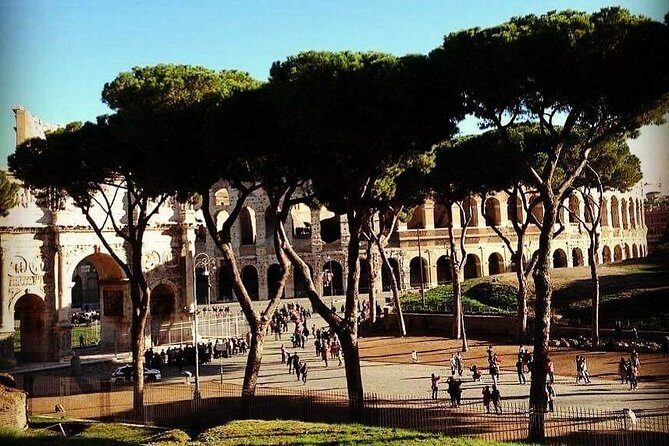
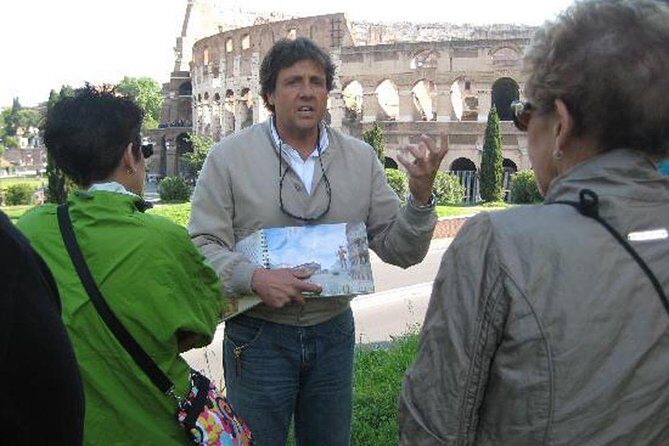
The Colosseum is the obvious headline, but the tour’s first job is to get you there with less friction. At the Arch of Constantine—right close to the Colosseum—you meet Marco with the tickets arranged so you can get inside without making the line.
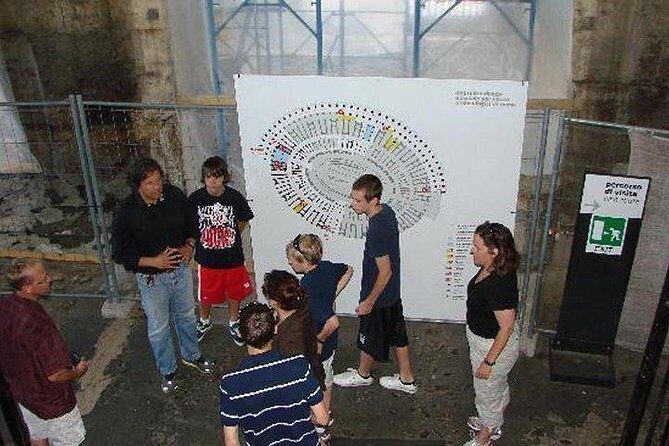
Once inside, the visit is set up in layers. You’ll experience the visit from street level, then go up to the first level above. That matters because it changes your view of the site. From ground level you understand the scale and the arena feel; from higher up you start to grasp how the structure connects.
One important note: admission for the Colosseum is not included in the tour price. The plan says tickets aren’t included, even though Marco helps handle the process so you’re not stuck in delays. So budget time for ticket work if you’re paying separately, and build in a “start calmly” mindset.
The upside is that the Colosseum opening sets the emotional tone for the whole day. It’s hard to appreciate the Roman world fully until you stand in the space people once filled with noise, movement, and performance.
Roman Forum and the Arch of Titus route
Right after the Colosseum, you shift into the Roman Forum area. The plan keeps things efficient: you walk inside the Forum and pass through the Arch of Titus, then continue in the direction of Capitol Hill.
The Forum is where you understand Rome’s everyday power. It’s not one building; it’s a whole decision-making landscape. Seeing it with a guide who connects the dots helps you avoid the most common visitor problem: staring at stones without knowing what you’re looking at.
The tour time here is about one hour, so you get enough guidance to orient yourself. You’ll also learn why this space mattered and how monuments functioned as public messaging. For your photos, it’s also a better use of time than wandering randomly—Marco helps you move toward the “this is why it’s here” viewpoints.
Like the Colosseum, admission for the Roman Forum is not included. So treat this section as your “big-ticket, most structured” hour. If your energy is limited, this is the place to stay sharp and listen closely—because the Forum only makes full sense when the story is told in sequence.
Teatro di Marcello and Largo Argentina: quick stops with punch
After the Forum, the itinerary deliberately slows down for two shorter, highly meaningful pauses.
First is Teatro di Marcello, about a 10-minute stop. The point here isn’t to spend forever—it’s to see and understand how this type of theatre worked in Roman times. Small stops like this are surprisingly useful because they reset your brain. You go from a sprawling complex back to one clear “purpose” building.
Then you reach Area Sacra di Largo Argentina, roughly 15 minutes. This is the place associated with the killing of Julius Caesar and a sacred area connected to Roman religious spaces and temples. What I like about including Largo Argentina is that it shifts your focus from entertainment and politics to religion and ritual. You start seeing how Rome didn’t separate those worlds; it stacked them.
Both of these stops are listed as free in the plan. That’s practical value—especially when the paid entries earlier can already feel like a lot. It also means you can enjoy the day without feeling that every turn costs money.
If you like your Rome with variety—arena, forum politics, then religion and assassination history—these two stops are a good rhythm break.






Pantheon: the 2000-year timeline you can actually feel

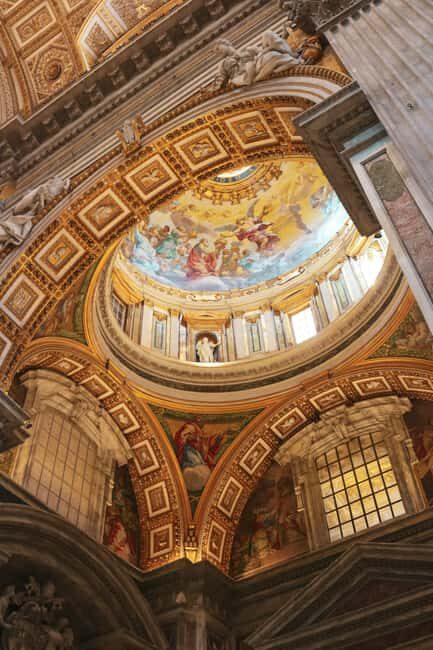
Next up is the Pantheon, and this is one of the most rewarding “everyone knows it, but you still learn something” stops on any Rome plan. The itinerary frames it as a symbol of Rome and highlights a specific timeline: the building is described as being 90 years earlier than the Colosseum, and it notes that in 27 BC it became the site of the first public bath built by the Romans under Marcus V. Agrippa, linked to Augustus as his son-in-law.
Inside, you’re told the visit covers about 2000 years of history. That line alone tells you what the tour is aiming for: not just appreciation, but understanding how a structure changes role while staying central to city life.
The Pantheon stop is about one hour, and it’s listed as admission free in the plan. That means you get a long, guided experience without adding another paid entry hurdle.
One tip for your own visit: if you can, plan to watch how you enter mentally. The Pantheon is famous, so people sometimes treat it like a quick check-in. On this tour, you’re in a guided sequence right before and after other ancient spaces, so you’ll see it as part of the same Roman story: power, identity, public life, and belief.
If you only have one “must” stop after the Colosseum and Forum, this is the one I’d protect.
Sant’ Eustachio Il Caffe: the coffee break that teaches too
At some point in any Rome walking day, you need a reset. This plan uses Sant’ Eustachio Il Caffe as that break, with a free coffee or tea included.
But the value isn’t only caffeine. The itinerary says you can also visit a small museum of coffee inside the bar. That turns a break into a short cultural pause, which is perfect when you don’t want your tour to end just because your legs need a moment.
This stop lasts about 20 minutes. That’s long enough to sit, drink, and feel human again, without dragging the schedule so much that you lose the momentum for the final sights.
I also like the practical psychology of this kind of stop. Rome can be intense: big architecture, crowded streets, constant sensory input. A planned pause reduces the chance you’ll get “snack fatigue” and then rush through later because you’re hungry or tired.
And because coffee culture is part of modern Italy, this stop adds a bridge. You’re going from ancient marble to a modern ritual in a historic setting. It feels like Rome, not just ancient Rome.
Piazza Navona and the underground Domitian stadium reconstruction
The last major sightseeing moment is Piazza Navona, and it’s included because Rome has layers—sometimes literally under your feet. The itinerary explains that beneath the square there’s a reconstruction of the Stadium of Domiziano from 82 AD. That’s a neat payoff because you end your day in a lively modern plaza, but you’re still learning about the ancient city form.
This stop is about one hour. Part of it is the underground stadium reconstruction, which helps you connect what you just saw in the Colosseum with older Roman entertainment and public spectacle.
Then there’s the fun part: the plan includes a gelato moment if you answer at least 5 questions during the tour. It’s playful, but it also reinforces what Marco is doing all day—keeping you present and paying attention.
Admission for this Piazza Navona underground visit is listed as not included. So even if the gelato is part of the reward, treat the underground access as the final possible extra cost depending on how you handle tickets that day.
Piazza Navona is also a great place to end because it’s easy to wander after. You don’t feel stranded. You’ve got energy, you’ve got food options, and you’ve got transit nearby.
Price and logistics: what you’re really paying for
The tour price is $453.79 per group, up to 6 people, and it runs about 5 to 6 hours. On paper, that sounds like a lot, but private tours in central Rome cost money fast. The key is how the value is distributed.
Here’s how I think about it:
- You’re paying for a private guide, not a seat on a bus.
- Marco helps with the most stressful parts first, especially at the start with Colosseum access handled so you don’t waste time in lines.
- You also get direction and pacing through multiple major sites in one day, instead of piecing together logistics on your own.
Tickets are not included, and that’s worth planning for. The plan lists certain stops as free (like Teatro di Marcello, Largo Argentina, and the Pantheon), but the Colosseum and Roman Forum are not included, and the Piazza Navona underground is also not included. So your final trip cost will depend on those entries.
Pickup is offered, and that can matter if you’re traveling from the port side. If you’re already coordinating many details, having someone manage the start of the day can be the difference between relaxed and rushed.
Finally, remember the tour is private, so you can’t rely on it being flexible like a general walking meetup. It’s structured. That’s a plus for people who want a clear plan, and a minus for people who want total free wandering.
Who this tour fits best (and who should skip it)
This works best for you if:
- You want a focused Rome highlights route with less confusion.
- You like your ancient history explained through stories, not lectures.
- You travel with a small group of up to 6 and want a private guide price that makes sense.
- You’re doing a limited-time visit, like a cruise day that starts around Civitavecchia.
It may be less ideal if:
- You want only free stops and no paid entries at all.
- You hate any walking pace changes, even for short transfers.
- You need a super long break schedule. The plan has set blocks (Colosseum, Forum, short stops, Pantheon, coffee, Piazza Navona), so it won’t feel open-ended.
One more practical point: this is described as requiring good weather. If conditions are poor, the experience may be canceled and you’ll be offered another date or a full refund. In Rome, that matters because walking tours live and die by conditions.
Should you book Marco’s Walking Tour?
I’d book it if you want a smooth, story-led introduction to Rome’s big ancient core, from the Colosseum to the Pantheon, with smart stops that keep the day from turning into just a list of ruins.
The big reasons to say yes: the private group size, Marco’s knack for making ancient material feel friendly, and the structure that gets you into major sites without turning the day into a line-spotting contest. Plus, the coffee stop at Sant’ Eustachio gives you a real break that still fits the theme of culture.
I’d think twice if you’re trying to keep costs ultra-low, because tickets for major entries are not included in the plan. But if you’re okay handling those and want someone guiding the story, this tour is one of the better ways to use a half-day to full-day in Rome.
FAQ
How long is the Walking Tour With Marco?
It lasts about 5 to 6 hours.
What’s the group size for this private tour?
It’s private for your group, with a maximum of up to 6 people.
Where do we meet and where does the tour end?
You meet at Civitavecchia Port at Piazza Vittorio Emanuele, 19, and the tour ends at the Colosseum area, Piazza del Colosseo, 1.
Are tickets included for the Colosseum and Roman Forum?
No. Admission tickets are listed as not included for the Colosseum and the Roman Forum stops.
Is coffee included?
Yes. Coffee and/or tea are included, and you’ll stop at Sant’ Eustachio Il Caffe.
What time does the tour start?
The start time is 9:00 am.
How do I get back to my hotel after the tour ends?
You’re advised to use Subway B to go back to your hotel.