REVIEW · FOOD
Trastevere Like a Local Food Tour with 7+ Food Tastings & Wines
Book on Viator →Operated by Secret Food Tours · Bookable on Viator
Rome’s best bites come in small steps.
This Trastevere Like a Local Food Tour is a 3 hours 30 minutes walking evening built around a small group and classic Roman street food, plus DOP Prosecco and local wine. I like that the tastings are spread out across multiple stops, so you keep sampling without feeling like you’re stuck in a restaurant line. One heads-up: it’s more aperitivo-style pairing than a heavy wine tasting, so if you want large pours, you may want to plan for a proper dinner after.
My favorite part is the human vibe. Guides like Claudia G and Rocio (and Roberto in some groups) get praise for keeping things fun, organized, and chatty in the best way, including helpful pointers at the end. The tradeoff is a fair amount of walking on uneven Roman streets, so comfy shoes matter.
In This Review
- Key things to know before you go
- Trastevere, on foot: why this route works
- Value for $130.66: what your money is buying
- Meet point and ending spot: plan around your first steps
- The food lineup: what you’ll likely be eating
- Stop 1: Ponte Fabricio and the plague-temple legend
- Stops 2 and 3: Piazza in Piscinula and the Mattei Houses area
- Stop 4: Vicolo del Moro and La Renella bakery vibes
- Stop 5: Piazza di Santa Maria in Trastevere, mosaics, and the oldest fountain
- Wine expectations: aperitivo pairing, not a pouring contest
- Guides can make or break it: what to look for
- Who this tour suits best (and who should rethink)
- A quick decision guide: should you book?
- FAQ
- What food tastings are included?
- What drinks are included on the tour?
- How long is the tour?
- Is this tour only for adults?
- Can they accommodate gluten-free allergies or intolerances?
- Where do I meet the guide, and where does the tour end?
- Can I cancel and get a full refund?
Key things to know before you go
- Small group cap (12 participants) keeps the evening feeling personal, not like a conveyor belt.
- 7+ food tastings plus wine are designed as a progressive route, not one big sit-down meal.
- Trastevere history woven into food starts with old Rome legends near Ponte Fabricio and ends in the basilica square.
- Aperitivo-minded drinks means you’ll get wine alongside bites, not necessarily big pours.
- Fried Roman favorites show up (including supplì and stuffed zucchini flowers), plus pasta and gelato.
- You walk through real neighborhood corners like Vicolo del Moro and Piazza in Piscinula, not just postcard streets.
Trastevere, on foot: why this route works
Trastevere can feel like one long “food + fun” zone, but this kind of tour turns that chaos into a plan. Instead of wandering hungry, you follow a route that links small squares and streets to what locals actually snack on—then you learn why those places matter.
The pacing is built for sampling: you move between stops, you eat something distinct at each one, and you keep going. That matters because Trastevere’s best moments are often short bursts—one bakery smell, one quiet piazza, one church façade mosaic you’d miss if you were just passing through.
You can also read our reviews of more food & drink experiences in Rome


Value for $130.66: what your money is buying
$130.66 is not a budget lunch. But you are paying for three things that are hard to replicate on your own:
1) A guided route through Trastevere’s key food-history spots.
2) A set menu of tastings that covers sweet and savory Roman favorites.
3) Included drinks: DOP Prosecco and local Roman wine, with the overall experience built around aperitivo culture.
Where the value really shows up is how you’re meant to leave. Many people come expecting to snack; they leave feeling properly fed, because the stops add up: stuffed zucchini flowers, Roman-style artichoke, porchetta, supplì, two Roman pastas, plus gelato—and an extra our secret dish.
One practical consideration: the included portions are tastings, not full restaurant plates. If you’re a big eater or you get very hungry after 3 hours of walking, you’ll probably still want dinner afterward (and that’s normal in Rome).
Meet point and ending spot: plan around your first steps
The tour starts at Via di Monte Savello, 26 and ends at Piazza Giuseppe Gioachino Belli (Piazza Gioacchino Belli). There’s no hotel pickup, so you’ll want to arrive early enough to find the start without stress.
If you’re the type who hates last-minute wandering, arrive a few minutes early and do a quick check on your phone map. Roman streets can look similar fast, and the difference between an easy start and a frustrating start can be that one corner you didn’t double-check.
The food lineup: what you’ll likely be eating
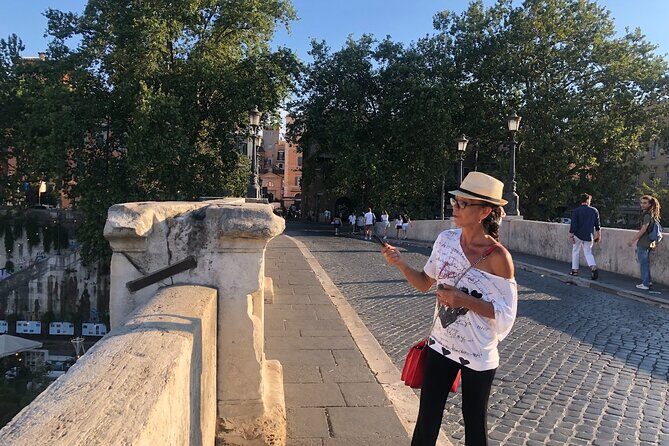
This tour’s included bites are the kind of Roman comfort food you can recognize even if you can’t name it yet. Here’s what’s on the menu list:
- Fiori di Zucca (stuffed zucchini flowers)
- Roman-style artichoke
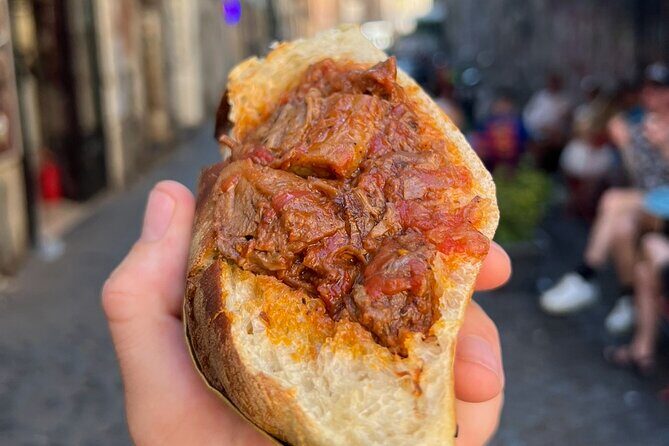
- Porchetta
- Supplì (iconic fried street food)
- 2 Roman pastas
- Gelato
- Our Secret Dish
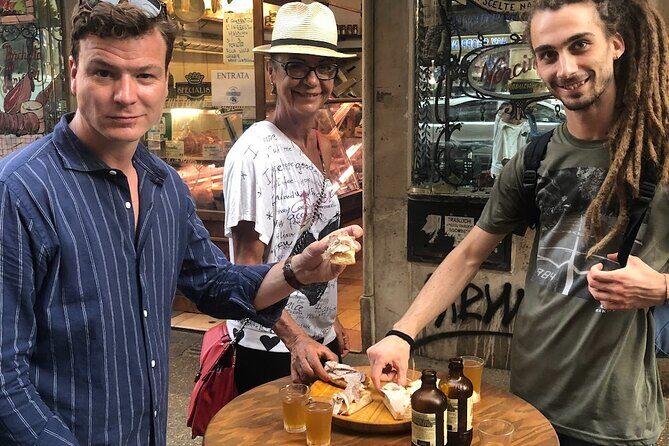
And for drinks, you get DOP Prosecco plus local Roman wine. Several guides also keep the evening aligned with aperitivo habits—meaning the drinks show up with tastings rather than turning into a single, long wine-focused session. Some guests specifically mention an extra liqueur like limoncello, but the core included items are Prosecco and local wine.
If you love fried snacks, this is a good match. Supplì alone is reason enough for many people to book, and the zucchini flower and artichoke make the tasting feel very Rome, not just “Italian food.”
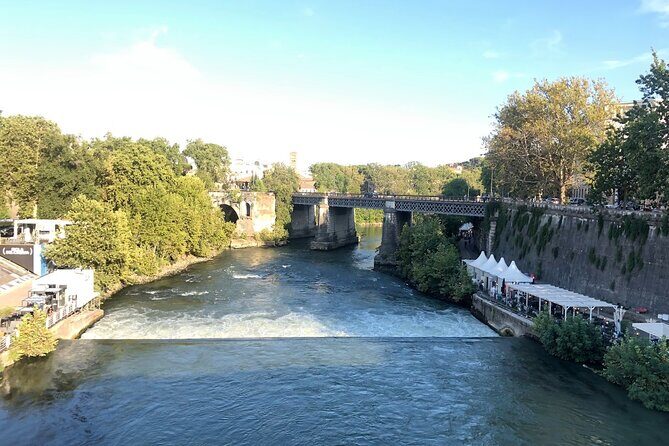
Stop 1: Ponte Fabricio and the plague-temple legend
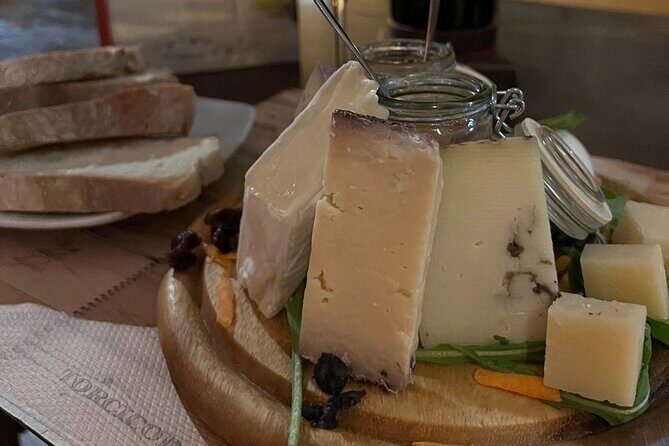
You start near Ponte Fabricio, also called the Bridge of the Four Heads, the oldest bridge in Rome that still preserves its original structure. It was built in 62 BC, which is the kind of detail that makes the walk feel more grounded than just “we’re in a pretty neighborhood.”
Right in the context of the area, the story connects to the old Roman island landscape on the Tiber. During Roman times, a temple dedicated to medicine—Aesculapius (Asclepius)—stood nearby. The legend says a plague broke out in 293 BC, and the Senate responded by building a temple to the god of healing.
Why this matters for your food tour: it sets the tone. Rome’s food culture isn’t separate from its past. You’re not just eating; you’re walking through layers where even a snack route can start with an ancient response to illness, community, and health.
You can also read our reviews of more tours and experiences in Rome
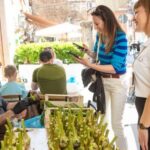

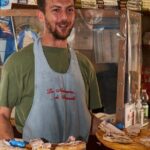

Stops 2 and 3: Piazza in Piscinula and the Mattei Houses area
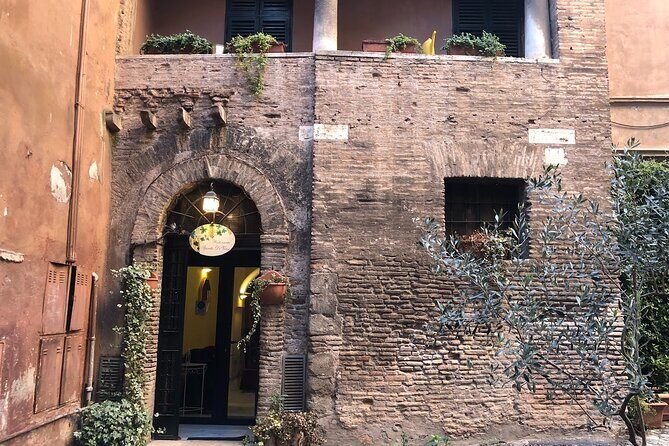
Your second stop area centers on Piazza in Piscinula, tied to “piscinula,” a diminutive linked to ancient Roman thermal baths. This is one of those details that makes you look around and notice what you’d otherwise walk past.
Nearby are the Mattei Houses, built in the 15th century and incorporating earlier structures tied to the Mattei family. It’s the kind of architecture that feels like it grew over time instead of being created in one clean moment—which is how old Rome tends to feel.
From this area, you can also reach the House of Dante, now known for being an active research center for Dante studies in Italy and abroad. Even if you don’t stop in for a visit, knowing it’s part of your walking zone changes how you read the neighborhood.
Food-wise, this part of the route is about atmosphere. These squares work as breathing space between tastings: you pause, you reset, you take in the medieval charm, then you’re ready for the next flavor hit.
Stop 4: Vicolo del Moro and La Renella bakery vibes
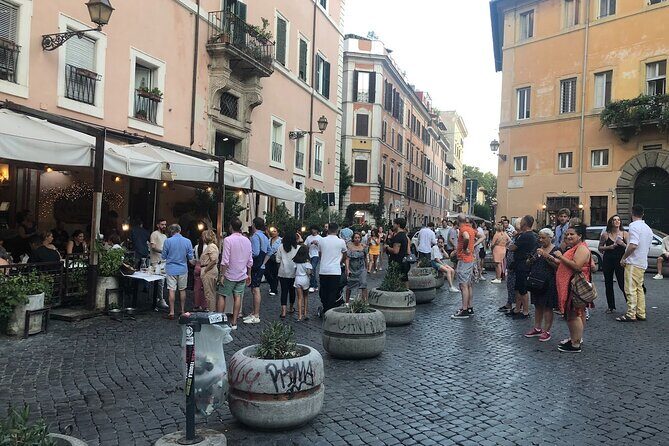
Next comes Vicolo del Moro, often described as chameleon-like. The idea is that the street changes its character between day and night, and you can feel that shift in how the street life moves.
As you walk, you pass local shops and artisans. Then the route brings you toward the aroma of freshly baked bread from La Renella Bakery, one of the oldest in Rome. That smell is not a small detail. It’s a sensory cue that helps your brain accept you’re in the middle of real local routine.
This is also where the guide’s job becomes visible. Some guides are great at trivia; others help you understand what you’re looking at—why a street like this becomes a nightlife lane, and why that matters for how locals eat before and after dinner.
Stop 5: Piazza di Santa Maria in Trastevere, mosaics, and the oldest fountain
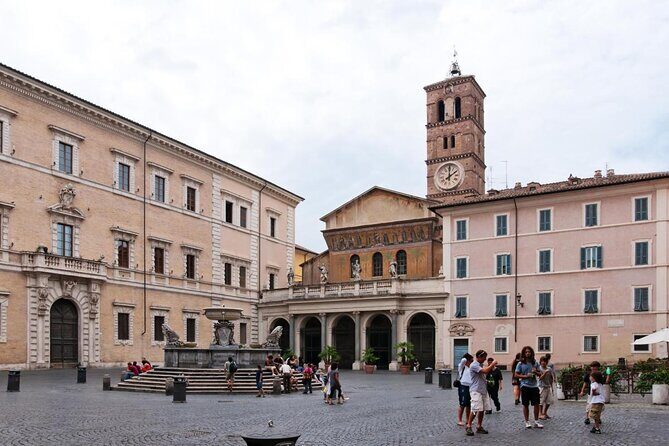
You finish in the ancient heart of Trastevere: Piazza di Santa Maria in Trastevere. The focal point is Basilica of Santa Maria in Trastevere, founded in 217 AD by Pope Callixtus. The façade’s 13th-century mosaics are the kind of visual payoff that feels worth the walk even if you were only doing the food part.
This square also features a fountain considered the oldest in Rome, built on the same spot where a fountain existed during Emperor Augustus’s time. In other words, you end with a place where the city kept “the same habit” for centuries: public water, public gathering, and public life.
Around the basilica you’ll spot historic buildings like Palazzo San Callisto and other palazzi in the area. The point isn’t to memorize names—it’s to end your meal walk in a space that still feels like a living center, not a stage set.
Wine expectations: aperitivo pairing, not a pouring contest
Here’s the thing I’d tell you straight: this tour is built around aperitivo culture. That means your drinks are meant to support the tastings, not replace a full wine education session.
A few people felt the wine amount was light (and they weren’t wrong to say it). But the design logic is that you’ll get small, paired glasses across the evening—so you taste food first, then feel how the wine lifts or rounds it out.
If you’re the type who wants wine like a theme, adjust your expectations. Consider treating this as your “wine with bites” part of the night. Then plan a relaxed dinner later where you can order the big pour you’re craving.
Guides can make or break it: what to look for
This tour experience tends to rise or fall with the guide’s energy and how well they connect stories to food. The names that come up strongly in the information you provided include Claudia G and Rocio, with Roberto also mentioned in some cases.
What gets praised most:
- Keeping the group engaged without rushing people.
- Clear explanations that make the food choices feel intentional.
- Humor and warmth that make it feel like hanging with friends in a neighborhood you’re only starting to learn.
- Help at the end—including guidance on getting back on your own.
If you’re hoping to get both food and neighborhood context, choose the evening when you can actually be present. When you’re paying attention, the history and the tasting feel like they click together.
Who this tour suits best (and who should rethink)
This is a great fit if you want:
- A guided way into Trastevere’s food scene without getting stuck choosing restaurants.
- Roman classics like supplì, porchetta, and zucchini flowers in a set tasting flow.
- A route that mixes food + real landmarks like Ponte Fabricio and Santa Maria in Trastevere.
It may be less ideal if:
- You strongly prefer gluten-free options. The tour states it cannot accommodate gluten-free allergies or intolerances.
- You want a full wine tasting with large pours. This is built around pairing and aperitivo style.
- You hate walking. It involves a fair amount of walking, and comfortable shoes are recommended.
Adults-only note: it’s strictly for 18+ participants. No pets on the tour, and dietary needs need advance contact so they can cater as best as possible.
A quick decision guide: should you book?
Book it if you’re the kind of traveler who wants to eat your way through a neighborhood and come away with specific Roman dishes you can repeat later. The small group cap (12) and the progressive tasting style make it feel more personal than most mass-market food tours. Add in the end at Santa Maria in Trastevere—with mosaics and that old fountain—plus you’re not just full, you’re oriented.
Skip or reconsider if you need gluten-free accommodations, or if “food and wine” for you means big, standalone wine pours and lots of time sitting with wine. In that case, you might be happier with a more wine-forward experience and then do your own Trastevere walk.
If your goal is a fun, well-paced evening where Trastevere feels like something you discovered (not just something you visited), this one is an easy yes.
FAQ
What food tastings are included?
You’ll get Fiori di Zucca (stuffed zucchini flowers), Roman-style artichoke, porchetta, supplì, two Roman pastas, gelato, and our secret dish.
What drinks are included on the tour?
The tour includes DOP Prosecco and local Roman wine. The experience is designed around aperitivo culture, with drinks paired through the stops.
How long is the tour?
It runs about 3 hours 30 minutes.
Is this tour only for adults?
Yes. It’s strictly for adults over 18 years old.
Can they accommodate gluten-free allergies or intolerances?
No. The tour cannot accommodate gluten-free allergies or intolerances. For other dietary requirements, you should contact the operator in advance.
Where do I meet the guide, and where does the tour end?
Meet at Via di Monte Savello, 26, 00186 Roma RM, Italy. The tour ends at Piazza Giuseppe Gioachino Belli, 00153 Roma RM, Italy.
Can I cancel and get a full refund?
Yes, you can cancel for a full refund if you cancel at least 24 hours before the experience’s start time. Free cancellation is available up to 24 hours in advance.