REVIEW · POMPEII
Small-Group Tour in Pompeii with a Real Archeologist, ticket included
Book on Viator →Operated by Pompei Trip&Transfer · Bookable on Viator
Pompeii gets real when someone explains it.
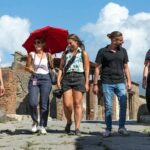
This small-group tour is built around a real archaeologist leading you through major houses and public spaces, then it gives you priority ticket entry to keep exploring. I love the tight group size (max 15) with headsets, which makes it easier to hear every detail, and I also like how the focus stays on everyday life—who lived here, how they decorated, and how the city worked. One thing to consider: the day is active and hot, and a couple of stops can involve lines or timed access, so plan to move fast and pack water.
In practice, you’re covering a lot of ground in about 2 hours 30 minutes, with short stops meant to give you strong landmarks. If you want more time in a single house or want to see extra sights beyond the planned sequence, you’ll be glad the ticket works for the day. The only real drawback I’d flag is that the itinerary is timed, so you won’t slow down for everything.
In This Review
- Key highlights to look for
- Pompeii in 2.5 hours: what this small group format gets right
- Priority entry and tickets: how value plays out at $66.23
- Casa del Poeta Tragico: the Cave Canem mosaic and why it’s a big deal
- Casa dei Vettii and the Lupanar: luxury, then the other side of town
- Foro de Pompeya: the city’s public center, designed for movement
- Suburban Baths: why the outskirts tell a different story
- Casa del Fauno and Casa del Menandro: art, bronze, and tableware culture
- Archaeological Park of Pompeii stop: amphitheatre scale and summer shade
- Temple of Apollo: religion just before the eruption
- What the guide style feels like in real life (Paulo, Teresa, Alfredo)
- Practical tips: wear in Pompeii, bring water, and use your day ticket
- Should you book this Pompeii small-group tour with an archaeologist?
- FAQ
- How long is the Small-Group Tour in Pompeii?
- What is the group size?
- Is this tour in English?
- Is a priority ticket included?
- Are entry tickets included for the stops?
- Can I explore Pompeii on my own after the tour?
- Is free cancellation available?
Key highlights to look for
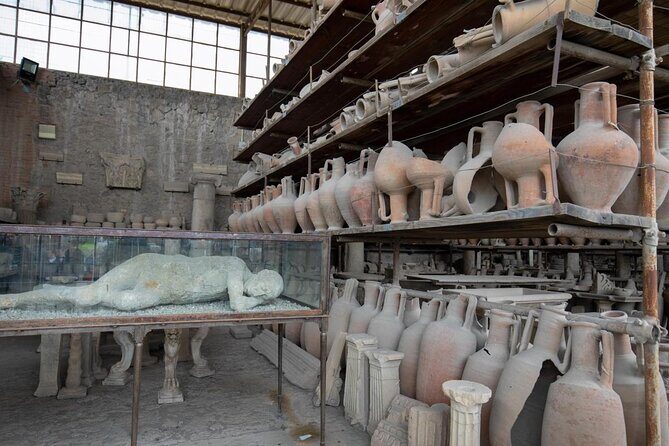
- Real archaeologist guidance that ties buildings to real Roman daily life
- Priority entry so you waste less time waiting at the park
- Included admissions at most stops, plus a day ticket for self-guided time afterward
- Headsets for clear explanations in English
- Stop-by-stop variety: mosaics, luxury homes, the Lupanar, the Forum, baths, and temples
Pompeii in 2.5 hours: what this small group format gets right
Pompeii is huge in feel, even when you’re only covering the center. The best tours don’t try to “do everything.” This one instead gives you a fast, guided route that still makes sense: domestic life first (the houses), then public life (Forum and baths), then religion and games (Apollo and the amphitheatre area).
The small group matters. With a maximum of 15 people and headsets, you can actually hear the archaeologist without standing shoulder-to-shoulder. That turns the experience from a photo sprint into a real explanation of how the city functioned. You’re also not stuck listening to a lecture from far away—questions and back-and-forth are much easier in a tight group.
The pace is also very practical. Each stop is short enough to stay moving, but long enough for you to notice details like floor mosaics, the layout around courtyards, or the kinds of spaces Romans built for everyday routine.
You can also read our reviews of more tours and experiences in Pompeii

Priority entry and tickets: how value plays out at $66.23
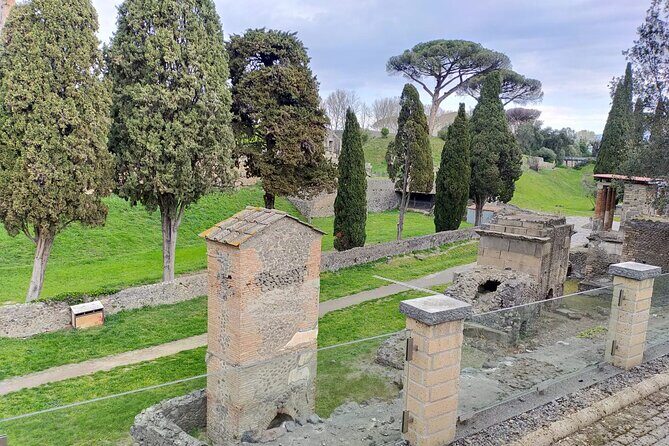
At $66.23 per person, you’re not just paying for a guide. You’re paying for three things that add up quickly at Pompeii: an archaeologist-led walkthrough, entry help at the park, and admissions included for many of the scheduled stops.
Here’s the value logic that helps you decide:
- If you buy nothing else separately, this tour covers a large slice of the must-see sites, including several house entrances.
- The priority ticket means you’re aiming to spend less time stuck at entry points.
- You get a day ticket for after the tour—so the guided portion doesn’t feel like the entire trip.
There is one timing nuance to keep in mind. The itinerary lists the “Archaeological Park of Pompeii” stop (the amphitheatre/gymnasium area) as admission ticket not included for that specific stop. At the same time, the tour includes priority entrance for the archaeological park. So you’ll want to treat this as: entry to the park is handled, but there may be separate access rules for certain areas. If you care about the amphitheatre interior in a specific way, check on-site with your guide before you assume it’s included.
Also, you’ll have a mobile ticket, and the tour ends where it starts—so your day doesn’t get complicated with extra transfers.
Casa del Poeta Tragico: the Cave Canem mosaic and why it’s a big deal
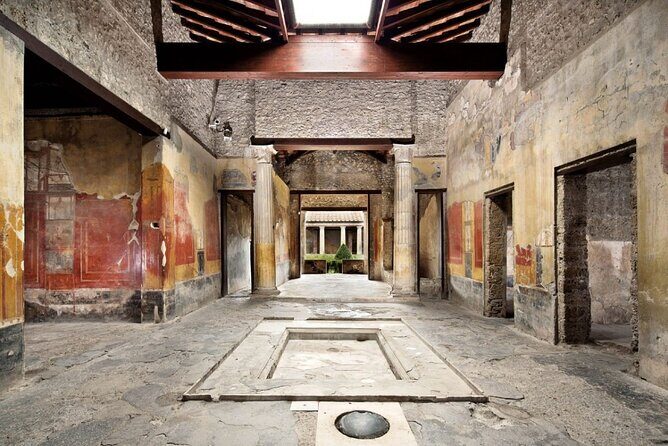
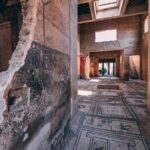
Stop one is a smart opener: Casa del Poeta Tragico. This is an elegant house from the imperial age, and it’s famous in part because of the floor mosaic “Cave Canem”—the warning about the guard dog.
This is exactly the kind of first stop that helps you “read” Pompeii. When you’re standing in a Roman house entrance area, you start to notice how decoration worked like messaging. The mosaic isn’t just art. It’s a domestic statement: who you are, what you want to communicate, and what kind of world you’re walking into.
A short visit here also sets expectations for the rest of the day. You begin to see patterns: courtyards and rooms arranged around light, wall art used as status language, and the way everyday spaces were treated like stages.
Casa dei Vettii and the Lupanar: luxury, then the other side of town
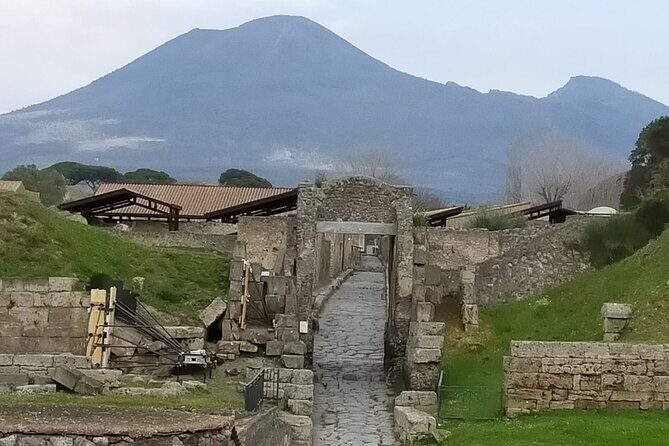
The tour then moves to Casa dei Vettii, one of Pompeii’s most beautiful and luxurious houses. It gets its name from its owners: Aulo Vettio Restituto and Aulo Vettio Conviva. This stop is where you start seeing how wealth shows up in material choices—space, ornament, and the overall impression of comfort.
The timing is tight, so you’ll want to focus on the highlights your guide points out rather than trying to see every corridor detail. With the headset, you can follow along and still look around.
Then comes the Lupanar, and it’s not subtle. This two-storey building was used as a brothel, and it’s described as having five rooms on the ground floor and five upstairs. The beds were described as concrete with something like a mat or mattress if you were lucky.
This stop can feel jarring, but that’s the point. Pompeii isn’t only villas and art. It’s a real city with sex work, commerce, and everyday problems that existed alongside wealth. The way this is framed—where it’s located, how the rooms were set up—helps you understand the city as a system, not a museum display.
If you’re sensitive to adult themes, this is the one stop you should mentally prepare for. It’s also one of the most discussed areas for a reason: it’s evidence of how ordinary people lived with institutions you might not expect to find documented so clearly.
Foro de Pompeya: the city’s public center, designed for movement
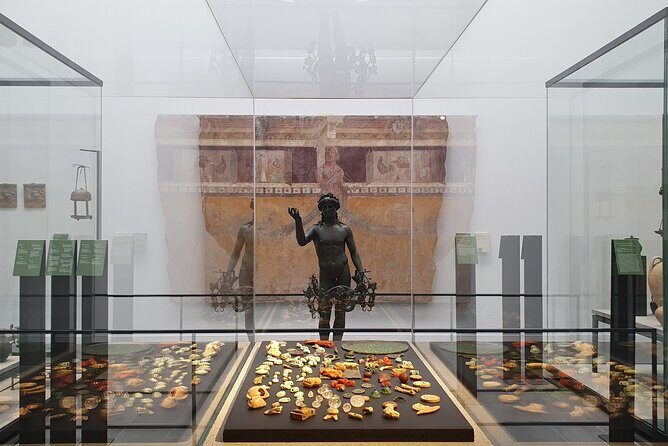
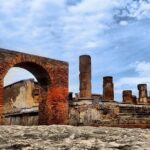
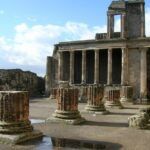
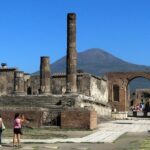
Next is the Foro de Pompeya, the Forum area reserved for pedestrians. Carts weren’t allowed, so the space functioned more like a controlled public corridor and civic focus than a general shopping street.
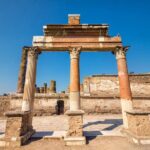
This Forum was about 142 metres long and 38 metres wide. Today you’ll find the area is bare of statues and ornate flooring that once stood here. After the eruption, the surviving materials were reportedly dug up and reused in later work—so what you’re seeing now is a mix of original layout and post-eruption recycling.
What I like about including the Forum in a house-heavy day is that it snaps you back into “city context.” After seeing private spaces, the Forum reminds you: people gathered here, public buildings faced the open space, and civic life shaped the rhythms of daily life.
Also, because the stop is guided and timed, you won’t just walk through emptiness. Your guide should help you visualize what used to be present and why the design mattered.


Suburban Baths: why the outskirts tell a different story
The Suburban Baths are outside the city walls. That location changes the story. Your tour also notes that there was a nearby port area—rocks where boats could moor—and that these baths were likely used by travelers rather than the everyday Pompeii resident.
This is one of those stops where a good guide really matters. Bath culture was social, and location tells you who used the facilities. It’s a reminder that Pompeii wasn’t isolated. It connected to arrivals and departures—people who came for business, transit, or whatever reason brought them to town.
Even in a short visit, you can get something useful: a sense for how Pompeii welcomed outsiders and how the city’s edges had their own role. You’re looking at infrastructure built for movement of people, not just for housing.
Casa del Fauno and Casa del Menandro: art, bronze, and tableware culture
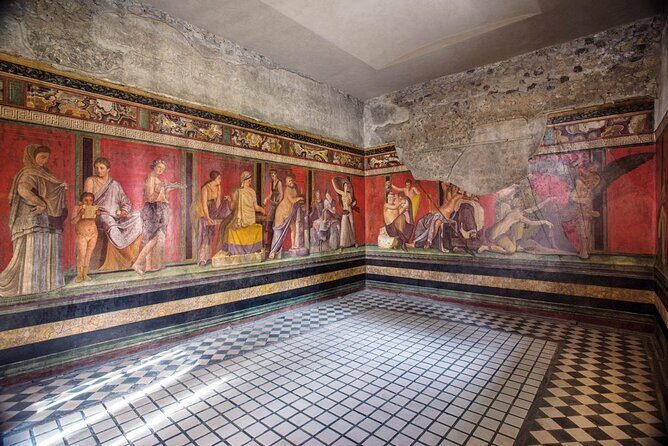
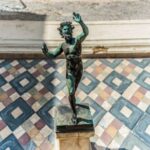
The Casa del Fauno is next, and the name comes from a bronze statue of a faun located in the impluvium. If you like art-in-place details—things you can point to and say, that’s where it was—this one pays off quickly. You’ll get the feeling that the house wasn’t just shelter. It was a carefully styled environment.
Then you move to Casa del Menandro, a very large prestigious house (around 2,000 square metres) named for an fresco of the poet Menandro. This is also where the tour description gets delightfully specific: inside, 118 objects in silver were found, described as tableware of great interest.
The art program here matters too. The frescoes depict Trojan War scenes, including the death of Laocoonte, Cassandra, and Ulysses. When a house displays myth scenes like this, it’s telling you something about identity and education. People weren’t only decorating for beauty—they were signaling taste, connections, and social standing.
The drawback with big houses is that they can feel repetitive if you don’t know what you’re looking for. This is where the archaeologist guidance helps you connect floor plan and wall art to cultural meaning. With headsets, it’s easier to track what matters during the short time window.
Archaeological Park of Pompeii stop: amphitheatre scale and summer shade
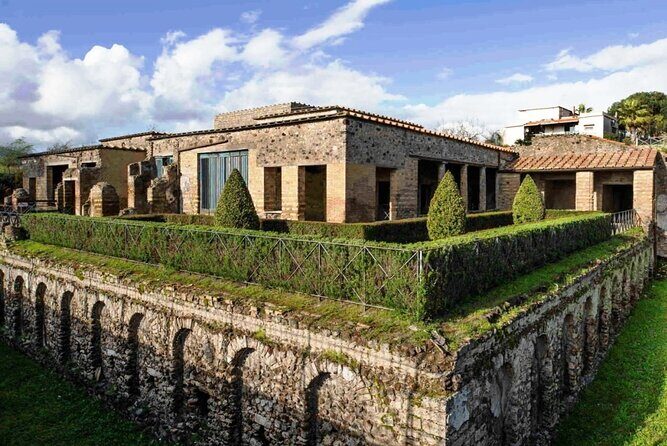
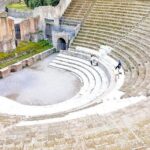
The park segment shifts from houses to games. Pompeii had an amphitheatre where gladiators fought—described as gladiators against gladiators and the kind of spectacle Romans loved.
The amphitheatre could house up to 20,000 people across three levels. That’s big enough to help you grasp the scale of entertainment culture in a city that still had room for domestic luxury and neighborhood commerce.
Here’s a detail I find especially practical: during hot summer months, spectators were protected by a dark linen covering. It’s the kind of thing you won’t guess just by looking at ruins. Hearing it makes you think about crowd comfort, not only architecture.
Adjacent to the arena, you can see the gymnasium where youngsters would work out. That’s a useful contrast—entertainment for adults alongside training and physical education for the young.
Since the itinerary notes admission ticket not included for this stop, don’t assume every possible component is automatic. If your priority is the amphitheatre area itself versus nearby viewpoints, it’s worth confirming what’s included when you arrive. Either way, the scale lesson is worth the time.
Temple of Apollo: religion just before the eruption
The final stop is the Temple of Apollo. The worship of Apollo arrived before the eruption of 79 A.C., and the description notes that this cult lost followers due to Jupiter becoming stronger.
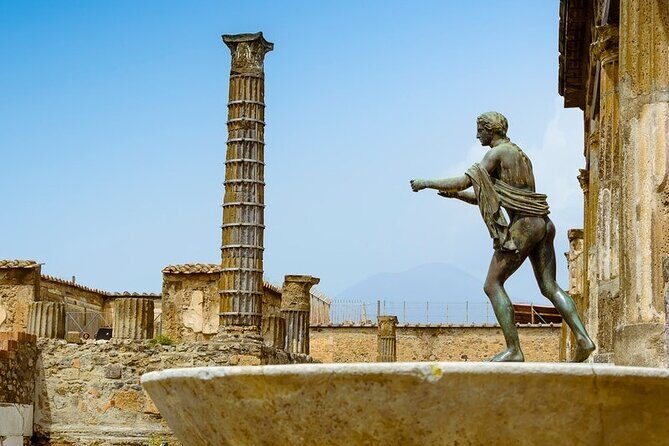
You’ll see a bronze statue of Apollo represented with bow and arrow, plus a statue of the goddess Diana. This ending works well because it moves you away from domestic spaces and public crowds toward belief, ritual, and how people organized their world.
Religion in Pompeii isn’t just a background theme. It shaped calendars, public life, and identity. Ending with Apollo helps you leave with a sense that Pompeii’s culture was layered: art in homes, commerce in streets, and formal worship in temples.
What the guide style feels like in real life (Paulo, Teresa, Alfredo)
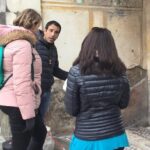
This tour earns its high marks for guide performance, and the names show up clearly in the experiences people described: Paulo (or Paolo), Teresa (listed under Askos Tours in the app but connected with the same operator), and Alfredo.
The strong theme is clarity: guides explain how to date what you’re seeing and place it into historical and cultural context. They also offer popular and alternate ways to interpret evidence, which is a real quality. It keeps the explanation from turning into one rigid story and instead helps you see why archaeologists talk the way they do.
I also like that the best guides keep energy high without running you into the next stop. One account called out heat management and shade breaks as a major win. Another praised pacing that keeps the group engaged. That’s exactly what you want when you’re walking in the open.
One caution from experience: a wrong meet-up location can happen. If it shows up in your confirmation materials or on the day, verify before you arrive. If something looks off, contact the group quickly so you’re not wandering in the wrong square.
Practical tips: wear in Pompeii, bring water, and use your day ticket
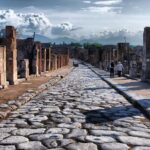
Pompeii punishes slow shoes. You’ll be walking a lot on uneven stone, and even if the stops are timed, the transitions add up.
My practical advice:
- Wear supportive walking shoes you trust on stone steps and sloped streets.
- Bring water. The tour is described as hot but worth it, and shade spots can help, but you still need hydration.
- Expect a steady pace. This isn’t a sit-down museum day. It’s a guided walk with short deep breaths.
- Use the day ticket after the tour. If you want to linger in a specific house or revisit an area you loved, this is the way to do it without feeling like you missed the whole point.
Also, keep expectations realistic. One experience described feeling like not all advertised sites were covered during the guided portion. The key fix is simple: the ticket is for the day, so after the tour you can explore on your own as long as you like. That gives you control, even if the guided route is tighter than you hoped.
Should you book this Pompeii small-group tour with an archaeologist?
Book it if you want:
- Guided context from an actual archaeologist rather than just signage and quick facts
- A small group (max 15) with headsets so you can hear the explanation
- Good value for the price because admissions for many stops are included and you get a day ticket for follow-up exploring
- A route that balances houses, public life, and religion (not just one theme)
Skip it or consider a different option if:
- You want lots of free time to wander slowly without a timed structure
- You’re very sensitive to adult content, since the Lupanar stop is part of the itinerary
- You care most about one specific area (like only one house or only the amphitheatre), because the tour is designed to cover multiple highlights in one go
If you’re going to Pompeii once, this tour is a strong way to get your bearings fast and leave with enough understanding to explore on your own afterward.
FAQ
How long is the Small-Group Tour in Pompeii?
The tour is approximately 2 hours 30 minutes.
What is the group size?
The maximum group size is 15 travelers.
Is this tour in English?
Yes, the tour is offered in English.
Is a priority ticket included?
Yes. Priority ticket entrance for the Archaeological Park of Pompeii is included.
Are entry tickets included for the stops?
Admission tickets are included for most listed stops, including the houses, the Forum, the Baths, and the Temple of Apollo. The Archaeological Park stop is listed as admission ticket not included, so you may want to confirm what access is included for the amphitheatre area on the day.
Can I explore Pompeii on my own after the tour?
Yes. Your ticket is for the day, so after the tour you can explore independently as long as you like.
Is free cancellation available?
Yes. You can cancel for a full refund up to 24 hours in advance. The experience also requires good weather, and if it’s canceled due to poor weather, you’ll be offered another date or a full refund.