REVIEW · PRIVATE
Skip the Line: Vatican Wheelchair Accessible Private Tour
Book on Viator →Operated by Tours of Rome · Bookable on Viator
Getting into the Vatican can feel like a contest.
This private skip-the-line tour gets you into the Vatican Museums faster, then keeps you moving through the big visual hits with a guide focused on art and meaning. I especially like the wheelchair-accessible pacing and routing, and the way your guide connects what you’re seeing to the artists and the Popes who commissioned the work.
The main drawback to plan for: proof of disability is required, and you’ll also need to follow the Vatican dress rule (shoulders and knees covered). If either of those is a problem on your travel dates, this tour may feel more stressful than it should.
In This Review
- Key things that make this tour worth your time
- Entering the Vatican Museums without the crush
- Meeting at Viale Vaticano and the rules that matter on arrival
- Pigna Courtyard, Pio Cristiano Museum, and the first sprint of meaning
- Galleries of Tapestries and Geographic Maps: the detail stop that’s easy to miss
- Raphael Rooms and Julius II: seeing why early-1500s mattered
- Sistine Chapel in 30 minutes: what you should focus on
- After the tour: how to use your extra time wisely
- Accessibility that’s more than ramps
- Price and value: is $385.53 per person a smart spend?
- Who should book this private wheelchair Vatican tour?
- Should you book this tour?
- FAQ
- Where is the tour meeting point?
- How long is the private tour?
- Is admission included for the Vatican Museums and Sistine Chapel?
- Is the tour wheelchair accessible, and is proof required?
- Do I need to wait with the guide before entering?
- What should I wear to enter the Vatican?
- Is St. Peter’s Basilica included?
- Can I stay inside after the guided portion ends?
- Is this tour refundable if I cancel?
Key things that make this tour worth your time

- Skip-the-line entry saves you from the longest, most demoralizing parts of the morning crowd
- Private, wheelchair-accessible route means fewer stops for regrouping and more time looking at art
- Art historian-style explanations help you spot what matters in the Raphael Rooms and the Sistine Chapel
- Sistine Chapel focus in 30 minutes gets you to the key ceiling scenes and the Last Judgement wall without fatigue
- Meeting right at Viale Vaticano keeps things simple and avoids confusion near the museum entrances
Entering the Vatican Museums without the crush

If you’ve ever visited the Vatican Museums, you already know the vibe: packed corridors, slow bottlenecks, and people trying to read tiny details while standing still. This tour’s biggest practical win is that it treats your visit like a mission with a plan. You start at Viale Vaticano and then get skip-the-line access into the Museums, which is a huge deal when your body (or your schedule) can’t handle long waits.
This is also a private tour, so you are not sharing your guide’s attention with a busload of people. In the reviews, guides are repeatedly described as patient and tuned in to mobility needs. Names that came up include Deborah Virgili, Serena, Franz, Michael (spelled Michael or Michelle in feedback), Teresa, Andrea/Andreas, and Alexandra—each described as friendly and focused on making the route work.
One more thing that helps: your guide is guiding you through the right entry points. You are specifically told not to go straight to the Vatican Museums entrance without your guide. That matters because it cuts down on time lost to walking the wrong way and then trying to fix it while lines form.
You can also read our reviews of more private tours in Rome



Meeting at Viale Vaticano and the rules that matter on arrival
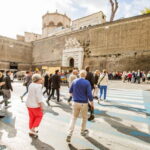
Your meeting point is Viale Vaticano 100, right by the Vatican City area, and the tour ends back near that same starting spot after about three hours. Because you’re meeting outside, it’s smart to give yourself a little buffer to find the group and settle before the schedule starts moving.
Two rules can trip people up if you don’t prep:
- You’ll need to cover between your shoulders and knees to enter. Bring a light layer you can wear quickly.
- Proof of disability is required. Plan your documents before you travel, and keep them accessible.
You also should know that pets and service dogs are not allowed on this tour. That’s the kind of detail that matters for real-life planning, so if you’re traveling with a dog for medical reasons, you’ll want to confirm whether your situation can be accommodated through the tour provider before you go.
Finally, the Vatican area can attract street vendors. You’re strongly advised to avoid them around the Vatican area since they may give incorrect information. In practice, that means: stick with your tour meeting directions, and don’t trust quick pitches near the entrances.
Pigna Courtyard, Pio Cristiano Museum, and the first sprint of meaning
Right after you meet your guide, the tour starts with you crossing the Pigna Courtyard. It’s a good opening move because it orients you fast, and it gets you into the Vatican Museums flow without wasting time circling.
From there, you head toward the Pio Cristiano Museum. Even if you don’t know much about early Christian artifacts, this part of the visit helps you understand what the Vatican Museums do: they don’t just stack masterpieces. They show how Rome’s religious and cultural story gets preserved in objects, rooms, and curatorial choices.
The value here is not only the objects you see—it’s the order. A guide can point out what to look for in each room so you don’t end up scanning randomly. That’s especially helpful on an accessible route where energy is limited. If you’re using a wheelchair or mobility scooter, you’ll appreciate having the day structured so you’re not guessing what’s coming next.
Also, note that some monuments may be affected due to the Jubilee and restorations. You may receive messages if plans shift. That doesn’t automatically mean something will be missing, but it does mean you should stay flexible and watch for updates close to your date.
Galleries of Tapestries and Geographic Maps: the detail stop that’s easy to miss
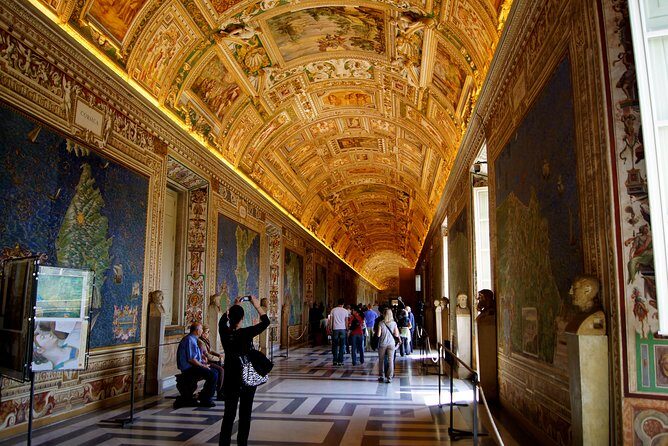
One of the stops is the Galleries of Tapestries and Geographic Maps. This is exactly the kind of room that’s hard to appreciate if you’re moving fast with a crowd. Here, you get time with an important display of Renaissance maps, which can surprise people who come expecting only paintings and statues.
Maps in the Renaissance aren’t just geography. They show how Europeans imagined the world, how knowledge circulated, and how power showed up in what got drawn and displayed. With a private guide, you can ask questions on the spot, and your guide can adjust to the pace your group needs.
A benefit of this tour’s style is that it’s not trying to cram every corridor into three hours. Instead, it picks key rooms and builds a narrative link between them: maps and the way the world was understood, then Raphael’s world of art and patronage, then Michelangelo’s visual theology in the Sistine Chapel.
Raphael Rooms and Julius II: seeing why early-1500s mattered
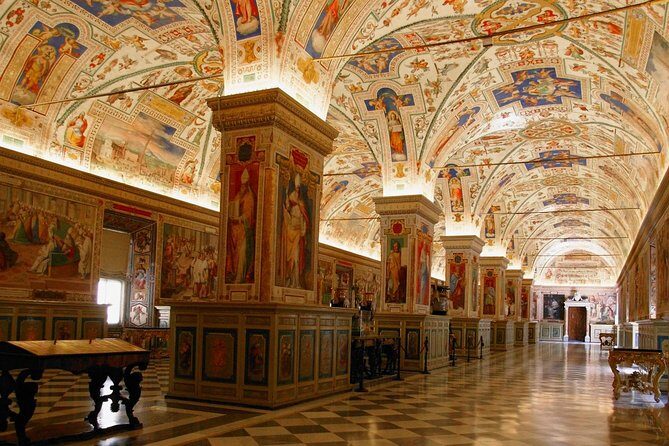
Next up are the Raphael Rooms (Le Stanze di Raffaello). These were commissioned by Pope Julius II in the early 1500s, when Raphael was still relatively young. That context matters. It turns the rooms from a checklist item into a story about timing, ambition, and how patronage shapes what art becomes.
Your guide will walk you through the Raphael Rooms with attention to the paintings and their significance, including how these works are considered some of Raphael’s greatest. The advantage with a private format is that you can linger over a detail without a guide whispering hurry-up cues in your ear. If you’re viewing from a wheelchair, that extra patience is not a luxury—it’s what turns the room from overwhelming to actually enjoyable.
In the reviews, guides are repeatedly praised for making the experience feel non-generic. People singled out how their guide pointed out specific paintings and explained history in a way that made the spaces feel less intimidating. That’s the difference between standing in a magnificent room and truly understanding why you’re standing there.
You can also read our reviews of more tours and experiences in Rome
- Skip-the-Line Group Tour of the Vatican, Sistine Chapel & St. Peter’s Basilica
★ 4.5 · 12,779 reviews


Sistine Chapel in 30 minutes: what you should focus on

Your tour then continues into the Sistine Chapel, with an allotted time of 30 minutes. That’s not a long time, but it’s realistic for a private accessible route. This tour is designed to get you to the main visual moments without turning the chapel into a long endurance test.
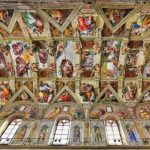
Your guide helps you examine Michelangelo’s Last Judgement on the altar wall, and then the colorful frescoes on the ceilings. That ceiling work is where most first-time visitors feel both awe and confusion at once. With a guide, you get the kind of orientation you normally miss: what scene you’re looking at, why it’s placed where it is, and what you should notice in the composition.
Two practical tips for you here:
- Go in with a plan for your own eyes. Pick one ceiling area to start with, then let the guide guide the rest.
- If you’re using a wheelchair, you’ll likely want a stable viewing angle and time to adjust. A good guide will help you slow down at the points that matter.
In feedback, several guides were praised for accommodating mobility needs and helping people navigate with minimal delay. That kind of on-the-ground attention is the reason 30 minutes can still feel like you actually saw something.
After the tour: how to use your extra time wisely
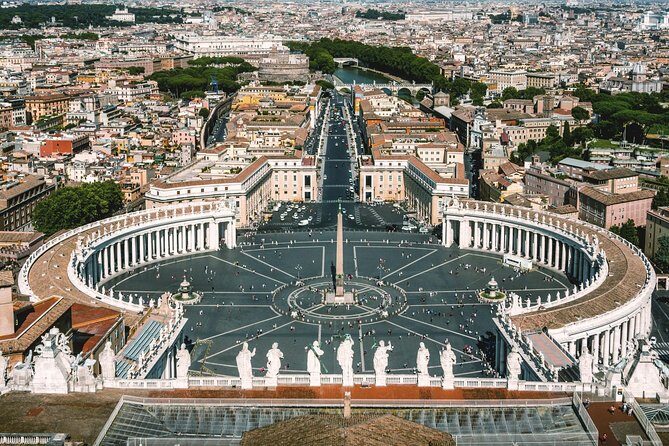
Your tour ends back near the main entrance after about three hours, but you can stay more time inside the Vatican. That’s a big deal because three hours moves fast. If you’re the type who likes a second pass—especially for photos, smaller details, or just decompressing in a quieter area—this is your chance.
Try to think of the guided portion as the map in your head. Once you’ve seen the Raphael Rooms and the Sistine Chapel through a guided lens, you’ll understand what you might want to revisit on your own. You’ll also be less likely to wander into the wrong corridor and lose your bearings.
One heads-up from real-world planning: St. Peter’s Basilica is not included in this tour. If you were hoping this private guide would cover it, you’ll need separate time for it. And on some days, access can be affected, so it’s smart to keep your expectations flexible and plan your broader Vatican day accordingly.
Accessibility that’s more than ramps
This is billed as a wheelchair-accessible tour of the Vatican Museums and the Sistine Chapel. What that means for you in practice is that your route should include accessible pathways and lifts where needed, rather than forcing you to constantly negotiate steps and dead ends.
The reviews give a clear signal that the guides treat accessibility like part of the job, not an afterthought. People mentioned plenty of accessible pathways and lifts, and one reviewer even noted they were able to get a wheelchair for a parent who recently had spine surgery. Another praised a guide’s self-awareness about ADA-style requirements, calling out how every effort was made to make the experience memorable and workable.
One practical consideration: wheelchair and scooter visitors can get tired faster in museums than they expect. A private tour that stops at key rooms helps you avoid that slow energy drain from endless walking. You still need to pace yourself, but the structure makes it easier.
Also, remember the proof of disability requirement. It’s not about being difficult; it’s how the tour qualifies and operates. Get your documents ready and you’ll glide through the day with less stress.
Price and value: is $385.53 per person a smart spend?
At $385.53 per person for about three hours, this isn’t the cheapest way to visit the Vatican. You’re paying for four things at once: private guiding, skip-the-line access to the Vatican Museums, admission included for the Museums and Sistine Chapel time, and wheelchair accessibility with accommodations planned into the route.
Here’s how I’d judge the value for your trip:
- If you’re visiting with mobility needs and you want less waiting, more control, and fewer surprises, the cost can feel reasonable because the tour is doing the hard coordination for you.
- If you’re traveling solo with full mobility and you’re comfortable doing a self-guided plan, a lower-cost group or self-guided option might make more sense. But you would be trading away the guided order and the accessibility planning.
For many people, the skip-the-line portion is the deciding factor. The Vatican can swallow time. If you can’t afford to spend it standing still, this tour buys you forward motion and a guide’s eyes on the art, not on the clock.
Who should book this private wheelchair Vatican tour?
Book this if your priority is a guided, accessible visit that focuses on the core highlights without turning the day into a marathon. It’s especially suitable for:
- Wheelchair users or anyone who needs an accessible route and lift-friendly pacing
- Couples and families who want a guide to adjust the flow to their needs
- People who want strong art context for Raphael and Michelangelo rather than just photos and names
It may be less ideal if you can’t meet the dress rule (shoulders and knees covered) or if you don’t have the required disability documentation. Also, if you want St. Peter’s Basilica as part of the same guided experience, you’ll need to plan that separately since it’s not included.
Should you book this tour?
I think this tour is a smart choice when you want the Vatican highlights with less friction. The combination of skip-the-line entry, a private art-focused guide, and wheelchair-accessible routing is exactly what turns a potentially exhausting visit into something you can enjoy.
If your biggest worry is time lost to crowds, and your biggest need is an accessible plan that doesn’t leave you stuck figuring things out alone, then yes—this is one of those tours where the price buys real ease.
FAQ
Where is the tour meeting point?
You meet at Viale Vaticano, 100, 00192 Roma RM, Italy. The tour ends back at the meeting point after about three hours.
How long is the private tour?
The tour runs for about 3 hours.
Is admission included for the Vatican Museums and Sistine Chapel?
Yes. Admission tickets are included for the Vatican Museums stop and the Sistine Chapel stop.
Is the tour wheelchair accessible, and is proof required?
Yes, it is a wheelchair-accessible tour of the Vatican Museums and the Sistine Chapel. Proof of disability is required.
Do I need to wait with the guide before entering?
Yes. You’re told not to go directly to the Vatican Museums entrance without the guide.
What should I wear to enter the Vatican?
You should cover between your shoulders and knees to be allowed inside.
Is St. Peter’s Basilica included?
No. St. Peter’s Basilica is not included as part of this experience.
Can I stay inside after the guided portion ends?
Yes. After the guided tour, you can stay more time inside the Vatican.
Is this tour refundable if I cancel?
No. This experience is non-refundable and cannot be changed for any reason.