REVIEW · ST PETER'S BASILICA TOURS
Vatican, Sistine Chapel & St. Peter’s Skip-the-Line Tour
Book on GetYourGuide →Operated by Made in Rome Tours · Bookable on GetYourGuide
Skip the Vatican lines, keep your cool. This tour is built for the real challenge: getting inside Vatican Museums without spending your morning in misery. I especially like how the guide ties big art moments to the people and power behind them, so the Sistine Chapel feels like more than postcard scenes. One thing to consider: it’s only about 3 hours, so you won’t have time for a full, slow wander of every gallery.
You’ll meet in Borgo Pio near St. Peter’s Square (Via Plauto 17/A), get a quick intro, then walk through the neighborhood and along Via della Conciliazione. The route sets you up for the scale of the Vatican, and the finish in St. Peter’s Basilica includes a special entrance designed to bypass the long queue out in the square.
In This Review
- Key highlights worth your attention
- Borgo Pio Meet-Up: where the visit actually starts
- St. Peter’s Square: obelisk, columns, and a Bernini story
- Vatican Museums entry: skip the line, then expect security
- Gallery of Maps and Tapestries: art that explains how the Vatican sees the world
- Sistine Chapel highlights: Creation of Adam and Last Judgement
- St. Peter’s Basilica finish: a special entrance that skips the square queue
- Price and logistics: why $58 can work out
- Who should book (and who should rethink the plan)
- Should you book this Vatican Museums, Sistine Chapel & St. Peter’s skip-the-line tour?
- FAQ
- How long is the Vatican, Sistine Chapel & St. Peter’s Skip-the-Line Tour?
- How much does the tour cost?
- Where do I meet the tour guide?
- What time should I arrive for check-in?
- Does skip-the-line mean I skip security?
- What sites are included?
- Will I be able to enter St. Peter’s Basilica even if there is a long line in the square?
- What are the main dress restrictions?
- Is this tour suitable for wheelchair users?
- What if St. Peter’s Basilica is closed on the day of my visit?
- Is the tour only in English?
Key highlights worth your attention
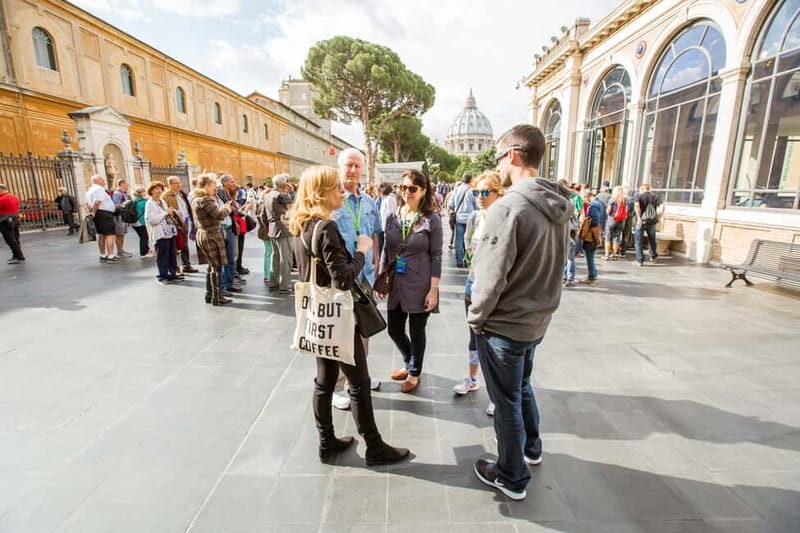
- Guaranteed skip-the-line access through a dedicated group entrance
- Sistine Chapel showstoppers like the Creation of Adam and the Last Judgement
- Vatican Museums favorites including the Gallery of Maps and a pass through major collections
- St. Peter’s Square setup with context on the obelisk and Bernini’s design
- Smart ending in St. Peter’s Basilica with a way in from the museum side
Borgo Pio Meet-Up: where the visit actually starts
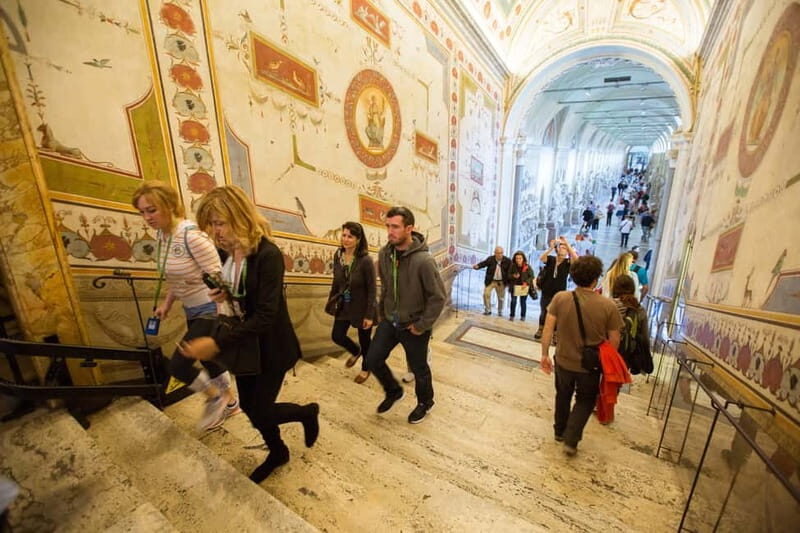
The best part of any Vatican plan is timing, and this one starts in the right place. You meet in Borgo Pio, near St. Peter’s Square, at Via Plauto 17/A. The tour notes ask you to arrive about 20 minutes early so you can check in and get grouped up before you head out.
From there, the early walking matters. You move through the oldest neighborhoods of the Vatican area, with small shops and that lived-in feel you don’t get when you only bounce from bus to entrance. Along the way, your guide gives local tips for eating and sightseeing in Rome—useful on a day when you’ll be tired, hungry, and short on patience.
Then you head toward St. Peter’s. You walk through Via della Conciliazione, the main approach to the square. It’s lined with embassies and flags, and it’s a good moment to notice how the Vatican sits inside a bigger political map. You don’t just see buildings—you understand why the site looks and feels the way it does.
Practical tip: wear shoes you can walk in for a few hours of steady pavement. This is a walking tour that starts with neighborhood streets, not a “sit on a bus” style day.
You can also read our reviews of more tours and experiences in Rome
St. Peter’s Square: obelisk, columns, and a Bernini story
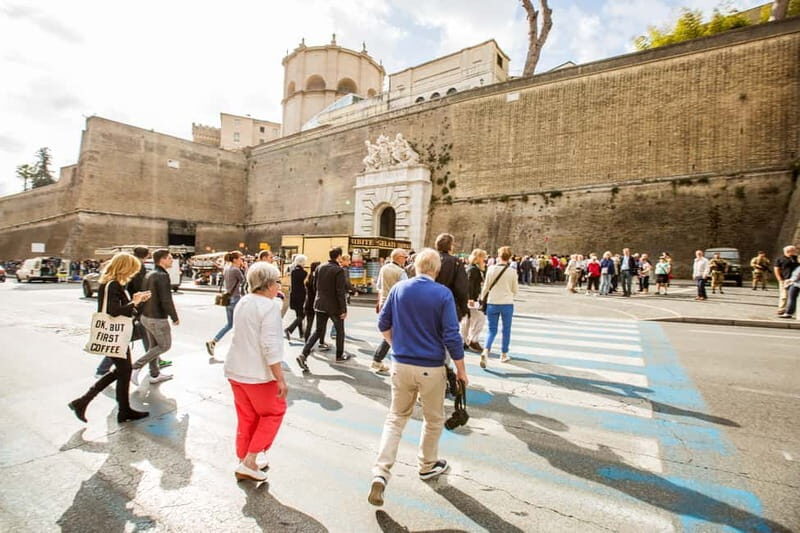
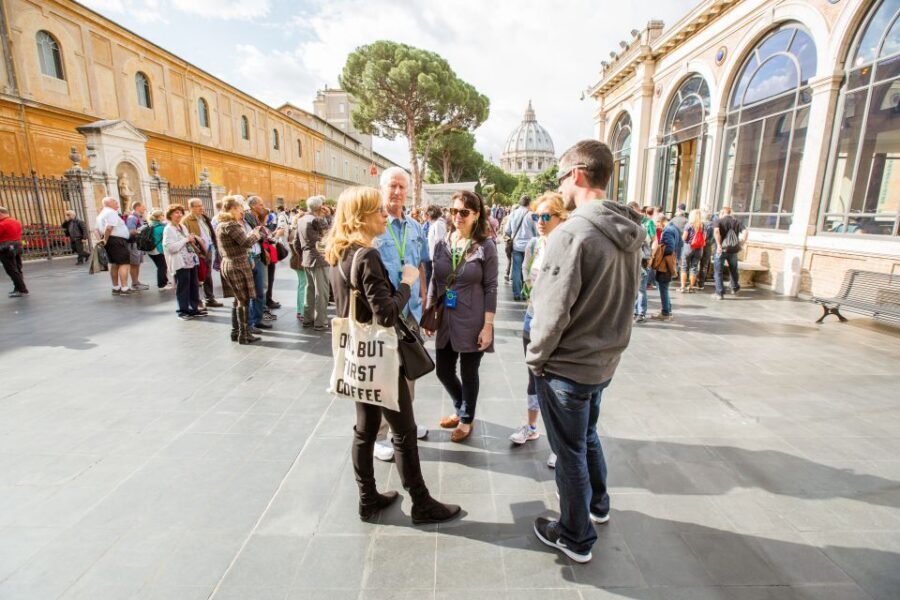
You’ll reach St. Peter’s Square as a group, and you’ll feel the scale right away. The square is anchored by a towering Egyptian obelisk, surrounded by the dramatic sweep of columns and statues of saints. Even if you’ve seen photos, being there is different. The space is designed to pull your eyes upward and forward, like the building is guiding your attention.
Your guide also shares the square’s background and the connection to Bernini, the artist closely associated with the way the piazza was shaped. You’ll get more than a name drop. The point is to help you read what you’re looking at: the symmetry, the approach lines, and why it feels like a stage.
There’s also a fun little reality check built into the walk. You’ll pass along points where you can see how residents of the smallest city-state in the world move through daily life. That matters because the Vatican isn’t only museums and monuments—it’s also a functioning place with people, routines, and security.
And yes, there’s a photo moment for the Swiss Guards in their distinct Renaissance-style uniforms. It’s one of those small breaks that makes the day feel less like a checklist and more like an experience you’ll remember.
Vatican Museums entry: skip the line, then expect security
Once you arrive at the museum area, the whole “skip-the-line” part kicks in. Your guide leads you to a special area reserved for group entry, so you’re not trapped behind the massive admission queue out front.
But keep your expectations realistic: skip-the-line tickets do not mean skip all checks. You still go through airport-style security. The good news is that your line management is handled so you don’t lose hours.
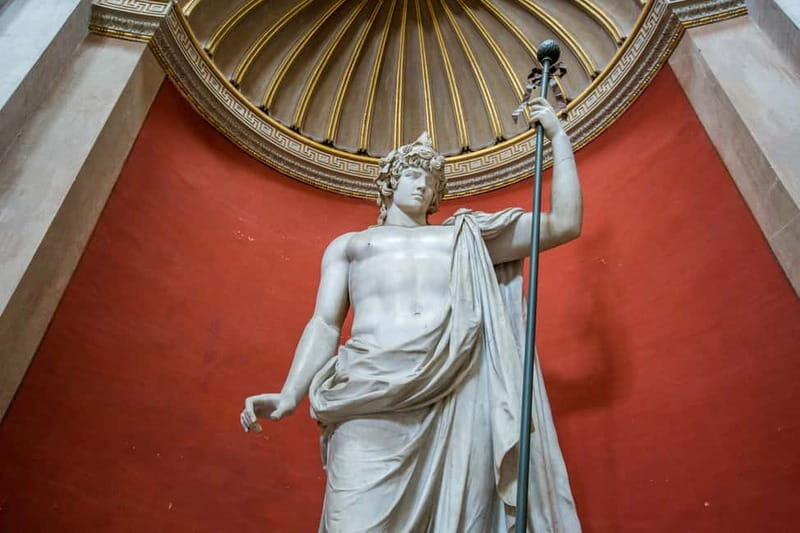
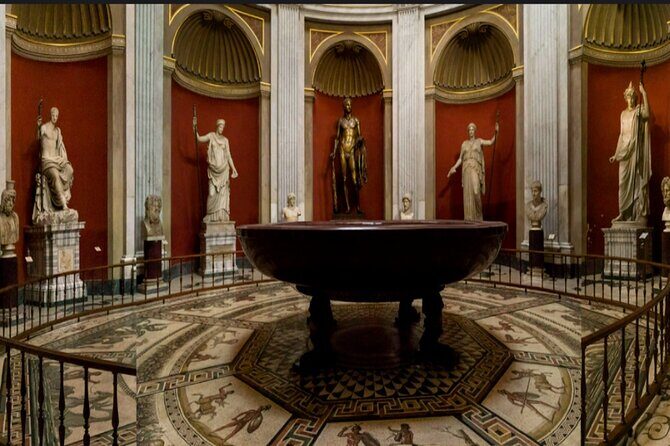
What you’ll see right away sets the tone. You’ll move through a collection that includes Roman and Greek statues, plus stop-and-learn moments like the Gallery of Tapestries and the Gallery of Maps. These rooms are not random decoration. They show how the Vatican collected, displayed, and communicated power through art—using both images and storytelling.
Practical tip: bring a small, secure bag and keep it simple. Security lines get slower when people fumble with belts, pockets, or oversized items. You don’t want to be the person who delays the group.
Gallery of Maps and Tapestries: art that explains how the Vatican sees the world
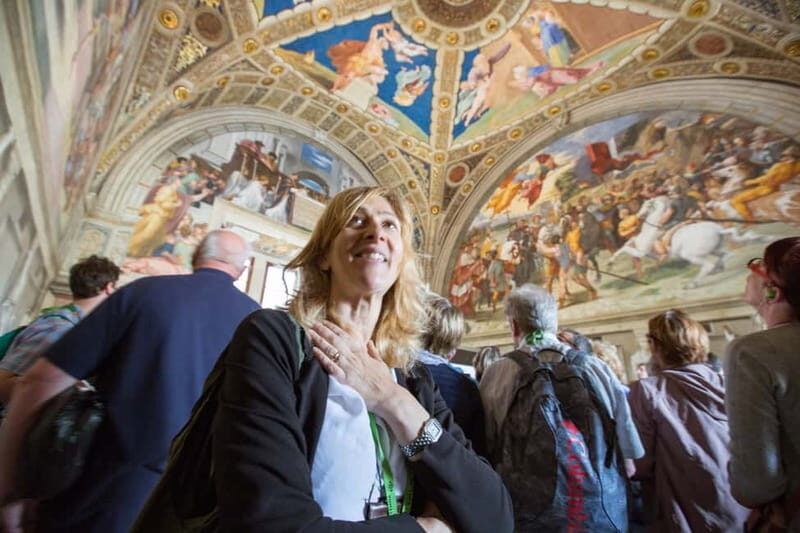
Two museum rooms get singled out for a reason: they teach you how to look. The Gallery of Maps is famous because it connects geography with message-making. Even if you’ve never studied it before, you’ll get enough context from the guide to understand what you’re seeing: the Vatican framing of lands, boundaries, and worldview through mapped visual language.
Then there’s the Gallery of Tapestries. Tapestries are art you can feel in your memory, not just photograph. They’re woven, layered, and detailed, and they communicate scenes in a way that’s almost theatrical. With a guide, you’re not only looking at images—you’re understanding why this medium mattered in court culture and religious storytelling.
This is where the guided part pays off. Without a guide, it’s easy to walk past these rooms and think, Wow, pretty. With a guide, you start noticing symbols, themes, and how the museum is built to guide your interpretation.
Sistine Chapel highlights: Creation of Adam and Last Judgement
The Sistine Chapel is why people plan the Vatican day in the first place, and your guide sets you up before you arrive. You learn a bit about the Chapel’s history, so when you step inside, the work doesn’t feel like random ceiling art.
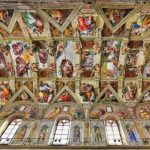
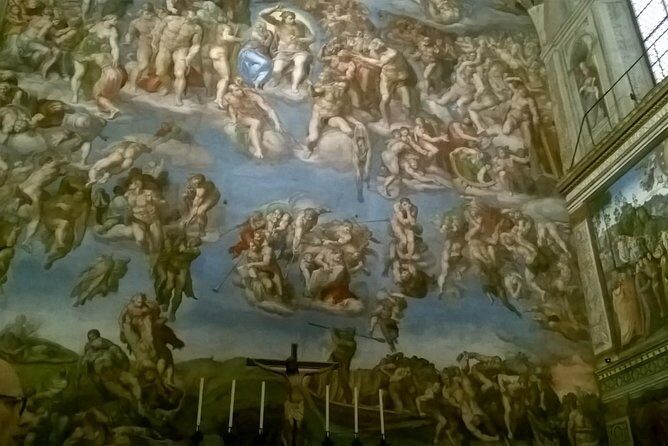
Then you hit the major masterpieces. Two names come up immediately because they’re unavoidable when you’re standing there: the Creation of Adam and the Last Judgement. These frescoes are big, yes—but what makes them land is how your guide frames them.
Creation of Adam is often described as the iconic moment everyone knows. The real win is seeing it as part of a larger chain of biblical storytelling, with emphasis on the way Michelangelo composed figures to feel almost human and immediate. You’re not only viewing anatomy. You’re seeing expression built into paint.
The Last Judgement is heavier, louder in emotion. It’s the kind of scene where figures seem to move across the ceiling, and your guide helps you read that chaos. You’ll get context for the biblical era it depicts and how the images were meant to communicate meaning, not just drama.
Quiet practical reality: the Chapel is popular, and your time is managed. Your tour gives you the big beats, but the main value is that you’re guided to the most meaningful moments rather than wandering until your feet give out.






St. Peter’s Basilica finish: a special entrance that skips the square queue
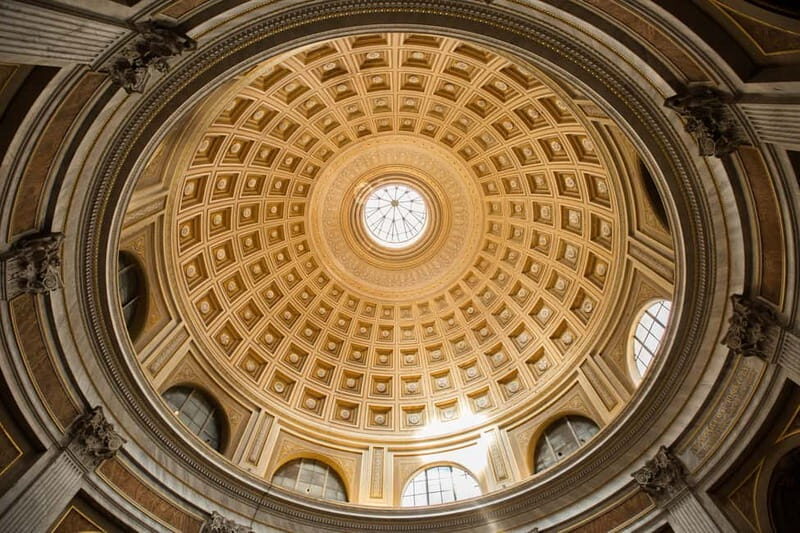
The ending is one of the smartest parts of the whole experience. After the museum route, you finish with St. Peter’s Basilica, and you’re brought to the front with a special entrance that lets you bypass the long queue out in the square.
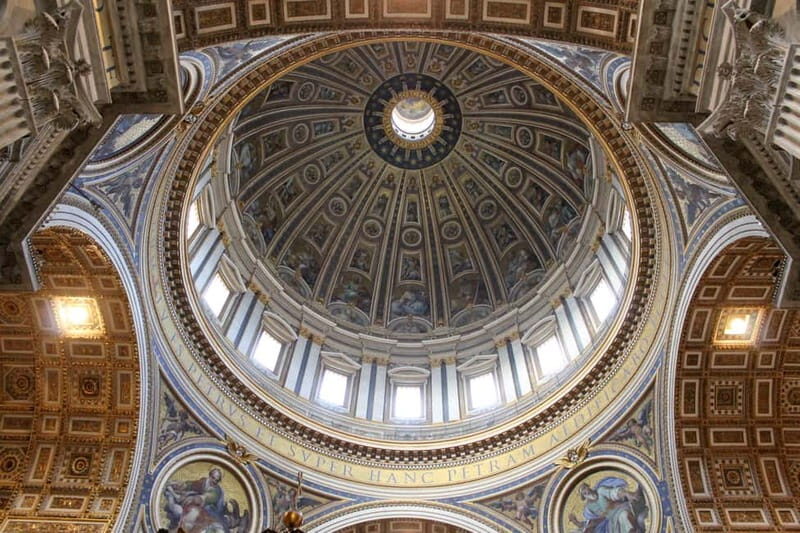
When you step inside, focus on the architecture. The building is a work of scale and engineering, with dramatic interior space and a sense of movement created by the design. You’ll also hear about the Basilica’s significance as part of the Vatican’s religious story, not just as a sightseeing stop.
One more important detail: the Vatican can have last-minute closures for special events. If St. Peter’s Basilica is closed on your day, it’s rare, but it can happen. In that situation, your guide will extend the tour inside the Vatican so you still get the Museums and Sistine Chapel as planned. It’s not the same as walking into the Basilica, but it helps protect the core experience.
Price and logistics: why $58 can work out
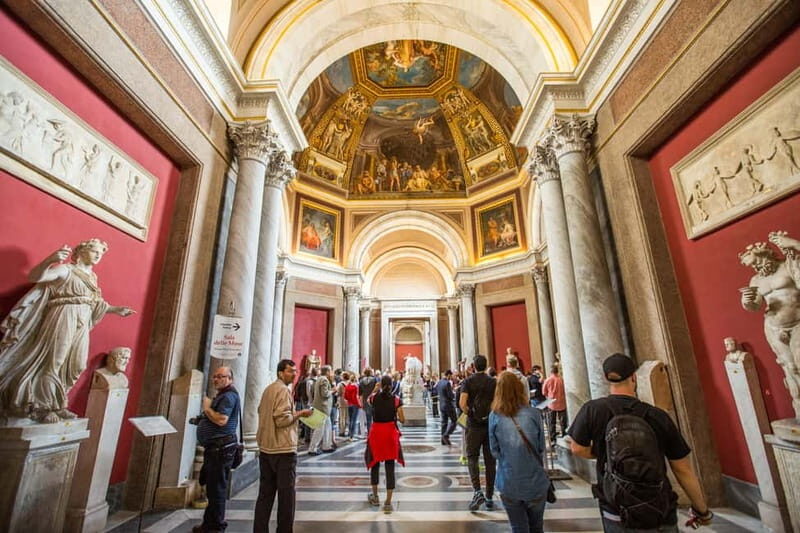
At around $58 per person for a roughly 3-hour guided visit, the value is mainly time. The Vatican has lines that can swallow your day. When you skip admission queues and have a guide routing you through the most important sections, you’re paying to buy back momentum.
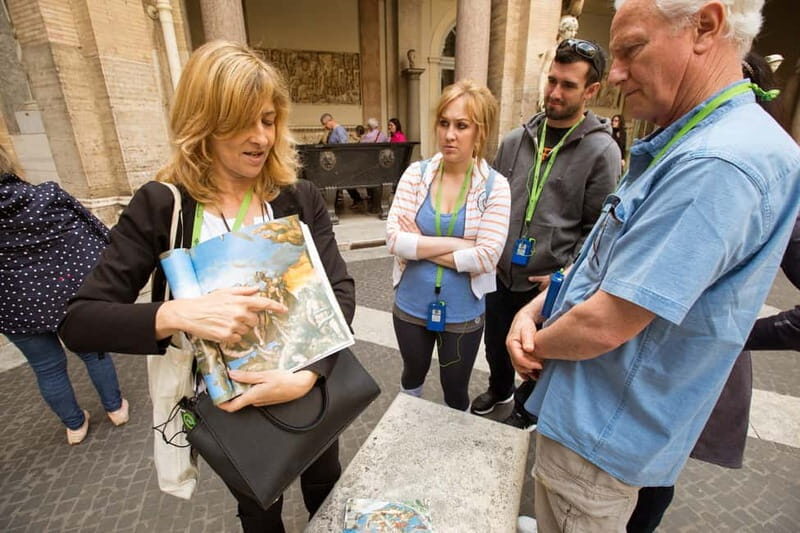
Think of it this way: you’re not paying only for access. You’re paying for interpretation. A guided pass through rooms like the Gallery of Maps, plus the Sistine Chapel’s big scenes, changes how you remember the day. It’s the difference between seeing highlights and understanding why those highlights mattered.
Also, the tour is paced for staying together. Some groups feel like they’re sprinting between photo stops. The structure here is designed to keep the flow going while still allowing questions—especially when guides like Filipe, Francesca, Carl, Maura, Shak, Giada, and Paula are mentioned often for bringing stories and answering questions clearly.
Bottom line: if you only have one shot at the Vatican, or your time in Rome is tight, this is the kind of plan that prevents wasted hours.
Who should book (and who should rethink the plan)
This works best if you:
- want Sistine Chapel highlights plus the museum hits without building a whole self-guided route
- like learning context while you look, instead of studying placards for hours
- care about avoiding the long admission and square lines
A few things to know upfront:
- It’s not suitable for wheelchair users, per the tour notes.
- Dress for security and entry. You can’t wear short skirts or sleeveless shirts, and you should avoid anything like weapons or sharp objects (obvious, but still in the rules).
- Plan for security checks even with skip-the-line entry.
If you’re the type who dreams of a slow, silent museum marathon with no guide and no structure, a timed guided tour might feel limiting. But if you want the Vatican’s big moments with less friction, this is a strong fit.
Should you book this Vatican Museums, Sistine Chapel & St. Peter’s skip-the-line tour?
I’d book it if your priority is efficiency plus meaningful context. The biggest win is the combination of skip-the-line access and a guide who helps you actually “read” what you’re seeing—especially in the Sistine Chapel and the rooms like the Gallery of Maps that explain how the Vatican used art to communicate.
I’d hesitate if you want an unhurried, do-everything-at-your-own-pace day, or if mobility limits make group walking hard. In those cases, you’ll likely feel rushed even with the line-skipping.
If you’re visiting for the first time and want the essentials done well, this tour is built for that job: smart routing, clear highlights, and an ending in St. Peter’s Basilica that’s designed to save you time when the square would otherwise slow you down.
FAQ
How long is the Vatican, Sistine Chapel & St. Peter’s Skip-the-Line Tour?
The tour duration is 3 hours.
How much does the tour cost?
It is listed at $58 per person.
Where do I meet the tour guide?
You meet in Borgo Pio near St. Peter’s Square, at Via Plauto 17/A. The tour notes say the address is Via Plauto 17/A.
What time should I arrive for check-in?
Arrive about 20 minutes before the tour start time for check-in. The start time is listed on your booking for the Vatican English tour.
Does skip-the-line mean I skip security?
No. Even with skip-the-line access, you still must go through airport-style security.
What sites are included?
You get guided access to the Vatican Museums, the Sistine Chapel, and St. Peter’s Basilica.
Will I be able to enter St. Peter’s Basilica even if there is a long line in the square?
The tour includes a special entrance that allows you to enter directly and bypass the long queue out in the square.
What are the main dress restrictions?
Short skirts and sleeveless shirts are not allowed.
Is this tour suitable for wheelchair users?
No, it is not suitable for wheelchair users.
What if St. Peter’s Basilica is closed on the day of my visit?
The Vatican may close it for special events, which is rare. If it happens and you can’t enter, the guide will extend the tour within the Vatican. The Vatican Museums and the Sistine Chapel are still included.
Is the tour only in English?
Yes, the live tour guide is in English.
You Might Also Enjoy
More Skip the Line in Rome
- Skip-the-Line Group Tour of the Vatican, Sistine Chapel & St. Peter’s Basilica
★ 4.5 · 12,779 reviews