REVIEW · WALKING TOURS
Secrets of Rome Walking Tour of Rome’s Most Popular Sites
Book on Viator →Operated by Crown Tours · Bookable on Viator
Rome gets easier when someone points.
This walking tour is a simple, well-paced way to orient yourself in the center of the city and understand what you’re actually seeing. I like the easy-going pace—it feels relaxed enough to absorb stories—and I really like how the stops hit three headline areas: Piazza Venezia, the Spanish Steps, and the Trevi Fountain.
One thing to plan for: it’s built for an overview, not a slow sit-down experience. You’ll spend limited time at each place, and food and drinks aren’t included, so you’ll want to handle that on your own.
In This Review
- Key highlights you’ll care about
- Why This 2-Hour Rome Orientation Works
- Meeting Point at Via della Polveriera: Simple Start, Clear End
- Piazza Venezia and Trajan’s Column: Where the Stories Begin
- Spanish Steps: A Quick Pass That Becomes a Better Walk
- Trevi Fountain: Hanging Out with the Right Frame
- The Guide Factor: Passion That Turns Sightseeing Into Sense
- What You Get (and Don’t): A Realistic Planning Checklist
- Price and Value: Is $41.47 Worth It?
- Who This Tour Suits Best (and Who Might Want More)
- Should You Book This Rome Walking Tour?
- FAQ
- How long is the Secrets of Rome walking tour?
- How much does the tour cost?
- Where is the meeting point?
- Where does the tour end?
- Which main stops are included?
- Is admission required for the stops?
- What’s included in the price?
- What’s not included?
- Is there a mobile ticket?
- Can I get a full refund if I cancel?
Key highlights you’ll care about
- 2 hours long: enough to get bearings without burning a whole day
- Small-group cap (max 30): easier to hear and keep moving
- Mobile ticket + instant confirmation: less stress right before you go
- Three major photo-and-story stops: Trajan’s Column area, Spanish Steps, Trevi Fountain
- Passionate guide focus: you’re not just walking—you’re getting explanations
Why This 2-Hour Rome Orientation Works

If Rome is your first stop on the trip, you need two things fast: direction and context. This tour gives you both in about two hours. The vibe is relaxed, and the pace is designed so you can actually hear the guide and look around, instead of feeling like you’re speed-walking through blur.
You’re also paying a very reasonable price for what you get. At $41.47 per person, you’re buying time with a guide who can explain what you’re looking at at the most famous landmarks. Since the stops themselves don’t require paid admission, your money goes mostly toward the guidance and the route logic.
The structure matters, too. The tour moves between Piazza Venezia, the Spanish Steps, and Trevi Fountain, with short stops where you can pause, listen, and then carry what you learned into the rest of your day. That’s the real value: better understanding for everything you do afterward.
You can also read our reviews of more walking tours in Rome



Meeting Point at Via della Polveriera: Simple Start, Clear End
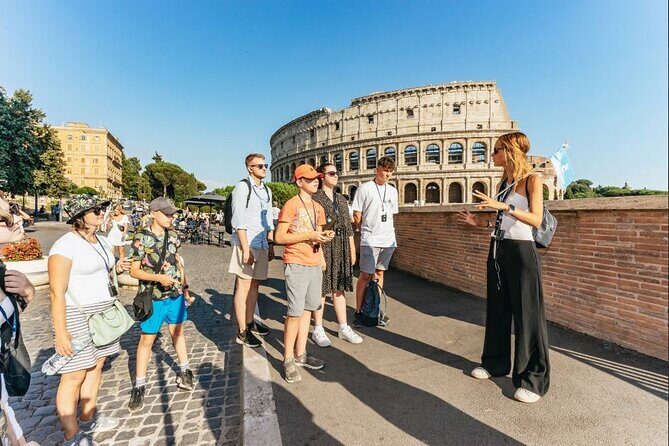
Logistics can ruin a tour day if the meeting point is vague. Here, it’s straightforward: you start at Via della Polveriera, 8, 00184 Roma RM, Italy. The tour ends back at the meeting point, so you don’t have to figure out a separate return plan.
It’s also listed as near public transportation, which is a big deal in Rome, where walking everywhere can be great but also tiring. I like that the tour is set up so you can connect it with other plans without a complex end-of-day scramble.
Also, the group size is capped at 30 travelers. That helps the tour feel manageable. You won’t be packed shoulder-to-shoulder in a way that makes hearing difficult, and the guide has room to keep the group together.
Piazza Venezia and Trajan’s Column: Where the Stories Begin
You start at Piazza Venezia, specifically near Trajan’s Column, and you get a quick 15-minute introduction to the ancient city context. Even if you’ve seen photos of the square before, this is the moment where it helps to have someone connect the visual dots.
Why this stop works: it anchors your understanding of Rome as more than just a collection of famous buildings. Piazza Venezia is a reference point. It’s the kind of place that helps you mentally map where you are. When the guide explains what you’re looking at here, you tend to move through the rest of central Rome with more confidence—less guessing, more recognition.
The stop is short on purpose. You’re not trying to memorize a textbook in a square. Instead, you’re getting a starting story you can build on as the tour moves to the more recognizable “post-ancient” landmarks.
Good to know: admission is free for this part, so you’re not waiting around for tickets. You can focus on the walking, the listening, and getting your bearings.
Spanish Steps: A Quick Pass That Becomes a Better Walk

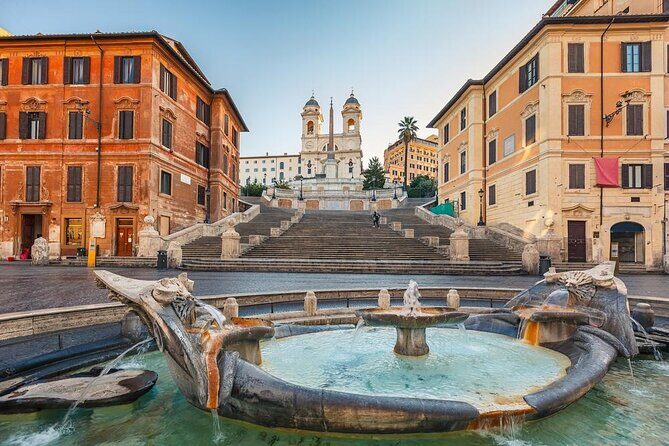
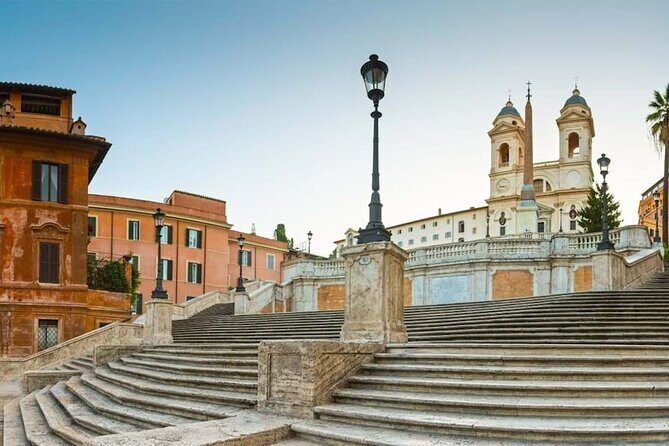
Next up, you’ll pass by the Spanish Steps with another 15-minute stop. This isn’t a long hangout at the steps themselves, so go in with the right mindset: you’re here for the context and the orientation, not a full photo session.
What I like about this format is that it keeps you moving. Rome is full of small lanes and sudden views, and if a tour pauses too long in one spot, you lose the momentum. This one gives you enough time to appreciate the place while keeping the day flowing.
The guide’s role is key here. With an explanation in your head, you’ll notice more than just the famous stairway. Even a brief stop can change how you read a location—what era it connects to, why it became iconic, and what makes it feel like a meeting point for visitors and locals.
And again, you’re not paying entry fees at this stop. That makes the Spanish Steps portion feel efficient: you get the story without adding extra cost or time.
Trevi Fountain: Hanging Out with the Right Frame

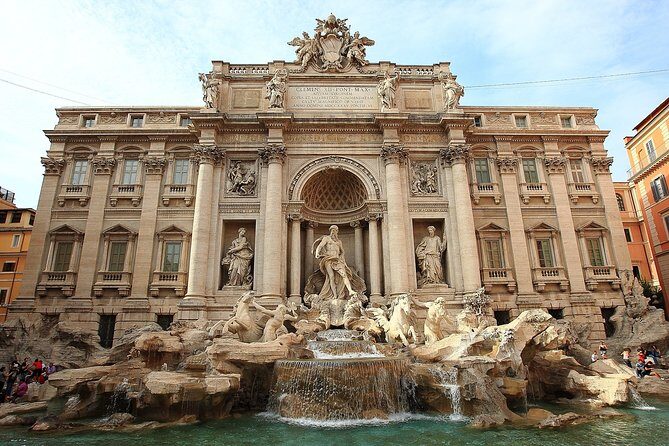
The last stop is Fontana di Trevi, with 20 minutes to hang out and learn the story behind the fountain. Compared to the other stops, this one gets a bit more time, which makes sense because Trevi is one of those places you want to actually experience for a moment rather than just glance at from the sidewalk.
Here’s the practical reason I like the way this tour handles Trevi: you learn the history behind it while you’re already standing there. That tends to stick better than reading about the fountain later after you’ve moved on. The guide’s explanation gives you a frame, and that changes what you look at—details you might otherwise skim past start making sense.
Also, this stop is listed with free admission, so your time is spent on what you came for: listening, looking, and taking in the atmosphere of one of the world’s most recognized landmarks.
One more planning thought: since this is an overview tour, don’t expect a slow, long-form “sit and absorb everything” experience. You’ll get enough time to understand the basics and enjoy the moment, but you may still want to return later on your own if you want deeper exploration.






The Guide Factor: Passion That Turns Sightseeing Into Sense
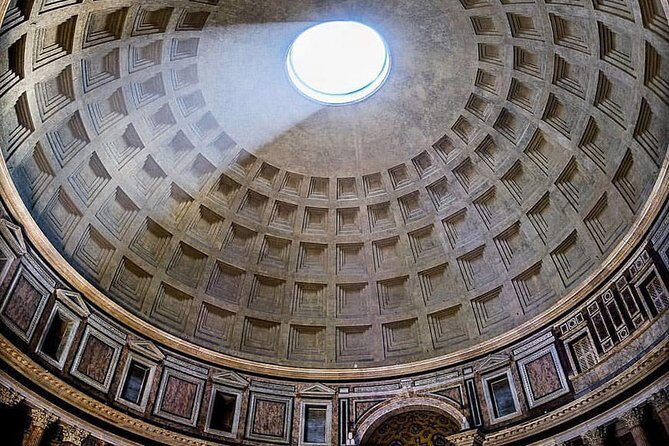
The biggest praise for this tour centers on the guide. The experience is built around a knowledgeable and passionate guide (and the reviews back that up hard). One specific name you might hear is Jessica, who’s described as amazing for both passion and Rome-focused knowledge.
What you’re really paying for is a person who can handle two jobs at once:
- keep the walking pace easy-going
- explain what you’re seeing in a way that feels clear
That’s not automatic on walking tours. Some guides narrate like they’re reading from a brochure. Others talk like they’re sharing something they genuinely enjoy. This one aims for the second type.
I also like that you get suggestions for your time visiting Rome. Even if you later make your own schedule, it’s helpful to have someone point you toward smarter priorities and help you avoid wasting time on the wrong things.
What You Get (and Don’t): A Realistic Planning Checklist
Here’s the simple truth about this tour’s inclusions:
- Included: Instant confirmation and a knowledgeable/passionate guide
- Not included: Food and drinks
That last line matters. You’re moving for about two hours, stopping at three big landmarks, and listening as you go. You can absolutely do it without a meal, but don’t show up hungry and then wonder why you feel off by the end.
If you want the day to feel smooth, I’d plan a snack or light meal before you start, and keep water handy. Since food isn’t part of the tour, you control the timing.
You also get a mobile ticket, which is usually a win in busy cities. Less paperwork, less fuss, fewer “where is that printed voucher?” problems.
Price and Value: Is $41.47 Worth It?
Let’s put the price in context. $41.47 for a 2-hour walking tour with a guide covering three major sites is not a splurge, especially because the main stops are listed as free admission.
You’re not paying for entrances. You’re paying for:
- a guide who can explain what you’re seeing
- an organized route that keeps your time efficient
- a small-group setting (up to 30)
- an overview that works whether it’s your first day in Rome or not
If you’re trying to build a day around Rome’s most famous sights, this is a smart way to start. You’ll likely get more out of the rest of your self-guided time because you’ve already learned what the landmarks mean.
If you’re the type who loves wandering without structure and you already know the big historical basics, you might feel the value is less. But if you want a guided orientation that doesn’t steal your whole day, this price is pretty friendly.
Who This Tour Suits Best (and Who Might Want More)
This walking tour is made for people who want an overview without pressure. It’s listed as a good fit for both first-time visitors and people who are returning. That matches the design: three iconic anchors, a short time at each, and guide explanations that help your next steps.
You’ll likely enjoy it most if you:
- want help understanding the landmarks quickly
- prefer a relaxed group pace
- like getting direction on what to do later in Rome
- want to keep your budget under control
You might want to look elsewhere if you’re expecting a long, detailed museum-style experience. This is not that. It’s a walk-and-learn format focused on orientation and the big-picture stories behind famous stops.
Should You Book This Rome Walking Tour?
I think this is a good booking when you want a smart start. If you’re building your trip around the headline sites—Piazza Venezia, the Spanish Steps, and Trevi Fountain—a short guided overview helps your whole day click into place.
Book it if you value:
- a guide-led explanation
- manageable timing (about 2 hours)
- a small-group feel (max 30)
- free admission at the stops
- a mobile ticket and instant confirmation
Skip it if you already know the stories you want and you prefer total freedom with no guided route. Also, keep one small reality check in mind: plans can occasionally change close to departure if something goes wrong on the booking side or if the tour needs to meet its minimum participant requirement. If you like certainty, double-check your confirmation details when the day gets close.
Overall, this is one of those Rome tours that earns its money by making your first hours feel easier—and your later wandering more interesting.
FAQ
How long is the Secrets of Rome walking tour?
It’s listed at about 2 hours.
How much does the tour cost?
The price is $41.47 per person.
Where is the meeting point?
The start location is Via della Polveriera, 8, 00184 Roma RM, Italy.
Where does the tour end?
The tour ends back at the meeting point.
Which main stops are included?
You’ll cover Piazza Venezia (near Trajan’s Column), pass by the Spanish Steps, and visit Fontana di Trevi.
Is admission required for the stops?
Admission is listed as free for each stop.
What’s included in the price?
Instant confirmation and a knowledgeable, passionate guide.
What’s not included?
Food and drinks are not included.
Is there a mobile ticket?
Yes, the tour uses a mobile ticket.
Can I get a full refund if I cancel?
Yes. Free cancellation is available up to 24 hours before the experience’s start time for a full refund.