REVIEW · CATACOMBS TOURS
Secrets Beneath Rome: Capuchin Crypt and Catacombs Tour
Book on Viator →Operated by Through Eternity Tours · Bookable on Viator
Rome has a second underground life.
This 3-hour Secrets Beneath Rome tour strings together three underground-and-almost-underground stops in one afternoon: Catacombe San Sebastiano, the Capuchin crypt beneath Santa Maria della Concezione, and a walk along the Appian Way (Via Appia Antica). You’ll ride out from central Rome, learn how early Christians honored the dead, then finish with the quieter, ancient road that once pushed Roman legions toward the empire. The group stays small (up to 15), and you get an English-speaking guide who can turn crypt history into something you can actually picture.
I particularly love the way this tour handles contrasts. The catacombs feel like a long story told in carvings, inscriptions, and surviving artwork, while the Capuchin crypt leans hard into a single message: death is certain, and life is temporary. I also love that the Appian Way segment isn’t just a photo stop. You’re walking on real ancient flagstones, then your guide connects the road to Roman burial rules and the movement of soldiers outside the city.
One thing to consider: underground means tight spaces and stairs. Catacombs are dark, narrow, and physically demanding in places, and you may find that the flow at the sites can shift once you’re inside with other visitors. If you’re expecting a nonstop display of bones and bodies everywhere, the experience can feel more like guided movement through memorial passages with select viewpoints rather than a full-on museum of mummies.
In This Review
- Key points before you go
- Underground Rome in 3 Hours: what to expect on this Secrets Beneath Rome tour
- Catacombe San Sebastiano: early Christian burial art under ancient walls
- Practical reality check
- Who will enjoy this stop most
- Who might find it challenging
- Capuchin Crypt at Santa Maria della Concezione: bones arranged into a message
- What makes this stop work
- Practical reality check
- Via Appia Antica walk: the Queen of Roads above the tombs
- Why this stop is valuable
- Pace tip
- Small-group energy and guide style: what you should look for
- A grounded takeaway for you
- Comfort, timing, and the real physical demands
- Plan for
- Value for money: tickets included, but don’t expect a “bones everywhere” show
- My practical advice
- Should you book Secrets Beneath Rome: Capuchin Crypt and Catacombs?
- FAQ
- How long is the Secrets Beneath Rome tour?
- Is the tour offered in English?
- What sites are included, and are tickets included?
- What physical level is required?
- Can the tour accommodate mobility concerns?
- Is free cancellation available?
Key points before you go
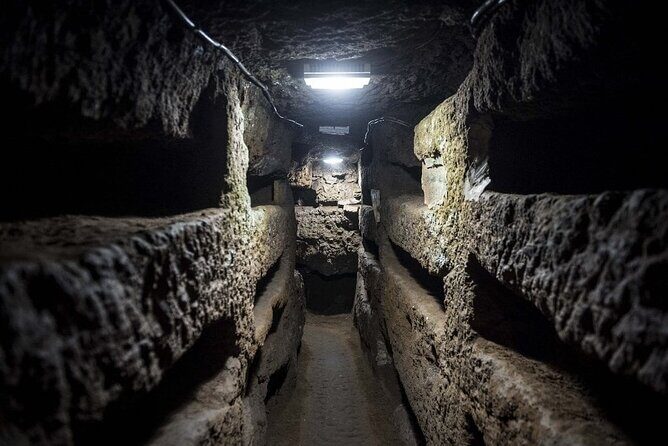
- Catacombe San Sebastiano: early Christian burial spaces cut into soft bedrock, with surviving wall art and inscriptions
- Capuchin monks’ crypt: bones arranged into patterns as a deliberate reflection on mortality
- Via Appia Antica walk: the Queen of Roads on ancient stone with tombs and monuments along the way
- Small group size (up to 15): more time for questions and guide interaction
- Underground comfort matters: plan for darkness, narrow corridors, and steep steps
Underground Rome in 3 Hours: what to expect on this Secrets Beneath Rome tour
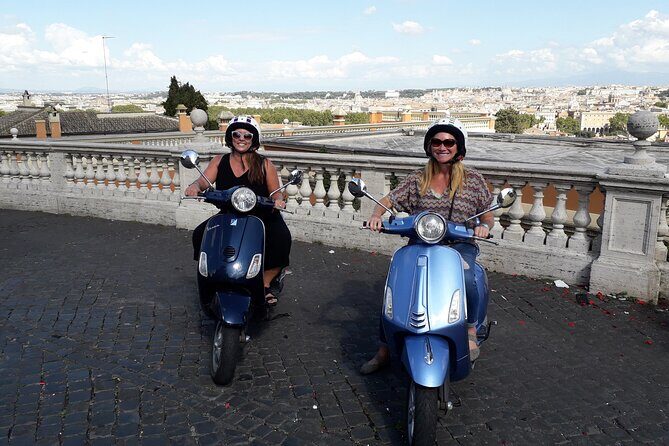
This is a focused afternoon loop through Rome’s burial world. You meet at Via delle Terme di Tito, 72 (near central Rome) at 2:15 pm, then head out by air-conditioned vehicle with your guide. Expect about one hour at each main stop, plus driving and walking time between them.
What makes the tour feel worthwhile is the pacing. You start with the early Christian story in the catacombs, you switch emotional gears with the Capuchin crypt, and then you end outdoors on the Appian Way, where the setting is calmer. It’s a smart structure because it helps you process what you’re seeing. Underground memorials can mess with your head; having an outdoor “reset” at the end is a relief.
Also, this is an English-speaking guided experience with tickets/reservation fees included for the major paid sites. That matters in Rome, where timing is everything and line-juggling can eat your day.
You can also read our reviews of more tours and experiences in Rome.



Catacombe San Sebastiano: early Christian burial art under ancient walls
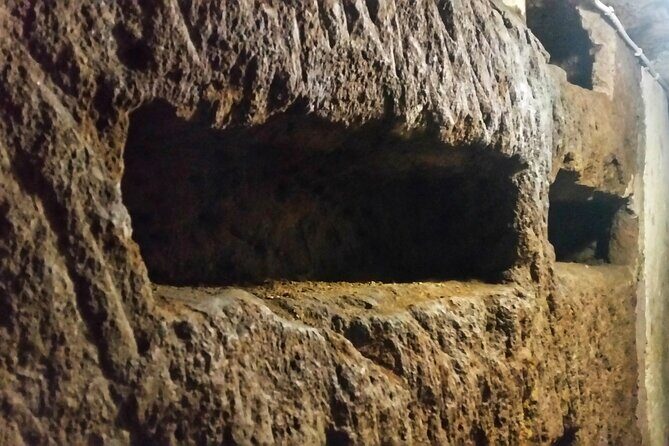
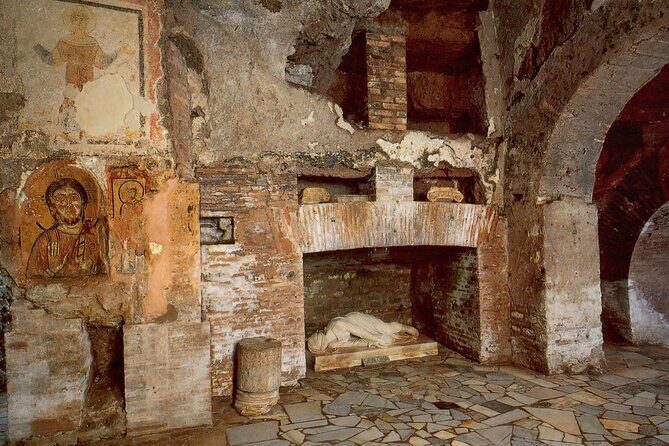
Your first stop is Catacombe San Sebastiano, just outside Rome’s ancient city walls. This part of Rome is built into the soft bedrock, with tunnels, passages, and galleries carved nearly 2,000 years ago. Descending into catacombs isn’t a gentle stroll. You’re going down into a dark, enclosed world where it’s easy to forget your phone exists.
What I like most here is how the guide frames the spaces. Instead of treating the catacombs as only grim storage for the dead, you’ll hear how these places functioned as expressions of belief. The walls and surviving markings—think shapes, carvings, and inscriptions—were part of how early Christians talked about life, death, and the idea of a glorious birth beyond the grave.
Practical reality check
Catacombs are not laid out like a bright, open gallery. You’ll be following paths through passages, and you might see some sections that are more about atmosphere and orientation than “wow, look at that!” moments. If your mental picture includes lots of fully open viewing areas with bodies on display, adjust your expectations. You’ll likely get a guided walk through the memorial layout, plus moments of explanation where the important features are located.
Who will enjoy this stop most
- You like religious art, symbols, and how communities used design to communicate ideas
- You’re comfortable with darkness and narrow passages
- You want context, not just sightseeing
Who might find it challenging
- If you’re claustrophobic, this could feel like too much at once
- If you have mobility issues, the steep, narrow stairs and tight spaces are a real factor


Capuchin Crypt at Santa Maria della Concezione: bones arranged into a message
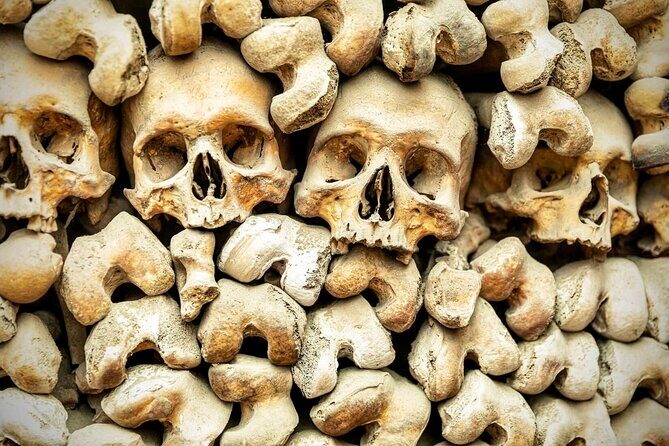
Next comes the Museum and Crypt of Capuchins Friars, inside the complex beneath Santa Maria della Concezione. This stop feels like a sharp turn in tone. Where the catacombs speak softly in symbols, the Capuchin crypt speaks loudly with bodies turned into art.
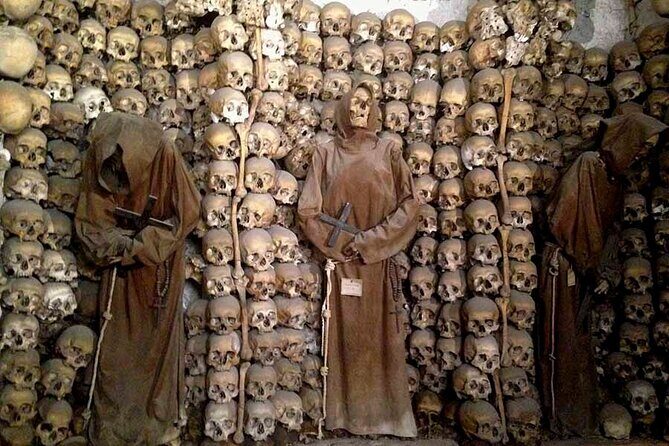
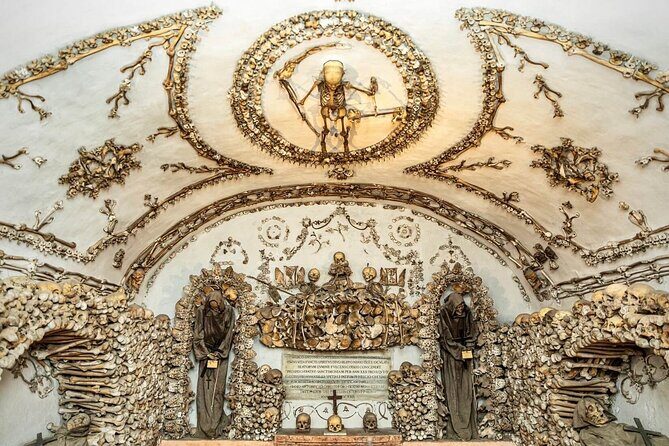
Over centuries, the bodies of almost 4,000 Capuchin monks were interred in the crypt. But not in the typical way you’d expect. Instead of coffins and standard tombs, the monks’ remains were arranged into patterns and artworks—so you see skeletons posed, arranged, and built into a striking visual statement.
The reason for the macabre style is key to understanding it. It reflects a belief at the heart of the Capuchin order: earthly life is temporary, and death comes to everyone. When you’re inside those small rooms, the message lands fast. It’s eerie in a way that feels intentional, not random.
What makes this stop work
This is one of those experiences where being guided changes everything. A good guide helps you look past the shock and notice the organizing idea—how an artwork-like arrangement can be a teaching tool about mortality.
One bonus detail from real-world experience: the Capuchin museum space is small, and it can move quickly. You may get short introductions and then pass through rooms with bone displays and small viewing areas. If you love slow, lingering museum time, don’t assume you’ll have hours here.
Practical reality check
This site can also be a bit more “visitor-controlled” than you might expect. At least one visitor experience described ear-piece radios and a quick flow through rooms. Plan to take in what’s there, then let the impact of the bone arrangements do the heavy lifting.
Via Appia Antica walk: the Queen of Roads above the tombs
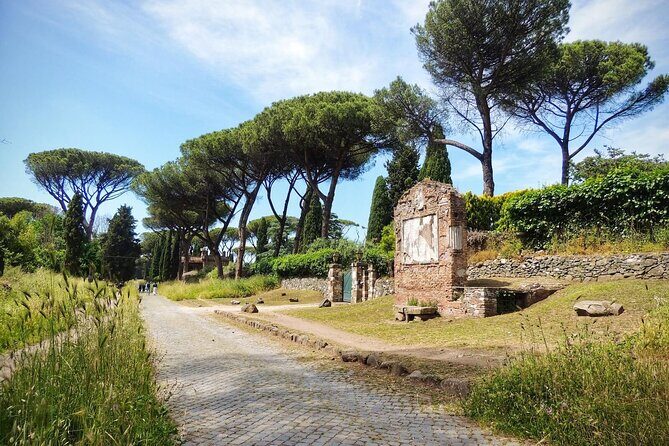
Finally, you head to the Appian Way (Via Appia Antica). This is the outdoor breath after the underground stops, and it’s a big part of why this tour works as a whole. Historically, Rome forbade burying bodies within city walls, so major funerary sites lined the roads leading out. The Appian Way was the big one—known in the ancient world as the Queen of Roads.
On this tour, you walk along the now-quiet road, still paved with ancient flagstones. It winds through a calmer countryside feel, with tombs and monuments along the way. What you’re hearing from your guide matters here too: you’ll connect the road to Roman military movement and the reason so many funerary monuments survived near this route.
Why this stop is valuable
If you only visit the big-ticket Roman sites, the Appian Way can be missing from your mental map. Here, you get a direct link between road infrastructure, burial policy, and how the empire operated beyond the city core.
Pace tip
The Appian Way section is often described as peaceful, but it’s still walking time on ancient stone. Bring footwear you trust on uneven surfaces.
Small-group energy and guide style: what you should look for
This tour runs with a maximum of 15 travelers, and that’s not just a number. In Rome, a small group can mean you don’t get left behind in dark corridors or bounced along by crowd pressure as much. It also helps with conversation—when your guide is willing to explain, small groups are where it actually happens.
In particular, the guide experience is the main reason people talk about this tour in a positive way. One guide named Fiona is described as funny with a dry sense of humor, easy to interact with, and strong on sharing city culture through personal stories. Another guide named Ilaria is described as friendly, enthusiastic, and bringing a personal touch through family memories of growing up in Rome.
A grounded takeaway for you
Pick this tour if you like guides who connect dots. This isn’t just a checklist of locations. The best part is when your guide helps you understand why early Christians buried the way they did, why the Capuchins staged remains the way they did, and why the Appian Way mattered as a road that shaped life—and death—outside Rome.
Comfort, timing, and the real physical demands
Even though the tour is about 3 hours, your energy use won’t feel evenly spread. The driving is easy. The underground parts are where the body workload shows up.
Plan for
- Darkness and enclosed passages in the catacombs
- Steep, narrow stairs in underground areas
- Tight group flow depending on how site staffing controls movement
- Walking on ancient stone during the Appian Way segment
If you want to be sure you’ll be comfortable, think about your comfort with stairs and narrow spaces before you book. The operator asks for you to advise them about mobility concerns during booking so they can best accommodate you. That’s a good sign: it means they expect physical constraints to matter.
Also, be aware of the seasonal reality. Because of the Jubilee, some monuments may be under restoration. If you get messages about changes, read them. In Rome, a small alteration can change where you spend your time.
Value for money: tickets included, but don’t expect a “bones everywhere” show
There’s clear value built in. You get an air-conditioned vehicle, an expert English-speaking guide, and admission ticket/reservation fees included for the main underground sites. Appian Way is listed as admission free, so your money concentrates on the guided underground experience rather than optional add-ons.
But there’s also a reality check. This tour blends three very different site types:
- catacombs = guided movement through tunnels with surviving markings
- Capuchin crypt = small museum rooms and bone arrangements with heavy emotional impact
- Appian Way = outdoor ancient road walk
If you’re shopping for a tour that’s mostly open rooms full of dramatic visuals, you might find the catacombs portion less flashy than you hoped. The upside is that the guided context helps you appreciate what you’re seeing: these spaces weren’t built as tourist attractions; they were built as burial and memorial environments.
My practical advice
- Treat this as a guided interpretation tour, not a spectacle
- Bring patience for dark corridors and controlled pacing
- Choose it for the contrast: early Christian memorial design, Capuchin mortality art, then outdoor ancient road history
Should you book Secrets Beneath Rome: Capuchin Crypt and Catacombs?
Book it if you want a compact Rome afternoon that links three burial-related sites into one story. I’d especially recommend it if you enjoy symbolic art, religious history explained in a human way, and you like being guided rather than wandering in the dark alone.
Skip it or rethink it if you know you struggle with tight spaces, dark stairs, or claustrophobic environments. Also rethink expectations if you’re imagining a nonstop lineup of bones or open “body display” chambers. This experience is built more around guided access to meaningful areas and viewpoints than around a constant stream of dramatic visuals.
If you do book, go in prepared: wear comfortable shoes, expect stairs, and give the guide time to steer your attention. When you do that, you get something rare in Rome—an afternoon that feels like it moves between belief, mortality, and the ancient roads that carried the city’s life outward.
FAQ
How long is the Secrets Beneath Rome tour?
It runs for about 3 hours.
Is the tour offered in English?
Yes, it’s offered in English.
What sites are included, and are tickets included?
The tour includes Catacombe San Sebastiano (ticket included) and the Museum and Crypt of Capuchins Friars (ticket included). The Appian Way portion is listed as free.
What physical level is required?
The tour notes a moderate physical fitness level. You should be ready for underground areas, including stairs.
Can the tour accommodate mobility concerns?
You should advise the operator during booking if you have mobility concerns so they can try to accommodate you.
Is free cancellation available?
Yes. You can cancel up to 24 hours in advance for a full refund.