REVIEW · FOOD
Roman countryside Food & Wine Tasting in a medieval winery
Book on Viator →Operated by Vinebliss Trip · Bookable on Viator
Leaving Rome behind feels good here. This medieval winery tour trades city time for Lazio hills, a real cellar walk, and three guided wine tastings. I like that the sommelier keeps it practical, not pretentious, and I like that the lunch is built around local bites. One thing to consider: there’s a drive out of Rome and the experience is about 4 hours, so it’s not the kind of day you stretch into a long, slow hang.
If you’re short on time but want something more authentic than a quick tasting room stop, this works well. You meet at Piazza del Popolo, ride out in air-conditioning, tour the medieval complex, then sit down to a paired lunch at the winery’s restaurant. The cellar is part of a historic village scene, not just a storefront.
In This Review
- Key Things That Make This Tour Worth Your Time
- Meeting at Piazza del Popolo and the Lazio Hills Drive
- Cantina Castello di Torre in Pietra: Medieval Cellars Carved Into Tufa Hills
- The Private Cellar Walk: What You Learn in Those Underground Rooms
- Three Wines, One Sommelier, and Actually Helpful Pairing
- Lunch at the Winery Restaurant: Antipasto-Style Bites Plus Roman Comfort
- The Winery Shop Stop: Buying Wine and Olive Oil On Site
- Time on the Van: Worth It, But Don’t Ignore the Clock
- Group Size, Pace, and What This Means for You
- Value Check: Why This $115 Half-Day Often Feels Like More
- Who Should Book This Tour (and Who Might Skip It)
- Should You Book This Medieval Wine and Food Tasting?
- FAQ
- FAQ
- Where do I meet for the tour?
- What time does the tour start?
- How long is the experience?
- What’s included in the $115 price?
- Do I need hotel pickup?
- Can I buy wine or olive oil during the tour?
- Is the tour limited in group size?
- What happens if weather is bad?
- What’s the cancellation window?
Key Things That Make This Tour Worth Your Time
- A medieval castle winery near Rome (Cantina Castello di Torre in Pietra) with cellar rooms inside the 12th-century complex
- Sommelier-led tasting of 3 wines, paired with a guided meal rather than random sips
- A structured food spread with local cheeses, cold cuts, and Roman-style dishes, served across courses
- Time to shop for wine and olive oil on site if you want to take something home
- Small-group feel inside a group size cap of 50, with a guided table setup and lots of instruction
- Meet right in central Rome at Piazza del Popolo under the arch, so you skip complicated transfers
Meeting at Piazza del Popolo and the Lazio Hills Drive
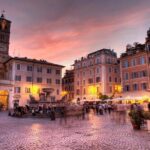
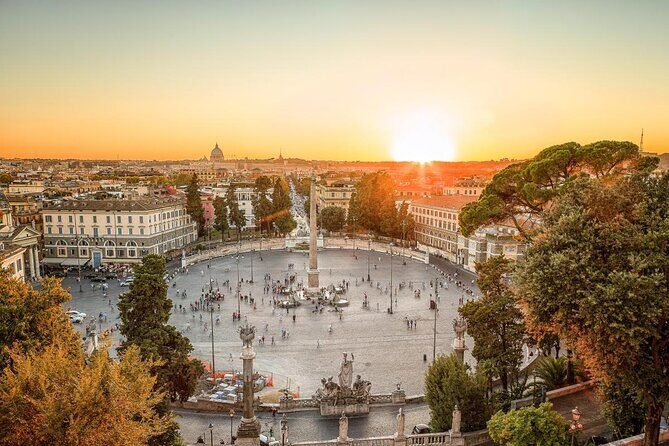
Start at Piazza del Popolo, at the arch area. If you arrive a bit early, you’ll feel calmer right away—this tour begins at 11:00 am, and you’ll want to be easy to spot. This matters more than people think, because there’s no hotel pickup. You’re going to get yourselves to the starting point, and then the rest of the day is handled.
From there, you head out by air-conditioned van toward the countryside outside Rome. Expect about an hour of driving, through the rolling hills of Lazio. It’s a simple reset from the noise and crowds of the center. You don’t need a car, and you don’t need to wrestle with parking or bus schedules.
Practical tip: plan for a return that lands back in the same spot in Piazza del Popolo. Don’t stack a late reservation right after the tour ends unless you like living dangerously. This day has a schedule, and traffic can add a few minutes.
Also, this experience is weather-dependent. If it’s not good outside, the day may be changed or refunded—so keep an eye on conditions the morning of.
You can also read our reviews of more food & drink experiences in Rome


Cantina Castello di Torre in Pietra: Medieval Cellars Carved Into Tufa Hills
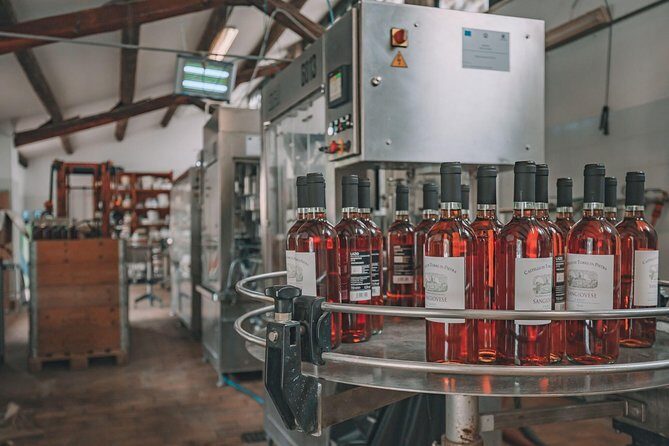
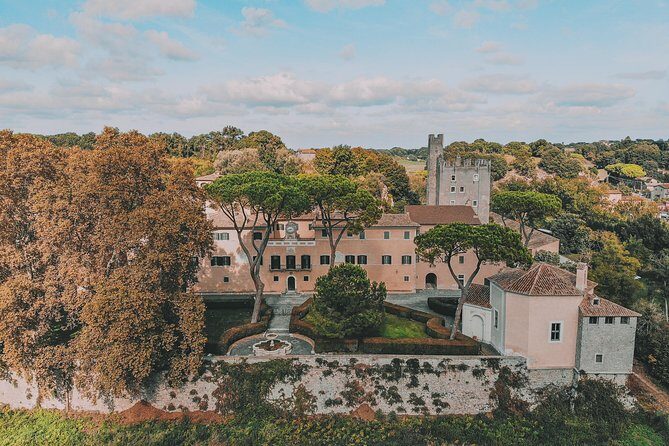
The heart of the experience is the winery itself: Cantina Castello di Torre in Pietra. What you’re really paying for is the setting—a medieval castle and hamlet complex where the wine cellars live.
Here’s what makes it more than scenery:
- The cellar area is in a medieval “Borgo” village.
- The complex dates to the 12th century, built by digging into the tufa hills behind the castle.
- During work in the 1930s, a tunnel between caverns was uncovered and mammoth tusks were found. It’s one of those details that makes the place feel real and a little unexpected.
When you arrive, you meet your sommelier guide and do a walk in the private cellar spaces. You’ll learn how the property fits into the winemaking process, and you’ll see the kinds of storage rooms where wine changes over time. This is where the medieval setting turns useful: you’re not just looking at old stone, you’re connecting it to how wine is handled.
And yes, you get a little sense of stepping back in time. But the real value is that the tour is organized around how wine gets made and aged, not just photo stops.
The Private Cellar Walk: What You Learn in Those Underground Rooms
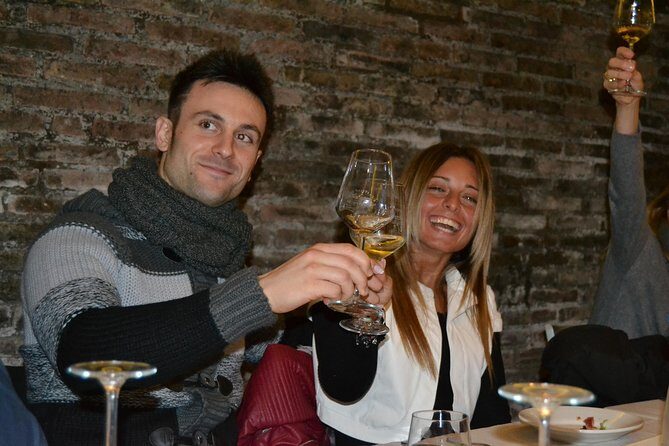
In the cellar, you’re getting the story of processing and storage at a scale that’s easy to understand. The guide’s job is to connect physical steps (storage, aging, temperature stability, time) to what you taste later.
A few things I’d pay attention to during the walk:
- How the cellar environment supports consistent aging. Even if you don’t remember every technical phrase, you’ll start to notice patterns in the tasting.
- The difference between where wines rest versus where they’re served. This helps you avoid the common mistake of drinking wine too fast and missing the shift that happens when it warms up.
- The way the guide explains terms in plain language. People often come wanting to learn how to taste, not how to win arguments about tasting notes.
You’ll get a brief walk through the cellar rooms, including time around the barrel areas. Then you head to the restaurant portion of the experience for the tasting lunch.
Three Wines, One Sommelier, and Actually Helpful Pairing
The tour is built around a trained sommelier guide who keeps the tasting structured. You’ll sample three distinct Italian wines, with pairings designed to show how flavors work together.
This is a smart approach for two reasons. First, it prevents random drinking. You taste with a purpose. Second, it teaches you how to handle your own wine experiences later—how to think about acidity, softness, and how food can make wine taste better or worse.
Based on what’s been shared by previous participants, the sommelier role often comes down to two strengths:
- Clear explanations of the wines and how to taste them.
- A balance between teaching and giving you space to enjoy.
You might even get a guide like Christian, who’s specifically praised for that balance—offering info, then letting the table breathe. In other runs, Marco has been highlighted for explaining winemaking in ways that actually stick. Either way, the goal is the same: you should leave understanding how the glass connects to the plate.
One more detail worth noting: at least one guest experience mentioned an organic wine produced at the winery. That doesn’t mean every bottle will be organic, but it does suggest this cellar and their winemaking choices aren’t just traditional—they’re also thoughtful about quality. If organic happens to show up in your tasting lineup, it’s a nice surprise.
Lunch at the Winery Restaurant: Antipasto-Style Bites Plus Roman Comfort
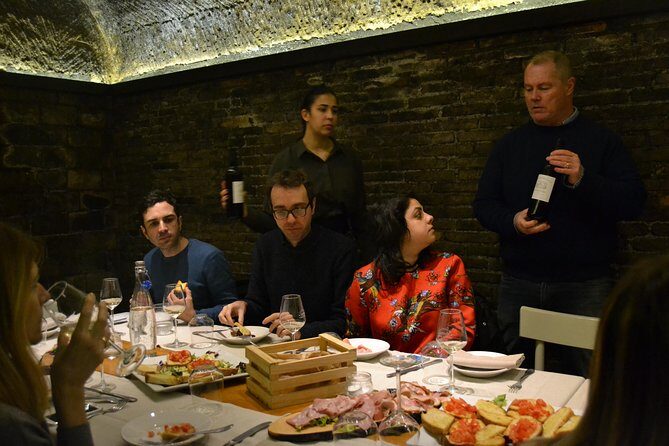
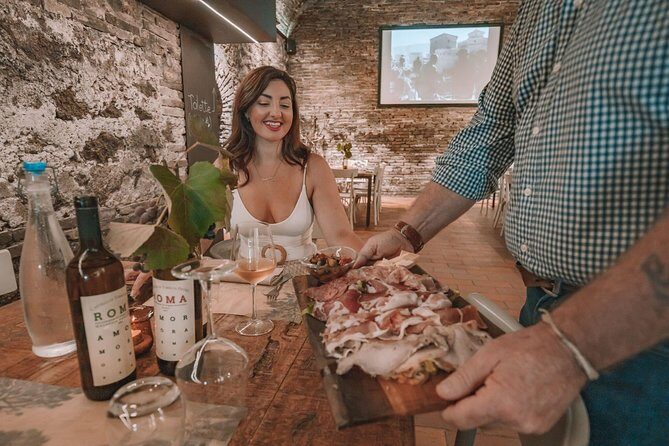
After the cellar visit, you sit down at the winery’s own restaurant for a guided tasting lunch. This isn’t a tiny snack. It’s set up as a pre-dinner experience with courses and pairings.
You can expect a spread that includes:
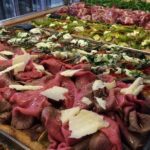
- A traditional pre-dinner style spread with cheeses and meats
- Cold cuts and local ingredients
- Roman-style dishes alongside the cheese-and-cured-meat vibe
- Dessert at the end of the meal experience in some form, depending on the exact course flow
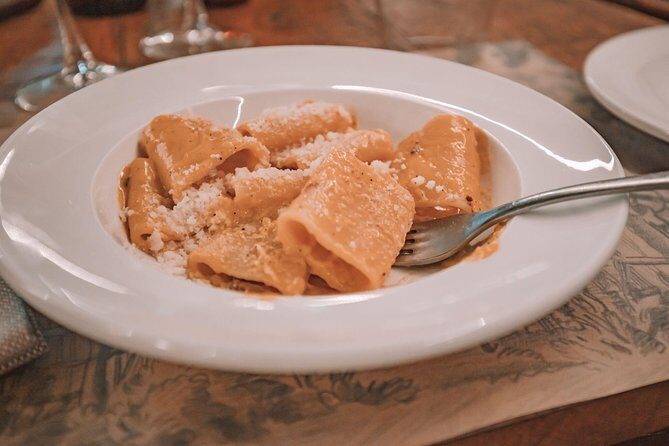
Each course is paired with one of the wines chosen by the chef and guide. That matters. The wine isn’t thrown at you and hoped for the best. You’re tasting alongside bites designed to highlight what each wine does well.
If you’re gluten-free, there’s at least one reported experience where gluten-free food was handled and still felt excellent. Still, I’d recommend you tell the operator or note it during booking if possible—don’t assume every itinerary can adapt in the same way.
Food portion note: multiple experiences describe the servings as abundant. That’s a good sign, because the biggest complaint about some wine tours is leaving hungry or feeling like the meal is just a token plate.
You can also read our reviews of more tours and experiences in Rome


The Winery Shop Stop: Buying Wine and Olive Oil On Site
Once the meal wraps, you get a few minutes of free time to browse the winery shop. You’ll have the chance to purchase wine and olive oil if you want.
I like this model because it separates your shopping moment from the tasting teaching moment. You’re not in the middle of a serious wine discussion while someone tries to push product. You can browse when your brain is ready.
If you’re the kind of person who buys one bottle to remember the day (and possibly a second if the wine surprises you), this is your moment. Also remember: you’re in Rome with limited baggage space, so keep an eye on how you’ll carry it back.
Time on the Van: Worth It, But Don’t Ignore the Clock
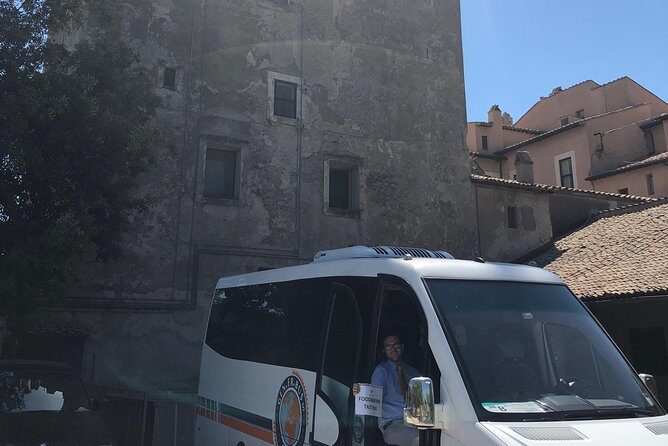
This tour is designed to fit a half-day window. The drive out is about an hour, and you’ll spend time moving between the meeting point and the countryside.
A couple of practical realities:
- You may feel the long drive more than expected if you’re hoping for a lot of winery time.
- The experience runs around 4 hours, but some schedules can stretch a bit depending on timing.
So my advice is simple: treat this as a structured outing. Don’t plan additional activities that require precision right after lunch. If you want extra free time, look for it elsewhere in your day, not by shaving minutes off this tour.
Group Size, Pace, and What This Means for You
The tour has a maximum of 50 travelers. That number sounds large, but the day itself is centered on a sommelier guide at the table and a walk through the cellar spaces.
In practice, the pace tends to be manageable because:
- You’re not standing in a line of hundreds.
- The tasting and meal keep you occupied with structured seating.
- The guide explains and then allows you time to enjoy.
If you’re traveling with family or a group, this type of setup can be friendly. One experience highlighted a table for 18 family members, and the day still worked as a shared event. That’s a good sign if you’re organizing a multigenerational trip and want the experience to feel social without chaos.
Value Check: Why This $115 Half-Day Often Feels Like More
At $115, you might wonder what’s included and why it’s priced this way. Here’s the value logic:
You get:
- Transport by air-conditioned vehicle (so you don’t deal with the countryside logistics)
- A local sommelier guide
- A visit to the medieval cellar at a historic winery complex
- Wine tasting of three different bottles
- A food tasting lunch with regional cheese, cold cuts, and Roman-style dishes
- The ability to buy wine and olive oil on site
The big thing is that the price bundles the major costs: the ride, the guide, the education, and the meal. You’re not paying separately for transportation plus a tasting plus lunch plus a guide. You’re buying a guided half-day package that tries to keep you moving from one meaningful part to the next.
So the question isn’t just whether $115 is fair. It’s whether the day feels complete. Based on the consistently high rating, it usually does—especially because the wine and food are paired with intention and the cellar setting makes the whole experience feel place-based.
Who Should Book This Tour (and Who Might Skip It)
This works best if you:
- Want a break from Rome without giving up real structure
- Enjoy wine education that stays understandable and practical
- Like pairing wine with food instead of tasting in isolation
- Appreciate a medieval setting that’s connected to winemaking, not just a backdrop
You might skip it if you:
- Want a long open-ended countryside day (this is still a half-day schedule)
- Hate driving time and prefer to stay in the city
- Are extremely sensitive to timing. The experience is scheduled, and the countryside drive is part of it.
If you’re the type who enjoys learning without turning it into homework, you’ll probably love this.
Should You Book This Medieval Wine and Food Tasting?
My vote: book it if you want an efficient, high-reward half-day. The combination of a 12th-century castle winery, a sommelier-led three-wine tasting, and a paired lunch gives you enough substance to make the trip feel worth leaving Rome for.
Book it especially if you’re trying to balance two things: learning something real and still having fun at the table. The day is built to teach you how to taste wine and how to think about pairing, but it doesn’t take away your time to enjoy the meal.
If you’re choosing between a quick city tasting and a countryside day, this one has the advantage of place. The medieval cellar setting turns the wine into part of a story you can actually walk through with a guide.
FAQ
FAQ
Where do I meet for the tour?
You meet in Piazza del Popolo, at the arch area (also described as Porta del Popolo under the arch).
What time does the tour start?
The start time is 11:00 am.
How long is the experience?
It runs about 4 hours (approximately).
What’s included in the $115 price?
You get air-conditioned transportation, a local sommelier guide, a visit to the medieval cellar, wine tasting of three bottles, and a food tasting lunch with pairings.
Do I need hotel pickup?
No. Hotel pickup and drop-off are not included, so you’ll make your own way to Piazza del Popolo.
Can I buy wine or olive oil during the tour?
Yes. There’s a chance to purchase wine and olive oil on site at the winery shop.
Is the tour limited in group size?
Yes. It has a maximum of 50 travelers.
What happens if weather is bad?
The experience requires good weather. If it’s canceled due to poor weather, you’ll be offered a different date or a full refund.
What’s the cancellation window?
You can cancel up to 24 hours in advance for a full refund. If you cancel less than 24 hours before the start time, it isn’t refunded.