REVIEW · NAPLES
Walking Tour of the Neapolitan Superstition
Book on Viator →Operated by APSIS Tour Napoli · Bookable on Viator
Neapolitan superstition is built into the streets. This walking tour turns everyday corners of central Naples into a living guidebook, full of charms, rituals, and folk stories where sacred and profane sit side by side. You’ll learn how locals use symbols—sometimes funny, sometimes eerie—to handle fear, luck, and the big subject everyone thinks about in the end: death.
I especially love how the tour mixes popular culture with real places. It’s not just facts on a page; you’ll hear songs and nursery-rhyme style storytelling while you stand right where the belief happened. Second, I like the small-group feel (max 10) and the extra texture from the accompanying traditional musician/folklorist alongside the guide, which makes the walk feel more like a local evening than a lecture. One thing to consider: it depends on good weather, so plan for an alternative date if Naples is doing its typical weather mood swings.
In This Review
- Key Points at a Glance
- Why Naples Uses Superstition as Street Language
- Piazza Bellini: The Map Starts With Charms, Death, and Lottery Luck
- Busto di Pulcinella: The Nose Touch That Explains a Whole Attitude
- Santa Maria delle Anime del Purgatorio ad Arco: Pezzentelle Souls and the Shadow Side
- Piazza San Gaetano: Where the munaciello Story Lives
- Via San Gregorio Armeno: Shops, Sanctuary Origins, and San Pantaleone
- Spaccanapoli and the Walk Toward Piazza San Domenico Maggiore
- The Last Ritual at Piazza San Domenico Maggiore
- Price and Value: What $72.56 Gets You (and What It Doesn’t)
- Group Size, Timing, and How to Make the Most of 1h45
- Who Should Book This Tour (and Who Might Skip It)
- Should You Book the Walking Tour of the Neapolitan Superstition?
- FAQ
- Where does the tour start and end?
- What time does the tour begin?
- How long is the walking tour?
- Is the tour offered in English?
- Do I receive a mobile ticket?
- How many people are in a group?
- Is admission included for the stops?
- What if the weather is bad?
- Can I get a full refund if I cancel?
Key Points at a Glance
- Start in Piazza Bellini and get the superstition basics before you walk into the details
- Pulcinella’s nose ritual is short, visual, and explains why people touch objects for luck
- Santa Maria delle Anime del Purgatorio ad Arco connects superstition to ideas about death
- The munaciello story brings the supernatural into the ancient-city heart of Piazza San Gaetano
- San Gregorio Armeno and the lot-saint angle show how folklore and chance overlap
- The ending in Piazza San Domenico Maggiore finishes with one last ritual for closure
Why Naples Uses Superstition as Street Language
Naples has a way of treating belief like daily communication. On this walk, you’re not meant to judge it from the outside. Instead, you’ll see how people manage uncertainty—bad luck, illness, loss, and plain old worries—using rituals, objects, and stories that keep getting passed along.
What makes this tour work is its tone. You get the serious side (death, fear, the idea of souls and the purgatory world), plus the playful side (Pulcinella, touching noses, and folk figures that sound like they belong in a comedy). That blend is the point. It helps you understand why a city can feel both spiritual and irreverent without contradiction.
Also, it’s built for a concentrated time window: about 1 hour 45 minutes. That’s ideal if you want something different without losing half a day to logistics.
You can also read our reviews of more walking tours in Naples

Piazza Bellini: The Map Starts With Charms, Death, and Lottery Luck
You begin in Piazza Bellini at 3:00 pm, right in the center of Naples’ action. From the first stop, the guide sets up the theme: locals have long relied on magical and profane rituals to push away negative energy. You’ll hear how that shows up in recognizable “charms,” and how the city holds an ambiguous relationship between the sacred and the everyday.
This opening segment is a smart move for you. If you arrive without context, Neapolitan superstition can feel like random oddities. Here, you get the framework first: what charms are for, how the city talks about death in folk terms, and why the lottery isn’t just gambling—it’s part of a larger hope-and-fate mindset.
You’ll also get story fuel beyond the usual. Expect anecdotes and songs, including material about the cunto of pezzentelle souls (a folk narrative thread tied to poverty, voice, and the afterlife). The walk also references newsstands and how public information spaces can develop their own local lore. The practical payoff is that, later in the tour, you’ll recognize the patterns the guide is pointing to.
One more detail that makes Piazza Bellini special: an accompanying traditional lover and cantor joins the tour. Even if you don’t catch every word, the rhythm changes how you experience the city. You’re hearing superstition as performance, not just description.
Busto di Pulcinella: The Nose Touch That Explains a Whole Attitude
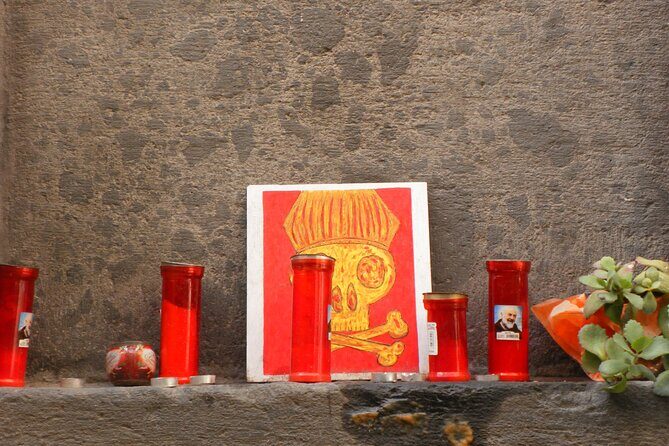
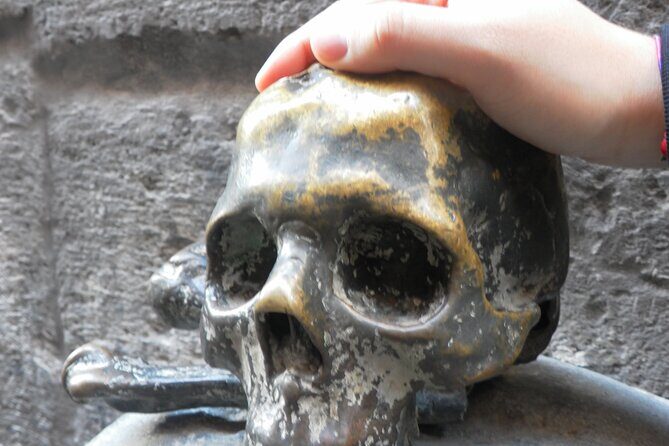
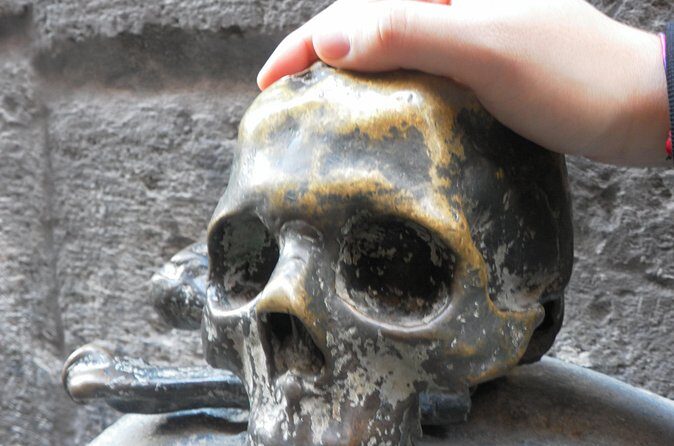
Next, you’ll stop at the Busto di Pulcinella, and you’ll get a fast ritual lesson: why do we touch Pulcinella’s nose? It’s a small act, but it’s a perfect example of how Neapolitan superstition is physical.
The real value here is not whether you want to participate in the touch. It’s what the ritual represents: a quick bargain with luck, done in public, with humor on its side. That’s a key idea throughout the tour. Superstition in Naples doesn’t always arrive as fear. Often it’s disguised as a wink.
This stop is brief (about 5 minutes), so it won’t feel like filler. It’s more like a punctuation mark: now you know the city talks in gestures.
Santa Maria delle Anime del Purgatorio ad Arco: Pezzentelle Souls and the Shadow Side
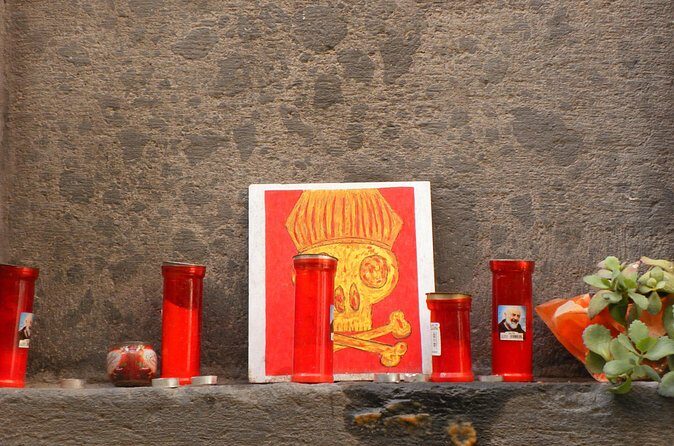
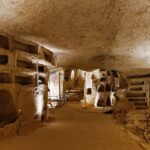
At Complesso Museale Santa Maria delle Anime del Purgatorio ad Arco, the tour shifts tone. Here you’re dealing with the cult of the pezzentelle souls and the way Naples frames death through folk belief.
The church complex matters because it turns abstract ideas into something you can point at. You’ll hear the history connected to the cult, and you’ll get a clear link between death and superstition that goes beyond spooky stories. This is the part of the tour that helps you understand why Neapolitan folk culture isn’t only about “magic tricks.” It’s also about spiritual anxiety—expressed through rituals and narratives people can carry.
Time here is about 15 minutes, which is enough to make the themes land without dragging. The main consideration: if you’re expecting only lighthearted charm explanations, this stop will bring the emotion forward. Think of it as the tour’s necessary gravity.
Piazza San Gaetano: Where the munaciello Story Lives
From there, you move into Piazza San Gaetano, described as the center of the ancient city. This stop is your big supernatural moment: you’ll hear the story of the munaciello, plus tales connected with the beautiful Marianas.
Why this works is simple. Piazza San Gaetano isn’t just scenery; it’s presented as the kind of place where old stories naturally stick. The guide ties the munaciello figure to local belief patterns—how people imagine spirits, mischief, protection, and threat inside everyday life. Even if you treat it as folklore (which is totally fine), the lesson is about community memory: stories that travel across generations.
The stop also gives you a sense of how Naples uses the supernatural to explain what otherwise can’t be explained cleanly. Bad luck happens. Strange events happen. The question is how a community talks about them. That’s what you’ll hear here.
Plan around 15 minutes in this square. It’s a good spot to look at the architecture and absorb how the space feels, since the tour’s goal is to connect the story to the street.


Via San Gregorio Armeno: Shops, Sanctuary Origins, and San Pantaleone
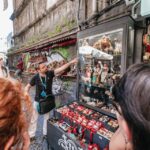
Next comes Via San Gregorio Armeno, one of the city’s famous lanes for workshop-style culture. Here, the tour focuses on the history of the shops and the origin of the sanctuary (as it relates to local belief). You’ll also connect this area to a couple of standout belief threads: the dissolution of the blood and San Pantaleone, described as the saint of the lot.
This is where the tour becomes especially useful for you if you like seeing how religion and folklore mix with commerce. Naples isn’t afraid to put belief in public spaces. In this segment, you’ll learn how these traditions show up in the shop culture and why a “sanctuary” can have a local, living origin rather than feeling like a distant concept.
Time is about 15 minutes, so it stays focused. You’ll want to pay attention to the story logic—how the saint of the lot connects to chance and hope—and not just to the street-level spectacle.
Spaccanapoli and the Walk Toward Piazza San Domenico Maggiore
After that, you move along Spaccanapoli. The guide frames it as the road that seems to split the city in two, and you’ll use that idea like a mental cue while you walk toward Piazza San Domenico and on to the final square.
Spaccanapoli is important to the tour because it’s the transition zone. You’re shifting from individual figures and specific cult stories into something more structural: how Naples organizes belief across neighborhoods, how stories travel along routes, and how daily walking becomes part of understanding the city.
This segment runs about 15 minutes, which is about the right amount of time to regroup, take photos if you like, and reset your attention. The tour keeps you moving, but it never feels like a forced sprint.
The Last Ritual at Piazza San Domenico Maggiore
The tour closes in Piazza San Domenico Maggiore. You’ll hear one last superstitious ritual, tying the earlier stops into a final message: superstition in Naples isn’t only about odd details. It’s a system people rely on—sometimes for comfort, sometimes for protection, sometimes just for hope.
The ending is about 10 minutes. That’s long enough for closure and short enough that you don’t feel like you’re being rushed out of the story.
This final stop also sets you up well for the rest of your day. Now that you understand the tour’s themes, other street corners will feel less random. You’ll start noticing how Naples speaks in symbols everywhere.
Price and Value: What $72.56 Gets You (and What It Doesn’t)
At $72.56 per person, this tour is priced for a guided cultural experience with added performance. You’re not paying mainly for the walk. You’re paying for:
- A guided narrative that connects multiple superstition threads
- A small group size (max 10)
- The presence of an accompanying musician/folklorist alongside the guide
- A typical gadget included with the tour
What you should not expect is private transportation—there isn’t any. Also, the stops are marked as admission ticket free, which helps your cost predictability. If you like experiences where you’re not hit with lots of add-on fees, that’s a point in the tour’s favor.
One more value tip: this is an experience that tends to get snapped up early. The average booking window is about 40 days in advance, so if you’re traveling during peak times, plan to reserve sooner rather than later.
Group Size, Timing, and How to Make the Most of 1h45
With a maximum of 10 people, you’ll get a more personal feel than you would on bigger walking tours. That matters on a story-based route, because the guide can keep momentum and adjust when questions come up.
Timing is also straightforward: it starts at 3:00 pm and lasts around 1 hour 45 minutes. If you’re trying to fit this into a packed itinerary, you’ll probably want to do it earlier in your Naples stay. That way, you can carry the superstition “decoder ring” into the rest of your sightseeing.
The experience requires good weather. Naples can change fast, so dress for walking and be ready to adapt if the tour has to be rescheduled.
Who Should Book This Tour (and Who Might Skip It)
This is a great fit if you want Naples in human terms: how people think, joke, fear, and hope—through story and ritual. I’d especially recommend it if you like folklore and performance, or if you’ve ever wondered why locals do the same tiny gestures (like touching Pulcinella’s nose) in the same places.
It may not be the best choice if you only want major archaeology and sweeping museum rooms. This tour is about belief systems and the city’s cultural habits, not big-ticket monuments.
If you’re traveling with limited time but you still want a deep sense of local identity, this works because it’s focused, centrally located, and structured in bite-size stops.
Should You Book the Walking Tour of the Neapolitan Superstition?
I think you should book it if you’re curious about how Naples explains the world to itself. The combination of Piazza Bellini context, the visible ritual at Pulcinella, the spiritual weight at Santa Maria delle Anime del Purgatorio ad Arco, and the supernatural stories of munaciello makes this more than a fun stroll. It’s a guided way to read the city.
Book early if your dates are firm, since this one gets reserved about 40 days ahead on average. And if weather is uncertain, just know the tour is designed around outdoor walking—so flexibility helps.
If you’re open-minded and enjoy story-driven guides with music in the mix, you’ll likely leave feeling that Naples makes sense in a new way—through superstition, not despite it.
FAQ
Where does the tour start and end?
It starts in Piazza Bellini, 80138 Napoli, Italy, and ends in Piazza San Domenico Maggiore, 80134 Napoli, Italy.
What time does the tour begin?
The start time is 3:00 pm.
How long is the walking tour?
It lasts about 1 hour 45 minutes.
Is the tour offered in English?
Yes, it’s offered in English.
Do I receive a mobile ticket?
Yes, the tour uses a mobile ticket.
How many people are in a group?
The tour has a maximum of 10 travelers.
Is admission included for the stops?
Admission tickets at the listed stops are marked as free.
What if the weather is bad?
The tour requires good weather. If it’s canceled due to poor weather, you’ll be offered a different date or a full refund.
Can I get a full refund if I cancel?
Yes. You can cancel up to 24 hours in advance for a full refund. If you cancel less than 24 hours before the start time, you won’t receive a refund.