REVIEW · WALKING TOURS
Rome Walking Tour of Holy Sites: Basilica of the Holy Cross in Jerusalem, San Giovanni in Laterano and Scala Santa
Book on Viator →Operated by Raphael Tours & Events · Bookable on Viator
Rome feels different when you walk on holy ground.
This private tour strings together three major sites tied to Christianity’s sacred story, starting with the Scala Santa and ending at Rome’s official cathedral, San Giovanni in Laterano. I like that it stays personal (only your group), and you get to choose from multiple start times so you can fit it into a real sightseeing day. One thing to plan for: it’s a strict places-of-worship visit, so dress rules and quiet behavior matter, or you can get turned away.
Two parts I really appreciate are the time given to the “slow” moments (especially on the Holy Stairs) and the way the guide connects what you see with what it meant, not just what it is. Guides are often singled out by name—Tomasso, Francesco, Bruno, Giorgio, and Giovanni Giorgio—mostly for patient pacing and for pointing out the specific objects you’ll care about. If you’re looking for a fast, photo-only church sprint, this isn’t that.
A small heads-up: you’ll be on foot for about two hours, with three stops and their indoor rules. Wear comfortable shoes and expect to keep food and drink simple (water is allowed, most else isn’t).
In This Review
- Key highlights you’ll actually notice
- A private Rome holy-sites walk that feels more like a visit than a checklist
- Meeting in the Laterano area and planning the 2-hour rhythm
- Stop 1: Scala Santa and the Holy Stairs on your knees
- Stop 2: Santa Croce in Gerusalemme and the relics of the Holy Cross
- Stop 3: San Giovanni in Laterano, Rome’s cathedral centerpiece
- Why the $346.87 per-person price can make sense
- Dress code, water-only rules, and how to avoid being turned away
- What kind of traveler should book this?
- Should you book Rome’s Holy Sites walk? My call
- FAQ
- How long is the tour?
- Is this a private tour?
- What language is the tour in?
- Where do we meet, and where does it end?
- What stops are included?
- Do I need tickets or admission money?
- What is the dress code for churches?
- Can I bring food or drinks inside?
- What’s the cancellation rule for a refund?
Key highlights you’ll actually notice
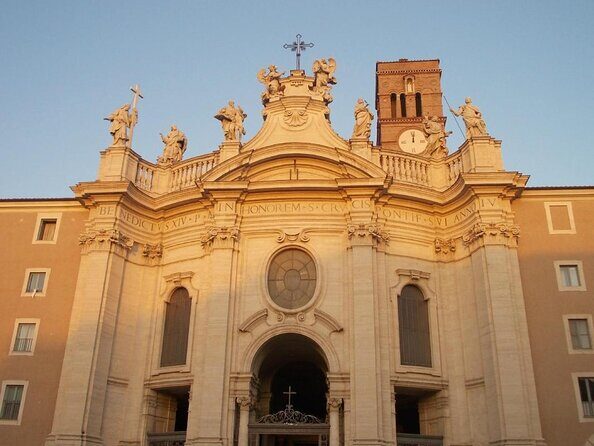
- The Scala Santa (Holy Stairs): you can follow the traditional feel of veneration right inside the chapel structure
- Real Passion relics: you’ll see remnants tied to the Holy Cross, including nails and thorns
- St. Helena connection: learn how these sacred objects and traditions found their way to Rome
- San Giovanni in Laterano: the oldest major Western basilica and one of the four papal basilicas
- Private pacing: you’re not sharing the guide’s attention with strangers
- Prayer-friendly timing: guides often slow down so you can pray and reflect
A private Rome holy-sites walk that feels more like a visit than a checklist
This tour is built for people who want their church time to feel human. You meet the guide in the area of Piazza San Giovanni in Laterano, then you move on foot between three of Rome’s most meaningful religious stops. It’s “walking tour” in the practical sense, but the vibe is closer to a guided pilgrimage: stories, artifacts, and time to look carefully.
I like that it’s explicitly private—only your group—so you can ask questions without a scramble. The pacing from guides named in past experiences also seems to be a theme: people describe not getting rushed and being shown the key details at each location.
The biggest drawback isn’t the route itself. It’s the rules. Churches have dress expectations and you won’t be able to snack your way through. If you go in prepared, the whole experience becomes calmer. If you show up underdressed or hungry, it turns annoying fast.
You can also read our reviews of more walking tours in Rome

Meeting in the Laterano area and planning the 2-hour rhythm
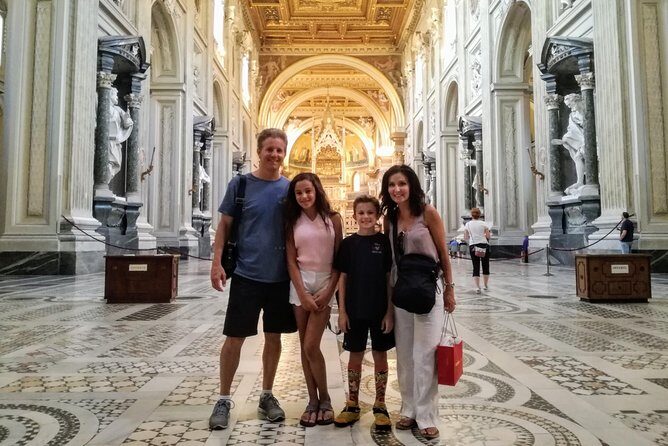
Plan on about 2 hours total. Each of the three stops is allotted around 40 minutes, which is a good match for how these places actually work: you arrive, look up, listen, and then step back for veneration or reflection.
You’ll start at Piazza di S. Giovanni in Laterano. That’s a practical choice because it puts you near one of the city’s most important cathedral complexes. From there, the route takes you to the Scala Santa first, then to Basilica di Santa Croce in Gerusalemme, and finally to San Giovanni in Laterano as the main cathedral capstone.
One detail you may want to double-check when you book: the tour’s listed end point shows Basilica di Santa Croce in Gerusalemme. The sequence of sites still follows the three main stops, but your actual finishing location may be around the Holy Cross basilica area. Either way, the walking day stays compact.
Stop 1: Scala Santa and the Holy Stairs on your knees
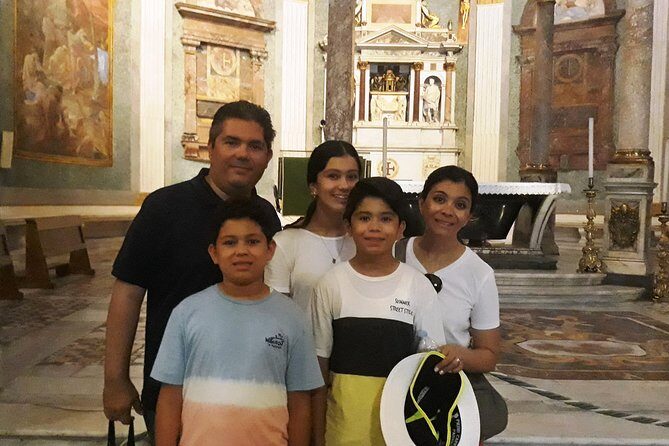
The Scala Santa, sometimes called the Holy Stairs, is the one many people come for. This isn’t just a staircase you look at from a distance. It’s a sacred marble stairway set within a chapel building, and you’re there to hear what the steps represent.
The guide story frames it through the Passion narrative: the Scala Santa is associated with the ladder ascended by Jesus to reach the scene of interrogation before Pontius Pilate. Then the tour connects that sacred tradition to Rome’s role in transporting sacred objects: you’ll hear how the steps are believed to date back to biblical times and how they were brought from the Holy Land to Italy by St. Helena.
What makes this stop special is the physical element. Some people climb in a reflective way, and a few choose knee pads for comfort—especially if you plan to spend real time on the steps. If you want the spiritual side of the tour to feel real, give yourself a little extra patience here. This is where the pace often slows the most.
A consideration: this is also where the dress code hits hardest. Knees and shoulders must be covered for entry, so wear clothing that lets you move and kneel without fuss.
Stop 2: Santa Croce in Gerusalemme and the relics of the Holy Cross
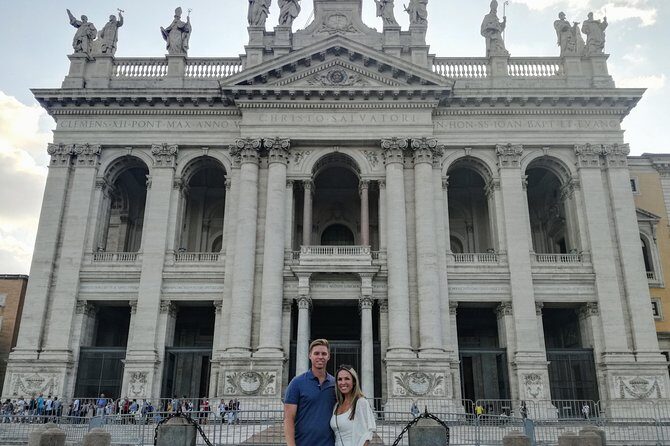
Next up is Basilica di Santa Croce in Gerusalemme, a church built starting from the fourth century on the site where buildings connected with St. Helena existed. It’s one of those Roman churches where “where it stands” matters almost as much as what you see inside.
Here, the tour focuses on Passion relics tied to the Holy Cross. You’ll be shown revered remnants connected to the Crucifixion story, including the nails and the thorns—the kind of objects that turn a Bible reference into something you can stand inches from. It’s not about turning it into a museum. The guide’s job is to put the objects back into a meaningful frame: why they were collected, venerated, and remembered.
You’ll also hear how this church fits into the broader Rome-and-Christianity world. Even when you know the basics, it helps to have a guide connect dates, names, and traditions so the details don’t float around in your head.
One “nice surprise” from past tours: people have singled out a full-size copy of the Shroud of Turin in this general holy-site context. You may see it during your visit depending on what’s on display and how the church presentation is set that day. It’s worth keeping your eyes open as you move through.
A consideration for this stop: food rules are strict. Food and drinks aren’t allowed in the churches, except for water, so plan to arrive with no need for snacks or drinks.
Stop 3: San Giovanni in Laterano, Rome’s cathedral centerpiece
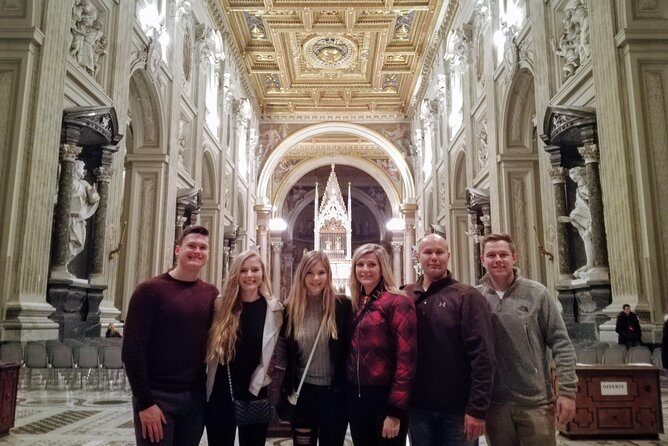
Your final stop is Arcibasilica di San Giovanni in Laterano. This place isn’t subtle. It’s the first of the four major papal basilicas, and it’s described as the oldest and most important Western basilica. Translation: you’re finishing at the big-name center of gravity.
This is Rome’s official cathedral, and it comes with a lot of art and relic-related material. The tour keeps things structured—again, around that 40-minute mark—but the value here is in the guided explanation. Instead of you trying to guess what you’re looking at, the guide points out what matters and why.
As you listen, you’ll also get a sense of how later history layered onto earlier sacred meaning. That combination is part of what makes Lateran special: it doesn’t feel like only one era. It feels like the cathedral has been doing its job for a very long time.
A small practical note: because this is a major cathedral, expect the church environment to be busy with worship routines at times. The private nature of your tour helps, though. Your guide can keep you focused on the right details without you feeling swept into random tourist flow.






Why the $346.87 per-person price can make sense
At $346.87 per person for a roughly 2-hour private tour, it’s not the budget option. But it also isn’t charging like a typical “three churches, see ya” walk. You’re paying for two main things that matter here:
First, it’s private. Only your group participates, and the guide’s time is yours. If you’re traveling as a couple or small group, that private factor can turn the price into something more tolerable.
Second, the experience is heavy on special-access moments and interpretive value. The Scala Santa isn’t a generic viewpoint stop. The relic-and-symbolism focus at Santa Croce in Gerusalemme is also why this kind of tour exists in the first place. Having the guide explain what the nails and thorns represent, who St. Helena is in the story, and how the tradition connects helps you leave with more than photos.
One more plus: the listing notes group discounts, which can help if you’re booking with friends or family. If you can’t spread the cost, it becomes more of a “do it if it’s a top priority” item.
Dress code, water-only rules, and how to avoid being turned away
This tour is for places of worship, and the rules are real. Before you go, plan your clothing around these requirements:
- No shorts
- No sleeveless tops
- Knees and shoulders must be covered for both men and women
- Food and drinks aren’t allowed inside churches, except for water
The most practical move is to dress like you’re attending a serious church service, not like you’re wandering around Rome in summer gear. If you don’t, you risk refused entry and that can cut the entire tour short.
Also: comfortable shoes are a must. The itinerary is short, but the surface inside churches and the walking between sites add up. If you’re hoping to linger for prayer or reflection, you’ll want feet that don’t punish you.
And if you’re planning to spend time on the Holy Stairs in a kneeling or close-to-kneeling way, a little comfort prep helps. Some people use knee pads for that.
What kind of traveler should book this?
Book this tour if you:
- want a spiritual-focused route, not just sightseeing
- like guided explanation that helps you understand what you’re seeing in sacred contexts
- appreciate private pacing and time for reflection
- care about Christian relic traditions tied to Rome, including stories connected with St. Helena
You might skip it if:
- your travel style is mostly quick outdoor landmarks and you hate dress rules
- you’re shopping for a high-energy “stand in front of things and move on” tour
- you don’t want to spend much time listening and standing inside churches
This is also a good fit for people who value the human side of the experience. Several tour descriptions highlight guides taking time while guests pray at the Holy Steps and at the Holy Cross, instead of sweeping everyone along.
Should you book Rome’s Holy Sites walk? My call
Yes, I’d book it if your priority is the Holy Stairs and the Passion relics, and you’re comfortable following church dress rules. The private structure makes it feel less crowded and more respectful, and the three-stop format keeps the day focused without turning into a long slog.
If you’re on the fence because of price, treat it like this: you’re paying for interpretation at Scala Santa and for a relic-centered visit at Santa Croce—moments that don’t land the same way if you go alone. If those are on your must-see list, the value is in leaving with a clearer understanding and a calmer visit, not in collecting more stamps.
FAQ
How long is the tour?
The tour is listed at about 2 hours.
Is this a private tour?
Yes. It’s described as a private tour/activity, and only your group participates.
What language is the tour in?
The tour is offered in English.
Where do we meet, and where does it end?
You meet at Piazza di S. Giovanni in Laterano, Roma. The listed end point is Basilica di Santa Croce in Gerusalemme, Piazza di S. Croce in Gerusalemme, 10.
What stops are included?
You’ll visit three sites: Scala Santa, Basilica di Santa Croce in Gerusalemme, and San Giovanni in Laterano.
Do I need tickets or admission money?
The stop details list Admission Ticket Free for each of the three stops.
What is the dress code for churches?
You need knees and shoulders covered. No shorts or sleeveless tops are allowed for both men and women, and you may be refused entry if you don’t comply.
Can I bring food or drinks inside?
Food and drinks aren’t allowed in the churches, except water.
What’s the cancellation rule for a refund?
Free cancellation is available, with a full refund if you cancel at least 24 hours before the experience start time.
If you tell me your travel month and whether you’re aiming for a morning or afternoon visit, I can help you pick the start time that best fits Rome church opening hours and your energy level.