REVIEW · TREVI FOUNTAIN TOURS
Rome: Trevi Fountain District and Underground Domus Guided Tour
Book on Viator →Operated by TOURISTATION · Bookable on Viator
Rome has a secret under Trevi. This small-group tour leads you into the Vicus Caprarius archaeological site, about 30 feet below street level, where Rome’s water system left physical traces you rarely see. You’ll connect those underground remains to the fountains above—then step out right near Trevi.
I love the small group size (max 15), because it keeps the experience personal even in a busy area. I also love the focus on specific discoveries: polychrome marble fragments, the head of Alessandro Helios, a haul of 800 coins, and special oil amphorae called spatheia.
One consideration: the underground portion is compact, and the Trevi Fountain stop is brief—so if you’re chasing time for photos or a long Trevi stroll, this may feel a bit tight.
In This Review
- What Makes This Tour Worth Your Time
- Vicus Caprarius: The Water City Under Trevi
- Price and What You’re Really Paying For
- Meet at Vicolo del Puttarello and Start Right Where It Counts
- Stop 1: Descending to the Aqueduct Tank and Roman Cistern Story
- The Artifacts That Bring the Underground Site to Life
- Stop 2: Trevi Fountain Finish Line (10 Minutes, Real Crowds)
- Small-Group Format: Why Max 15 People Matters Here
- Who This Tour Suits Best
- Practical Tips for Making the 55 Minutes Work
- Should You Book This Vicus Caprarius and Trevi Tour?
What Makes This Tour Worth Your Time

- Meet at Vicolo del Puttarello (Vicus Caprarius entrance) to start at street level and get going fast
- 30-foot descent to the Water City to see an aqueduct connection and a water tank setup
- Roman finds with real explanations like marble coverings, coins, and spatheia amphorae
- Small group cap of 15 people for easier questions in English
- Trevi Fountain as a finish line with coin legend and a quick look at the landmark
Vicus Caprarius: The Water City Under Trevi
If you think you already know Trevi, do this one anyway. The big difference is that you’re not just looking at famous stone in bright light—you’re learning how water moved through Rome, from underground infrastructure to the fountains you see above.
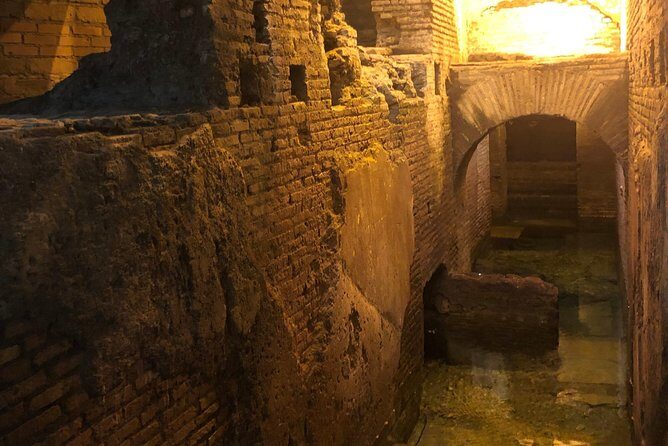
This tour centers on Vicus Caprarius, a subterranean archaeological site discovered in 1999 in the basement of a cinema. From the moment you enter, the story turns practical: where did the water come from, how was it stored or routed, and what did Romans preserve when they built and repaired systems over time?
You’ll go about 30 feet (nine meters) down below the streets, guided the whole way. Expect stairs and a bit of tight space. Nothing about this is designed for a leisurely wander; it’s built for an efficient guided visit where you focus on what the site reveals.
You can also read our reviews of more guided tours in Rome



Price and What You’re Really Paying For
At $53.10 per person for roughly 55 minutes, the price isn’t just for access. What you’re buying is reserved entry to the Vicus Caprarius site plus a guided tour, capped at 15 people, with staff support from Touristation.
You’re also getting added value that’s easy to overlook: Trevi Fountain access is included, plus an Italian gelato. Even if gelato is only the cherry on top, it signals that this package is meant to be a complete, short plan rather than a pick-and-choose day.
Is it expensive compared with doing everything DIY? Possibly, and some people do compare it to lower-cost self-entry options for underground sites. But for me, the main question is whether you want interpretation. If you’re the type who likes a guide tying the underground features to the fountains above, this package can make sense. If you only want a quick look and you’re fine reading quietly on your own, you may feel less convinced.
Meet at Vicolo del Puttarello and Start Right Where It Counts
Your meeting point is Vicolo del Puttarello, 25, 00187 Rome. That’s also where you redeem tickets at Vicus Caprarius – The Water City, so you’re not sent on a scavenger hunt to some separate office.
Why that matters: timing. The whole tour is about 55 minutes, with the underground visit taking most of it. If you arrive late, you’re likely to feel it immediately because there isn’t much buffer.
The tour is offered in English and is near public transportation. Also, note the practical limit: this experience is not suitable for people with mobility impairments, which usually means steps and confined underground areas. If that’s you, don’t force it—Rome has plenty of other water-themed experiences that stay at street level.
Stop 1: Descending to the Aqueduct Tank and Roman Cistern Story
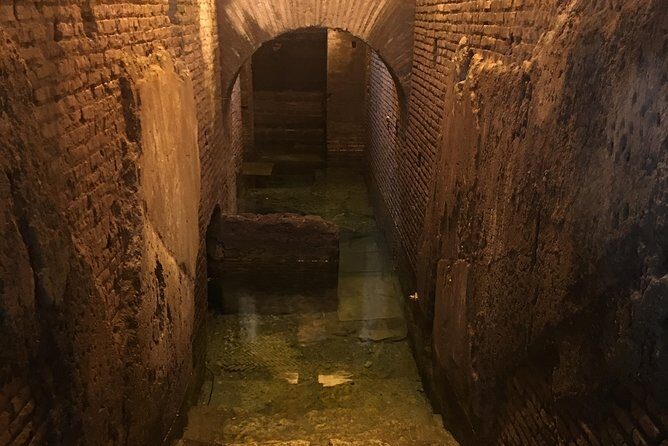
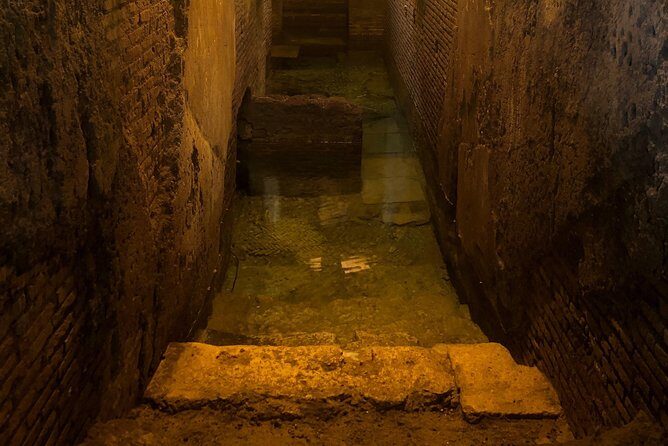
This is the main event: 45 minutes at Vicus Caprarius. You’ll enter with your guide, then head down into a real underground setting rather than a staged museum room.
Here’s what you’re looking for once you’re down there:
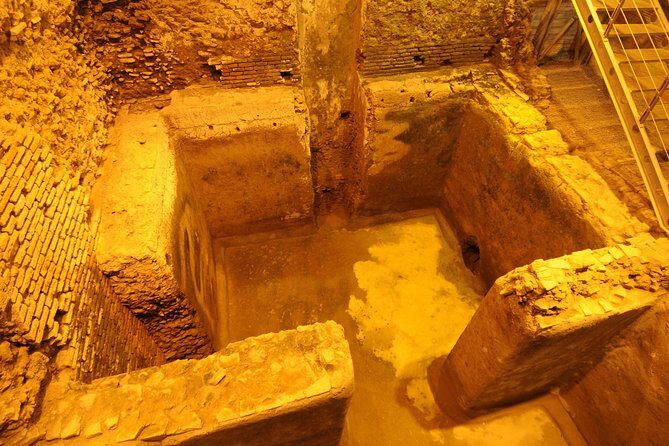
- A water tank connected to the Vergine aqueduct
- Remains tied to a Roman villa setting and an ancient cistern
- Evidence of how water was handled in the area that later became associated with water-related identity
A key part of what makes this compelling is that the site was uncovered relatively recently (1999). That makes the underground feel even more immediate: this is not a vague “ancient Rome” concept. It’s a discovered structure that tells you how older infrastructure can sit hidden under modern life—like a cinema basement holding a water system clue.
Also keep expectations realistic. The most common disappointment I’d watch for is thinking this will be a large tunnel network. It’s more like a specific underground archaeological space with enough features to explain a story. That’s still fascinating, but it’s not an endless maze.
The Artifacts That Bring the Underground Site to Life
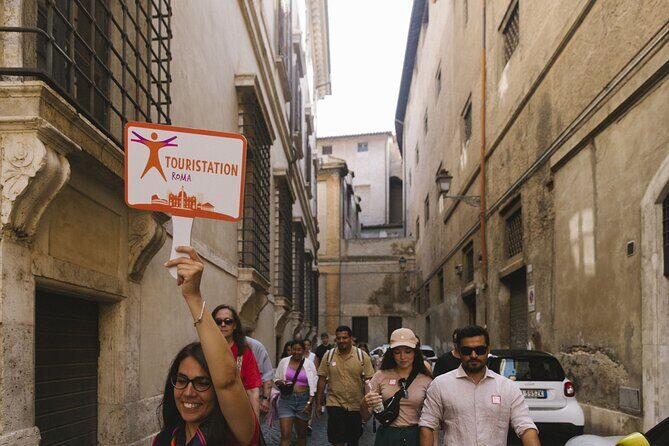
The underground visit doesn’t just point at stone. It’s about what was found when archaeologists excavated the area, and why those items matter for understanding Roman daily life.
You’ll get to see or learn about:
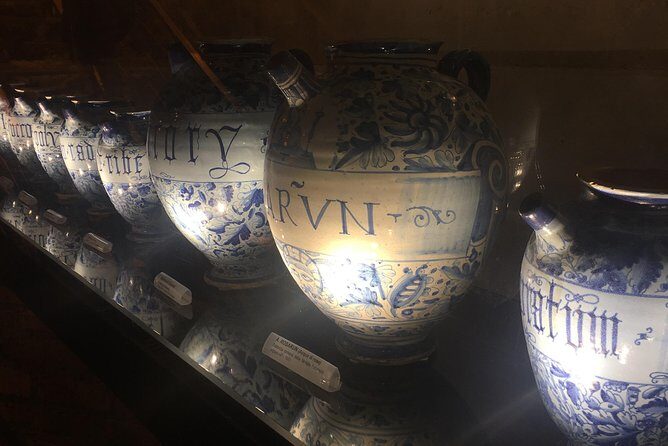
- Precious polychrome marble coverings, including colorful stone elements tied to the villa setting
- The famous head of Alessandro Helios
- A treasure trove of about 800 coins
- Spathaeia, special African amphorae used to transport oil
That list is gold for your imagination. Marble and statues clue you into status and aesthetics. Coins hint at wealth, timing, and what was present when the site was active. Oil amphorae connect the infrastructure to real consumption—Rome wasn’t just building water systems for fun. It was feeding kitchens, lamps, markets, and storage needs.
If you like history that’s connected to everyday logistics—who moved what, where it went, and how it survived—this is the kind of tour that clicks. Even in 45 minutes, you’ll leave with the sense that water wasn’t a background detail. It was a working system with components you can actually locate.



Stop 2: Trevi Fountain Finish Line (10 Minutes, Real Crowds)
After the underground segment, you’ll exit and end your tour at the iconic Trevi Fountain. Trevi is gorgeous, but it’s also famously crowded, and your time there is about 10 minutes.
What to do with those minutes:
- Find a spot where you can actually see the fountain details and not just people’s shoulders
- If you plan to throw a coin, do it confidently and quickly, then shift to photos
- Use the guide’s final framing to connect what you learned below with what you’re seeing above
There’s also the well-known legend: throw a coin and it’s supposed to ensure your return to Rome someday. Whether you believe it or not, it’s a fun ritual and a good reason to take one classic moment on camera before you move on.
A small note: the short Trevi stop can be a mismatch for people expecting a long Trevi district tour. This isn’t trying to be a full Trevi neighborhood outing. It’s a two-stop plan where the underground site does most of the talking.
Small-Group Format: Why Max 15 People Matters Here
This tour caps out at 15 travelers, and that matters more than you might think. Underground spaces tend to compress sound, movement, and attention. With a small group, you’re less likely to be stuck behind someone while the guide explains a key feature.
It also keeps pacing under control. When you’re descending, then moving through tight space while learning names and functions—aqueduct connections, water tanks, cistern context—everyone benefits from not having a crowd surge behind them.
In the feedback you’ll see patterns about guides being lively and clear in English, and that fits what you need in a short tour. You want someone who can keep the story moving without turning it into a lecture, especially when you only have 55 minutes total.
Who This Tour Suits Best
This experience is a strong match if you:
- Want a water-focused look at Rome that ties underground infrastructure to famous fountains
- Prefer a guided interpretation over reading signs alone
- Enjoy short, efficient plans that fit into a packed day
- Like seeing specific discoveries, not just general “ancient Rome” talking points
It’s less ideal if you:
- Came only for the Trevi Fountain and want more time walking the surrounding streets
- Expected a large maze of underground tunnels
- Need wheelchair-friendly access or step-free routes (this one is not suitable for mobility impairments)
For repeat Rome visitors, this is also worth considering. Trevi is one of those places you can see from the street and still feel like you barely scratched the surface. This tour forces you to look at the mechanics behind the beauty.
Practical Tips for Making the 55 Minutes Work
This is a quick tour, so small choices matter.
- Wear shoes you can grip. Underground areas usually mean stairs and uneven footing.
- Arrive a few minutes early at Vicolo del Puttarello, 25. Redeeming the ticket and getting everyone in place takes a moment.
- Plan for Trevi congestion. Your 10 minutes will be in the most crowded part of the day for many visitors. Move smart: pick your spot, watch the fountain, then snap photos without getting trapped in the flow.
- Ask your questions underground. If you want clarification on the aqueduct connection or how the finds relate to the water story, this is when you get the best chance.
And one more thought: because the underground portion is compact, you’ll likely get the most out of this tour if you go in with curiosity instead of expecting a huge underground network. Think of it as a targeted “how Rome managed water” lesson you can stand inside.
Should You Book This Vicus Caprarius and Trevi Tour?
Book it if you want a short, structured plan that does two clever things at once: it teaches the water system behind Trevi and then drops you back out at the landmark itself. The combination of reserved entry, guided explanation, small-group format, and included extras like gelato makes it feel like a complete experience rather than a bare ticket.
Skip or consider alternatives if you mainly care about spending more time at Trevi Fountain or you’re hoping for a sprawling underground tunnel adventure. In that case, you may prefer a self-guided option for the underground site and then spend your own time enjoying Trevi without the tour time limit.
If your travel style is practical and story-driven—water systems, logistics, and real artifacts—this is a good bet for Rome. It’s not long, but it’s the right kind of different.