REVIEW · WALKING TOURS
Rome: Squares and Fountains Walking Guided Tour
Book on GetYourGuide →Operated by Tour in the City - Travel Agency Rome - · Bookable on GetYourGuide
Rome hits you fast, and this walk hits even faster. In just 2.5 hours, you follow a smart loop through Baroque and Renaissance Rome, with an art-and-archaeology guide who explains what you’re looking at as you go. I like that it starts with a viewpoint, not a boring intro, and that you end at the riverfront with one of the city’s most dramatic bridge-and-castle views.
What I like most is the small-group feel, which helps the guide answer questions and keep everyone moving at a good pace. The second big win: you’re not doing a single famous stop and rushing off. You connect a string of landmark sights—Trevi Fountain, the Pantheon, Piazza Navona, and up to Ponte Sant’Angelo and Castel Sant’Angelo—while also seeing quieter street corners along the way.
One thing to consider: this is still a walking tour. It involves a moderate amount of walking on uneven sidewalks and steps, so it’s not a great fit if your back isn’t happy or if mobility is a challenge.
In This Review
- Key things to know before you go
- Starting above the Spanish Steps for a real Rome orientation
- Spanish Steps to Trevi: how Baroque drama works on foot
- Pantheon at street level: the dome you can’t shrink
- Piazza Navona: the Baroque square that still feels theatrical
- Breaks, ice cream time, and why pacing matters
- Hidden alleys that connect the big names
- Ponte Sant’Angelo and Castel Sant’Angelo: the view that earns the finale
- What the 2.5 hours really feels like on your feet
- Price and value: when $85 makes sense in Rome
- Who should book this walk (and who should skip it)
- Should you book this Rome squares-and-fountains tour?
- FAQ
- Where does the tour start?
- How long is the walking tour?
- What sights are included in the route?
- Is food included?
- Do I need to bring anything?
- Is the tour in English?
- Is it wheelchair accessible?
Key things to know before you go
- Panoramic start above the Spanish Steps gives you instant orientation for the rest of the walk
- Headsets help you hear the guide clearly when the group is larger
- Trevi and Pantheon stops are timed for photos plus explanations, not long museum-style delays
- Piazza Navona includes Bernini’s Fountain of the Four Rivers and Baroque architectural details you can spot
- You get break moments at Trevi and Piazza Navona, plus time for an ice cream pause
- The finale is Ponte Sant’Angelo and Castel Sant’Angelo—great for evening-light photos
Starting above the Spanish Steps for a real Rome orientation
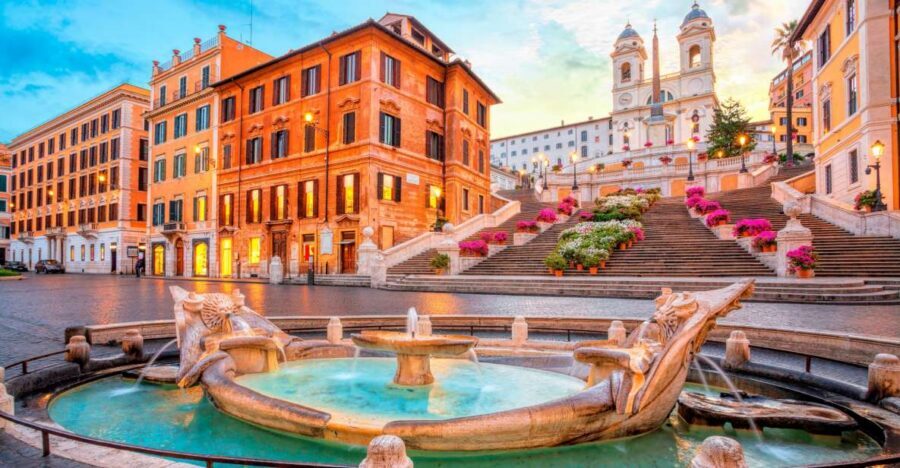
You meet at Trinità dei Monti, up above the Spanish Steps. The first payoff is the panoramic view of Rome, which helps you understand where you’ll be walking and why these squares feel “placed” so intentionally in the city.
Then the guide walks you into the vibe of the area with short photo stops and quick orientation. This is a good warm-up, and it saves you from the usual Rome problem: staring at buildings without knowing what you’re seeing.
You can also read our reviews of more walking tours in Rome

Spanish Steps to Trevi: how Baroque drama works on foot
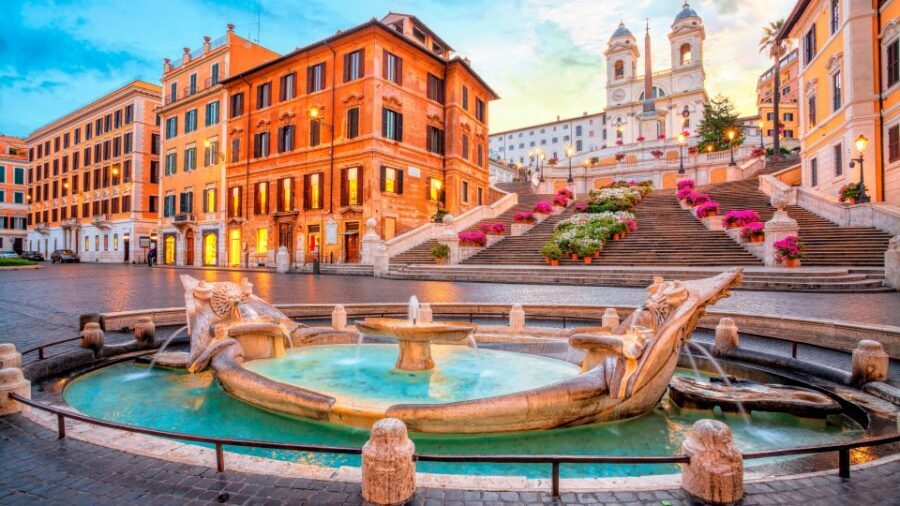
The walk from the Spanish Steps area toward Trevi keeps you in the center of Rome’s classic visual rhythm: stairs, open space, then fountains. At each stop, the guide gives you the story behind what’s in front of you, so it’s not just sightseeing-by-snapshots.
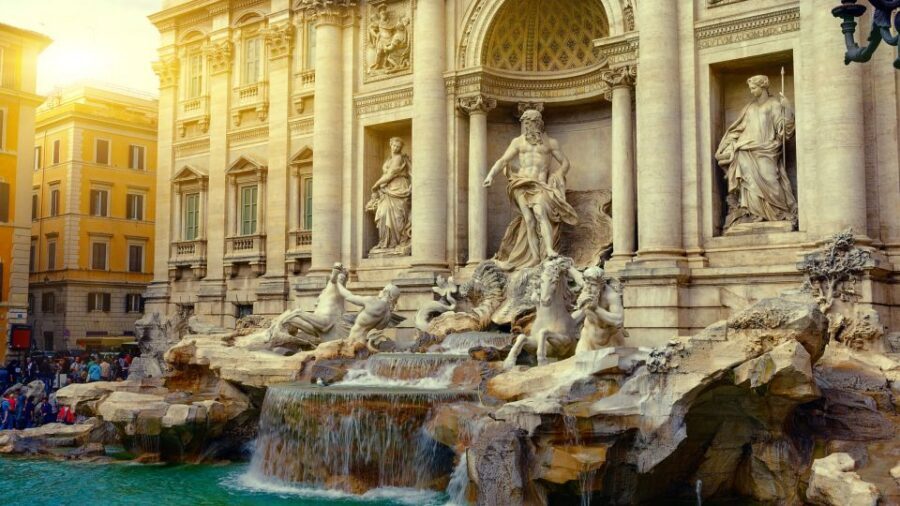
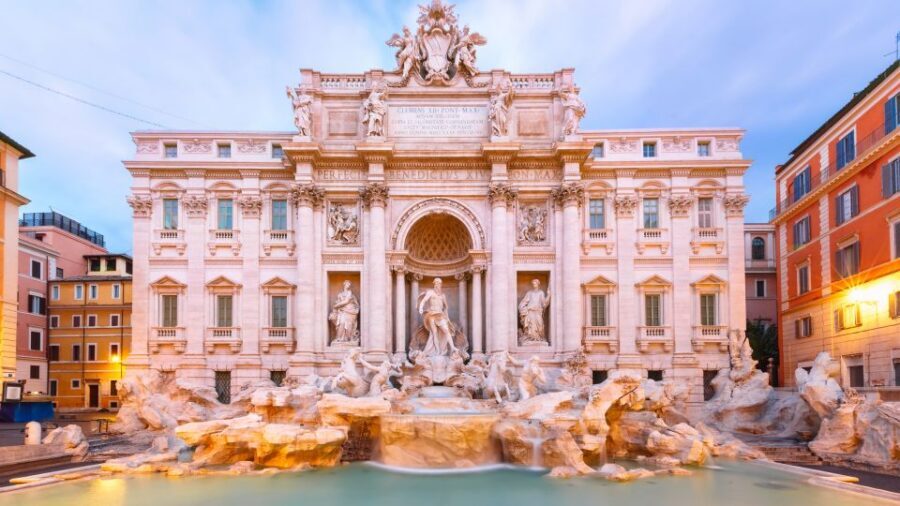
Trevi Fountain is where Rome’s showmanship peaks. You’ll get a photo stop plus a guided visit and a brief break. The key value here is context: you’ll hear the legends and myths that made Trevi more than a pretty landmark.
Practical tip: plan to slow down right at Trevi. That area is crowded, and the best photos usually come from stepping aside at angles the guide points out, then letting the group regroup.
Pantheon at street level: the dome you can’t shrink
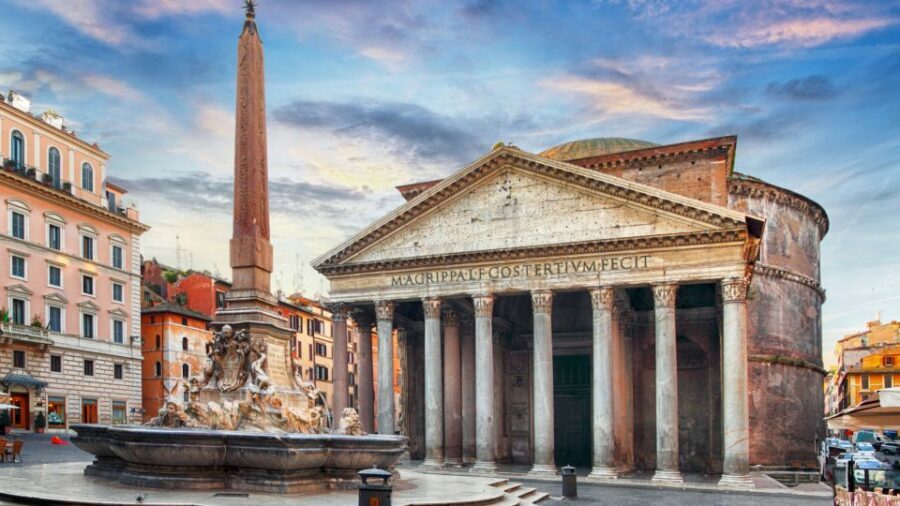
Next comes the Pantheon, and it’s one of those rare monuments that still feels unreal from the outside. The guide explains it in a way that makes the building’s purpose feel clear, including how it was built as a temple dedicated to the Olympian gods.
Then there’s the dome. You’ll hear why it became the largest dome in the world since ancient times, and why it still dominates the space even when you’re surrounded by modern streets and traffic.
This stop is short, on purpose. It’s designed to give you the main “aha” points so you leave knowing what you saw, not just that it looked impressive.
Piazza Navona: the Baroque square that still feels theatrical
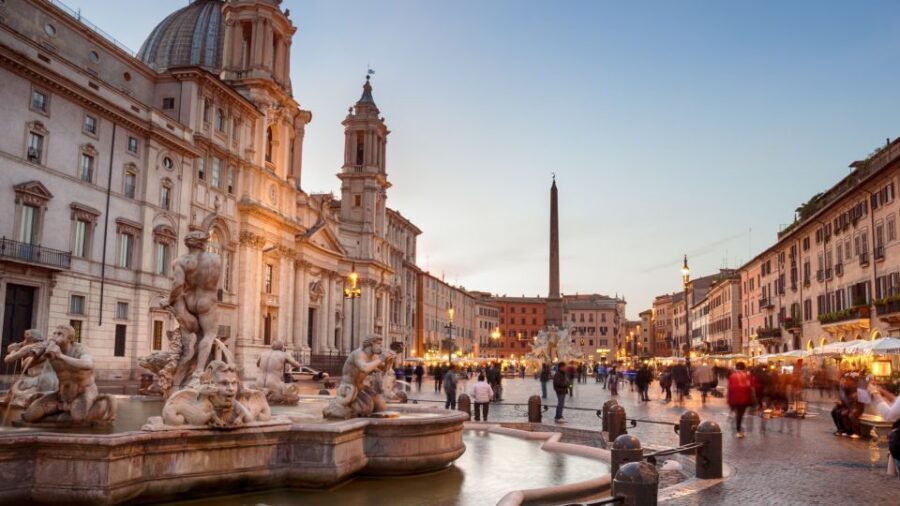
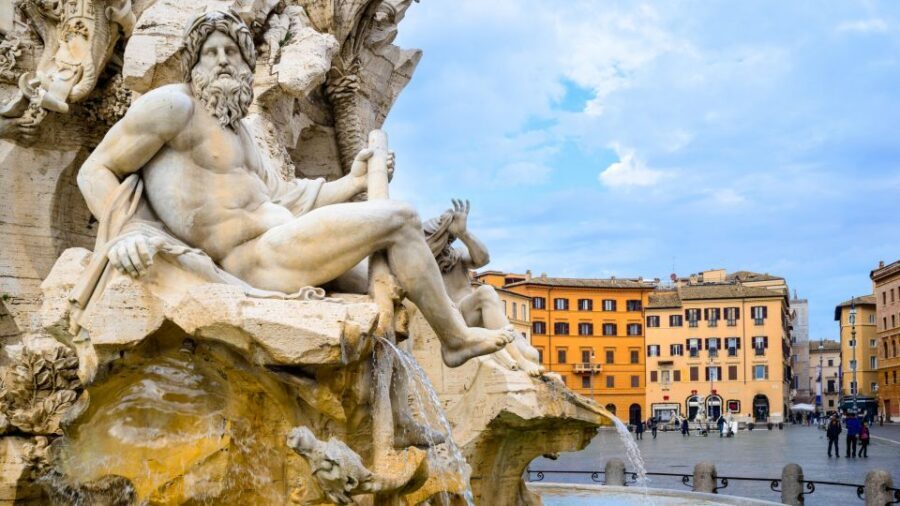
Piazza Navona is one of Rome’s most stylish squares, and it works as a live stage for Baroque art. You arrive with time to pause, then you’ll get guided context for the square’s role in Roman public life, including how it hosted theatrical events and festivals over time.
The star is Bernini’s Fountain of the Four Rivers. The guide points out what makes it so visually powerful, and you’ll likely notice details you would miss if you were just walking through.
Piazza Navona also gives you architectural contrasts you can actually see. The guide brings in Baroque context around the surrounding buildings, including Santa Agnese in Agone, with its artistic design linked to Borromini.
Breaks, ice cream time, and why pacing matters
This tour is paced like a good conversation: quick introductions, time to look, then a short breather. You’ll get break time at Trevi and again at Piazza Navona, which matters because Rome’s best photos come when you’re not rushing.
There’s also time included to taste ice cream during the walk. One note for your planning: your ticket covers the guide and walking tour, while food and drinks aren’t listed as included unless specified—so treat the ice cream stop as a scheduled break where you can buy your own.
If the weather turns, don’t panic. The guide energy has been praised as steady even when conditions aren’t ideal, and that’s what makes or breaks a short tour day.
You can also read our reviews of more guided tours in Rome




Hidden alleys that connect the big names
Between the headline sights, you’ll walk through smaller streets that feel like a city inside the city. That’s not just for variety—it’s practical.
The value of these quieter lanes is how they shape your understanding of Rome. You start to see how the big squares aren’t isolated postcard moments. They’re connected by routes that were used for everyday movement, processions, and public life.
It also makes the walk more fun. You’re not stuck in a straight line of monuments—you’re sampling how Rome actually feels when you’re not hovering in a single plaza.
Ponte Sant’Angelo and Castel Sant’Angelo: the view that earns the finale
Once you reach Ponte Sant’Angelo, you get the riverfront atmosphere—and it’s a big mood shift from the concentrated square-to-square rhythm. The guide explains the bridge’s place in Rome’s long timeline, and then you look toward Castel Sant’Angelo.
Castel Sant’Angelo is more than a dramatic backdrop. You’ll learn it was built as Hadrian’s tomb, later transformed into a fortress for the popes, and it still stands as one of Rome’s iconic monuments.
The finishing touch is the magical atmosphere of the bridge itself, in front of Castel Sant’Angelo. If you like night photos, this is the moment where the whole walk starts feeling like a movie scene.
What the 2.5 hours really feels like on your feet
This is a walking tour with photo stops and guided moments, not a slow museum crawl. Expect a moderate amount of walking, plus brief stops where you’ll stand, look, and listen.
What you’ll notice most is how the guide manages timing. Photo stops keep you from standing too long at the wrong angle, and the breaks keep the group from turning into a grumpy stack of feet.
Bring comfortable shoes—Rome sidewalks are often uneven, and the tour includes steps and street surfaces that don’t always forgive bad footwear. Sunglasses and a sun hat are also smart if you’re walking under direct light.
Price and value: when $85 makes sense in Rome
At $85 per person for about 2.5 hours, you’re paying for two things: an expert guide and time-saving structure.
If you tried to stitch this route together on your own, you’d still hit Trevi, Pantheon, Piazza Navona, and the river. But you’d miss the why behind what you see—the connections between Baroque art, architectural details, and the older layers of the city.
This tour also includes headsets for groups larger than 8, which helps the guide stay audible in crowded areas like Trevi and Piazza Navona. And since you’re getting a concentrated set of major sights plus street-level orientation, the value comes from efficiency: you get a guided storyline through central Rome without spending the whole day in transit.
Who should book this walk (and who should skip it)
This is a great match if you want a guided Rome day that feels focused rather than frantic. It’s also good if you enjoy art-and-architecture explanations you can follow in real time—Trevi, Pantheon, Bernini’s fountain, and the bridge-and-tomb finale are all designed for that.
It’s less ideal if you need wheelchair access or if you have mobility limits. The tour isn’t wheelchair accessible and isn’t recommended for people with back problems or difficulty walking.
Should you book this Rome squares-and-fountains tour?
I’d book it if you want one guided loop that strings together the city’s most famous visual moments with the stories that make them click. The route works because it starts with orientation, builds through major Baroque highlights, and ends with a dramatic riverfront payoff.
Skip it only if your plan is mostly “quick photos and no walking.” This tour leans into the walking and listening part—comfortable shoes are your best friend here, and the timing works best when you show up ready to move.
If you can, look for guides like Sabrina—the experience has strong praise for guides who bring serious art context, keep families and teens engaged, and help with photos at key stops.
FAQ
Where does the tour start?
The meeting point is Trinità dei Monti above the Spanish Steps.
How long is the walking tour?
The duration is about 2.5 hours.
What sights are included in the route?
You’ll visit or see stops including the Spanish Steps, Trevi Fountain, the Pantheon, Piazza Navona (including Bernini’s Fountain of the Four Rivers), Santa Agnese in Agone, Ponte Sant’Angelo, and Castel Sant’Angelo, with scenic views toward St. Peter’s Basilica.
Is food included?
Food and drinks are not included unless specified. The tour includes time to taste ice cream.
Do I need to bring anything?
Bring comfortable shoes, sunglasses, and a sun hat.
Is the tour in English?
Yes, the live guide offers English and Italian.
Is it wheelchair accessible?
No. It’s not wheelchair accessible and is not recommended for people with mobility impairments or difficulty walking.