REVIEW · WALKING TOURS
Rome: Relics from the Passion of the Christ Walking Tour
Book on GetYourGuide →Operated by Roman Vacations · Bookable on GetYourGuide
Rome has a way of turning faith into stone and story.
This tour connects you to that in a very physical way, walking through churches that hold relics tied to the Crucifixion. I like that the experience is framed with both spiritual meaning and solid context, from the early Christian era to how St Helena helped bring relics to Rome in the 4th century. I especially liked seeing how the tour is guided by real people such as Paul and Tom, who bring structure and energy without rushing you.
Two things I really love: you get an expert local guide who explains why each relic matters, and you also get moments to slow down and pray rather than just “see and move on.” One consideration: it’s a walking tour with multiple churches in a short window, so if you’re slow or you get winded easily, you’ll want to plan for the pace and use the golf cart option if offered.
In This Review
- Key things to know before you go
- Why this Passion relic tour feels different in Rome
- The price and value: what $96.29 gets you
- Where you start: Santa Maria Maggiore’s piazza meeting point
- Basilica Papale di Santa Maria Maggiore: wood from the manger and a Bernini presence
- Santa Prassede: 9th-century mosaics and the scourging pillar
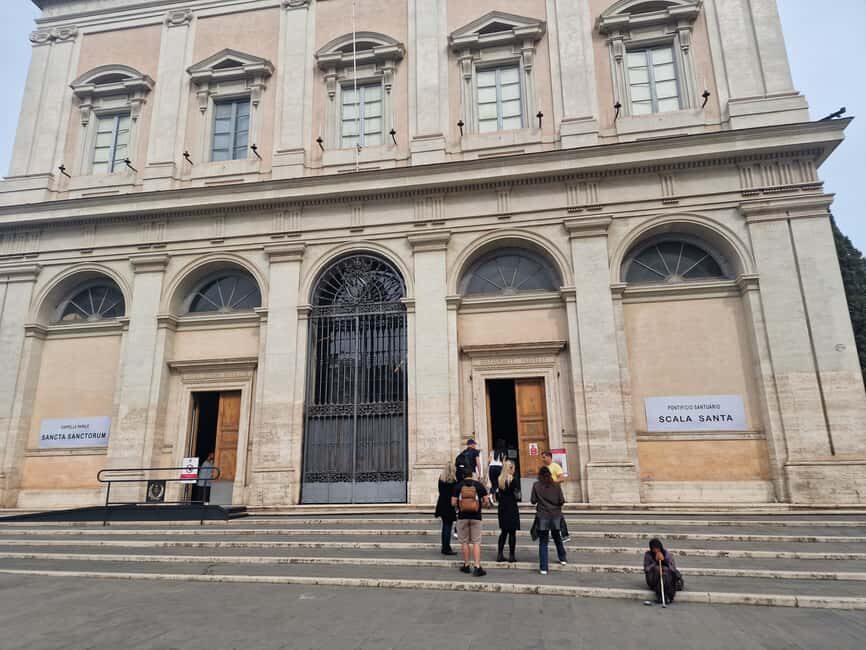
- Scala Sancta: the Holy Steps judged by Pilate
- Basilica of San Giovanni in Laterano: Borromini design and the skulls of Peter and Paul
- Basilica of the Holy Cross in Jerusalem: fragments and relics from Calvary
- How the prayer time works (and why it’s worth taking seriously)
- Who this tour suits best (and who might prefer something else)
- Practical tips for church dress, comfort, and pacing
- What makes the guides matter on a tour like this
- Should you book the Rome Relics from the Passion of the Christ walking tour?
- FAQ
- How long is the Rome Relics from the Passion of the Christ walking tour?
- Where do I meet the guide?
- Which sites are included in the tour?
- Is the tour wheelchair accessible?
- What should I wear to enter the churches?
- Is entry to the sites included in the price?
- Is food and drink included?
Key things to know before you go
- Relics tied to the Passion you can visit and pray with inside major Roman basilicas
- Small group (up to 10), which makes questions easier during the stops
- A focused 3-hour route across Santa Maria Maggiore, Santa Prassede, Scala Sancta, Lateran, and Holy Cross in Jerusalem
- Time to reflect and pray is built into the experience, not just an afterthought
- Strict church dress rules (shoulders and knees covered), so plan your outfit early
Why this Passion relic tour feels different in Rome
If your idea of pilgrimage is mostly about grand views and famous ruins, this tour is a sharp change of pace. In Rome, Christianity isn’t just remembered. It’s housed—under altars, embedded in mosaics, and preserved in chapels—so the story of the Passion becomes something you stand next to.
What makes this experience especially compelling is the chain of meaning it builds. The guide connects the early Christian world to Rome’s later role as the center of a faith the empire once persecuted. Then the tour moves from background into objects: items associated with Jesus’ torture and death that were brought to Rome from Jerusalem, widely associated with St Helena’s 4th-century journeys.
You’ll notice that the churches here are not interchangeable. Each one has its own tone, its own art style, and its own place in the larger Christian narrative. And because you’re also praying in the right spaces, the whole route feels intentional rather than like a checklist.
You can also read our reviews of more walking tours in Rome

The price and value: what $96.29 gets you
At $96.29 per person for about 3 hours, the value here comes from access plus interpretation. Entry is included for each stop, and you’re not just walking around solo—you’re getting an expert local guide who helps you understand what you’re looking at and why it matters.
A solo visit to multiple basilicas can be cheaper on paper, but you’d still be piecing together meaning: what you’re seeing, where the relics are, and how the Passion objects connect to the broader story of Rome and early Christianity. The small group size (limited to 10 participants) also helps keep the experience from turning into a fast-moving herd.
If you’re the type of traveler who likes to ask questions and get context on the spot, this price tends to feel fair. If you just want a quick glance at famous churches and you’re not interested in relic history or prayer time, you might feel the route is more structured than you need.
Where you start: Santa Maria Maggiore’s piazza meeting point
You meet in Piazza di Santa Maria Maggiore, at the fountain in front of the Basilica of Santa Maria Maggiore. The guide will be holding an orange sign with a lion head.
I like meeting at a landmark like this because it’s easy to orient yourself fast. And because the churches you’ll visit are active worship spaces, starting on time matters. The tour departs promptly, and the check-in window is 15 minutes before your scheduled start.
Practical tip: wear comfortable walking shoes. Even with a short route length, the surfaces can vary, and you’ll be going in and out of churches, so your feet will notice.
Basilica Papale di Santa Maria Maggiore: wood from the manger and a Bernini presence
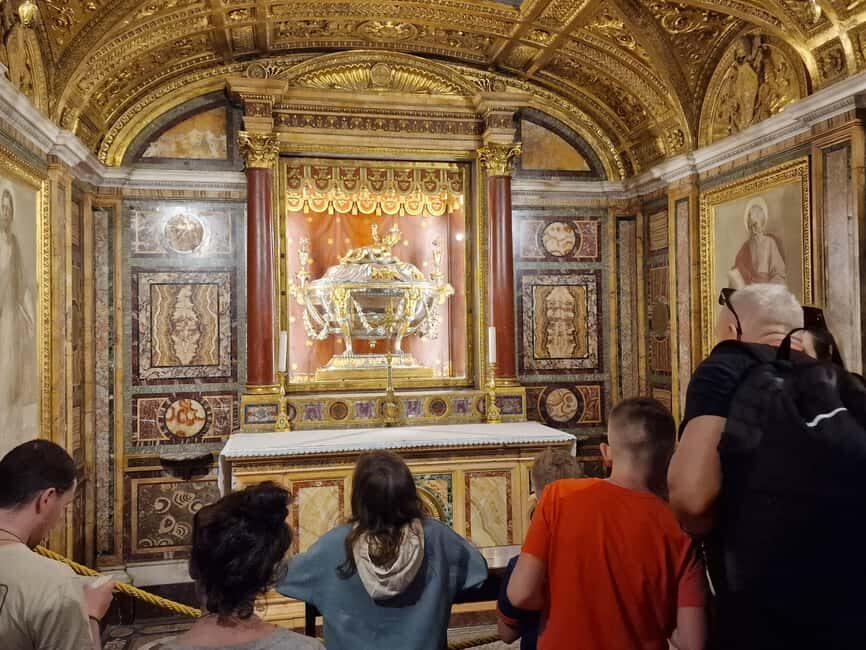
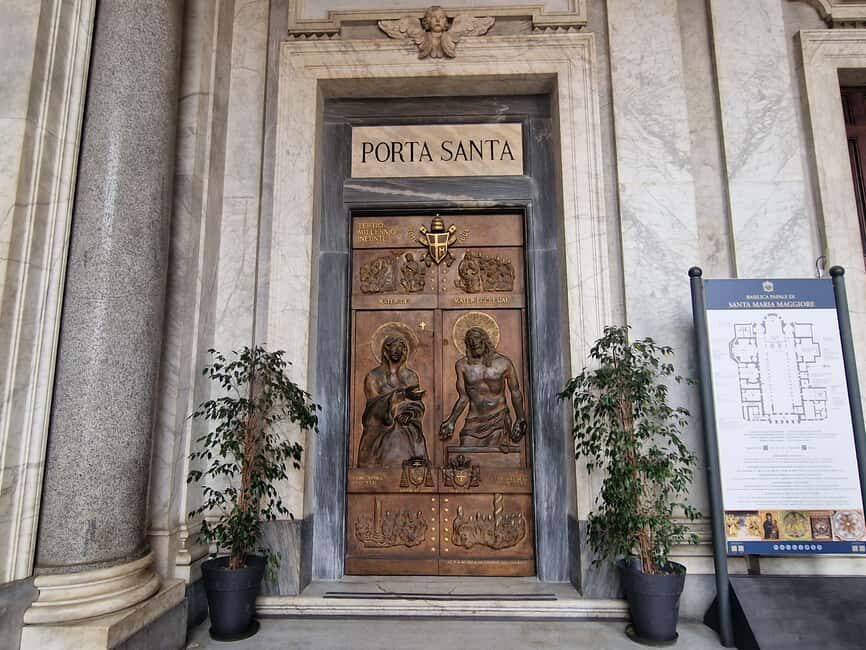
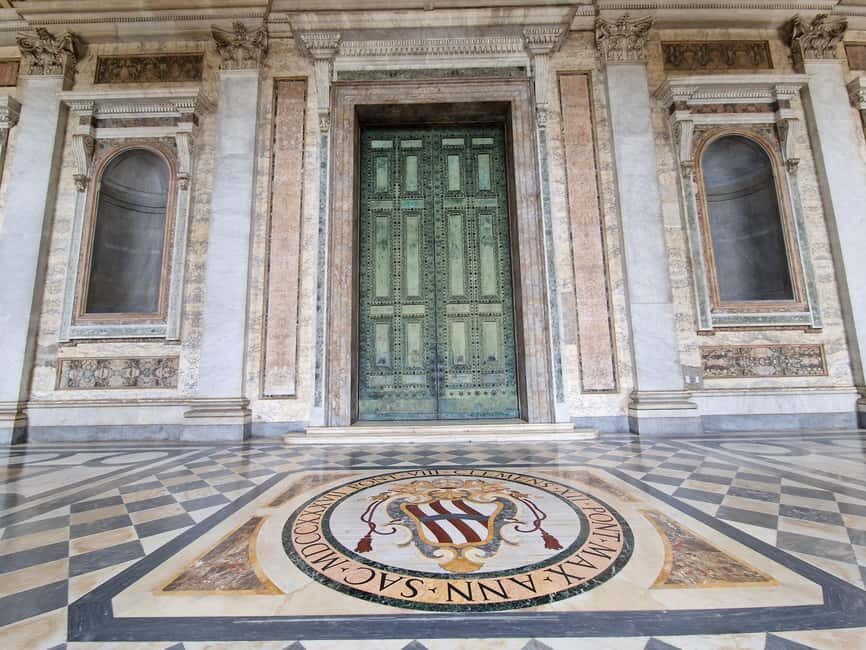
The first church stop is Basilica Papale di Santa Maria Maggiore, a major Roman basilica dedicated to the Mother of God, the Theotokos. This is not just a pretty opening. It sets the tone of the day: Jesus’ life story before you shift fully into the Passion.
One of the most striking details is what you find beneath the main altar: wood from the manger where the baby Jesus once lay. Even if you’re not sure what to expect visually, the moment you learn what the church contains, the place becomes more than architecture. It becomes an anchor point for belief and memory.
Another highlight is the presence of Gian Lorenzo Bernini in the basilica context. That kind of artistic weight matters in Rome: it tells you that later eras treated these Christian spaces as serious, not casual.
What to watch: this church is a major site with strong visitor flow. You’ll want to keep your schedule tight and follow the guide’s lead on where to stand, what to look at, and how long to spend in prayer.
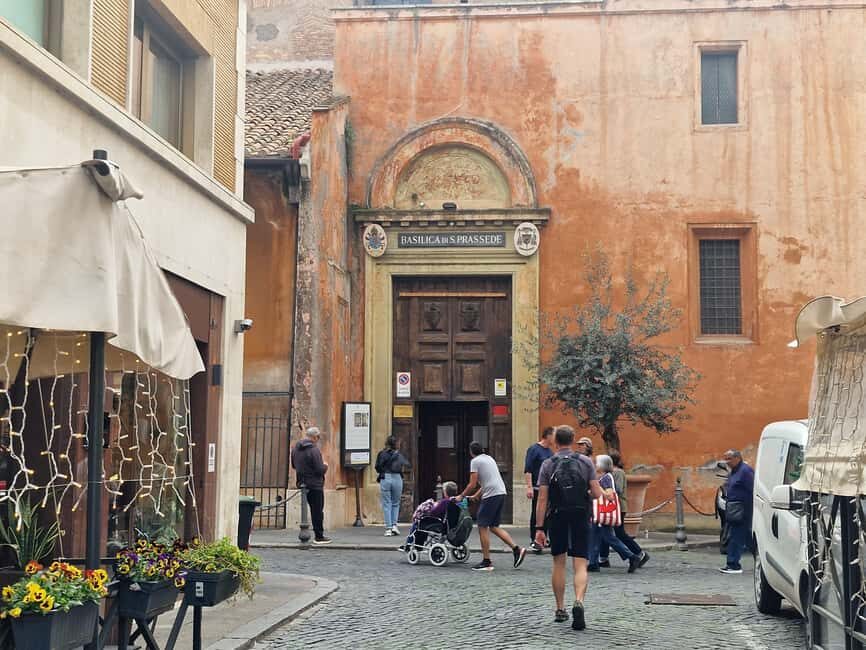
Santa Prassede: 9th-century mosaics and the scourging pillar
Next is Santa Prassede, famous for fabulous 9th-century mosaics. The guide’s job here is key: mosaics can feel like wall-to-wall beauty until you’re shown what to focus on. With a guide, you start seeing how the art supports the theology and the story.
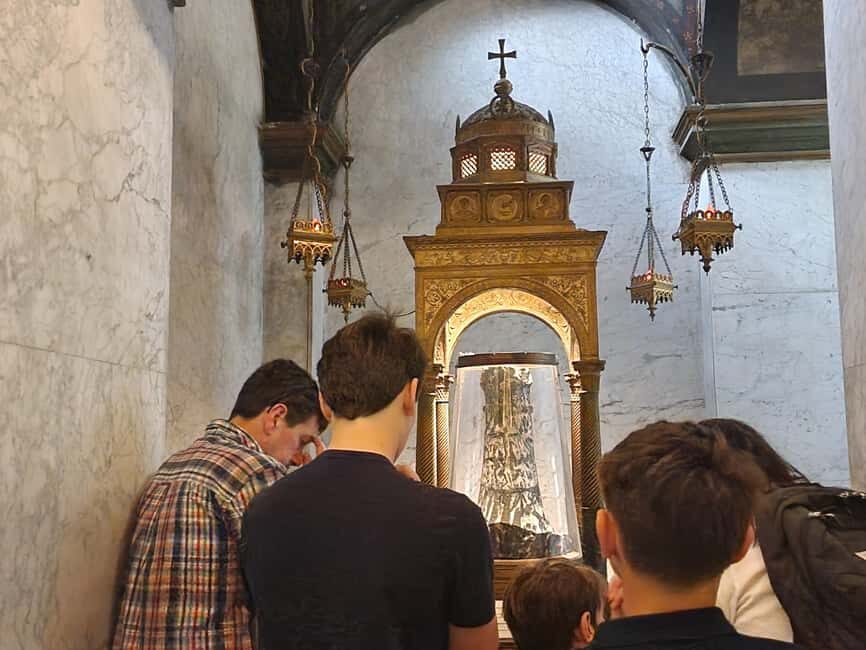
The spiritual center of this stop is the stone pillar on which Jesus was scourged. The tour highlights that this pillar was brought from the Praetorium in Jerusalem to Rome in the 13th century.
This is one of those moments where you’ll likely have to slow your thinking down. The Passion can feel distant if you treat it like history. But when you’re standing near an object tied directly to a painful event, the narrative becomes immediate.
What I’d suggest: give yourself a real minute or two of quiet. The mosaics can draw your eyes, but the relic is the reason you came.






Scala Sancta: the Holy Steps judged by Pilate
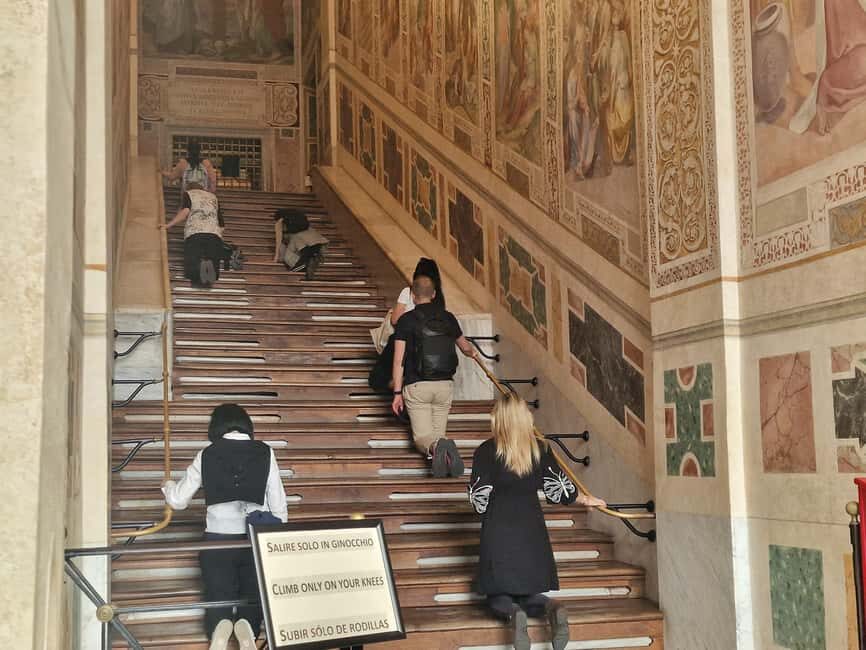
Then you reach the Scala Sancta, often called the Holy Steps. Here, the guide connects the site to Jesus being judged by Pontius Pilate, and to the tradition that the steps were brought to Rome in the 4th century by St Helena.
The tour notes that you won’t have time to ascend on your knees according to the pilgrim tradition, but you’ll still spend time with the place and what it represents. At the top, you can peer into the Holy of Holies area to see the icon painted by the Gospel writer St Luke.
That “peer into” moment matters. It’s not just sightseeing. It feels like looking toward a sacred focal point that has drawn worshippers for centuries—without turning your visit into a performance.
Practical watch-out: Scala Sancta and nearby areas can feel cooler and more formal than open piazzas. Dress for that, and keep your hands free if you’re holding a shawl or cover for church rules.
Basilica of San Giovanni in Laterano: Borromini design and the skulls of Peter and Paul
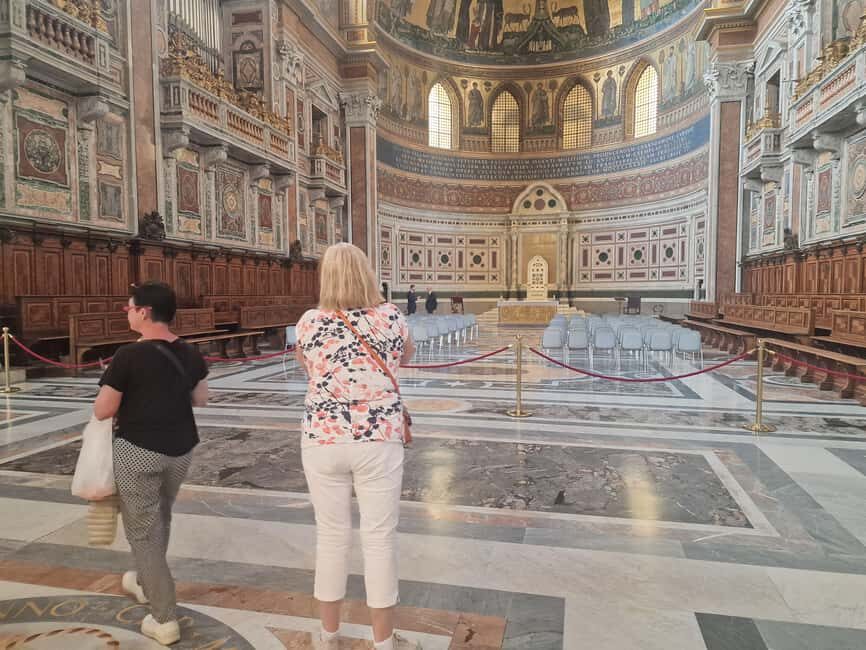
Next up is the Basilica of Saint John Lateran, known as San Giovanni Laterano. This stop blends architecture and symbols so well that it helps you understand why relic spaces weren’t only devotional—they were also messages in stone and art.
The tour highlights the architectural design associated with Borromini and points out symbolism in the stunning mosaic. Again, the guide’s explanations are the difference between passing by beauty and understanding why the church was designed the way it was.
Then comes a very specific focal point: the place above the high altar where the skulls of Sts Peter and Paul rest. That detail is intense, and it’s one reason this route lands differently for people who come seeking more than general “Rome sightseeing.”
If you like spiritual sites with specific stories behind them, this is a strong mid-tour payoff.
Basilica of the Holy Cross in Jerusalem: fragments and relics from Calvary
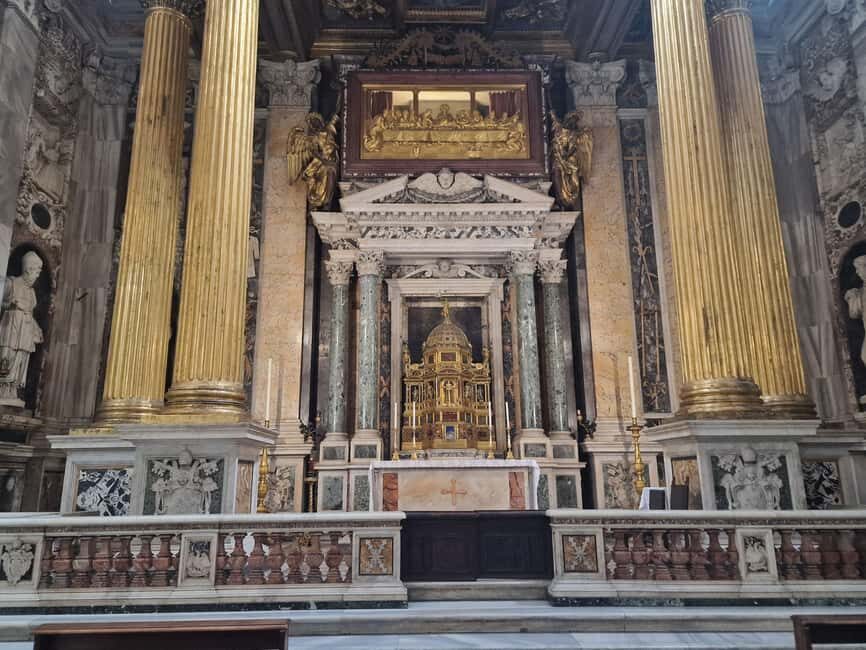
This is the climax of the tour, and it’s the stop most people remember first. The Basilica of the Holy Cross in Jerusalem is described as built on earth brought from Calvary in the 4th century. That connection is the framing device for everything you’ll see next.
Here you enter to see fragments associated with the Passion and the places around it, including:
- fragments of the Holy Sepulcher
- the Cave of Bethlehem
- a Nail of the Crucifixion
- two Thorns of the Crown of Thorns
- a small walnut board reading Jesus the Nazarene, king of the Jews
- the wood of the Cross Jesus was crucified on
Even if you already know the tradition, seeing the variety of objects in one place is powerful. It turns a narrative into separate artifacts, each with its own weight.
One important consideration: this stop can depend on time. There’s at least one report of the relics at Santa Croce not being fully seen due to time allotment. To avoid feeling rushed, arrive early, stay with the group, and don’t plan to wander away for long photos.
How the prayer time works (and why it’s worth taking seriously)
This tour doesn’t treat devotion like a background detail. It includes time for reflection and prayer as part of the experience. That’s not common in every “church plus highlights” tour, especially when you’re cramming multiple stops into a few hours.
You’ll find that prayer time changes how you experience the relics. Without that pause, it can become information overload: names, dates, materials, and symbolism stacking fast. With time built in, you get to let the story settle in your body, not just your brain.
Also, the small group format helps. With up to 10 participants, it’s easier to shift your attention from the guide’s explanations to what’s in front of you without constantly being pushed or jostled.
Who this tour suits best (and who might prefer something else)
This is ideal if you’re a Christian pilgrim, you’re traveling with family for a faith-based reason, or you want a Rome tour that treats the Passion seriously through relics and prayer.
It’s also a good fit if you care about context. The guide ties the relics to the broader history of the early church and Rome’s transformation from persecutor to patron of Christianity.
It might be less ideal if you want a casual wander with maximum free time. This route is structured and timed, with multiple churches and clear dress rules. And because it’s a walking tour, you’ll need to be comfortable with moving between sites.
If mobility is limited, the tour notes a golf cart option. That one detail can turn the trip from stressful to manageable.
Practical tips for church dress, comfort, and pacing
This tour has clear entry rules. Plan to follow them closely:
- Shoulders and knees must be covered to enter churches
- No shorts, short skirts, or sleeveless shirts
In warm months, you may also want a cover for bare shoulders. I’d rather you over-pack one scarf than have to sit out sections or feel awkward about clothing.
Other practical reminders:
- The tour is in all weather conditions unless a site closes for safety. Bring what helps: water, sunscreen, and sun protection.
- Check in 15 minutes early so you don’t miss the departure.
- Comfortable shoes matter. You’ll be on your feet for the full route.
- Proof of identification may be required, so bring a valid photo ID for each guest.
A small humorous truth: Rome asks you to dress like it matters. This tour really does.
What makes the guides matter on a tour like this
On a relic-focused route, the guide isn’t just providing trivia. The guide helps you connect objects to story, art to meaning, and place to devotion.
From the experience accounts shared with this tour, guides such as Paul, Daniel, Tom, and Tim are highlighted for how they structure the day and answer questions. One reason people love this style is that it helps you see the Passion as a living narrative, not a distant set of events.
I also appreciate when a guide sets the pace without making it feel like a lecture. It lets your prayer time feel real, not squeezed in.
Should you book the Rome Relics from the Passion of the Christ walking tour?
Book it if you want a faith-based Rome experience focused on relics, prayer time, and context, not just photos. The small group size, expert guidance, and the concentration of Passion-related objects in major basilicas make this a strong use of a few hours in the Eternal City.
Think twice if you’re looking for a relaxed, flexible walk with lots of free time, or if you struggle with church dress rules and lots of walking. In that case, plan carefully and consider the mobility support option.
If your goal is to experience the Passion through specific relics tied to the story of Rome and early Christianity, this tour is a very focused, meaningful way to spend half a day.
FAQ
How long is the Rome Relics from the Passion of the Christ walking tour?
The tour lasts about 3 hours.
Where do I meet the guide?
You meet at the fountain in Piazza di Santa Maria Maggiore, in front of the entrance to Basilica of Santa Maria Maggiore. The guide will be holding an orange sign with a lion head.
Which sites are included in the tour?
The included stops are Basilica Papale di Santa Maria Maggiore, Santa Prassede, Scala Sancta, Basilica of San Giovanni in Laterano, and the Basilica of the Holy Cross in Jerusalem.
Is the tour wheelchair accessible?
Yes, the tour is wheelchair accessible. There is also mention of a golf cart option if you have limited mobility.
What should I wear to enter the churches?
You need shoulders and knees covered. Shorts, short skirts, and sleeveless shirts are not allowed. A cover for bare shoulders can be helpful in warmer months.
Is entry to the sites included in the price?
Yes. Entry to each site included in the tour is part of the tour price.
Is food and drink included?
No. Food and drink are not included. You may want to bring water, especially if you’re visiting in hot or sunny weather.