REVIEW · 2-HOUR EXPERIENCES
Rome: Private City Sightseeing 2 Hours Tour by Golf Cart
Book on GetYourGuide →Operated by LINQUE · Bookable on GetYourGuide
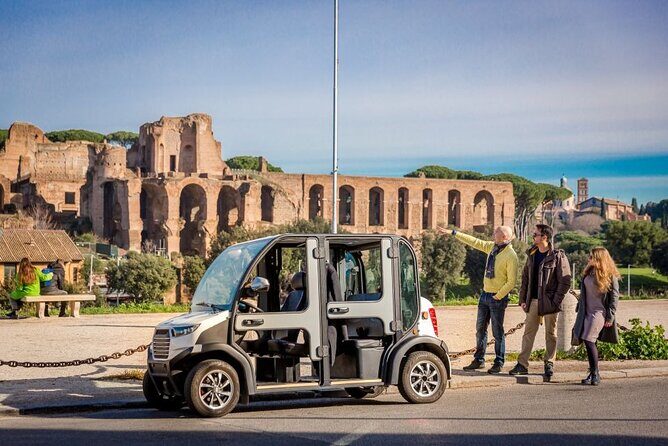
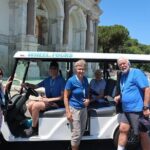
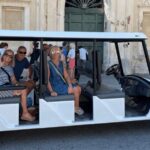
Rome feels faster when it’s electric. This private 2-hour ride links Rome’s biggest sights with an easy, wind-in-your-hair pace, in a quiet electric cart with 360-degree views. You get guided commentary and photo stops, so you spend less time figuring out routes and more time noticing details you’d otherwise miss.
I especially like that it’s customizable, meaning your guide can steer the stop order and emphasis toward what you actually care about. I also like the practical way the cart helps you see key squares and monuments in a short window, without turning your day into a full-on walking mission.
One thing to think about: this is built around short photo stops and the cart route time, so you won’t get long lingering time at any single site, and entry tickets are not included. And if pickup timing slips, later stops can shift into lower light, which changes the feel and photo quality.
Key things I’d book this for
- Electric golf cart with 360-degree views for photos and relaxed sightseeing
- Private, customizable route that fits your interests instead of a fixed script
- Hotel pickup/drop-off in a tight central radius around the starting area
- Photo stops at major landmarks like the Colosseum, Trevi Fountain, and Pantheon
- Access to restricted traffic zones that regular cars often can’t enter
- Local guide commentary in English, Spanish, German, or French
In This Review
- Why a 2-Hour Golf Cart Loop Works for First-Timers
- Pickup Within 3 km of Piazzale delle Canestre: The Logistics That Matter
- Colosseum Photo Stop: How to See It Without Turning It Into a Long Day
- Circus Maximus: The Grand Roman Space You Might Miss on Foot
- Piazza del Popolo: A Photo Stop That Feels Like a Reset Button
- Piazza Navona: Where the City’s Energy Shows Up
- Trevi Fountain and Pantheon: The Two Stops That Can Make or Break Your Timing
- Campo de’ Fiori: A Final Taste of Everyday Rome
- Your Guide and the Whole Point of Commentary
- Price and Value: Is $94 Worth It for a 2-Hour Private Cart?
- Practical Tips to Make the Most of Your 2 Hours
- Should You Book This Rome Golf Cart Tour?
- FAQ
- How long is the Rome private city sightseeing tour by golf cart?
- What major sights are included in the route?
- Is this tour private?
- Is hotel pickup included?
- Are entrance tickets included?
- Is the tour wheelchair accessible?
- What languages are the guides available in?
Why a 2-Hour Golf Cart Loop Works for First-Timers
Rome is big, but your energy is not. A two-hour golf cart tour is a smart way to get the city’s headline moments in one go—especially if you’re arriving on a cruise day, you’re traveling with kids, or you simply want an efficient first impression.
The cart changes the rhythm. You’re not constantly stopping to reorient, and you’re not stuck weaving through confusing lanes on foot. Instead, you get a steady flow between grand squares and iconic monuments, with a guide ready to connect the dots as you pass.
It’s also a good value structure for people who want a guided overview but don’t want the cost and time commitment of a full-day tour. At $94 per person (private group, 2–7 seats), the value comes from the combination of transport, local commentary, and the fact that you’re going through areas where traffic restrictions can otherwise make city driving slow or impossible.
Pickup Within 3 km of Piazzale delle Canestre: The Logistics That Matter
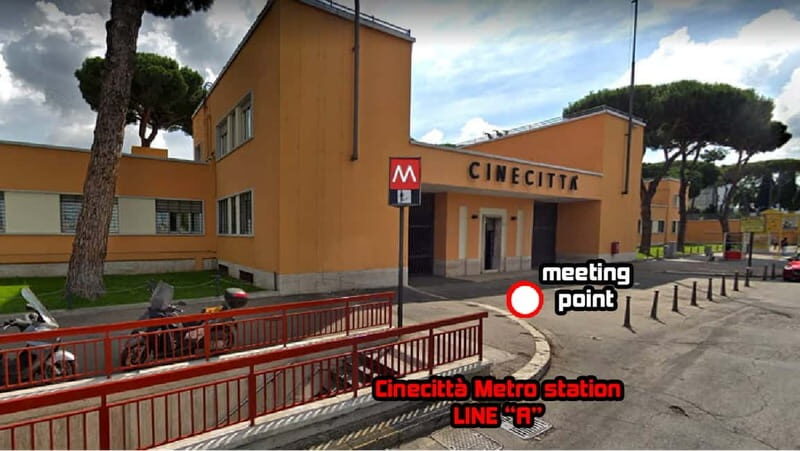
This tour starts with hotel pickup and drop-off in central Rome, but there’s a real-world limitation: your pickup point must be within a 3-kilometer radius of Piazzale delle Canestre.
So here’s my practical advice: before you book, double-check where your hotel actually sits on the map relative to that area. If you’re staying farther out, you might have a longer walk to the pickup point area—or you might not qualify for pickup at all.
Because it’s a two-hour experience, timing is everything. You’re not just waiting for a driver; you’re also protecting daylight and keeping each photo stop at the time it’s designed for. When the start is on time, the whole route feels smooth.
You can also read our reviews of more city tours in Rome

Colosseum Photo Stop: How to See It Without Turning It Into a Long Day
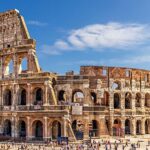
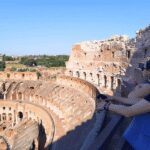
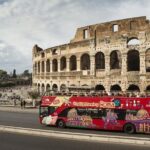
The first major stop is the Colosseum, with a 15-minute photo stop. This is the kind of moment where Rome can feel overwhelming. You see the structure in front of you, but you also need context—what you’re looking at, and why it matters.
Since entry tickets aren’t included, your goal here is street-level appreciation. Focus on getting angles that show the scale, plus the surrounding urban layers that make the Colosseum feel like a living part of the city rather than a lone ruin. If you love architecture and city planning, your guide’s commentary during this stop is where you’ll get the payoff, because you’re pairing visuals with explanations right as you look.
A cart makes this easier because you can position yourself for photos without trudging from parking spots. You’ll still want to be efficient with your time: 15 minutes disappears fast when you’re waiting for everyone to line up.
Circus Maximus: The Grand Roman Space You Might Miss on Foot
Next up is Circus Maximus, again with a 15-minute photo stop. This isn’t always the first stop people imagine when they say Rome—so it’s a nice shift from the super-famous crowd magnets.
What I like about this stop is the scale. Even if you don’t know a single Roman term, the space helps your brain picture what daily life and public events might have looked like here. You’ll get that “oh, this wasn’t just one building” understanding, which makes later stops click more clearly.
A downside to note: because it’s a photo stop, you won’t get a full exploration of the area. But as part of a tight 2-hour plan, Circus Maximus is the kind of stop that adds variety without derailing your schedule.
Piazza del Popolo: A Photo Stop That Feels Like a Reset Button
Then you move to Piazza del Popolo, another 15-minute photo stop. This square works well mid-tour because it gives you open space and clean lines. It’s also the kind of place where your guide can help you “read” the city—where you are, what direction you’re facing, and how the next landmarks connect visually.
I’d treat this stop as a reset. Walk a little, grab photos, and take a moment to orient yourself. When you later see other squares, you’ll understand the city more quickly because you’ve already established landmarks in your mind.
If your group prefers faster pacing, Piazza del Popolo is forgiving: even a short stop gives you enough view to feel like you saw something real.
Piazza Navona: Where the City’s Energy Shows Up
Piazza Navona is one of Rome’s most atmospheric squares, and this stop is timed for a 15-minute photo stop. When you roll in by cart, you arrive with minimal effort and maximum “wow, I’m here” energy.
What to expect: lively square atmosphere, classic Roman street-life energy, and lots of angles for photos. If you care about visual storytelling, Navona is a strong choice because it has that postcard-and-real-life overlap. Your guide’s commentary helps you move beyond surface impressions.
The practical consideration: squares like this can get busy. Your cart drops you close, but you may still need a bit of patience to get the photo position you want, especially if there’s a crowd around your ideal viewpoint.
You can also read our reviews of more private tours in Rome



Trevi Fountain and Pantheon: The Two Stops That Can Make or Break Your Timing
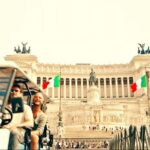
This tour includes Trevi Fountain with a 15-minute photo stop, plus Pantheon, Rome for another 15-minute photo stop. Together, they’re the “I can’t believe it’s real” pairing—one with a famous legend, one with an architectural centerpiece.
At Trevi Fountain, you’ll have time for classic photos—and yes, you’ll be able to stop to toss a coin, if that’s your thing. The guide can also help you approach it in a way that doesn’t turn into a long standstill. The key is to use your time strategically: get your main shot, then scan for the best angles nearby rather than getting stuck waiting for the perfect moment.
Then there’s the Pantheon. Even without entry, the exterior is a major photo subject. The structure’s presence in the street scene is what makes the stop worthwhile. Your guide’s commentary will help you understand what you’re seeing and why it’s so important, even if you don’t go inside.
The consideration here is simple: because both are high-demand areas, the quality of your experience depends on how effectively the group manages those 15-minute windows. If you want more than photos—if you want to linger—this tour may feel a little tight.
Campo de’ Fiori: A Final Taste of Everyday Rome
The route finishes with Campo de’ Fiori, again with a 15-minute photo stop. This stop feels different from the big monuments because it’s more about street atmosphere. It’s a nice way to end: you’ve already seen the headlines, and now you get a sense of the neighborhood vibe.
If your goal is to feel like you visited Rome, not just photographed it, Campo de’ Fiori adds that last ingredient. Think of it as the bridge between the Rome you came for and the Rome you’ll remember walking around after the tour.
Again, the time is brief, so aim for a quick circuit: one direction for photos and one direction to get a feel for the square’s energy.
Your Guide and the Whole Point of Commentary
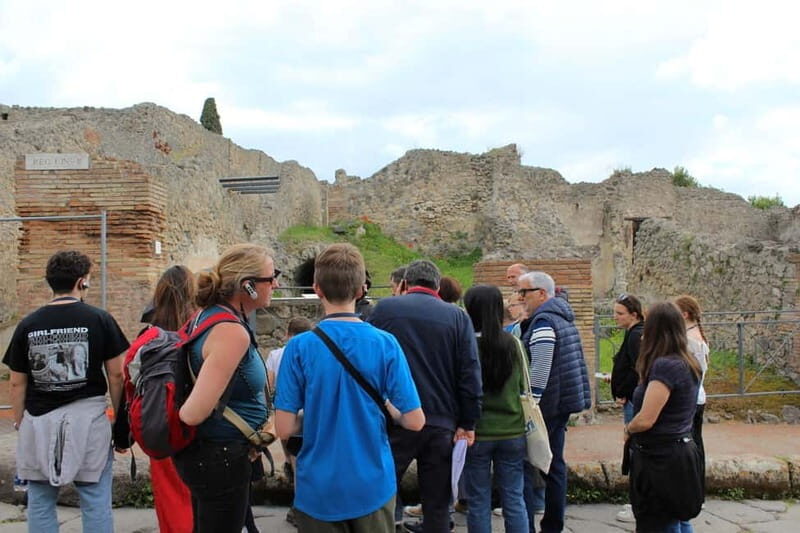
The tour is led by a local guide, and the experience lives or dies on how good that guidance is. You can usually choose from English, Spanish, German, or French.
From what I’ve picked up about the best versions of this tour, the strongest guides do two things well. First, they know how to explain what you’re seeing in plain language. Second, they connect landmarks to real city life so the stories don’t feel like memorized facts.
Two guide examples stand out from the information you were given. Alex, a guide from South Tyrol, is described as someone who knows Rome’s streets deeply and offers clear insights into Roman history. Emilia is described as excellent and even providing a helpful local suggestion beyond the main route—like pointing out a place where a child could play chess. That’s the difference between a checklist and a truly guided ride.
So here’s my takeaway for you: if you care about stories, ask your guide to tailor the route toward what you want to understand—ancient Rome, city planning, famous legends, or photo-friendly viewpoints.
Price and Value: Is $94 Worth It for a 2-Hour Private Cart?
Let’s talk money without hand-waving. At $94 per person, this is not the cheapest way to see Rome. It’s also not priced like a budget hop-on bus.
The value comes from four concrete things:
- Private experience (not just a shared crowd shuffle)
- Golf cart transport in a way that helps you cover ground quickly
- Hotel pickup and drop-off within a defined central area
- Guided commentary plus photo stops at major sites
Then there’s a very practical bonus: the tour includes access to restricted traffic zones that regular vehicles typically can’t use. That matters because Rome’s traffic rules and streets can waste time for self-guided planning.
When it might not be worth it: if you’re the type who wants to spend lots of time inside museums, churches, or guided interiors, this tour won’t replace that. Entry tickets are not included, and the stop model is designed for photos and context rather than deep time at one attraction.
Practical Tips to Make the Most of Your 2 Hours
A golf cart is comfortable, but your photo results still depend on how you prepare and how you move.
Here’s what I’d do:
- Wear shoes you can stand in. Photo stops are short, and you’ll likely walk a bit in the square or sidewalk area to find the right angle.
- Charge your phone/camera fully. You’ll be hitting several iconic stops back-to-back: Colosseum, Circus Maximus, Piazza del Popolo, Piazza Navona, Trevi Fountain, Pantheon, and Campo de’ Fiori.
- Decide your photo priorities at Trevi and Pantheon. Don’t try to “cover everything.” Pick your must-have shots first.
- Use the customization option. If you’re more interested in a particular landmark, tell your guide early so the route matches your interests instead of defaulting to a general sequence.
- Watch timing. Because each stop is about 15 minutes, arriving late to the next pickup moment can ripple through the whole route.
Also, the cart ride is described as quiet and comfortable with 360-degree views, so you’ll get good sightseeing from your seat between stops. Use those moments to look up and around, not just at the road in front of you.
Should You Book This Rome Golf Cart Tour?
I’d book this if you want a fast, guided “greatest hits” tour that feels easy and fun, and you like the idea of getting photo stops with commentary rather than spending hours figuring out logistics. It’s especially compelling if you’re traveling in a small private group and want the route shaped to your interests.
Skip it if your dream day is long interior visits and deep time at monuments. This is a street-view, photo-stop format with entry tickets not included, so it’s best as an overview and orientation tool—not a substitute for longer landmark experiences.
If you care about the quality of the narration, choose this with confidence. The tour is built around a local guide who shares stories and practical tips, and the best versions (like those associated with Alex and Emilia) show how personal guidance can turn a quick circuit into something that makes Rome feel more understandable by the end.
FAQ
How long is the Rome private city sightseeing tour by golf cart?
The tour duration is 2 hours.
What major sights are included in the route?
You’ll have photo stops at the Colosseum, Circus Maximus, Piazza del Popolo, Piazza Navona, Trevi Fountain, the Pantheon, and Campo de’ Fiori.
Is this tour private?
Yes, it’s a private group tour. The golf cart can accommodate 2–7 seats.
Is hotel pickup included?
Yes. Pickup and drop-off are included within a 3-kilometer radius of Piazzale delle Canestre.
Are entrance tickets included?
No. Entry tickets are not included.
Is the tour wheelchair accessible?
Yes, the tour is wheelchair accessible.
What languages are the guides available in?
The live guide is available in English, Spanish, German, and French.