REVIEW · WALKING TOURS
Rome: Lesser Known Ancient Rome Walking Tour
Book on GetYourGuide →Operated by City Stories Tours · Bookable on GetYourGuide
Some cities give you the same photos. This one gives you the same stones, but in a smarter order. You start with ancient remains sitting in the middle of modern Rome, then keep moving toward sights tied to everyday life, big public spaces, and Roman engineering. It’s Ancient Rome away from the crowds and built for people who want context, not just captions.
I like the focus on small-group storytelling. With a group capped at 15 (or a private option up to 25), you get frequent moments where the guide explains what you’re looking at and why it mattered. And from what I’ve seen in feedback, the guide’s style hits that sweet spot: history with clear structure and a sense of narrative, like an educated friend who actually cares.
The main thing to consider is simple: this is a walking tour in weather that can be unpredictable. It runs rain or shine, so you’ll want solid shoes and a plan for sun or drizzle.
In This Review
- Key highlights worth getting excited about
- The real charm: lesser-known Rome with an actual story
- Starting at Largo di Torre Argentina (or Piazza Venezia) and getting your bearings fast
- Via delle Botteghe Oscure: the Roman city hiding under your feet
- Capitoline Hill: power, religion, and the seven-hill perspective
- Insula dell’Ara Coeli: seeing ordinary Roman life in a surviving apartment
- Theatre of Marcellus, Forum Boarium, and temple architecture you can actually spot
- Bocca della Verità and Roman engineering: myth meets infrastructure
- Ending at Circus Maximus: the scale of Roman spectacle
- How it works on the ground: timing, group size, and pace
- Your guide matters: expert historian style with real storytelling
- Price and value: why $28 can feel like a bargain
- What to bring so the tour feels easy, not annoying
- Who this tour suits best (and who should think twice)
- Should you book this Rome Lesser-Known Ancient Rome Walking Tour?
- FAQ
- Where does the tour start?
- How long is the Rome lesser-known ancient Rome walking tour?
- How big are the groups?
- What’s included in the price?
- Do I need to pay for tickets to individual sites?
- Is the tour rain or shine?
- Is the tour wheelchair accessible?
- What should I bring for the walk?
- Where does the tour end?
Key highlights worth getting excited about
- Largo di Torre Argentina’s four ancient temples in the middle of the city, plus the Julius Caesar connection
- Via delle Botteghe Oscure and a look at buried ruins beneath today’s streets
- Capitoline Hill and the Insula dell’Ara Coeli apartment, a rare surviving window into everyday Roman housing
- Theatre of Marcellus, Forum Boarium, and preserved temple spaces where rituals and public life come through
- Bocca della Verità and a practical taste of Roman “plumbing” with the outdoor remains of some of the world’s oldest sewers
- Circus Maximus as the end point, with the scale of Rome’s public spectacles you can still feel
The real charm: lesser-known Rome with an actual story
Iconic Rome is famous for a reason. But it can also feel like you’re sprinting from landmark to landmark, collecting stamps and missing the thread. This tour takes a different approach. You walk through parts of ancient Rome that don’t dominate the usual sightseeing route, then connect them with a guide who explains how all the pieces fit.
What makes it work is the mix of “big empire” and “regular life.” You get major religious and civic centers, but you also get hints of the ordinary side of Rome: where people lived, what people did, and how public spaces were used. That’s the shift I like most, because it turns ruins into something you can picture.
And yes, it’s still fun. There’s mystery, myth, and a couple of stops that feel like they belong in a movie. But the guide keeps it grounded in what you can actually see in front of you, so you’re not left with vague impressions.
You can also read our reviews of more walking tours in Rome

Starting at Largo di Torre Argentina (or Piazza Venezia) and getting your bearings fast
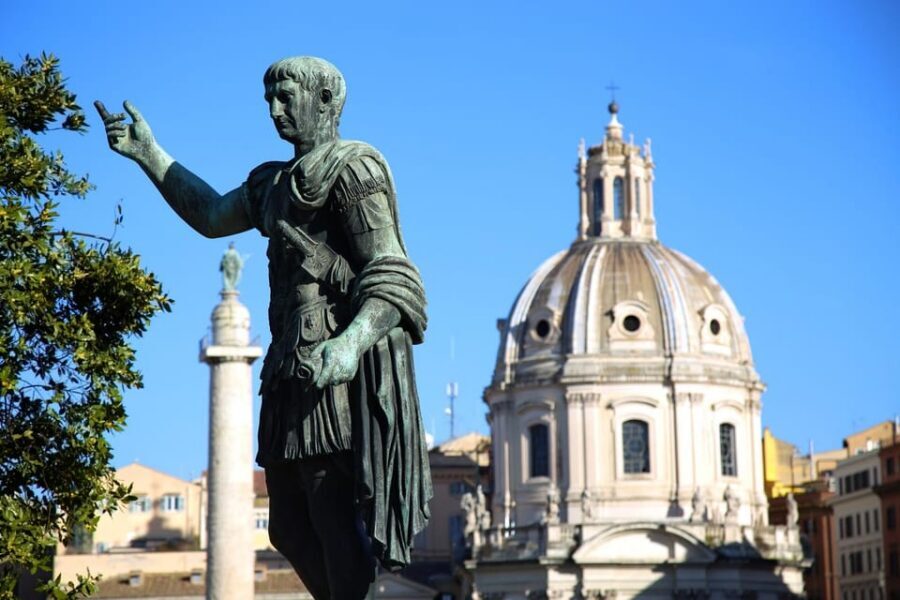
Your day begins at one of two starting points: Largo di Torre Argentina or Piazza Venezia. Either way, you’re set up to see Rome in a way that’s slightly off the standard route. If you’re thinking about logistics, this flexibility helps you match the meeting point to where you’ll be before the walk.
One of the biggest early wins is that Largo di Torre Argentina doesn’t look like a “top attraction” until you’re standing there. The remains of four ancient temples sit in plain sight, surrounded by modern streets. The guide gives you the setting quickly, so you’re not wandering in a fog of names.
This is also where the Julius Caesar story enters the picture. You get the idea of how sacred space and political shock could collide in the same neighborhood. If you’ve only heard Caesar in the abstract, this kind of on-the-ground framing helps the story feel less like a textbook paragraph and more like a specific place where real people moved and acted.
At this stage, the tour is brief but punchy. You’re guided through the key context, then you’re on your way, before the stops turn into a lecture marathon.
Via delle Botteghe Oscure: the Roman city hiding under your feet
After the opening focus, the walk shifts into another kind of wow: the layers of Rome. You head along Via delle Botteghe Oscure, where you can see ruins tied to a larger ancient structure that ended up buried beneath the streets.
This is the part of the tour I think many people underestimate. It’s not flashy from far away, but the guide’s explanation gives it meaning. You start to grasp how the city rebuilt itself over time, and how you can walk above old stone and still catch glimpses of what came before.
For you, that means the tour doesn’t just show monuments. It teaches you to read the city. After this stop, Rome stops feeling flat. It starts feeling stacked, like history layered into real-time life.
Capitoline Hill: power, religion, and the seven-hill perspective
Then you reach Capitoline Hill, described as the heart of ancient Rome and revered as one of the city’s seven hills. This is where the tour leans into the Rome most people associate with authority: religious center, symbolic power, and the kind of place where decisions and meaning gathered.
You’ll get guided orientation as you look around, so you can understand why this hill mattered beyond its scenery. The guide’s job here is crucial. Rome’s layout can look confusing at first, especially if you’re used to the typical big-site loop. With short, focused explanation, you start to see how the hill functioned as a center point.
And it isn’t all high politics. The tour continues into a different angle that I love.
Insula dell’Ara Coeli: seeing ordinary Roman life in a surviving apartment
One of the most memorable “shift” moments on this tour is visiting Insula dell’Ara Coeli, where you can see one of the few surviving examples of an ancient Roman apartment.
This is the stop that makes the whole walk feel more human. Instead of thinking only about palaces and temples, you’re reminded that Rome ran on daily routines. People ate, lived, climbed, repaired, argued, and slept in spaces that can still be glimpsed today.
The tour’s value here is how it connects place to lived experience. The guide frames what you’re seeing as a rare survival, which helps you understand why this small-looking structure carries a lot of meaning. Ruins can feel distant. This one feels closer, because it’s tied to the spaces ordinary people actually inhabited.






Theatre of Marcellus, Forum Boarium, and temple architecture you can actually spot
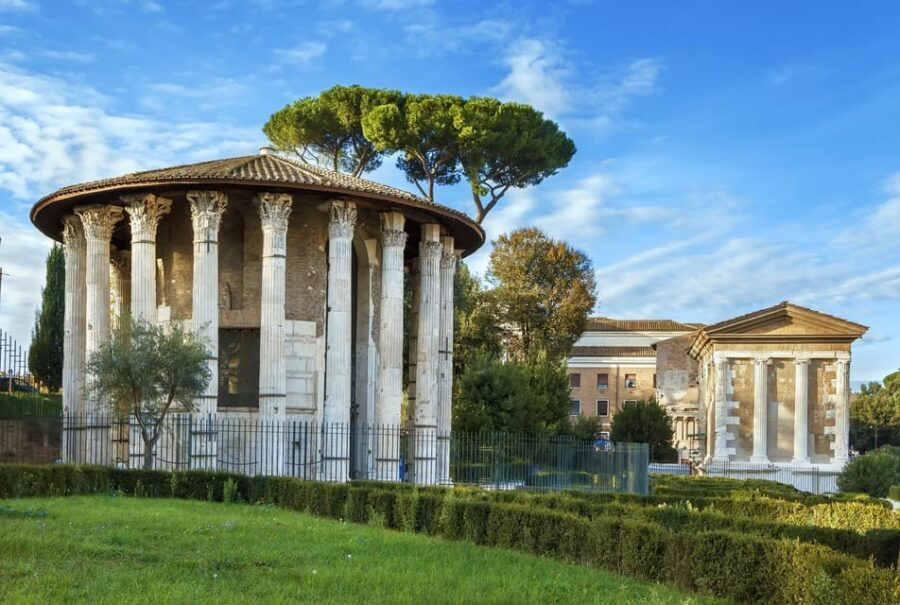
From Capitoline Hill, the tour rolls through major but less overhyped points: the Theatre of Marcellus, Forum Boarium, and spaces tied to Roman religious architecture.
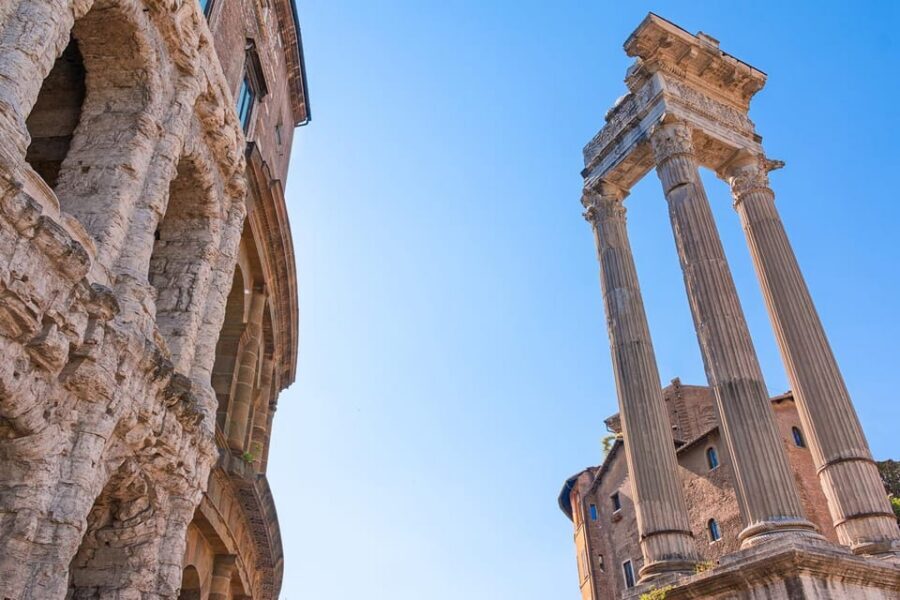
At Theatre of Marcellus, you learn about how performances once worked for Roman audiences. The effect of this stop is imagination. You stand in the presence of a theatre footprint and the guide helps you picture how crowds gathered and how public life played out in built form.
Next comes Forum Boarium. Even if you’ve never put it on your must-see list, it’s useful because it broadens your sense of where Rome’s everyday activity happened. The guide keeps it focused on what you can understand from the ground you’re standing on.
Then you get some of the city’s best-preserved temples, which is a relief if you’ve felt like other sites are either too crowded or too ruined to read. Here, the architecture helps do the explaining for you. The guide adds the story of rituals and meaning so you understand what those spaces were for, not just how old they look.
If you like your Rome with context and you don’t want to spend the whole day staring at stone, this middle section is the payoff.
Bocca della Verità and Roman engineering: myth meets infrastructure
Now the tour has fun, and it also has brains.
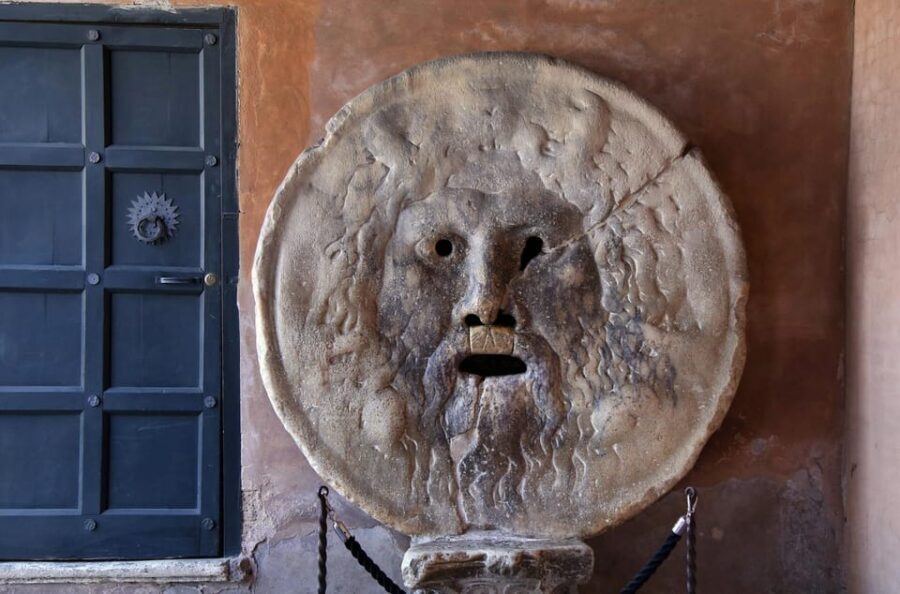
First up is Bocca della Verità, the stone mask rumored to bite off hands of those who tell lies. Even if you’ve heard the myth before, it lands better when you’ve already built up the ancient-world context. You’re not just doing a gimmick. You’re seeing how stories stuck to objects people actually interacted with.
Then comes a neat surprise: a unique archway and the outdoor remains of the world’s oldest sewers. That’s not a line you forget. It’s also a reminder that Romans didn’t just build temples and monuments. They built systems that let cities function.
This stop is where the tour gets especially practical for your understanding of Roman life. When you can connect public spaces, rituals, and daily movement to infrastructure, the city starts to make sense. You’ll likely remember these details longer than the “big names only” route.
Ending at Circus Maximus: the scale of Roman spectacle
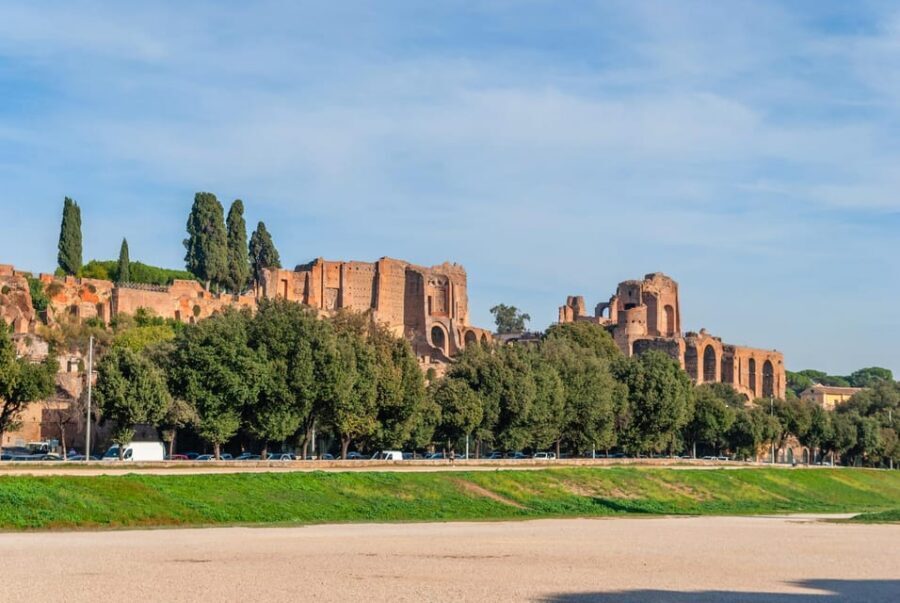
The final stretch brings you to two deeply ancient anchors: the birthplace of Rome itself and the sprawling Circus Maximus, finishing at the latter.
Even without getting lost in extra details, Circus Maximus delivers scale. It’s described as the largest stadium ever built, and standing in the space helps you understand why chariot races and mass gatherings were such a big deal. The guide gives enough context so you can picture the noise and the crowds without needing a museum display to do it.
If you’re the kind of person who wants one lasting “final image” before you end your day, this works. You finish with the kind of public Rome that people still talk about because the concept is so clear: massive crowds, organized spectacle, and a city that knew how to bring people together.
How it works on the ground: timing, group size, and pace
This tour runs 2 to 2.5 hours. Starting times vary by availability, so it’s worth checking what slot fits your day best. It also includes an optional break stop for food and drinks, so you’re not forced to sprint hungry from start to finish.
The walk is structured with guided segments at multiple stops, each one short enough to keep you engaged. You get context, you look, you move. That pacing matters in Rome because weather and foot traffic can grind you down if the tour feels too long or too stop-start.
Group size is a major quality signal here: max 15 people for the standard tour, and up to 25 for a private option. Smaller groups usually mean more questions and less time listening to explanations from the back of someone else’s shoulders. And since the tour is clearly built around storytelling, that matters.
You’ll also want to know it runs rain or shine. The good news is the route is still doable in wet conditions. The thing you should bring is weather gear. Rome isn’t polite. Neither is this walk. Plan accordingly.
Also: the tour is listed as wheelchair accessible, which is helpful if you’re managing mobility and still want guided coverage.
Your guide matters: expert historian style with real storytelling
The tour is led by an expert historian guide, and the difference shows up in how people describe the experience. One feedback highlight named Ben specifically, praising his genuine knowledge and his ability to put ancient remnants into context with storytelling. Another note praised the guide’s performance even in rain, calling out clear explanations that don’t feel like you’re stuck reading dates off a plaque.
I like that approach for you because it’s practical. The best guides don’t just identify stones. They help you understand why the location mattered and what daily life might have looked like there. This tour is built around that style.
If you prefer facts delivered with structure and pacing, you’ll likely feel at home here.
Price and value: why $28 can feel like a bargain
At $28 per person for 2 to 2.5 hours, the value depends on what you want from Rome.
If you’re trying to cram in only the headline sites, you might feel tempted to skip smaller spaces. But this tour is specifically designed to show you the kinds of places most first-timers don’t naturally prioritize. That means you’re paying for more than “walking and seeing.” You’re paying for interpretation: what these lesser-known sites are, how they connect, and what Roman life looked like beyond the obvious icons.
You also get a real “group learning” setup. Small group size is included. And you finish at Circus Maximus, which is a strong ending point for people who want a final sense of Roman scale.
Compared with paying for separate entries and guides at multiple big sites, this can be a smart way to get broad ancient context without turning your day into a logistics puzzle.
What to bring so the tour feels easy, not annoying
This is a walk with some stops that can be exposed. To keep it smooth, bring:
- Comfortable shoes (non-negotiable in Rome)
- Water bottle (bring one, and in warmer weather you can refill at fountains)
- Sunscreen if you’re going in summer
- Camera because you’ll want photos of the places that aren’t on the typical photo list
- Weather protection since it runs rain or shine
Also, if you tend to get lightheaded when you’re hot, plan your water intake early. The tour includes an optional break stop, but it’s still better to start hydrated.
Who this tour suits best (and who should think twice)
This tour is a great fit if you:
- Want Ancient Rome beyond the Colosseum and Roman Forum focus
- Like learning how Romans lived, not only what emperors built
- Prefer a guide who explains what you’re looking at in plain language
- Appreciate smaller groups and a manageable walking schedule
It might feel less ideal if you:
- Only want the biggest, most famous monuments and don’t care about lesser-known sites
- Are looking for a long, museum-style day with lots of seating and slow pacing
Should you book this Rome Lesser-Known Ancient Rome Walking Tour?
If you want Rome that feels less crowded and more coherent, I’d book it. The route covers a wide range of Roman life: sacred space, everyday housing, performance culture, myth, and even infrastructure. You end with Circus Maximus, so you’re not stuck finishing at something minor.
Book it especially if your priority is understanding. This tour is built around that, not around checking boxes. The small group size helps the guide keep the explanations sharp, and the rain-or-shine plan means you’re less likely to lose your day to weather.
One last quick decision tip: if you already have tickets and plans for the ultra-famous sites, this tour is the perfect partner. It rounds out your day and gives you the “Rome you don’t see by accident” feeling.
FAQ
Where does the tour start?
The tour has two possible starting locations: Largo di Torre Argentina or Piazza Venezia. The exact meeting point may vary based on the option you book.
How long is the Rome lesser-known ancient Rome walking tour?
It lasts about 2 to 2.5 hours. Starting times vary based on availability.
How big are the groups?
The group tour is capped at a maximum of 15 people. There is also a private group option that can run up to 25 people.
What’s included in the price?
You get a guided tour of lesser-known ancient sites with an expert historian guide, plus the small-group experience.
Do I need to pay for tickets to individual sites?
Food and drinks are not included, but the tour includes guided coverage of the sites. The data does not list specific ticket inclusions or exclusions for each stop.
Is the tour rain or shine?
Yes. The tour runs rain or shine, so you should bring appropriate weather protection.
Is the tour wheelchair accessible?
Yes, it is listed as wheelchair accessible.
What should I bring for the walk?
Bring comfortable shoes, a camera, sunscreen, and water. In warm weather, you’re recommended to bring a water bottle, and fountains are available for refills.
Where does the tour end?
It ends back at the meeting point, with the final stop described as Circus Maximus.