REVIEW · WALKING TOURS
Rome Jewish District Walking Tour
Book on Viator →Operated by Joy of Rome · Bookable on Viator
Rome’s Jewish story is written in streets. This Rome Jewish district walking tour strings together centuries of faith, law, and everyday life, from the first Jewish community in Roman times to the horrors of WWII. You’ll move at an unhurried pace with a guide who explains what you’re seeing, not just where it is.
What I like most is the human clarity of the guiding. With Francesca leading (she’s known for teaching and answering questions on the spot), the history feels organized and easy to follow, even when the subject gets heavy. I also love the street-by-street method: the tour doesn’t treat landmarks like props, it explains how markets, houses, and public space shaped Jewish life.
One possible drawback: the food tasting part is not included in the price, so the pastries and fried bites you’ll spot along the way cost extra.
In This Review
- Key highlights you’ll care about
- A focused walk in Rome’s Jewish district
- Price and what you’re really paying for ($301.03 per person)
- Meeting point reality: Piazza del Campidoglio to the Tiber side
- Antico Quartiere Ebraico: from early presence to the ghetto wall
- Il Portico di Ottavia: fish market history and WWII memory
- Teatro di Marcello: an authentic neighborhood vibe with layered time
- Food and tastings: plan extra spending if you want the samples
- What it’s like with a small group and a guide who answers
- Who should book this Rome Jewish district walking tour?
- Should you book? My practical take
- FAQ
- How long is the Rome Jewish District Walking Tour?
- How much does the tour cost?
- Where does the tour start and end?
- Is it a private tour?
- What language is the tour offered in?
- What’s included in the price?
- Is the food tasting included?
- What should I wear and when should I meet the guide?
- Does weather affect the tour?
- Is there free cancellation?
Key highlights you’ll care about
- Private format with only your group, so you can ask questions without feeling rushed
- Professional art historian + local guide pairing for buildings and meaning
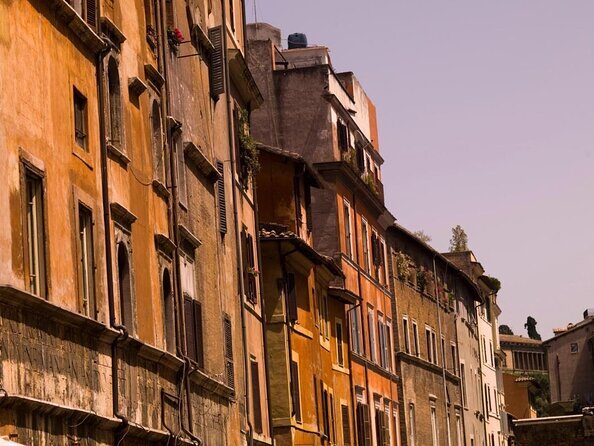
- Antico Quartiere Ebraico framing the shift from early presence to the later ghetto system
- Il Portico di Ottavia with fish-market lore and wartime memory tied to what’s written on site
- Teatro di Marcello area showing a real neighborhood mood, not just ruins on a map
- Optional Jewish food stops for your own budget, including typical pastries and fried artichokes
A focused walk in Rome’s Jewish district
This is a private walking tour built for your guide’s full attention. That matters in a place like Rome, where streets can look similar and timelines can blur fast. Instead of racing, you get a relaxed rhythm and time to ask why things happened, not only when.
The guide team is the big selling point. You’re not just getting a history lecture. You’re getting a guided reading of the built environment—how structures, inscriptions, and neighborhood layout point to the lived experience of Rome’s Jewish community.
And yes, the emotional weight is real. You’ll talk about enforced boundaries and later violence. The difference here is that the explanations stay practical: what changed, how it changed daily life, and what you can still see today.
You can also read our reviews of more walking tours in Rome

Price and what you’re really paying for ($301.03 per person)
At $301.03 per person for about 2 hours, this isn’t the cheapest way to see Rome. But you are paying for a specialized, guide-led experience with both a local guide and a professional art historian guide.
If you’re the kind of traveler who wants context—how emperors’ building projects became medieval marketplaces, or how one area’s role shifted across centuries—this format can feel worth it. You’re also paying for the private nature of the tour, so you’re not stuck waiting for a slow group or stuck listening to headphones instead of conversation.
Two costs to remember:
- The tour price includes guiding, but food tasting is not included.
- You’ll want to keep time for walking between stops, since the tour is designed as a neighborhood stroll rather than a museum shuttle.
Meeting point reality: Piazza del Campidoglio to the Tiber side
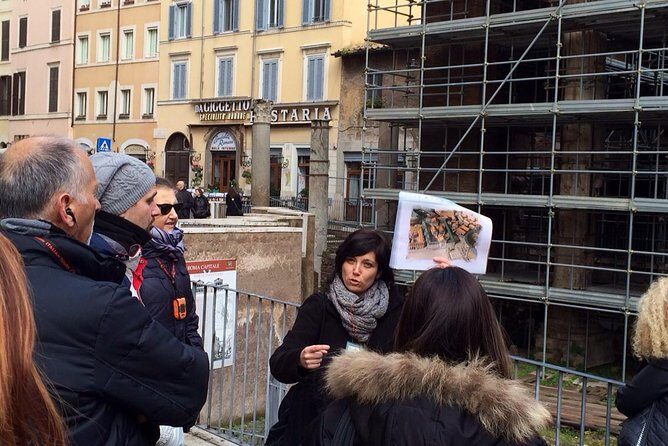
The tour starts at Piazza del Campidoglio (00186 Rome). You meet your guide at the meeting point 10 minutes before the departure time you selected, and smart casual is the suggested dress code.
It’s also near public transportation, which helps in Rome. You’re not committing to a long walk from transit to a remote corner. You will, however, be on your feet for the full stretch—this is a walking tour, not a sit-down lecture.
It ends around Tiber Island (Tiber Island / Tiberina Island area), which is a handy finish if you want to keep exploring by foot afterward. You’ll be positioned where the river area makes it easy to wander on your own.
Tip: if you’re trying to pair this with other plans the same day, keep your next activity flexible. The experience can run best when you don’t rush out the door the second you finish.
Antico Quartiere Ebraico: from early presence to the ghetto wall
One of the strongest parts of the tour is how it frames the Jewish story in Rome as a long arc, not a single event. You start by hearing that Jews were among the first settlers in Rome—almost 2,000 years ago. The tone at first is striking: early on, the community lived with a degree of harmony and freedom within Roman society.
Then the tour shifts to the reality of later centuries. You’ll learn about the ghetto period—when Roman Jews were forced to live enclosed, with restrictions such as an imposed curfew. The walled district you associate with the word ghetto wasn’t torn down until the 19th century, which is a reminder that these boundaries weren’t just ancient history. They shaped life in times that were, in historical terms, fairly recent.
What makes this stop work on the street is the contrast. You’re looking at a neighborhood that has changed, but the story of enclosure and control is part of the space. Your guide helps you connect what you see now to what that place meant when the walls and rules were active.
A practical note: this is one of those moments where you’ll probably want to slow down. If you’re the type who reads every plaque and takes photos, give yourself permission to do so here. This is where the tour’s biggest theme lands.
Il Portico di Ottavia: fish market history and WWII memory
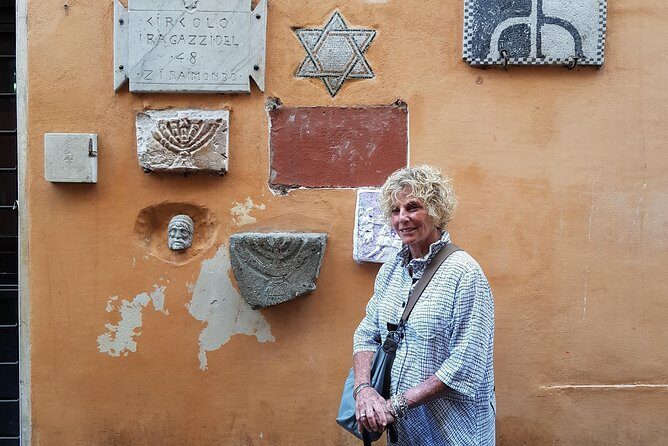
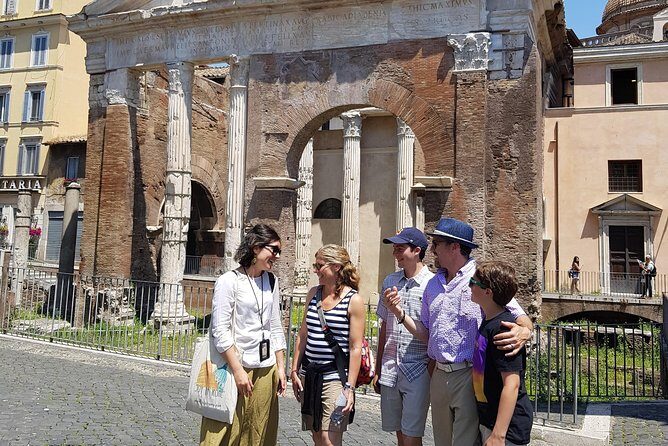
Next you’ll head toward Il Portico di Ottavia, where you can still appreciate the remains of the porch built by Emperor Augustus for his sister. Even if the structure looks smaller than you imagine from a photo, the guide’s context helps you picture its old scale.
From there, the story turns medieval. In the Middle Ages, this area became tied to the city’s major fish market. One of the most vivid details you’ll hear is how Jewish women collected market waste to cook their famous fish broth. That’s the kind of detail that makes history feel human: not only laws and tragedy, but daily work and survival skills.
Then the tour expands again into Renaissance life, when noble families built palaces around the area. Your guide connects that to what changed in the city’s social structure over time.
The most sobering part is what you learn about Nazi occupation of Rome (1943–44), including what’s recorded through inscriptions in the area. This stop doesn’t let the past sit in the distant past tense. It ties memory to physical text on-site.
And yes, there’s a lighter thread too. You’ll pass places where you can taste typical Jewish sweets and snacks, like pastries and even fried artichokes. Just remember the key point: tasting is own expense. The tour doesn’t bundle those bites into the price.






Teatro di Marcello: an authentic neighborhood vibe with layered time
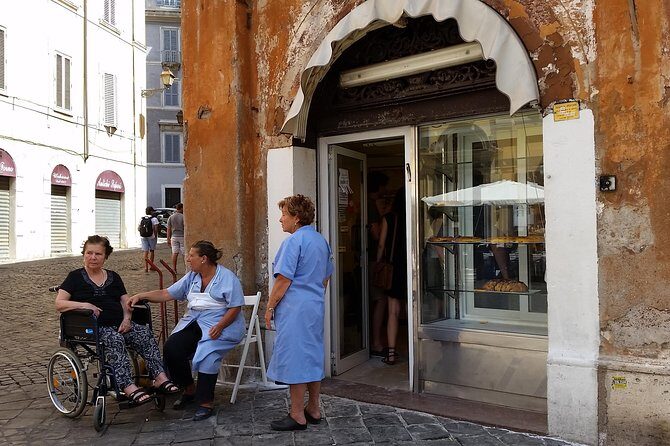
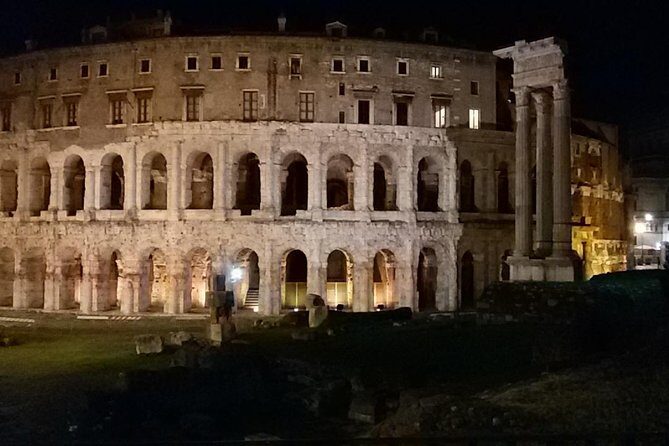
The walk then brings you to the Teatro di Marcello area. This stop is less about a single story and more about atmosphere. Your guide talks about this being a stronghold of Roman popular custom and tradition—an area where life hums through squares, corners, and alleyways.
It’s also a place to reset from the heavier topics. The tour describes how the neighborhood functions like a meeting point: a space for gossip and even an aperitif culture. In other words, it’s not only a “history stop.” It’s a Rome stop.
You’ll also get a legend connected to the site—one about mineral oil that supposedly sprang from the ground. After centuries of rules and restrictions, that kind of local lore feels like a breath of street-level storytelling.
The visual payoff here comes from the mix of eras you’re allowed to see without sprinting:
- ancient church sites and decorated spaces
- aristocratic palaces and older workshops
- medieval towers and Renaissance family palaces
- papal memories and the sense that power has shifted hands here again and again
If you’ve ever felt like Rome tours over-focus on the biggest monuments, this part is a relief. You get to feel how the city lives at neighborhood scale, not only grand scale.
Food and tastings: plan extra spending if you want the samples
The tour includes a clear message: food tasting isn’t in the tour cost. Your guide may point you toward local delicatessen options, typical Jewish pastries, and fried bites like artichokes, but you pay for what you choose to eat.
This is actually good to know up front. It means the “food” part stays flexible. You can go light—just one pastry and a coffee—or you can turn it into a proper snack stop without feeling like you missed an included component.
Budget tip: set aside a little spending so you’re not deciding on money while you’re hungry. Rome can make that decision harder than it should be.
What it’s like with a small group and a guide who answers
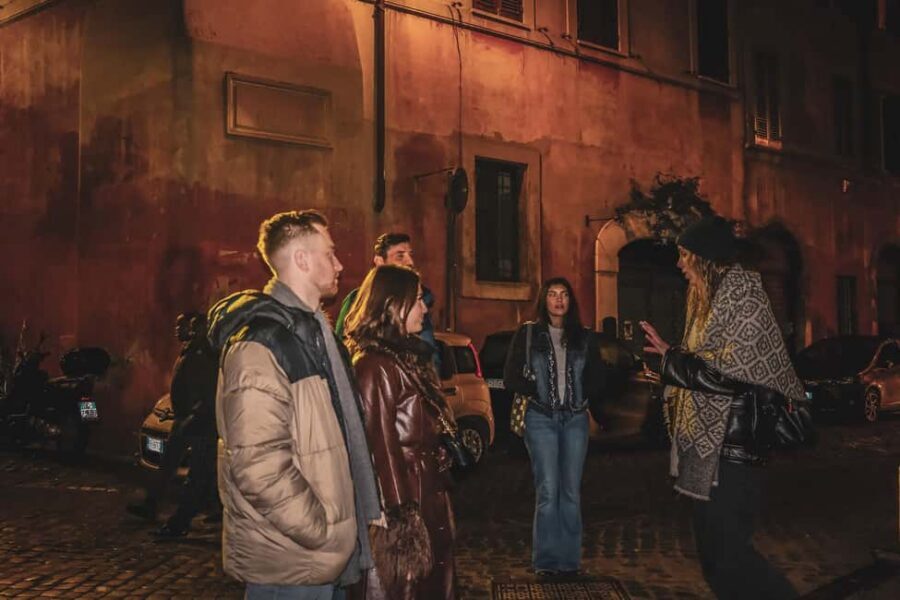
Even though it’s private, the pace still feels social in a good way. Your guide keeps the conversation open so you can ask follow-up questions, especially as the timeline moves from ancient Rome to WWII. That question-friendly approach is part of why the guides get such strong marks.
Francesca is the name that comes up again and again: thoughtful, very well informed, and responsive when you ask questions. The tour’s structure also supports that, because each landmark comes with explanation rather than just a name and a photo op.
If your group is just two or three people, you’ll likely feel like you’re getting a custom lesson. And if you’re the only bookings at the time, you’ll feel the difference even more.
Who should book this Rome Jewish district walking tour?
Book it if you:
- want a history-focused Rome walk that connects architecture to Jewish life
- like small-group conversation instead of headsets and rushed checkpoints
- enjoy neighborhood atmosphere, not only major monuments
You might think twice if you:
- want a mostly casual “quick highlights” tour with minimal context
- expect food to be fully included
- dislike outdoor walking for extended stretches
This is best for travelers who like to understand what they’re seeing as they walk.
Should you book? My practical take
If you’re serious about learning the story of Jewish Rome—from early presence to the ghetto era and the WWII years—this tour is a strong choice. The combination of a local guide, an art historian guide, and the way the route blends emotional context with visible landmarks makes it feel like more than a walk with stops.
At the price point, it’s not a casual add-on. But if you want meaning per step, you’ll probably feel you got your money’s worth—especially because it’s private and built around questions, not just narration.
If you do book it, come with an open mind, wear comfy shoes, and give yourself room to eat a little on the way if the guide points you toward a pastry or snack.
FAQ
How long is the Rome Jewish District Walking Tour?
It lasts about 2 hours.
How much does the tour cost?
The price is $301.03 per person.
Where does the tour start and end?
The tour starts at Piazza del Campidoglio, 00186 Rome. It ends at Tiber Island, 00186 Rome.
Is it a private tour?
Yes. It’s private, and only your group participates.
What language is the tour offered in?
It’s offered in English.
What’s included in the price?
The tour includes a local guide and a professional art historian guide.
Is the food tasting included?
No. Food tasting is not included in the tour cost, so you’ll pay for any tastings on your own.
What should I wear and when should I meet the guide?
The dress code is smart casual. Meet your guide at the meeting point 10 minutes before the selected departure time.
Does weather affect the tour?
Yes. It requires good weather. If it’s canceled due to poor weather, you’ll be offered a different date or a full refund.
Is there free cancellation?
Yes. You can cancel for a full refund up to 24 hours before the experience starts.