REVIEW · ROME
Rome in Golf Cart Trastevere and Jewish Ghetto
Book on Viator →Operated by DGS Driver Guide Service · Bookable on Viator
Skip the footwork, hit the good bits. In just about 4 hours, this golf cart tour helps you move through two of Rome’s most character-filled neighborhoods without turning your legs into pasta. You’ll thread through Trastevere lanes, then roll into the Jewish Ghetto area for a very different feel of the city.
What I like most is the stop-by-stop guidance from an English-speaking driver guide, so you get what to look for as you pass it. In the best versions of this tour, guides like Achill bring energy, keep things easygoing, and handle special requests when they can.
One thing to consider: the pace is efficient, so the time at each spot is brief. You’ll get close-up views, but this is more for orientation and quick impressions than slow, deep museum-style visiting.
In This Review
- Key highlights worth knowing before you ride
- Why Trastevere and the Jewish Ghetto work so well by golf cart
- What 4 hours really means on the street
- Trastevere lanes, Saint Cecilia, and the square with Bernini’s touch
- Roman archaeology between the Tiber: Porticus Minucia, Isola Tiberina, and the Turtle Fountain
- Teatro di Marcello: ancient open-air drama without a long detour
- Entering the Jewish Ghetto: Great Synagogue and Antico Quartiere Ebraico
- Price and value: what you’re paying for (and what you’re not)
- Who this tour suits best (and who might want something else)
- Should you book the Rome in Golf Cart Trastevere and Jewish Ghetto tour?
- FAQ
- How long is the Rome in Golf Cart Trastevere and Jewish Ghetto tour?
- What does the tour price include?
- Is the tour private?
- Which locations are included?
- Are admissions included for every stop?
- Is pickup available?
- What happens if monuments are under restoration for the Jubilee?
- Does the tour depend on weather?
Key highlights worth knowing before you ride
- Fast access to two neighborhoods: Trastevere plus the Jewish Ghetto in a single session
- On-board driver commentary: learn why each corner matters before you move on
- Roman landmarks in between: Augustus-era Porticus Minucia, plus views toward Teatro di Marcello
- Iconic Rome details: Bernini’s restoration work and the Turtle Fountain name story
- Ghetto focus with context: including the Great Synagogue area and nearby streets
- Central pickup convenience: hotel pickup and drop-off if you’re in the center
Why Trastevere and the Jewish Ghetto work so well by golf cart
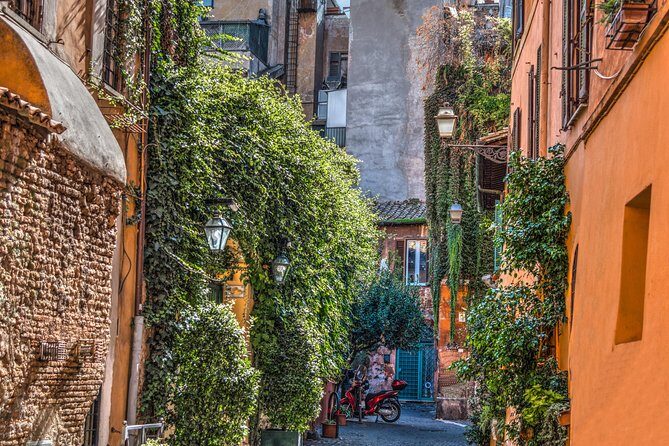
Rome is famous for walking, but you don’t have to suffer for the experience. Trastevere’s cobbled lanes and tight corners can be charming for 30 minutes and exhausting for two hours. On a cart, you keep your momentum while still seeing the textures that make these streets feel unmistakably Roman.
This combo also makes sense historically and emotionally. Trastevere gives you everyday neighborhood life—trattorias, small shops, artisan workshops, and that feeling of getting lost on purpose. Then the Jewish Ghetto area shifts the tone: older, more reflective, and tied to community landmarks like the Great Synagogue.
Best of all, the tour is designed for people who want more than the usual top-10 checklist. If you’re already planning to hit the big headline sites, this is a smart add-on to see Rome sideways, at street level.
You can also read our reviews of more tours and experiences in Rome.



What 4 hours really means on the street
The tour runs about 4 hours, and that time gets spent on getting you from one meaningful scene to the next. You’re not stuck in long transfers, and you’re not waiting around for crowds to thin out. Instead, you get a string of close stops that give you a guided “route” through the city.
Hotel pickup and drop-off are included if you’re staying in the center of Rome. That matters more than it sounds. One easy arrival beats a frantic last-minute scramble, especially when you’re trying to time your day around opening hours.
One more practical point: this experience requires good weather. If it’s cancelled due to poor weather, you’ll be offered a different date or a full refund. So if your schedule is flexible, you can usually pick a day that works.
Also note the pace is designed to be efficient, not leisurely. You’ll spend short blocks of time at each stop, typically enough to look, listen, and take a few photos without turning it into a long walking day.
Trastevere lanes, Saint Cecilia, and the square with Bernini’s touch
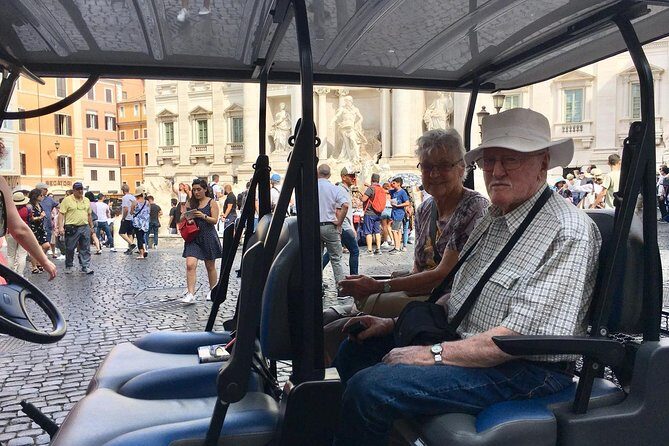
Trastevere is the warm-up that sets the tone. Even if you’ve seen photos of Rome before, these lanes feel different when you’re moving through them. The idea here is to experience the neighborhood’s rhythm—tiny alleys, lively trattorias, and shops that seem made for wandering without a destination.
Stop one gives you a chance to get the layout in your head. You’ll be in the kind of area where you can drift into side streets and still recognize where you are, because the guided route anchors you.
Next comes Santa Cecilia in Trastevere. Saint Cecilia is considered the patron saint of music, and the stop is built around that connection. If it’s open, you’ll see it from inside too. If it’s not, you still get the exterior context, but you’ll want to remember that church hours can be the deciding factor in what you experience.
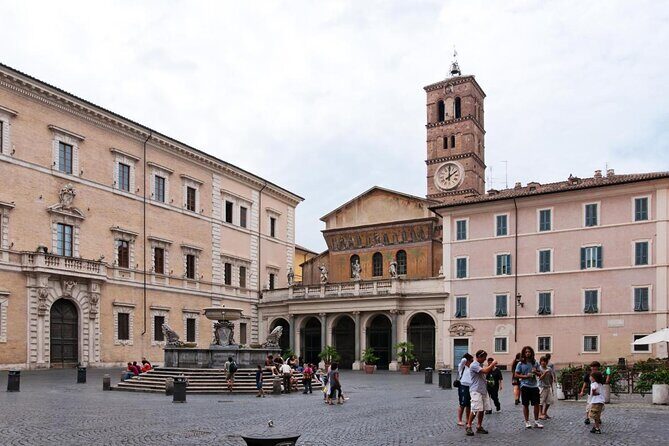
Then you’ll roll to Piazza di Santa Maria in Trastevere. This square is anchored by a fountain with Roman origins, and restoration work by Bernini in 1659 gave it the form you’ll notice today. After a long restoration, the basilica facade is described as glimmering, which tells you the stop is timed for visual impact rather than just a quick glance.
Practical tip: in Trastevere, the most useful photos aren’t always the wide shots. Look for the small details—doorways, mosaics, and the way facades catch light as you move.
Roman archaeology between the Tiber: Porticus Minucia, Isola Tiberina, and the Turtle Fountain

Once Trastevere settles into your brain, you get the Roman “how it was built” layer. Porticus Minucia is a great example of why this tour format works: it gives you a snapshot of the city’s engineering and memory without turning it into a full archaeology day.
Porticus Minucia is linked to Augustus, built probably between 33 and 23 BC, in memory of his sister Octavia. The tour framing is specific: a double-columned porch of rectangular form, decorated with sculptures and paintings, and designed to make access easier to the Marcello theatre. In other words, it wasn’t just decorative. It helped people flow through the area.
From there, you’ll head toward Isola Tiberina, the Tiber Island. The legends attached to its shape tie it to the origins story of Rome. One version says its shape mimicked the ship that transported Aesculapius, god of medicine, from Epidaurus. You don’t need to treat legends like facts to appreciate why they mattered. They show you how Romans explained the city’s geography long before you arrived.
Then comes Fontana delle Tartarughe, the Turtle Fountain. Here’s the detail that makes the story memorable: you’ll see why it’s named for turtles, but there are no turtles swimming in the water. The “animals” are made in sculpted form, and they’re the kind of Roman whimsy you often miss if you only race from monument to monument.
Practical tip: water-side stops can be windy. If you’re visiting in cooler months, bring a light layer even if the day starts bright.
Teatro di Marcello: ancient open-air drama without a long detour
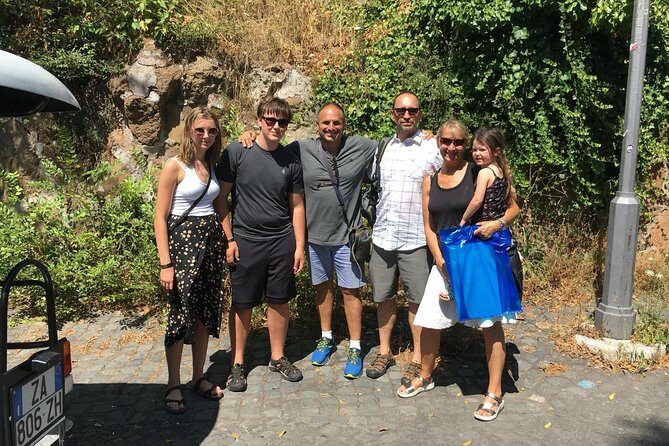
Teatro di Marcello is the kind of ancient structure that changes your view of Rome. Built in the closing years of the Roman Republic, it was an open-air theatre—big enough to feel civic, not just entertainment.
This is also where the tour’s design shows its logic. Since Porticus Minucia was tied to access for Marcello, you’re essentially getting the story of the neighborhood’s built environment. The tour gives you the chance to connect the dots between “what you’re looking at” and “why it was placed there.”
One note for your planning: admission for Teatro di Marcello isn’t included. The tour stops very close, so you’ll likely get a strong view and context, but if you expected entrance tickets baked in, check before you go.
If you like architecture, this stop is satisfying even without entering. You can stand back and see the scale, then let the guide narration do the rest.





Entering the Jewish Ghetto: Great Synagogue and Antico Quartiere Ebraico
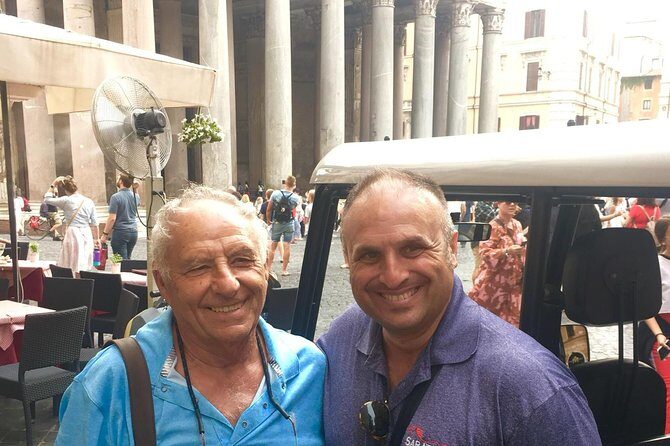
The Jewish Ghetto portion shifts from sightseeing into something more about place and meaning. The area is described as one of the oldest in Europe, with a strong Jewish community presence and a top dining scene nearby. That combination matters. It reminds you that this isn’t just a historic label—it’s part of a living neighborhood.
The Great Synagogue is highlighted as both a place for prayer and a symbol of freedom for the Jewish community in Rome. It also functions as a cultural center for the community, which helps you understand the landmark beyond architecture. Even if you don’t go inside, the stop is meant to frame how the site works in daily life and in public memory.
Then you’ll move through Antico Quartiere Ebraico, the historic ghetto area. It’s presented as a beautiful hidden treasure of Rome. That phrasing is meant to guide your expectations: you’re not there for a theme park experience. You’re there to read the street layout, recognize the landmark significance, and appreciate the neighborhood’s character.
Practical tip: if you want to eat in this area, build time later in the day. The tour itself is designed for navigation and context, not for a long sit-down meal mid-route.
Price and value: what you’re paying for (and what you’re not)
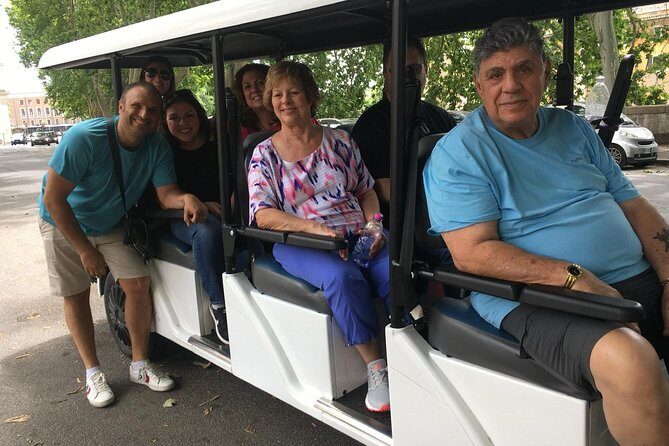
At $401.43 per person for an experience that runs around 4 hours, this isn’t a budget option. But it can still feel like good value depending on your group size and how you like to travel.
Here’s what you’re paying for:
- Private format: it’s your group only, so you’re not squeezed into a big herd.
- Golf cart transport: fewer footsore moments, more time seeing rather than marching.
- Driver guide expertise: on-board commentary at each stop.
- Convenience: hotel pickup and drop-off if you’re centrally located.
- A tight itinerary: you cover Trastevere and the Jewish Ghetto plus key Roman landmarks in one go.
What you’re not getting:
- A long guided walking tour at each stop. The tour is built to stop close to sights, not to turn every location into a slow, detailed walkthrough.
- Some site admissions. Teatro di Marcello is specifically marked as not included.
If you’re the type who likes to understand what you’re looking at while also keeping energy for the rest of the day, this format fits well. If you want long indoor museum time or a deep dive into one single site, you’ll probably prefer a different style of tour.
Also worth considering: the Jubilee season can mean some monuments are under restoration. You’ll receive messages about changes if that affects stops, so don’t assume every facade or interior will be exactly as expected.
Who this tour suits best (and who might want something else)
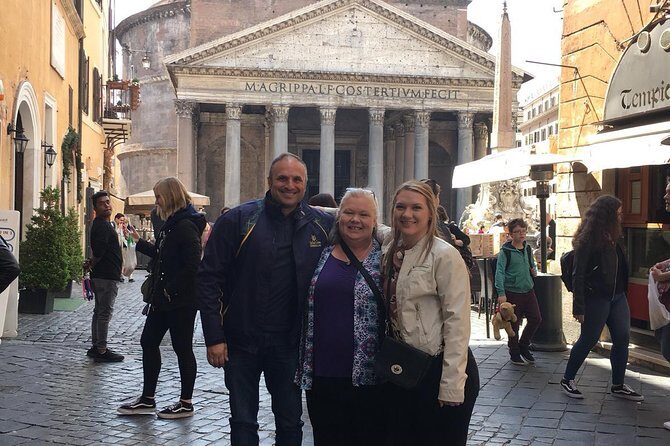
I think this tour is a strong match if you want:
- Neighborhood feel without the strain of nonstop cobblestone walking
- A route that connects Trastevere, Roman landmarks, and the Jewish Ghetto
- Clear guidance from an English-speaking driver guide, with stops close to key scenes
- A format that works well if you have limited time in Rome
It may be less ideal if you:
- Want to spend a lot of time inside museums or large-ticket attractions (since this is stop-and-go)
- Are hoping for a guided walking experience at every site
- Are visiting on days where weather is unreliable, since good weather is required
Should you book the Rome in Golf Cart Trastevere and Jewish Ghetto tour?
I’d book it if you want a smart, efficient day that still feels personal and local. The best ingredient here is the combination of transport plus commentary, which helps you see more without walking yourself into misery. Add in a private setup and central pickup, and it becomes a practical way to experience two very different sides of Rome in one 4-hour block.
I would hesitate only if your travel style demands long stays at fewer sites or if you’ll be disappointed when some interiors depend on opening hours or when certain admissions aren’t included.
If your goal is to get your bearings fast, understand what matters on each street, and then enjoy the rest of Rome on your own terms, this tour earns a spot on your plan.
FAQ
How long is the Rome in Golf Cart Trastevere and Jewish Ghetto tour?
It runs for about 4 hours.
What does the tour price include?
The price includes an expert English-speaking driver guide, a private tour, and hotel pickup and drop-off if you’re in the center of Rome. A mobile ticket is used.
Is the tour private?
Yes. It’s a private tour/activity, so only your group participates.
Which locations are included?
The route includes stops in Trastevere and around landmarks such as Santa Cecilia in Trastevere, Piazza di Santa Maria in Trastevere, Porticus Minucia, Isola Tiberina, Fontana delle Tartarughe, Teatro di Marcello, the Great Synagogue area, and Antico Quartiere Ebraico.
Are admissions included for every stop?
Many stops are listed as free admission. Teatro di Marcello is listed as not included. Admission details for other locations are not specified beyond what’s described in the itinerary.
Is pickup available?
Yes, hotel pick-up and drop-off are included if your hotel is located in the center of Rome.
What happens if monuments are under restoration for the Jubilee?
Some monuments may be under restoration, and you may receive messages about potential changes.
Does the tour depend on weather?
Yes, it requires good weather. If it’s cancelled due to poor weather, you’ll be offered a different date or a full refund.