REVIEW · COLOSSEUM TOURS
Colosseum, Roman Forum and Palatine Hill Exclusive Private Tour
Book on Viator →Operated by Rome Colosseum Tours | Official Guided Tours · Bookable on Viator
A walk through the Colosseum beats the big-group shuffle. This private 2.5-hour tour is built for you to get inside fast with Colosseum entrance tickets included, then slow down with expert stories and Q&A. I especially like the structure: you get a focused guide-led walk first, plus free time later to wander parts of the Roman Forum and Palatine Hill. My only watch-out is that entry is strict—your full name must match your ID/passport and you’ll go through security screening, so double-check everything before you arrive.
I like that this tour stays practical. You’re guided by a licensed Blue Badge local, with headsets available when the group gets larger, and the pace leaves room for questions instead of you yelling across a crowd. I’ve also seen this tour praised for guides like Claudia (strong English and careful preparation) and Giorgio (great explanations with a sense of humor), which is exactly what you want when the ruins start to feel like one big pile of stone.
If you’re short on time in Rome, this is a smart way to connect the dots between arenas, power, and everyday politics. You’ll cover the Colosseum first (with the scale hitting you as soon as you walk in), then you’ll move to Palatine Hill and the Roman Forum, ending in the Forum area.
In This Review
- Key highlights to know before you go
- Entering The Colosseum Without the Ticket-Line Headache
- The Arch of Constantine: The Story Behind the Stone
- Palatine Hill: From Imperial Residences to Open-Air Museum Views
- The Roman Forum: Where Politics, Law, and Spectacle Lived
- How the Timing Really Works in 2.5 Hours
- What Makes It a True Private Tour (Not Just Smaller Crowds)
- Price and Value: Is $217.67 Worth It?
- Meeting Point and Practical Tips That Prevent Stress
- Who This Tour Fits Best (and Who Might Want Something Else)
- Should You Book This Colosseum, Roman Forum and Palatine Hill Private Tour?
- FAQ
- How long is the Colosseum, Roman Forum and Palatine Hill private tour?
- How much does the tour cost per person?
- Is the tour offered in English?
- Is this tour private?
- What’s included in the ticket price?
- Are Colosseum and Roman Forum entrance tickets included?
- Do we get time to explore on our own?
- Where is the meeting point?
- What time should I check in before the tour starts?
- What ID do I need for entry?
- What items are forbidden inside the Colosseum?
Key highlights to know before you go
- Skip the Colosseum ticket lines: entrance tickets are provided so your group can go straight in.
- Licensed local guidance: you’ll learn what you’re seeing, not just facts read off a wall.
- Headsets for clarity: included for groups over 8 so you can actually hear the guide.
- Free time on Palatine Hill and the Roman Forum: you’re not locked into a single-file march.
- A tight arc of Roman power: Colosseum → imperial symbolism → Forum life.
- Strict entry rules: bring ID that matches the names you book with.
Entering The Colosseum Without the Ticket-Line Headache
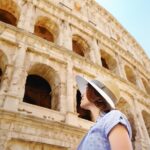
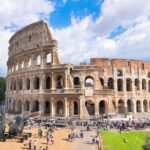
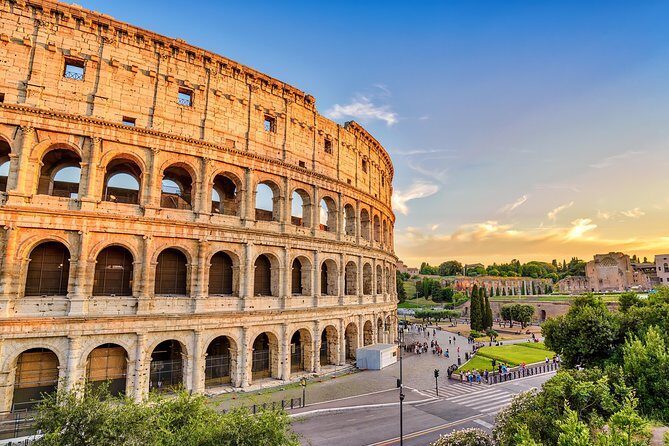
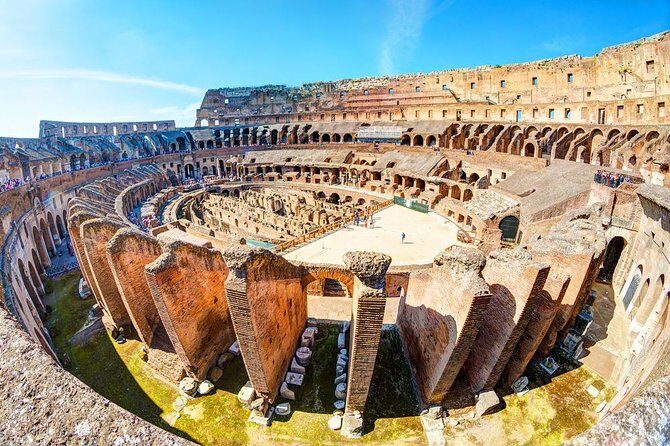
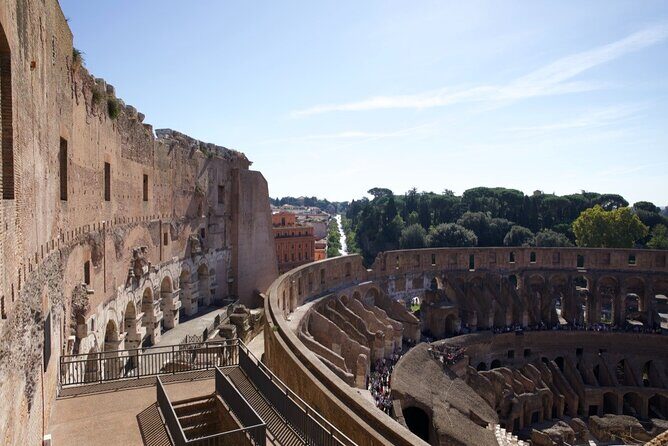
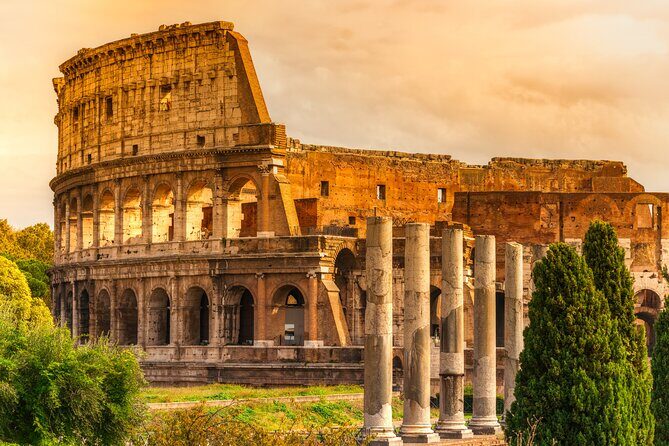
The Colosseum is one of those places where a photo can’t prepare you for the real scale. On this tour, the first win is simple: you’re given Colosseum entrance tickets so the group doesn’t waste the early part of the visit standing in ticket lines. That means more of your limited time is spent inside the arena, where the stories actually land.
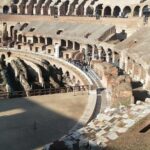
Expect your guide to start connecting the dots as soon as you enter. The tour is designed around the idea that you’ll feel the magnitude of the place, then hear how Romans used the arena for spectacle and politics. You’re not just looking at arches and seats—you’re getting a framework for what you’re standing in.
One extra detail that can make the Colosseum stop feel more real is the way guides tend to layer in context while you walk. In the same overall flow, you’ll learn about nearby imperial symbolism too, which helps if you’ve ever visited the Colosseum and thought, I know what gladiators are, but what about everything else?
You can also read our reviews of more private tours in Rome


The Arch of Constantine: The Story Behind the Stone
Right in the Colosseum area, you’ll also be pointed to the Arch of Constantine I. This isn’t just another photo stop. It was erected around 315 CE to commemorate Constantine’s victory over Maxentius at the Battle of Milvian Bridge on 28 October 312 CE.
Here’s why this matters to your visit: the arch is political propaganda made of stone. You’re shown how it presents Constantine as a living continuation of earlier successful Roman emperors—military wins, good governance, the whole package. If you want to understand why Roman monuments look the way they do, this kind of explanation makes the arch feel less like background and more like messaging.
Palatine Hill: From Imperial Residences to Open-Air Museum Views
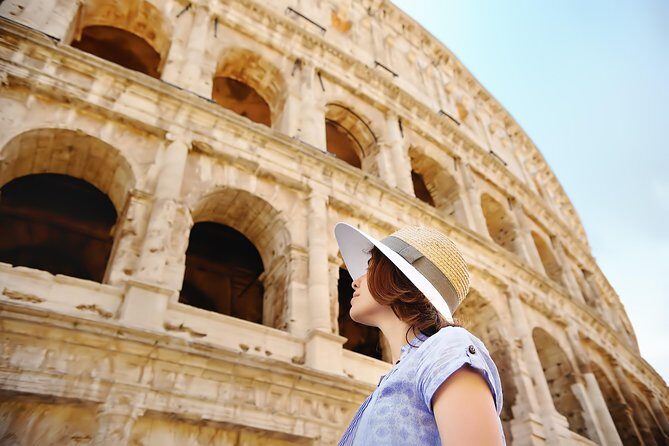
After the Colosseum, the tour shifts up a gear into a different kind of Rome. Palatine Hill is one of the oldest parts of the city and is often described as the first nucleus of the Roman Empire. It’s now largely an open-air museum, which means you can see the site in a way that feels more like a landscape you’re walking through than a sealed gallery.
Your time here is about 30 minutes, and it’s set up to give you both context and breathing room. The big theme is power and ownership. Imperial palaces were built here starting with Augustus, after the hill had been mostly home to wealthy residences long before imperial rule.
Palatine Hill also helps you “read” the city. The ruins and museum finds aren’t just there to look old—they explain where rulers lived and how Rome’s elite shaped the city’s identity. If you’re the kind of person who likes understanding what was where, Palatine does that quickly. And if you’re not, the open-air views still do the job: you’ll get a sense of why the Romans chose this ground.
The Roman Forum: Where Politics, Law, and Spectacle Lived
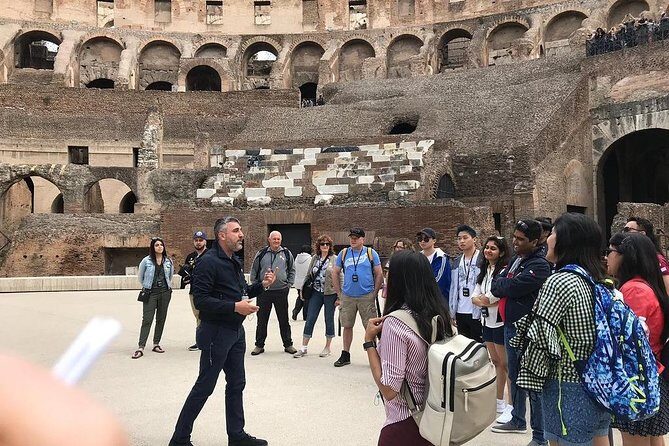
Then comes the Roman Forum, the place where Rome’s public life happened. This is the most important forum in ancient Rome, set on low ground between the Palatine and Capitoline hills. The Forum is one of those ruins that can feel confusing if you don’t know what you’re looking at, so the guide-led context is a real asset.
You’ll learn that in republican times it was where you found public meetings, law courts, and even gladiatorial combats. Over time, especially under the empire, the Forum shifted toward religious and secular spectacles and ceremonies. The result is a site full of monuments that signal status and authority.
Your tour also calls out major surviving structures you can look for as you walk. These include:
- Temple of Castor and Pollux
- Temple of the Deified Caesar
- Mamertine Prison
- Curia (senate house)
- Temple of Saturn
- Temple of Vesta
- Temple of Romulus
- Arch of Titus
- Arch of Septimius Severus
- Cloaca Maxima
The clever part here is that this isn’t just a list. When you’re moving with a guide, each stop helps you place the others. Instead of seeing scattered ruins, you start to recognize the Forum as a working stage—governance, worship, and performance all tangled together.
How the Timing Really Works in 2.5 Hours
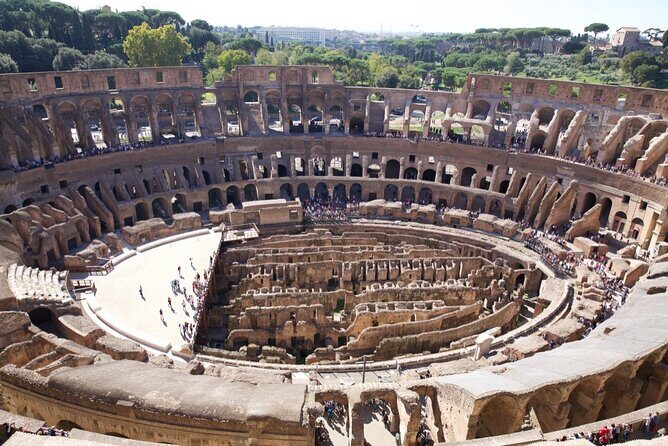
This tour clocks in at about 2 hours 30 minutes, with a bit of flexibility (about 20–30 minutes variation can happen for organizational reasons). The good news is that the itinerary is built around practical blocks rather than one long slog.
- Colosseum: about 1 hour with your guided walk and included admission
- Palatine Hill: about 30 minutes with included admission
- Roman Forum: about 1 hour with included admission
The tour also includes free time for you to explore additional areas at the Roman Forum and Palatine Hill. That matters because the Forum and Palatine can tempt you to wander without losing your orientation. You don’t want to feel trapped in “look, listen, move” mode the entire time—this gives you a chance to stop, regroup, and take photos without feeling rushed.
If you prefer structured time with a little control over your pace, this setup is a good match.





What Makes It a True Private Tour (Not Just Smaller Crowds)
This is described as a private guided tour where only your group participates. That changes the experience in a way you’ll feel quickly: more room for questions, less waiting for people who are slower at the start, and fewer interruptions when you ask something that pops into your head.
It also helps with comfort. If you’ve done big-group tours where you’re stuck hearing the guide at the back, this is easier to manage thanks to the headsets system. Headsets are provided for groups over 8 participants, which should help keep the tour readable even if your group is bigger than you expected.
Also, because the guide can move you with intention through the site, you usually get a better sense of flow—Colosseum first for impact, then Palatine for the imperial “why,” then the Forum for the “what happened here.”
Price and Value: Is $217.67 Worth It?
At $217.67 per person, the price isn’t low. But value here comes from what’s included and how the time is used.
You’re getting:
- Professional local licensed Blue Badge guide
- Entrance tickets for the Colosseum (and admission tied into the itinerary for the Roman Forum and Palatine Hill)
- Reservation/entry fees are included in the total price
- Headsets when needed
- A tour format that includes free time for your own exploration
The biggest value lever is time. With skip-the-line style entry at the Colosseum, you spend less of your visit queued up and more inside where the scale and stories matter. If you’re pairing this with other Roman sites later, saving even 30–45 minutes can be the difference between a smooth day and a rushed one.
Private also matters. You’re paying for more control and more conversation with the guide, not just smaller crowds. If you’re the type of traveler who asks questions—about dates, who held power, why certain monuments were built—this format tends to pay off.
Meeting Point and Practical Tips That Prevent Stress
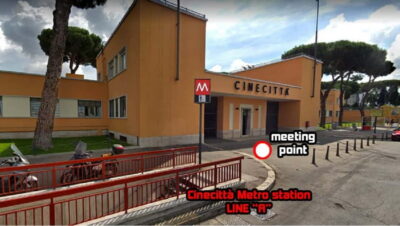
The meeting point is Via delle Terme di Tito, 72, 00184 Roma RM, Italy. You’ll end in the Roman Forum area (00186 Rome). There’s no hotel pickup or drop-off, so plan on getting yourself there using public transit or walking.
Check-in is 20 minutes before your chosen starting time. That’s not a suggestion; Colosseum entry is managed with strict procedures and security screening, so arriving late can cut into your actual tour time.
Two practical items you should take seriously:
- Your full name must match the names provided at booking. If it doesn’t, entry can be denied.
- Each person must show a valid passport or ID that matches the booking name.
The Colosseum also has forbidden items. You should avoid bringing bottles/glasses containers, alcoholic beverages, aerosols, backpacks, camping gear, and bulky luggage or trolley bags inside.
Finally, plan for real-world changes. The tour can be canceled due to strikes or bad weather, and the itinerary can shift depending on conditions like rain, high temperatures, or other events beyond the operator’s control.
Who This Tour Fits Best (and Who Might Want Something Else)
This tour is a good fit if you want:
- A guided, story-driven look at the Colosseum instead of a silent ruin stroll
- More interaction and questions thanks to a private group format
- Time to breathe—especially on the Palatine Hill and Roman Forum sections
- An efficient route that connects arena spectacle to politics and daily public life
It may be less ideal if you dislike structured timing at all, or if you don’t want to deal with strict entry rules and security checks. But for most people visiting Rome for a limited number of days, this is one of the smartest ways to make the ruins make sense.
One more note: this experience is often booked about 27 days in advance, so if you’re traveling in peak season, I’d treat it as something to lock in sooner rather than later.
Should You Book This Colosseum, Roman Forum and Palatine Hill Private Tour?
Book it if you want maximum return on your time. The key advantages are clear: tickets included for fast entry, a licensed guide to connect what you’re seeing, and a private format that gives you room to ask questions. Add in the free time to explore the Roman Forum and Palatine Hill on your own, and you get both structure and freedom.
Skip it if you’re traveling very casually and don’t want to follow strict entry requirements. With the ID/name matching rules and security screening, this tour rewards a little preparation.
If you’re trying to make your first Roman-ruins day feel coherent—arena, power, and public life in one arc—this is a strong choice.
FAQ
How long is the Colosseum, Roman Forum and Palatine Hill private tour?
It lasts about 2 hours 30 minutes, with possible variation of 20–30 minutes.
How much does the tour cost per person?
The listed price is $217.67 per person.
Is the tour offered in English?
Yes, the tour is offered in English.
Is this tour private?
Yes. It’s described as private, and only your group will participate.
What’s included in the ticket price?
You get a Colosseum walking tour with a professional local licensed Blue Badge guide, entrance/admission for the Colosseum and Roman Forum, headsets if there are over 8 participants, and free time to explore additional areas at the Roman Forum and Palatine Hill.
Are Colosseum and Roman Forum entrance tickets included?
Yes. Entry/admission for the Colosseum is included, and Roman Forum admission is included as part of the experience.
Do we get time to explore on our own?
Yes. There is free time to explore additional areas at the Roman Forum and Palatine Hill.
Where is the meeting point?
The meeting point is Via delle Terme di Tito, 72, 00184 Roma RM, Italy.
What time should I check in before the tour starts?
You should check in 20 minutes before the chosen starting time.
What ID do I need for entry?
Each traveler must present a valid passport or ID document that matches the full name provided at booking.
What items are forbidden inside the Colosseum?
Forbidden items include bottles and glasses containers, alcoholic beverages and aerosols, backpacks, camping items, and bulky bags or luggage/trolleys.